FIRST AID AND
EMERGENCY
PROCEDURES
Introduction
First Aid and emergency procedures provide a framework on how to
approach a potentially dangerous or risky situation and, or when someone is
hurt. This will help you stay calm, make safe choices and reduce the time it
takes for help to arrive.
Mostly injuries on a Duke of Edinburgh expedition are minor: cuts and
grazes, blisters and minor burns. We however have to be prepared, but
don't be scared by the First Aid training. You are not expected to be an
expert First Aider. It will help you identify a possibly illness or injury and act
in a way that helps a casualty.
Stay safe
Personal safety, your team and safety of other countryside users should be foremost in
your mind when planning your expedition.
Plan for safety. Prepare escape routes and alternative routing, allowing for bad weather.
Know the weather forecast and emergency procedures, before setting off.
Equip for safety. Have the properly equipment and personal clothing, making sure it
is being used or worn correctly. Do not carry too much and carry a personal first aid kit.
Train for safety. Follow the instructions and advice given to you throughout your training.
Most accidents are avoidable. Prevention is better than cure, meaning taking steps to
prevent an accident is better than having to deal with it.
What to do in an emergency or accident?
The most important piece of advice is to stay calm.
Assess using the 3 S's. Is it Safe? What can you See? What is the Situation or
what has happened?
Make an area safe. It is important to eliminate anything that presents a danger to
those involved and anyone who goes to help, including you, if it is safe to do
so. Once an area is safe, use the primary survey to assess casualties.
Assist the emergency services. Give the emergency services as much information
as you can when they arrive. Follow their instructions.
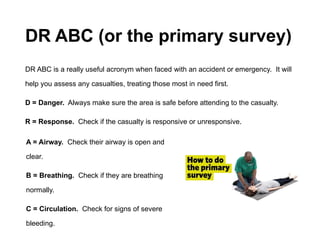
DR ABC (or the primary survey)
DR ABC is a really useful acronym when faced with an accident or emergency. It will
help you assess any casualties, treating those most in need first.
D = Danger. Always make sure the area is safe before attending to the casualty.
R = Response. Check if the casualty is responsive or unresponsive.
A = Airway. Check their airway is open and
clear.
B = Breathing. Check if they are breathing
normally.
C = Circulation. Check for signs of severe
bleeding.
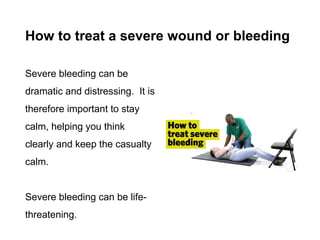
How to treat a severe wound or bleeding
Severe bleeding can be
dramatic and distressing. It is
therefore important to stay
calm, helping you think
clearly and keep the casualty
calm.
Severe bleeding can be life-
threatening.
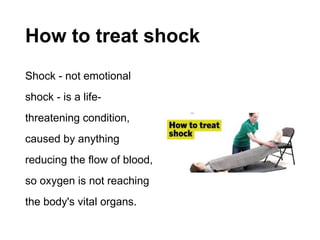
How to treat shock
Shock - not emotional
shock - is a life-
threatening condition,
caused by anything
reducing the flow of blood,
so oxygen is not reaching
the body's vital organs.
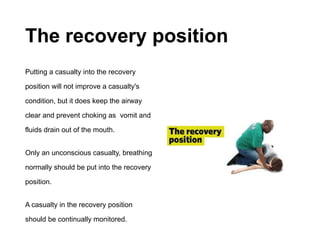
The recovery position
Putting a casualty into the recovery
position will not improve a casualty's
condition, but it does keep the airway
clear and prevent choking as vomit and
fluids drain out of the mouth.
Only an unconscious casualty, breathing
normally should be put into the recovery
position.
A casualty in the recovery position
should be continually monitored.
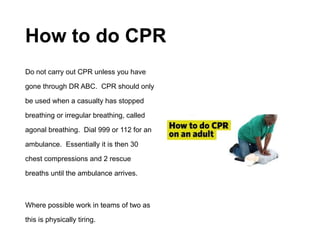
How to do CPR
Do not carry out CPR unless you have
gone through DR ABC. CPR should only
be used when a casualty has stopped
breathing or irregular breathing, called
agonal breathing. Dial 999 or 112 for an
ambulance. Essentially it is then 30
chest compressions and 2 rescue
breaths until the ambulance arrives.
Where possible work in teams of two as
this is physically tiring.
How to treat hypothermia and heatstroke
Being too cold and too hot can be life-threatening.
Hypothermia is a condition that occurs when a casualty’s body temperature drops below
normal. It is a condition affecting many older people.
Heatstroke is the opposite condition, when a casualty's brain stops regulating the body’s
temperate and is unable to cool itself.
Heatstroke also happens after heat exhaustion.
The general advice in the hot weather is to cover up with light clothing, wear a hat, keep
to the shade where possible, apply suncream regularly and drink plenty of water.
Sunburn also needs treating.
General advice in hot weather
The general advice in the hot
weather is to cover up with light
clothing, wear a hat, keep to the
shade where possible, apply sun
cream regularly and drink plenty of
water.
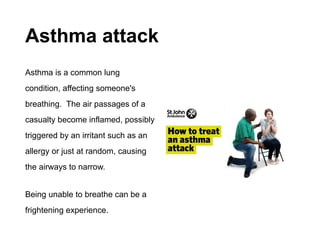
Asthma attack
Asthma is a common lung
condition, affecting someone's
breathing. The air passages of a
casualty become inflamed, possibly
triggered by an irritant such as an
allergy or just at random, causing
the airways to narrow.
Being unable to breathe can be a
frightening experience.
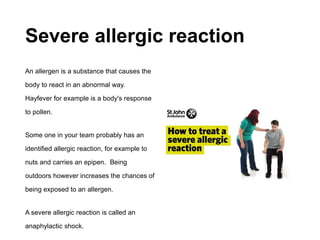
Severe allergic reaction
An allergen is a substance that causes the
body to react in an abnormal way.
Hayfever for example is a body's response
to pollen.
Some one in your team probably has an
identified allergic reaction, for example to
nuts and carries an epipen. Being
outdoors however increases the chances of
being exposed to an allergen.
A severe allergic reaction is called an
anaphylactic shock.
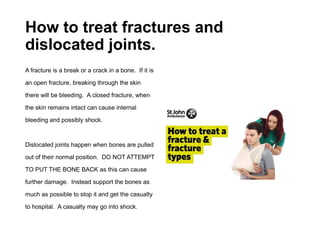
How to treat fractures and
dislocated joints.
A fracture is a break or a crack in a bone. If it is
an open fracture, breaking through the skin
there will be bleeding. A closed fracture, when
the skin remains intact can cause internal
bleeding and possibly shock.
Dislocated joints happen when bones are pulled
out of their normal position. DO NOT ATTEMPT
TO PUT THE BONE BACK as this can cause
further damage. Instead support the bones as
much as possible to stop it and get the casualty
to hospital. A casualty may go into shock.
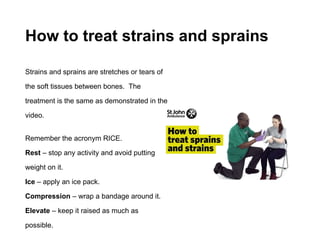
How to treat strains and sprains
Strains and sprains are stretches or tears of
the soft tissues between bones. The
treatment is the same as demonstrated in the
video.
Remember the acronym RICE.
Rest – stop any activity and avoid putting
weight on it.
Ice – apply an ice pack.
Compression – wrap a bandage around it.
Elevate – keep it raised as much as
possible.
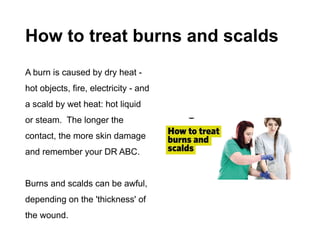
How to treat burns and scalds
A burn is caused by dry heat -
hot objects, fire, electricity - and
a scald by wet heat: hot liquid
or steam. The longer the
contact, the more skin damage
and remember your DR ABC.
Burns and scalds can be awful,
depending on the 'thickness' of
the wound.
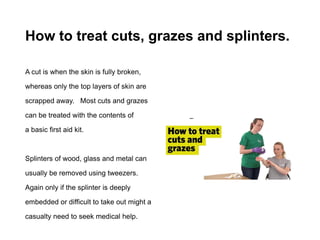
How to treat cuts, grazes and splinters.
A cut is when the skin is fully broken,
whereas only the top layers of skin are
scrapped away. Most cuts and grazes
can be treated with the contents of
a basic first aid kit.
Splinters of wood, glass and metal can
usually be removed using tweezers.
Again only if the splinter is deeply
embedded or difficult to take out might a
casualty need to seek medical help.
Blisters
Blisters are small pockets of fluid
underneath the skin, looking like fluid-
filled bumps. They are caused by
constant rubbing or exposure to heat.
It is also advisable to include special
blister plasters in your first aid kit.
How to treat stings and bites.
It is better to prevent stings and bites than treat a bite. Regularly apply bite protection creams
and sprays, wearing long sleeves and trousers and avoiding areas where stinging and
biting insects gather, such as water.
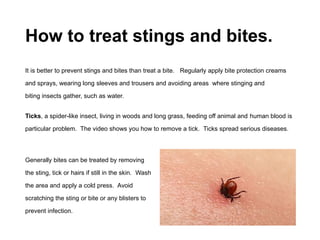
Ticks, a spider-like insect, living in woods and long grass, feeding off animal and human blood is
particular problem. The video shows you how to remove a tick. Ticks spread serious diseases.
Generally bites can be treated by removing
the sting, tick or hairs if still in the skin. Wash
the area and apply a cold press. Avoid
scratching the sting or bite or any blisters to
prevent infection.
How to treat a headache.
Most headaches are easily treated, although
it is useful to identify why a casualty might
have a headache, for example, has s/he
been drinking water regularly and therefore
could be dehydrated.
A headache after a head injury is of
concern, particularly if it is getting worse.
This is a sign of compression.
On expedition, let your supervisor know if you
have taken any medication, no matter how
routine or trivial it seems to you.
Calling Help
If someone is seriously ill or injured and a life is at risk, do not hesitate to call for help.
Often having something to do helps everyone stay calm and feel a sense of control.
Be ready to provide the following:
1. The telephone number you are calling
from.
2. The exact location of the incident.
3. The type and gravity of the emergency.
4. Number, gender and age of casualties.
5. Details of any hazards.
What to do while you are waiting?
Often having something to do helps everyone stay calm and feel a sense of
control.
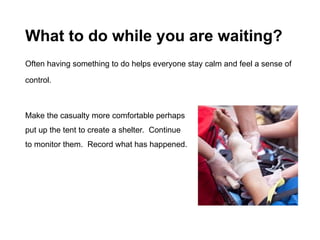
Make the casualty more comfortable perhaps
put up the tent to create a shelter. Continue
to monitor them. Record what has happened.
THANK YOU

First aid, emergency procedures, self aid.pptx

  • 1.
  • 2.
    Introduction First Aid andemergency procedures provide a framework on how to approach a potentially dangerous or risky situation and, or when someone is hurt. This will help you stay calm, make safe choices and reduce the time it takes for help to arrive. Mostly injuries on a Duke of Edinburgh expedition are minor: cuts and grazes, blisters and minor burns. We however have to be prepared, but don't be scared by the First Aid training. You are not expected to be an expert First Aider. It will help you identify a possibly illness or injury and act in a way that helps a casualty.
  • 3.
    Stay safe Personal safety,your team and safety of other countryside users should be foremost in your mind when planning your expedition. Plan for safety. Prepare escape routes and alternative routing, allowing for bad weather. Know the weather forecast and emergency procedures, before setting off. Equip for safety. Have the properly equipment and personal clothing, making sure it is being used or worn correctly. Do not carry too much and carry a personal first aid kit. Train for safety. Follow the instructions and advice given to you throughout your training. Most accidents are avoidable. Prevention is better than cure, meaning taking steps to prevent an accident is better than having to deal with it.
  • 4.
    What to doin an emergency or accident? The most important piece of advice is to stay calm. Assess using the 3 S's. Is it Safe? What can you See? What is the Situation or what has happened? Make an area safe. It is important to eliminate anything that presents a danger to those involved and anyone who goes to help, including you, if it is safe to do so. Once an area is safe, use the primary survey to assess casualties. Assist the emergency services. Give the emergency services as much information as you can when they arrive. Follow their instructions.
  • 5.
    DR ABC (orthe primary survey) DR ABC is a really useful acronym when faced with an accident or emergency. It will help you assess any casualties, treating those most in need first. D = Danger. Always make sure the area is safe before attending to the casualty. R = Response. Check if the casualty is responsive or unresponsive. A = Airway. Check their airway is open and clear. B = Breathing. Check if they are breathing normally. C = Circulation. Check for signs of severe bleeding.
  • 6.
    How to treata severe wound or bleeding Severe bleeding can be dramatic and distressing. It is therefore important to stay calm, helping you think clearly and keep the casualty calm. Severe bleeding can be life- threatening.
  • 7.
    How to treatshock Shock - not emotional shock - is a life- threatening condition, caused by anything reducing the flow of blood, so oxygen is not reaching the body's vital organs.
  • 8.
    The recovery position Puttinga casualty into the recovery position will not improve a casualty's condition, but it does keep the airway clear and prevent choking as vomit and fluids drain out of the mouth. Only an unconscious casualty, breathing normally should be put into the recovery position. A casualty in the recovery position should be continually monitored.
  • 9.
    How to doCPR Do not carry out CPR unless you have gone through DR ABC. CPR should only be used when a casualty has stopped breathing or irregular breathing, called agonal breathing. Dial 999 or 112 for an ambulance. Essentially it is then 30 chest compressions and 2 rescue breaths until the ambulance arrives. Where possible work in teams of two as this is physically tiring.
  • 10.
    How to treathypothermia and heatstroke Being too cold and too hot can be life-threatening. Hypothermia is a condition that occurs when a casualty’s body temperature drops below normal. It is a condition affecting many older people. Heatstroke is the opposite condition, when a casualty's brain stops regulating the body’s temperate and is unable to cool itself. Heatstroke also happens after heat exhaustion. The general advice in the hot weather is to cover up with light clothing, wear a hat, keep to the shade where possible, apply suncream regularly and drink plenty of water. Sunburn also needs treating.
  • 11.
    General advice inhot weather The general advice in the hot weather is to cover up with light clothing, wear a hat, keep to the shade where possible, apply sun cream regularly and drink plenty of water.
  • 12.
    Asthma attack Asthma isa common lung condition, affecting someone's breathing. The air passages of a casualty become inflamed, possibly triggered by an irritant such as an allergy or just at random, causing the airways to narrow. Being unable to breathe can be a frightening experience.
  • 13.
    Severe allergic reaction Anallergen is a substance that causes the body to react in an abnormal way. Hayfever for example is a body's response to pollen. Some one in your team probably has an identified allergic reaction, for example to nuts and carries an epipen. Being outdoors however increases the chances of being exposed to an allergen. A severe allergic reaction is called an anaphylactic shock.
  • 14.
    How to treatfractures and dislocated joints. A fracture is a break or a crack in a bone. If it is an open fracture, breaking through the skin there will be bleeding. A closed fracture, when the skin remains intact can cause internal bleeding and possibly shock. Dislocated joints happen when bones are pulled out of their normal position. DO NOT ATTEMPT TO PUT THE BONE BACK as this can cause further damage. Instead support the bones as much as possible to stop it and get the casualty to hospital. A casualty may go into shock.
  • 15.
    How to treatstrains and sprains Strains and sprains are stretches or tears of the soft tissues between bones. The treatment is the same as demonstrated in the video. Remember the acronym RICE. Rest – stop any activity and avoid putting weight on it. Ice – apply an ice pack. Compression – wrap a bandage around it. Elevate – keep it raised as much as possible.
  • 16.
    How to treatburns and scalds A burn is caused by dry heat - hot objects, fire, electricity - and a scald by wet heat: hot liquid or steam. The longer the contact, the more skin damage and remember your DR ABC. Burns and scalds can be awful, depending on the 'thickness' of the wound.
  • 17.
    How to treatcuts, grazes and splinters. A cut is when the skin is fully broken, whereas only the top layers of skin are scrapped away. Most cuts and grazes can be treated with the contents of a basic first aid kit. Splinters of wood, glass and metal can usually be removed using tweezers. Again only if the splinter is deeply embedded or difficult to take out might a casualty need to seek medical help.
  • 18.
    Blisters Blisters are smallpockets of fluid underneath the skin, looking like fluid- filled bumps. They are caused by constant rubbing or exposure to heat. It is also advisable to include special blister plasters in your first aid kit.
  • 19.
    How to treatstings and bites. It is better to prevent stings and bites than treat a bite. Regularly apply bite protection creams and sprays, wearing long sleeves and trousers and avoiding areas where stinging and biting insects gather, such as water. Ticks, a spider-like insect, living in woods and long grass, feeding off animal and human blood is particular problem. The video shows you how to remove a tick. Ticks spread serious diseases. Generally bites can be treated by removing the sting, tick or hairs if still in the skin. Wash the area and apply a cold press. Avoid scratching the sting or bite or any blisters to prevent infection.
  • 20.
    How to treata headache. Most headaches are easily treated, although it is useful to identify why a casualty might have a headache, for example, has s/he been drinking water regularly and therefore could be dehydrated. A headache after a head injury is of concern, particularly if it is getting worse. This is a sign of compression. On expedition, let your supervisor know if you have taken any medication, no matter how routine or trivial it seems to you.
  • 21.
    Calling Help If someoneis seriously ill or injured and a life is at risk, do not hesitate to call for help. Often having something to do helps everyone stay calm and feel a sense of control. Be ready to provide the following: 1. The telephone number you are calling from. 2. The exact location of the incident. 3. The type and gravity of the emergency. 4. Number, gender and age of casualties. 5. Details of any hazards.
  • 22.
    What to dowhile you are waiting? Often having something to do helps everyone stay calm and feel a sense of control. Make the casualty more comfortable perhaps put up the tent to create a shelter. Continue to monitor them. Record what has happened.
  • 23.