
First Aid Kit
Weiqiang Jin
• What Is In A First Aid Kit?
According to American Red Cross, all first aid kits for a family of four include the following:
• 2 absorbent compress dressings (5 x 9 inches)
• 25 adhesive bandages (assorted sizes)
• 1 adhesive cloth tape (10 yards x 1 inch)
• 5 antibiotic ointment packets (approximately 1 gram)
• 5 antiseptic wipe packets
• 2 packets of aspirin (81 mg each)
• 1 blanket (space blanket)
• 1 breathing barrier (with one-way valve)
• 1 instant cold compress
• 2 pair of non-latex gloves (size: large)
• 2 hydrocortisone ointment packets (approximately 1 gram each)
• Scissors
• 1 roller bandage (3 inches wide)
• 1 roller bandage (4 inches wide)
• 5 sterile gauze pads (3 x 3 inches)
• 5 sterile gauze pads (4 x 4 inches)
• Oral thermometer (non-mercury/nonglass)
• 2 triangular bandages
• Tweezers
• First aid instruction booklet
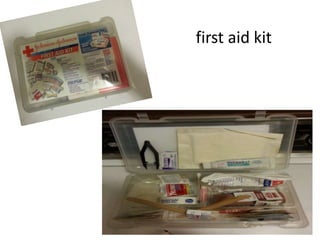
first aid kit
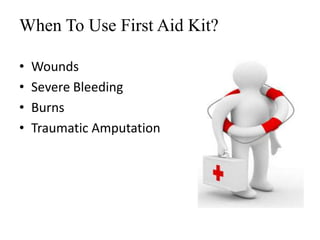
When To Use First Aid Kit?
• Wounds
• Severe Bleeding
• Burns
• Traumatic Amputation
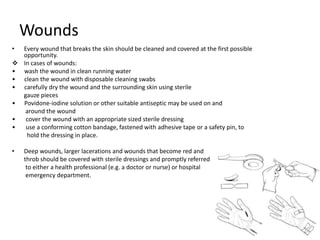
Wounds
• Every wound that breaks the skin should be cleaned and covered at the first possible
opportunity.
 In cases of wounds:
• wash the wound in clean running water
• clean the wound with disposable cleaning swabs
• carefully dry the wound and the surrounding skin using sterile
gauze pieces
• Povidone-iodine solution or other suitable antiseptic may be used on and
around the wound
• cover the wound with an appropriate sized sterile dressing
• use a conforming cotton bandage, fastened with adhesive tape or a safety pin, to
hold the dressing in place.
• Deep wounds, larger lacerations and wounds that become red and
throb should be covered with sterile dressings and promptly referred
to either a health professional (e.g. a doctor or nurse) or hospital
emergency department.
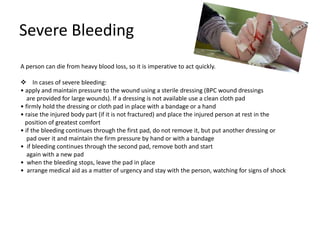
Severe Bleeding
A person can die from heavy blood loss, so it is imperative to act quickly.
 In cases of severe bleeding:
• apply and maintain pressure to the wound using a sterile dressing (BPC wound dressings
are provided for large wounds). If a dressing is not available use a clean cloth pad
• firmly hold the dressing or cloth pad in place with a bandage or a hand
• raise the injured body part (if it is not fractured) and place the injured person at rest in the
position of greatest comfort
• if the bleeding continues through the first pad, do not remove it, but put another dressing or
pad over it and maintain the firm pressure by hand or with a bandage
• if bleeding continues through the second pad, remove both and start
again with a new pad
• when the bleeding stops, leave the pad in place
• arrange medical aid as a matter of urgency and stay with the person, watching for signs of shock
Burns
A burn refers to damage caused to body tissues by heat/cold, hazardous
substances, electricity or radiation (e.g. ultraviolet light, microwaves and
laser beams).
Standard Treatment for Burns:
The immediate treatment for burns is as follows:
• ensure that both the person administering the first aid and bystanders
are safe
• take the injured person to a safe place if possible
• give priority care to the injured person’s airway, breathing and
circulation
cool, running water applied quickly is the best remedy of all – cool the
affected area with cold, running water for at least 20 minutes to limit
tissue damage and relieve pain
• irrigation should continue if the patient continues to complain
of burning
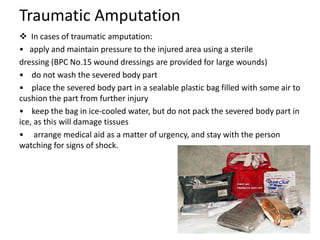
Traumatic Amputation
 In cases of traumatic amputation:
• apply and maintain pressure to the injured area using a sterile
dressing (BPC No.15 wound dressings are provided for large wounds)
• do not wash the severed body part
• place the severed body part in a sealable plastic bag filled with some air to
cushion the part from further injury
• keep the bag in ice-cooled water, but do not pack the severed body part in
ice, as this will damage tissues
• arrange medical aid as a matter of urgency, and stay with the person
watching for signs of shock.
First aid kit

First aid kit

  • 1.
  • 2.
    • What IsIn A First Aid Kit? According to American Red Cross, all first aid kits for a family of four include the following: • 2 absorbent compress dressings (5 x 9 inches) • 25 adhesive bandages (assorted sizes) • 1 adhesive cloth tape (10 yards x 1 inch) • 5 antibiotic ointment packets (approximately 1 gram) • 5 antiseptic wipe packets • 2 packets of aspirin (81 mg each) • 1 blanket (space blanket) • 1 breathing barrier (with one-way valve) • 1 instant cold compress • 2 pair of non-latex gloves (size: large) • 2 hydrocortisone ointment packets (approximately 1 gram each) • Scissors • 1 roller bandage (3 inches wide) • 1 roller bandage (4 inches wide) • 5 sterile gauze pads (3 x 3 inches) • 5 sterile gauze pads (4 x 4 inches) • Oral thermometer (non-mercury/nonglass) • 2 triangular bandages • Tweezers • First aid instruction booklet
  • 3.
  • 4.
    When To UseFirst Aid Kit? • Wounds • Severe Bleeding • Burns • Traumatic Amputation
  • 5.
    Wounds • Every woundthat breaks the skin should be cleaned and covered at the first possible opportunity.  In cases of wounds: • wash the wound in clean running water • clean the wound with disposable cleaning swabs • carefully dry the wound and the surrounding skin using sterile gauze pieces • Povidone-iodine solution or other suitable antiseptic may be used on and around the wound • cover the wound with an appropriate sized sterile dressing • use a conforming cotton bandage, fastened with adhesive tape or a safety pin, to hold the dressing in place. • Deep wounds, larger lacerations and wounds that become red and throb should be covered with sterile dressings and promptly referred to either a health professional (e.g. a doctor or nurse) or hospital emergency department.
  • 6.
    Severe Bleeding A personcan die from heavy blood loss, so it is imperative to act quickly.  In cases of severe bleeding: • apply and maintain pressure to the wound using a sterile dressing (BPC wound dressings are provided for large wounds). If a dressing is not available use a clean cloth pad • firmly hold the dressing or cloth pad in place with a bandage or a hand • raise the injured body part (if it is not fractured) and place the injured person at rest in the position of greatest comfort • if the bleeding continues through the first pad, do not remove it, but put another dressing or pad over it and maintain the firm pressure by hand or with a bandage • if bleeding continues through the second pad, remove both and start again with a new pad • when the bleeding stops, leave the pad in place • arrange medical aid as a matter of urgency and stay with the person, watching for signs of shock
  • 7.
    Burns A burn refersto damage caused to body tissues by heat/cold, hazardous substances, electricity or radiation (e.g. ultraviolet light, microwaves and laser beams). Standard Treatment for Burns: The immediate treatment for burns is as follows: • ensure that both the person administering the first aid and bystanders are safe • take the injured person to a safe place if possible • give priority care to the injured person’s airway, breathing and circulation cool, running water applied quickly is the best remedy of all – cool the affected area with cold, running water for at least 20 minutes to limit tissue damage and relieve pain • irrigation should continue if the patient continues to complain of burning
  • 8.
    Traumatic Amputation  Incases of traumatic amputation: • apply and maintain pressure to the injured area using a sterile dressing (BPC No.15 wound dressings are provided for large wounds) • do not wash the severed body part • place the severed body part in a sealable plastic bag filled with some air to cushion the part from further injury • keep the bag in ice-cooled water, but do not pack the severed body part in ice, as this will damage tissues • arrange medical aid as a matter of urgency, and stay with the person watching for signs of shock.