OSCE
PEDIATRICS
Dr.Y.K.Amdekar
dnbpaediatrics.blogspot.
in
Station 1 – history taking
• 8 month old infant presents with history of
cough and wheezing
dnbpaediatrics.blogspot.in
• Introduce yourself
• Onset – acute / subacute Duration – hours / days
• Progress – better / worst / same
• Accompanying symptoms – fever, cold, vomiting,
skin rash, failure to thrive
• Past history of similar episode
• Feeding, growth, well being, immunisation
• Birth history
• Family history of atopy / contact with viral inf
• Drug history – relief if anydnbpaediatrics.blogspot.in
Station 2 – physical exam
• Examine respiratory system of this child
dnbpaediatrics.blogspot.in
• Introduce yourself and take permission from
mother or child
• Undress the child
• Examine from foot end or head end for
respiration
• Palpate for tracheal deviation
• Percuss gently and follow rules of
percussiion
dnbpaediatrics.blogspot.in
Station 3 – counseling
• 3 year old child has been diagnosed as
asthma – counsel the parents
dnbpaediatrics.blogspot.in
• Introduce yourself and find out what language
they would feel comfortable
• Describe in lay language about asthma
• Emphasise no one to blame and not to worry
• Tell them that it can be controlled
• Discuss preventive measures and drug therapy
• Inform advantages and safety of inhaled therapy
over oral medications
• Insist on diary record and periodic follow-up
• Explain end point of response and anticipated
period of time / end with “any questions?”/ thanks
dnbpaediatrics.blogspot.in
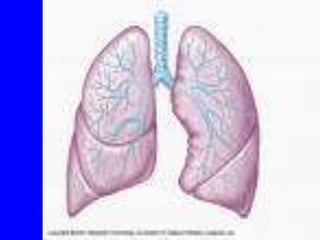
Station 4
• Draw surface anatomy of lungs
• Name all segments of left lung
dnbpaediatrics.blogspot.in
• Left upper lobe – apical, anterior, posterior
• Lingula – superior lingula, inferior lingula
• Lower lobe – apical,anterior, posterior,
lateral
dnbpaediatrics.blogspot.in
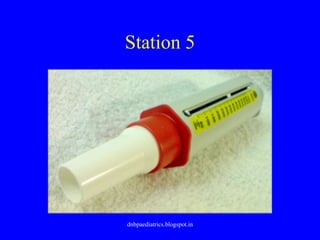
Station 5
dnbpaediatrics.blogspot.in
• What is the approximate normal value of
PEFR in a child whose height is 120 cms
dnbpaediatrics.blogspot.in
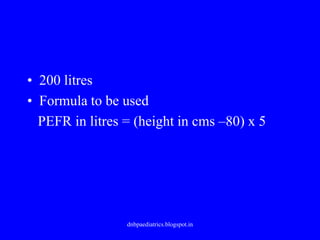
• 200 litres
• Formula to be used
PEFR in litres = (height in cms –80) x 5
dnbpaediatrics.blogspot.in
Station 6
• What are different types of devices used for
inhalation therapy?
• What is the advantage of a spacer?
• Describe maintenance of spacer
dnbpaediatrics.blogspot.in
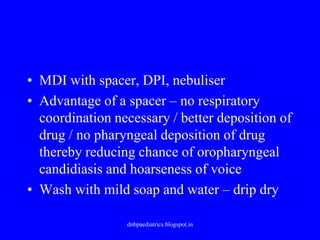
• MDI with spacer, DPI, nebuliser
• Advantage of a spacer – no respiratory
coordination necessary / better deposition of
drug / no pharyngeal deposition of drug
thereby reducing chance of oropharyngeal
candidiasis and hoarseness of voice
• Wash with mild soap and water – drip dry
dnbpaediatrics.blogspot.in
Station 7
• In case of need for oxygen therapy, attempts
must be made to decrease oxygen
consumption. Name maneuvers to decrease
oxygen consumption
dnbpaediatrics.blogspot.in
• Control fever
• Adequate humidification
• Proper positioning
• Open airway
• Clear secretions
• Alleviate anxiety – child in mother’s lap
dnbpaediatrics.blogspot.in
Station 8
• What is low flow and high flow system of
oxygen delivery?
• Give examples of low flow and high flow
system
dnbpaediatrics.blogspot.in
• Low flow < pt’s inspiratory flow
achieves low oxygen concentration
Low flow systems – face mask, nasal canula
• High flow is adequate or > pt’s inspiratory flow
achieves high oxygen concentration
non-breathing mask - face mask and reservoir bag
with valve, oxygen hood, venturi mask
offers fixed FiO2 delivery
dnbpaediatrics.blogspot.in
Station 9
• Define following terms in relation to TB
Relapse
Defaulter
Lost to treatment
Treatment failure
• What treatment for each of them?
dnbpaediatrics.blogspot.in
• Relapse – signs and symptoms reappearing within
2 years of completion of ATT
• Defaulter – one who discontinues treatment for >
1 week
• Lost to treatment – one who defaults for > 1
month
• Treatment failure – no response or deterioration
after 12 weeks of intensive therapy
• Category 2 of RNTCP
2SHRZE / 1HRZE / 5HRE
dnbpaediatrics.blogspot.in
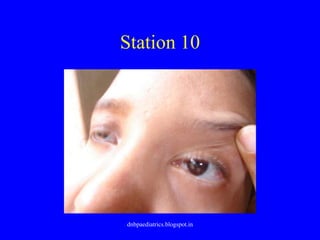
Station 10
dnbpaediatrics.blogspot.in
• Identify the condition
• Name three salient features
• Name type of inheritance
• What is the prognosis?
dnbpaediatrics.blogspot.in
• Ataxia-talengectesia
• Recurrent sino-pulmonary infections,
ataxia, immune deficiency, malignancy
• Autosomal recessive
• Poor – death due to chronic respiratory
failure by second decade
dnbpaediatrics.blogspot.in
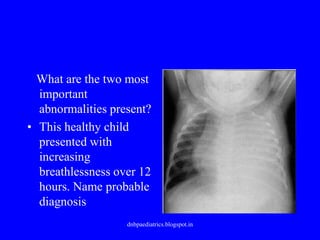
What are the two most
important
abnormalities present?
• This healthy child
presented with
increasing
breathlessness over 12
hours. Name probable
diagnosis
dnbpaediatrics.blogspot.in
• Left pleural effusion and mediastinal shift
• Acute allergic pleural effusion of TB or
traumatic hemorrhagic effusion
dnbpaediatrics.blogspot.in
Station 12
• Name biochemical criteria for exudative
pleural fluid
dnbpaediatrics.blogspot.in
• pH < 7.2
• Pleural fluid > 3 gm/l
• Pleural LDH > 200 IU/l
or
Pleural fluid / serum LDH > 0.6
Pleural fluid / serum protein > 0.5
dnbpaediatrics.blogspot.in
Station 13
• How do you manage pleural effusion
accompanying acute pneumonia?
dnbpaediatrics.blogspot.in
• Uncomplicated para-pneumonic effusion – chest
x-ray lateral decubitus < 10 mm fluid – antibiotics
only
• Complicated effusion – chest x-ray lateral
decubitus - > 10 mm fluid / pH >7.2 / glucose > 40
/ protein < 3 gm/l – antibiotic + thoracocentesis
• Complicated effusion – chest x-ray lateral
decubitus > 10 mm fluid / pH < 7.2 / glucose < 40
/ protein > 3 gm/l – antibiotic + tube drainage
• Multiple loculations – VAT / decortication
dnbpaediatrics.blogspot.in
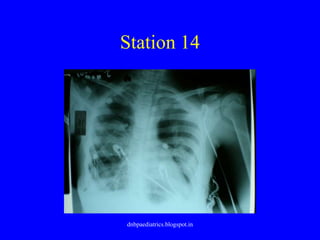
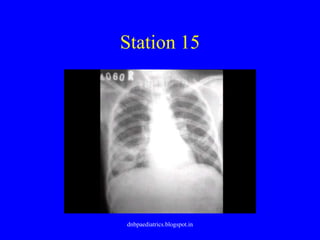
Station 14
dnbpaediatrics.blogspot.in
• Multiple fractures
• Bilateral pneumothorax
• Air in soft tissue
• Scoliosis
dnbpaediatrics.blogspot.in
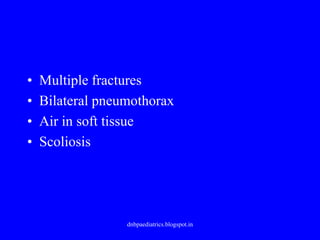
Station 15
dnbpaediatrics.blogspot.in
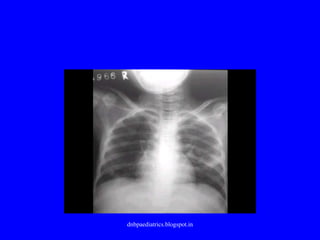
• This 7 year old child was diagnosed as
acute pneumonia on the basis of clinical
profile, neutrophilic leucocytosis and chest
x-ray – was treated with IV Ceftriaxone
• 4 days later, as fever continued, repeat CBC
and chest x-ray were ordered
• What is the problem?
dnbpaediatrics.blogspot.in
• Immune mediated inflammatory disease
Wagner’s granulomatosis
dnbpaediatrics.blogspot.in
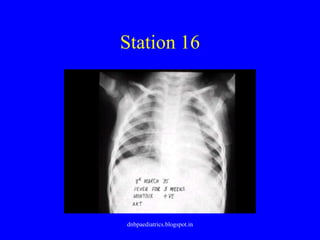
Station 16
dnbpaediatrics.blogspot.in
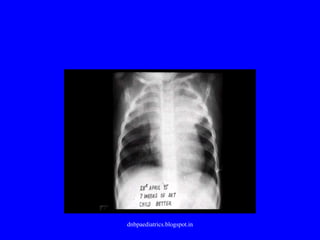
• What is the problem?
• How do you treat?
dnbpaediatrics.blogspot.in
• Paradoxical immune response
• Continue same ATT – in case of acute
symptoms such as breathlessness, consider
oral steroids
dnbpaediatrics.blogspot.in
Station 17
• What concentration of PPD is ideal for
Mantoux test?
• How do you measure test result?
• How do you interpret test result?
• What is the effect of BCG vaccine on Mt
test?
dnbpaediatrics.blogspot.in
• PPD 1 TU RT 23 with Tween 80 as a preservative
or PPD 2 TU without Tween 80 – PPD 5TU may
be an acceptable though inferior alternative
• Ball point method of measuring induration
• Induration > 10 mm is considered +ve indicative
of natural infection
• Previous BCG vaccine has minimal to none
influence on interpretation of Mantoux test
dnbpaediatrics.blogspot.in

On1

  • 1.
  • 2.
    Station 1 –history taking • 8 month old infant presents with history of cough and wheezing dnbpaediatrics.blogspot.in
  • 3.
    • Introduce yourself •Onset – acute / subacute Duration – hours / days • Progress – better / worst / same • Accompanying symptoms – fever, cold, vomiting, skin rash, failure to thrive • Past history of similar episode • Feeding, growth, well being, immunisation • Birth history • Family history of atopy / contact with viral inf • Drug history – relief if anydnbpaediatrics.blogspot.in
  • 4.
    Station 2 –physical exam • Examine respiratory system of this child dnbpaediatrics.blogspot.in
  • 5.
    • Introduce yourselfand take permission from mother or child • Undress the child • Examine from foot end or head end for respiration • Palpate for tracheal deviation • Percuss gently and follow rules of percussiion dnbpaediatrics.blogspot.in
  • 6.
    Station 3 –counseling • 3 year old child has been diagnosed as asthma – counsel the parents dnbpaediatrics.blogspot.in
  • 7.
    • Introduce yourselfand find out what language they would feel comfortable • Describe in lay language about asthma • Emphasise no one to blame and not to worry • Tell them that it can be controlled • Discuss preventive measures and drug therapy • Inform advantages and safety of inhaled therapy over oral medications • Insist on diary record and periodic follow-up • Explain end point of response and anticipated period of time / end with “any questions?”/ thanks dnbpaediatrics.blogspot.in
  • 8.
    Station 4 • Drawsurface anatomy of lungs • Name all segments of left lung dnbpaediatrics.blogspot.in
  • 9.
  • 10.
    • Left upperlobe – apical, anterior, posterior • Lingula – superior lingula, inferior lingula • Lower lobe – apical,anterior, posterior, lateral dnbpaediatrics.blogspot.in
  • 11.
  • 12.
    • What isthe approximate normal value of PEFR in a child whose height is 120 cms dnbpaediatrics.blogspot.in
  • 13.
    • 200 litres •Formula to be used PEFR in litres = (height in cms –80) x 5 dnbpaediatrics.blogspot.in
  • 14.
    Station 6 • Whatare different types of devices used for inhalation therapy? • What is the advantage of a spacer? • Describe maintenance of spacer dnbpaediatrics.blogspot.in
  • 15.
    • MDI withspacer, DPI, nebuliser • Advantage of a spacer – no respiratory coordination necessary / better deposition of drug / no pharyngeal deposition of drug thereby reducing chance of oropharyngeal candidiasis and hoarseness of voice • Wash with mild soap and water – drip dry dnbpaediatrics.blogspot.in
  • 16.
    Station 7 • Incase of need for oxygen therapy, attempts must be made to decrease oxygen consumption. Name maneuvers to decrease oxygen consumption dnbpaediatrics.blogspot.in
  • 17.
    • Control fever •Adequate humidification • Proper positioning • Open airway • Clear secretions • Alleviate anxiety – child in mother’s lap dnbpaediatrics.blogspot.in
  • 18.
    Station 8 • Whatis low flow and high flow system of oxygen delivery? • Give examples of low flow and high flow system dnbpaediatrics.blogspot.in
  • 19.
    • Low flow< pt’s inspiratory flow achieves low oxygen concentration Low flow systems – face mask, nasal canula • High flow is adequate or > pt’s inspiratory flow achieves high oxygen concentration non-breathing mask - face mask and reservoir bag with valve, oxygen hood, venturi mask offers fixed FiO2 delivery dnbpaediatrics.blogspot.in
  • 20.
    Station 9 • Definefollowing terms in relation to TB Relapse Defaulter Lost to treatment Treatment failure • What treatment for each of them? dnbpaediatrics.blogspot.in
  • 21.
    • Relapse –signs and symptoms reappearing within 2 years of completion of ATT • Defaulter – one who discontinues treatment for > 1 week • Lost to treatment – one who defaults for > 1 month • Treatment failure – no response or deterioration after 12 weeks of intensive therapy • Category 2 of RNTCP 2SHRZE / 1HRZE / 5HRE dnbpaediatrics.blogspot.in
  • 22.
  • 23.
    • Identify thecondition • Name three salient features • Name type of inheritance • What is the prognosis? dnbpaediatrics.blogspot.in
  • 24.
    • Ataxia-talengectesia • Recurrentsino-pulmonary infections, ataxia, immune deficiency, malignancy • Autosomal recessive • Poor – death due to chronic respiratory failure by second decade dnbpaediatrics.blogspot.in
  • 25.
    What are thetwo most important abnormalities present? • This healthy child presented with increasing breathlessness over 12 hours. Name probable diagnosis dnbpaediatrics.blogspot.in
  • 26.
    • Left pleuraleffusion and mediastinal shift • Acute allergic pleural effusion of TB or traumatic hemorrhagic effusion dnbpaediatrics.blogspot.in
  • 27.
    Station 12 • Namebiochemical criteria for exudative pleural fluid dnbpaediatrics.blogspot.in
  • 28.
    • pH <7.2 • Pleural fluid > 3 gm/l • Pleural LDH > 200 IU/l or Pleural fluid / serum LDH > 0.6 Pleural fluid / serum protein > 0.5 dnbpaediatrics.blogspot.in
  • 29.
    Station 13 • Howdo you manage pleural effusion accompanying acute pneumonia? dnbpaediatrics.blogspot.in
  • 30.
    • Uncomplicated para-pneumoniceffusion – chest x-ray lateral decubitus < 10 mm fluid – antibiotics only • Complicated effusion – chest x-ray lateral decubitus - > 10 mm fluid / pH >7.2 / glucose > 40 / protein < 3 gm/l – antibiotic + thoracocentesis • Complicated effusion – chest x-ray lateral decubitus > 10 mm fluid / pH < 7.2 / glucose < 40 / protein > 3 gm/l – antibiotic + tube drainage • Multiple loculations – VAT / decortication dnbpaediatrics.blogspot.in
  • 31.
  • 32.
    • Multiple fractures •Bilateral pneumothorax • Air in soft tissue • Scoliosis dnbpaediatrics.blogspot.in
  • 33.
  • 34.
    • This 7year old child was diagnosed as acute pneumonia on the basis of clinical profile, neutrophilic leucocytosis and chest x-ray – was treated with IV Ceftriaxone • 4 days later, as fever continued, repeat CBC and chest x-ray were ordered • What is the problem? dnbpaediatrics.blogspot.in
  • 35.
  • 36.
    • Immune mediatedinflammatory disease Wagner’s granulomatosis dnbpaediatrics.blogspot.in
  • 37.
  • 38.
  • 39.
    • What isthe problem? • How do you treat? dnbpaediatrics.blogspot.in
  • 40.
    • Paradoxical immuneresponse • Continue same ATT – in case of acute symptoms such as breathlessness, consider oral steroids dnbpaediatrics.blogspot.in
  • 41.
    Station 17 • Whatconcentration of PPD is ideal for Mantoux test? • How do you measure test result? • How do you interpret test result? • What is the effect of BCG vaccine on Mt test? dnbpaediatrics.blogspot.in
  • 42.
    • PPD 1TU RT 23 with Tween 80 as a preservative or PPD 2 TU without Tween 80 – PPD 5TU may be an acceptable though inferior alternative • Ball point method of measuring induration • Induration > 10 mm is considered +ve indicative of natural infection • Previous BCG vaccine has minimal to none influence on interpretation of Mantoux test dnbpaediatrics.blogspot.in