
1
Objectives
- Discuss the causes and dangers of
overweight.
- Discuss the causes and dangers of
underweight.
- Identify foods suitable for high-calorie
diets and those suitable for low-calorie
diets.
2
Body Mass Index:
- Is a measure of body fat based on height
and weight that applies to adult men and
women.
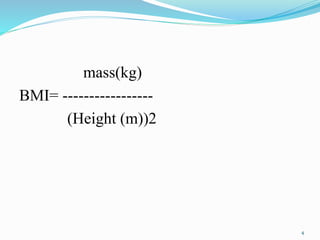
- Obtained by dividing weight in kilograms
by height in meters squared
3
mass(kg)
BMI= -----------------
(Height (m))2
4
- A BMI of 18.5 to 25 may indicate optimal
weight
- A BMI lower than 18.5 suggests the
person is underweight
- A number above 25 may indicate the
person is overweight
- And a number above 30 suggests the
person is obese.
5
Fat Distribution
- Fat in the abdominal cavity is associated
with a greater risk for hypertension,
diabetes, coronary heart disease, type 2
diabetes, and certain types of cancer than
fat in the thigh, buttocks, and hip area.
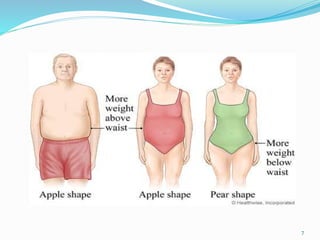
- A person with a pear-shaped body has a
lower risk for disease than someone with an
apple-shaped body.
6
7
Overweight and Obesity
- Overweight is a serious health hazard.
- It increases susceptibility to diabetes
mellitus and hypertension, and to other
health problems as well.
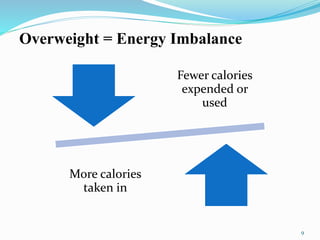
- Energy imbalance is a significant cause.
(More calories taken in than used)
8
Overweight = Energy Imbalance
Fewer calories
expended or
used
More calories
taken in
9
Causes of Obesity
- Lack of Energy Balance
- An Inactive Lifestyle
- Environment
- Genes and family history
- Health condition
10
- Drugs and hormones
- Age
- Emotional factor
- Pregnancy
- Lack of sleep
- Portion size
11
Treatment of obesity:
1- Dietary Treatment of obesity
- Reduce portion size and caloric intake.
- Diet based on MyPyramid
- Diet should consist of 10%–35% protein,
45%–65% carbohydrate, and 20%–35% or less
fat.
- Key is changing eating habits and exercising
for 90 minutes on most days of the week.
12
2- Food Selection
- Fat-free milk
- Yogurt or low-fat sour
- Fat-free salad
- Fruit for rich appetizers or desserts
- Water-packed canned foods rather than
those packed in oil or syrup
13
3- Cooking Methods
- Trim fat from meat before cooking.
- Skim fat from the tops of soups and meat
dishes.
- Avoid addition of extra butter or
margarine and replace with fat-free
seasonings.
14
4- Exercise
- Aerobic exercise helps tone muscles and
burns calories
- To prevent chronic diseases: 30 minutes
most days
15
- To prevent weight gain: 60–90 minutes on
most days
- To maintain weight loss: over 90 minutes
on most days
- Children should be active for 60 minutes
daily.
16
Underweight
- Causes can be poor nutrition,
psychological or physical conditions, or
genetics
- Treated with a high-calorie diet combined
with counseling if the cause is
psychological
17
- It can be as difficult for an underweight
person to gain weight as it is for an
overweight person to lose it.
- Extra calories must be introduced
progressively.
- Easily digested food is recommended.
18
Conclusion
- The health care professional must support
and encourage the client regarding weight
control.
- Excessive weight endangers health and
should be lost using a restricted-calorie diet
based on MyPyramid.
- Excess weight is caused by an energy
imbalance.
19
- Underweight is also dangerous to health,
and psychological counseling, as well as a
high-calorie diet, may be required for
proper treatment.
- Behavior modification is an essential
component of any weight-loss or weight-
gain regimen.
20
Thank
21

Diet and weight control

  • 1.
  • 2.
    Objectives - Discuss thecauses and dangers of overweight. - Discuss the causes and dangers of underweight. - Identify foods suitable for high-calorie diets and those suitable for low-calorie diets. 2
  • 3.
    Body Mass Index: -Is a measure of body fat based on height and weight that applies to adult men and women. - Obtained by dividing weight in kilograms by height in meters squared 3
  • 4.
  • 5.
    - A BMIof 18.5 to 25 may indicate optimal weight - A BMI lower than 18.5 suggests the person is underweight - A number above 25 may indicate the person is overweight - And a number above 30 suggests the person is obese. 5
  • 6.
    Fat Distribution - Fatin the abdominal cavity is associated with a greater risk for hypertension, diabetes, coronary heart disease, type 2 diabetes, and certain types of cancer than fat in the thigh, buttocks, and hip area. - A person with a pear-shaped body has a lower risk for disease than someone with an apple-shaped body. 6
  • 7.
  • 8.
    Overweight and Obesity -Overweight is a serious health hazard. - It increases susceptibility to diabetes mellitus and hypertension, and to other health problems as well. - Energy imbalance is a significant cause. (More calories taken in than used) 8
  • 9.
    Overweight = EnergyImbalance Fewer calories expended or used More calories taken in 9
  • 10.
    Causes of Obesity -Lack of Energy Balance - An Inactive Lifestyle - Environment - Genes and family history - Health condition 10
  • 11.
    - Drugs andhormones - Age - Emotional factor - Pregnancy - Lack of sleep - Portion size 11
  • 12.
    Treatment of obesity: 1-Dietary Treatment of obesity - Reduce portion size and caloric intake. - Diet based on MyPyramid - Diet should consist of 10%–35% protein, 45%–65% carbohydrate, and 20%–35% or less fat. - Key is changing eating habits and exercising for 90 minutes on most days of the week. 12
  • 13.
    2- Food Selection -Fat-free milk - Yogurt or low-fat sour - Fat-free salad - Fruit for rich appetizers or desserts - Water-packed canned foods rather than those packed in oil or syrup 13
  • 14.
    3- Cooking Methods -Trim fat from meat before cooking. - Skim fat from the tops of soups and meat dishes. - Avoid addition of extra butter or margarine and replace with fat-free seasonings. 14
  • 15.
    4- Exercise - Aerobicexercise helps tone muscles and burns calories - To prevent chronic diseases: 30 minutes most days 15
  • 16.
    - To preventweight gain: 60–90 minutes on most days - To maintain weight loss: over 90 minutes on most days - Children should be active for 60 minutes daily. 16
  • 17.
    Underweight - Causes canbe poor nutrition, psychological or physical conditions, or genetics - Treated with a high-calorie diet combined with counseling if the cause is psychological 17
  • 18.
    - It canbe as difficult for an underweight person to gain weight as it is for an overweight person to lose it. - Extra calories must be introduced progressively. - Easily digested food is recommended. 18
  • 19.
    Conclusion - The healthcare professional must support and encourage the client regarding weight control. - Excessive weight endangers health and should be lost using a restricted-calorie diet based on MyPyramid. - Excess weight is caused by an energy imbalance. 19
  • 20.
    - Underweight isalso dangerous to health, and psychological counseling, as well as a high-calorie diet, may be required for proper treatment. - Behavior modification is an essential component of any weight-loss or weight- gain regimen. 20
  • 21.