Sanjivani Rural Education Society’s
Sanjivani College of Engineering, Kopargaon
(An Autonomous Institute, Affiliated to Savitribai Phule Pune University, Pune)
NAAC ‘A’ Grade Accredited , ISO 9001:2015 certified
Subject: Engineering Mechanics
Unit 1: Resultant of Con-current force system
(Numericals on Triangle Law and Parallelogram Law)
Presented By,
Miss. Shinde Bharti M. (Assistant Professor)
Department of Civil Engineering
Email- shindebharticivil@sanjivani.org.in
1
2
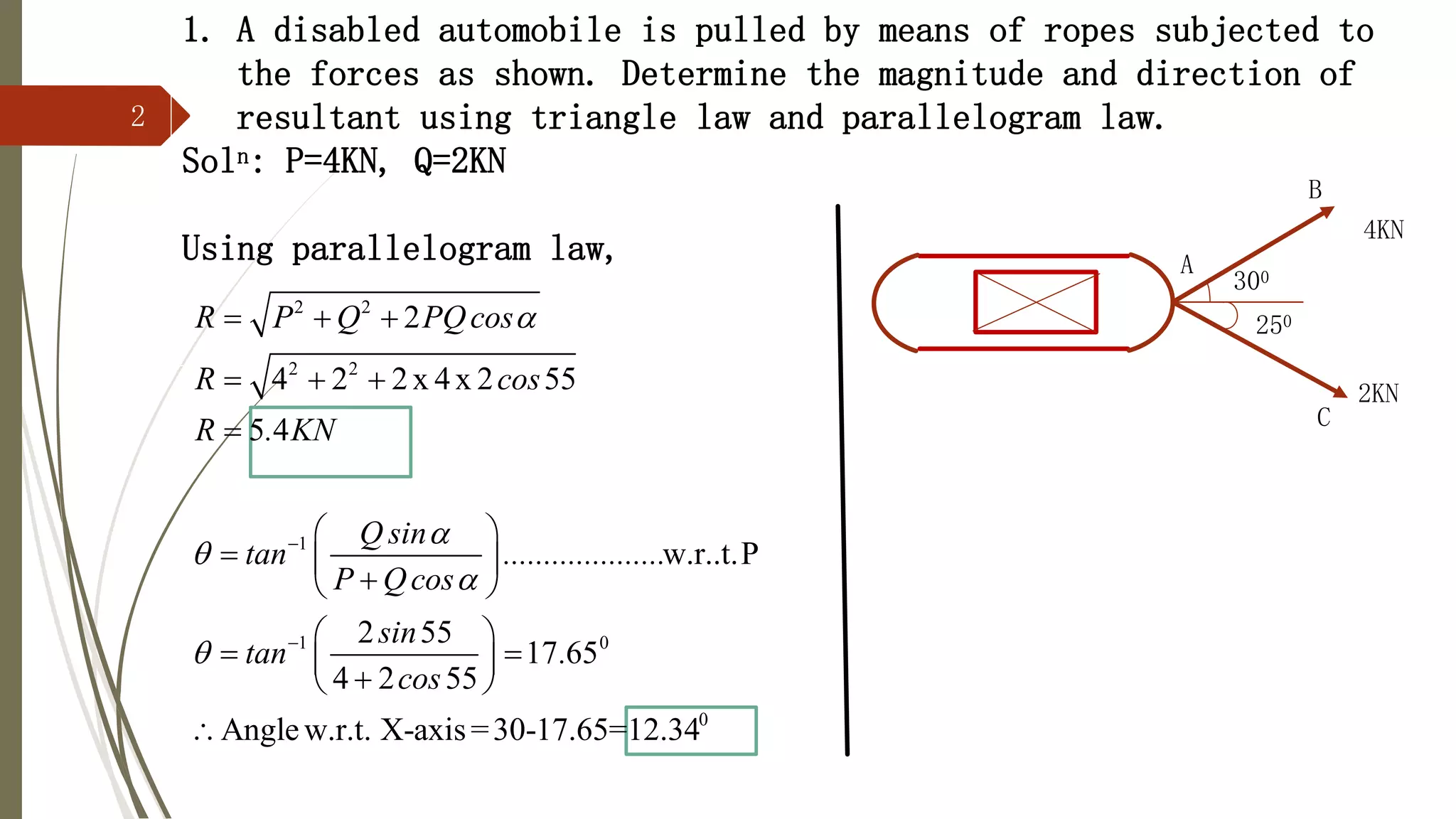
1. A disabled automobile is pulled by means of ropes subjected to
the forces as shown. Determine the magnitude and direction of
resultant using triangle law and parallelogram law.
Soln: P=4KN, Q=2KN
Using parallelogram law,
300
2KN
4KN
250
A
B
C
2 2
2 2
1
1 0
0
2
4 2 2x 4x 2 55
5 4
w.r..t.P
2 55
17 65
4 2 55
Angle w.r.t. X-axis=30-17.65=12.34
R P Q PQcos
R cos
R . KN
Q sin
tan ....................
P Qcos
sin
tan .
cos







  
  

 
  

 
 
 
 

 

3
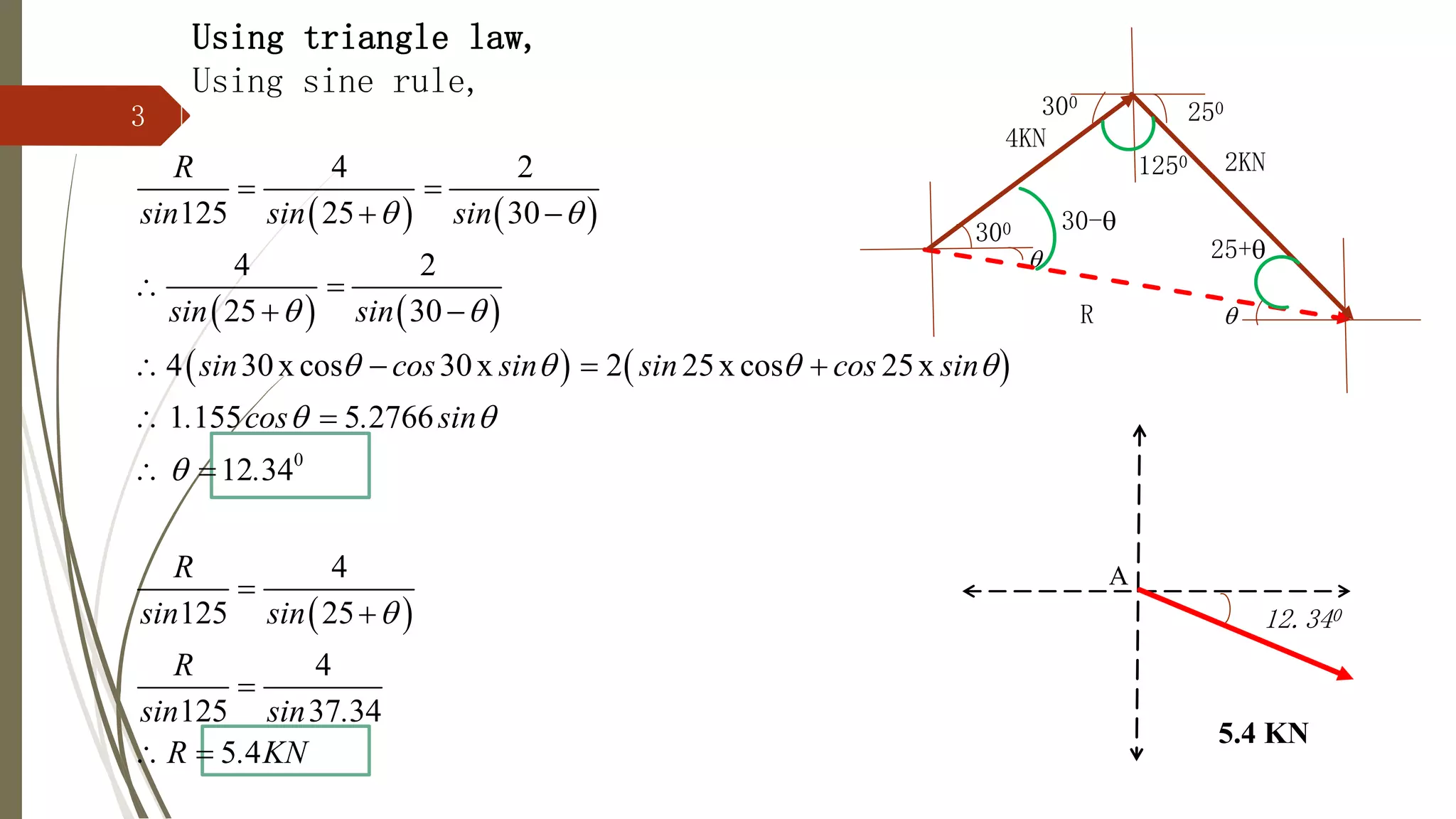
Using triangle law,
Using sine rule,
   
   
   
 
0
4 2
125 25 30
4 2
25 30
4 30x cos 30x 2 25x cos 25x
1 155 5 2766
12 34
4
125 25
4
125 37 34
5 4
R
sin sin sin
sin sin
sin cos sin sin cos sin
. cos . sin
.
R
sin sin
R
sin sin .
R . KN
 
 
   
 


 
 
 
 
   
 
 



 
300


4KN
2KN
R
300
250
1250
25+
30-
12.340
A
5.4 KN
4
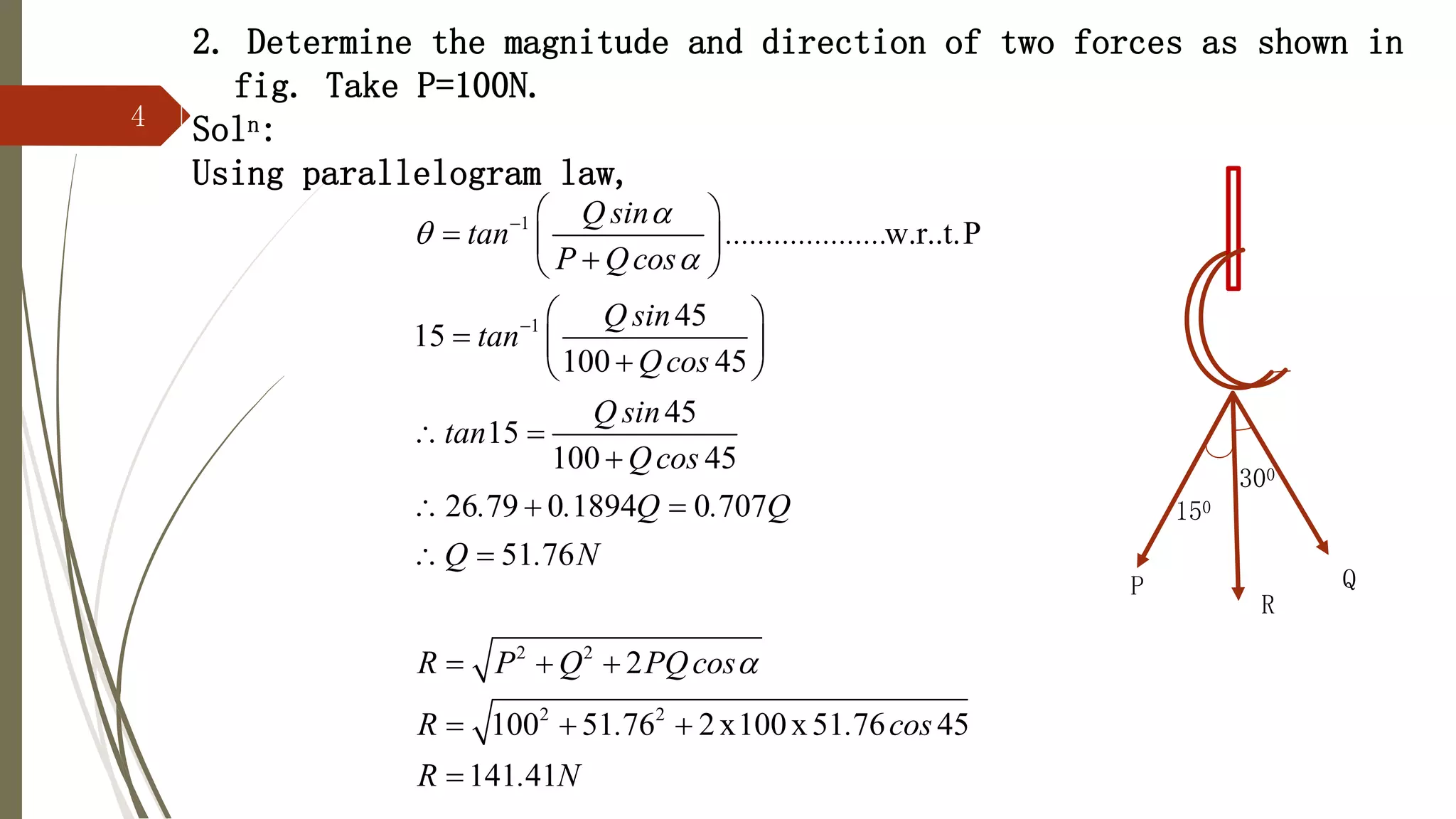
2. Determine the magnitude and direction of two forces as shown in
fig. Take P=100N.
Soln:
Using parallelogram law,
1
1
2 2
2 2
w.r..t.P
45
15
100 45
45
15
100 45
26 79 0 1894 0 707
51 76
2
100 51 76 2x100x51 76 45
141 41
Q sin
tan ....................
P Qcos
Q sin
tan
Qcos
Q sin
tan
Qcos
. . Q . Q
Q . N
R P Q PQcos
R . . cos
R . N






 
  

 
 
  

 
 

  
 
  
  

300
P Q
150
R
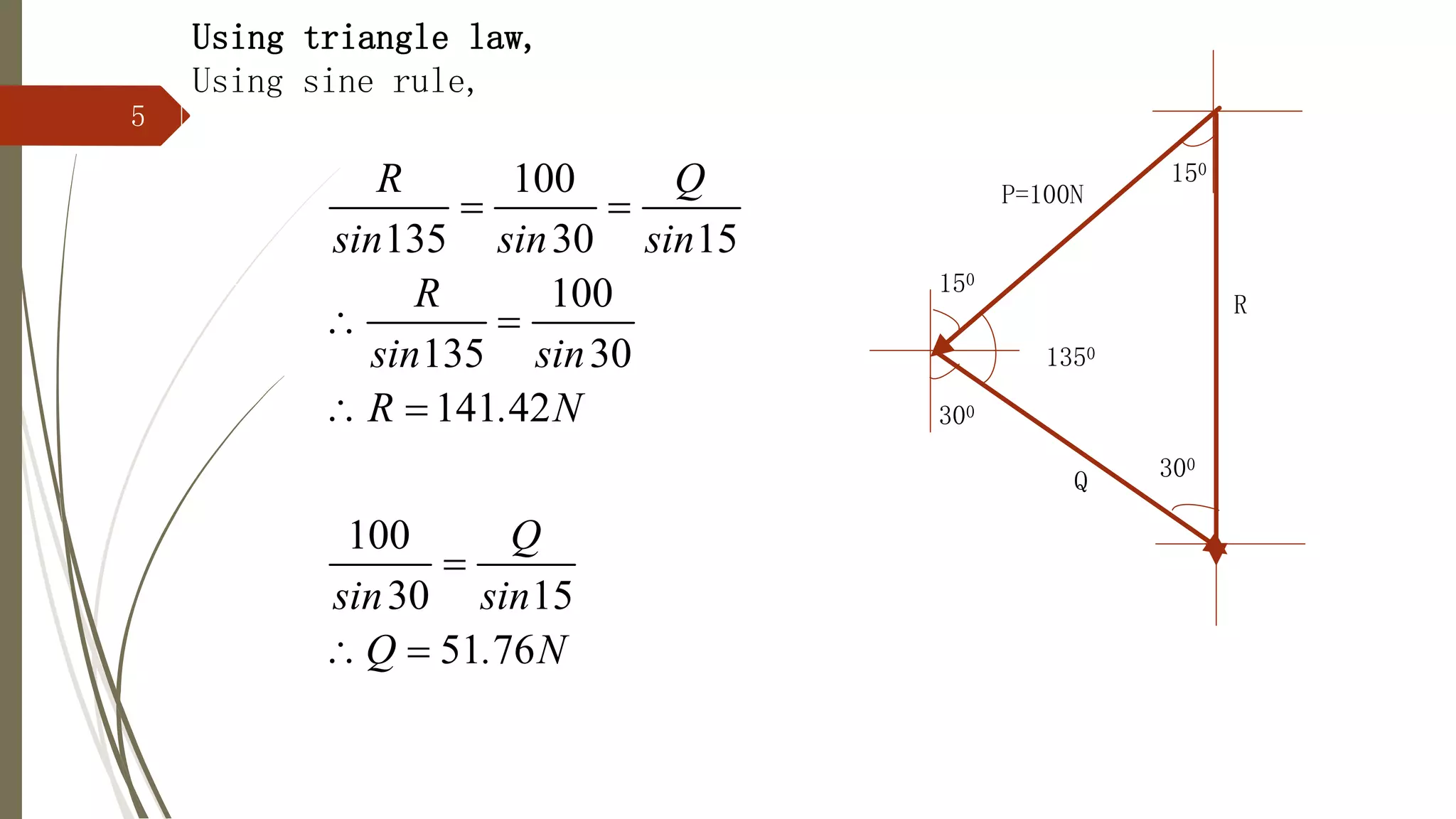
5
Using triangle law,
Using sine rule,
100
135 30 15
100
135 30
141 42
100
30 15
51 76
R Q
sin sin sin
R
sin sin
R . N
Q
sin sin
Q . N
 
 
 

 
R
Q
P=100N
1350
300
150
150
300
6
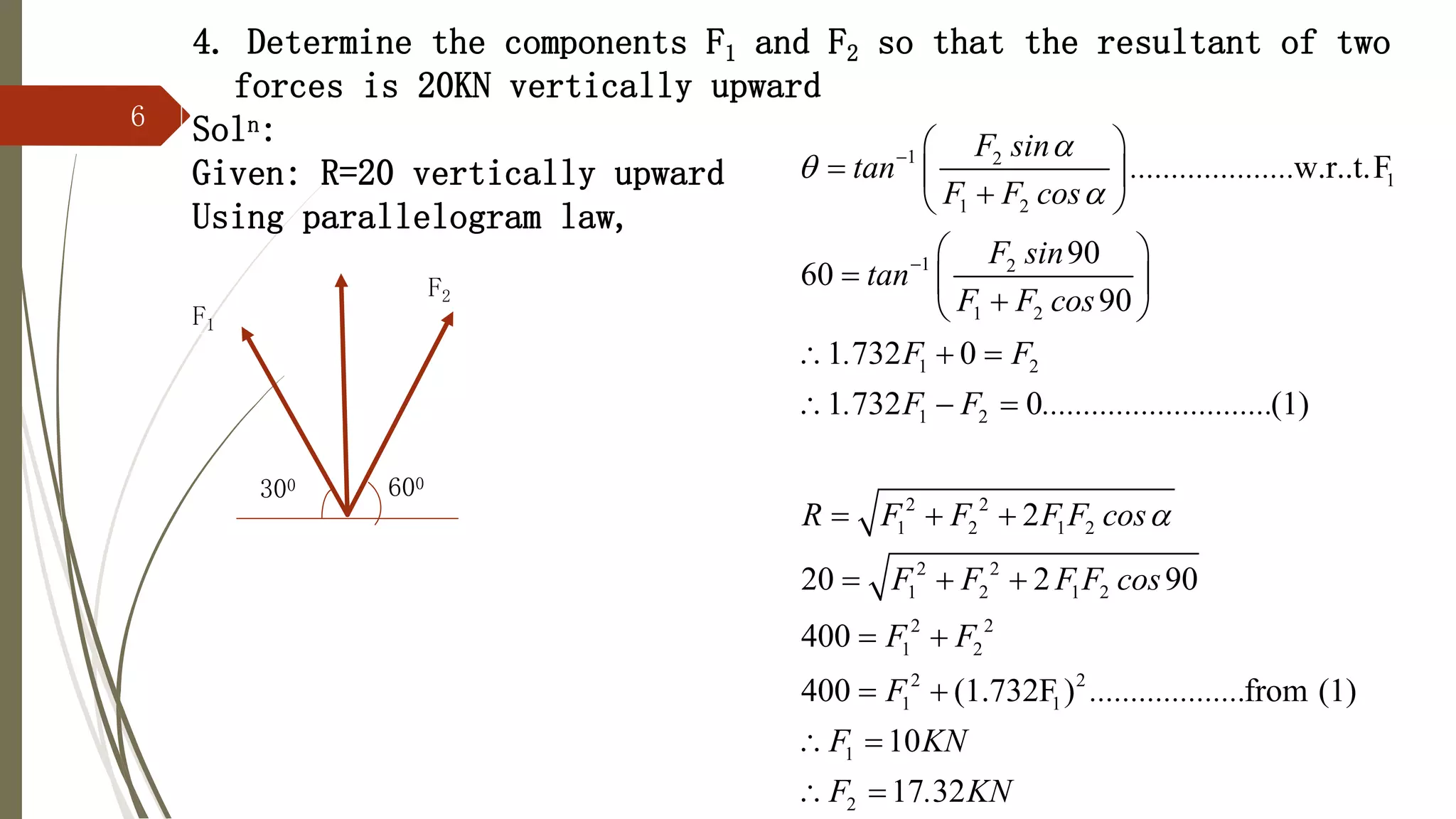
4. Determine the components F1 and F2 so that the resultant of two
forces is 20KN vertically upward
Soln:
Given: R=20 vertically upward
Using parallelogram law,
1 2
1
1 2
1 2
1 2
1 2
1 2
2 2
1 2 1 2
2 2
1 2 1 2
2 2
1 2
w.r..t.F
90
60
90
1 732 0
1 732 0 (1)
2
20 2 90
400
400
F sin
tan ....................
F F cos
F sin
tan
F F cos
. F F
. F F ............................
R F F F F cos
F F F F cos
F F






 
  

 
 
  

 
  
  
  
  
 
 2 2
1 1
1
2
(1.732F ) from (1)
10
17 32
F ...................
F KN
F . KN

 
 
300
F2
F1
600
7
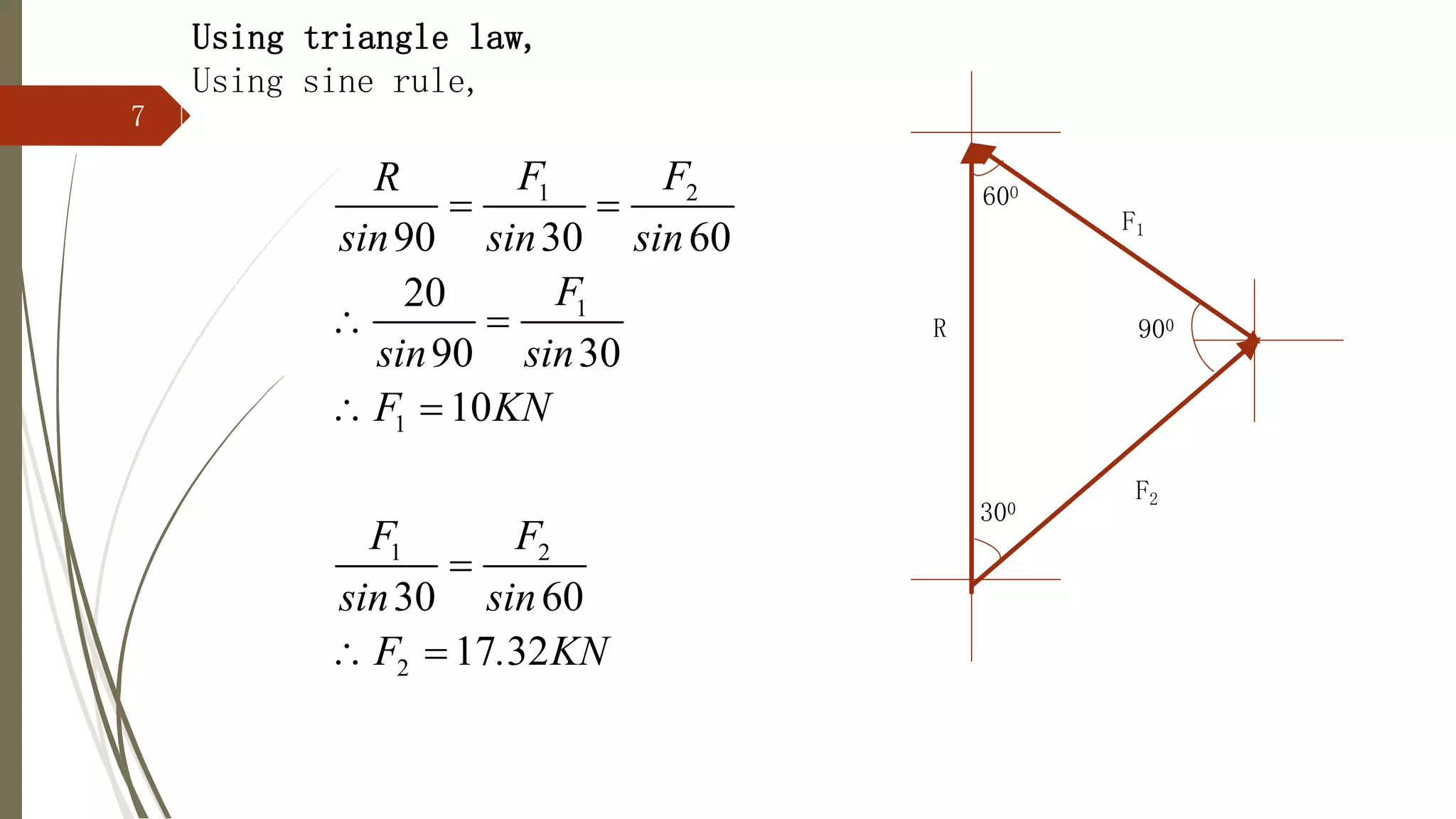
Using triangle law,
Using sine rule,
1 2
1
1
1 2
2
90 30 60
20
90 30
10
30 60
17 32
F F
R
sin sin sin
F
sin sin
F KN
F F
sin sin
F . KN
 
 
 

 
R
F1
F2
900
600
300
8
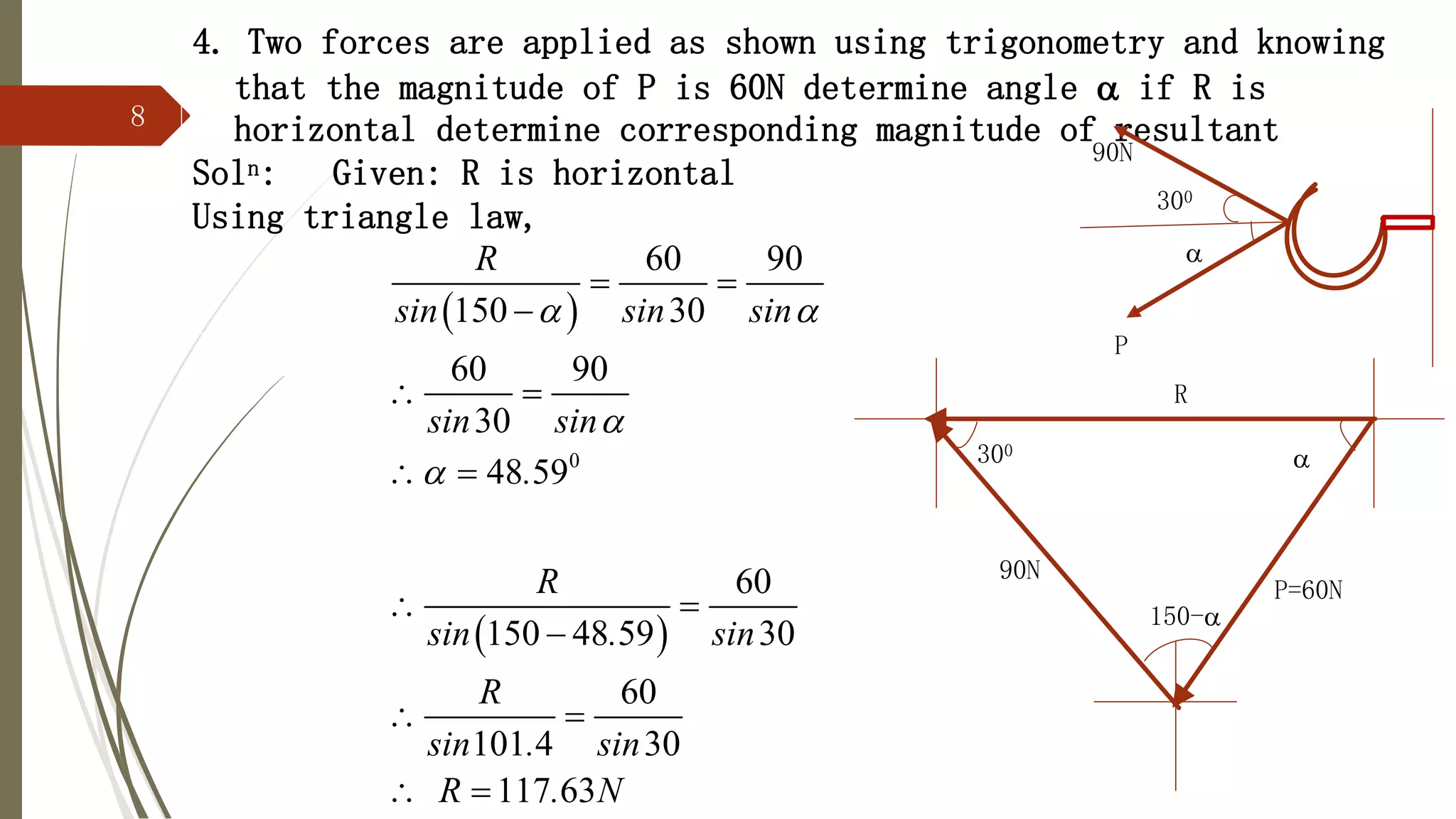
4. Two forces are applied as shown using trigonometry and knowing
that the magnitude of P is 60N determine angle  if R is
horizontal determine corresponding magnitude of resultant
Soln: Given: R is horizontal
Using triangle law,

90N
P
300
R
P=60N
90N
150-

300
 
 
0
60 90
150 30
60 90
30
48 59
60
150 48 59 30
60
101 4 30
117 63
R
sin sin sin
sin sin
.
R
sin . sin
R
sin . sin
R . N
 


 

 
 
 

 
 
9
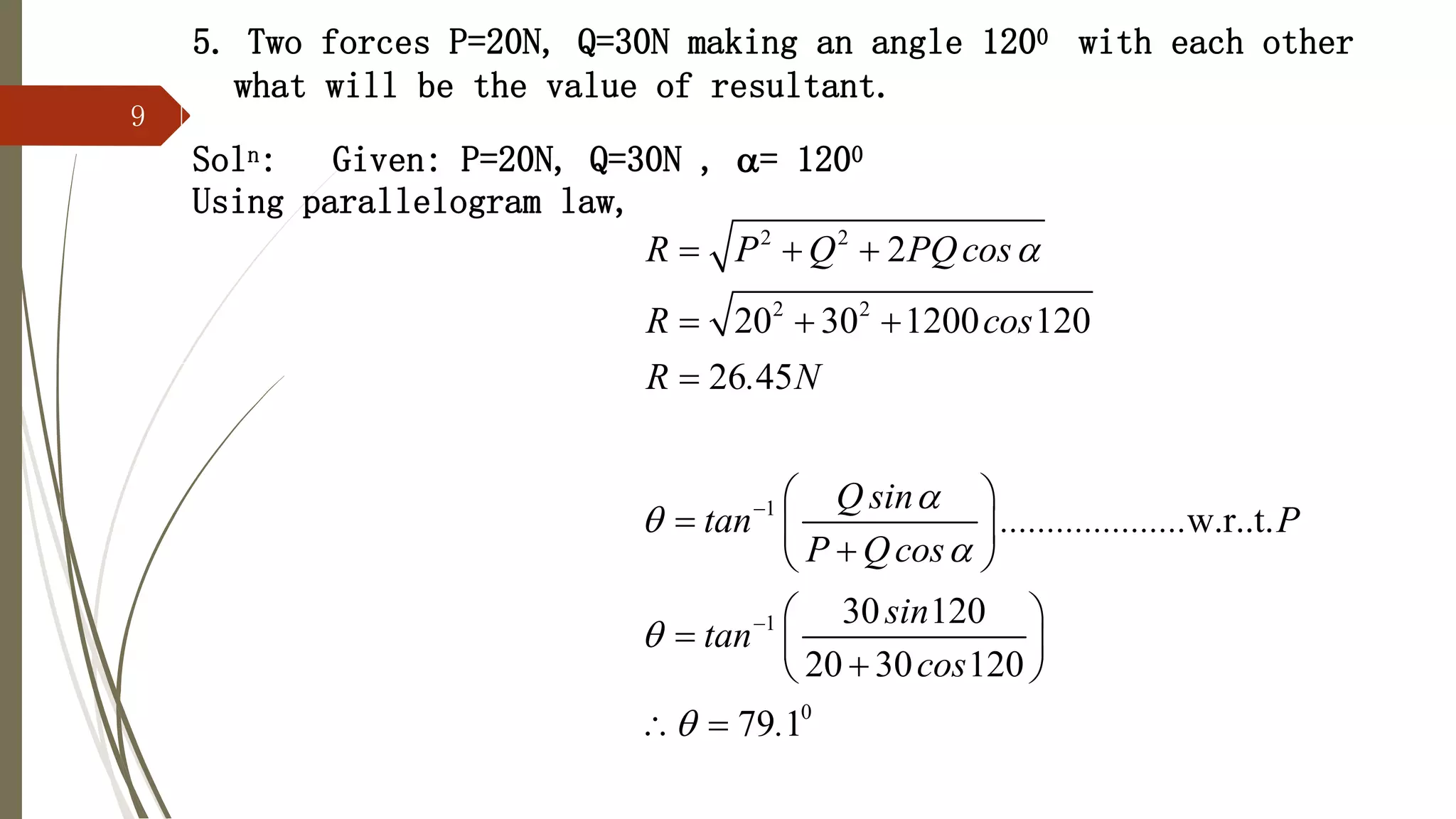
5. Two forces P=20N, Q=30N making an angle 1200 with each other
what will be the value of resultant.
Soln: Given: P=20N, Q=30N , = 1200
Using parallelogram law,
2 2
2 2
1
1
0
2
20 30 1200 120
26 45
w.r..t.
30 120
20 30 120
79 1
R P Q PQcos
R cos
R . N
Q sin
tan .................... P
P Qcos
sin
tan
cos
.








  
  

 
  

 
 
  

 
 
10

Numericals on resultant of con-current force system.pdf

  • 1.
    Sanjivani Rural EducationSociety’s Sanjivani College of Engineering, Kopargaon (An Autonomous Institute, Affiliated to Savitribai Phule Pune University, Pune) NAAC ‘A’ Grade Accredited , ISO 9001:2015 certified Subject: Engineering Mechanics Unit 1: Resultant of Con-current force system (Numericals on Triangle Law and Parallelogram Law) Presented By, Miss. Shinde Bharti M. (Assistant Professor) Department of Civil Engineering Email- shindebharticivil@sanjivani.org.in 1
  • 2.
    2 1. A disabledautomobile is pulled by means of ropes subjected to the forces as shown. Determine the magnitude and direction of resultant using triangle law and parallelogram law. Soln: P=4KN, Q=2KN Using parallelogram law, 300 2KN 4KN 250 A B C 2 2 2 2 1 1 0 0 2 4 2 2x 4x 2 55 5 4 w.r..t.P 2 55 17 65 4 2 55 Angle w.r.t. X-axis=30-17.65=12.34 R P Q PQcos R cos R . KN Q sin tan .................... P Qcos sin tan . cos                                
  • 3.
    3 Using triangle law, Usingsine rule,               0 4 2 125 25 30 4 2 25 30 4 30x cos 30x 2 25x cos 25x 1 155 5 2766 12 34 4 125 25 4 125 37 34 5 4 R sin sin sin sin sin sin cos sin sin cos sin . cos . sin . R sin sin R sin sin . R . KN                                  300   4KN 2KN R 300 250 1250 25+ 30- 12.340 A 5.4 KN
  • 4.
    4 2. Determine themagnitude and direction of two forces as shown in fig. Take P=100N. Soln: Using parallelogram law, 1 1 2 2 2 2 w.r..t.P 45 15 100 45 45 15 100 45 26 79 0 1894 0 707 51 76 2 100 51 76 2x100x51 76 45 141 41 Q sin tan .................... P Qcos Q sin tan Qcos Q sin tan Qcos . . Q . Q Q . N R P Q PQcos R . . cos R . N                                      300 P Q 150 R
  • 5.
    5 Using triangle law, Usingsine rule, 100 135 30 15 100 135 30 141 42 100 30 15 51 76 R Q sin sin sin R sin sin R . N Q sin sin Q . N          R Q P=100N 1350 300 150 150 300
  • 6.
    6 4. Determine thecomponents F1 and F2 so that the resultant of two forces is 20KN vertically upward Soln: Given: R=20 vertically upward Using parallelogram law, 1 2 1 1 2 1 2 1 2 1 2 1 2 2 2 1 2 1 2 2 2 1 2 1 2 2 2 1 2 w.r..t.F 90 60 90 1 732 0 1 732 0 (1) 2 20 2 90 400 400 F sin tan .................... F F cos F sin tan F F cos . F F . F F ............................ R F F F F cos F F F F cos F F                                      2 2 1 1 1 2 (1.732F ) from (1) 10 17 32 F ................... F KN F . KN      300 F2 F1 600
  • 7.
    7 Using triangle law, Usingsine rule, 1 2 1 1 1 2 2 90 30 60 20 90 30 10 30 60 17 32 F F R sin sin sin F sin sin F KN F F sin sin F . KN          R F1 F2 900 600 300
  • 8.
    8 4. Two forcesare applied as shown using trigonometry and knowing that the magnitude of P is 60N determine angle  if R is horizontal determine corresponding magnitude of resultant Soln: Given: R is horizontal Using triangle law,  90N P 300 R P=60N 90N 150-  300     0 60 90 150 30 60 90 30 48 59 60 150 48 59 30 60 101 4 30 117 63 R sin sin sin sin sin . R sin . sin R sin . sin R . N                  
  • 9.
    9 5. Two forcesP=20N, Q=30N making an angle 1200 with each other what will be the value of resultant. Soln: Given: P=20N, Q=30N , = 1200 Using parallelogram law, 2 2 2 2 1 1 0 2 20 30 1200 120 26 45 w.r..t. 30 120 20 30 120 79 1 R P Q PQcos R cos R . N Q sin tan .................... P P Qcos sin tan cos .                                 
  • 10.