Sanjivani Rural Education Society’s
Sanjivani College of Engineering, Kopargaon
(An Autonomous Institute, Affiliated to Savitribai Phule Pune University, Pune)
NAAC ‘A’ Grade Accredited , ISO 9001:2015 certified
Subject: Advanced Concrete Technology
Properties of concrete
Presented By,
Miss. Shinde Bharti M. (Assistant Professor)
Department of Structural Engineering
Email- shindebhartist@sanjivani.org.in
1
Ingredients of Concrete
 Cement
 Aggregate
 Sand
 Water
2
3
Cement
Manufacturing of cement
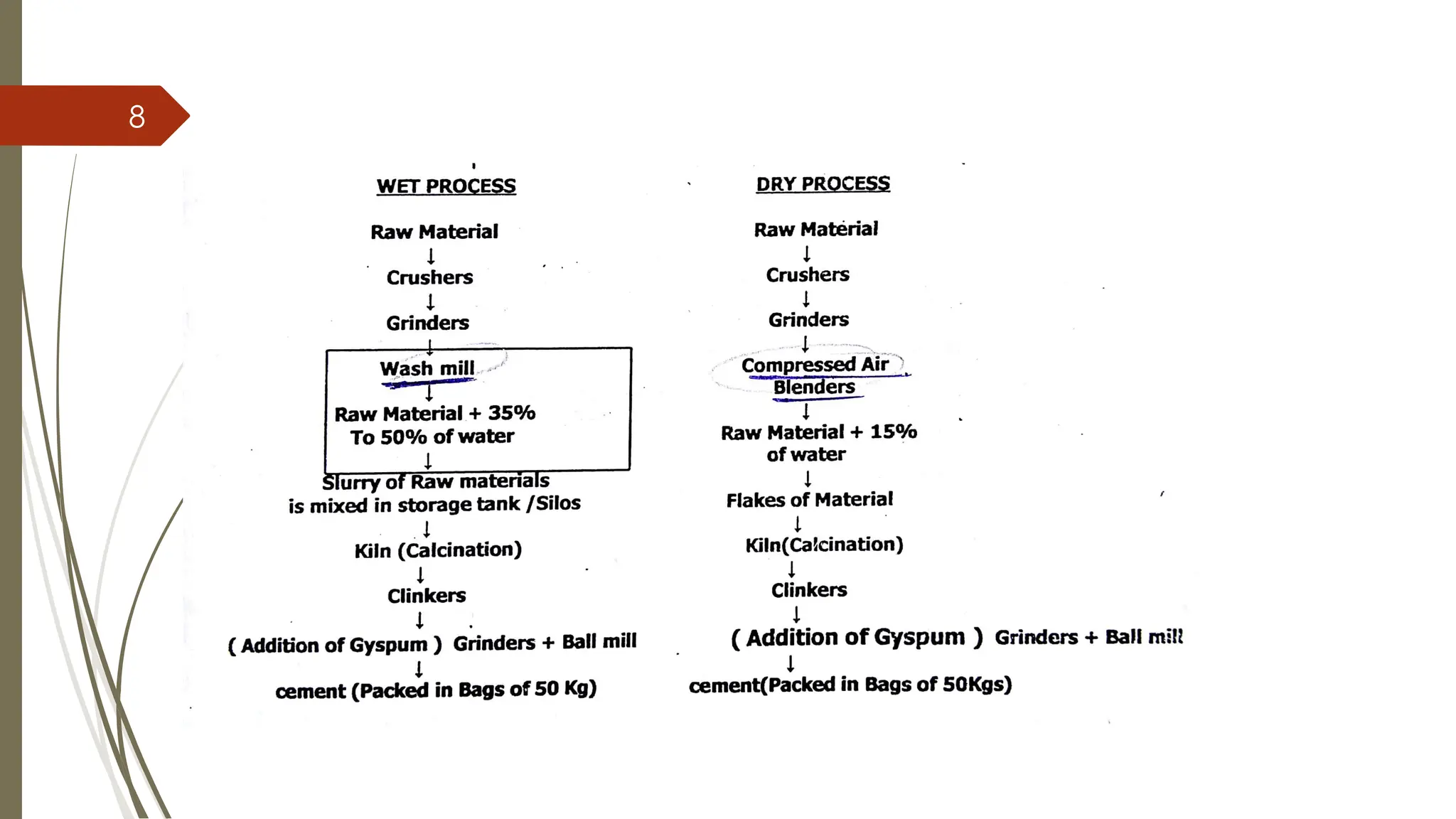
Wet Process
Dry Process
4
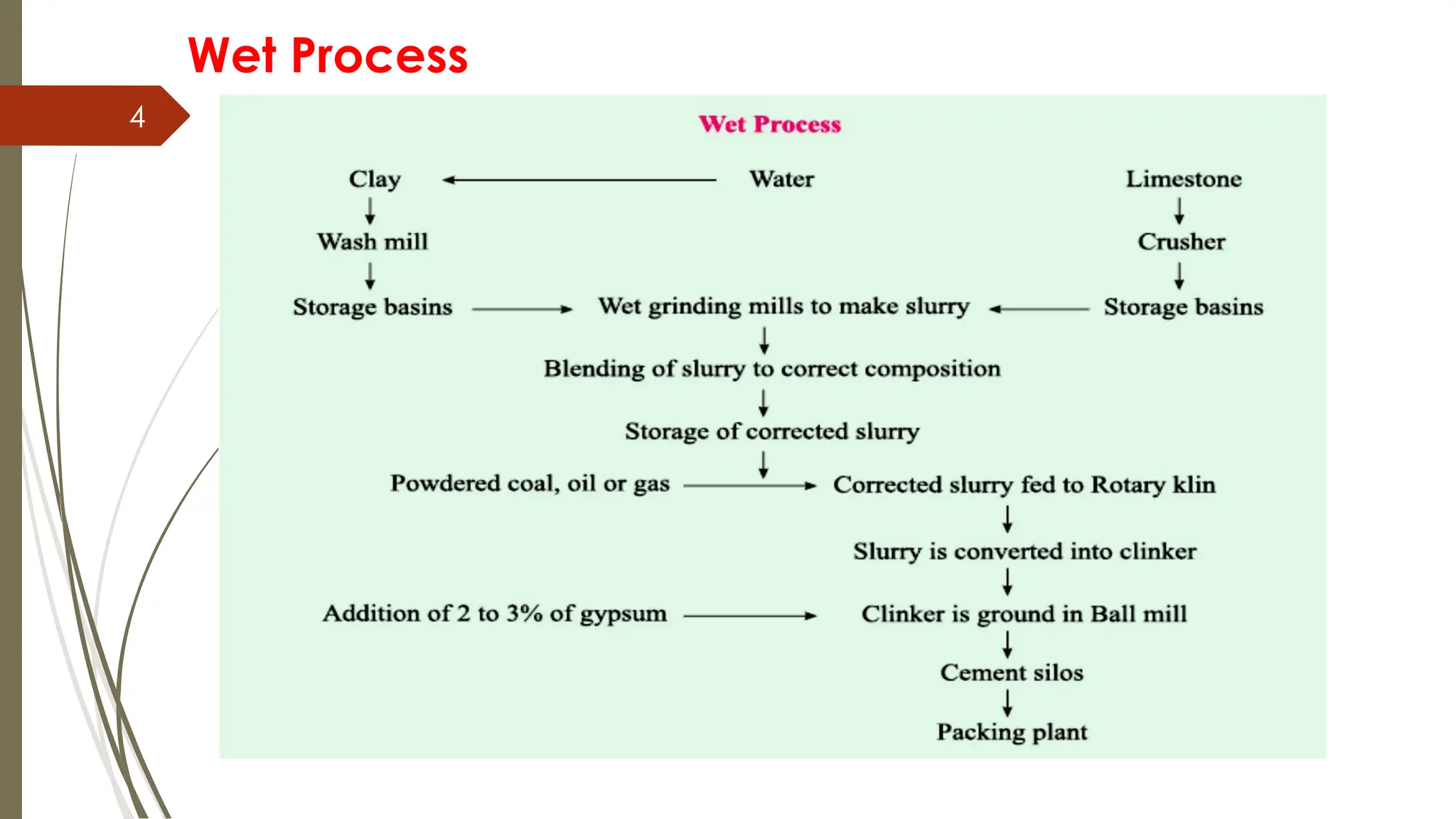
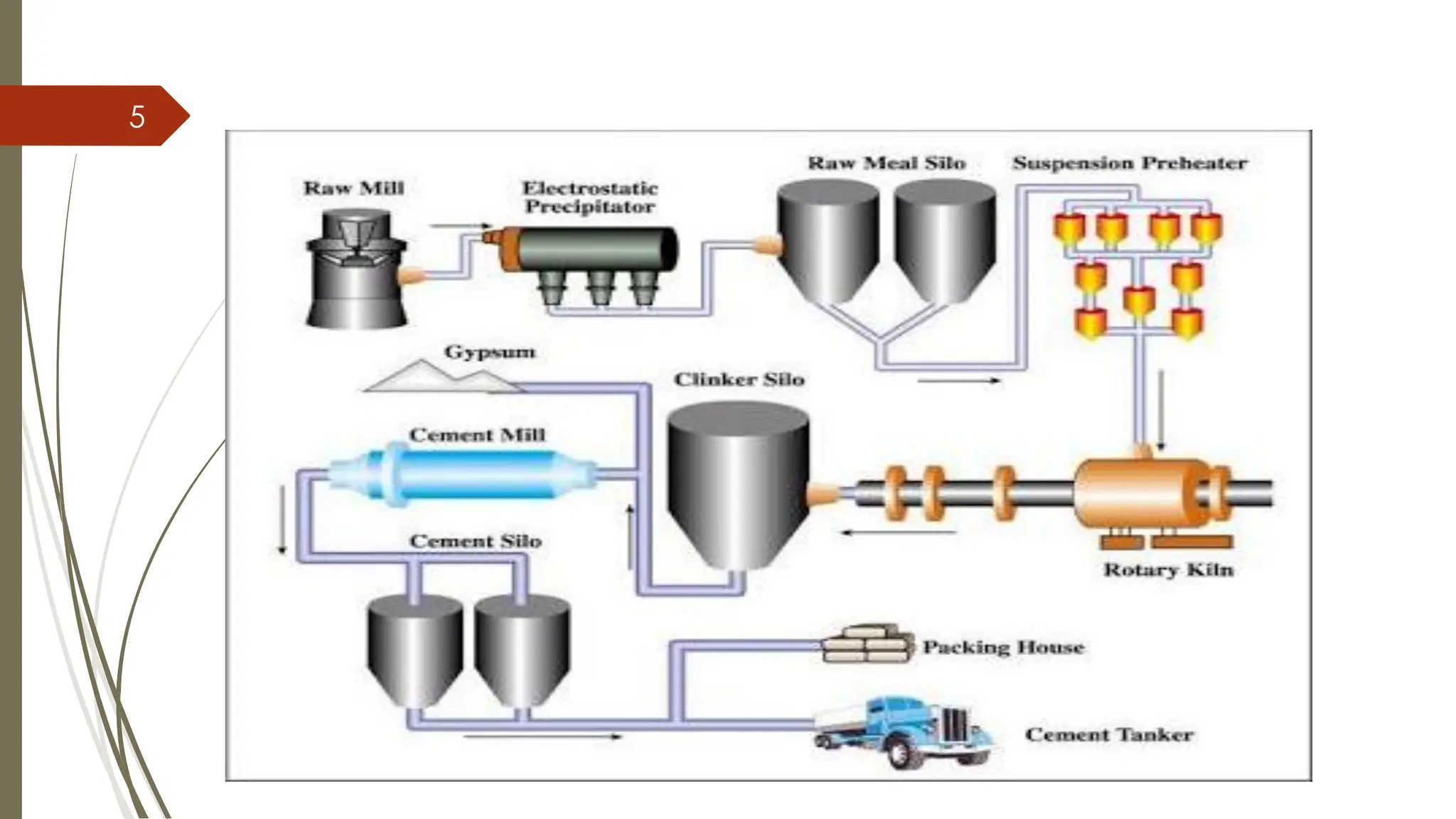
Wet Process
5
6
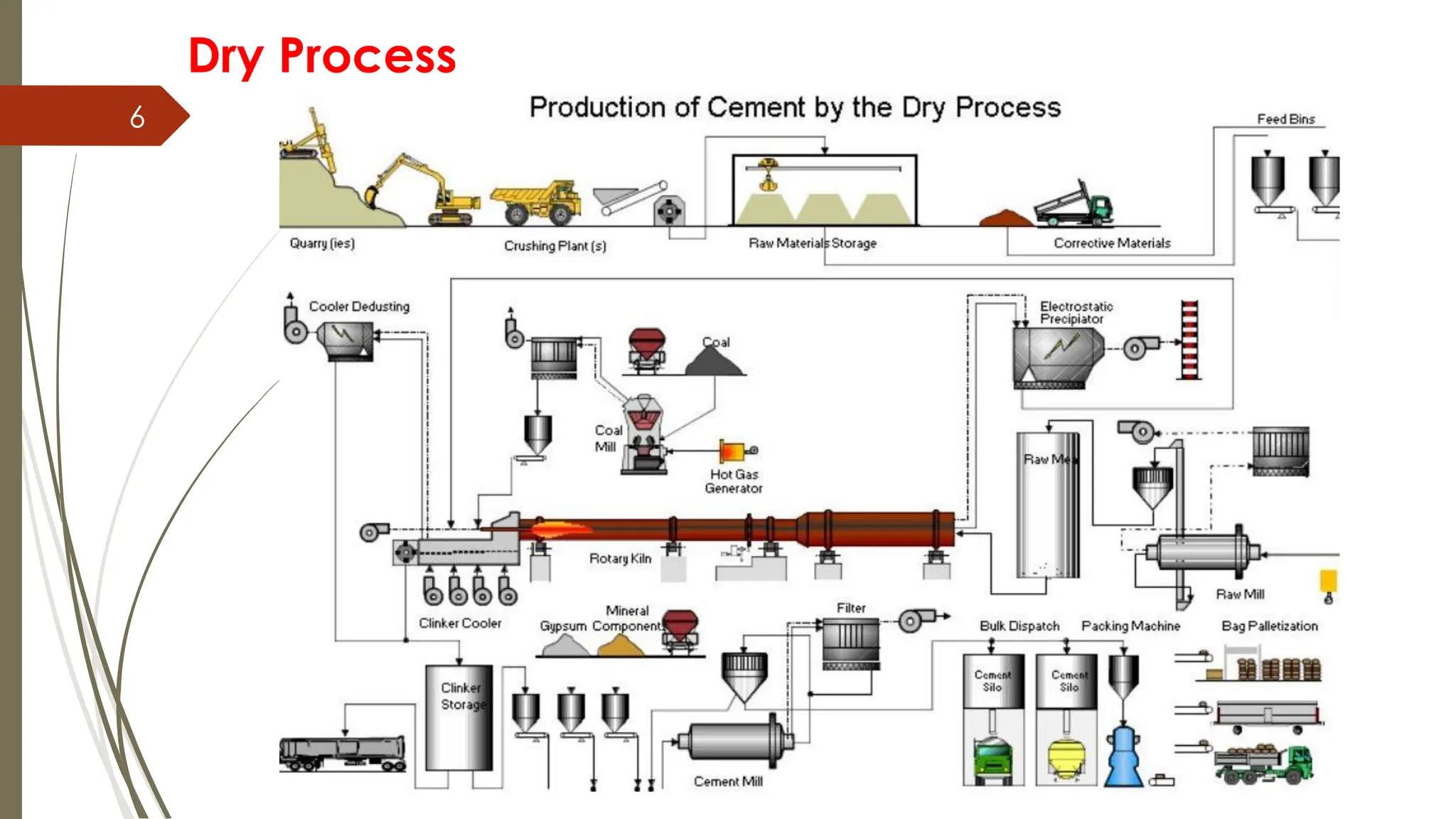
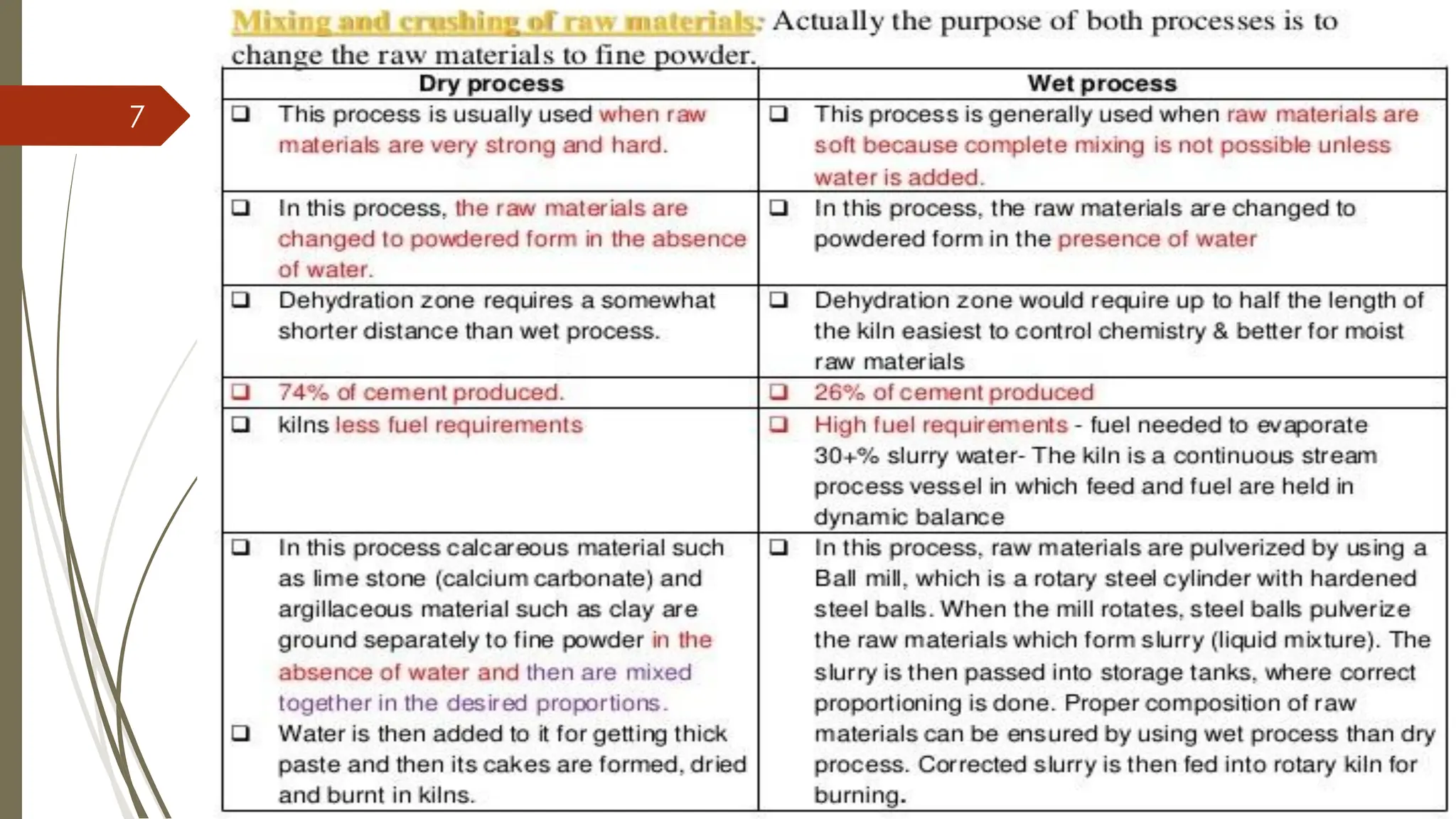
Dry Process
7
8
9
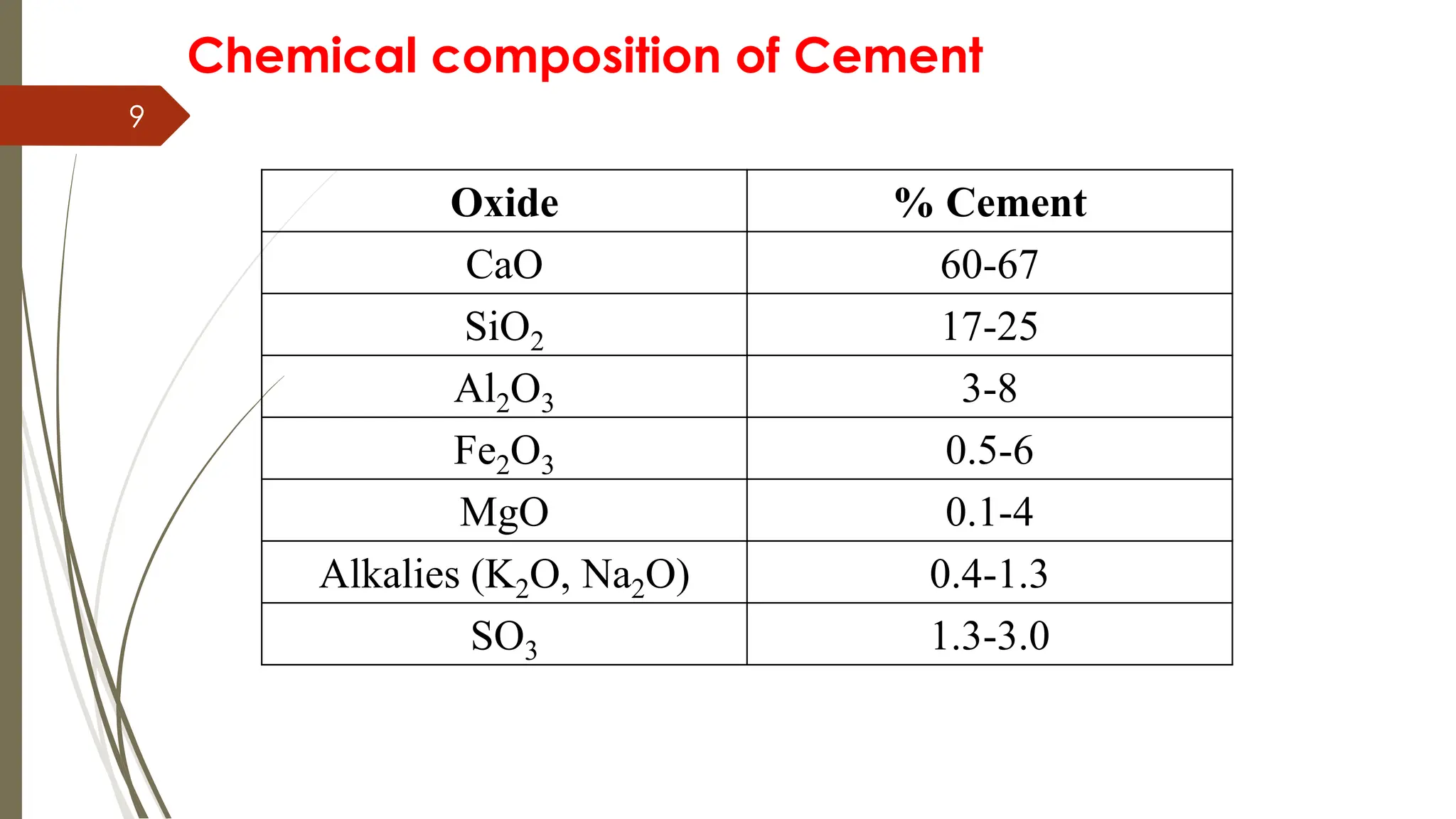
Chemical composition of Cement
Oxide % Cement
CaO 60-67
SiO2 17-25
Al2O3 3-8
Fe2O3 0.5-6
MgO 0.1-4
Alkalies (K2O, Na2O) 0.4-1.3
SO3 1.3-3.0
10
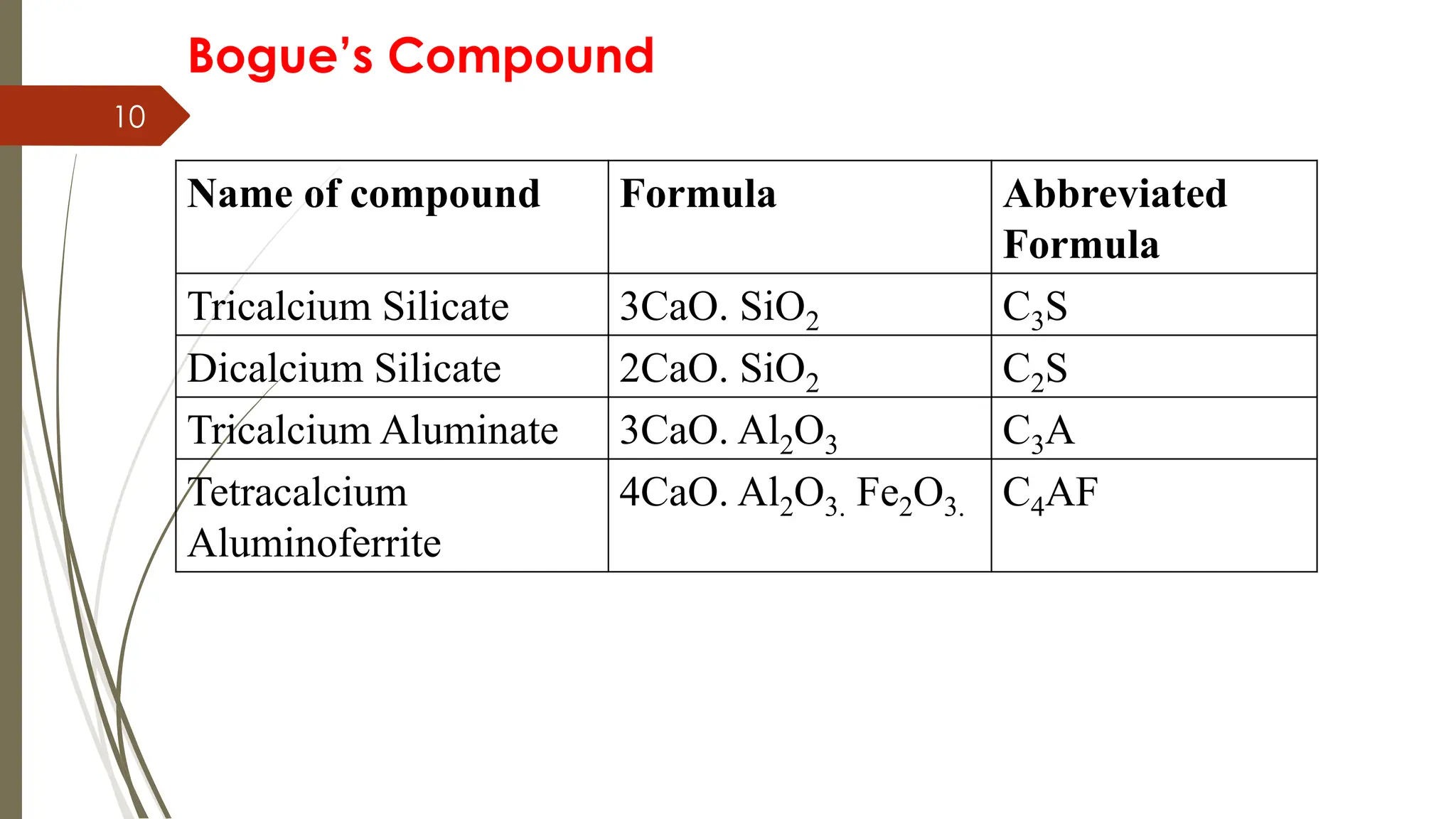
Bogue’s Compound
Name of compound Formula Abbreviated
Formula
Tricalcium Silicate 3CaO. SiO2 C3S
Dicalcium Silicate 2CaO. SiO2 C2S
Tricalcium Aluminate 3CaO. Al2O3 C3A
Tetracalcium
Aluminoferrite
4CaO. Al2O3. Fe2O3. C4AF
11
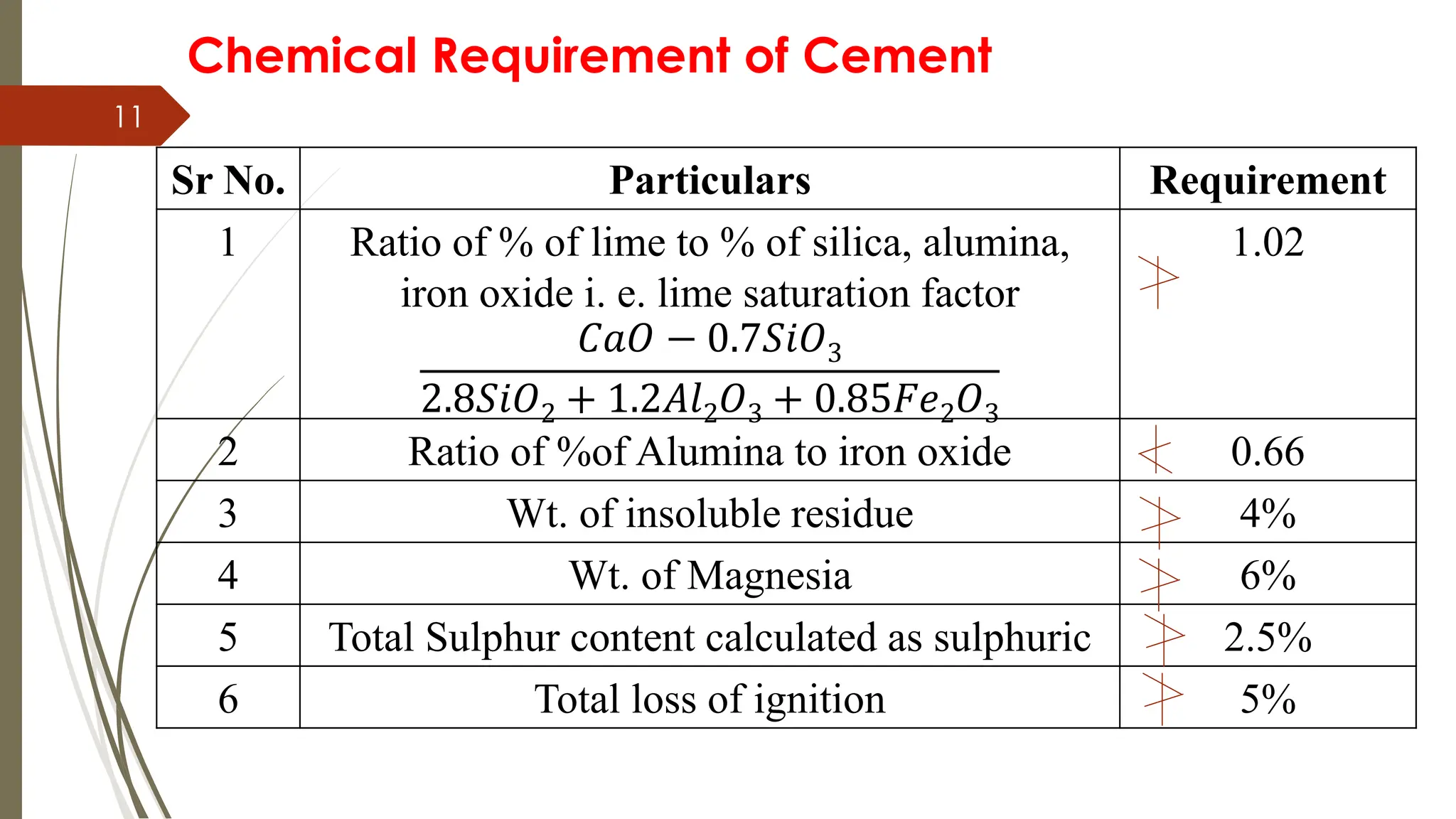
Chemical Requirement of Cement
Sr No. Particulars Requirement
1 Ratio of % of lime to % of silica, alumina,
iron oxide i. e. lime saturation factor
𝐶𝑎𝑂 − 0.7𝑆𝑖𝑂3
2.8𝑆𝑖𝑂2 + 1.2𝐴𝑙2𝑂3 + 0.85𝐹𝑒2𝑂3
1.02
2 Ratio of %of Alumina to iron oxide 0.66
3 Wt. of insoluble residue 4%
4 Wt. of Magnesia 6%
5 Total Sulphur content calculated as sulphuric 2.5%
6 Total loss of ignition 5%
12
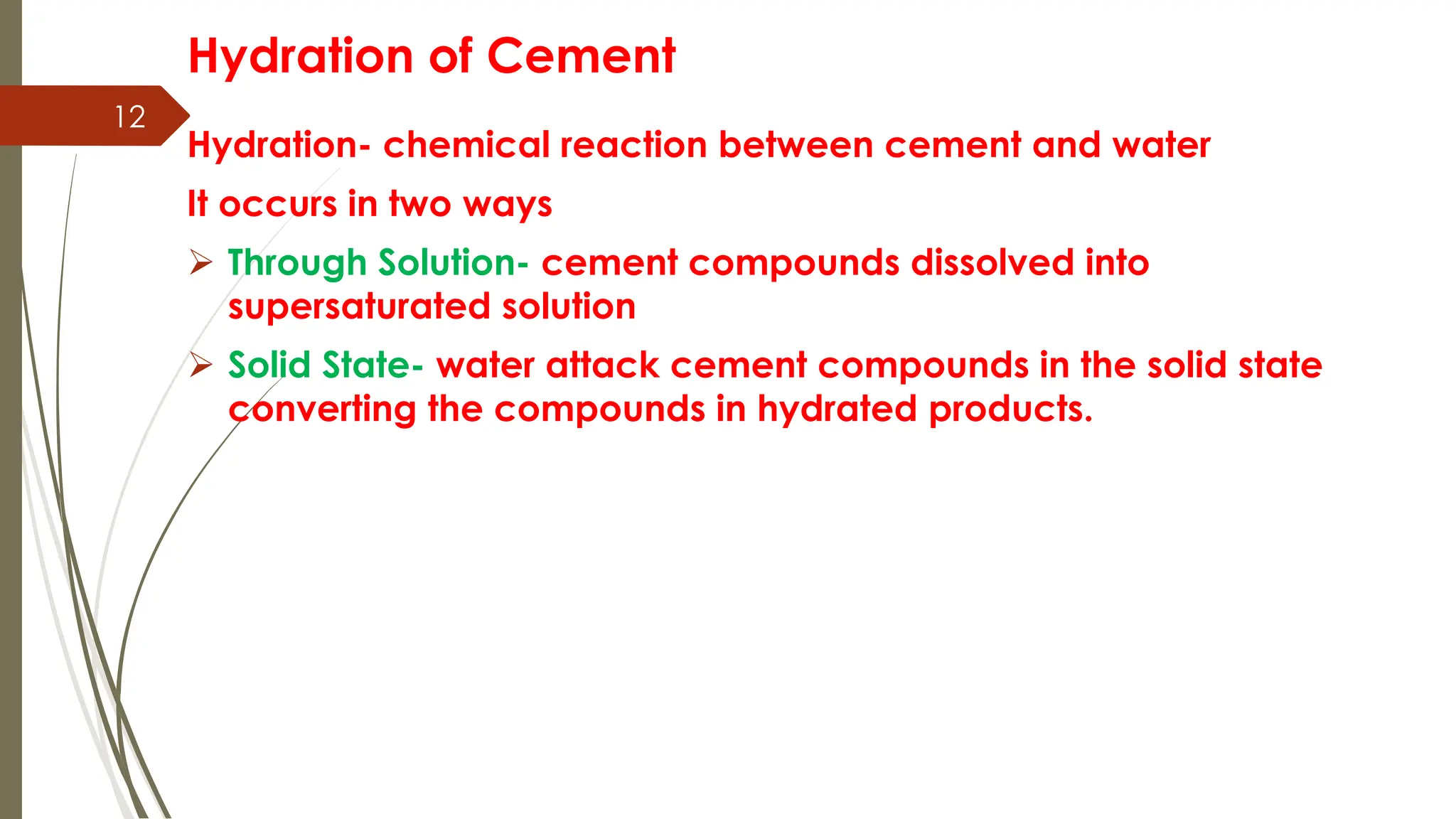
Hydration of Cement
Hydration- chemical reaction between cement and water
It occurs in two ways
 Through Solution- cement compounds dissolved into
supersaturated solution
 Solid State- water attack cement compounds in the solid state
converting the compounds in hydrated products.
13
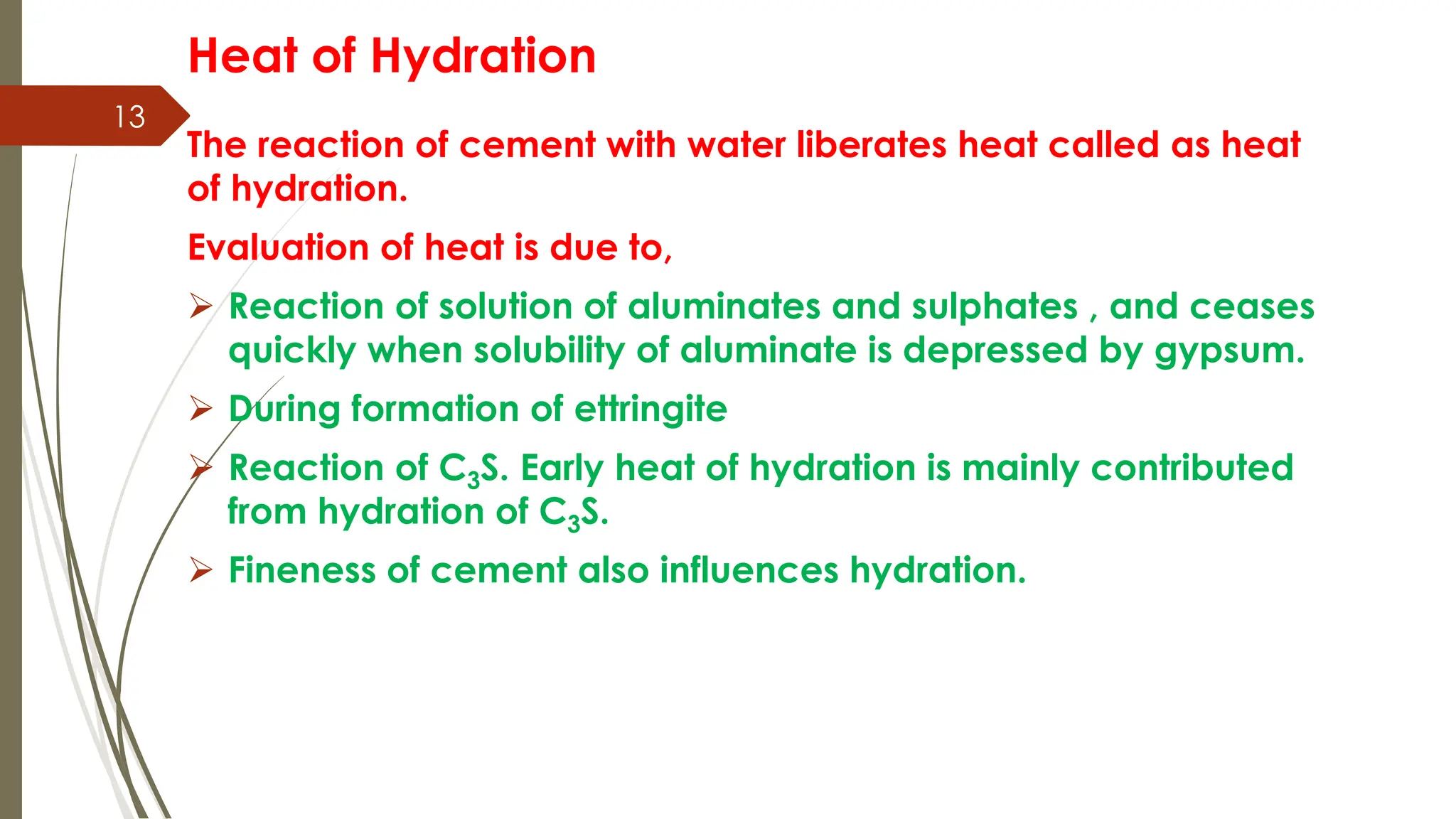
Heat of Hydration
The reaction of cement with water liberates heat called as heat
of hydration.
Evaluation of heat is due to,
 Reaction of solution of aluminates and sulphates , and ceases
quickly when solubility of aluminate is depressed by gypsum.
 During formation of ettringite
 Reaction of C3S. Early heat of hydration is mainly contributed
from hydration of C3S.
 Fineness of cement also influences hydration.
14
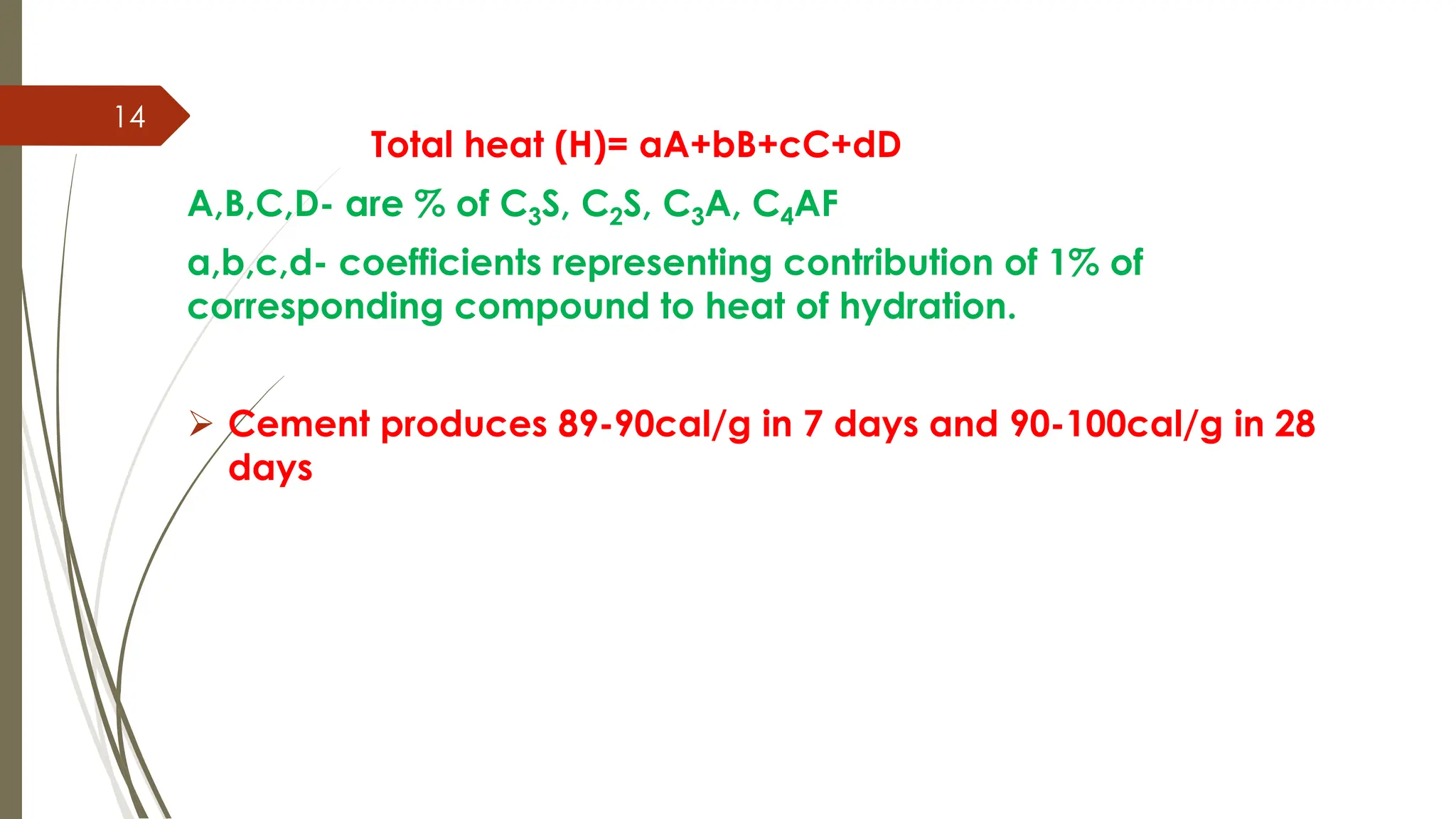
Total heat (H)= aA+bB+cC+dD
A,B,C,D- are % of C3S, C2S, C3A, C4AF
a,b,c,d- coefficients representing contribution of 1% of
corresponding compound to heat of hydration.
 Cement produces 89-90cal/g in 7 days and 90-100cal/g in 28
days
15
16 Calcium Slicate Hydrate
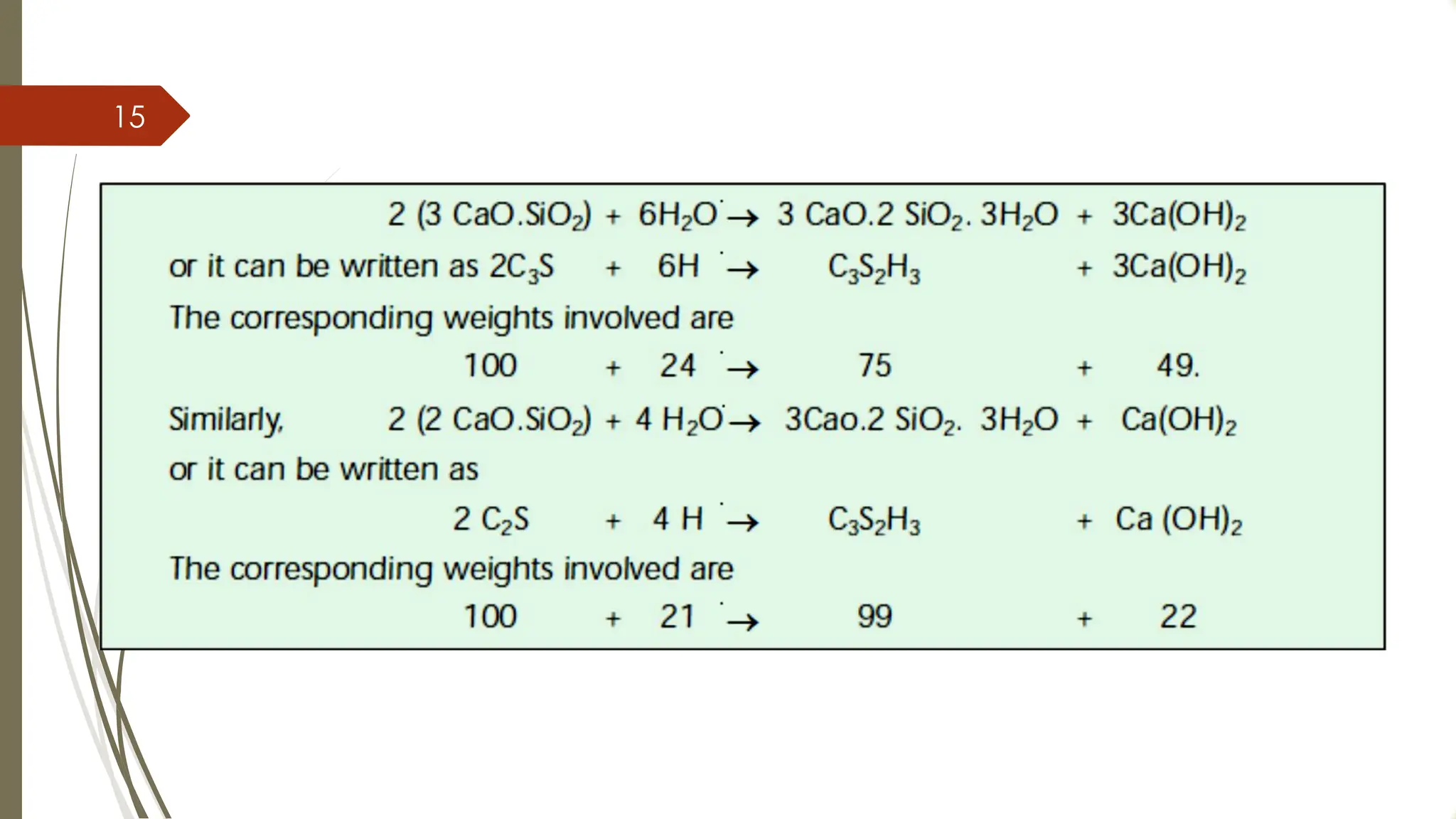
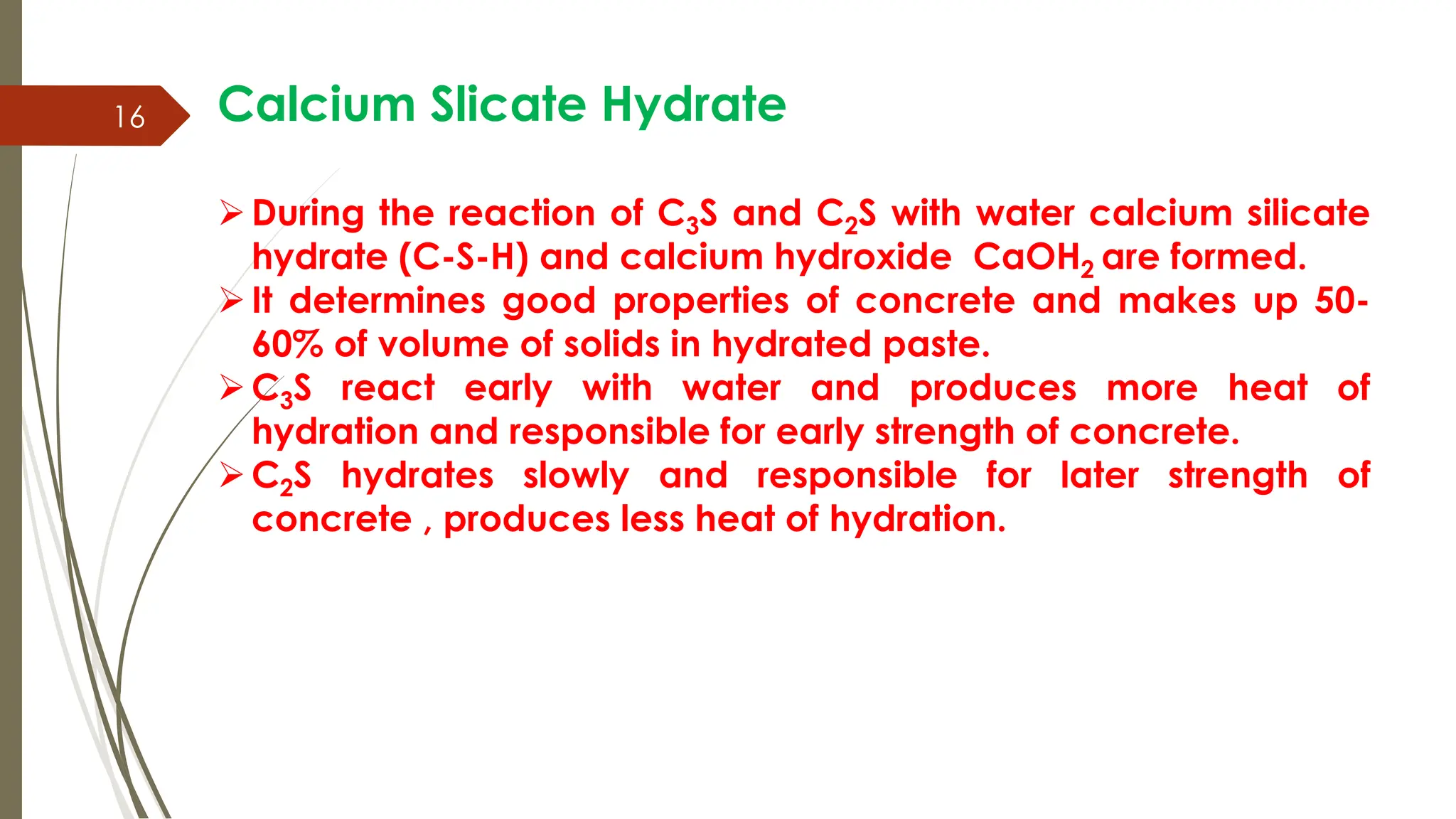
During the reaction of C3S and C2S with water calcium silicate
hydrate (C-S-H) and calcium hydroxide CaOH2 are formed.
It determines good properties of concrete and makes up 50-
60% of volume of solids in hydrated paste.
C3S react early with water and produces more heat of
hydration and responsible for early strength of concrete.
C2S hydrates slowly and responsible for later strength of
concrete , produces less heat of hydration.
17 Calcium Hydroxide (Hydration of C3S and C2S)
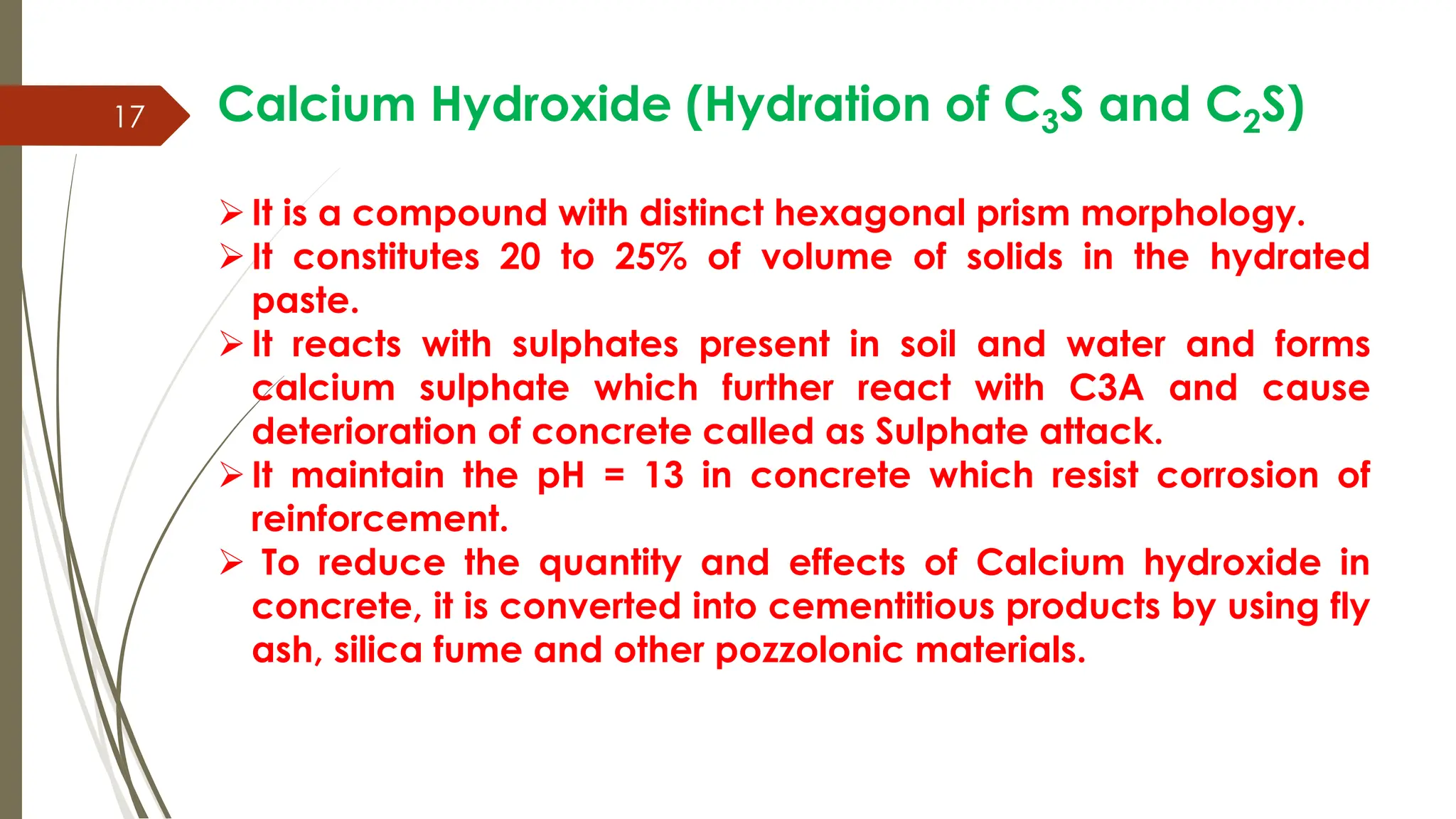
It is a compound with distinct hexagonal prism morphology.
It constitutes 20 to 25% of volume of solids in the hydrated
paste.
It reacts with sulphates present in soil and water and forms
calcium sulphate which further react with C3A and cause
deterioration of concrete called as Sulphate attack.
It maintain the pH = 13 in concrete which resist corrosion of
reinforcement.
 To reduce the quantity and effects of Calcium hydroxide in
concrete, it is converted into cementitious products by using fly
ash, silica fume and other pozzolonic materials.
18 Calcium Aluminate Hydrates
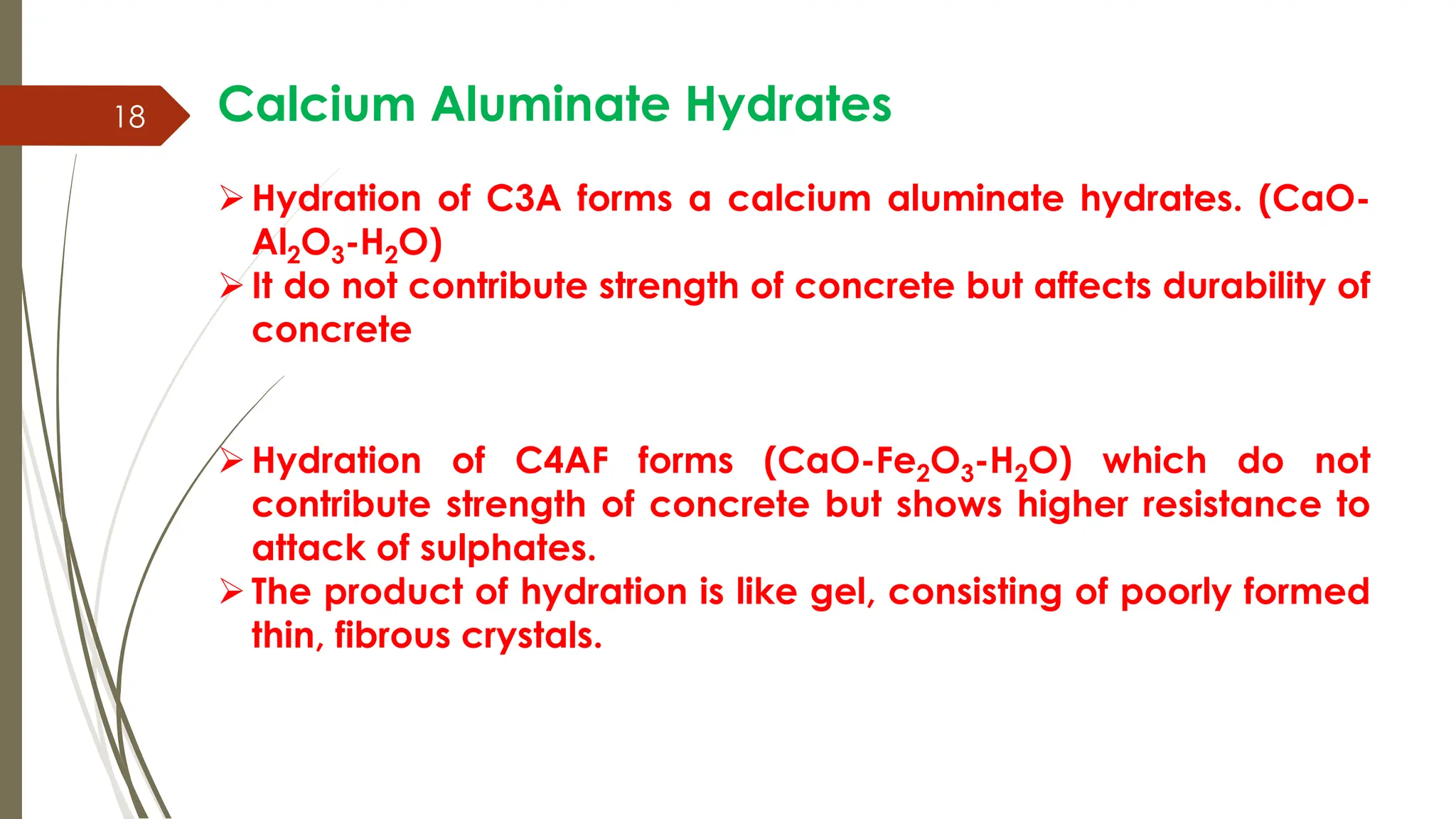
Hydration of C3A forms a calcium aluminate hydrates. (CaO-
Al2O3-H2O)
It do not contribute strength of concrete but affects durability of
concrete
Hydration of C4AF forms (CaO-Fe2O3-H2O) which do not
contribute strength of concrete but shows higher resistance to
attack of sulphates.
The product of hydration is like gel, consisting of poorly formed
thin, fibrous crystals.
19
Water Requirement of Hydration
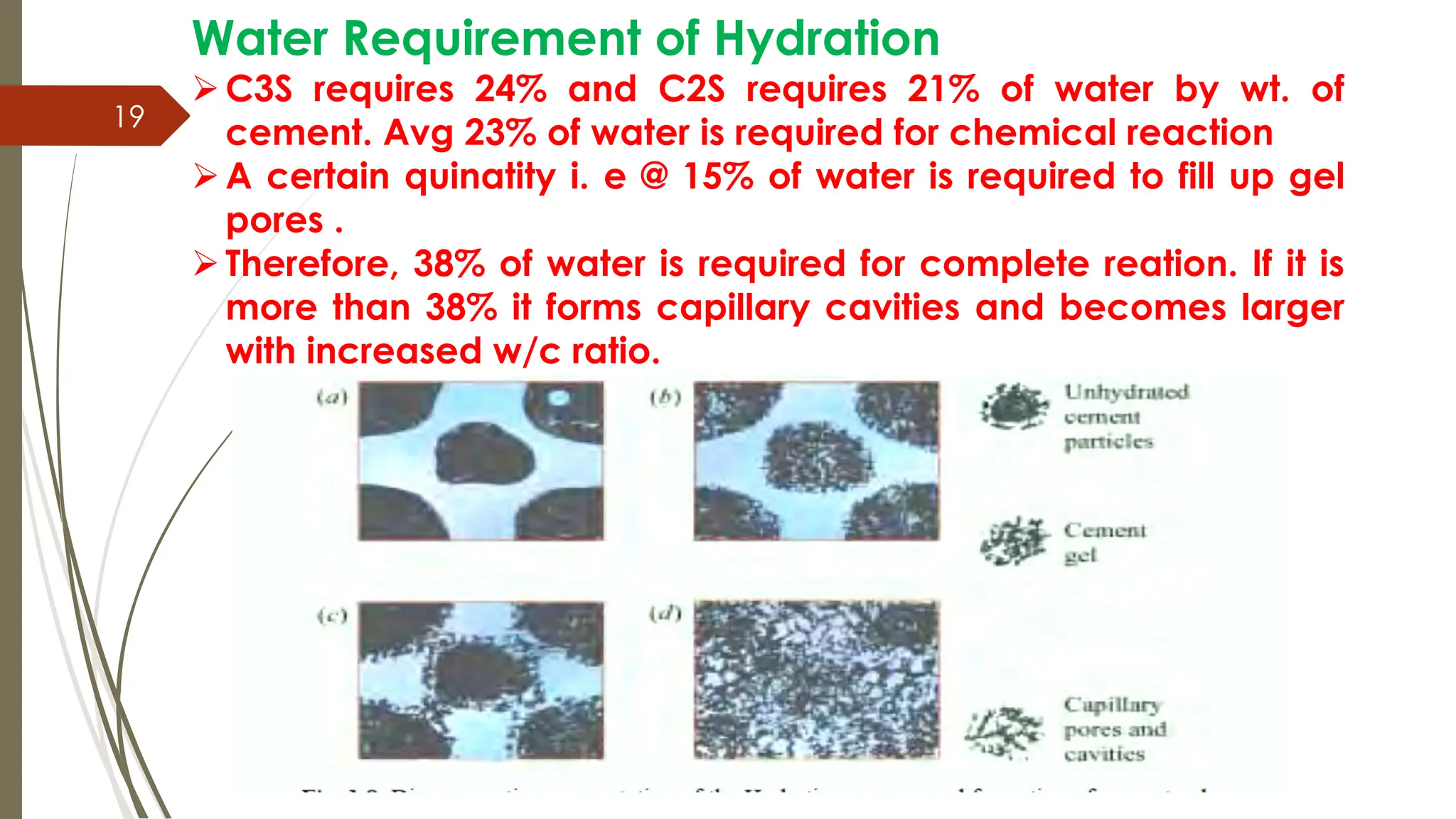
C3S requires 24% and C2S requires 21% of water by wt. of
cement. Avg 23% of water is required for chemical reaction
A certain quinatity i. e @ 15% of water is required to fill up gel
pores .
Therefore, 38% of water is required for complete reation. If it is
more than 38% it forms capillary cavities and becomes larger
with increased w/c ratio.
20
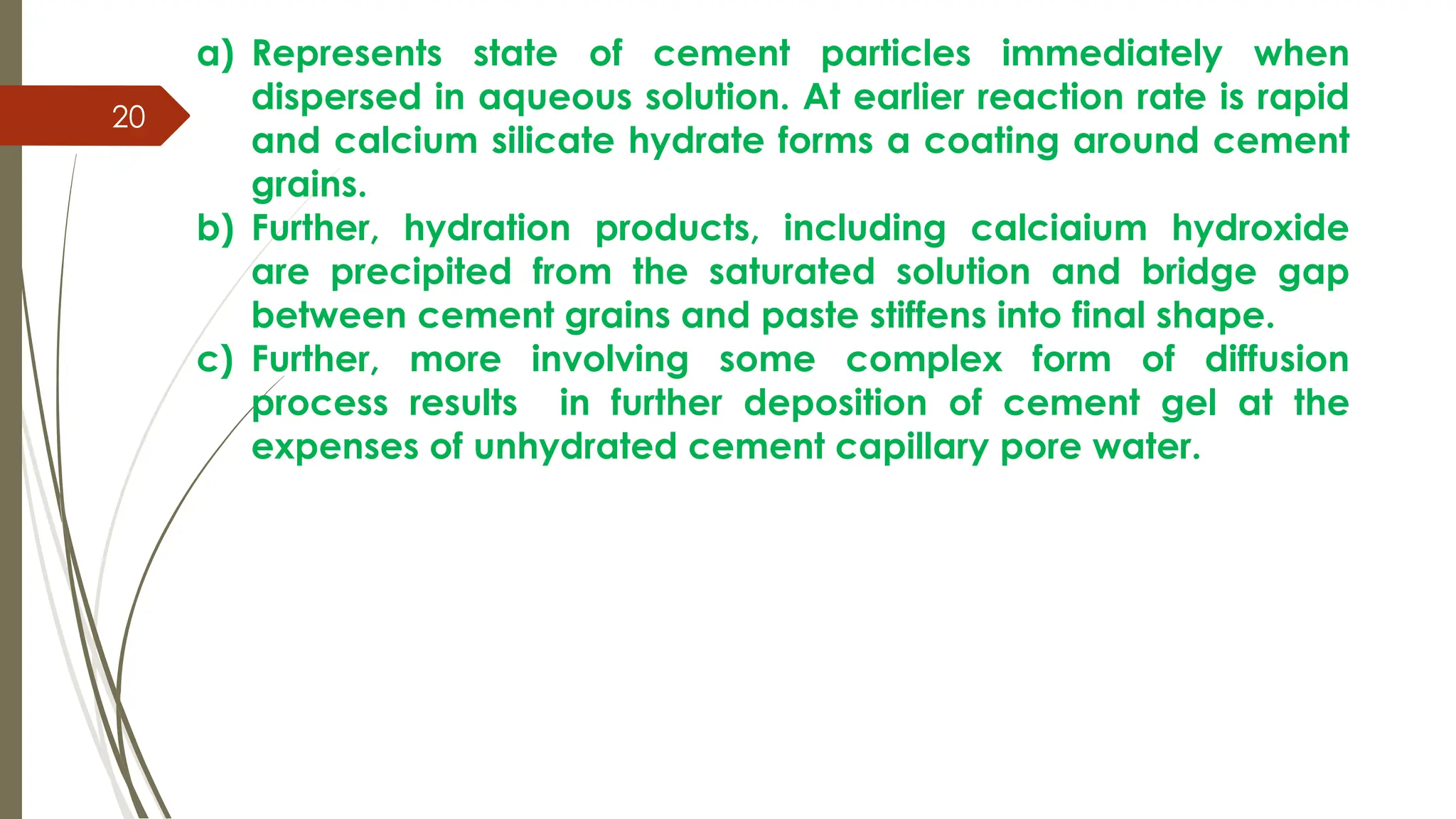
a) Represents state of cement particles immediately when
dispersed in aqueous solution. At earlier reaction rate is rapid
and calcium silicate hydrate forms a coating around cement
grains.
b) Further, hydration products, including calciaium hydroxide
are precipited from the saturated solution and bridge gap
between cement grains and paste stiffens into final shape.
c) Further, more involving some complex form of diffusion
process results in further deposition of cement gel at the
expenses of unhydrated cement capillary pore water.
21
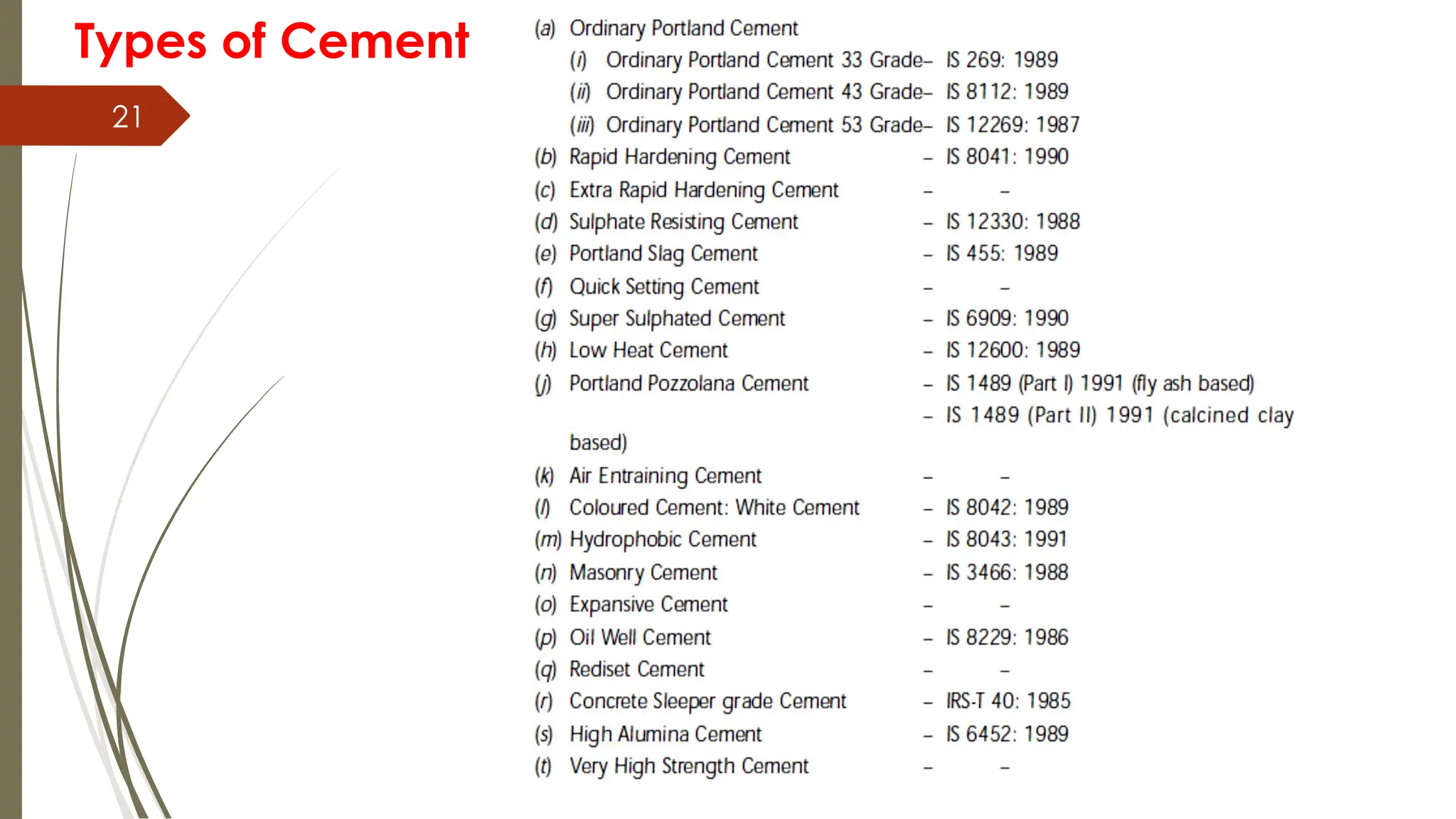
Types of Cement
22
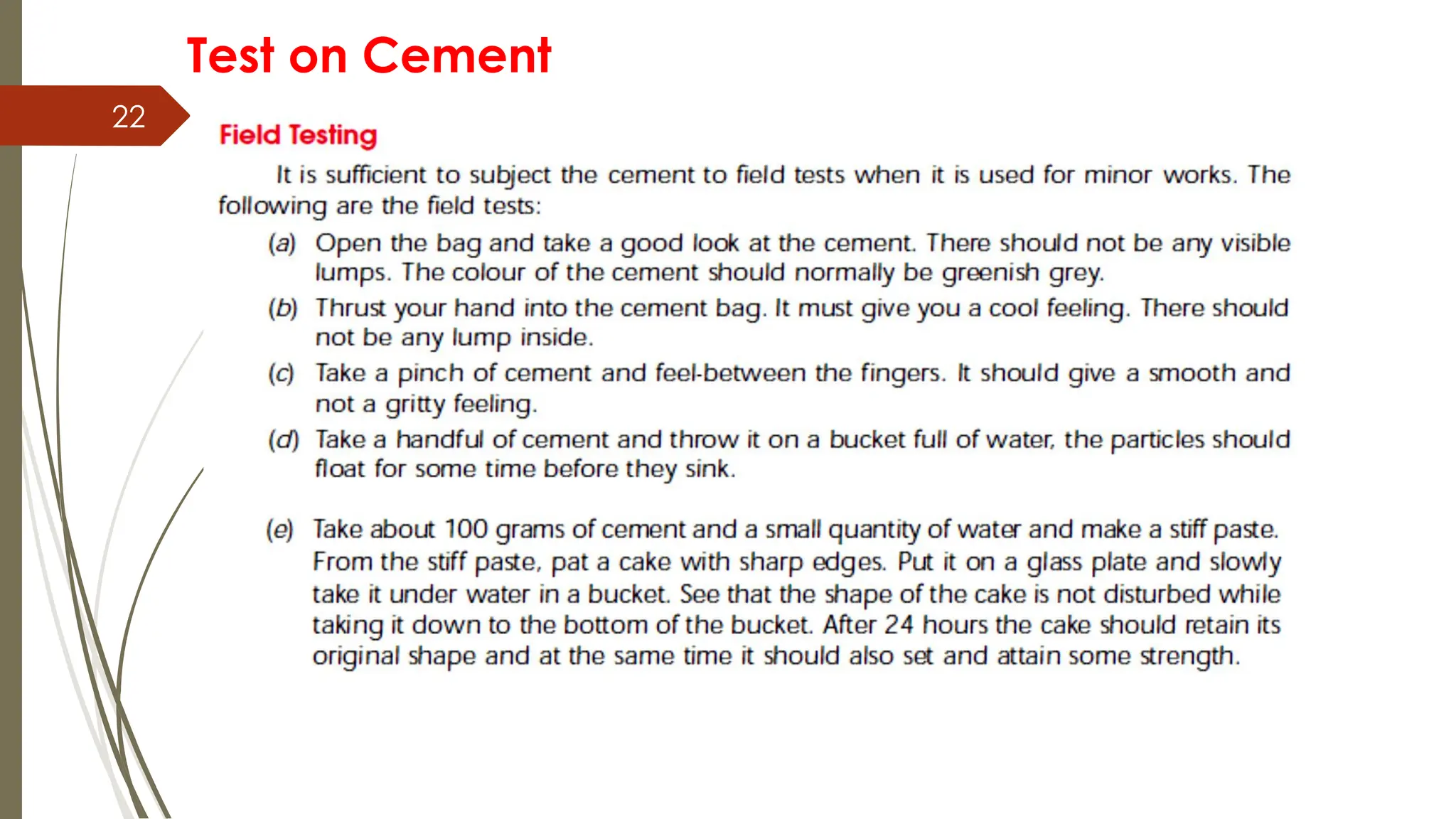
Test on Cement
23
Laboratory Test on Cement
 Finess test
 Setting Time test
 Soundness Test
 Strength Test
 Heat of hydration test
 Chemical composition test

Advanced Concrete Technology- Properties of Concrete

  • 1.
    Sanjivani Rural EducationSociety’s Sanjivani College of Engineering, Kopargaon (An Autonomous Institute, Affiliated to Savitribai Phule Pune University, Pune) NAAC ‘A’ Grade Accredited , ISO 9001:2015 certified Subject: Advanced Concrete Technology Properties of concrete Presented By, Miss. Shinde Bharti M. (Assistant Professor) Department of Structural Engineering Email- shindebhartist@sanjivani.org.in 1
  • 2.
    Ingredients of Concrete Cement  Aggregate  Sand  Water 2
  • 3.
  • 4.
  • 5.
  • 6.
  • 7.
  • 8.
  • 9.
    9 Chemical composition ofCement Oxide % Cement CaO 60-67 SiO2 17-25 Al2O3 3-8 Fe2O3 0.5-6 MgO 0.1-4 Alkalies (K2O, Na2O) 0.4-1.3 SO3 1.3-3.0
  • 10.
    10 Bogue’s Compound Name ofcompound Formula Abbreviated Formula Tricalcium Silicate 3CaO. SiO2 C3S Dicalcium Silicate 2CaO. SiO2 C2S Tricalcium Aluminate 3CaO. Al2O3 C3A Tetracalcium Aluminoferrite 4CaO. Al2O3. Fe2O3. C4AF
  • 11.
    11 Chemical Requirement ofCement Sr No. Particulars Requirement 1 Ratio of % of lime to % of silica, alumina, iron oxide i. e. lime saturation factor 𝐶𝑎𝑂 − 0.7𝑆𝑖𝑂3 2.8𝑆𝑖𝑂2 + 1.2𝐴𝑙2𝑂3 + 0.85𝐹𝑒2𝑂3 1.02 2 Ratio of %of Alumina to iron oxide 0.66 3 Wt. of insoluble residue 4% 4 Wt. of Magnesia 6% 5 Total Sulphur content calculated as sulphuric 2.5% 6 Total loss of ignition 5%
  • 12.
    12 Hydration of Cement Hydration-chemical reaction between cement and water It occurs in two ways  Through Solution- cement compounds dissolved into supersaturated solution  Solid State- water attack cement compounds in the solid state converting the compounds in hydrated products.
  • 13.
    13 Heat of Hydration Thereaction of cement with water liberates heat called as heat of hydration. Evaluation of heat is due to,  Reaction of solution of aluminates and sulphates , and ceases quickly when solubility of aluminate is depressed by gypsum.  During formation of ettringite  Reaction of C3S. Early heat of hydration is mainly contributed from hydration of C3S.  Fineness of cement also influences hydration.
  • 14.
    14 Total heat (H)=aA+bB+cC+dD A,B,C,D- are % of C3S, C2S, C3A, C4AF a,b,c,d- coefficients representing contribution of 1% of corresponding compound to heat of hydration.  Cement produces 89-90cal/g in 7 days and 90-100cal/g in 28 days
  • 15.
  • 16.
    16 Calcium SlicateHydrate During the reaction of C3S and C2S with water calcium silicate hydrate (C-S-H) and calcium hydroxide CaOH2 are formed. It determines good properties of concrete and makes up 50- 60% of volume of solids in hydrated paste. C3S react early with water and produces more heat of hydration and responsible for early strength of concrete. C2S hydrates slowly and responsible for later strength of concrete , produces less heat of hydration.
  • 17.
    17 Calcium Hydroxide(Hydration of C3S and C2S) It is a compound with distinct hexagonal prism morphology. It constitutes 20 to 25% of volume of solids in the hydrated paste. It reacts with sulphates present in soil and water and forms calcium sulphate which further react with C3A and cause deterioration of concrete called as Sulphate attack. It maintain the pH = 13 in concrete which resist corrosion of reinforcement.  To reduce the quantity and effects of Calcium hydroxide in concrete, it is converted into cementitious products by using fly ash, silica fume and other pozzolonic materials.
  • 18.
    18 Calcium AluminateHydrates Hydration of C3A forms a calcium aluminate hydrates. (CaO- Al2O3-H2O) It do not contribute strength of concrete but affects durability of concrete Hydration of C4AF forms (CaO-Fe2O3-H2O) which do not contribute strength of concrete but shows higher resistance to attack of sulphates. The product of hydration is like gel, consisting of poorly formed thin, fibrous crystals.
  • 19.
    19 Water Requirement ofHydration C3S requires 24% and C2S requires 21% of water by wt. of cement. Avg 23% of water is required for chemical reaction A certain quinatity i. e @ 15% of water is required to fill up gel pores . Therefore, 38% of water is required for complete reation. If it is more than 38% it forms capillary cavities and becomes larger with increased w/c ratio.
  • 20.
    20 a) Represents stateof cement particles immediately when dispersed in aqueous solution. At earlier reaction rate is rapid and calcium silicate hydrate forms a coating around cement grains. b) Further, hydration products, including calciaium hydroxide are precipited from the saturated solution and bridge gap between cement grains and paste stiffens into final shape. c) Further, more involving some complex form of diffusion process results in further deposition of cement gel at the expenses of unhydrated cement capillary pore water.
  • 21.
  • 22.
  • 23.
    23 Laboratory Test onCement  Finess test  Setting Time test  Soundness Test  Strength Test  Heat of hydration test  Chemical composition test