Non-Mendelian
Inheritance
Non-Mendelian
Inheritance
 It is a term used to refer to any
pattern of inheritance in which traits
do not segregate in accordance
with Mendel’s Laws
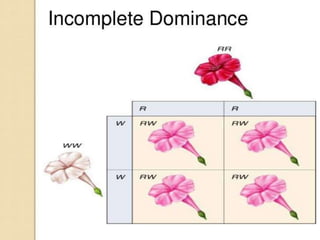
Incomplete Dominance
 A form of intermediate inheritance
in which one allele for a specific
trait is not completely dominant
over the other allele.
 This results in a combined
phenotype
Co-Dominance
 A cross between organisms with
two different phenotypes produces
offspring with a third phenotype in
which both of the parental traits
appear together.
Multiple Alleles
 Involves more than just the typical
two alleles that usually code for a
certain characteristic in a species
Maternal Effect
 A situation where the phenotype of
an organism is determined not only
by the environment it experiences
and its genotype, but also by the
environment and genotype of its
mother
 Occurs when an organism shows
the phenotype expected from the
genotype of the mother
Paternal Effect
 A phenotype results from the
genotype of the father
 The genes responsible for these
effects are components
of sperm that are involved
in fertilization and early
development.
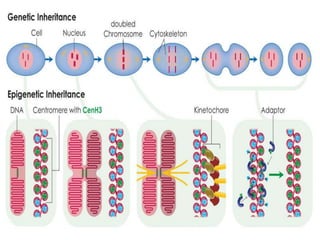
Epigenetic Inheritance
 Modification occurs to a nuclear
gene or chromosome.
 This occurs during
spermatogenesis, oogenesis, and
early stages of embryogenesis
Gene Conversion
 One of the major forms of Non-
Mendelian Inheritance
 It is a reparation process in DNA
recombination, by which a piece of
DNA sequence information is
transferred from one DNA helix
(which remains unchanged) to
another DNA helix, whose
sequence is altered.

Non-Mendelian Inheritance

  • 1.
  • 2.
    Non-Mendelian Inheritance  It isa term used to refer to any pattern of inheritance in which traits do not segregate in accordance with Mendel’s Laws
  • 3.
    Incomplete Dominance  Aform of intermediate inheritance in which one allele for a specific trait is not completely dominant over the other allele.  This results in a combined phenotype
  • 5.
    Co-Dominance  A crossbetween organisms with two different phenotypes produces offspring with a third phenotype in which both of the parental traits appear together.
  • 6.
    Multiple Alleles  Involvesmore than just the typical two alleles that usually code for a certain characteristic in a species
  • 7.
    Maternal Effect  Asituation where the phenotype of an organism is determined not only by the environment it experiences and its genotype, but also by the environment and genotype of its mother  Occurs when an organism shows the phenotype expected from the genotype of the mother
  • 8.
    Paternal Effect  Aphenotype results from the genotype of the father  The genes responsible for these effects are components of sperm that are involved in fertilization and early development.
  • 9.
    Epigenetic Inheritance  Modificationoccurs to a nuclear gene or chromosome.  This occurs during spermatogenesis, oogenesis, and early stages of embryogenesis
  • 11.
    Gene Conversion  Oneof the major forms of Non- Mendelian Inheritance  It is a reparation process in DNA recombination, by which a piece of DNA sequence information is transferred from one DNA helix (which remains unchanged) to another DNA helix, whose sequence is altered.