NON-VERBAL BUSINESS
COMMUNICATION
February 2013
2


AGENDA

- Importance of Non-Verbal
  Communication
- Physical Aspects
- Audio Considerations
- Common Examples
- Active Listening
- Review
3


IMPORTANCE
NON-VERBAL COMMUNIATION
4


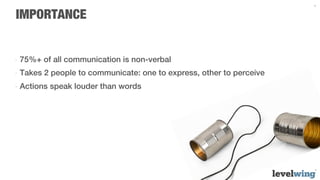
IMPORTANCE


-  75%+ of all communication is non-verbal
-  Takes 2 people to communicate: one to express, other to perceive
-  Actions speak louder than words
5


PHYSICAL ASPECTS
NON-VERBAL COMMUNIATION
6


PHYSICAL ASPECTS

1.  ‘Personal Curbside Appeal’
2.  Firm Handshake
3.  Maintain Eye Contact
4.  Watch Facial Expressions
5. Stand Up, Walk in Presentation
6. Natural Arm + Hand Movements
7. Maintain Appropriate Space
8. Upright Posture
7


‘PERSONAL CURBSIDE APPEAL’


-  Neat + tidy
-  Dress like they look
8


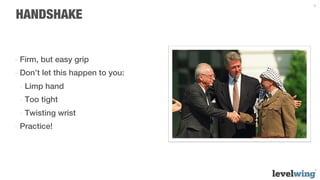
HANDSHAKE


-  Firm, but easy grip
-  Don’t let this happen to you:
 -  Limp hand
 -  Too tight
 -  Twisting wrist
-  Practice!
9


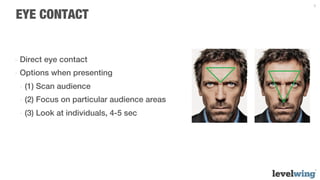
EYE CONTACT


-  Direct eye contact
-  Options when presenting
 -  (1) Scan audience
 -  (2) Focus on particular audience areas
 -  (3) Look at individuals, 4-5 sec
10


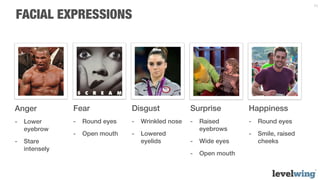
FACIAL EXPRESSIONS


Anger          Fear            Disgust            Surprise        Happiness
-  Lower       -  Round eyes   -  Wrinkled nose   -  Raised       -  Round eyes
   eyebrow                                           eyebrows
               -  Open mouth   -  Lowered                         -  Smile, raised
-  Stare                          eyelids         -  Wide eyes       cheeks
   intensely
                                                  -  Open mouth
11


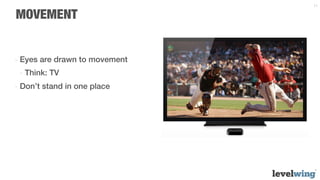
MOVEMENT


-  Eyes are drawn to movement
 -  Think: TV
-  Don’t stand in one place
12


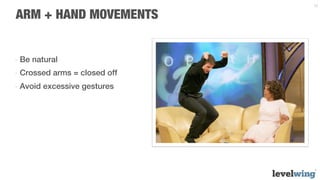
ARM + HAND MOVEMENTS


-  Be natural
-  Crossed arms = closed off
-  Avoid excessive gestures
13


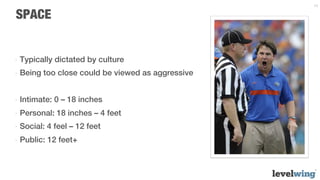
SPACE


-  Typically dictated by culture
-  Being too close could be viewed as aggressive


-  Intimate: 0 – 18 inches
-  Personal: 18 inches – 4 feet
-  Social: 4 feel – 12 feet
-  Public: 12 feet+
14


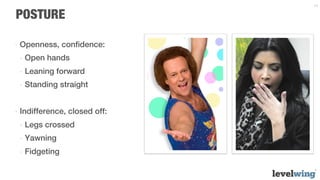
POSTURE

-  Openness, confidence:
 -  Open hands
 -  Leaning forward
 -  Standing straight


-  Indifference, closed off:
 -  Legs crossed
 -  Yawning
 -  Fidgeting
15


AUDIO CONSIDERATIONS
NON-VERBAL COMMUNIATION
16


AUDIO CONSIDERATIONS

1.  Projection = Confidence
2.  Maintain Tone, Limit Extraneous Sounds
3.  Speak Slowly
17


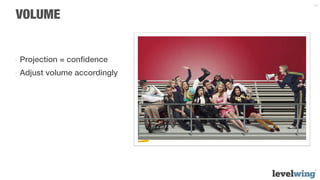
VOLUME


-  Projection = confidence
-  Adjust volume accordingly
18


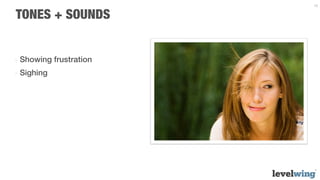
TONES + SOUNDS


-  Showing frustration
-  Sighing
19


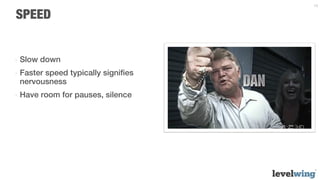
SPEED


-  Slow down
-  Faster speed typically signifies
   nervousness
-  Have room for pauses, silence
20


COMMON EXAMPLES
NON-VERBAL COMMUNIATION
21


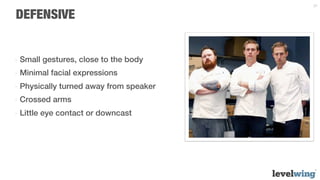
DEFENSIVE


-  Small gestures, close to the body
-  Minimal facial expressions
-  Physically turned away from speaker
-  Crossed arms
-  Little eye contact or downcast
22


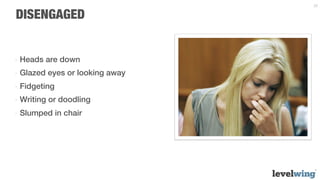
DISENGAGED


-  Heads are down
-  Glazed eyes or looking away
-  Fidgeting
-  Writing or doodling
-  Slumped in chair
23


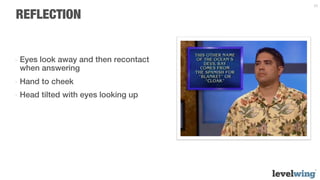
REFLECTION


-  Eyes look away and then recontact
   when answering
-  Hand to cheek
-  Head tilted with eyes looking up
24


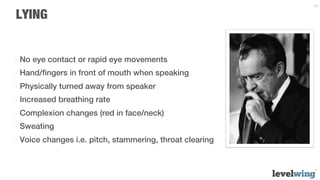
LYING


-  No eye contact or rapid eye movements
-  Hand/fingers in front of mouth when speaking
-  Physically turned away from speaker
-  Increased breathing rate
-  Complexion changes (red in face/neck)
-  Sweating
-  Voice changes i.e. pitch, stammering, throat clearing
25


ACTIVE LISTENING
NON-VERBAL COMMUNIATION
26


ACTIVE LISTENING

1.  Pay Attention
2.  Show That You’re Listening
3.  Provide Feedback
4.  Defer Judgment
27


PAY ATTENTION


-  Look at speaker
-  Don’t mentally prepare rebuttal
-  Pick up on speaker’s body
   language
28


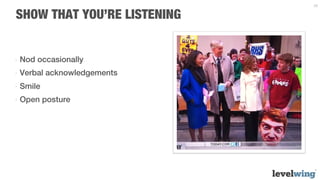
SHOW THAT YOU’RE LISTENING


-  Nod occasionally
-  Verbal acknowledgements
-  Smile
-  Open posture
29


PROVIDE FEEDBACK


-  Questions for clarifications
-  Summarize points back to speaker
30


DEFER JUDGMENT


-  Let speaker finish point
-  Don’t interrupt with counter
   arguments
31


RECAP
NON-VERBAL COMMUNIATION
32


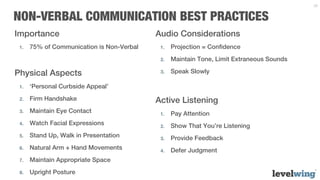
NON-VERBAL COMMUNICATION BEST PRACTICES
Importance                                  Audio Considerations
 1.    75% of Communication is Non-Verbal    1.    Projection = Confidence
                                             2.    Maintain Tone, Limit Extraneous Sounds

Physical Aspects                             3.    Speak Slowly

 1.    ‘Personal Curbside Appeal’
 2.    Firm Handshake                       Active Listening
 3.    Maintain Eye Contact                  1.    Pay Attention
 4.    Watch Facial Expressions              2.    Show That You’re Listening
 5.    Stand Up, Walk in Presentation        3.    Provide Feedback
 6.    Natural Arm + Hand Movements          4.    Defer Judgment
 7.    Maintain Appropriate Space
 8.    Upright Posture
33


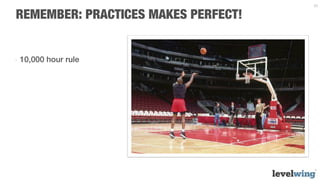
REMEMBER: PRACTICES MAKES PERFECT!


-  10,000 hour rule
34


SOURCES
-  Active Listening – Hear What People are Really Saying:
   http://www.mindtools.com/CommSkll/ActiveListening.htm
-  Body Language – Understanding Non-Verbal Communication:
   http://www.mindtools.com/pages/article/Body_Language.htm
-  Nonverbal Communication:
   http://www.slideshare.net/akashabsl/non-verbala
-  Secrets of Nonverbal Communication:
   http://www.forbes.com/2009/11/11/body-language-nonverbal-
   leadership-careers-communication.html
-  Techniques for Improving Your Nonverbal Communication Skills in the
   Workplace:
   http://smallbusiness.chron.com/techniques-improving-nonverbal-
   communication-skills-workplace-21411.html
20


LIKE WHAT YOU SEE? WANT TO SEE MORE?
Visit our sponsors at Levelwing.com
At Levelwing, we specialize in interpreting data and providing you with applications (and not just
graphs) that can impact your MARKETING, MERCHANDISING, INVENTORY or even TALENT
RECRUITMENT. We help companies utilize data to OPERATE WITH GREATER CLARITY +
PROFITABILITY.
Bottom line, we move your business forward by helping you make sense of your data so that
you can ACHIEVE WHAT COULD BE.

For additional information, please contact:
STEVE PARKER, JR.
Co-Founder & Managing Partner
steve@levelwing.com
1 + 843.631.4587

Nonverbal Business Communication

  • 1.
  • 2.
    2 AGENDA - Importance of Non-Verbal Communication - Physical Aspects - Audio Considerations - Common Examples - Active Listening - Review
  • 3.
  • 4.
    4 IMPORTANCE -  75%+ ofall communication is non-verbal -  Takes 2 people to communicate: one to express, other to perceive -  Actions speak louder than words
  • 5.
  • 6.
    6 PHYSICAL ASPECTS 1.  ‘PersonalCurbside Appeal’ 2.  Firm Handshake 3.  Maintain Eye Contact 4.  Watch Facial Expressions 5. Stand Up, Walk in Presentation 6. Natural Arm + Hand Movements 7. Maintain Appropriate Space 8. Upright Posture
  • 7.
    7 ‘PERSONAL CURBSIDE APPEAL’ - Neat + tidy -  Dress like they look
  • 8.
    8 HANDSHAKE -  Firm, buteasy grip -  Don’t let this happen to you: -  Limp hand -  Too tight -  Twisting wrist -  Practice!
  • 9.
    9 EYE CONTACT -  Directeye contact -  Options when presenting -  (1) Scan audience -  (2) Focus on particular audience areas -  (3) Look at individuals, 4-5 sec
  • 10.
    10 FACIAL EXPRESSIONS Anger Fear Disgust Surprise Happiness -  Lower -  Round eyes -  Wrinkled nose -  Raised -  Round eyes eyebrow eyebrows -  Open mouth -  Lowered -  Smile, raised -  Stare eyelids -  Wide eyes cheeks intensely -  Open mouth
  • 11.
    11 MOVEMENT -  Eyes aredrawn to movement -  Think: TV -  Don’t stand in one place
  • 12.
    12 ARM + HANDMOVEMENTS -  Be natural -  Crossed arms = closed off -  Avoid excessive gestures
  • 13.
    13 SPACE -  Typically dictatedby culture -  Being too close could be viewed as aggressive -  Intimate: 0 – 18 inches -  Personal: 18 inches – 4 feet -  Social: 4 feel – 12 feet -  Public: 12 feet+
  • 14.
    14 POSTURE -  Openness, confidence: -  Open hands -  Leaning forward -  Standing straight -  Indifference, closed off: -  Legs crossed -  Yawning -  Fidgeting
  • 15.
  • 16.
    16 AUDIO CONSIDERATIONS 1.  Projection= Confidence 2.  Maintain Tone, Limit Extraneous Sounds 3.  Speak Slowly
  • 17.
    17 VOLUME -  Projection =confidence -  Adjust volume accordingly
  • 18.
    18 TONES + SOUNDS - Showing frustration -  Sighing
  • 19.
    19 SPEED -  Slow down - Faster speed typically signifies nervousness -  Have room for pauses, silence
  • 20.
  • 21.
    21 DEFENSIVE -  Small gestures,close to the body -  Minimal facial expressions -  Physically turned away from speaker -  Crossed arms -  Little eye contact or downcast
  • 22.
    22 DISENGAGED -  Heads aredown -  Glazed eyes or looking away -  Fidgeting -  Writing or doodling -  Slumped in chair
  • 23.
    23 REFLECTION -  Eyes lookaway and then recontact when answering -  Hand to cheek -  Head tilted with eyes looking up
  • 24.
    24 LYING -  No eyecontact or rapid eye movements -  Hand/fingers in front of mouth when speaking -  Physically turned away from speaker -  Increased breathing rate -  Complexion changes (red in face/neck) -  Sweating -  Voice changes i.e. pitch, stammering, throat clearing
  • 25.
  • 26.
    26 ACTIVE LISTENING 1.  PayAttention 2.  Show That You’re Listening 3.  Provide Feedback 4.  Defer Judgment
  • 27.
    27 PAY ATTENTION -  Lookat speaker -  Don’t mentally prepare rebuttal -  Pick up on speaker’s body language
  • 28.
    28 SHOW THAT YOU’RELISTENING -  Nod occasionally -  Verbal acknowledgements -  Smile -  Open posture
  • 29.
    29 PROVIDE FEEDBACK -  Questionsfor clarifications -  Summarize points back to speaker
  • 30.
    30 DEFER JUDGMENT -  Letspeaker finish point -  Don’t interrupt with counter arguments
  • 31.
  • 32.
    32 NON-VERBAL COMMUNICATION BESTPRACTICES Importance Audio Considerations 1.  75% of Communication is Non-Verbal 1.  Projection = Confidence 2.  Maintain Tone, Limit Extraneous Sounds Physical Aspects 3.  Speak Slowly 1.  ‘Personal Curbside Appeal’ 2.  Firm Handshake Active Listening 3.  Maintain Eye Contact 1.  Pay Attention 4.  Watch Facial Expressions 2.  Show That You’re Listening 5.  Stand Up, Walk in Presentation 3.  Provide Feedback 6.  Natural Arm + Hand Movements 4.  Defer Judgment 7.  Maintain Appropriate Space 8.  Upright Posture
  • 33.
    33 REMEMBER: PRACTICES MAKESPERFECT! -  10,000 hour rule
  • 34.
    34 SOURCES -  Active Listening– Hear What People are Really Saying: http://www.mindtools.com/CommSkll/ActiveListening.htm -  Body Language – Understanding Non-Verbal Communication: http://www.mindtools.com/pages/article/Body_Language.htm -  Nonverbal Communication: http://www.slideshare.net/akashabsl/non-verbala -  Secrets of Nonverbal Communication: http://www.forbes.com/2009/11/11/body-language-nonverbal- leadership-careers-communication.html -  Techniques for Improving Your Nonverbal Communication Skills in the Workplace: http://smallbusiness.chron.com/techniques-improving-nonverbal- communication-skills-workplace-21411.html
  • 35.
    20 LIKE WHAT YOUSEE? WANT TO SEE MORE? Visit our sponsors at Levelwing.com At Levelwing, we specialize in interpreting data and providing you with applications (and not just graphs) that can impact your MARKETING, MERCHANDISING, INVENTORY or even TALENT RECRUITMENT. We help companies utilize data to OPERATE WITH GREATER CLARITY + PROFITABILITY. Bottom line, we move your business forward by helping you make sense of your data so that you can ACHIEVE WHAT COULD BE. For additional information, please contact: STEVE PARKER, JR. Co-Founder & Managing Partner steve@levelwing.com 1 + 843.631.4587