Communication WITH CLIENTTips and tools for Effective Listening and Proper Speaking Skills
Communication with Client…The most important factor to be a skilled communication expert is to have EFFECTIVE LISTENING SKILLS.
Your communication is the foundation of your relationship with your client
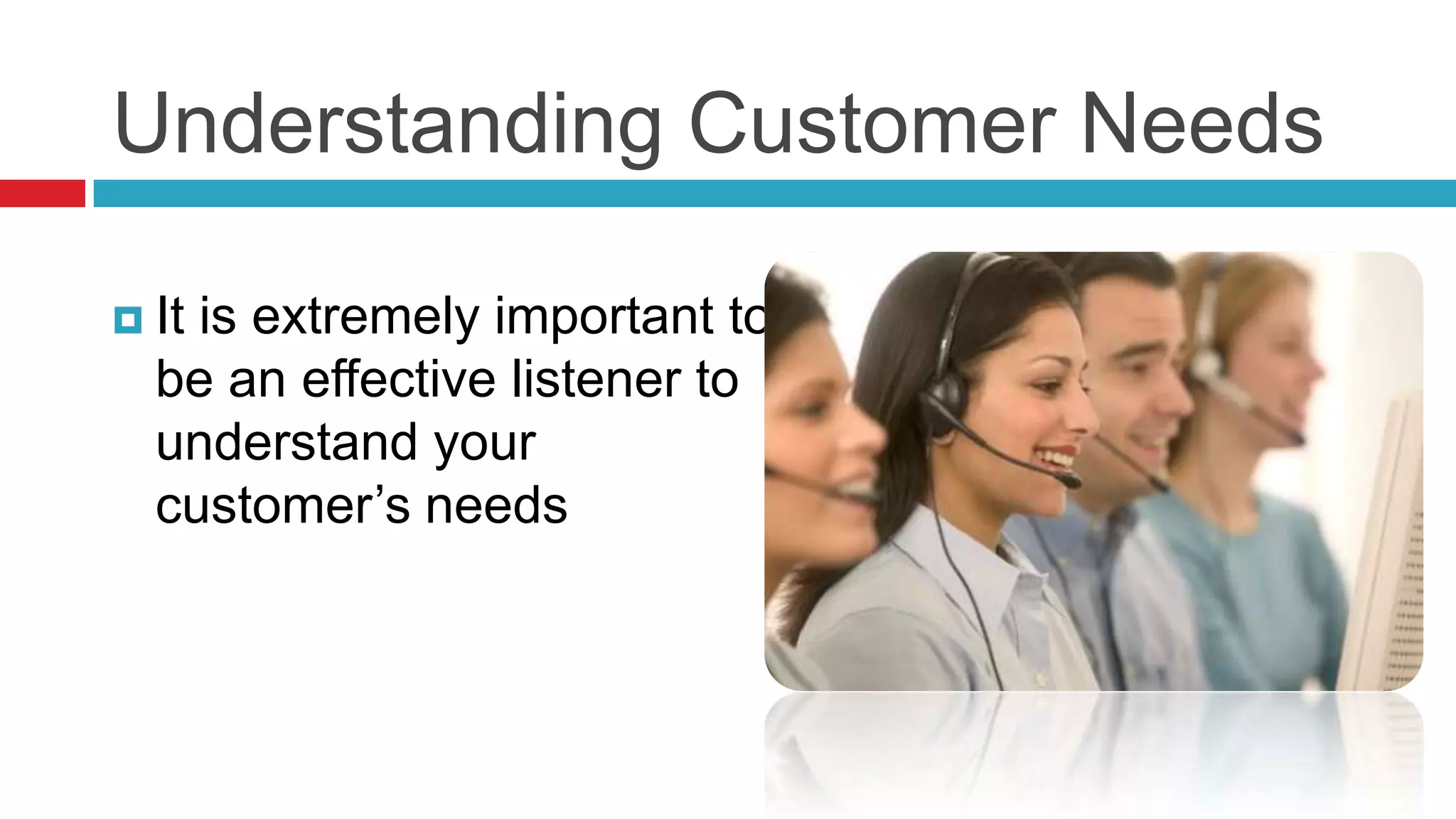
The effectiveness of your successful communication and its quality determines the volume of future references you get from your clientUnderstanding Customer NeedsIt is extremely important to be an effective listener to understand your customer’s needs
Benefits of Good ListeningAlways take full responsibility of your communication with customer.Accurate Listening - Allows for an accurate exchange of information which is critical for you to serve the client properlyReduced Misunderstandings - Helps eliminate misunderstandings, increasing client satisfaction with your services and enhancing their perception of your competenceIncreased Rapport - Improves trust and rapport and maximizes the probability of getting referrals in the future. Clients feel you understand them, it creates greater trustDifferentiation - Since most people are poor listeners, good listening skills will make you stand above the crowd
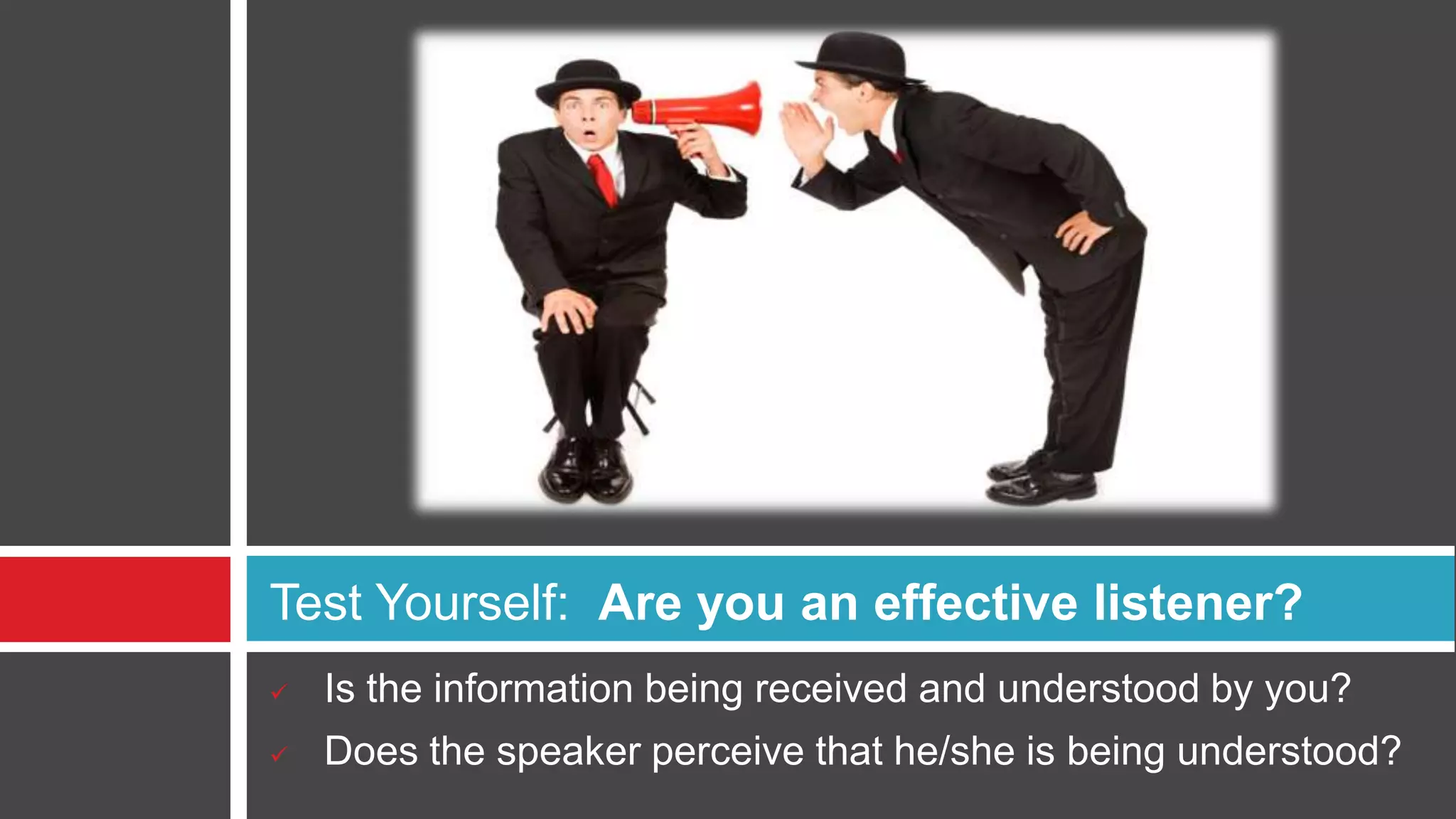
Is the information being received and understood by you?
Does the speaker perceive that he/she is being understood? Test Yourself:  Are you an effective listener?
Know your ObstaclesOnly about 60% of spoken information is accurately received. Reasons the information doesn't get through could beThe speaker is unclear or not specific enough causing you to make assumptionsYou are not paying attention due to lack of interest in the subject matterYou are busy formulating a rebuttal to something the speaker said previously Important: By necessity, most accountants are reasonably proficient at the first. Since they rely heavily on information the customer provides, they listen carefully to get the facts straight. Many accountants are not as good at creating the perception that they are receiving the information. This causes them to lose rapport with their clients.
Be An Active ListenerMost miscommunications are the result of poor listening, not poor articulation. Most people are passive listeners.Passive listening allows misunderstandings to go undetectedEven when information is received and understood, the listener fails to acknowledge itNeither do they verify that the information received is what the speaker intended to sayThis can cause the speaker to feel he/she is not getting throughTaking 100% responsibility for communication requires you to be specific and articulate in your own speech, and to actively facilitate the quality of the other party's communication when you are listening. This facilitation is known as Active Listening.
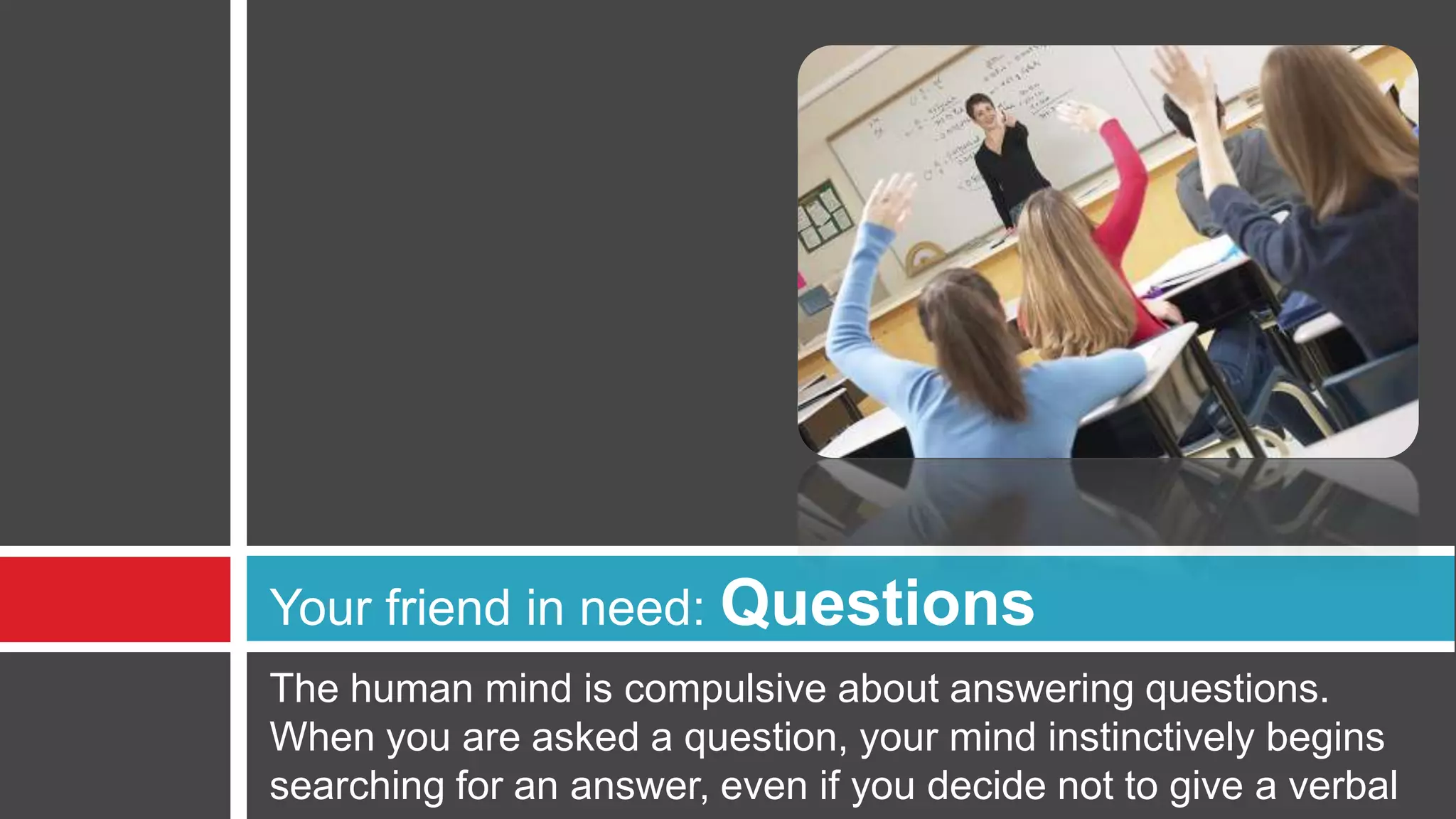
The human mind is compulsive about answering questions. When you are asked a question, your mind instinctively begins searching for an answer, even if you decide not to give a verbal answer.Your friend in need: Questions
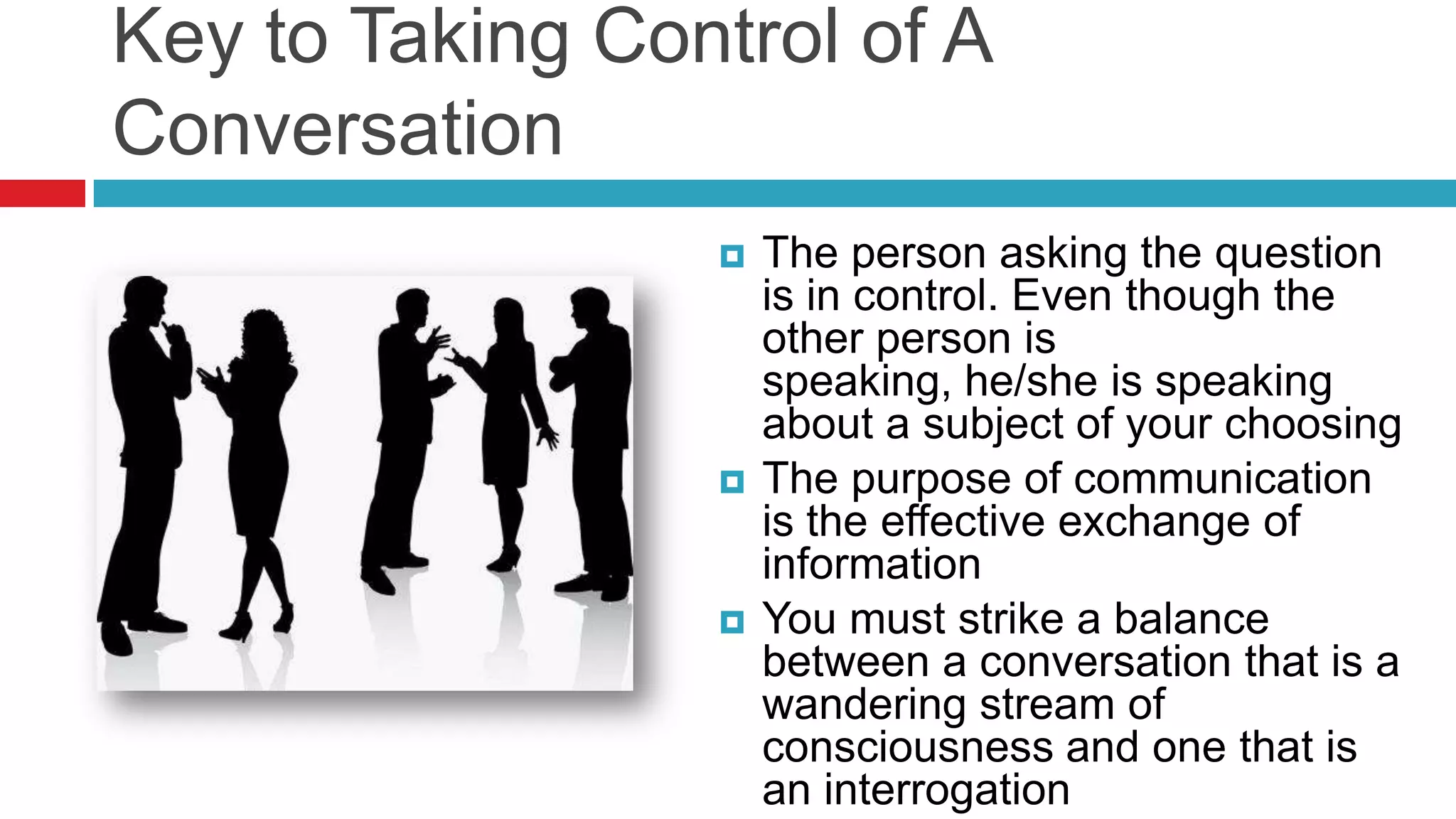
Key to Taking Control of A ConversationThe person asking the question is in control. Even though the other person is speaking, he/she is speaking about a subject of your choosing The purpose of communication is the effective exchange of informationYou must strike a balance between a conversation that is a wandering stream of consciousness and one that is an interrogation
Ask Frequent Relevant QuestionsGood communication is a very simple process where you listen carefully to the content and then ask questions that seek clarification, verification, motivation or specificity.Clarification - Those you ask when there seem to be inconsistencies or when you are not sure you understand what the person is trying to say. Clarifying questions reduce the amount of ambiguityVerification - Questions you ask to verify that the information has been correctly received. Always verify that conclusion from the speaker's point of view before you assume your deduction is obviously correctMotivation - Help you understand the reasons why people act and they give you insight into how they are likely to behave in the futureSpecificity - People tend to speak in generalities. They assume you will get the whole idea if they give you the general idea. Ask them to be more specific.
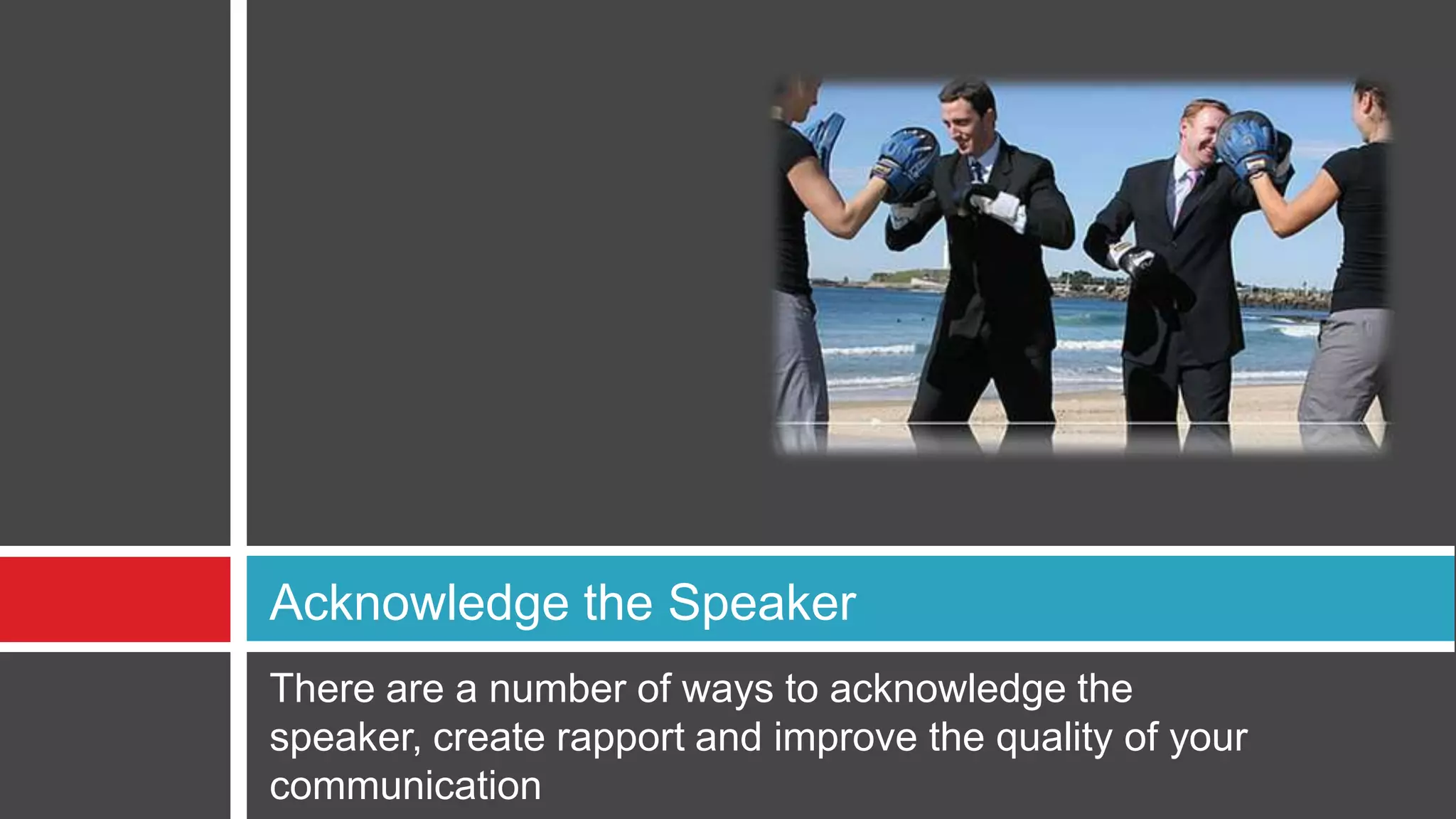
There are a number of ways to acknowledge the speaker, create rapport and improve the quality of your communicationAcknowledge the Speaker
Listening ChecksWhen the speaker is speaking you should give both auditory and visual signs that you are listening Often the speaker will ask for acknowledgments by saying "you know?" or by giving you a look. At this time it is particularly important to respondUse listening checks frequently with your clientsIt will improve your relationship and increase rapportImportant: Listening checks are statements rather than questions. After the statement is made, the speaker will either confirm that you have understood the message or try to clarify it.

Communication with Client

  • 1.
    CommunicationWITH CLIENTTips and tools for Effective Listening and Proper Speaking Skills
  • 2.
    Communication with Client…Themost important factor to be a skilled communication expert is to have EFFECTIVE LISTENING SKILLS.
  • 3.
    Your communication isthe foundation of your relationship with your client
  • 4.
    The effectiveness ofyour successful communication and its quality determines the volume of future references you get from your clientUnderstanding Customer NeedsIt is extremely important to be an effective listener to understand your customer’s needs
  • 5.
    Benefits of GoodListeningAlways take full responsibility of your communication with customer.Accurate Listening - Allows for an accurate exchange of information which is critical for you to serve the client properlyReduced Misunderstandings - Helps eliminate misunderstandings, increasing client satisfaction with your services and enhancing their perception of your competenceIncreased Rapport - Improves trust and rapport and maximizes the probability of getting referrals in the future. Clients feel you understand them, it creates greater trustDifferentiation - Since most people are poor listeners, good listening skills will make you stand above the crowd
  • 6.
    Is the informationbeing received and understood by you?
  • 7.
    Does the speakerperceive that he/she is being understood? Test Yourself: Are you an effective listener?
  • 8.
    Know your ObstaclesOnlyabout 60% of spoken information is accurately received. Reasons the information doesn't get through could beThe speaker is unclear or not specific enough causing you to make assumptionsYou are not paying attention due to lack of interest in the subject matterYou are busy formulating a rebuttal to something the speaker said previously Important: By necessity, most accountants are reasonably proficient at the first. Since they rely heavily on information the customer provides, they listen carefully to get the facts straight. Many accountants are not as good at creating the perception that they are receiving the information. This causes them to lose rapport with their clients.
  • 9.
    Be An ActiveListenerMost miscommunications are the result of poor listening, not poor articulation. Most people are passive listeners.Passive listening allows misunderstandings to go undetectedEven when information is received and understood, the listener fails to acknowledge itNeither do they verify that the information received is what the speaker intended to sayThis can cause the speaker to feel he/she is not getting throughTaking 100% responsibility for communication requires you to be specific and articulate in your own speech, and to actively facilitate the quality of the other party's communication when you are listening. This facilitation is known as Active Listening.
  • 10.
    The human mindis compulsive about answering questions. When you are asked a question, your mind instinctively begins searching for an answer, even if you decide not to give a verbal answer.Your friend in need: Questions
  • 11.
    Key to TakingControl of A ConversationThe person asking the question is in control. Even though the other person is speaking, he/she is speaking about a subject of your choosing The purpose of communication is the effective exchange of informationYou must strike a balance between a conversation that is a wandering stream of consciousness and one that is an interrogation
  • 12.
    Ask Frequent RelevantQuestionsGood communication is a very simple process where you listen carefully to the content and then ask questions that seek clarification, verification, motivation or specificity.Clarification - Those you ask when there seem to be inconsistencies or when you are not sure you understand what the person is trying to say. Clarifying questions reduce the amount of ambiguityVerification - Questions you ask to verify that the information has been correctly received. Always verify that conclusion from the speaker's point of view before you assume your deduction is obviously correctMotivation - Help you understand the reasons why people act and they give you insight into how they are likely to behave in the futureSpecificity - People tend to speak in generalities. They assume you will get the whole idea if they give you the general idea. Ask them to be more specific.
  • 13.
    There are anumber of ways to acknowledge the speaker, create rapport and improve the quality of your communicationAcknowledge the Speaker
  • 14.
    Listening ChecksWhen thespeaker is speaking you should give both auditory and visual signs that you are listening Often the speaker will ask for acknowledgments by saying "you know?" or by giving you a look. At this time it is particularly important to respondUse listening checks frequently with your clientsIt will improve your relationship and increase rapportImportant: Listening checks are statements rather than questions. After the statement is made, the speaker will either confirm that you have understood the message or try to clarify it.
  • 15.
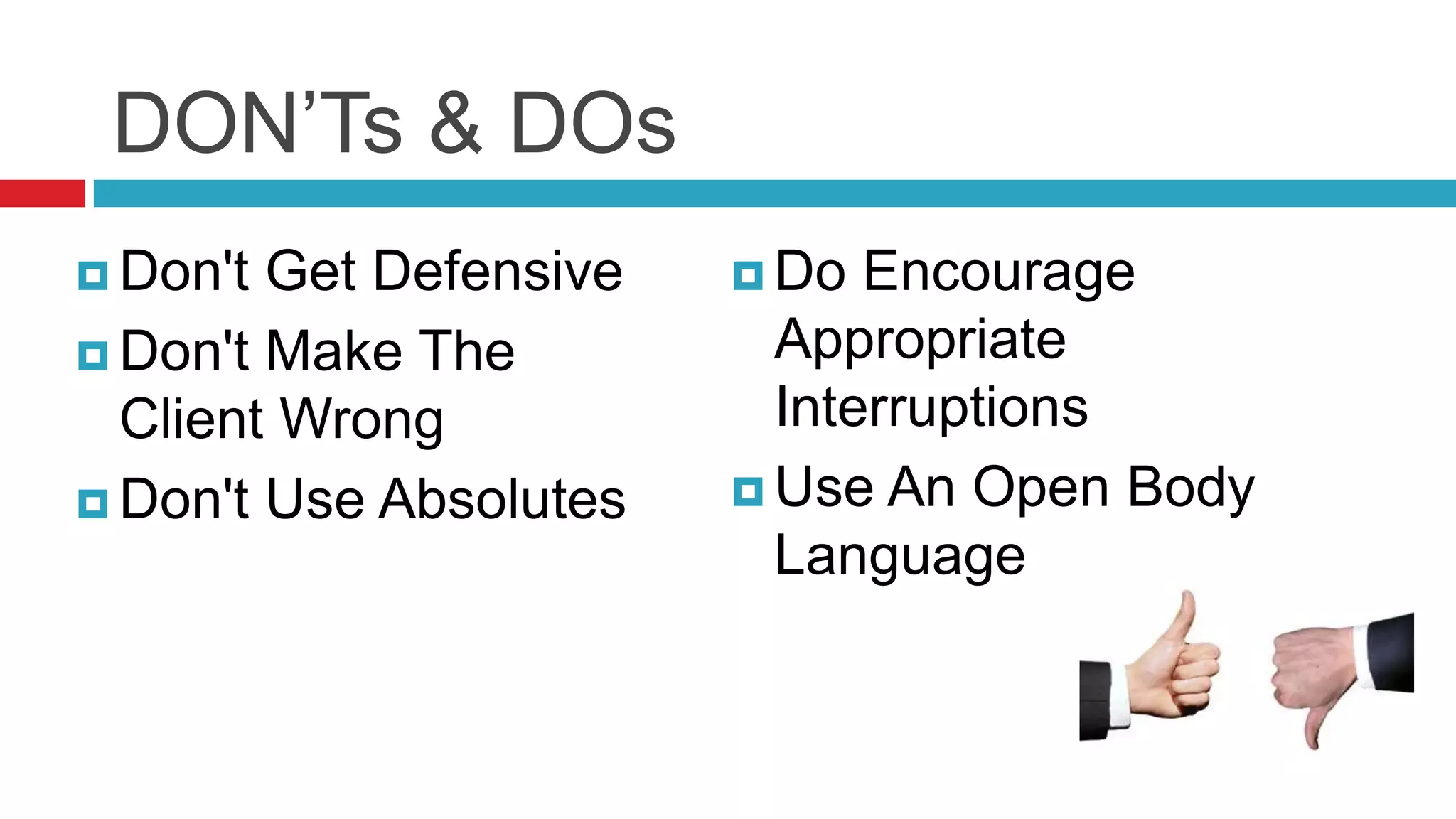
    DON’Ts & DOsDon'tGet Defensive Don't Make The Client Wrong Don't Use AbsolutesDo Encourage Appropriate Interruptions Use An Open Body Language
  • 16.