CYTOPLASMIC 
INHERITANCE
 Inheritance due to genes located in cytoplasm 
(plasmagenes) is called cytoplasmic inheritance. 
 Since genes governing traits showing cytoplasmic 
inheritance are located outside the nucleus and in the 
cytoplasm, they are referred to as plasmagenes. 
 The plasmagenes are located in DNA present in 
mitochondria (mt DNA) and in chloroplasts (cp DNA). 
 Together both the DNAs are called organelle DNA. 
Therefore, this type of inheritance is often referred to as 
organellar inheritance, plastid inheritance or 
mitochondrial inheritance.
 In this, generally, the character of only one of the two 
parents (usually female) is transmitted to the progeny. 
 Hence such inheritance is usually referred to as extra - 
nuclear or extra-chromosomal or maternal or uniparental 
inheritance. 
 The cytoplasmic inheritance is of two types: 1) Plastid 
inheritance and 2) mitochondrial inheritance.
1. Plastidial or chloroplast inheritance 
 Plastids are self duplicated and have some 
amount of DNA and plays an important role in 
cytoplasmic inheritance. 
 Plastids have green pigments called chloroplasts. 
Chloroplasts contain a unique circular DNA (cp 
DNA) in the stroma that is completely different 
from the nuclear genome.
Leaf variegation in Mirabilis Jalapa 
 The conclusive evidence for cytoplasmic inheritance was first 
presented by C. Correns in Mirabilis jalapa (Four ‘O’ clock 
plant) in 1909. 
 He studied inheritance of leaf variegation in M. jalapa. 
 Variegation refers to the presence of white or yellow spots of 
variable size on the green background of leaves. 
 In M. jalapa, leaves may be green, white or variegated. Some 
branches may have only green, only white or only variegated 
leaves. 
 Correns made crosses in all possible combinations among the 
flowers produced on these three types of branches.
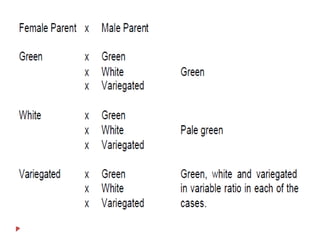
 When flowers from green branch were used as 
female parent, all the progeny were green 
irrespective of the phenotype (green, white or 
variegated) of male parent. 
 Similarly, progeny from crosses involving flowers 
bloomed on white branches as female parent 
were all white irrespective of the phenotype of 
male parent. 
 But in progeny from all crosses involving flowers 
born on variegated branches as female 
parent, all the three types i.e. green, white and 
variegated individuals were recovered in 
variable proportions.
 The green leaf branches have normal chloroplasts, 
white branches have mutant chloroplasts and 
variegated have a mixture of both normal and 
mutant chloroplasts. 
 The above results indicated that the inheritance is 
governed by chloroplasts. 
 Since the cytoplasm is contributed to the zygote 
mainly by female parent, the plastids are 
transmitted to the zygote from the female parent. 
 Thus the plastids are responsible for variation in the 
crosses of green, white and variegated leaves.
Inheritance of faulty mitochondrial genes 
(maternal inheritance) 
 The number of mitochondria in every cell of a 
person’s body varies from a few, to hundreds. 
 All of these mitochondria, and therefore the DNA 
within the mitochondria, descend from the small 
number of mitochondria present in the original 
egg cell at the time of that person’s conception. 
 The sperm contributes very few mitochondria to 
the baby.
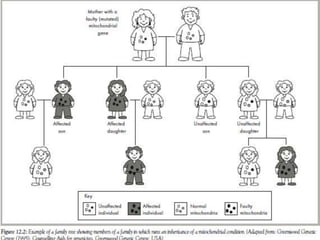
 An individual’s mitochondria are generally only 
inherited from his or her mother. A change 
(mutation) in one of the mitochondrial genes that 
makes it faulty, can therefore be passed by the 
mother to a child in her egg cells. 
 This pattern of inheritance is therefore often referred 
to as maternal inheritance.
 The egg cell contains many mitochondria, each 
having on average one to several copies of the 
mitochondrial genes. 
 If a particular gene in every mitochondrion in an 
egg cell is faulty, the disruption to energy 
production would be so severe that the early 
embryo would probably not survive. 
 The fact that a person survives to birth and is 
affected with a mitochondrial condition means 
that they must have inherited two types of 
mitochondria from his or her mother: some 
containing the working copy of the gene, and 
some containing the faulty gene.
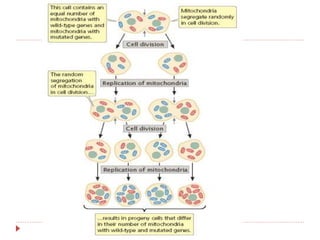
 The working copy of the mitochondrial gene will 
still be able to send the right instructions, but the 
amount of energy produced may be impacted 
and may result in a mitochondrial condition. 
 On the other hand, having some mitochondria 
with a faulty gene may cause no problem at all.
cytoplasmic inheritance

cytoplasmic inheritance

  • 1.
  • 2.
     Inheritance dueto genes located in cytoplasm (plasmagenes) is called cytoplasmic inheritance.  Since genes governing traits showing cytoplasmic inheritance are located outside the nucleus and in the cytoplasm, they are referred to as plasmagenes.  The plasmagenes are located in DNA present in mitochondria (mt DNA) and in chloroplasts (cp DNA).  Together both the DNAs are called organelle DNA. Therefore, this type of inheritance is often referred to as organellar inheritance, plastid inheritance or mitochondrial inheritance.
  • 3.
     In this,generally, the character of only one of the two parents (usually female) is transmitted to the progeny.  Hence such inheritance is usually referred to as extra - nuclear or extra-chromosomal or maternal or uniparental inheritance.  The cytoplasmic inheritance is of two types: 1) Plastid inheritance and 2) mitochondrial inheritance.
  • 4.
    1. Plastidial orchloroplast inheritance  Plastids are self duplicated and have some amount of DNA and plays an important role in cytoplasmic inheritance.  Plastids have green pigments called chloroplasts. Chloroplasts contain a unique circular DNA (cp DNA) in the stroma that is completely different from the nuclear genome.
  • 5.
    Leaf variegation inMirabilis Jalapa  The conclusive evidence for cytoplasmic inheritance was first presented by C. Correns in Mirabilis jalapa (Four ‘O’ clock plant) in 1909.  He studied inheritance of leaf variegation in M. jalapa.  Variegation refers to the presence of white or yellow spots of variable size on the green background of leaves.  In M. jalapa, leaves may be green, white or variegated. Some branches may have only green, only white or only variegated leaves.  Correns made crosses in all possible combinations among the flowers produced on these three types of branches.
  • 6.
     When flowersfrom green branch were used as female parent, all the progeny were green irrespective of the phenotype (green, white or variegated) of male parent.  Similarly, progeny from crosses involving flowers bloomed on white branches as female parent were all white irrespective of the phenotype of male parent.  But in progeny from all crosses involving flowers born on variegated branches as female parent, all the three types i.e. green, white and variegated individuals were recovered in variable proportions.
  • 8.
     The greenleaf branches have normal chloroplasts, white branches have mutant chloroplasts and variegated have a mixture of both normal and mutant chloroplasts.  The above results indicated that the inheritance is governed by chloroplasts.  Since the cytoplasm is contributed to the zygote mainly by female parent, the plastids are transmitted to the zygote from the female parent.  Thus the plastids are responsible for variation in the crosses of green, white and variegated leaves.
  • 9.
    Inheritance of faultymitochondrial genes (maternal inheritance)  The number of mitochondria in every cell of a person’s body varies from a few, to hundreds.  All of these mitochondria, and therefore the DNA within the mitochondria, descend from the small number of mitochondria present in the original egg cell at the time of that person’s conception.  The sperm contributes very few mitochondria to the baby.
  • 10.
     An individual’smitochondria are generally only inherited from his or her mother. A change (mutation) in one of the mitochondrial genes that makes it faulty, can therefore be passed by the mother to a child in her egg cells.  This pattern of inheritance is therefore often referred to as maternal inheritance.
  • 11.
     The eggcell contains many mitochondria, each having on average one to several copies of the mitochondrial genes.  If a particular gene in every mitochondrion in an egg cell is faulty, the disruption to energy production would be so severe that the early embryo would probably not survive.  The fact that a person survives to birth and is affected with a mitochondrial condition means that they must have inherited two types of mitochondria from his or her mother: some containing the working copy of the gene, and some containing the faulty gene.
  • 12.
     The workingcopy of the mitochondrial gene will still be able to send the right instructions, but the amount of energy produced may be impacted and may result in a mitochondrial condition.  On the other hand, having some mitochondria with a faulty gene may cause no problem at all.