TOPIC :
NITRIC ACID & HCL
PRESENTED By
Khurram Bashir
B1F17BSCH0057
NITRIC ACID
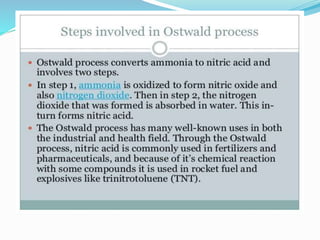
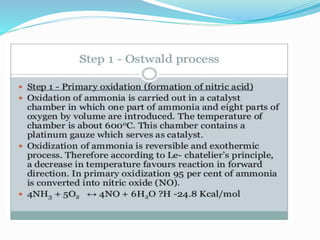
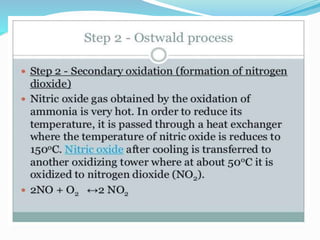
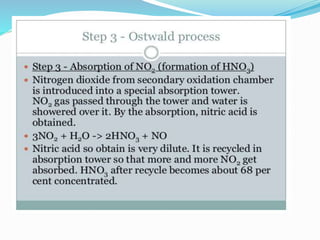
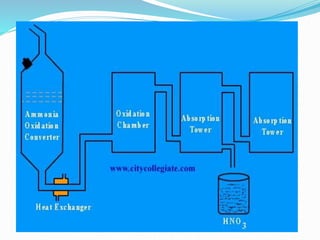
PREPARATION OF NITRIC ACID
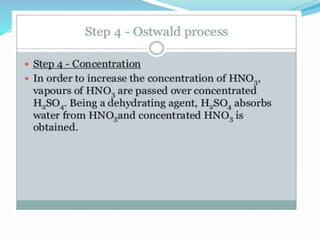
EXPLANATION OF STEPS
USES OF NITRIC ACID
 Nitric acid is used in the production of ammonium
nitrate for fertilizers, making plastics, and in the
manufacture of dyes.
 It is also used for making explosives such as
nitroglycerin and TNT. When it is combined with
hydrochloric acid, an element called aqua regia is
formed.
DISADVANTAGES OF NITRIC ACID
 Nitric acid (HNO3) is highly corrosive. If inhaled, it
irritates and burns the lungs and throat badly,
potentially leading to pulmonary edema and death.
If it's swallowed, it burns through the lining of the
throat and stomach. Finally, note that breathing
nitrogen can kill you too
Introduction:
Hydrochloric acid is a clear, colorless, highly pungent
solution of hydrogen chloride (HCl) in water.
It is a highly corrosive, strong mineral acid with many
industrial uses. Hydrochloric acid is found naturally in
gastric acid.
As an monoprotic acid and one of the six common
strong mineral acids, it is the least likely to be subject
to an oxidation-reduction reaction.
Methods
 Synthesis from elements (Burning Process)
 Organic By-product Synthesis.
 Metallic chlorides with Sulfuric acid.
 Waste Incineration.
 Thermal decomposition of hydrated heavy metals
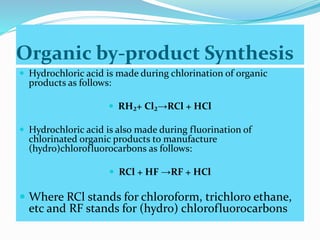
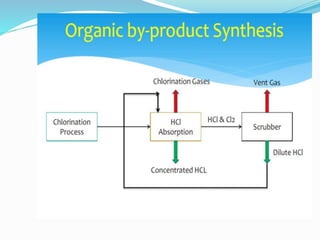
Organic by-product Synthesis
 Hydrochloric acid is made during chlorination of organic
products as follows:
 RH₂+ Cl₂→RCl + HCl
 Hydrochloric acid is also made during fluorination of
chlorinated organic products to manufacture
(hydro)chlorofluorocarbons as follows:
 RCl + HF →RF + HCl
 Where RCl stands for chloroform, trichloro ethane,
etc and RF stands for (hydro) chlorofluorocarbons
Nitric acid Preparation & Uses

Nitric acid Preparation & Uses

  • 1.
    TOPIC : NITRIC ACID& HCL PRESENTED By Khurram Bashir B1F17BSCH0057
  • 2.
  • 3.
  • 5.
  • 10.
    USES OF NITRICACID  Nitric acid is used in the production of ammonium nitrate for fertilizers, making plastics, and in the manufacture of dyes.  It is also used for making explosives such as nitroglycerin and TNT. When it is combined with hydrochloric acid, an element called aqua regia is formed.
  • 11.
    DISADVANTAGES OF NITRICACID  Nitric acid (HNO3) is highly corrosive. If inhaled, it irritates and burns the lungs and throat badly, potentially leading to pulmonary edema and death. If it's swallowed, it burns through the lining of the throat and stomach. Finally, note that breathing nitrogen can kill you too
  • 13.
    Introduction: Hydrochloric acid isa clear, colorless, highly pungent solution of hydrogen chloride (HCl) in water. It is a highly corrosive, strong mineral acid with many industrial uses. Hydrochloric acid is found naturally in gastric acid. As an monoprotic acid and one of the six common strong mineral acids, it is the least likely to be subject to an oxidation-reduction reaction.
  • 15.
    Methods  Synthesis fromelements (Burning Process)  Organic By-product Synthesis.  Metallic chlorides with Sulfuric acid.  Waste Incineration.  Thermal decomposition of hydrated heavy metals
  • 16.
    Organic by-product Synthesis Hydrochloric acid is made during chlorination of organic products as follows:  RH₂+ Cl₂→RCl + HCl  Hydrochloric acid is also made during fluorination of chlorinated organic products to manufacture (hydro)chlorofluorocarbons as follows:  RCl + HF →RF + HCl  Where RCl stands for chloroform, trichloro ethane, etc and RF stands for (hydro) chlorofluorocarbons