Atifa Ambreen
3rd Semester, M.Phil Microbiology
GC University, Faisalabad
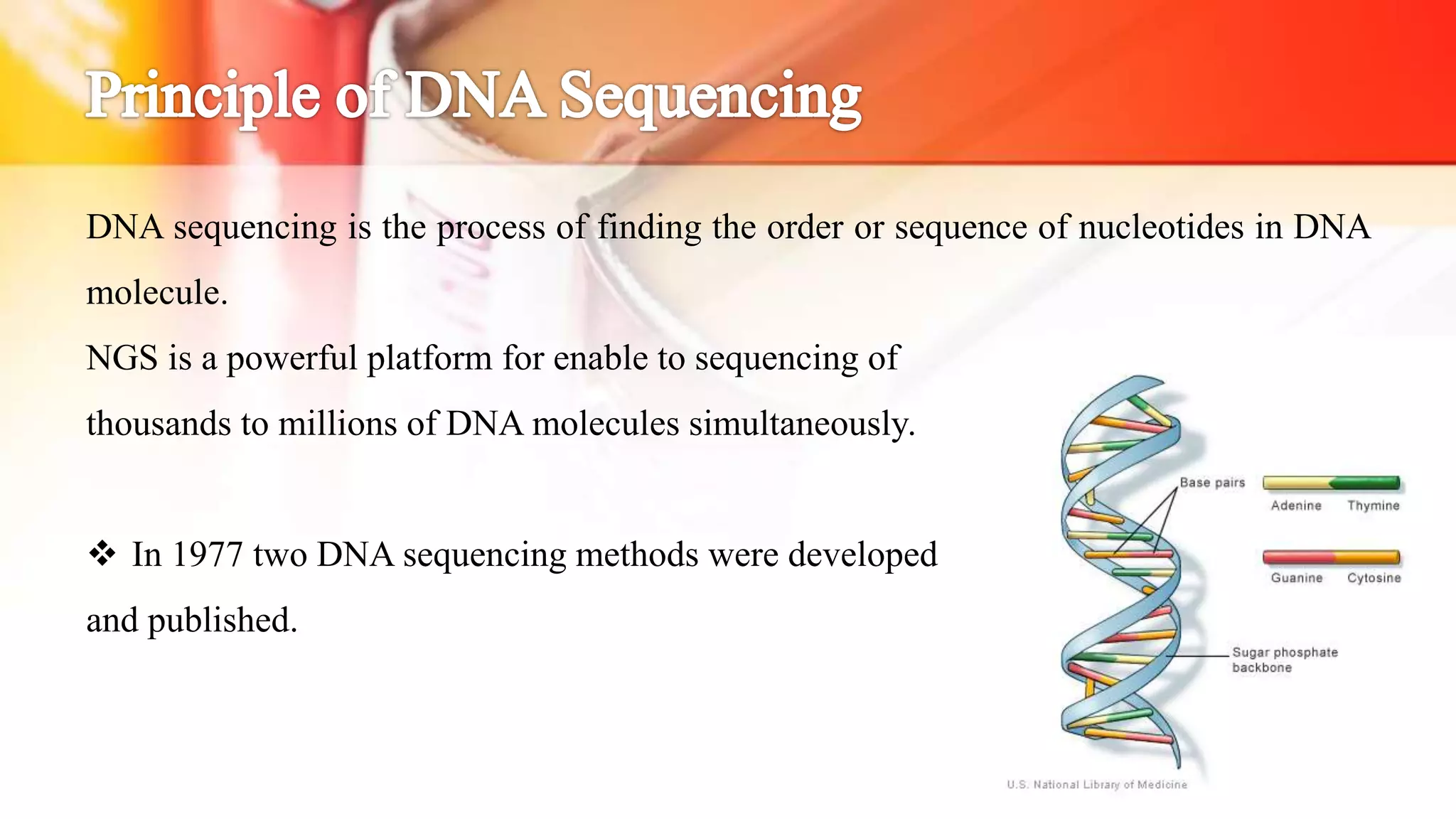
DNA sequencing is the process of finding the order or sequence of nucleotides in DNA
molecule.
NGS is a powerful platform for enable to sequencing of
thousands to millions of DNA molecules simultaneously.
 In 1977 two DNA sequencing methods were developed
and published.
• Maxam-Gilbert sequencing by chemical degradation method
• Sanger sequencing by chain termination method
• Although initial Maxam-Gilbert was more popular eventually sanger sequencing method
become more preferred due to several technical and safety reasons.
• It is important to note that at that time there was no PCR, which was discovered in 1983.
• Roche 454 sequencing (pyrosequencing)
• SOLiD sequencing (Sequencing by oligonucleotides ligation and detection)
• Ion torrent (Post light sequencing)
• Illumina (Solexa) sequencing
• PaBio (Single Molecule Real Time Sequencing)
• Oxford Nanopore (Nanopore sequencing)
These recent technologies allow us to sequence DNA and RNA much more quickly and
cheaply than the previously used Sanger sequencing, and as such have revolutionized
the study of genomics and molecular biology.
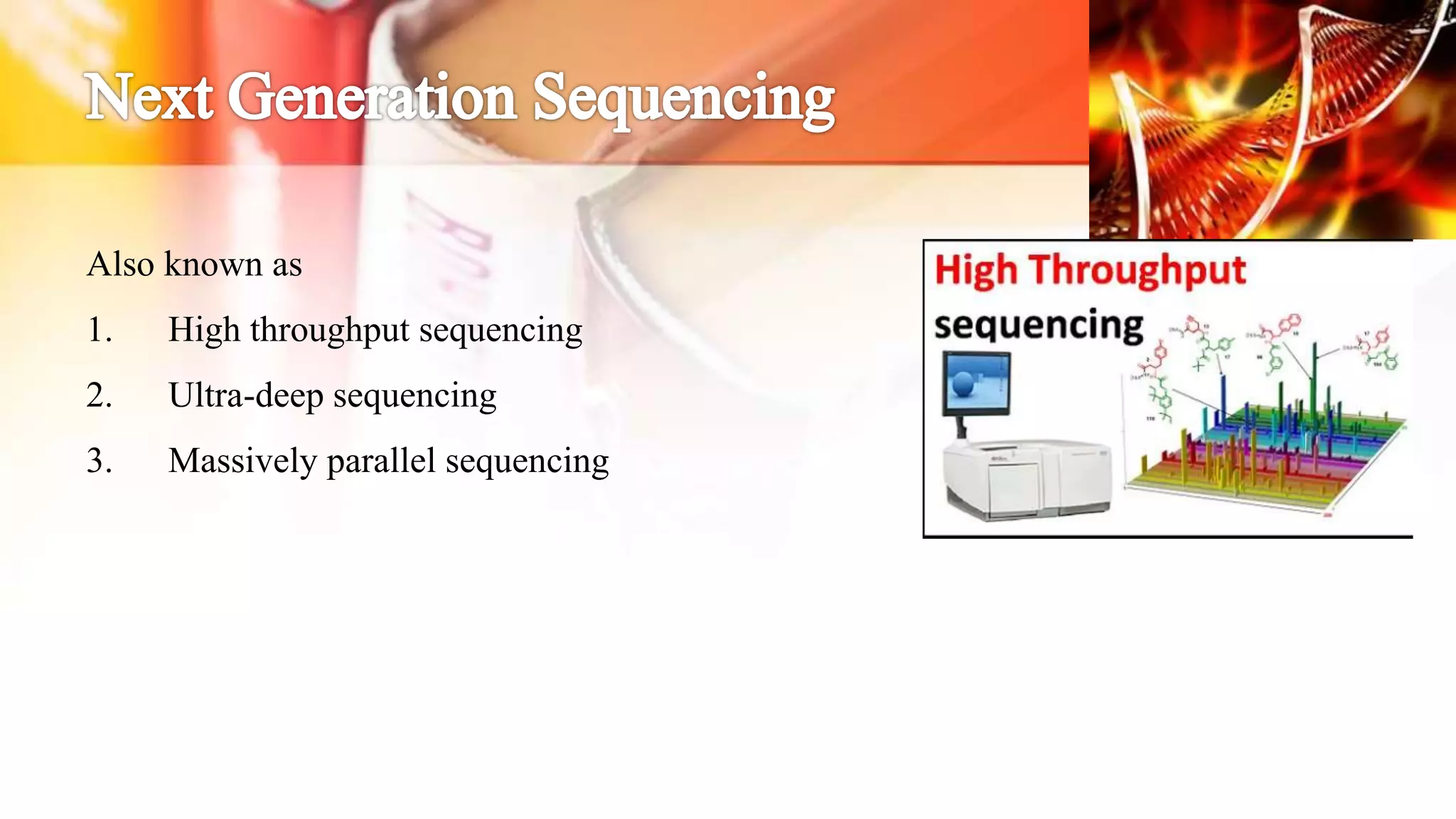
Also known as
1. High throughput sequencing
2. Ultra-deep sequencing
3. Massively parallel sequencing
Different machines have been developed with various different technical details they all
share some common features:
Next generation technologies for sequencing is combination of strategies for
• Template preparation.
• Sequencing and imaging
• Genome alignment
• Assembly methods
• Produce a non-biased source of nucleic acid material from the
genome
• Breaking genomic DNA into smaller sizes Ligate adaptors attach
the template to a solid surface and allows thousands to billions of
sequencing reactions to be performed simultaneously.
 Clonally amplified templates
• By emulsion PCR (emPCR) eg: 454 and SOLiD
• Solid phase amplification eg: Illumina
 Single Molecule templates
• Single molecule sequencing
• cyclic reversible termination(CRT) e.g. illumina/solexa
• single-nucleotide addition (SNA) e.g. 454/roche
• real-time sequencing: R&D going on (pacific Bioscience)
• Sequencing by ligation (SBL) e.g. SOLiD
• measuring bioluminescent signals
• four-colour imaging of single molecular events e.g. illumina/solexa.
After NGS reads have been generated they are align to
• A known reference sequence
• assembled de novo (Primary genetic sequence of
particular organism)
• DNA is fragmented, joined to adapters at either end of the fragmented
DNA.
• Amplified in an emulsion PCR (includes agarose bead with complimentary
adaptors to fragmented DNA)
• PCR amplified allowing up to 1 million
identical fragments around one bead and finally
dropped into a pico TitreTube (PTT).
• Adapter containing the universal priming site are
ligated to target ends.
• Same primer can be used for amplification.
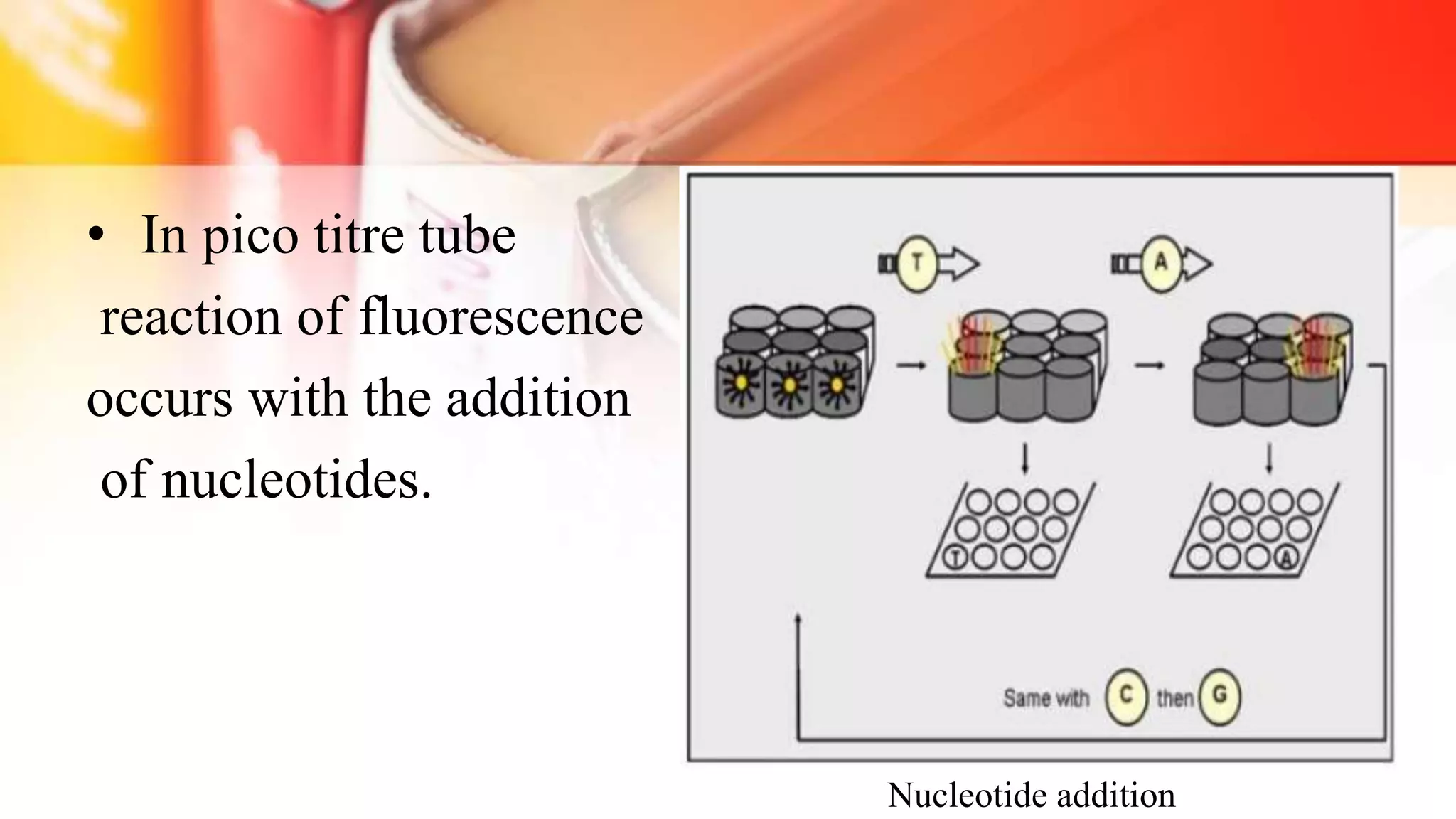
• In pico titre tube
reaction of fluorescence
occurs with the addition
of nucleotides.
Nucleotide addition
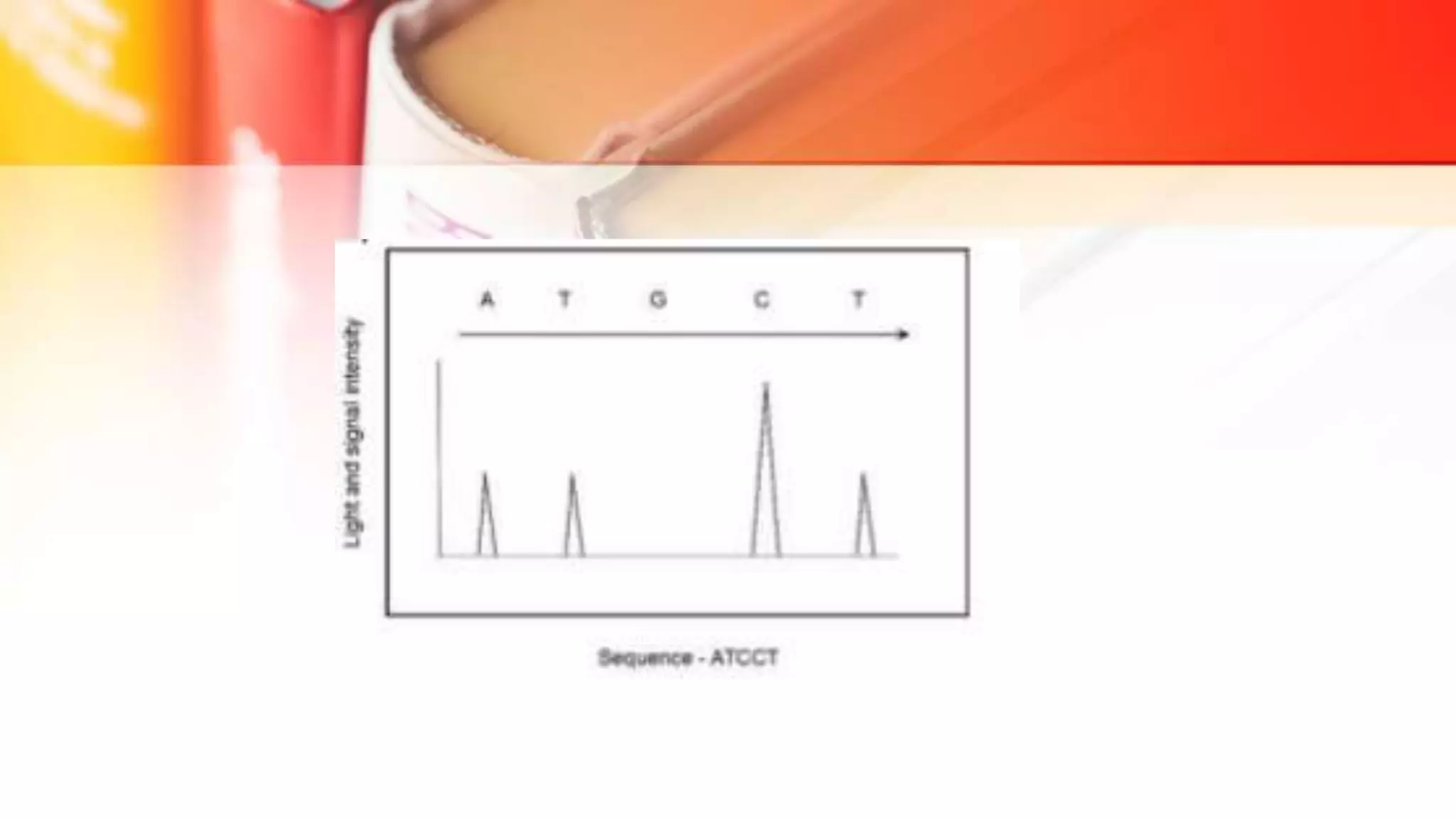
Output: Oxyluciferin Luciferin
APS+PPi ATP ATP Light
Sulfurylase Luciferase
Nucleotide addition
Sequencing by ligation and detection.
• Steps:
1. Library preparation
Two types of libraries sequencing-
fragment are prepared.
2. Emulsion PCR/ Bead enrichment
Amplification template is done in same
manner as 454.
3. Bead deposition
Deposit 3’ modified beads onto a glass slide.
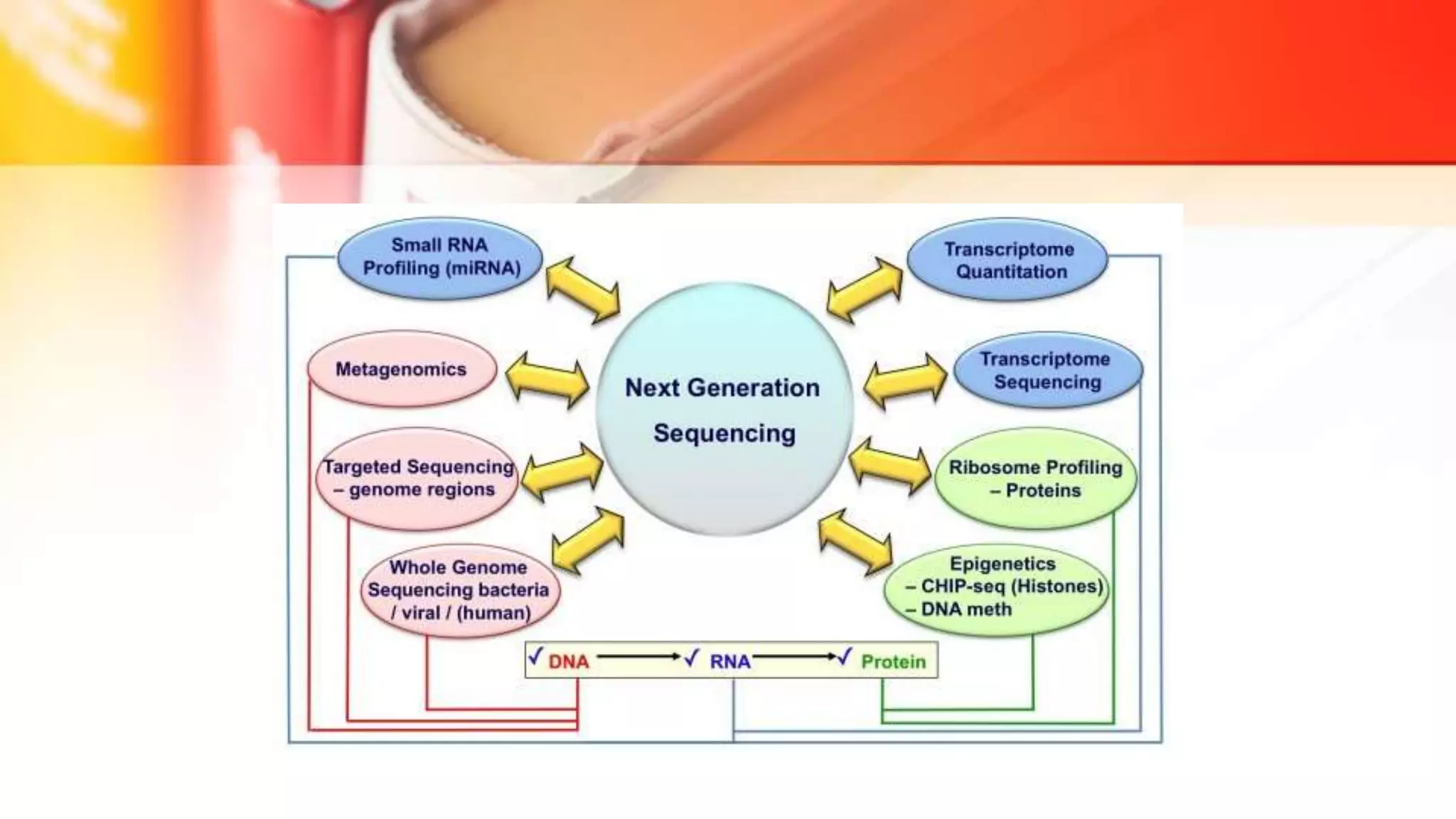
1. NGS is revolutionary field such as Personalized medicine, genetic diseases and
clinical diagnostics.
2. Variants discovery in targeted region or whole genome by re-sequencing.
3. Resembling genome of lower organism by de novo method
4. Cost-effective sequencing of complex samples at remarkable scale and speed.
5. Sequencing entire transcriptome.
6. In Meta genomics: sequencing genome of entire biological communities.
6. Replacing ChIP-on-chip with ChIP-seq in case of multicellular eukaryotes.
7. Personalized genome for personalized medicine.
8. NGS-based sequencing enables cancer researchers to detect rare somatic variants,
tumor sub clones, and circulating DNA fragments.
9. NGS-based sequencing can help researchers gain genetic insight into bacteria and
viruses.
10. Illumina sequencing is introducing new avenues for understanding
immunological, neurological, and other complex disorders on a molecular
level.
11. Illumina sequencing and array technologies deliver fast, accurate
information that can guide choices along the reproductive and genetic health
journey.
Next Generation Sequencing

Next Generation Sequencing

  • 2.
    Atifa Ambreen 3rd Semester,M.Phil Microbiology GC University, Faisalabad
  • 3.
    DNA sequencing isthe process of finding the order or sequence of nucleotides in DNA molecule. NGS is a powerful platform for enable to sequencing of thousands to millions of DNA molecules simultaneously.  In 1977 two DNA sequencing methods were developed and published.
  • 4.
    • Maxam-Gilbert sequencingby chemical degradation method • Sanger sequencing by chain termination method • Although initial Maxam-Gilbert was more popular eventually sanger sequencing method become more preferred due to several technical and safety reasons. • It is important to note that at that time there was no PCR, which was discovered in 1983.
  • 5.
    • Roche 454sequencing (pyrosequencing) • SOLiD sequencing (Sequencing by oligonucleotides ligation and detection) • Ion torrent (Post light sequencing) • Illumina (Solexa) sequencing • PaBio (Single Molecule Real Time Sequencing) • Oxford Nanopore (Nanopore sequencing)
  • 6.
    These recent technologiesallow us to sequence DNA and RNA much more quickly and cheaply than the previously used Sanger sequencing, and as such have revolutionized the study of genomics and molecular biology.
  • 7.
    Also known as 1.High throughput sequencing 2. Ultra-deep sequencing 3. Massively parallel sequencing
  • 8.
    Different machines havebeen developed with various different technical details they all share some common features: Next generation technologies for sequencing is combination of strategies for • Template preparation. • Sequencing and imaging • Genome alignment • Assembly methods
  • 9.
    • Produce anon-biased source of nucleic acid material from the genome • Breaking genomic DNA into smaller sizes Ligate adaptors attach the template to a solid surface and allows thousands to billions of sequencing reactions to be performed simultaneously.  Clonally amplified templates • By emulsion PCR (emPCR) eg: 454 and SOLiD • Solid phase amplification eg: Illumina  Single Molecule templates • Single molecule sequencing
  • 10.
    • cyclic reversibletermination(CRT) e.g. illumina/solexa • single-nucleotide addition (SNA) e.g. 454/roche • real-time sequencing: R&D going on (pacific Bioscience) • Sequencing by ligation (SBL) e.g. SOLiD • measuring bioluminescent signals • four-colour imaging of single molecular events e.g. illumina/solexa.
  • 11.
    After NGS readshave been generated they are align to • A known reference sequence • assembled de novo (Primary genetic sequence of particular organism)
  • 12.
    • DNA isfragmented, joined to adapters at either end of the fragmented DNA. • Amplified in an emulsion PCR (includes agarose bead with complimentary adaptors to fragmented DNA) • PCR amplified allowing up to 1 million identical fragments around one bead and finally dropped into a pico TitreTube (PTT).
  • 13.
    • Adapter containingthe universal priming site are ligated to target ends. • Same primer can be used for amplification.
  • 14.
    • In picotitre tube reaction of fluorescence occurs with the addition of nucleotides. Nucleotide addition
  • 15.
    Output: Oxyluciferin Luciferin APS+PPiATP ATP Light Sulfurylase Luciferase Nucleotide addition
  • 17.
    Sequencing by ligationand detection. • Steps: 1. Library preparation Two types of libraries sequencing- fragment are prepared. 2. Emulsion PCR/ Bead enrichment Amplification template is done in same manner as 454. 3. Bead deposition Deposit 3’ modified beads onto a glass slide.
  • 18.
    1. NGS isrevolutionary field such as Personalized medicine, genetic diseases and clinical diagnostics. 2. Variants discovery in targeted region or whole genome by re-sequencing. 3. Resembling genome of lower organism by de novo method 4. Cost-effective sequencing of complex samples at remarkable scale and speed. 5. Sequencing entire transcriptome. 6. In Meta genomics: sequencing genome of entire biological communities.
  • 19.
    6. Replacing ChIP-on-chipwith ChIP-seq in case of multicellular eukaryotes. 7. Personalized genome for personalized medicine. 8. NGS-based sequencing enables cancer researchers to detect rare somatic variants, tumor sub clones, and circulating DNA fragments. 9. NGS-based sequencing can help researchers gain genetic insight into bacteria and viruses.
  • 20.
    10. Illumina sequencingis introducing new avenues for understanding immunological, neurological, and other complex disorders on a molecular level. 11. Illumina sequencing and array technologies deliver fast, accurate information that can guide choices along the reproductive and genetic health journey.