Downloaded 18 times
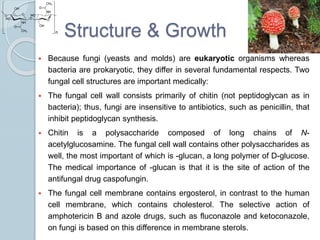
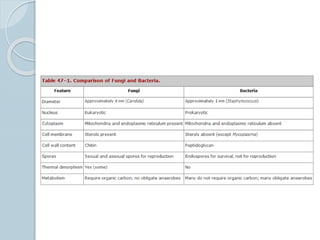
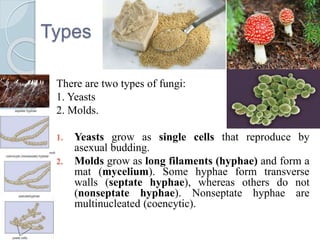
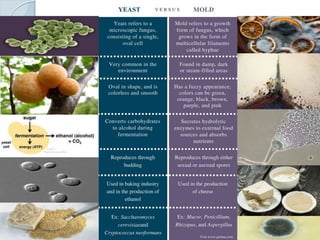
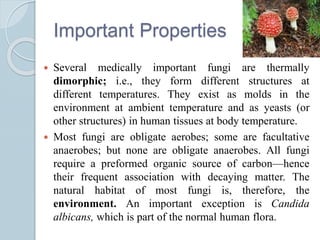
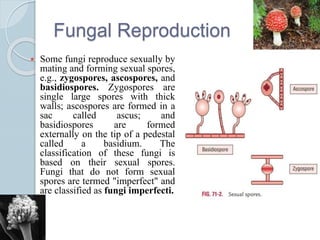
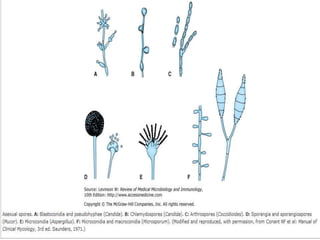



Fungi differ from bacteria in that they have a cell wall composed of chitin rather than peptidoglycan, and a cell membrane containing ergosterol rather than cholesterol. There are two main types of fungi: yeasts, which grow as single cells, and molds, which grow as filaments called hyphae. Many medically important fungi can exist as either molds or yeasts depending on temperature. Fungi reproduce both sexually through spores and asexually through budding or formation of conidia. Host defenses against fungi include intact skin and mucous membranes, as well as cell-mediated immunity and antibodies, though fungi do not produce endotoxins or exotox


