
NEW
PRODUCT
DEVELOPMENT
Vijyata
Assistant Professor, RanchiWomen’s College, RanchiUniversity
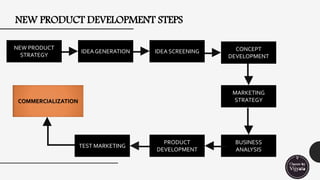
NEW PRODUCT
STRATEGY
IDEA GENERATION
MARKETING
STRATEGY
BUSINESS
ANALYSIS
CONCEPT
DEVELOPMENT
IDEA SCREENING
PRODUCT
DEVELOPMENT
COMMERCIALIZATION
TEST MARKETING
NEW PRODUCT DEVELOPMENT STEPS
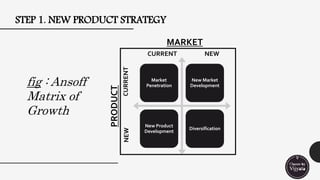
STEP 1. NEW PRODUCT STRATEGY
Market
Penetration
New Market
Development
New Product
Development
Diversification
CURRENT NEW
CURRENTNEW
MARKET
PRODUCT
fig : Ansoff
Matrix of
Growth
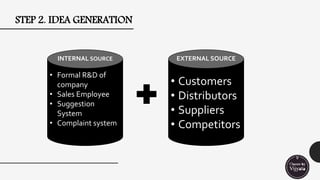
STEP 2. IDEA GENERATION
• Formal R&D of
company
• Sales Employee
• Suggestion
System
• Complaint system
• Customers
• Distributors
• Suppliers
• Competitors
INTERNAL SOURCE EXTERNAL SOURCE
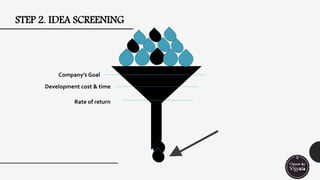
STEP 2. IDEA SCREENING
Company’s Goal
Development cost & time
Rate of return
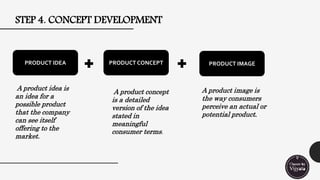
STEP 4. CONCEPT DEVELOPMENT
PRODUCT IDEA PRODUCT CONCEPT PRODUCT IMAGE
A product idea is
an idea for a
possible product
that the company
can see itself
offering to the
market.
A product concept
is a detailed
version of the idea
stated in
meaningful
consumer terms.
A product image is
the way consumers
perceive an actual or
potential product.
T
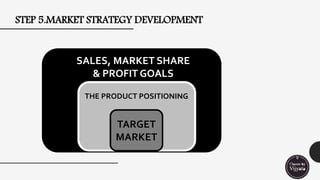
STEP 5.MARKET STRATEGY DEVELOPMENT
TARGET
MARKET
THE PRODUCT POSITIONING
SALES, MARKET SHARE
& PROFIT GOALS
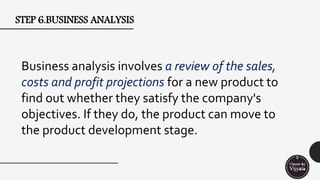
STEP 6.BUSINESS ANALYSIS
Business analysis involves a review of the sales,
costs and profit projections for a new product to
find out whether they satisfy the company's
objectives. If they do, the product can move to
the product development stage.
STEP 7.PRODUCT DEVELOPMENT
Developing the product concept into a
physical product in order to ensure that the
product idea can be turned into a workable
product.
Design for Manufacturability and Assembly
(DEMA) approach is advisable to make product
pass functional and consumer tests.
STEP 8.TEST MARKETING
Company tests the product and its entire marketing
programme - positioning strategy, advertising its
distribution, pricing, branding and packaging, and
budget levels - in real market situations.The company
uses test marketing to learn how consumers and
dealers will react to handling, using and repurchasing
the product
TEST MARKETING APPROACHES
StandardTest Markets – Full marketing campaign is conducted in selected
cities and the results are applied on entire market.
ControlledTest Markets - Research firms keep controlled panels of stores
which have agreed to carry new products for a fee. Sales results are tracked
to determine the impact of these factors on demand.
SimulatedTest Markets – Consumers are paid money to buy products in a
simulated shopping environment or laboratory store where the new
product as well competitor brands are kept. Consumer are then
interviewed for their choice of product.
STEP 9. COMMERCIALIZATION
•Where ??
•ToWhom??
•How??
THANK YOU!!!
For feedback/query mail me at vijyata.rwc@gmail.com or comment in comment box

New product development

  • 1.
  • 2.
    NEW PRODUCT STRATEGY IDEA GENERATION MARKETING STRATEGY BUSINESS ANALYSIS CONCEPT DEVELOPMENT IDEASCREENING PRODUCT DEVELOPMENT COMMERCIALIZATION TEST MARKETING NEW PRODUCT DEVELOPMENT STEPS
  • 3.
    STEP 1. NEWPRODUCT STRATEGY Market Penetration New Market Development New Product Development Diversification CURRENT NEW CURRENTNEW MARKET PRODUCT fig : Ansoff Matrix of Growth
  • 4.
    STEP 2. IDEAGENERATION • Formal R&D of company • Sales Employee • Suggestion System • Complaint system • Customers • Distributors • Suppliers • Competitors INTERNAL SOURCE EXTERNAL SOURCE
  • 5.
    STEP 2. IDEASCREENING Company’s Goal Development cost & time Rate of return
  • 6.
    STEP 4. CONCEPTDEVELOPMENT PRODUCT IDEA PRODUCT CONCEPT PRODUCT IMAGE A product idea is an idea for a possible product that the company can see itself offering to the market. A product concept is a detailed version of the idea stated in meaningful consumer terms. A product image is the way consumers perceive an actual or potential product.
  • 7.
    T STEP 5.MARKET STRATEGYDEVELOPMENT TARGET MARKET THE PRODUCT POSITIONING SALES, MARKET SHARE & PROFIT GOALS
  • 8.
    STEP 6.BUSINESS ANALYSIS Businessanalysis involves a review of the sales, costs and profit projections for a new product to find out whether they satisfy the company's objectives. If they do, the product can move to the product development stage.
  • 9.
    STEP 7.PRODUCT DEVELOPMENT Developingthe product concept into a physical product in order to ensure that the product idea can be turned into a workable product. Design for Manufacturability and Assembly (DEMA) approach is advisable to make product pass functional and consumer tests.
  • 10.
    STEP 8.TEST MARKETING Companytests the product and its entire marketing programme - positioning strategy, advertising its distribution, pricing, branding and packaging, and budget levels - in real market situations.The company uses test marketing to learn how consumers and dealers will react to handling, using and repurchasing the product
  • 11.
    TEST MARKETING APPROACHES StandardTestMarkets – Full marketing campaign is conducted in selected cities and the results are applied on entire market. ControlledTest Markets - Research firms keep controlled panels of stores which have agreed to carry new products for a fee. Sales results are tracked to determine the impact of these factors on demand. SimulatedTest Markets – Consumers are paid money to buy products in a simulated shopping environment or laboratory store where the new product as well competitor brands are kept. Consumer are then interviewed for their choice of product.
  • 12.
    STEP 9. COMMERCIALIZATION •Where?? •ToWhom?? •How??
  • 13.
    THANK YOU!!! For feedback/querymail me at vijyata.rwc@gmail.com or comment in comment box