RETAIL IMAGE MIX
By -Vijyata
RETAIL IMAGE
• Image refers to how a retailer is perceived by customers
and others, and positioning refers to how a firm devises
its strategy so as to project an image relative to its retail
category and its competitors— and to elicit a positive
consumer response. To succeed, a retailer must
communicate a distinctive, clear, and consistent image.
Once its image is established in consumers’ minds, a
retailer is placed in a niche relative to competitors
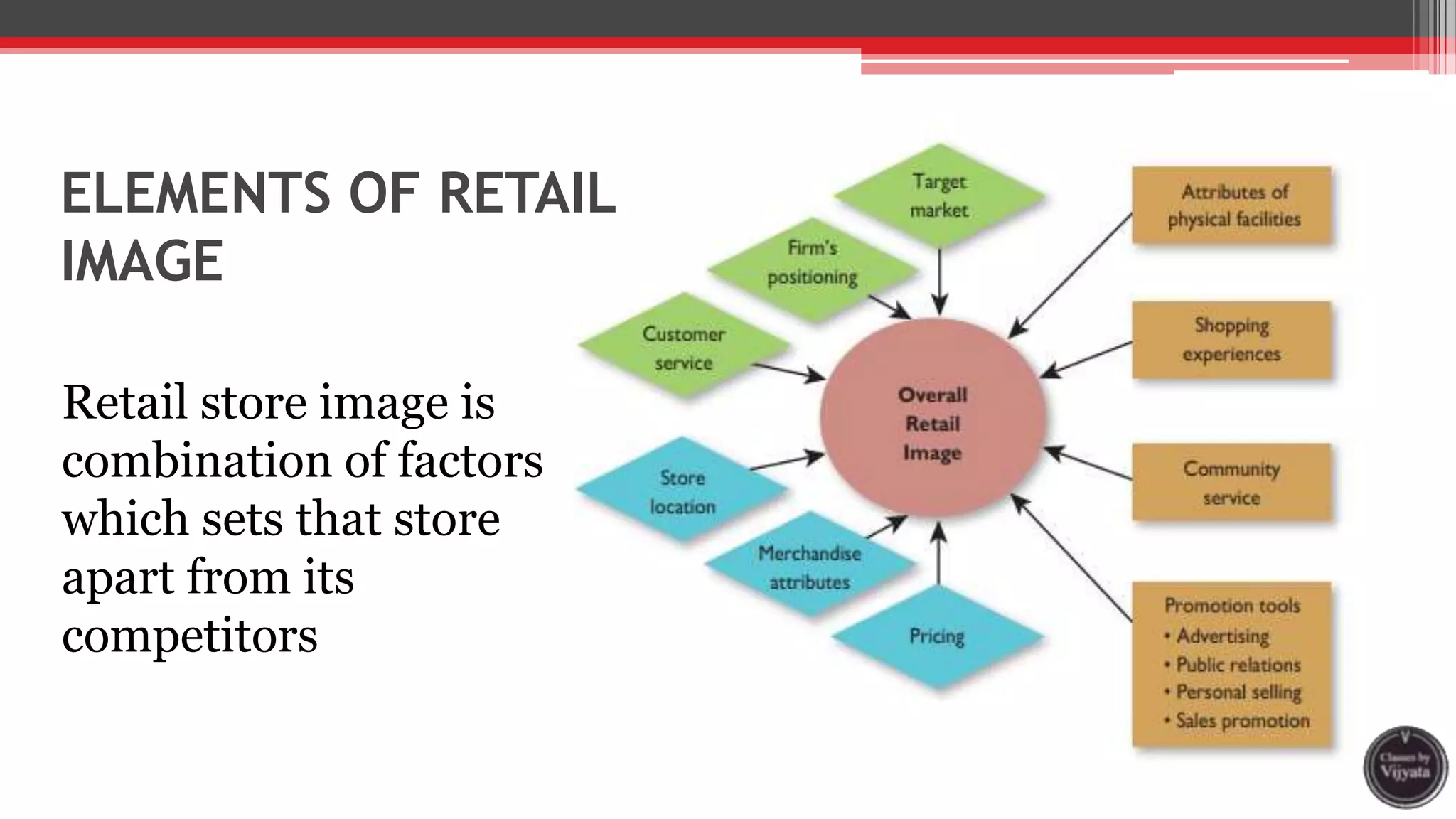
Retail store image is
combination of factors
which sets that store
apart from its
competitors
ELEMENTS OF RETAIL
IMAGE
STORE ATMOSPHERE
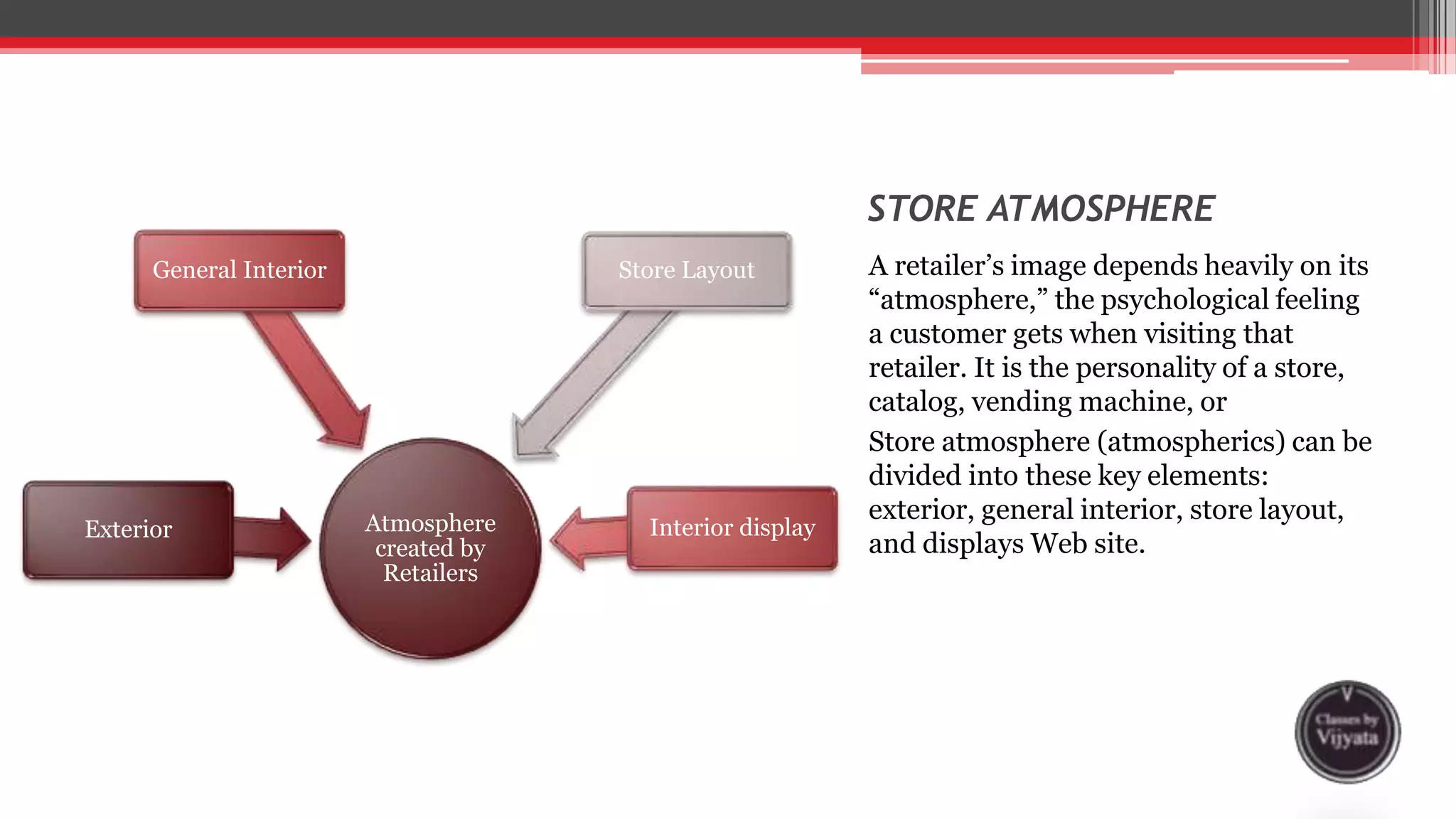
A retailer’s image depends heavily on its
“atmosphere,” the psychological feeling
a customer gets when visiting that
retailer. It is the personality of a store,
catalog, vending machine, or
Store atmosphere (atmospherics) can be
divided into these key elements:
exterior, general interior, store layout,
and displays Web site.
Atmosphere
created by
Retailers
Exterior
General Interior Store Layout
Interior display
COMMUNITY RELATIONS
• The way retailers interact with the communities
around them can have a significant impact on
both their image and performance.
▫ Their stature can be enhanced by engaging in such
community oriented actions as these:
• Making sure that stores are barrier-free for disabled shoppers and strictly
enforcing handicapped parking rules
• Showing a concern for the environment by recycling trash and cleaning
streets
• Supporting charities and noting that support at the company Web site
• Participating in antidrug programs
• Employing area residents
• Running special sales for senior citizens and other groups
• Sponsoring Little League and other youth activities
• Cooperating with neighborhood planning groups
• Donating money and/or equipment to schools.
• Carefully checking IDs for purchases with age minimum
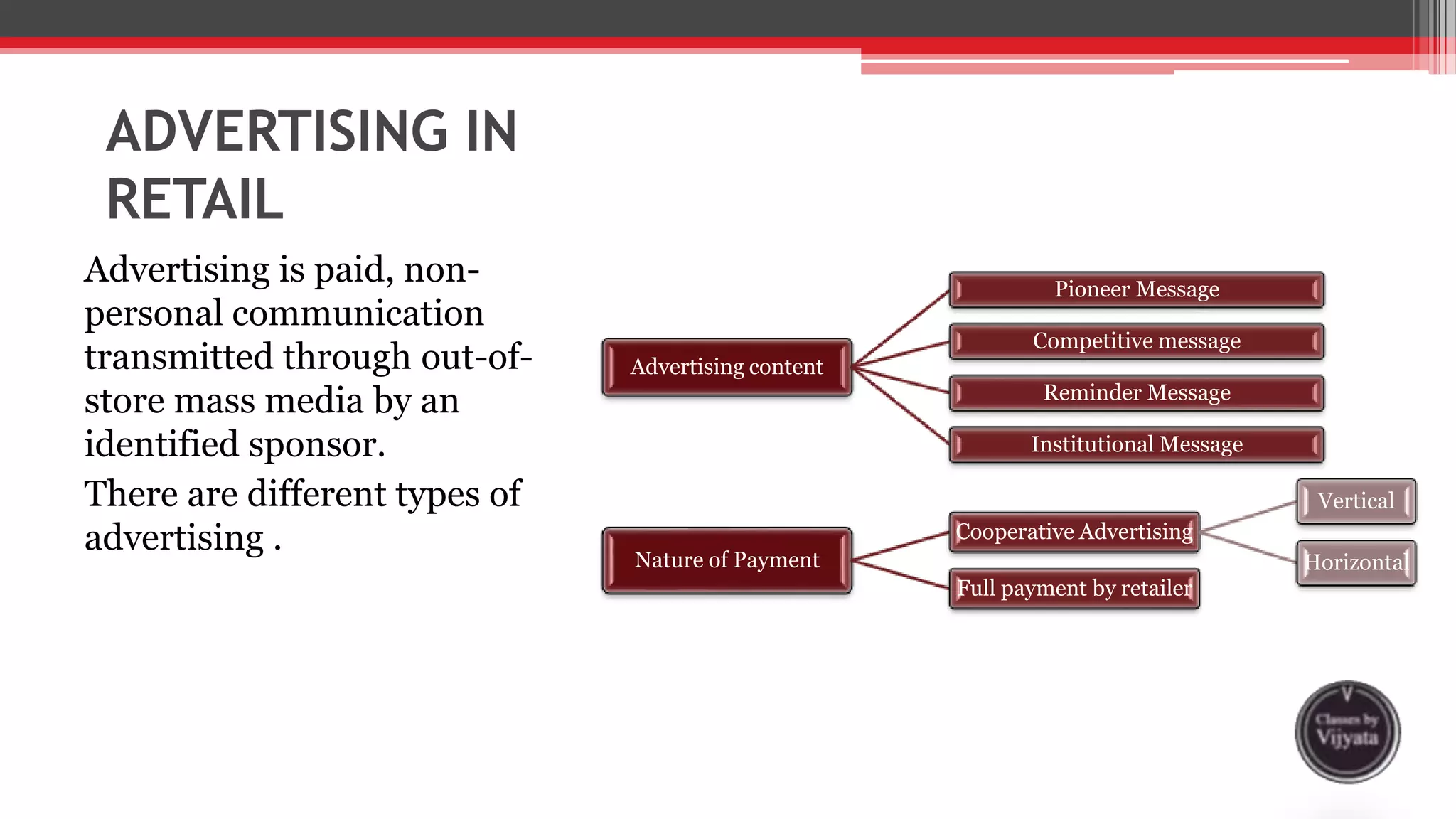
ADVERTISING IN
RETAIL
Advertising is paid, non-
personal communication
transmitted through out-of-
store mass media by an
identified sponsor.
There are different types of
advertising .
Advertising content
Pioneer Message
Competitive message
Reminder Message
Institutional Message
Nature of Payment
Cooperative Advertising
Vertical
Horizontal
Full payment by retailer
PUBLIC RELATIONS
• Public relations entail any communication that
fosters a favorable image for the retailer among
its publics (consumers, investors, government,
channel members, employees, and the general
public). It may be non-personal or personal,
paid or nonpaid, and sponsor controlled or not
controlled.
SALES PROMOTION
• Sales promotion encompasses the paid
communication activities other than advertising,
public relations, and personal selling that stimulate
consumer purchases and dealer effectiveness. Sales
promotion goals are:
▫ To increase short-term sales volume
▫ To maintain customer loyalty
▫ To emphasize novelty
▫ To complement other promotion tools
PERSONAL SELLING
Personal selling involves oral communication with one or more
prospective customers for the purpose of making a sale. Retail
salespeople include anyone who interacts face-to-face (or via
the phone) with the shopper in a way that encourages that shopper
to make a purchase. The level of personal selling used by a retailer
depends on the image it wants to convey, the products sold, the
amount of self-service, and the interest in long-term customer
relationships—as well as customer expectations. Retail salespeople
may work in a store, visit consumer homes or places of work; engage
in telemarketing; or engage in real-time online chat.
RETAIL POSITIONING
Retail positioning is a plan of the store’s action for how
the retailer will enter the target market and will compete
with its main competitors. Retail positioning from a
retail store’s point of view, is a step-by-step plan to
create and maintain a unique and everlasting image of
the store in the consumers mind. This process reveals
the fact that understanding ‘what the customer wants’ is
the success key to retail positioning in the market.
Retail positioning is made possible under these
circumstances:
▫ By differentiation of the store’s merchandise from
that its competitors.
▫ By offering a high level of service after sales at
nominal cost
▫ By adopting low pricing policies.
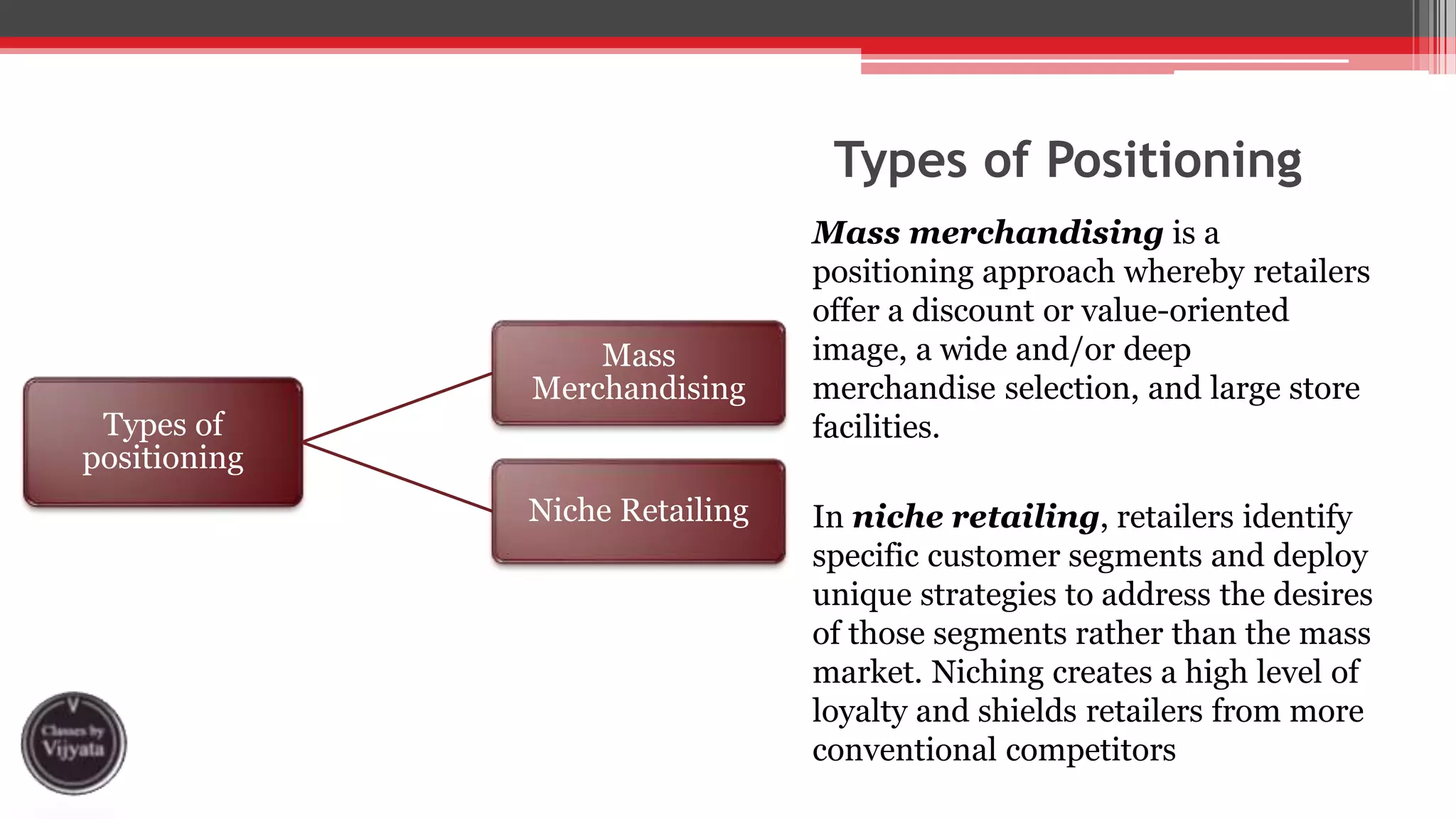
Types of Positioning
Mass merchandising is a
positioning approach whereby retailers
offer a discount or value-oriented
image, a wide and/or deep
merchandise selection, and large store
facilities.
In niche retailing, retailers identify
specific customer segments and deploy
unique strategies to address the desires
of those segments rather than the mass
market. Niching creates a high level of
loyalty and shields retailers from more
conventional competitors
Types of
positioning
Mass
Merchandising
Niche Retailing
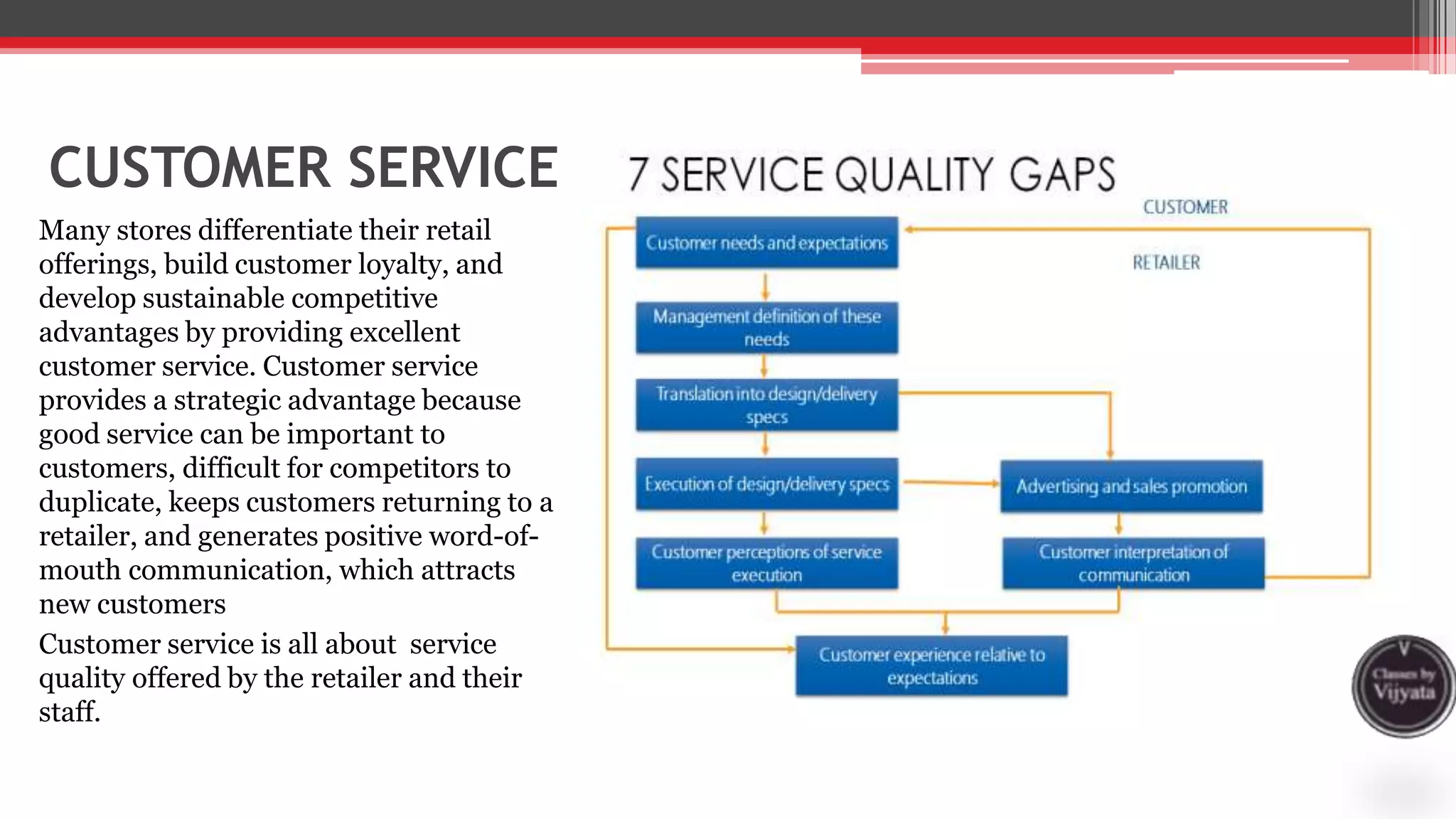
CUSTOMER SERVICE
Many stores differentiate their retail
offerings, build customer loyalty, and
develop sustainable competitive
advantages by providing excellent
customer service. Customer service
provides a strategic advantage because
good service can be important to
customers, difficult for competitors to
duplicate, keeps customers returning to a
retailer, and generates positive word-of-
mouth communication, which attracts
new customers
Customer service is all about service
quality offered by the retailer and their
staff.
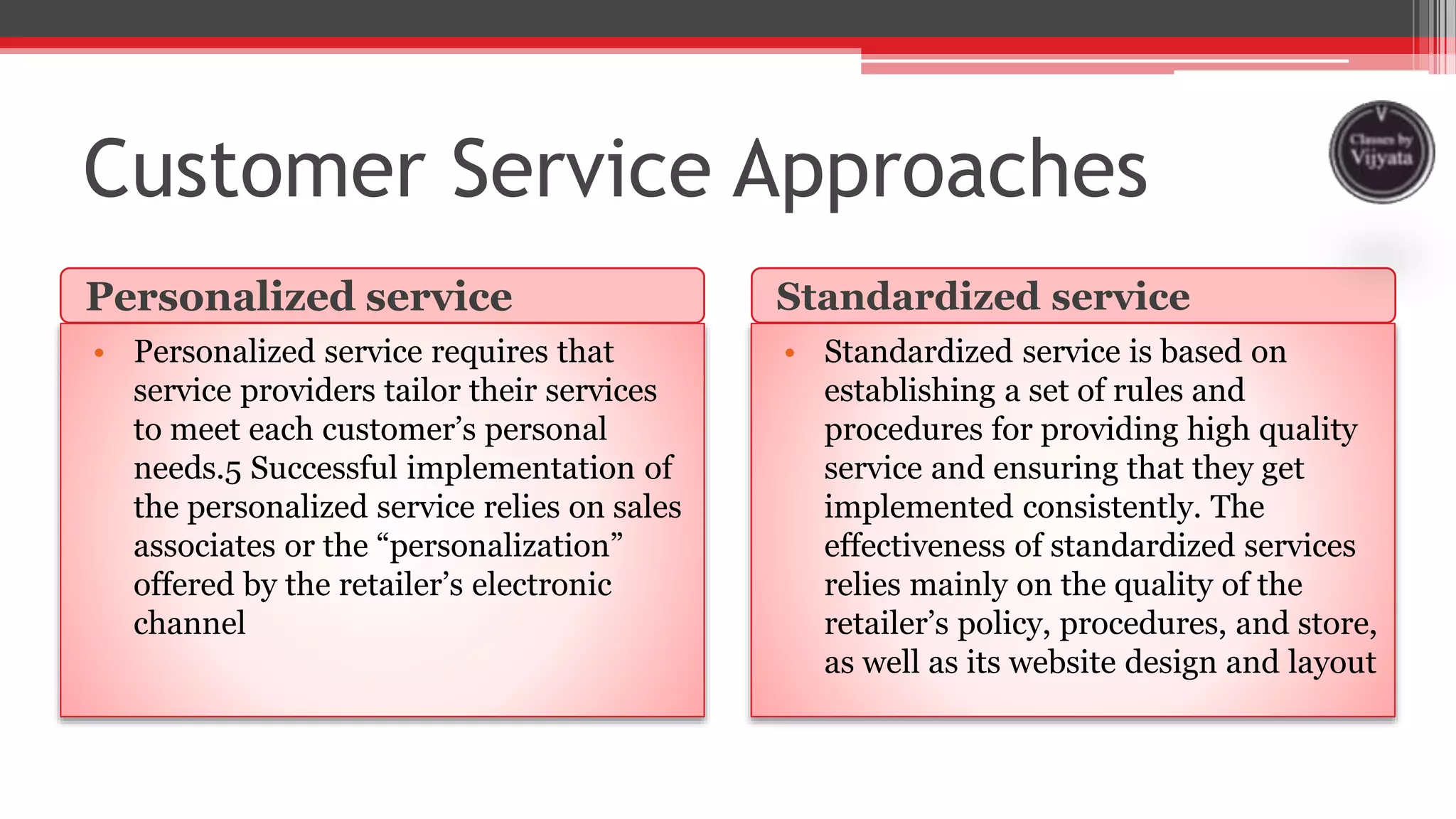
Customer Service Approaches
Personalized service Standardized service
• Personalized service requires that
service providers tailor their services
to meet each customer’s personal
needs.5 Successful implementation of
the personalized service relies on sales
associates or the “personalization”
offered by the retailer’s electronic
channel
• Standardized service is based on
establishing a set of rules and
procedures for providing high quality
service and ensuring that they get
implemented consistently. The
effectiveness of standardized services
relies mainly on the quality of the
retailer’s policy, procedures, and store,
as well as its website design and layout
MERCHANDISE MANAGEMENT
• Merchandise management is the process by which a
retailer attempts to offer the appropriate quantity of the
right merchandise, in the right place and at the right
time, so that it can meet the company’s financial goals.
Buyers need to be in touch with and anticipate what
customers will want to buy, but this ability to sense
market trends is just one skill needed to manage
merchandise inventory effectively
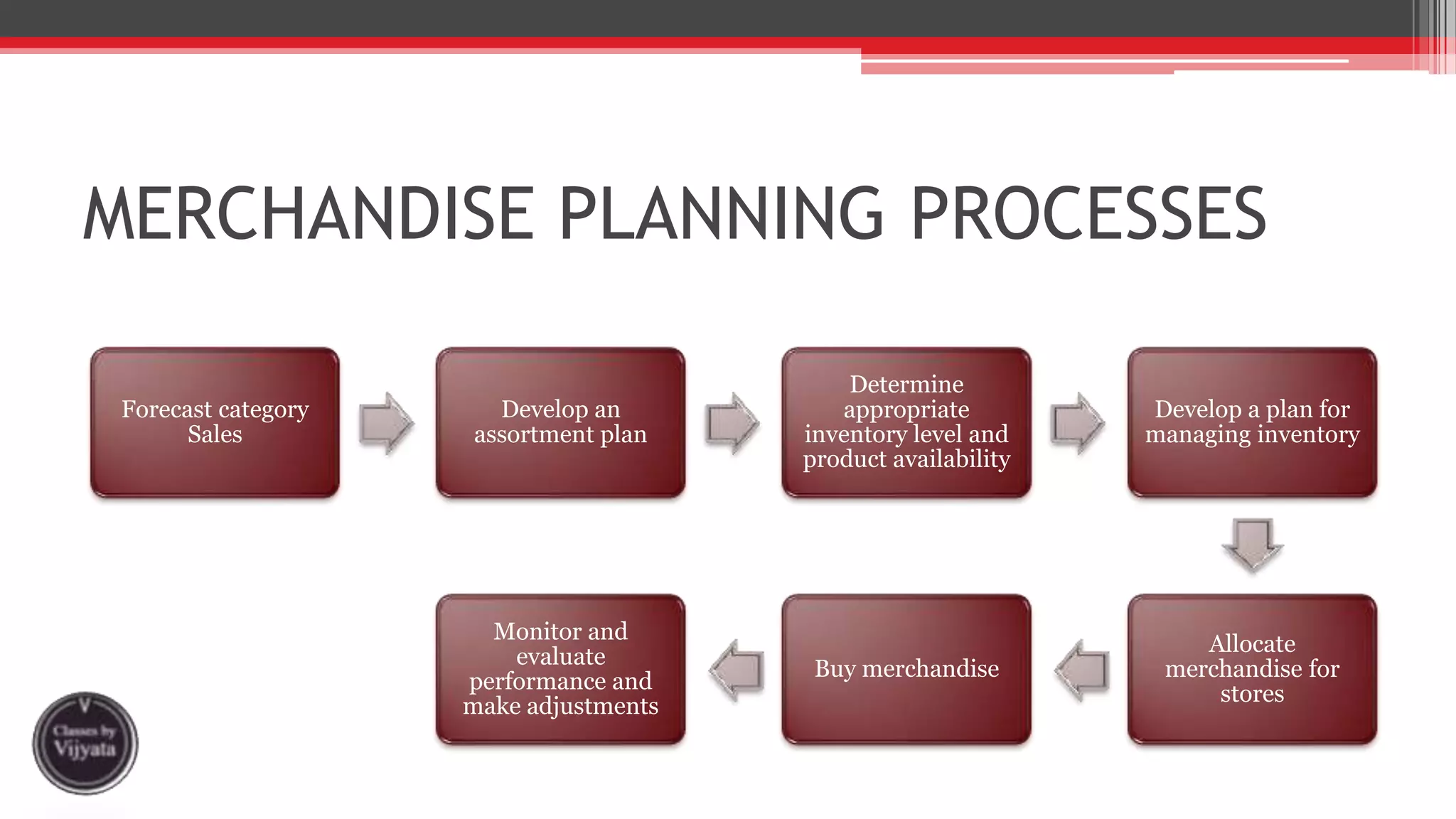
MERCHANDISE PLANNING PROCESSES
Forecast category
Sales
Develop an
assortment plan
Determine
appropriate
inventory level and
product availability
Develop a plan for
managing inventory
Allocate
merchandise for
stores
Buy merchandise
Monitor and
evaluate
performance and
make adjustments
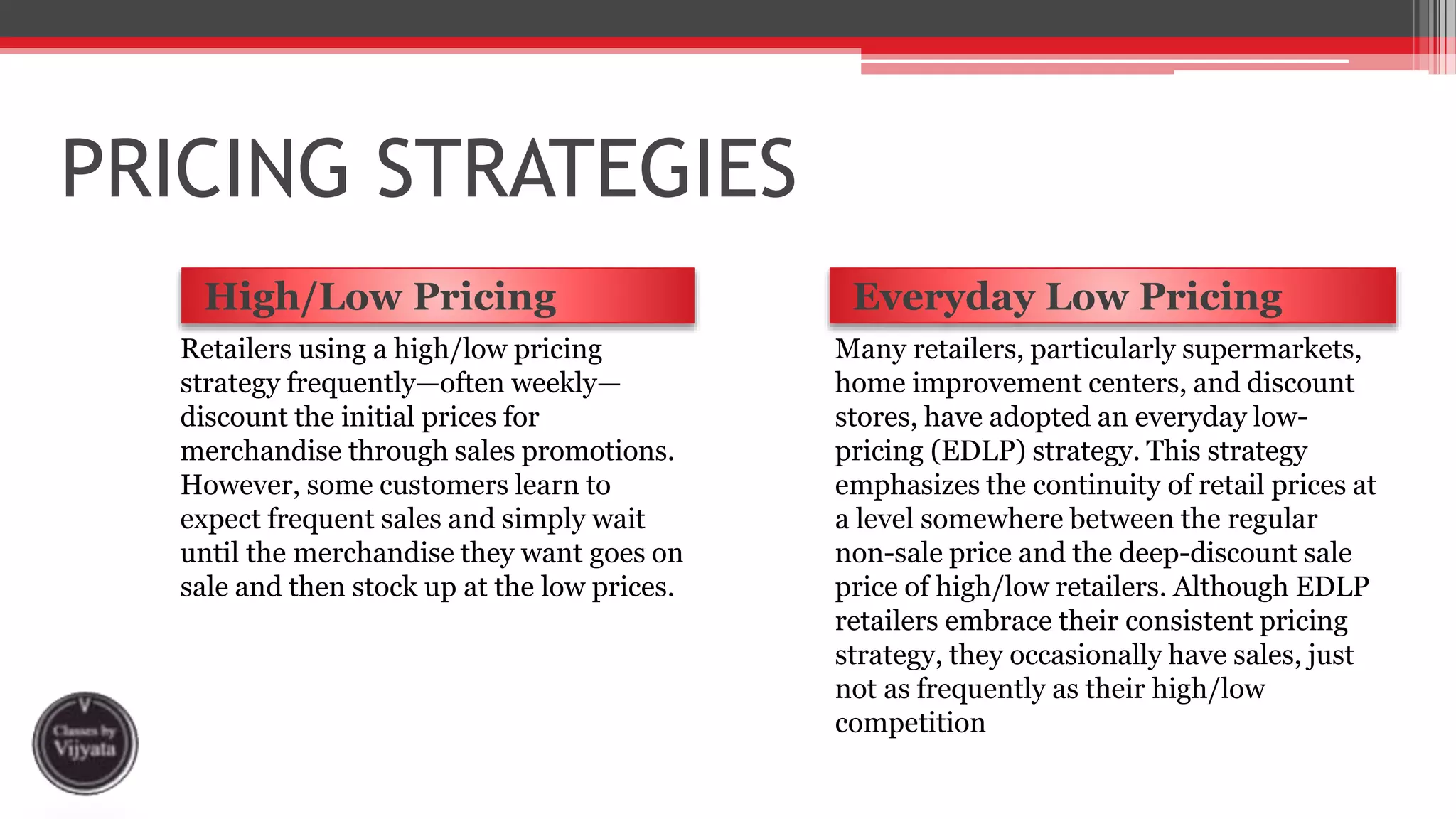
PRICING STRATEGIES
High/Low Pricing Everyday Low Pricing
Retailers using a high/low pricing
strategy frequently—often weekly—
discount the initial prices for
merchandise through sales promotions.
However, some customers learn to
expect frequent sales and simply wait
until the merchandise they want goes on
sale and then stock up at the low prices.
Many retailers, particularly supermarkets,
home improvement centers, and discount
stores, have adopted an everyday low-
pricing (EDLP) strategy. This strategy
emphasizes the continuity of retail prices at
a level somewhere between the regular
non-sale price and the deep-discount sale
price of high/low retailers. Although EDLP
retailers embrace their consistent pricing
strategy, they occasionally have sales, just
not as frequently as their high/low
competition
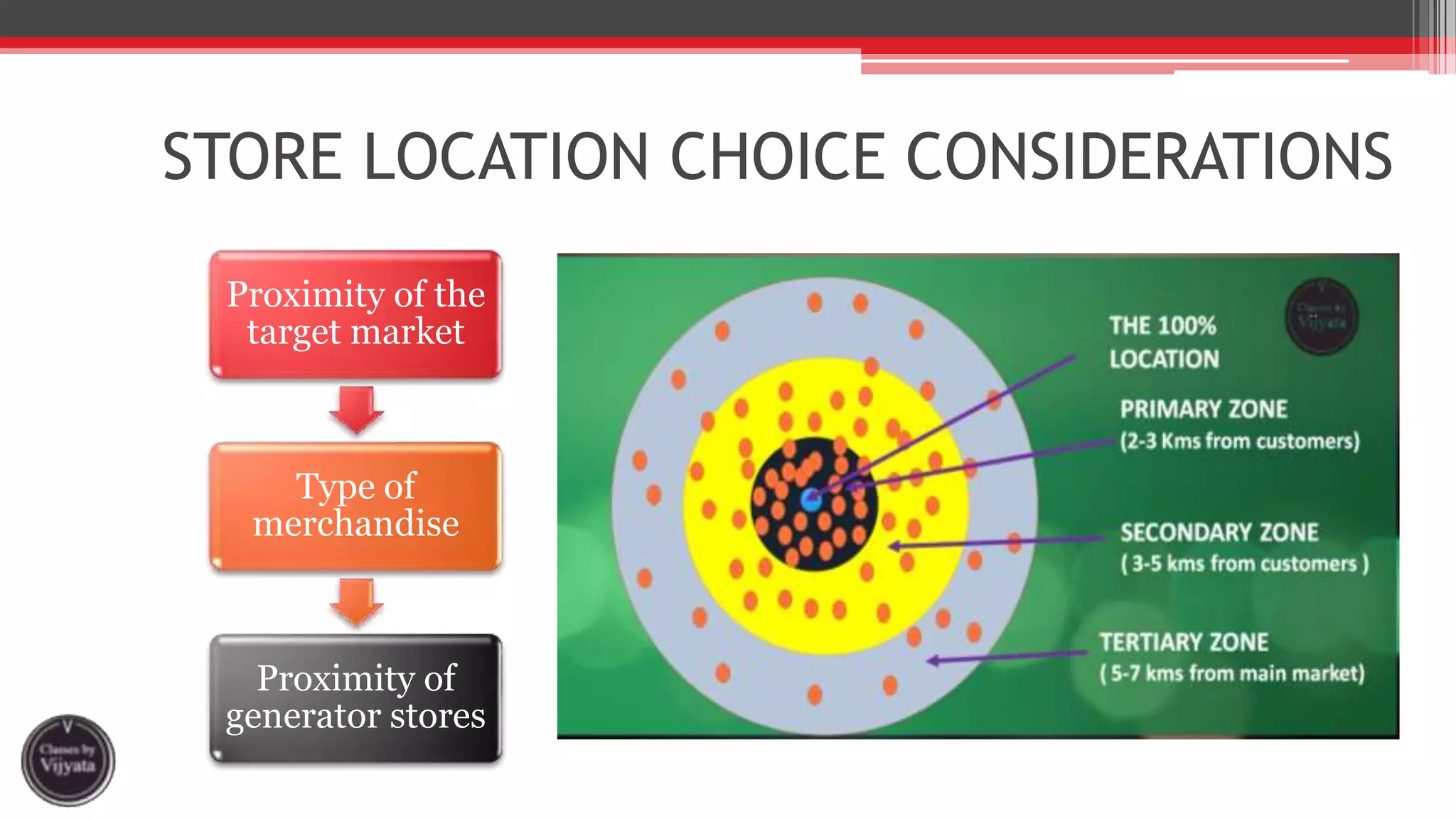
STORE LOCATION CHOICE CONSIDERATIONS
Proximity of the
target market
Type of
merchandise
Proximity of
generator stores
Write to me at vijyata.rwc@gmail.com or comment in the
comment box

Retail image mix

  • 1.
  • 2.
    RETAIL IMAGE • Imagerefers to how a retailer is perceived by customers and others, and positioning refers to how a firm devises its strategy so as to project an image relative to its retail category and its competitors— and to elicit a positive consumer response. To succeed, a retailer must communicate a distinctive, clear, and consistent image. Once its image is established in consumers’ minds, a retailer is placed in a niche relative to competitors
  • 3.
    Retail store imageis combination of factors which sets that store apart from its competitors ELEMENTS OF RETAIL IMAGE
  • 4.
    STORE ATMOSPHERE A retailer’simage depends heavily on its “atmosphere,” the psychological feeling a customer gets when visiting that retailer. It is the personality of a store, catalog, vending machine, or Store atmosphere (atmospherics) can be divided into these key elements: exterior, general interior, store layout, and displays Web site. Atmosphere created by Retailers Exterior General Interior Store Layout Interior display
  • 5.
    COMMUNITY RELATIONS • Theway retailers interact with the communities around them can have a significant impact on both their image and performance. ▫ Their stature can be enhanced by engaging in such community oriented actions as these:
  • 6.
    • Making surethat stores are barrier-free for disabled shoppers and strictly enforcing handicapped parking rules • Showing a concern for the environment by recycling trash and cleaning streets • Supporting charities and noting that support at the company Web site • Participating in antidrug programs • Employing area residents • Running special sales for senior citizens and other groups • Sponsoring Little League and other youth activities • Cooperating with neighborhood planning groups • Donating money and/or equipment to schools. • Carefully checking IDs for purchases with age minimum
  • 7.
    ADVERTISING IN RETAIL Advertising ispaid, non- personal communication transmitted through out-of- store mass media by an identified sponsor. There are different types of advertising . Advertising content Pioneer Message Competitive message Reminder Message Institutional Message Nature of Payment Cooperative Advertising Vertical Horizontal Full payment by retailer
  • 8.
    PUBLIC RELATIONS • Publicrelations entail any communication that fosters a favorable image for the retailer among its publics (consumers, investors, government, channel members, employees, and the general public). It may be non-personal or personal, paid or nonpaid, and sponsor controlled or not controlled.
  • 9.
    SALES PROMOTION • Salespromotion encompasses the paid communication activities other than advertising, public relations, and personal selling that stimulate consumer purchases and dealer effectiveness. Sales promotion goals are: ▫ To increase short-term sales volume ▫ To maintain customer loyalty ▫ To emphasize novelty ▫ To complement other promotion tools
  • 10.
    PERSONAL SELLING Personal sellinginvolves oral communication with one or more prospective customers for the purpose of making a sale. Retail salespeople include anyone who interacts face-to-face (or via the phone) with the shopper in a way that encourages that shopper to make a purchase. The level of personal selling used by a retailer depends on the image it wants to convey, the products sold, the amount of self-service, and the interest in long-term customer relationships—as well as customer expectations. Retail salespeople may work in a store, visit consumer homes or places of work; engage in telemarketing; or engage in real-time online chat.
  • 11.
    RETAIL POSITIONING Retail positioningis a plan of the store’s action for how the retailer will enter the target market and will compete with its main competitors. Retail positioning from a retail store’s point of view, is a step-by-step plan to create and maintain a unique and everlasting image of the store in the consumers mind. This process reveals the fact that understanding ‘what the customer wants’ is the success key to retail positioning in the market.
  • 12.
    Retail positioning ismade possible under these circumstances: ▫ By differentiation of the store’s merchandise from that its competitors. ▫ By offering a high level of service after sales at nominal cost ▫ By adopting low pricing policies.
  • 13.
    Types of Positioning Massmerchandising is a positioning approach whereby retailers offer a discount or value-oriented image, a wide and/or deep merchandise selection, and large store facilities. In niche retailing, retailers identify specific customer segments and deploy unique strategies to address the desires of those segments rather than the mass market. Niching creates a high level of loyalty and shields retailers from more conventional competitors Types of positioning Mass Merchandising Niche Retailing
  • 14.
    CUSTOMER SERVICE Many storesdifferentiate their retail offerings, build customer loyalty, and develop sustainable competitive advantages by providing excellent customer service. Customer service provides a strategic advantage because good service can be important to customers, difficult for competitors to duplicate, keeps customers returning to a retailer, and generates positive word-of- mouth communication, which attracts new customers Customer service is all about service quality offered by the retailer and their staff.
  • 15.
    Customer Service Approaches Personalizedservice Standardized service • Personalized service requires that service providers tailor their services to meet each customer’s personal needs.5 Successful implementation of the personalized service relies on sales associates or the “personalization” offered by the retailer’s electronic channel • Standardized service is based on establishing a set of rules and procedures for providing high quality service and ensuring that they get implemented consistently. The effectiveness of standardized services relies mainly on the quality of the retailer’s policy, procedures, and store, as well as its website design and layout
  • 16.
    MERCHANDISE MANAGEMENT • Merchandisemanagement is the process by which a retailer attempts to offer the appropriate quantity of the right merchandise, in the right place and at the right time, so that it can meet the company’s financial goals. Buyers need to be in touch with and anticipate what customers will want to buy, but this ability to sense market trends is just one skill needed to manage merchandise inventory effectively
  • 17.
    MERCHANDISE PLANNING PROCESSES Forecastcategory Sales Develop an assortment plan Determine appropriate inventory level and product availability Develop a plan for managing inventory Allocate merchandise for stores Buy merchandise Monitor and evaluate performance and make adjustments
  • 18.
    PRICING STRATEGIES High/Low PricingEveryday Low Pricing Retailers using a high/low pricing strategy frequently—often weekly— discount the initial prices for merchandise through sales promotions. However, some customers learn to expect frequent sales and simply wait until the merchandise they want goes on sale and then stock up at the low prices. Many retailers, particularly supermarkets, home improvement centers, and discount stores, have adopted an everyday low- pricing (EDLP) strategy. This strategy emphasizes the continuity of retail prices at a level somewhere between the regular non-sale price and the deep-discount sale price of high/low retailers. Although EDLP retailers embrace their consistent pricing strategy, they occasionally have sales, just not as frequently as their high/low competition
  • 19.
    STORE LOCATION CHOICECONSIDERATIONS Proximity of the target market Type of merchandise Proximity of generator stores
  • 20.
    Write to meat vijyata.rwc@gmail.com or comment in the comment box