Download to read offline
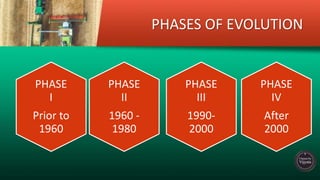
![PHASE I [ Prior to 1960 ]
• Rural marketing was synonymous to
Agricultural Marketing
• Agricultural produce and allied products
were bought and sold
• Earthen and metallic utensils and crafts
were exchanged
• Asian Paints was the FIRST company to
enter rural market in 1949](https://image.slidesharecdn.com/evolutionofruralmarketing-210708182924/85/Evolution-of-Rural-marketing-3-320.jpg)
![PHASE II [1960 – 1980s]
• HLL entered rural markets with Lifebouy soap
followed by Colgate, Dabur, Nirma, & Marico
• Green Revolution [1967-68 to 1977-78], White
Revolution [1970] brought rural prosperity and
changed demand cycles
• Khadi and Village Industries Commission,
Bunkar associations , handicraft emporia took
over marketing of rural products](https://image.slidesharecdn.com/evolutionofruralmarketing-210708182924/85/Evolution-of-Rural-marketing-4-320.jpg)
![PHASE III [1990-2000 ]
• New Service Sector emerged in India
• Pro-rural initiatives by Government
• India’s industrial sector gained strength
lading to transition from agriculture to
industry.
• Companies launched plethora of products
to woo rural markets](https://image.slidesharecdn.com/evolutionofruralmarketing-210708182924/85/Evolution-of-Rural-marketing-5-320.jpg)
![PHASE IV [ After 2000]
• Financial Inclusion
• Media explosion and satellite invasion
• Companies started to hire rural staff to
have a better foothold in rural areas.
• Food safety bill, Aanganwadis, Mid day
meals increased the literacy rate as well
as the living standard](https://image.slidesharecdn.com/evolutionofruralmarketing-210708182924/85/Evolution-of-Rural-marketing-6-320.jpg)


This document outlines the evolution of rural marketing in India through four phases: Phase I (prior to 1960) consisted of agricultural marketing and exchanges of crafts and utensils; Phase II (1960-1980) saw the entry of consumer goods companies and changes in rural demand due to the Green Revolution; Phase III (1990-2000) included new service sectors, pro-rural government initiatives, and companies launching rural-focused products; Phase IV (after 2000) featured financial inclusion, media expansion, hiring of rural staff, and improved standards of living through various government programs.


