Organizational Culture
Questions for Consideration

 What is organizational culture?
 When is organizational culture functional?
  Dysfunctional?
 How do employees learn about the culture of
  their organization?
 “Culture is the soul of the organization — the beliefs
 and values, and how they are manifested. I think of
 the structure as the skeleton, and as the flesh and
 blood. And culture is the soul that holds the thing
 together and gives it life force.”
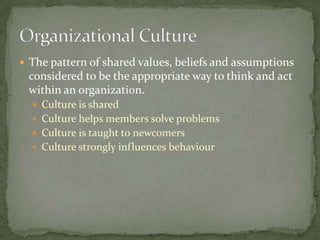
 The pattern of shared values, beliefs and assumptions
 considered to be the appropriate way to think and act
 within an organization.
   Culture is shared
   Culture helps members solve problems
   Culture is taught to newcomers
   Culture strongly influences behaviour
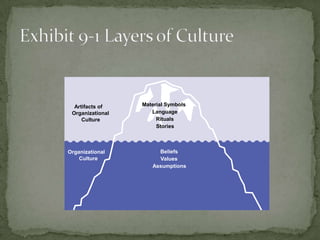
Artifacts of    Material Symbols
 Organizational      Language
     Culture           Rituals
                       Stories


Organizational         Beliefs
    Culture            Values
                     Assumptions
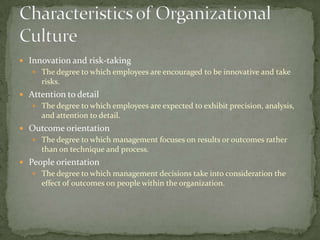
 Innovation and risk-taking
    The degree to which employees are encouraged to be innovative and take
     risks.
 Attention to detail
    The degree to which employees are expected to exhibit precision, analysis,
     and attention to detail.
 Outcome orientation
    The degree to which management focuses on results or outcomes rather
     than on technique and process.
 People orientation
    The degree to which management decisions take into consideration the
     effect of outcomes on people within the organization.
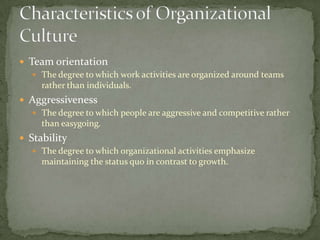
 Team orientation
    The degree to which work activities are organized around teams
     rather than individuals.
 Aggressiveness
   The degree to which people are aggressive and competitive rather
    than easygoing.
 Stability
    The degree to which organizational activities emphasize
     maintaining the status quo in contrast to growth.
 Stories
 Rituals
 Material Symbols
 Language
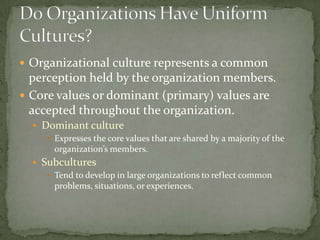
 Organizational culture represents a common
  perception held by the organization members.
 Core values or dominant (primary) values are
  accepted throughout the organization.
   Dominant culture
      Expresses the core values that are shared by a majority of the
       organization’s members.
   Subcultures
      Tend to develop in large organizations to reflect common
       problems, situations, or experiences.
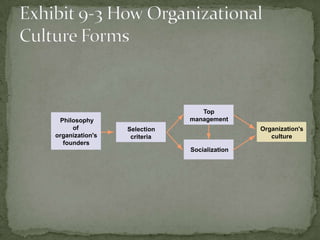
Top
 Philosophy                  management
     of          Selection                   Organization's
organization's    criteria                      culture
  founders
                             Socialization
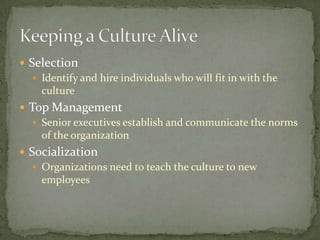
 Selection
    Identify and hire individuals who will fit in with the
     culture
 Top Management
   Senior executives establish and communicate the norms
    of the organization
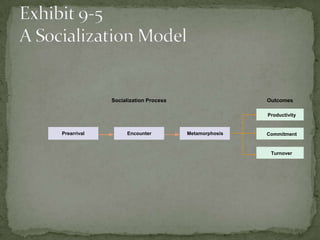
 Socialization
    Organizations need to teach the culture to new
     employees
Socialization Process                   Outcomes

                                                     Productivity


Prearrival        Encounter          Metamorphosis   Commitment


                                                      Turnover
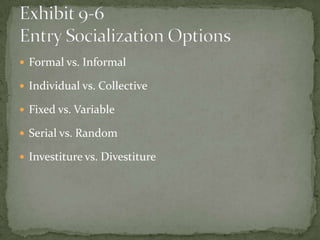
 Formal vs. Informal

 Individual vs. Collective

 Fixed vs. Variable

 Serial vs. Random

 Investiture vs. Divestiture
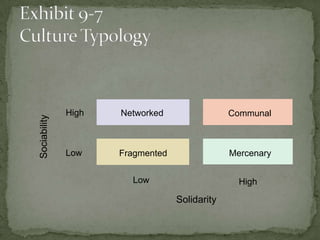
High   Networked                 Communal
Sociability


              Low    Fragmented                Mercenary


                       Low                       High

                                  Solidarity
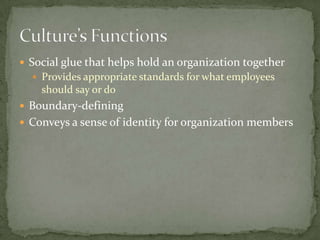
 Social glue that helps hold an organization together
   Provides appropriate standards for what employees
    should say or do
 Boundary-defining
 Conveys a sense of identity for organization members
 Facilitates commitment to something larger than one’s
  individual self-interest
 Enhances social system stability
 Serves as a “sense-making” and control mechanism
   Guides and shapes the attitudes and behaviour of
    employees
 Culture can have dysfunctional aspects in some
 instances
   Culture as a Barrier to Change
      When organization is undergoing change, culture may impede
       change
   Culture as a Barrier to Diversity
      Strong cultures put considerable pressure on employees to
       conform
   Culture as a Barrier to Mergers and Acquisitions
      Merging the cultures of two organizations can be difficult, if not
       impossible
 Have top-management people become positive
  role models, setting the tone through their
  behaviour.
 Create new stories, symbols, and rituals to replace
  those currently in vogue.
 Select, promote, and support employees who
  espouse the new values that are sought.
 Redesign socialization processes to align with the
  new values.
 Change the reward system to encourage
  acceptance of a new set of values.
 Replace unwritten norms with formal rules and
  regulations that are tightly enforced.
 Shake up current subcultures through transfers,
  job rotation, and/or terminations.
 Work to get peer group consensus through
  utilization of employee participation and creation
  of a climate with a high level of trust.
 Employees form an overall subjective perception of the
  organization based on such factors as degree of risk
  tolerance, team emphasis, and support of people.
   This overall perception becomes, in effect, the organization’s
    culture or personality.
   These favourable or unfavourable perceptions then affect employee
    performance and satisfaction, with the impact being greater for
    stronger cultures.
 Just as people’s personalities tend to be stable over time, so
  too do strong cultures.
   This makes strong cultures difficult for managers to change.
 One of the more important managerial implications of
  organizational culture relates to selection decisions.
   Hiring individuals whose values don't align with those of the
    organization is not good.
 An employee's performance depends to a considerable
  degree on knowing what he should or should not do.
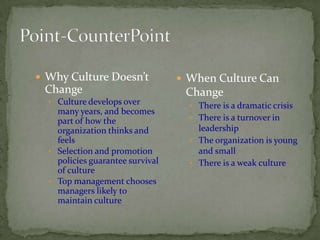
 Why Culture Doesn’t              When Culture Can
 Change                            Change
   Culture develops over
                                     There is a dramatic crisis
    many years, and becomes
    part of how the                  There is a turnover in
    organization thinks and           leadership
    feels                            The organization is young
   Selection and promotion           and small
    policies guarantee survival      There is a weak culture
    of culture
   Top management chooses
    managers likely to
    maintain culture

Organization Culture by SAG

  • 1.
  • 2.
    Questions for Consideration What is organizational culture?  When is organizational culture functional? Dysfunctional?  How do employees learn about the culture of their organization?
  • 3.
     “Culture isthe soul of the organization — the beliefs and values, and how they are manifested. I think of the structure as the skeleton, and as the flesh and blood. And culture is the soul that holds the thing together and gives it life force.”
  • 4.
     The patternof shared values, beliefs and assumptions considered to be the appropriate way to think and act within an organization.  Culture is shared  Culture helps members solve problems  Culture is taught to newcomers  Culture strongly influences behaviour
  • 5.
    Artifacts of Material Symbols Organizational Language Culture Rituals Stories Organizational Beliefs Culture Values Assumptions
  • 6.
     Innovation andrisk-taking  The degree to which employees are encouraged to be innovative and take risks.  Attention to detail  The degree to which employees are expected to exhibit precision, analysis, and attention to detail.  Outcome orientation  The degree to which management focuses on results or outcomes rather than on technique and process.  People orientation  The degree to which management decisions take into consideration the effect of outcomes on people within the organization.
  • 7.
     Team orientation  The degree to which work activities are organized around teams rather than individuals.  Aggressiveness  The degree to which people are aggressive and competitive rather than easygoing.  Stability  The degree to which organizational activities emphasize maintaining the status quo in contrast to growth.
  • 8.
     Stories  Rituals Material Symbols  Language
  • 9.
     Organizational culturerepresents a common perception held by the organization members.  Core values or dominant (primary) values are accepted throughout the organization.  Dominant culture  Expresses the core values that are shared by a majority of the organization’s members.  Subcultures  Tend to develop in large organizations to reflect common problems, situations, or experiences.
  • 10.
    Top Philosophy management of Selection Organization's organization's criteria culture founders Socialization
  • 11.
     Selection  Identify and hire individuals who will fit in with the culture  Top Management  Senior executives establish and communicate the norms of the organization  Socialization  Organizations need to teach the culture to new employees
  • 12.
    Socialization Process Outcomes Productivity Prearrival Encounter Metamorphosis Commitment Turnover
  • 13.
     Formal vs.Informal  Individual vs. Collective  Fixed vs. Variable  Serial vs. Random  Investiture vs. Divestiture
  • 14.
    High Networked Communal Sociability Low Fragmented Mercenary Low High Solidarity
  • 15.
     Social gluethat helps hold an organization together  Provides appropriate standards for what employees should say or do  Boundary-defining  Conveys a sense of identity for organization members
  • 16.
     Facilitates commitmentto something larger than one’s individual self-interest  Enhances social system stability  Serves as a “sense-making” and control mechanism  Guides and shapes the attitudes and behaviour of employees
  • 17.
     Culture canhave dysfunctional aspects in some instances  Culture as a Barrier to Change  When organization is undergoing change, culture may impede change  Culture as a Barrier to Diversity  Strong cultures put considerable pressure on employees to conform  Culture as a Barrier to Mergers and Acquisitions  Merging the cultures of two organizations can be difficult, if not impossible
  • 18.
     Have top-managementpeople become positive role models, setting the tone through their behaviour.  Create new stories, symbols, and rituals to replace those currently in vogue.  Select, promote, and support employees who espouse the new values that are sought.  Redesign socialization processes to align with the new values.
  • 19.
     Change thereward system to encourage acceptance of a new set of values.  Replace unwritten norms with formal rules and regulations that are tightly enforced.  Shake up current subcultures through transfers, job rotation, and/or terminations.  Work to get peer group consensus through utilization of employee participation and creation of a climate with a high level of trust.
  • 20.
     Employees forman overall subjective perception of the organization based on such factors as degree of risk tolerance, team emphasis, and support of people.  This overall perception becomes, in effect, the organization’s culture or personality.  These favourable or unfavourable perceptions then affect employee performance and satisfaction, with the impact being greater for stronger cultures.  Just as people’s personalities tend to be stable over time, so too do strong cultures.  This makes strong cultures difficult for managers to change.
  • 21.
     One ofthe more important managerial implications of organizational culture relates to selection decisions.  Hiring individuals whose values don't align with those of the organization is not good.  An employee's performance depends to a considerable degree on knowing what he should or should not do.
  • 22.
     Why CultureDoesn’t  When Culture Can Change Change  Culture develops over  There is a dramatic crisis many years, and becomes part of how the  There is a turnover in organization thinks and leadership feels  The organization is young  Selection and promotion and small policies guarantee survival  There is a weak culture of culture  Top management chooses managers likely to maintain culture