








SOLUTIONS II

• COLLIGATIVE PROPERTIES
• Chapter 13.6 Silberberg

13-1
Chapter 13
The Properties of Mixtures:
Solutions and Colloids

13-2
The Properties of Mixtures: Solutions and Colloids
13.1 Types of Solutions: Intermolecular Forces and Solubility
13.2 Intermolecular Forces and Biological Macromolecules
13.3 Why Substances Dissolve: Understanding the Solution Process
13.4 Solubility as an Equilibrium Process
13.5 Concentration Terms

13.6 Colligative Properties of Solutions
13.7 Structure and Properties of Colloids

13-3
Goals & Objectives
• See the following Learning
Objectives on pages 543-544.
• Understand these Concepts:
• 13.15-20.
• Master these Skills:
• 13.5-10.
13-4
Colligative Properties
• Colligative properties depend on the
number, rather than the kind, of
solute particles.
• Colligative properties are physical
properties of solutions.

13-5
Colligative Properties
• Examples of colligative properties
include:
– change in vapor pressure
if solute is volatile
– lowering of vapor pressure
if solute is not volatile

– freezing point depression
– boiling point elevation
if solute is not volatile
13-6

– osmotic pressure
Colligative Properties of Solutions
Colligative properties are properties that depend on the
number of solute particles, not their chemical identity.
The number of particles in solution can be predicted from
the formula and type of the solute.
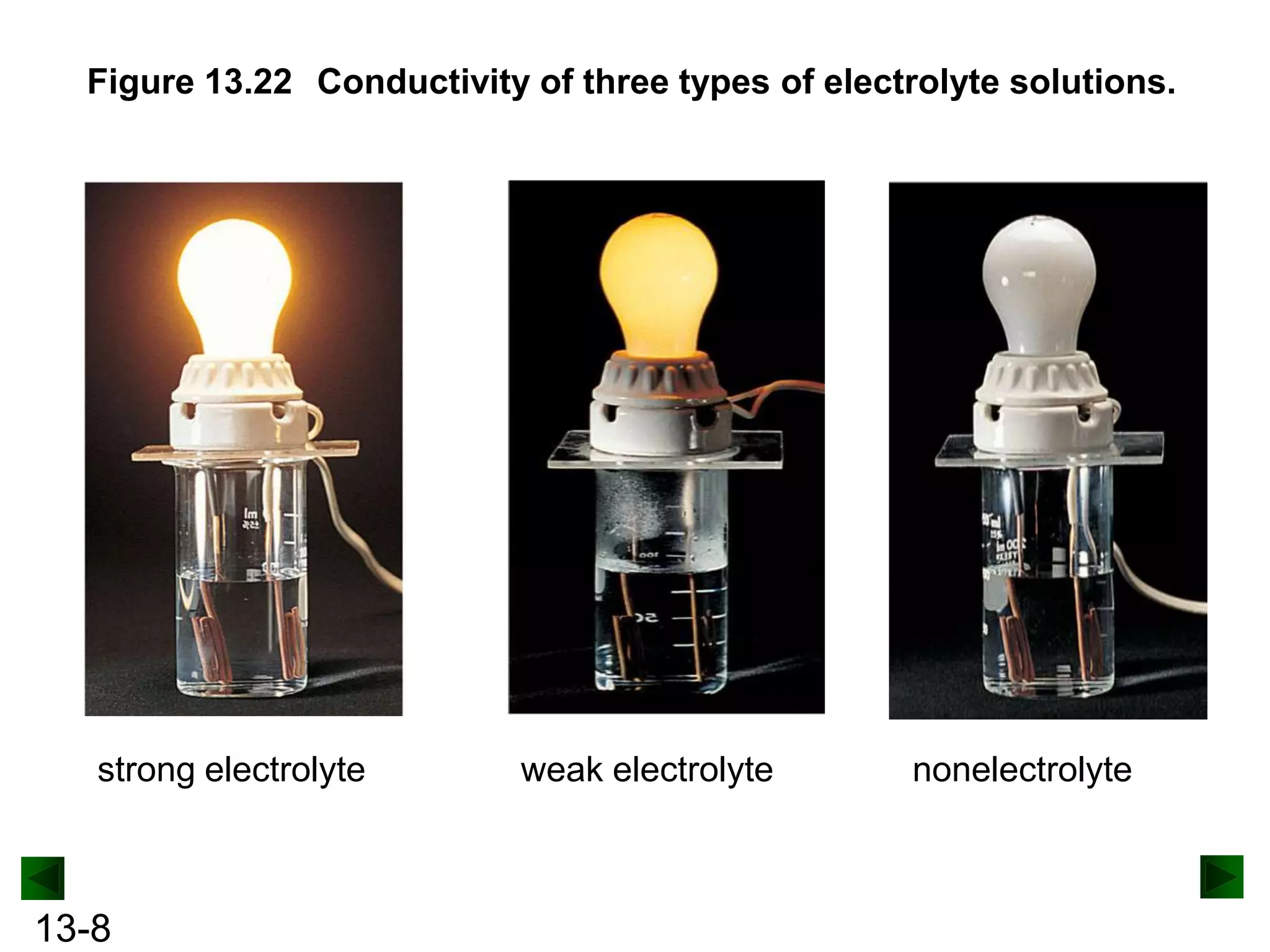
An electrolyte separates into ions when it dissolves in
water.
Strong electrolytes dissociate completely while weak electrolytes
dissociate very little.

A nonelectrolyte does not dissociate to form ions.
Each mole of dissolved compound yields 1 mole of particles in
solution.

13-7
Figure 13.22 Conductivity of three types of electrolyte solutions.

strong electrolyte

13-8

weak electrolyte

nonelectrolyte
Volatile Nonelectrolyte Solutions
For a volatile nonelectrolyte, the vapor of the solution
contains both solute and solvent.
The presence of each volatile component lowers the
vapor pressure of the other, since each one lowers the
mole fraction of the other.
For such a solution, the vapor will have a higher mole
fraction of the more volatile component.
The vapor has a different composition than the solution.

13-9
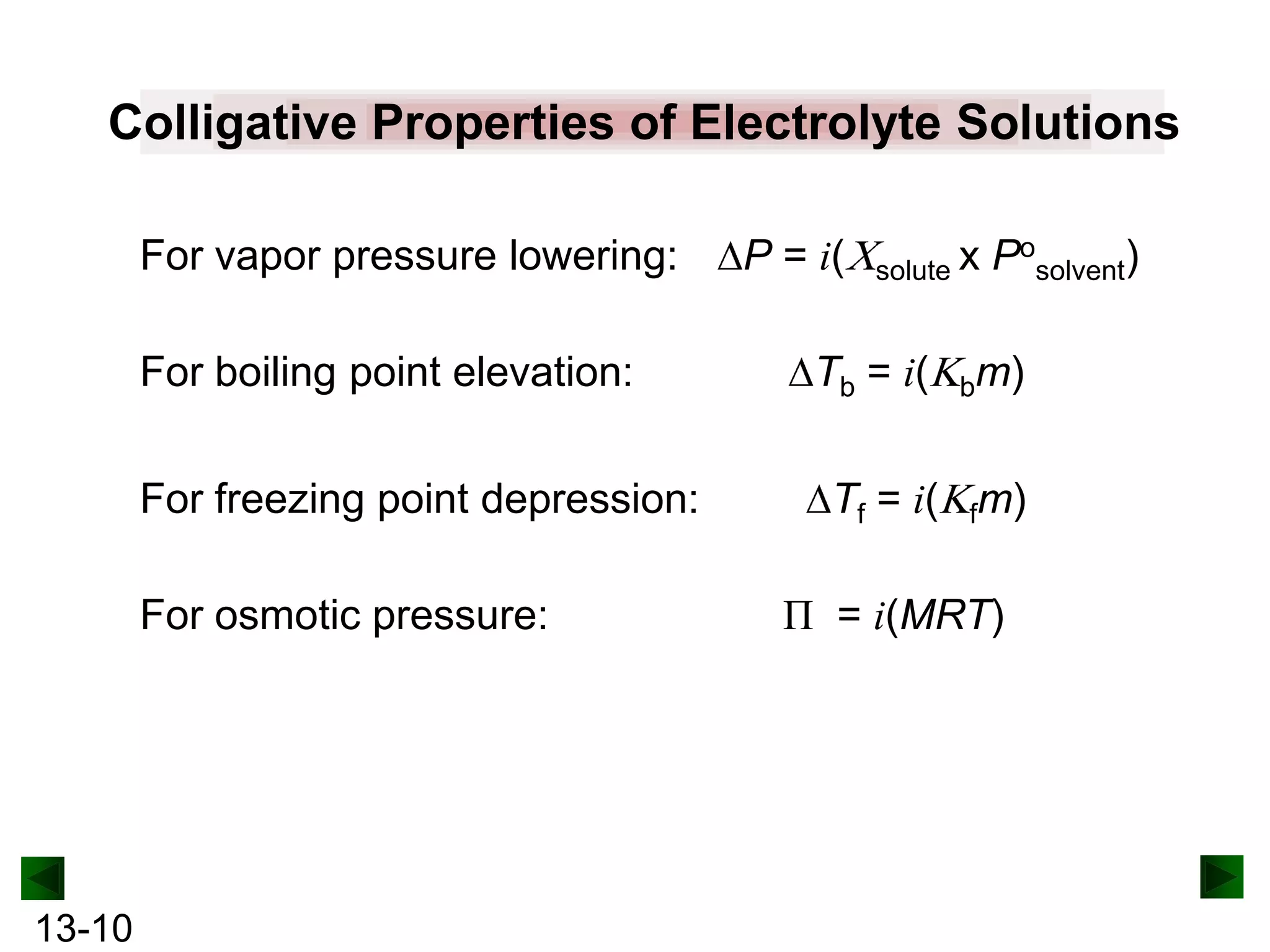
Colligative Properties of Electrolyte Solutions
For vapor pressure lowering:
For boiling point elevation:
For freezing point depression:
For osmotic pressure:

13-10

P = i(

solute x

Tb = i(

Posolvent)

bm)

Tf = i( fm)
Π = i(MRT)
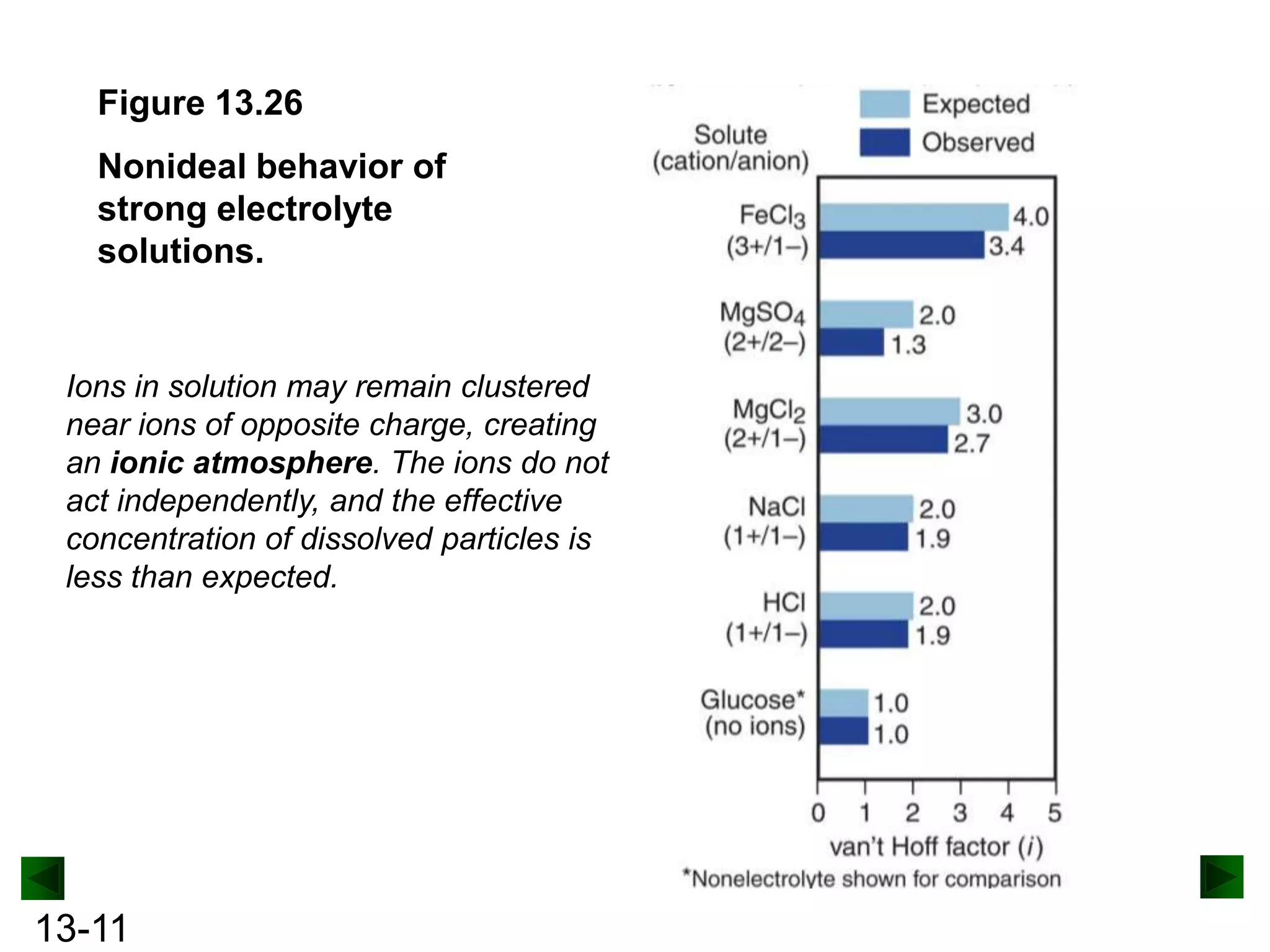
Figure 13.26
Nonideal behavior of
strong electrolyte
solutions.

Ions in solution may remain clustered
near ions of opposite charge, creating
an ionic atmosphere. The ions do not
act independently, and the effective
concentration of dissolved particles is
less than expected.

13-11
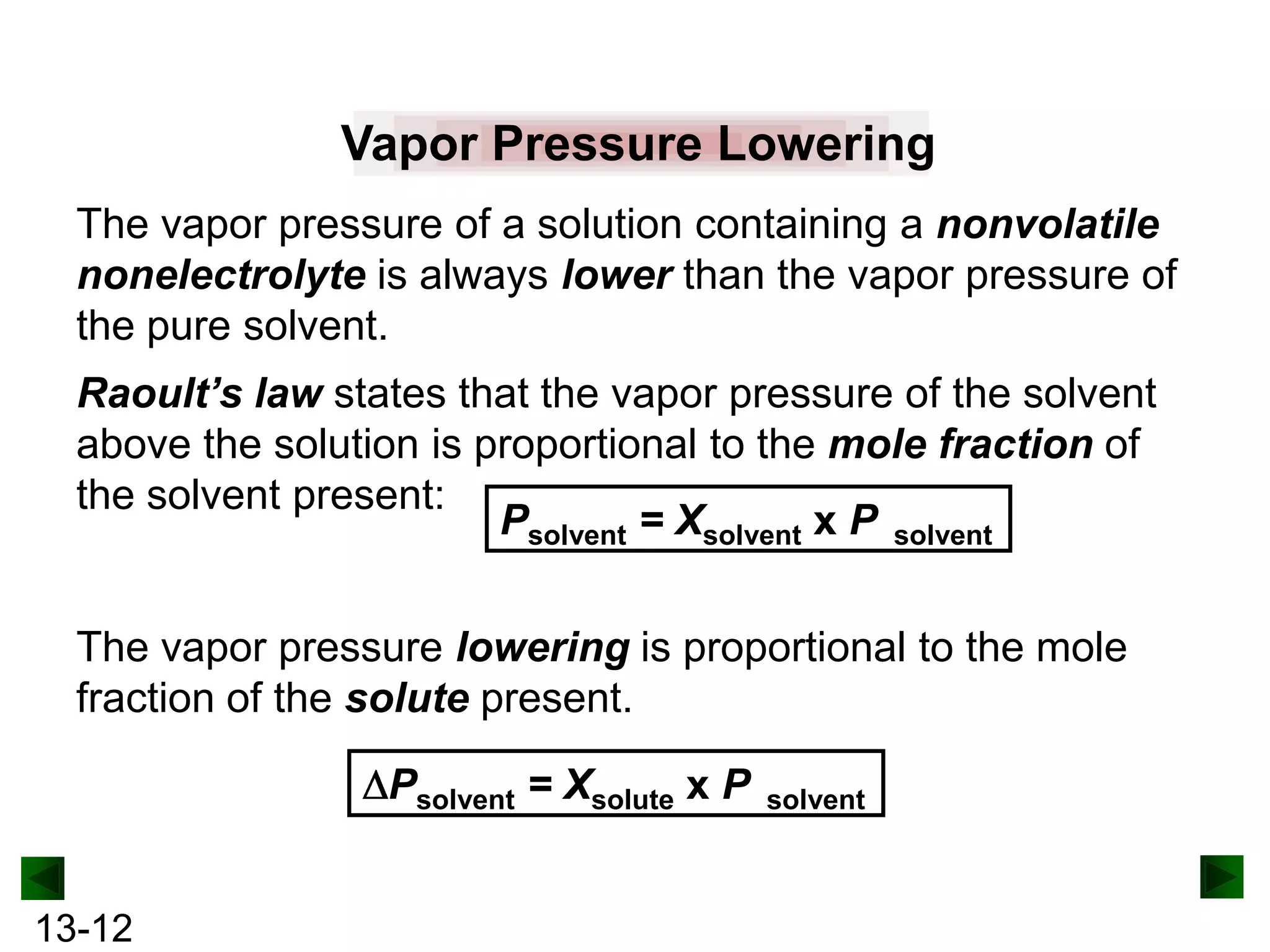
Vapor Pressure Lowering
The vapor pressure of a solution containing a nonvolatile
nonelectrolyte is always lower than the vapor pressure of
the pure solvent.
Raoult’s law states that the vapor pressure of the solvent
above the solution is proportional to the mole fraction of
the solvent present:
Psolvent = Xsolvent x P solvent
The vapor pressure lowering is proportional to the mole
fraction of the solute present.
Psolvent = Xsolute x P
13-12

solvent
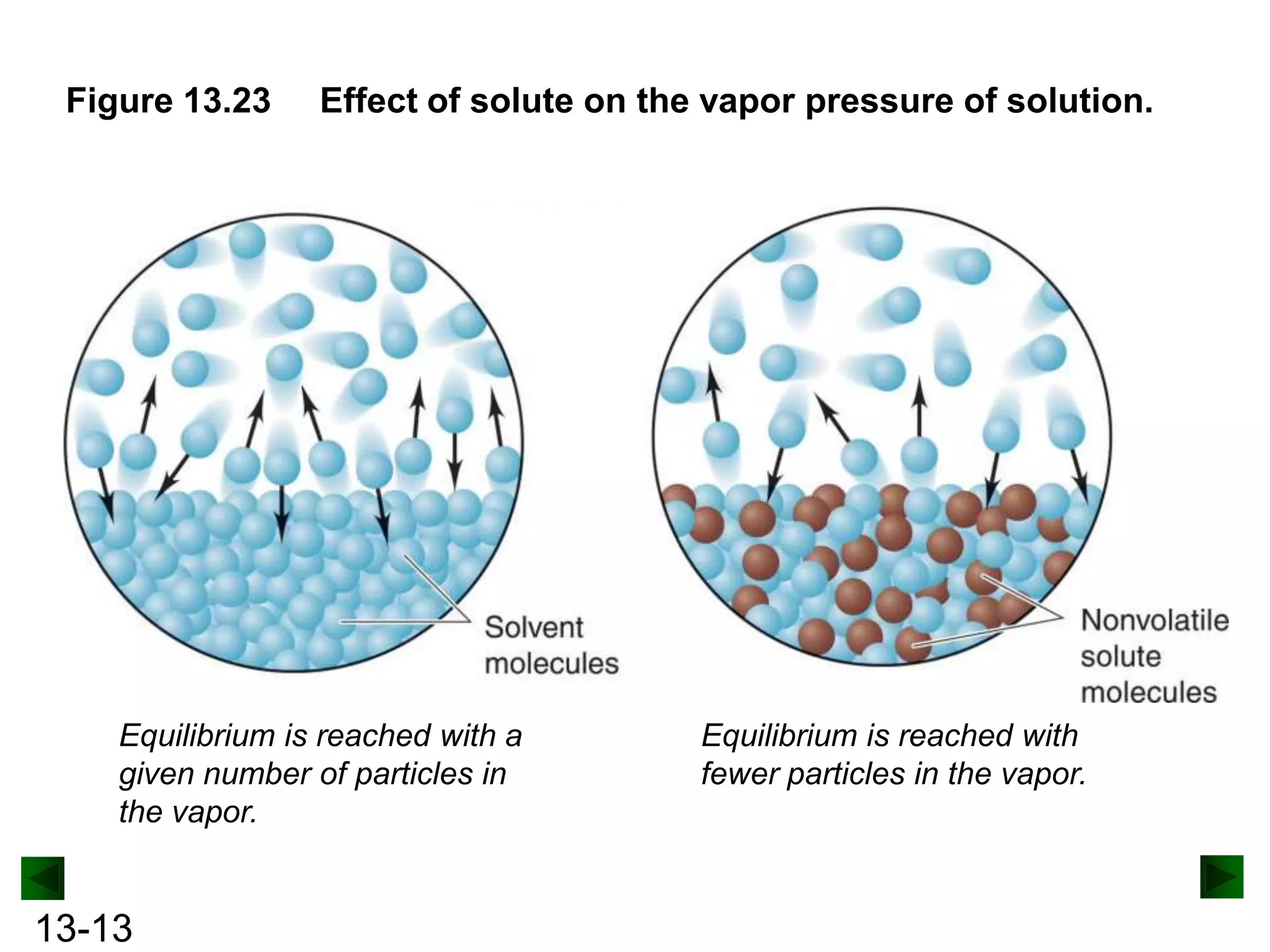
Figure 13.23

Effect of solute on the vapor pressure of solution.

Equilibrium is reached with a
given number of particles in
the vapor.

13-13

Equilibrium is reached with
fewer particles in the vapor.
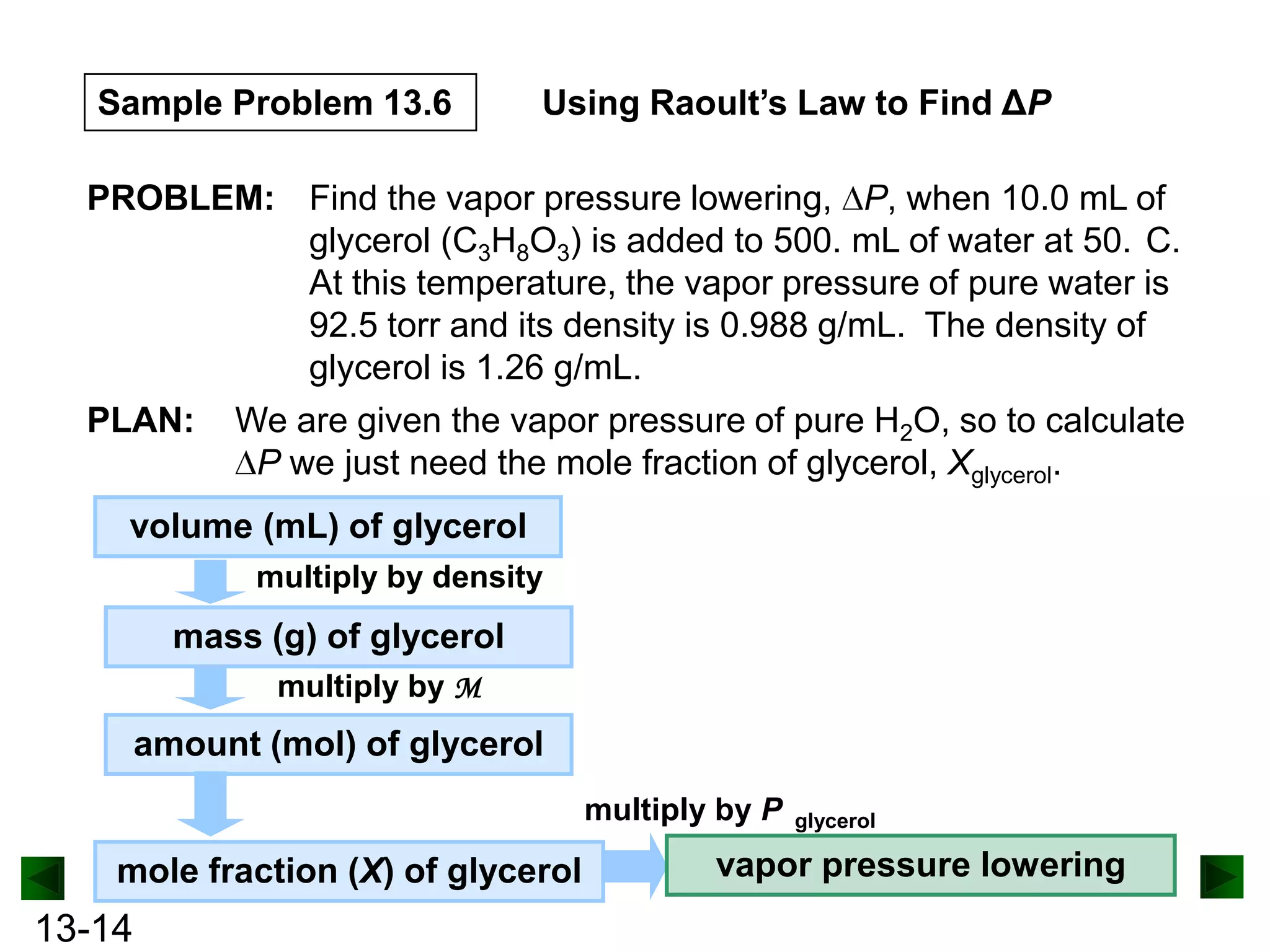
Sample Problem 13.6

Using Raoult’s Law to Find ΔP

PROBLEM: Find the vapor pressure lowering, P, when 10.0 mL of
glycerol (C3H8O3) is added to 500. mL of water at 50. C.
At this temperature, the vapor pressure of pure water is
92.5 torr and its density is 0.988 g/mL. The density of
glycerol is 1.26 g/mL.
PLAN: We are given the vapor pressure of pure H2O, so to calculate
P we just need the mole fraction of glycerol, Xglycerol.
volume (mL) of glycerol
multiply by density

mass (g) of glycerol
multiply by M

amount (mol) of glycerol
multiply by P

mole fraction (X) of glycerol

13-14

glycerol

vapor pressure lowering
Sample Problem 13.6
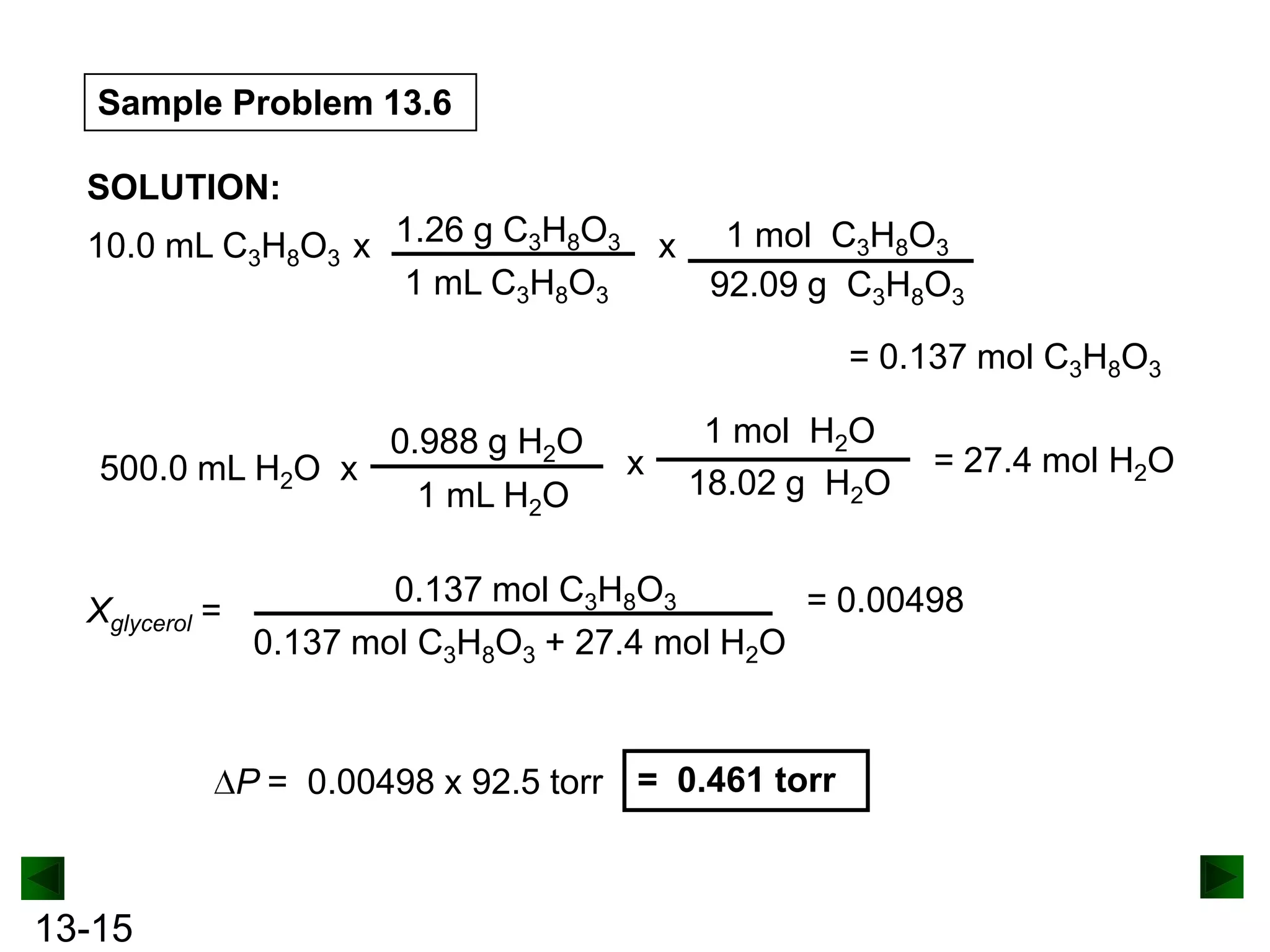
SOLUTION:
10.0 mL C3H8O3 x 1.26 g C3H8O3
1 mL C3H8O3

x

1 mol C3H8O3
92.09 g C3H8O3
= 0.137 mol C3H8O3

500.0 mL H2O x

Xglycerol =

0.988 g H2O
1 mL H2O

x

1 mol H2O
18.02 g H2O

0.137 mol C3H8O3
= 0.00498
0.137 mol C3H8O3 + 27.4 mol H2O

P = 0.00498 x 92.5 torr = 0.461 torr

13-15

= 27.4 mol H2O
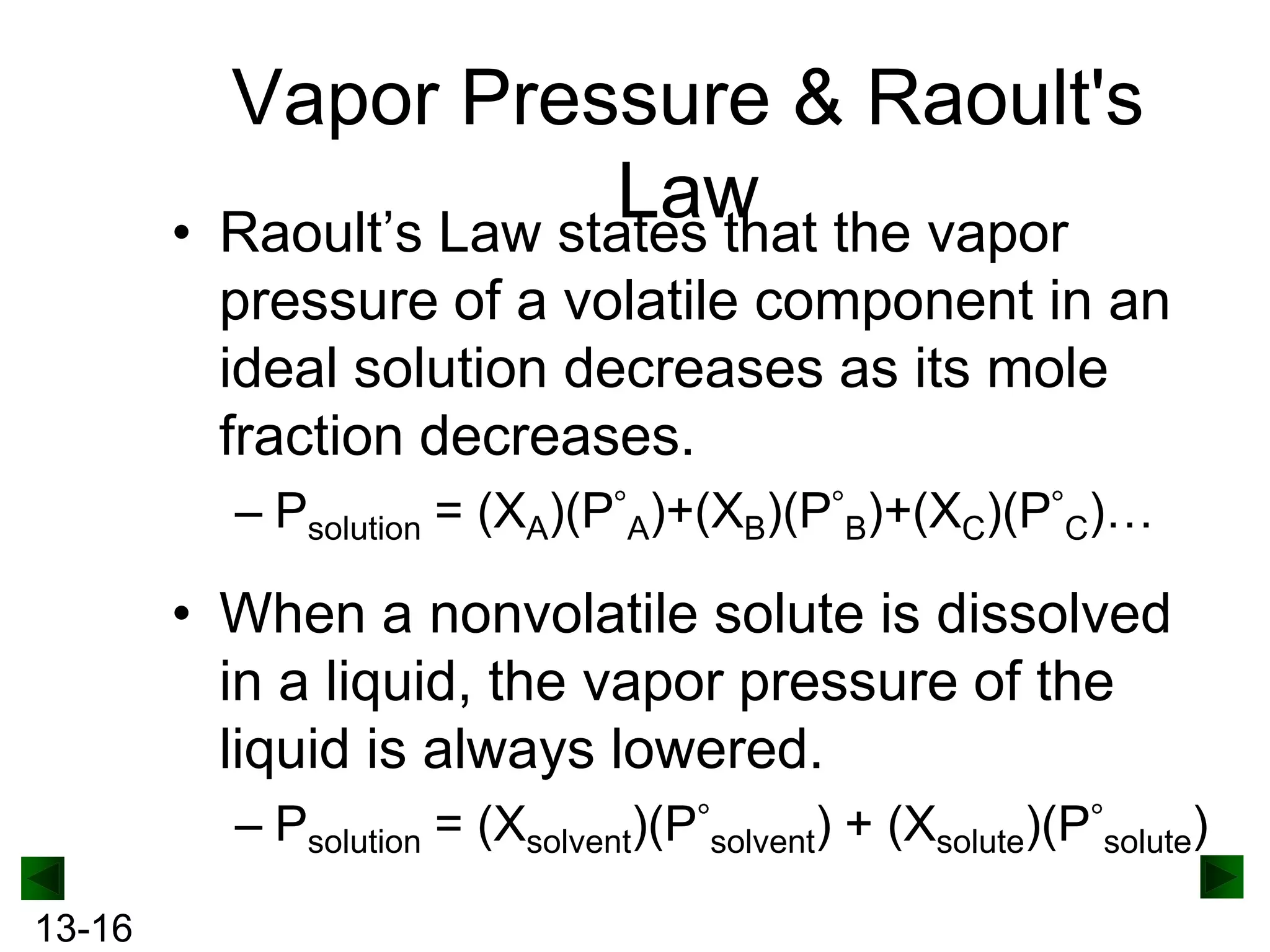
•

Vapor Pressure & Raoult's
Law the vapor
Raoult’s Law states that
pressure of a volatile component in an
ideal solution decreases as its mole
fraction decreases.
– Psolution = (XA)(P A)+(XB)(P B)+(XC)(P C)…

• When a nonvolatile solute is dissolved
in a liquid, the vapor pressure of the
liquid is always lowered.
– Psolution = (Xsolvent)(P solvent) + (Xsolute)(P solute)
13-16
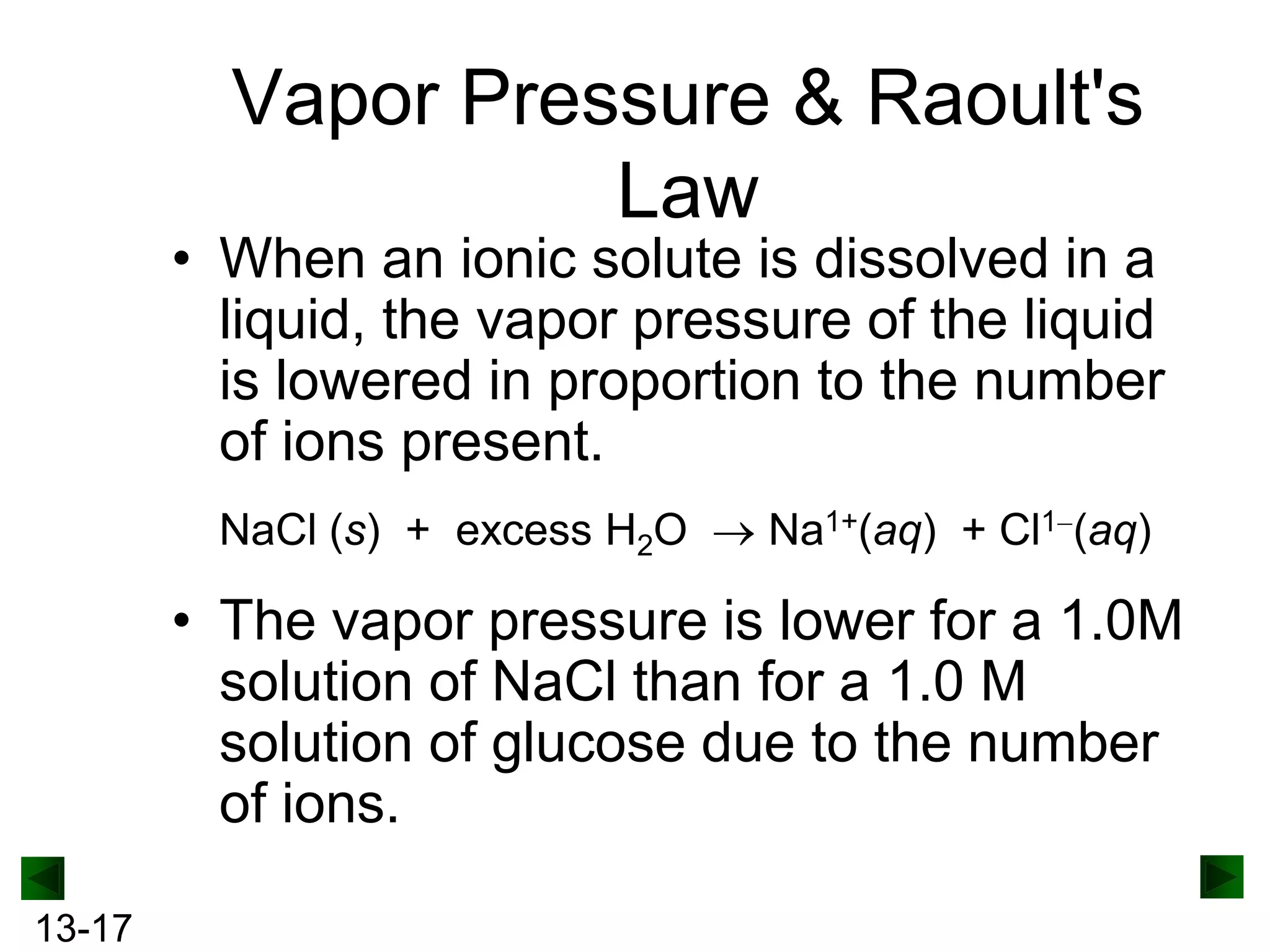
Vapor Pressure & Raoult's
Law

• When an ionic solute is dissolved in a
liquid, the vapor pressure of the liquid
is lowered in proportion to the number
of ions present.
NaCl (s) + excess H2O

Na1+(aq) + Cl1 (aq)

• The vapor pressure is lower for a 1.0M
solution of NaCl than for a 1.0 M
solution of glucose due to the number
of ions.
13-17
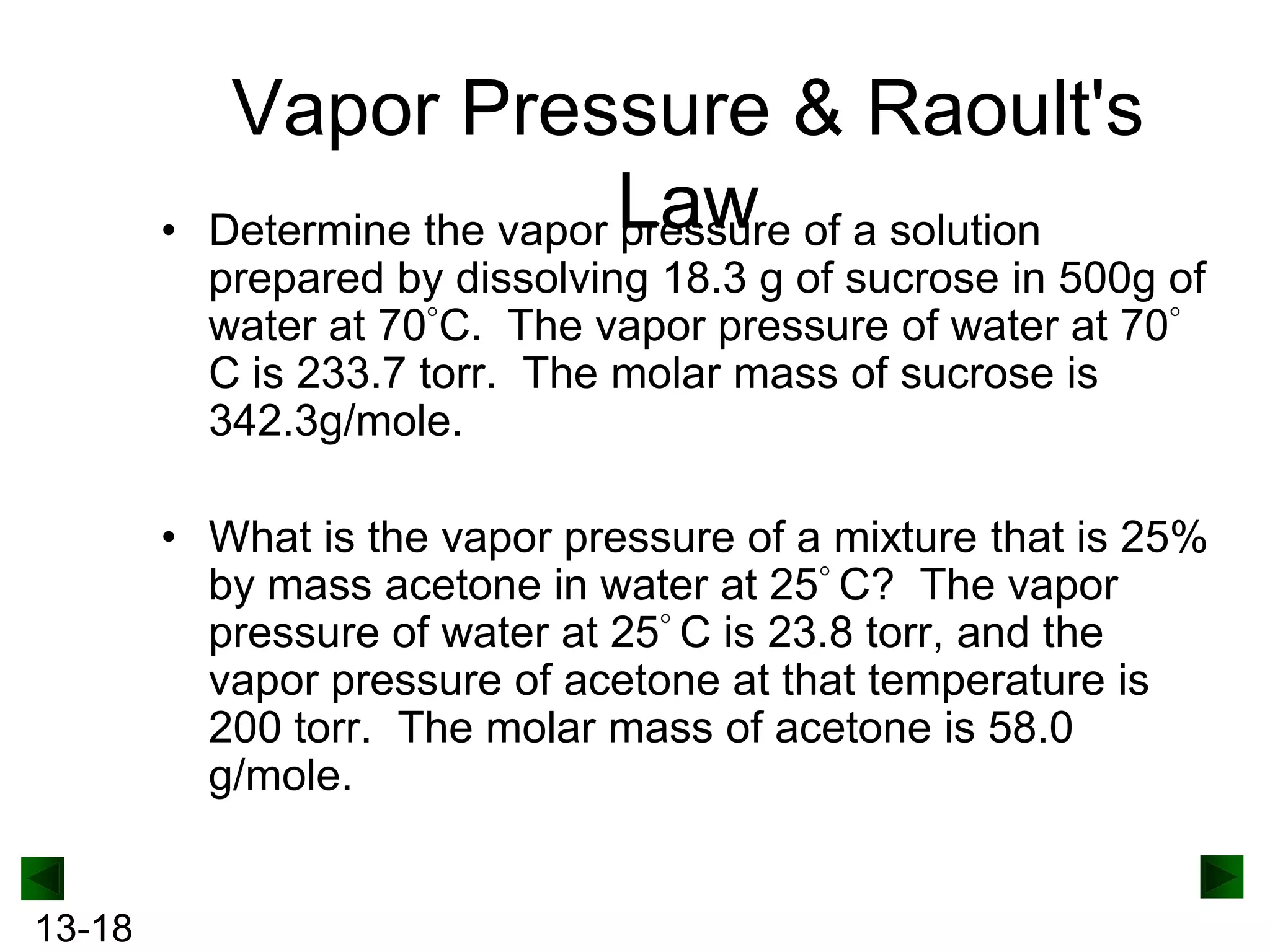
•

Vapor Pressure & Raoult's
Determine the vapor Law of a solution
pressure
prepared by dissolving 18.3 g of sucrose in 500g of
water at 70 C. The vapor pressure of water at 70
C is 233.7 torr. The molar mass of sucrose is
342.3g/mole.

• What is the vapor pressure of a mixture that is 25%
by mass acetone in water at 25 C? The vapor
pressure of water at 25 C is 23.8 torr, and the
vapor pressure of acetone at that temperature is
200 torr. The molar mass of acetone is 58.0
g/mole.

13-18
13-19
13-20
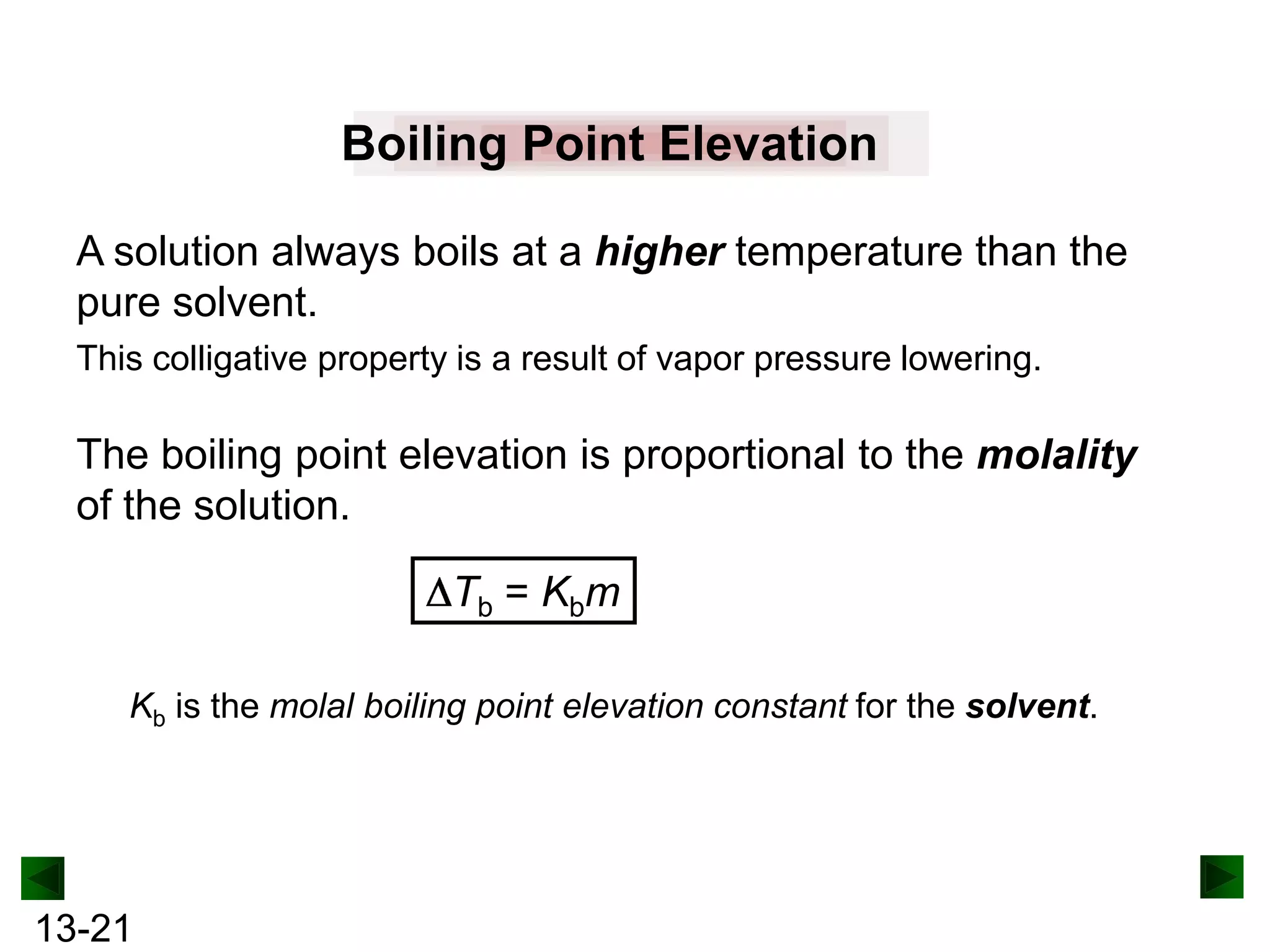
Boiling Point Elevation
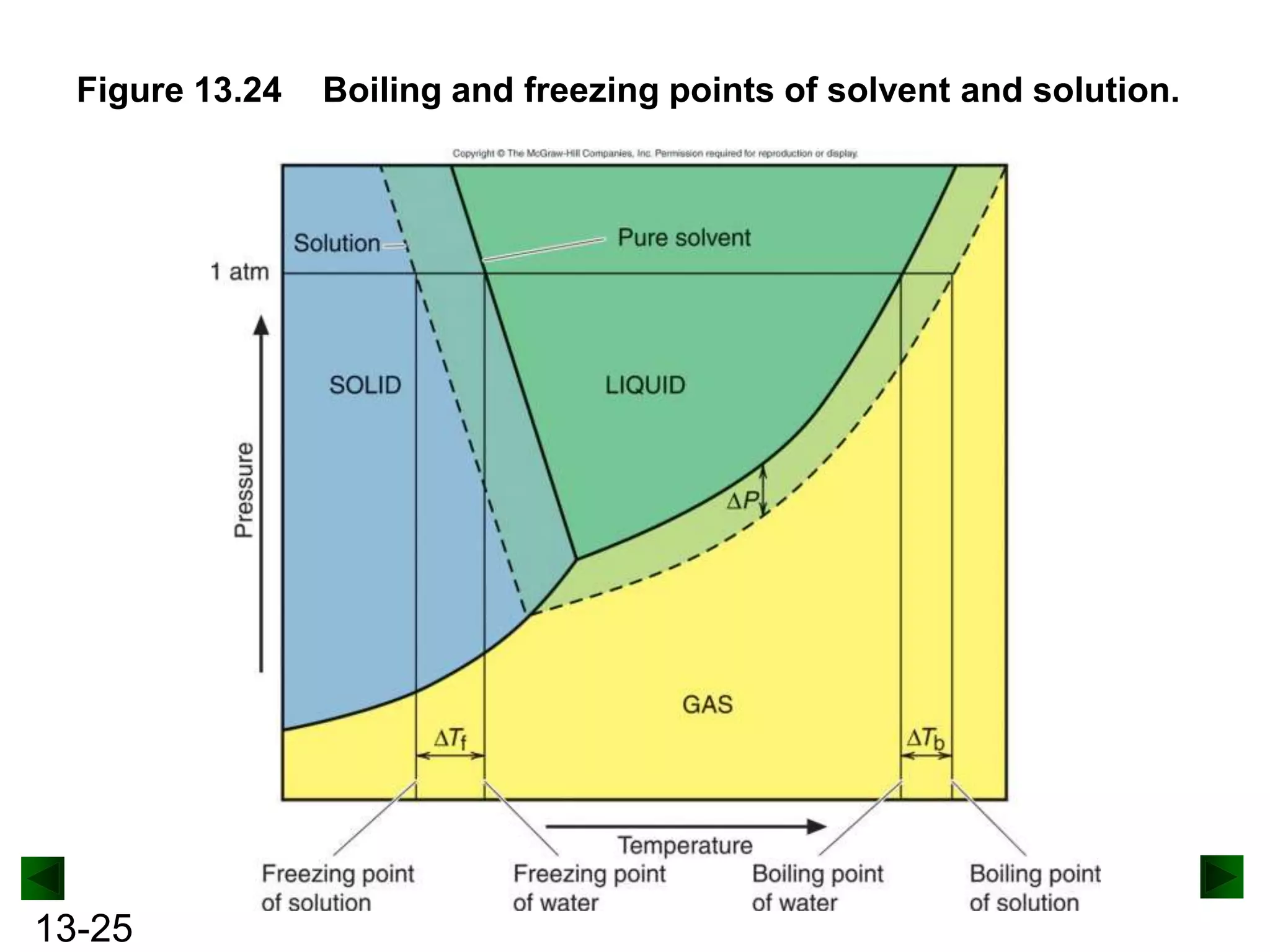
A solution always boils at a higher temperature than the
pure solvent.
This colligative property is a result of vapor pressure lowering.

The boiling point elevation is proportional to the molality
of the solution.
Tb = Kbm
Kb is the molal boiling point elevation constant for the solvent.

13-21
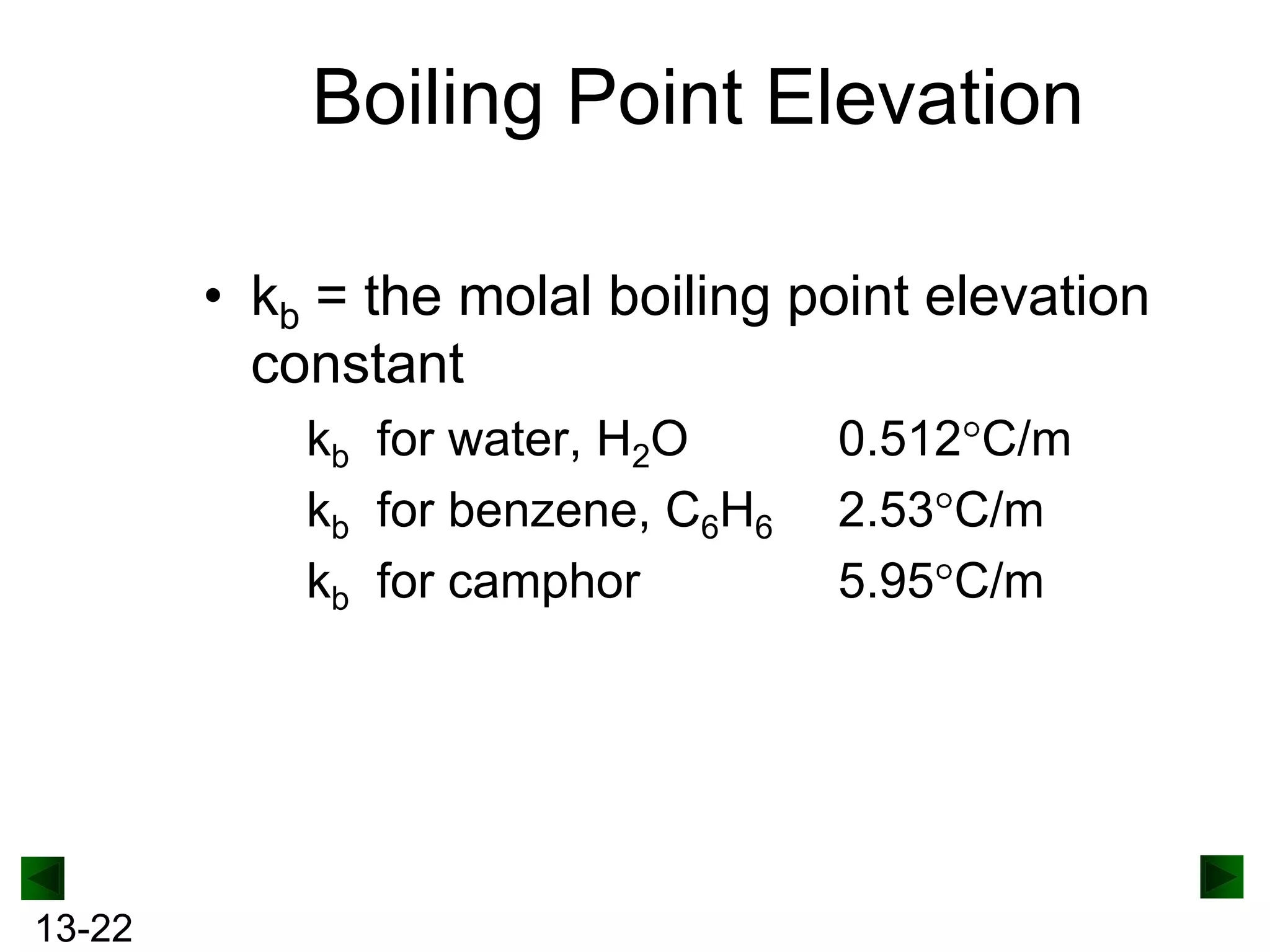
Boiling Point Elevation
• kb = the molal boiling point elevation
constant
kb for water, H2O
kb for benzene, C6H6
kb for camphor

13-22

0.512 C/m
2.53 C/m
5.95 C/m
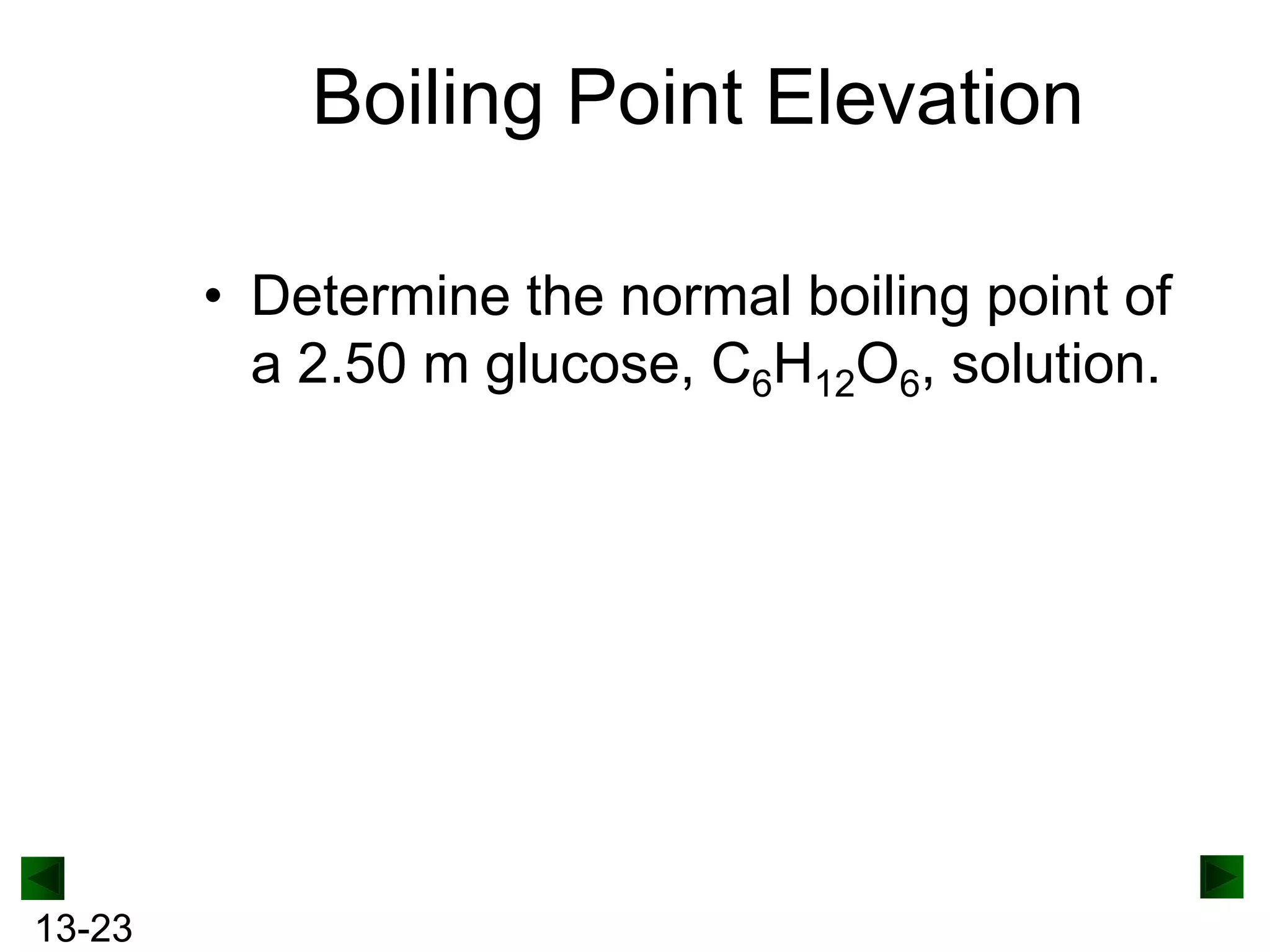
Boiling Point Elevation
• Determine the normal boiling point of
a 2.50 m glucose, C6H12O6, solution.

13-23
13-24
Figure 13.24

13-25

Boiling and freezing points of solvent and solution.
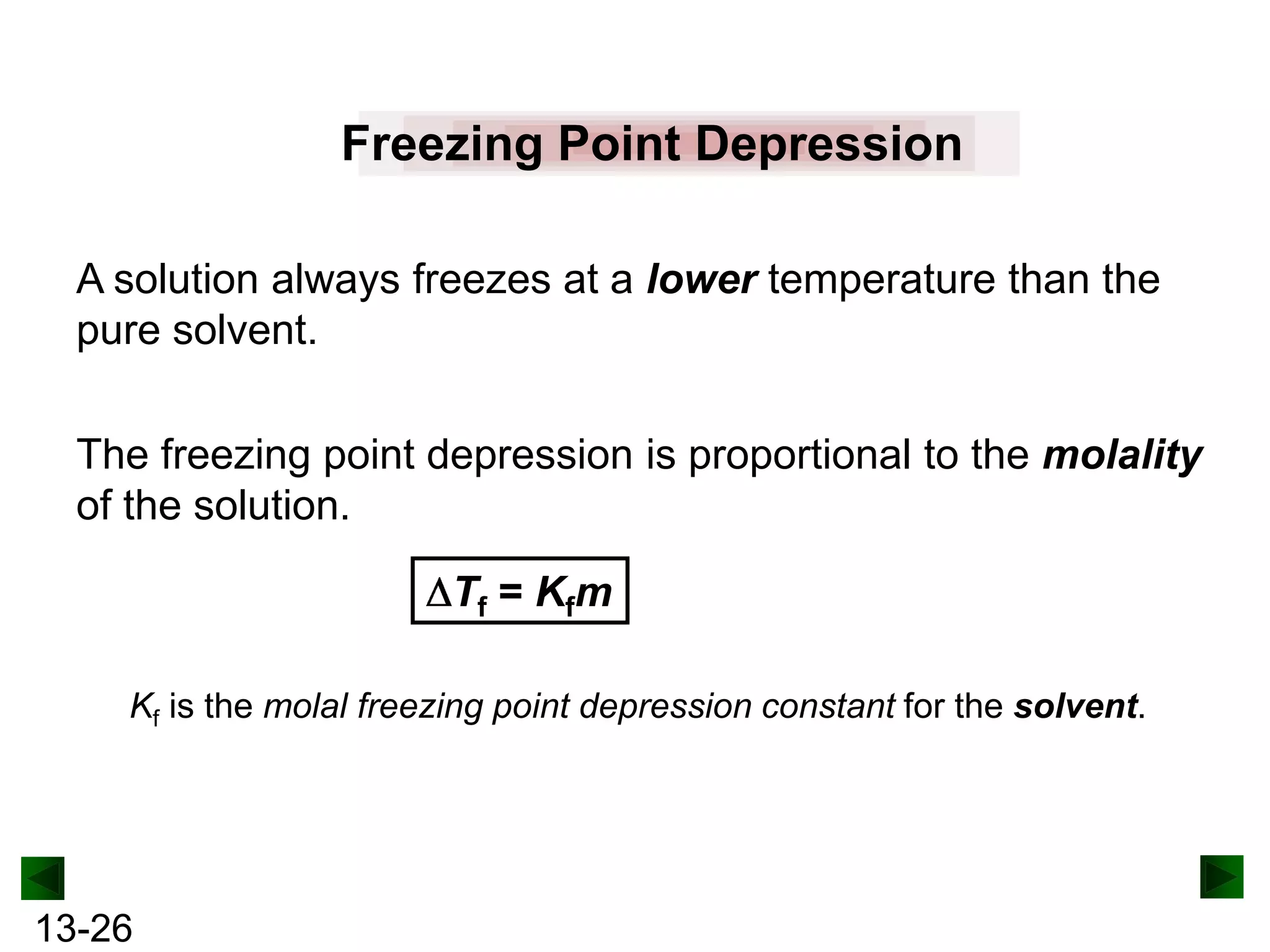
Freezing Point Depression
A solution always freezes at a lower temperature than the
pure solvent.
The freezing point depression is proportional to the molality
of the solution.
Tf = Kfm
Kf is the molal freezing point depression constant for the solvent.

13-26
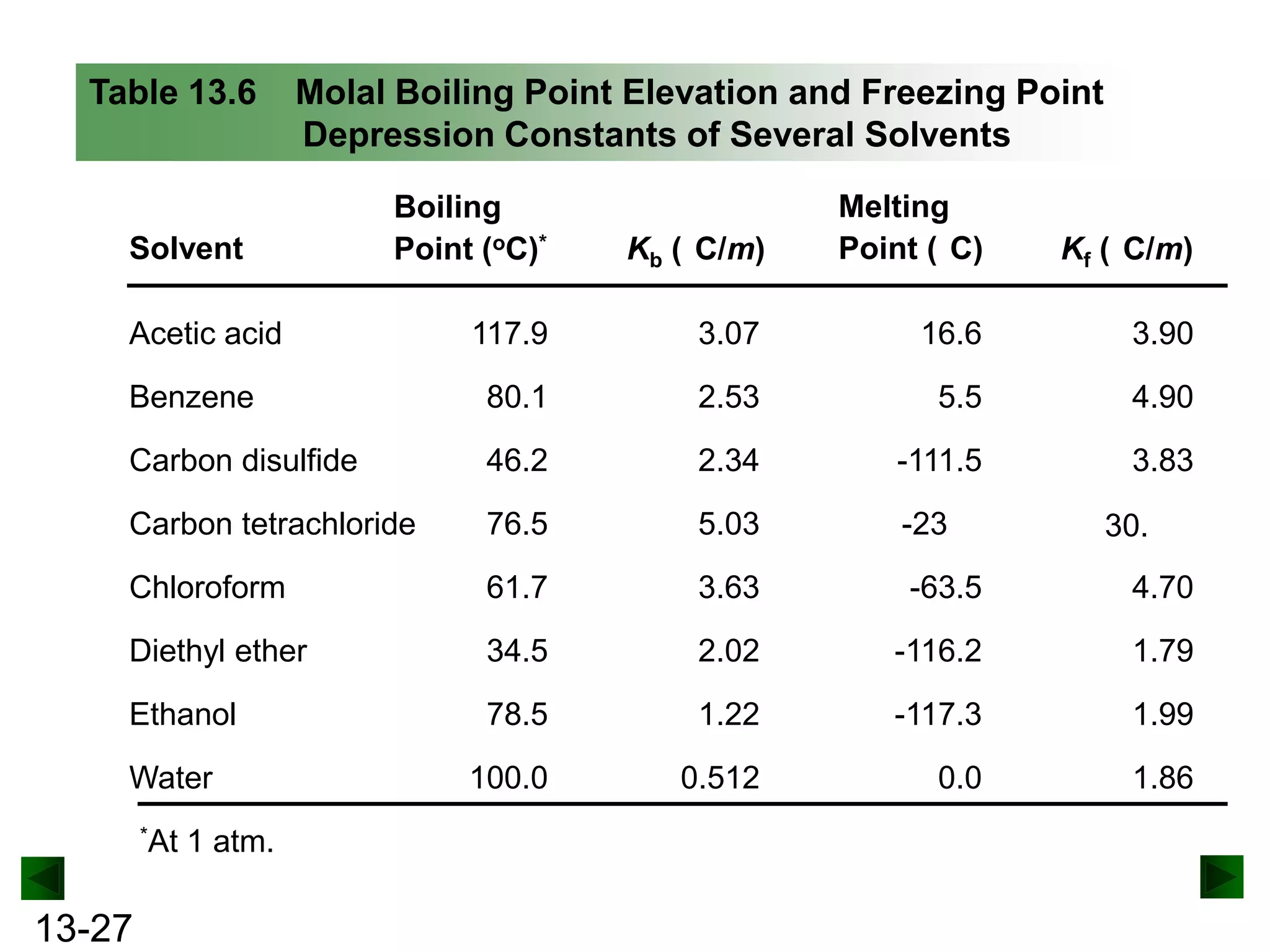
Table 13.6

Molal Boiling Point Elevation and Freezing Point
Depression Constants of Several Solvents
Kb ( C/m)

Melting
Point ( C)

Kf ( C/m)

117.9

3.07

16.6

3.90

Benzene

80.1

2.53

5.5

4.90

Carbon disulfide

46.2

2.34

-111.5

3.83

Carbon tetrachloride

76.5

5.03

-23

Chloroform

61.7

3.63

-63.5

4.70

Diethyl ether

34.5

2.02

-116.2

1.79

Ethanol

78.5

1.22

-117.3

1.99

100.0

0.512

0.0

1.86

Solvent

Boiling
Point (oC)*

Acetic acid

Water
*At

13-27

1 atm.

30.
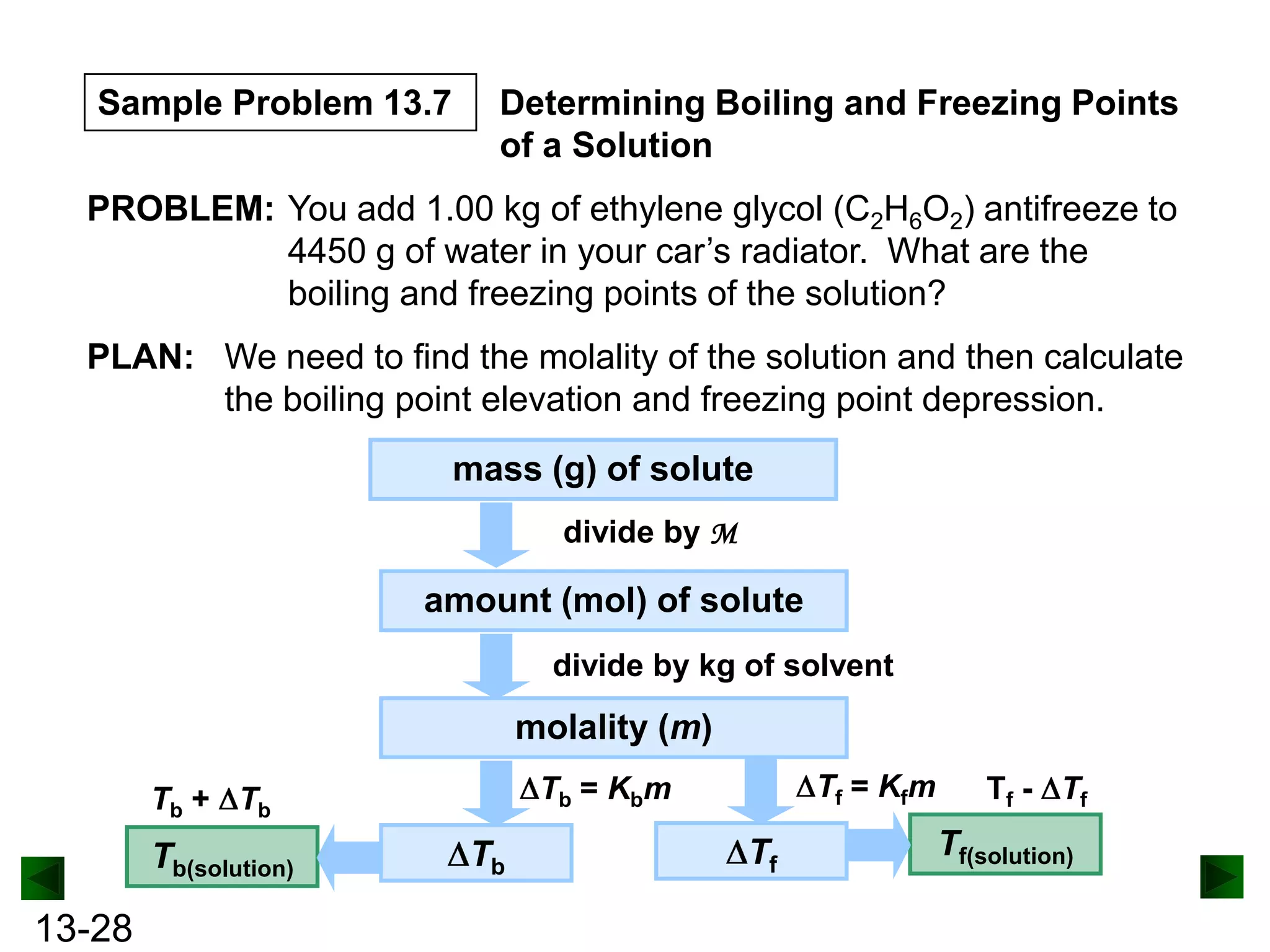
Sample Problem 13.7

Determining Boiling and Freezing Points
of a Solution

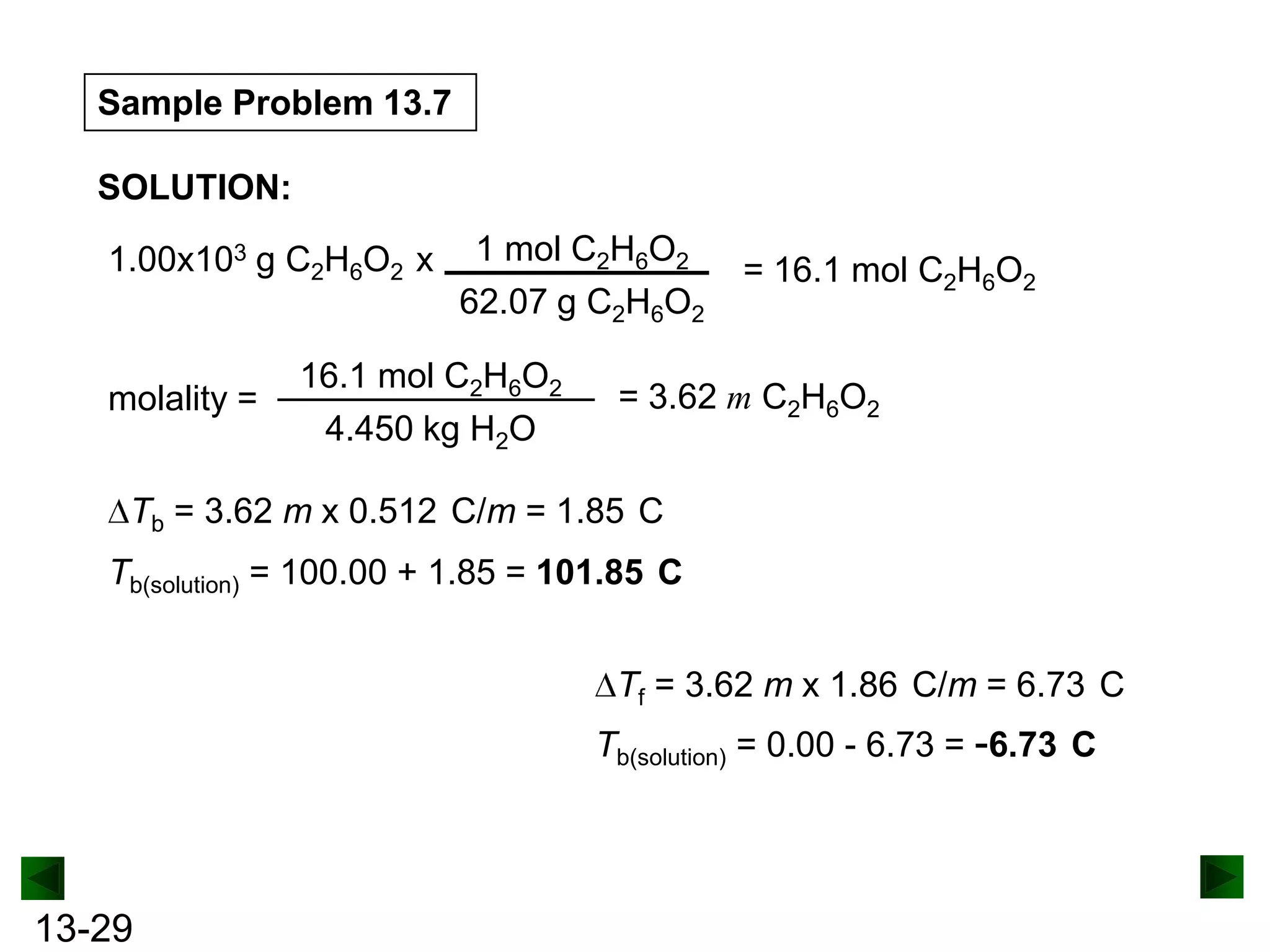
PROBLEM: You add 1.00 kg of ethylene glycol (C2H6O2) antifreeze to
4450 g of water in your car’s radiator. What are the
boiling and freezing points of the solution?
PLAN: We need to find the molality of the solution and then calculate
the boiling point elevation and freezing point depression.
mass (g) of solute
divide by M

amount (mol) of solute
divide by kg of solvent

molality (m)

Tb(solution)

13-28

Tf = Kfm

Tb = Kbm

Tb + Tb

Tb

Tf

T f - Tf

Tf(solution)
Sample Problem 13.7
SOLUTION:
1.00x10³ g C2H6O2 x

molality =

1 mol C2H6O2
62.07 g C2H6O2

16.1 mol C2H6O2
4.450 kg H2O

= 16.1 mol C2H6O2

= 3.62 m C2H6O2

Tb = 3.62 m x 0.512 C/m = 1.85 C
Tb(solution) = 100.00 + 1.85 = 101.85 C
Tf = 3.62 m x 1.86 C/m = 6.73 C
Tb(solution) = 0.00 - 6.73 = -6.73 C

13-29
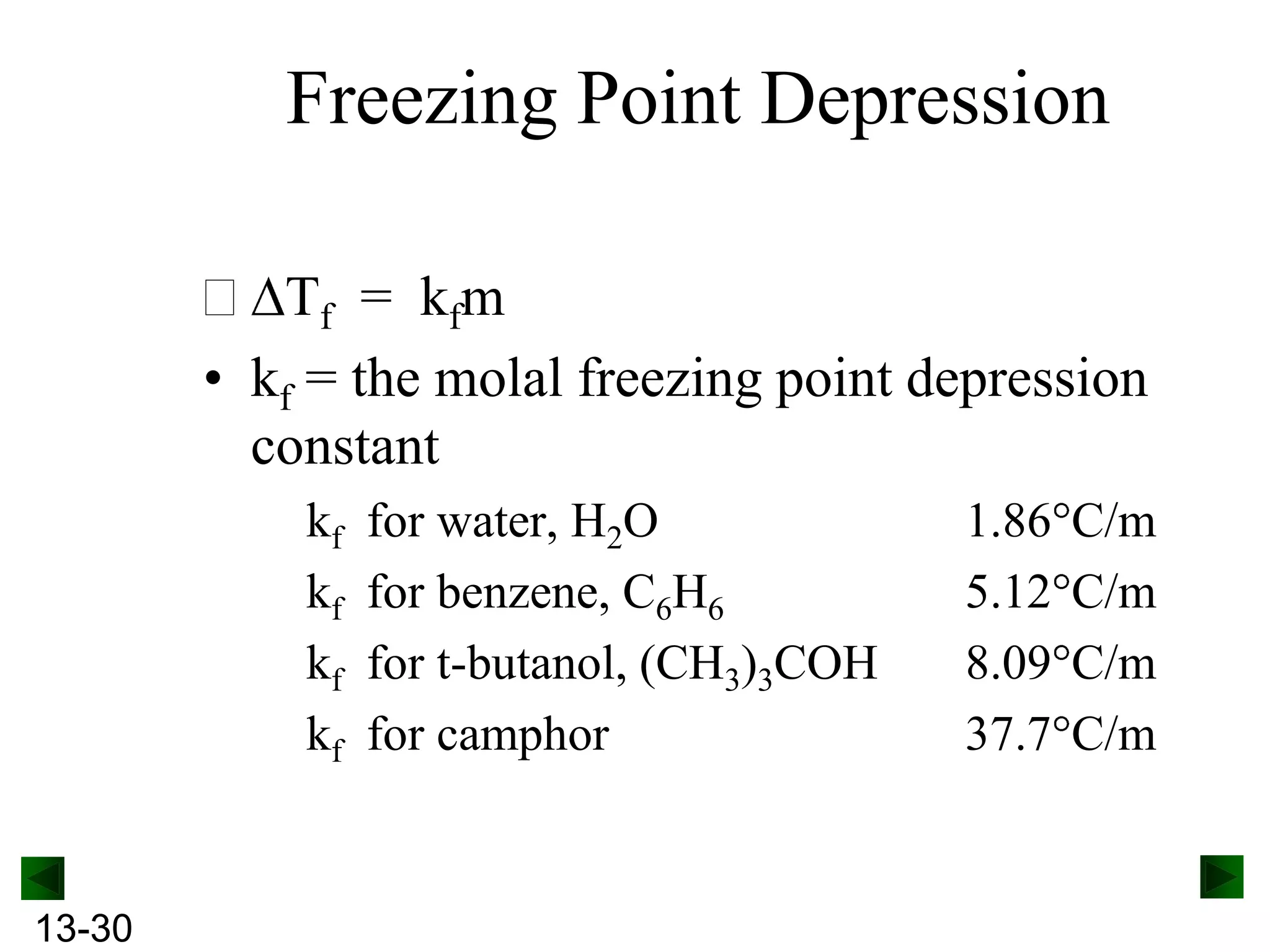
Freezing Point Depression
Tf = kfm
• kf = the molal freezing point depression
constant
kf
kf
kf
kf

13-30

for water, H2O
for benzene, C6H6
for t-butanol, (CH3)3COH
for camphor

1.86
5.12
8.09
37.7

C/m
C/m
C/m
C/m
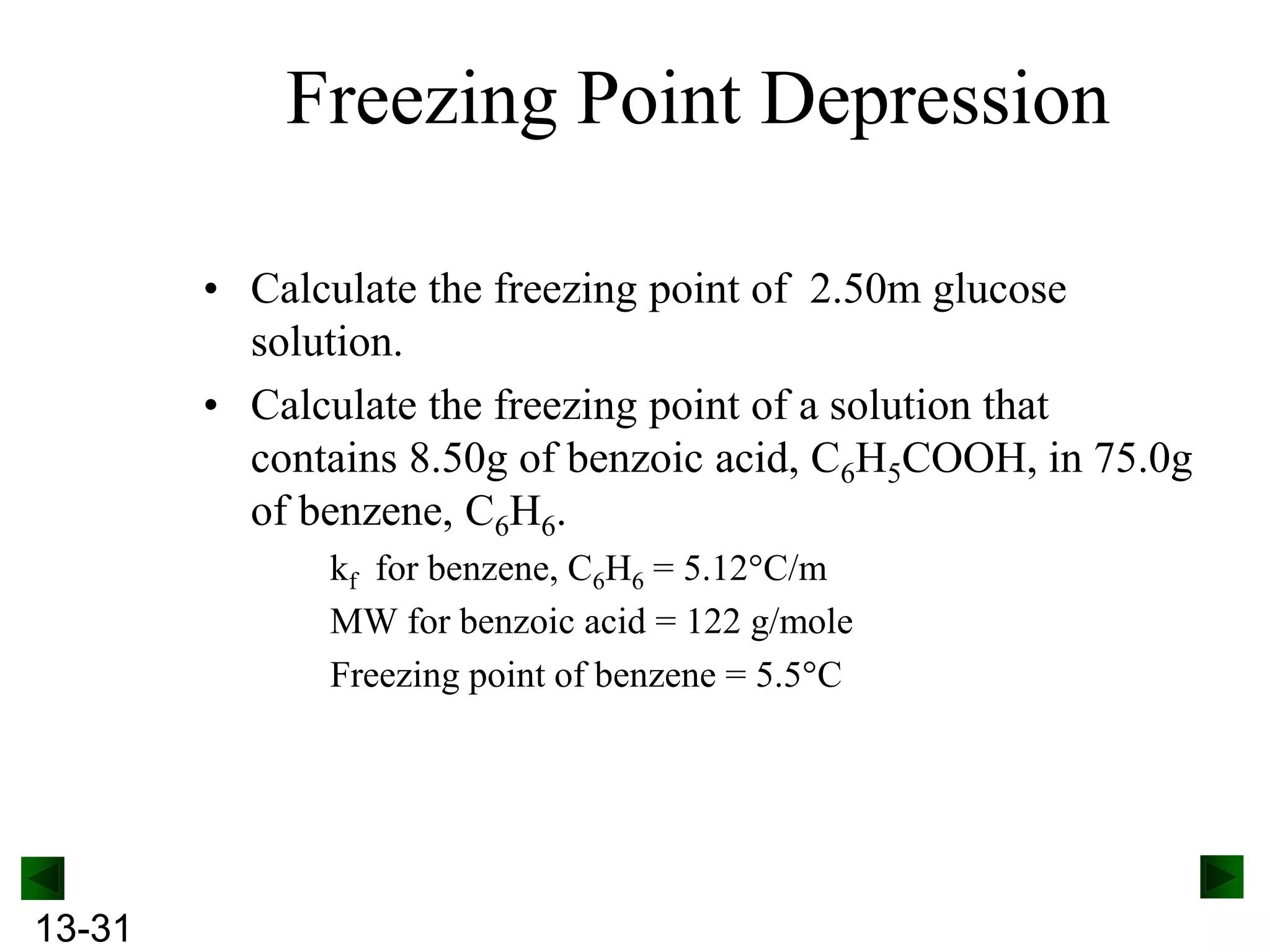
Freezing Point Depression
• Calculate the freezing point of 2.50m glucose
solution.
• Calculate the freezing point of a solution that
contains 8.50g of benzoic acid, C6H5COOH, in 75.0g
of benzene, C6H6.
kf for benzene, C6H6 = 5.12 C/m
MW for benzoic acid = 122 g/mole
Freezing point of benzene = 5.5 C

13-31
13-32
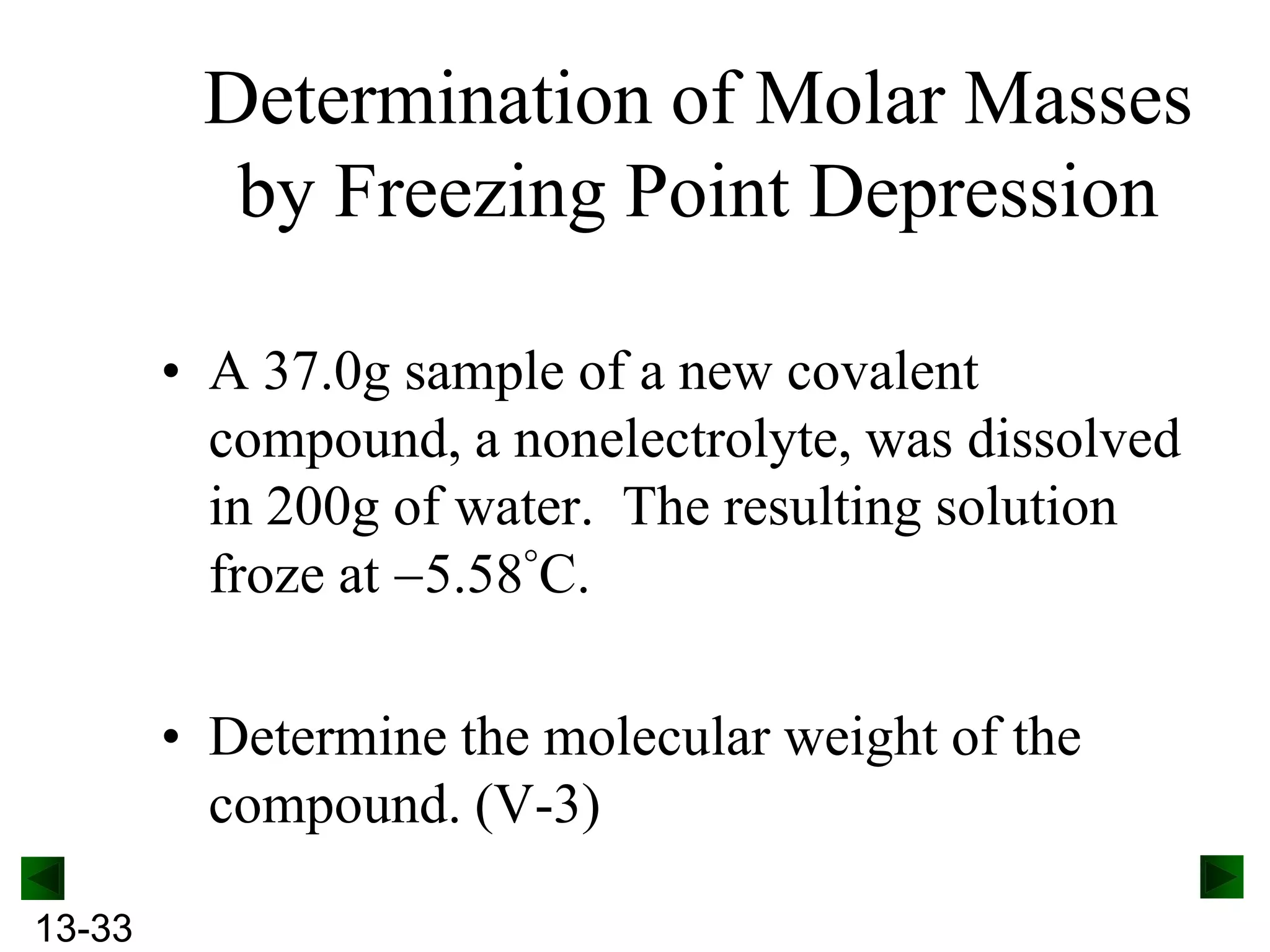
Determination of Molar Masses
by Freezing Point Depression
• A 37.0g sample of a new covalent
compound, a nonelectrolyte, was dissolved
in 200g of water. The resulting solution
froze at 5.58 C.
• Determine the molecular weight of the
compound. (V-3)
13-33
13-34
13-35
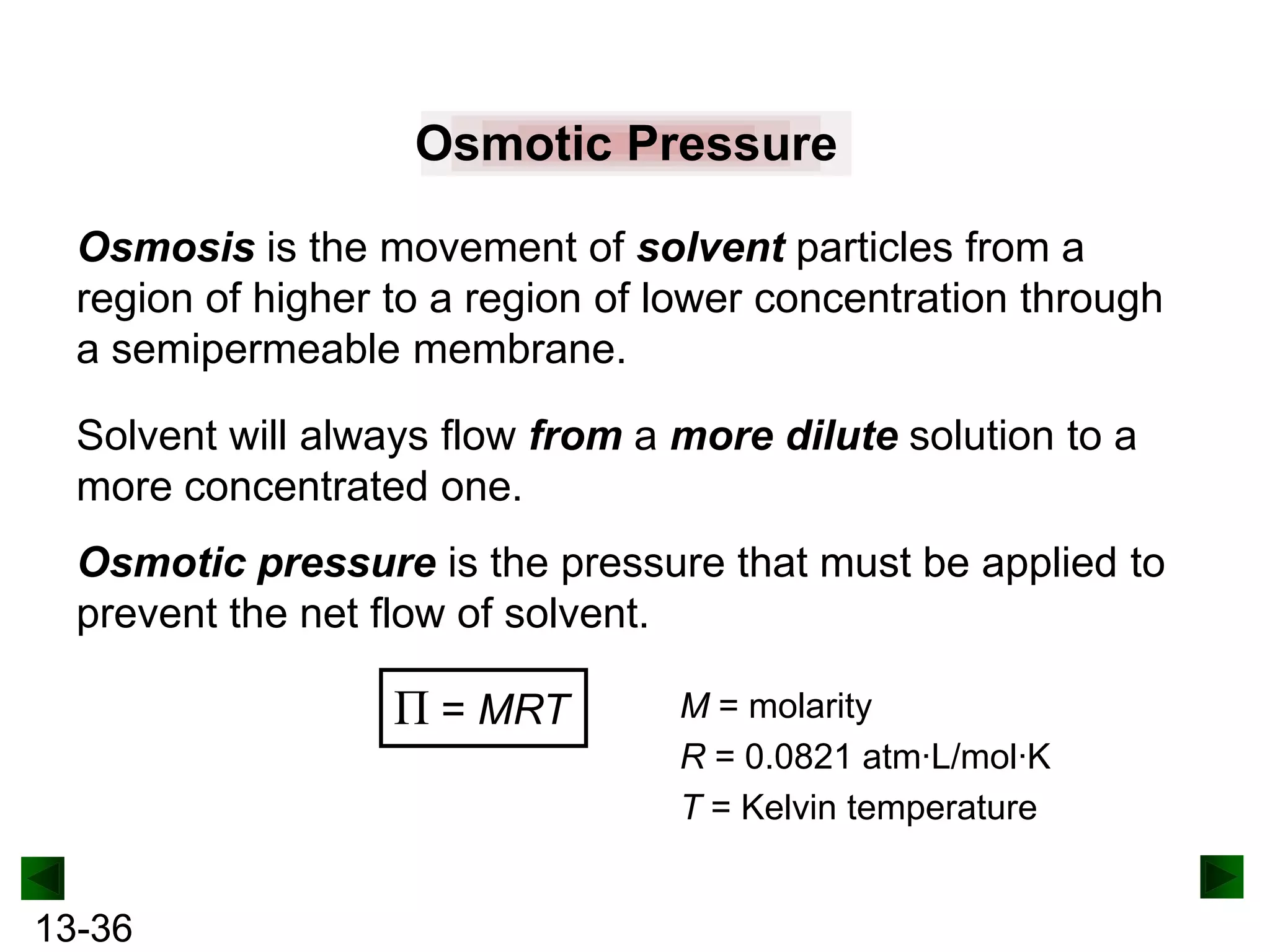
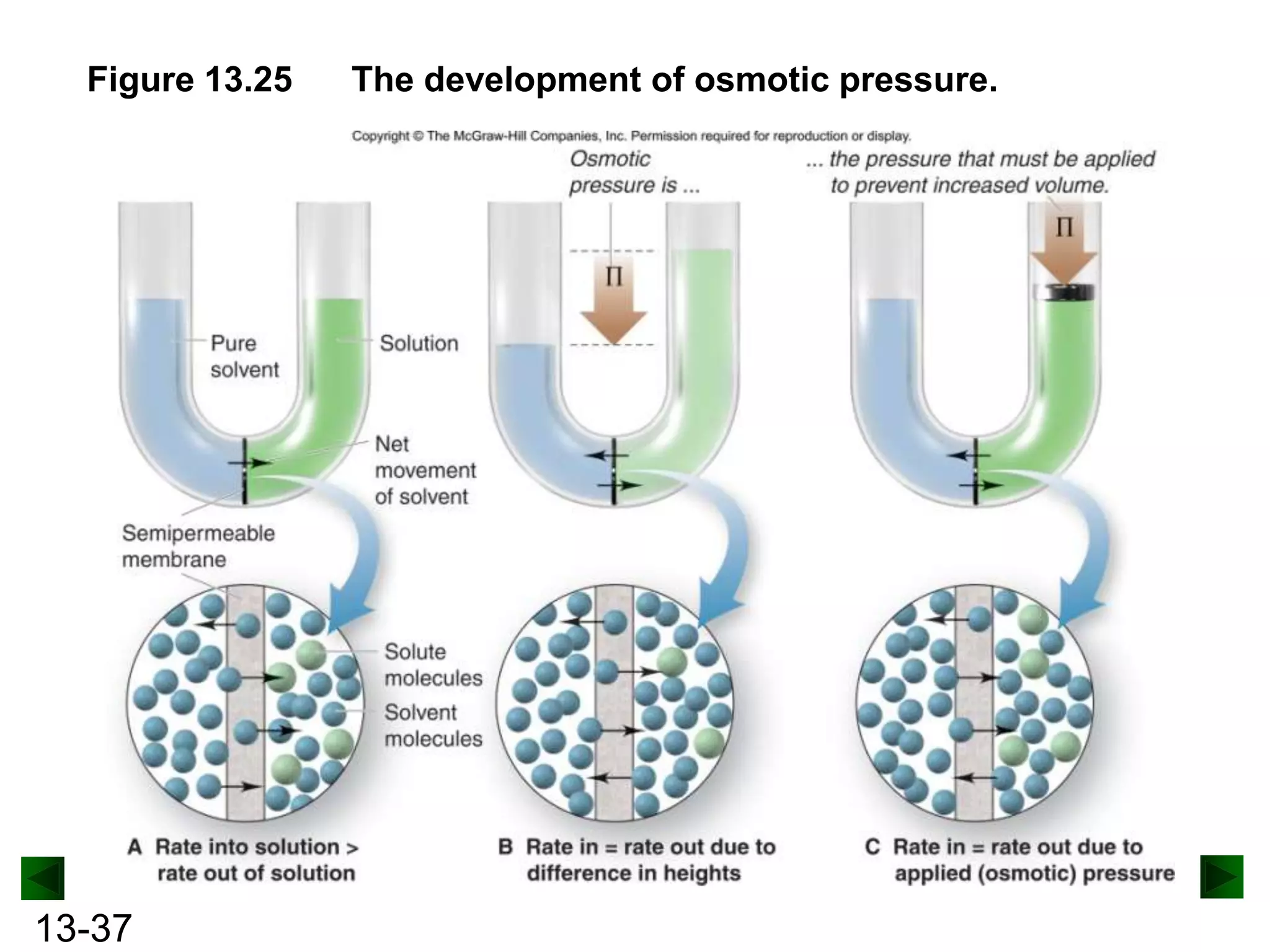
Osmotic Pressure
Osmosis is the movement of solvent particles from a
region of higher to a region of lower concentration through
a semipermeable membrane.
Solvent will always flow from a more dilute solution to a
more concentrated one.
Osmotic pressure is the pressure that must be applied to
prevent the net flow of solvent.

Π = MRT

13-36

M = molarity
R = 0.0821 atm·L/mol·K
T = Kelvin temperature
Figure 13.25

13-37

The development of osmotic pressure.
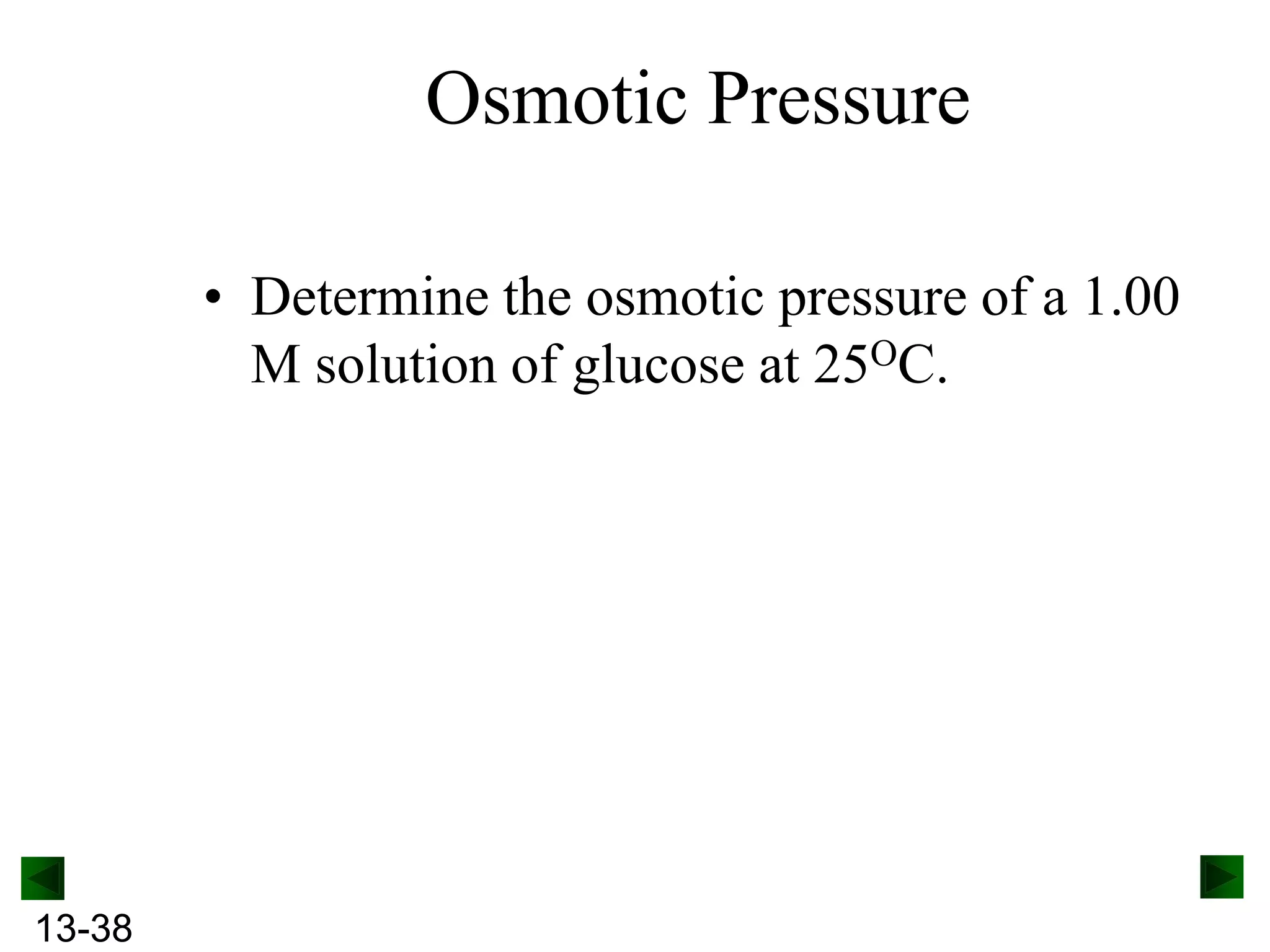
Osmotic Pressure
• Determine the osmotic pressure of a 1.00
M solution of glucose at 25OC.

13-38
13-39
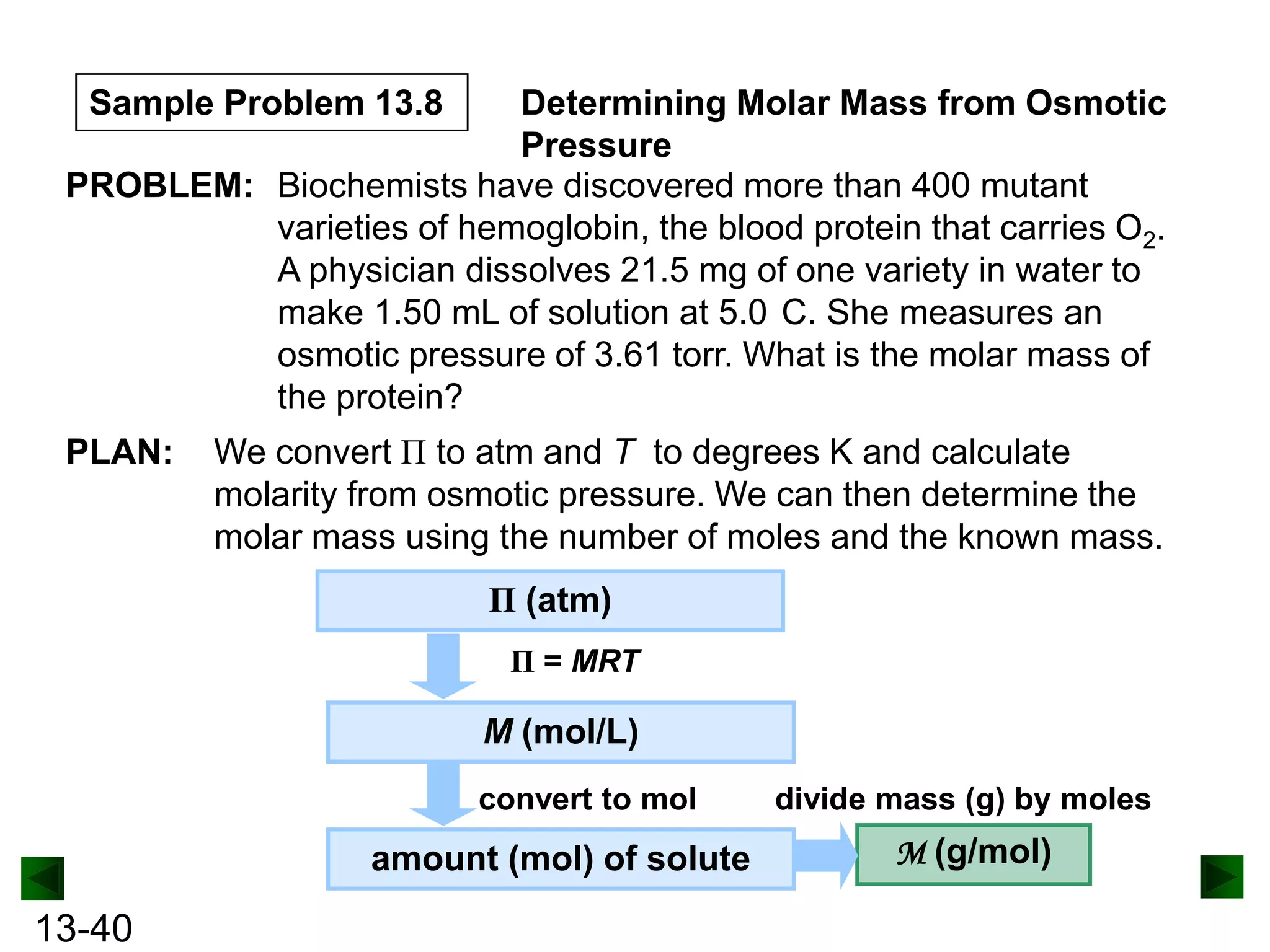
Sample Problem 13.8

Determining Molar Mass from Osmotic
Pressure
PROBLEM: Biochemists have discovered more than 400 mutant
varieties of hemoglobin, the blood protein that carries O2.
A physician dissolves 21.5 mg of one variety in water to
make 1.50 mL of solution at 5.0 C. She measures an
osmotic pressure of 3.61 torr. What is the molar mass of
the protein?
PLAN:

We convert Π to atm and T to degrees K and calculate
molarity from osmotic pressure. We can then determine the
molar mass using the number of moles and the known mass.
Π (atm)
Π = MRT

M (mol/L)
convert to mol

amount (mol) of solute

13-40

divide mass (g) by moles

M (g/mol)
Sample Problem 13.8
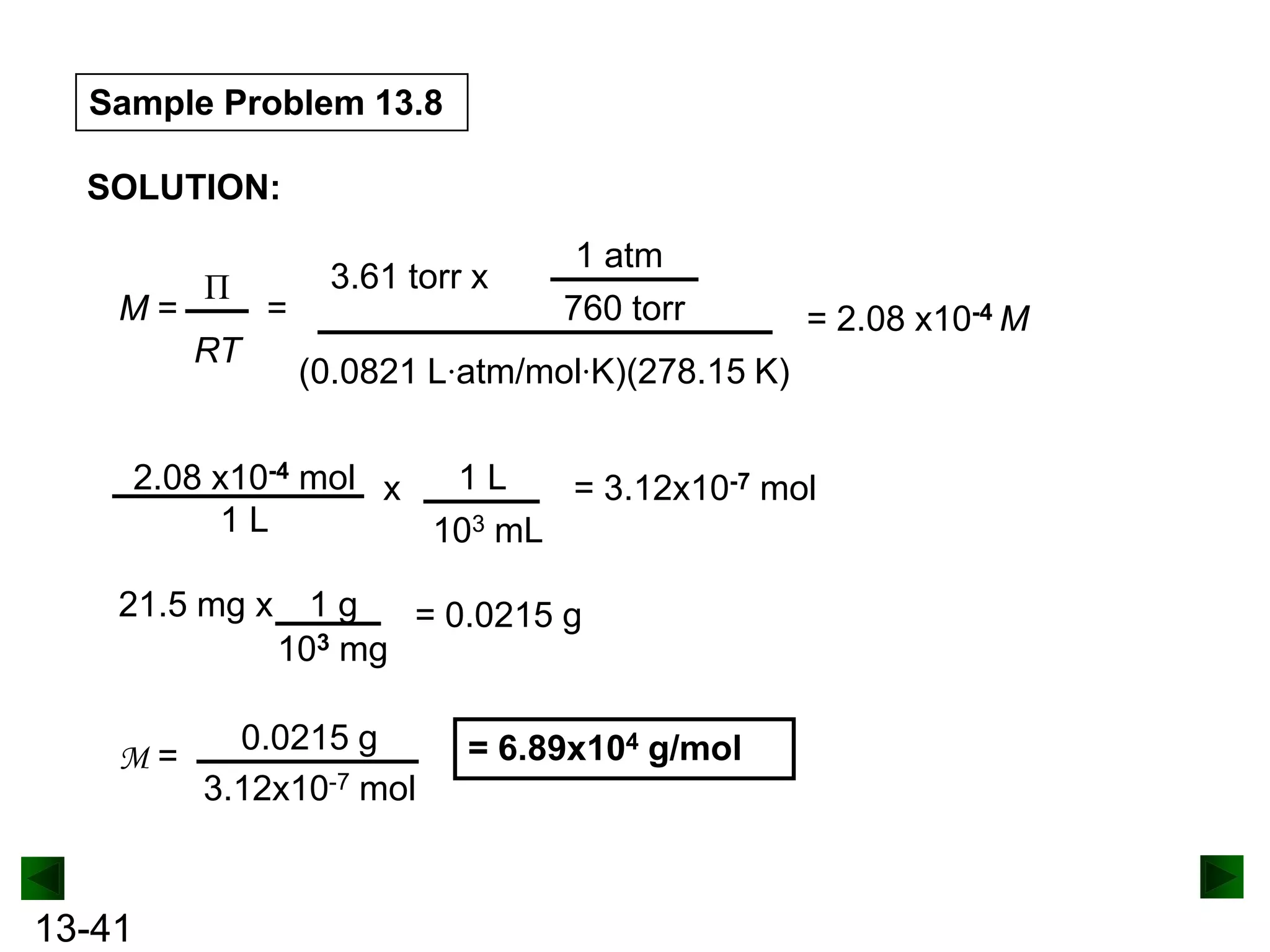
SOLUTION:
M=

Π

=

RT

3.61 torr x

1 atm
760 torr

= 2.08 x10⁻⁴ M

(0.0821 L·atm/mol·K)(278.15 K)

2.08 x10-4 mol x
1L
= 3.12x10⁻⁷ mol
1L
103 mL
21.5 mg x

M=

13-41

1g
= 0.0215 g
103 mg

0.0215 g
3.12x10⁻⁷ mol

= 6.89x10⁴ g/mol
Osmotic Pressure
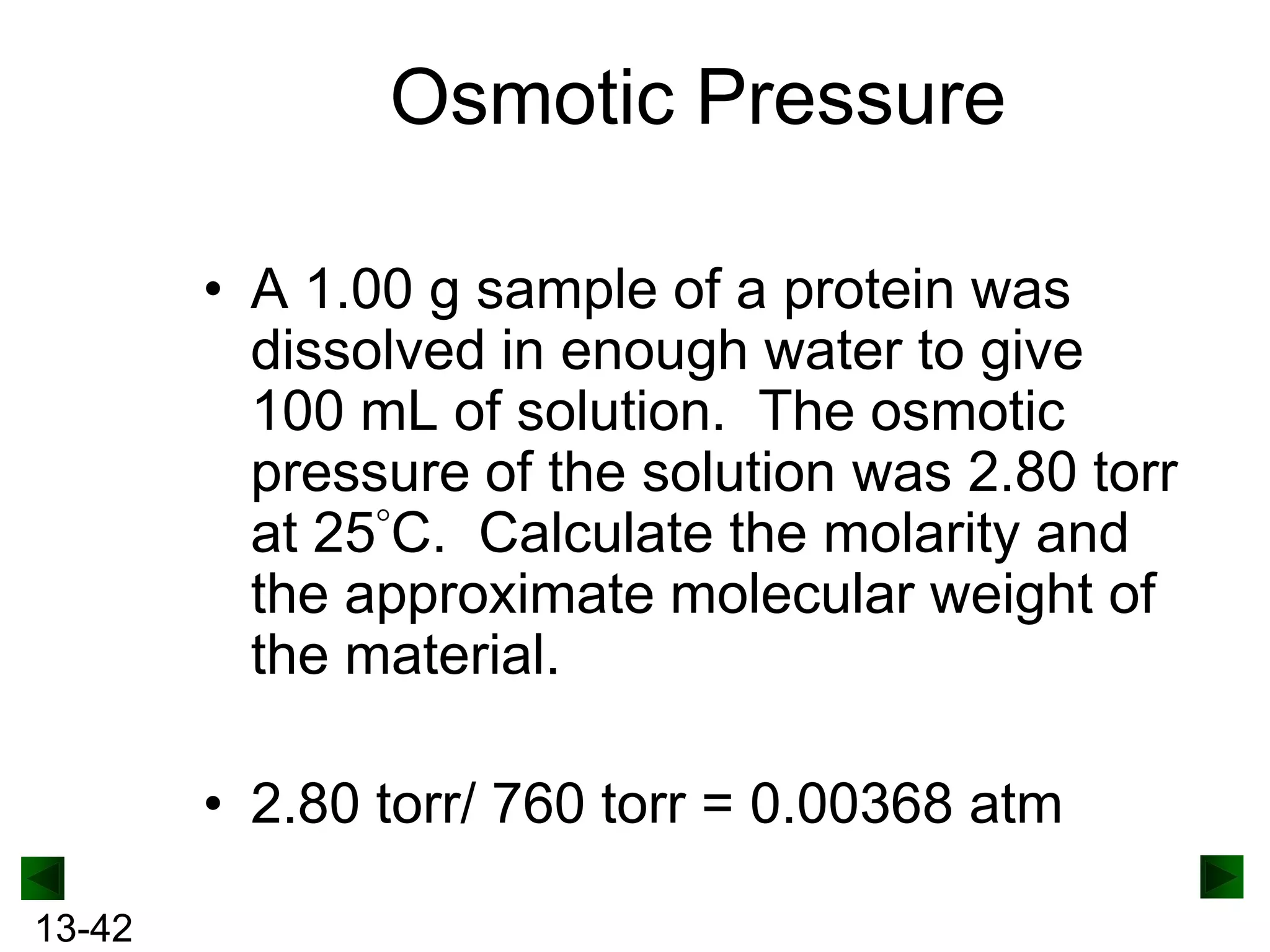
• A 1.00 g sample of a protein was
dissolved in enough water to give
100 mL of solution. The osmotic
pressure of the solution was 2.80 torr
at 25 C. Calculate the molarity and
the approximate molecular weight of
the material.

• 2.80 torr/ 760 torr = 0.00368 atm
13-42
13-43
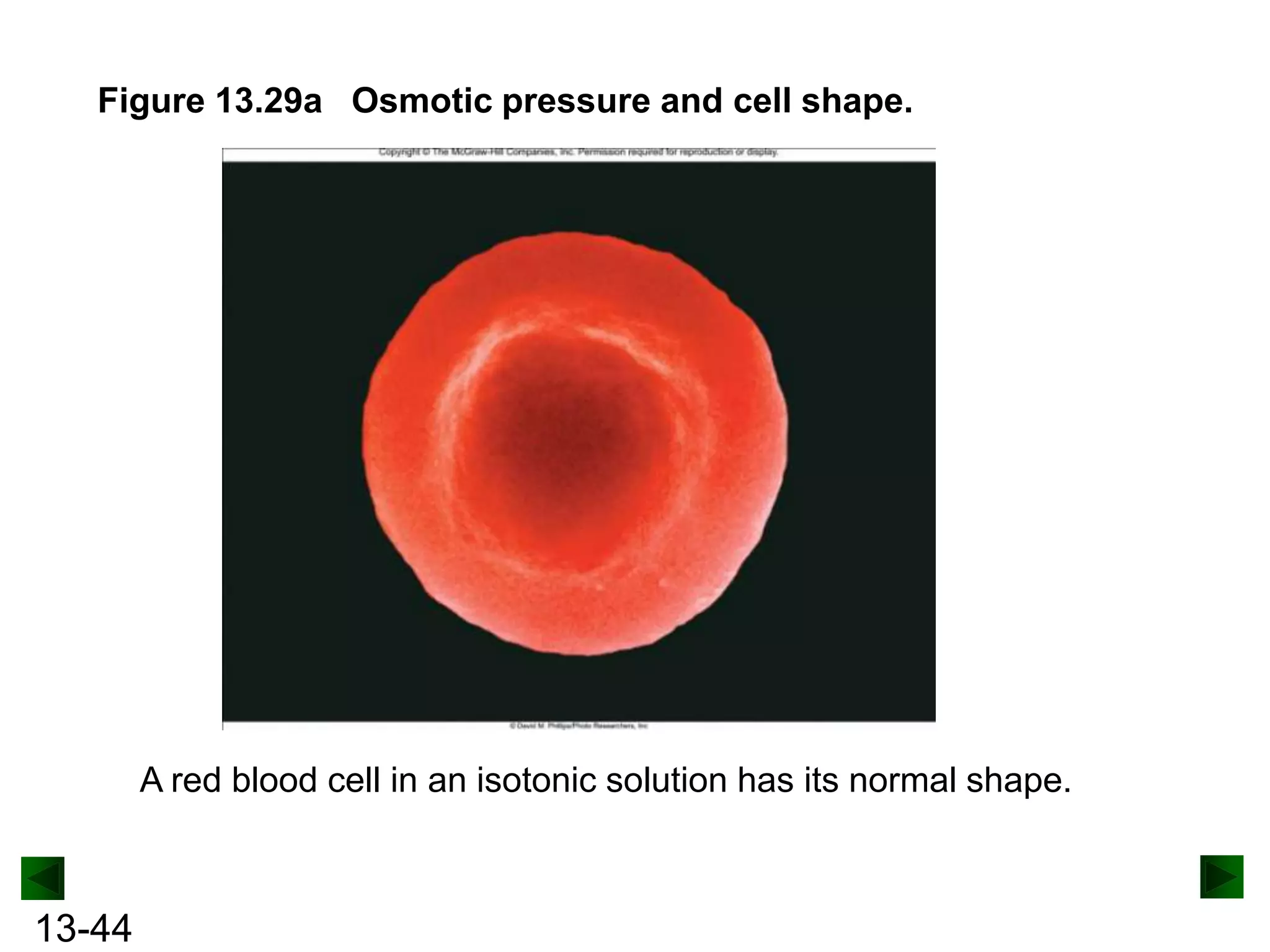
Figure 13.29a Osmotic pressure and cell shape.

A red blood cell in an isotonic solution has its normal shape.

13-44
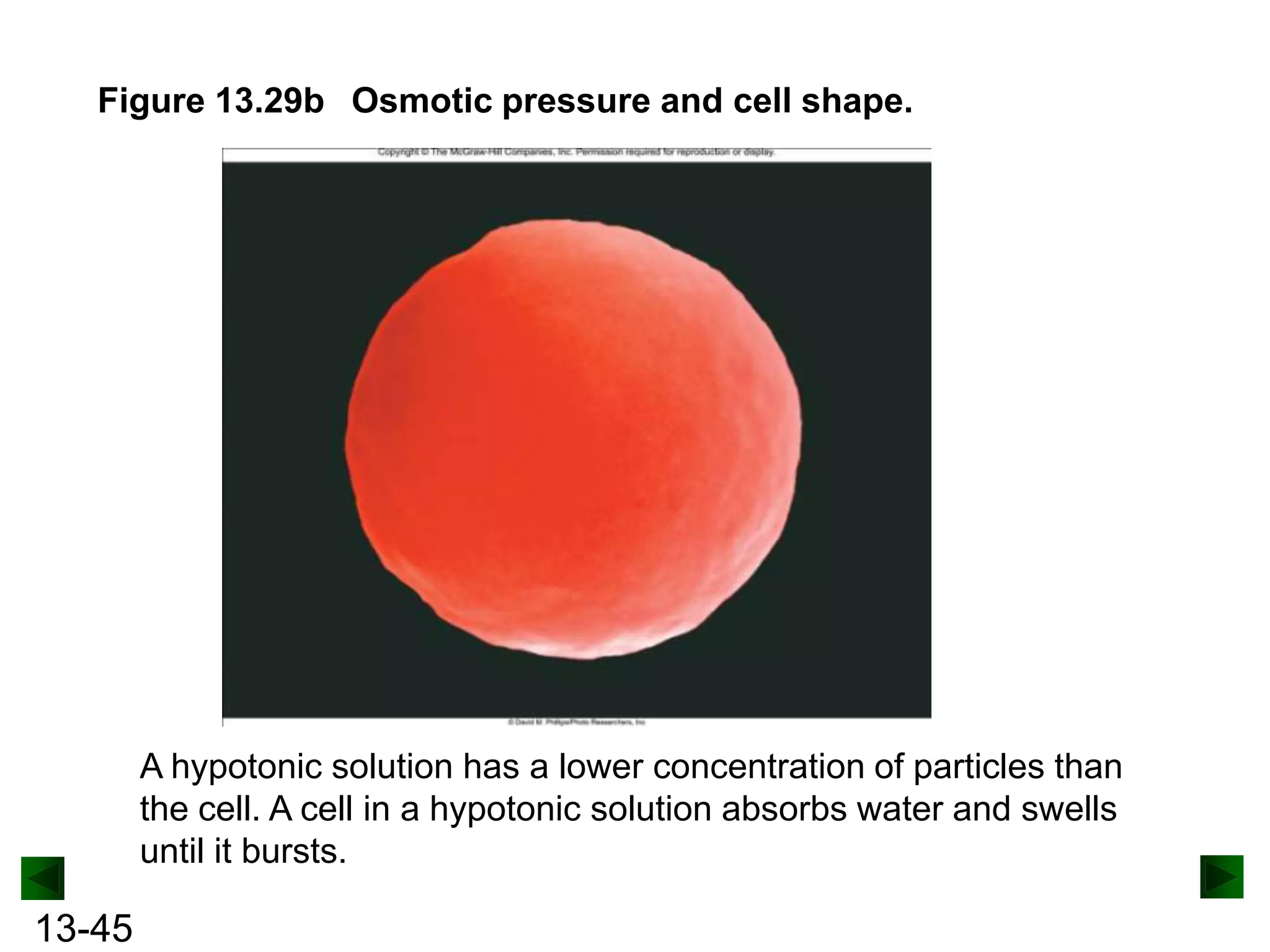
Figure 13.29b Osmotic pressure and cell shape.

A hypotonic solution has a lower concentration of particles than
the cell. A cell in a hypotonic solution absorbs water and swells
until it bursts.

13-45
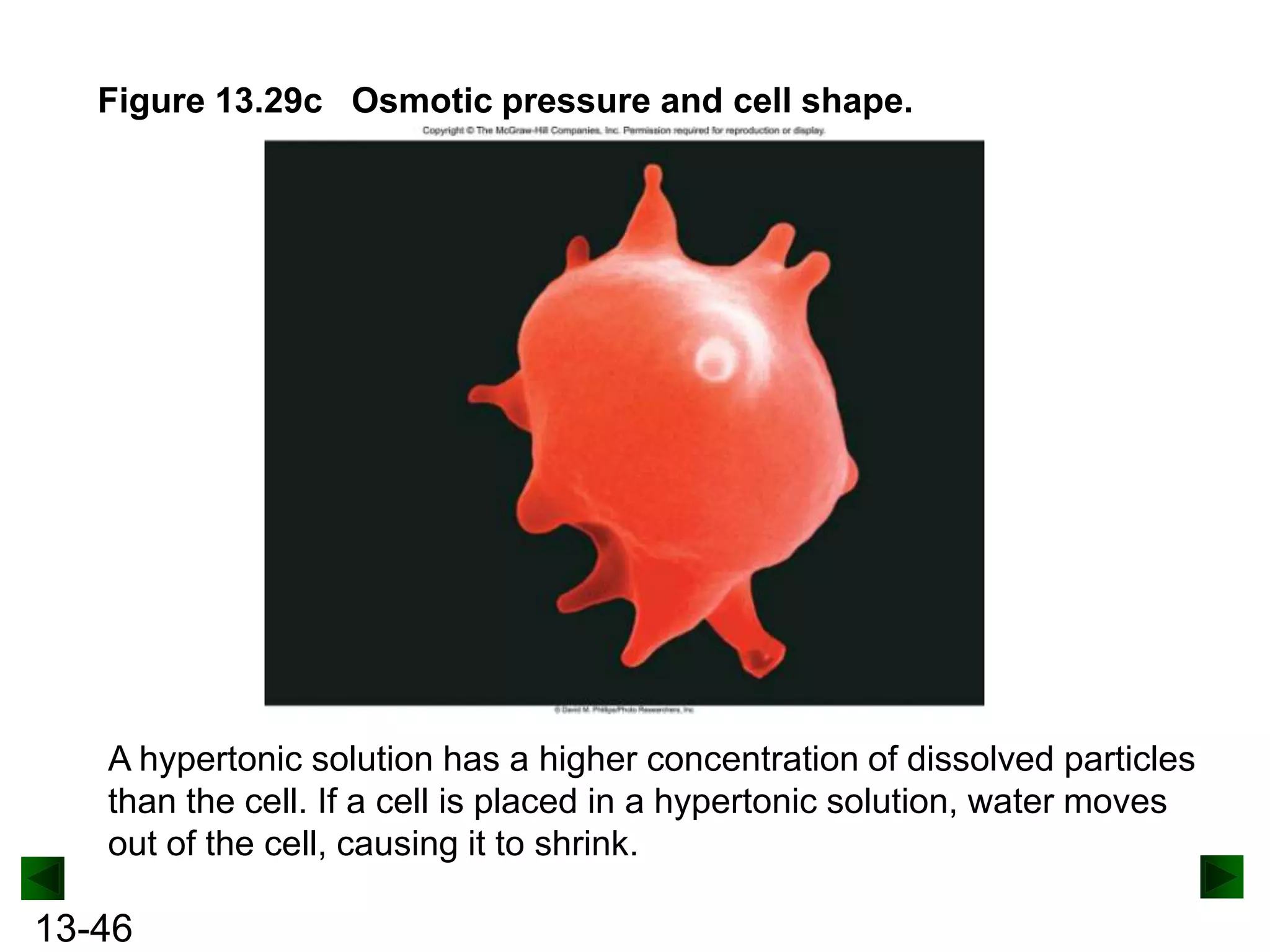
Figure 13.29c Osmotic pressure and cell shape.

A hypertonic solution has a higher concentration of dissolved particles
than the cell. If a cell is placed in a hypertonic solution, water moves
out of the cell, causing it to shrink.

13-46
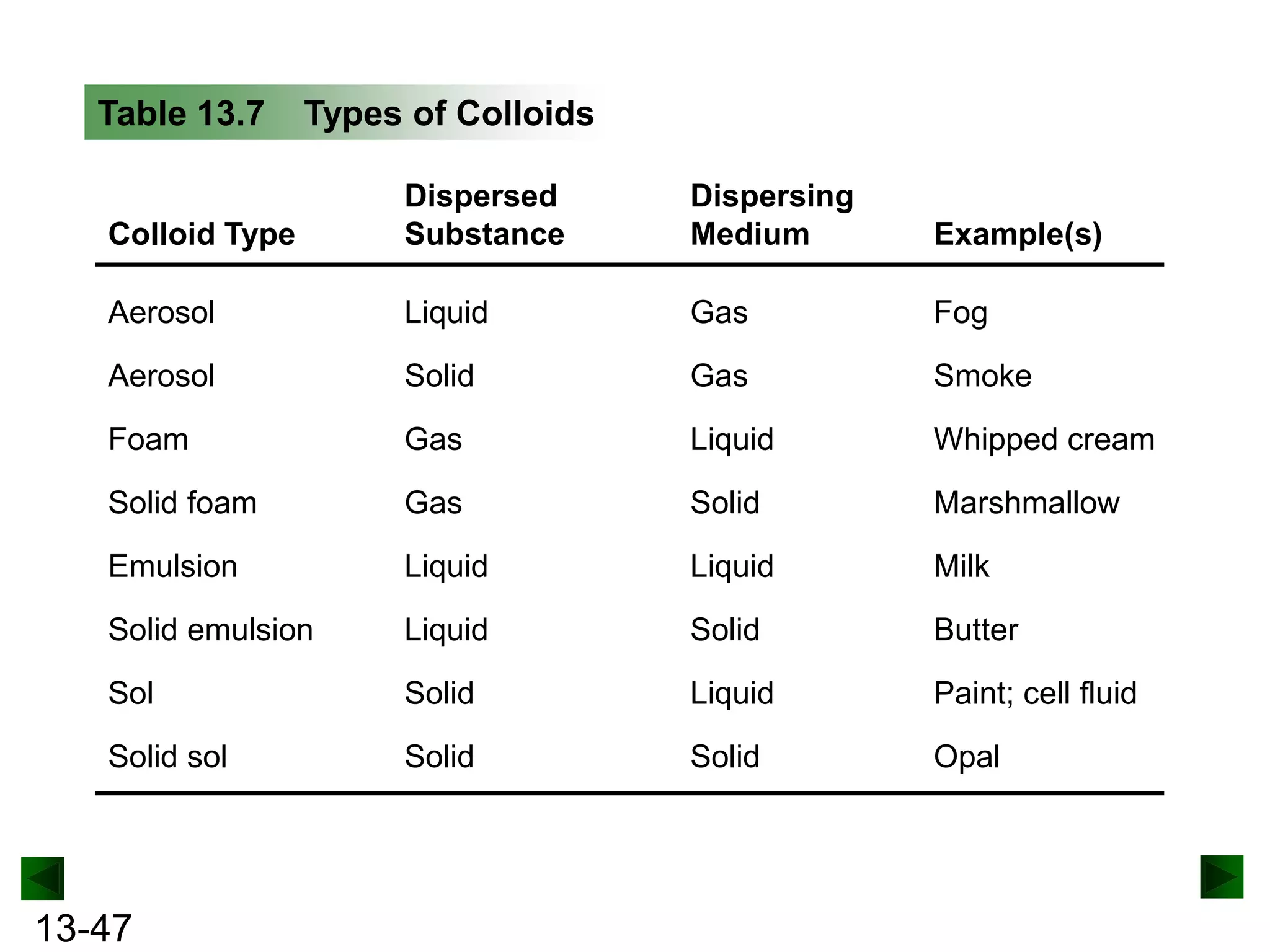
Table 13.7

Types of Colloids

Colloid Type

Dispersed
Substance

Dispersing
Medium

Example(s)

Aerosol

Liquid

Gas

Fog

Aerosol

Solid

Gas

Smoke

Foam

Gas

Liquid

Whipped cream

Solid foam

Gas

Solid

Marshmallow

Emulsion

Liquid

Liquid

Milk

Solid emulsion

Liquid

Solid

Butter

Sol

Solid

Liquid

Paint; cell fluid

Solid sol

Solid

Solid

Opal

13-47
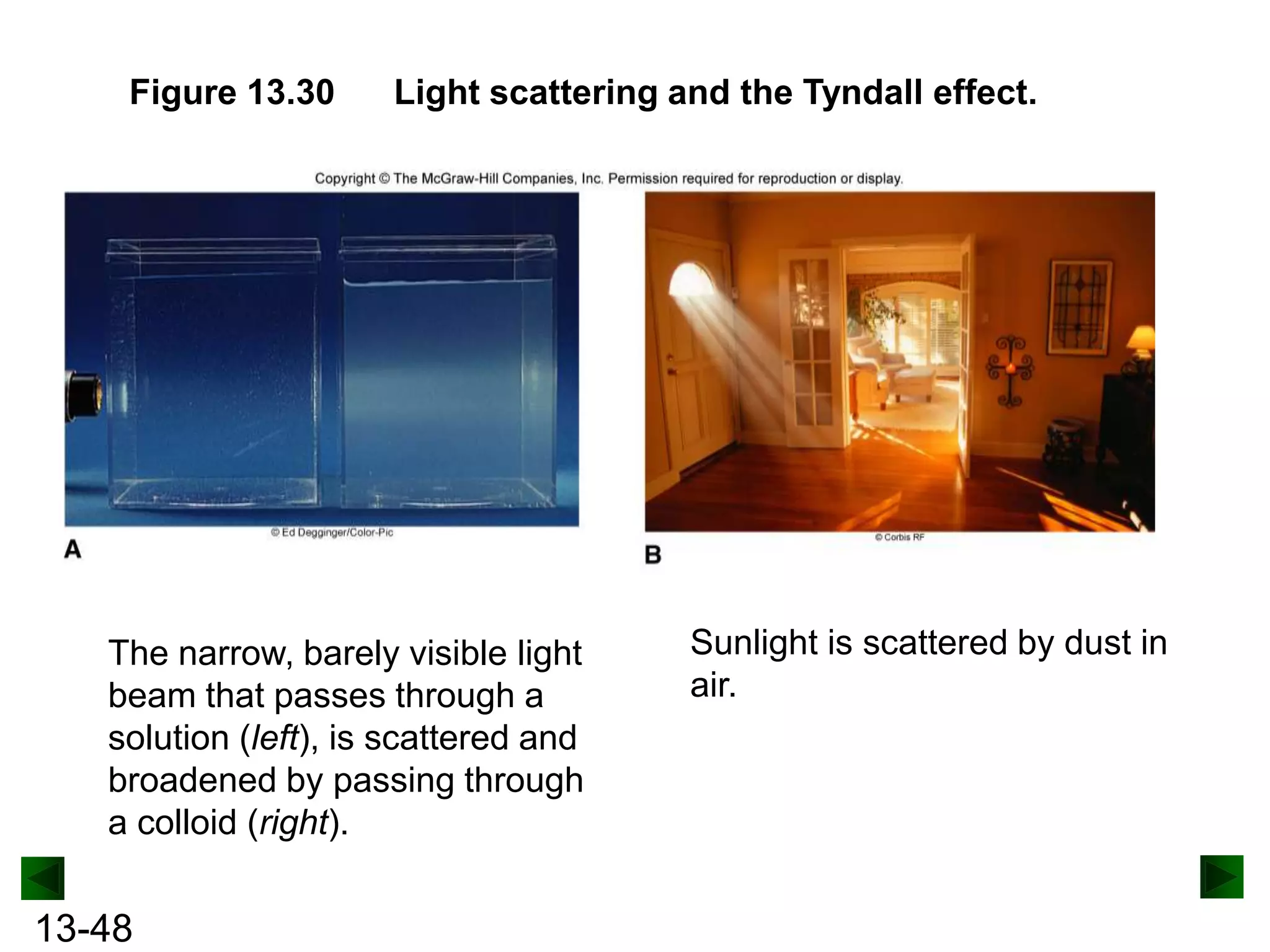
Figure 13.30

Light scattering and the Tyndall effect.

The narrow, barely visible light
beam that passes through a
solution (left), is scattered and
broadened by passing through
a colloid (right).

13-48

Sunlight is scattered by dust in
air.
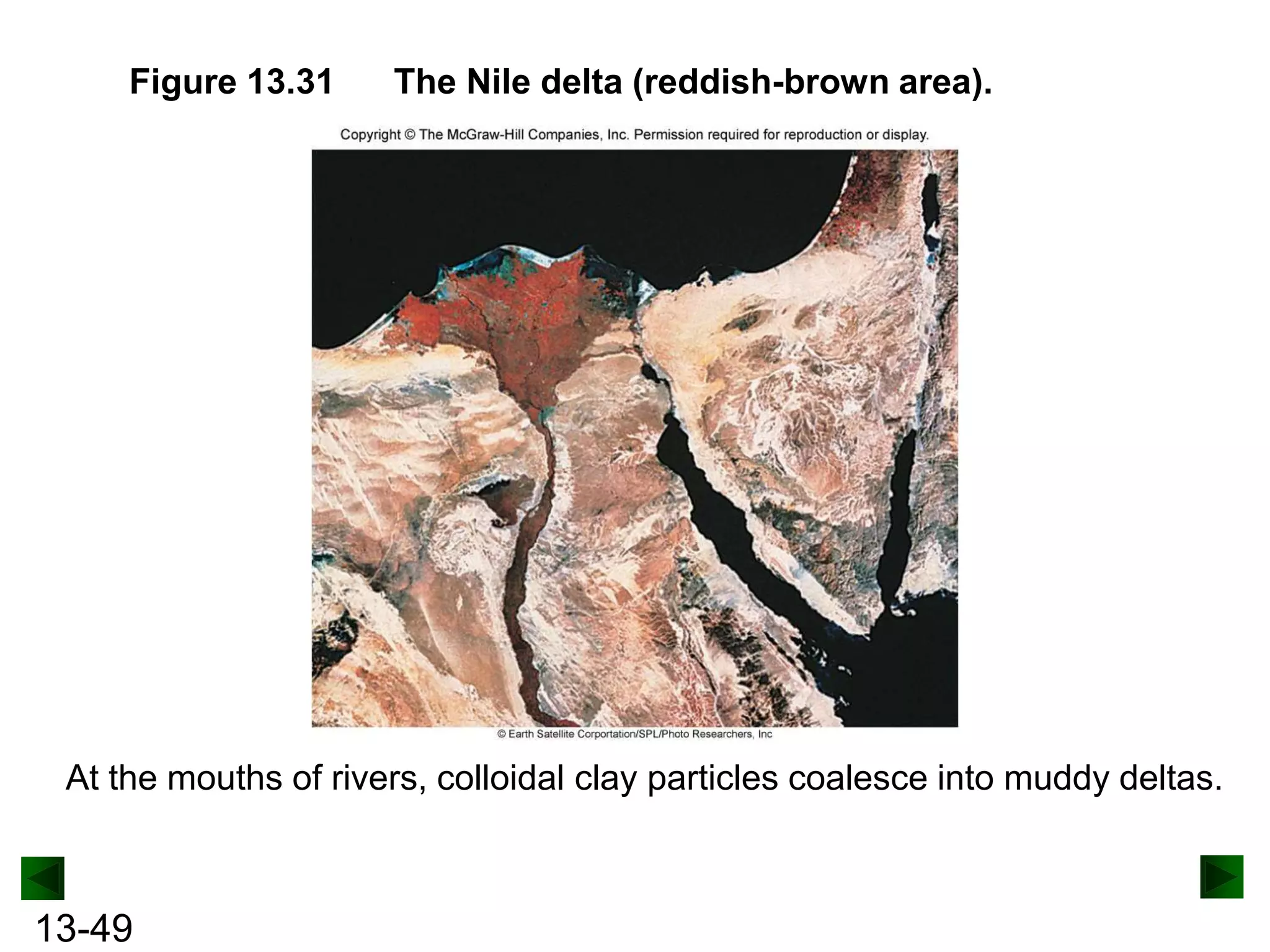
Figure 13.31

The Nile delta (reddish-brown area).

At the mouths of rivers, colloidal clay particles coalesce into muddy deltas.

13-49
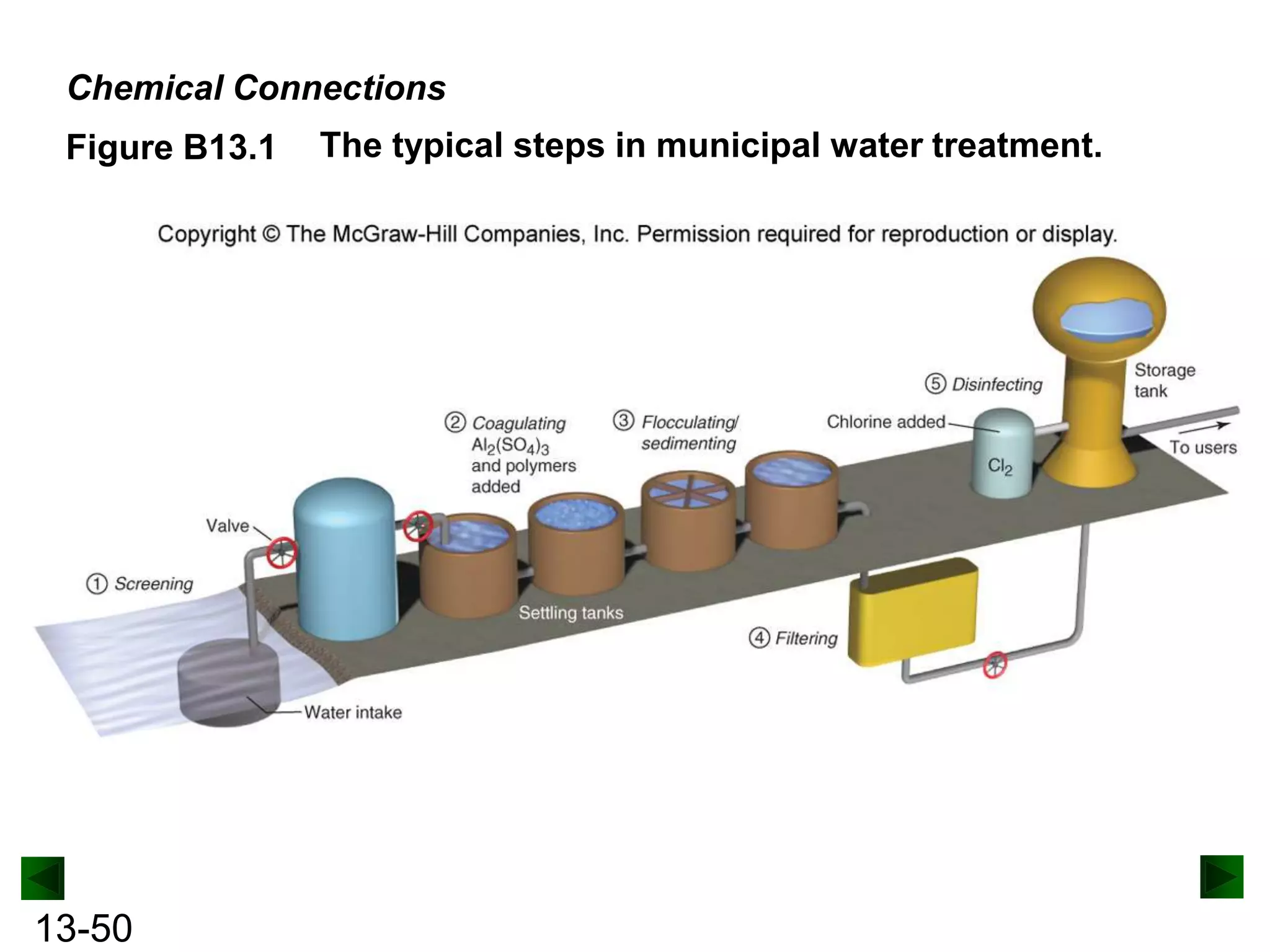
Chemical Connections
Figure B13.1

Figure B13.1

13-50

The typical steps in municipal water treatment.
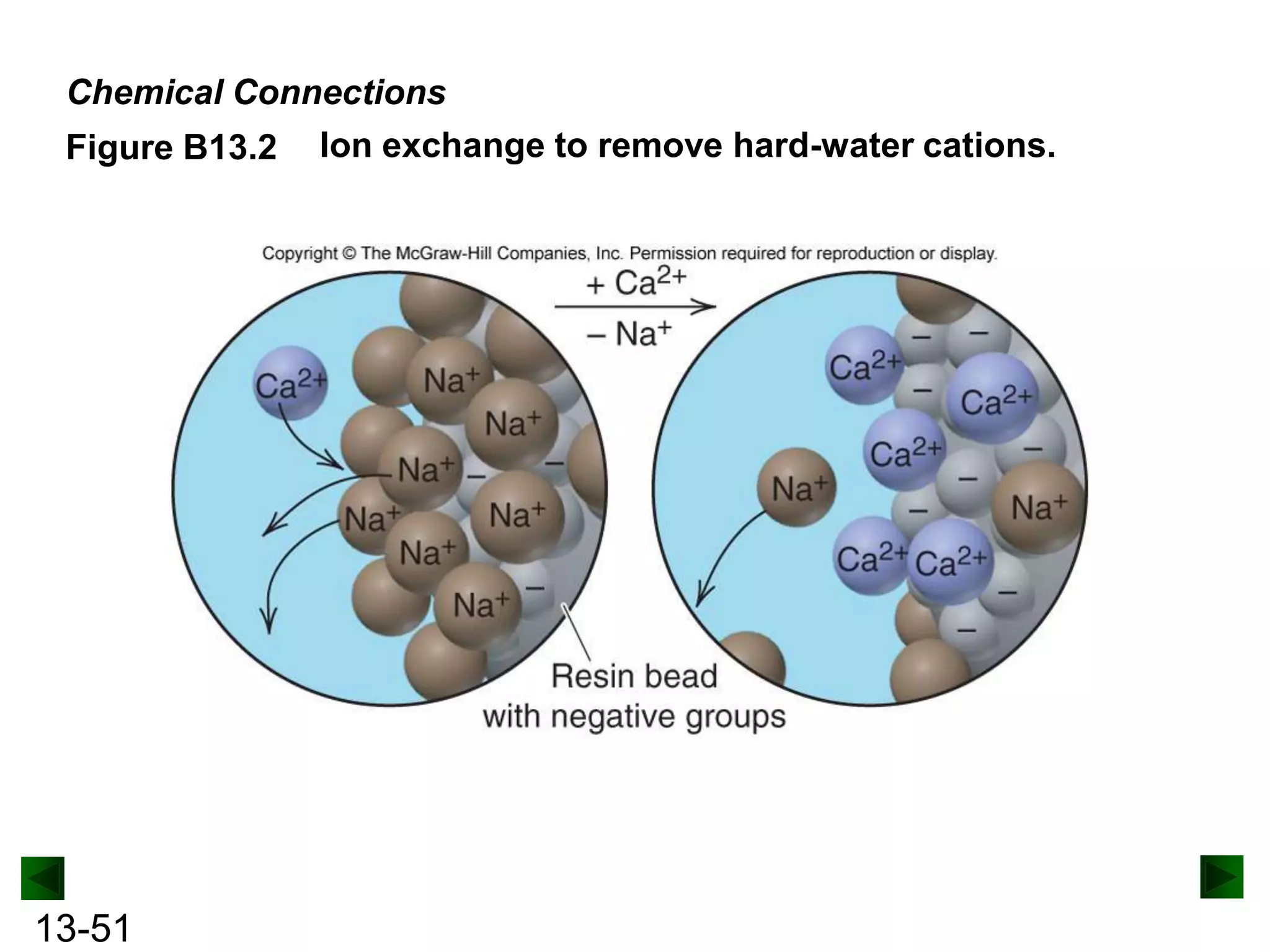
Chemical Connections
Figure B13.2 Ion exchange to remove hard-water cations.

13-51
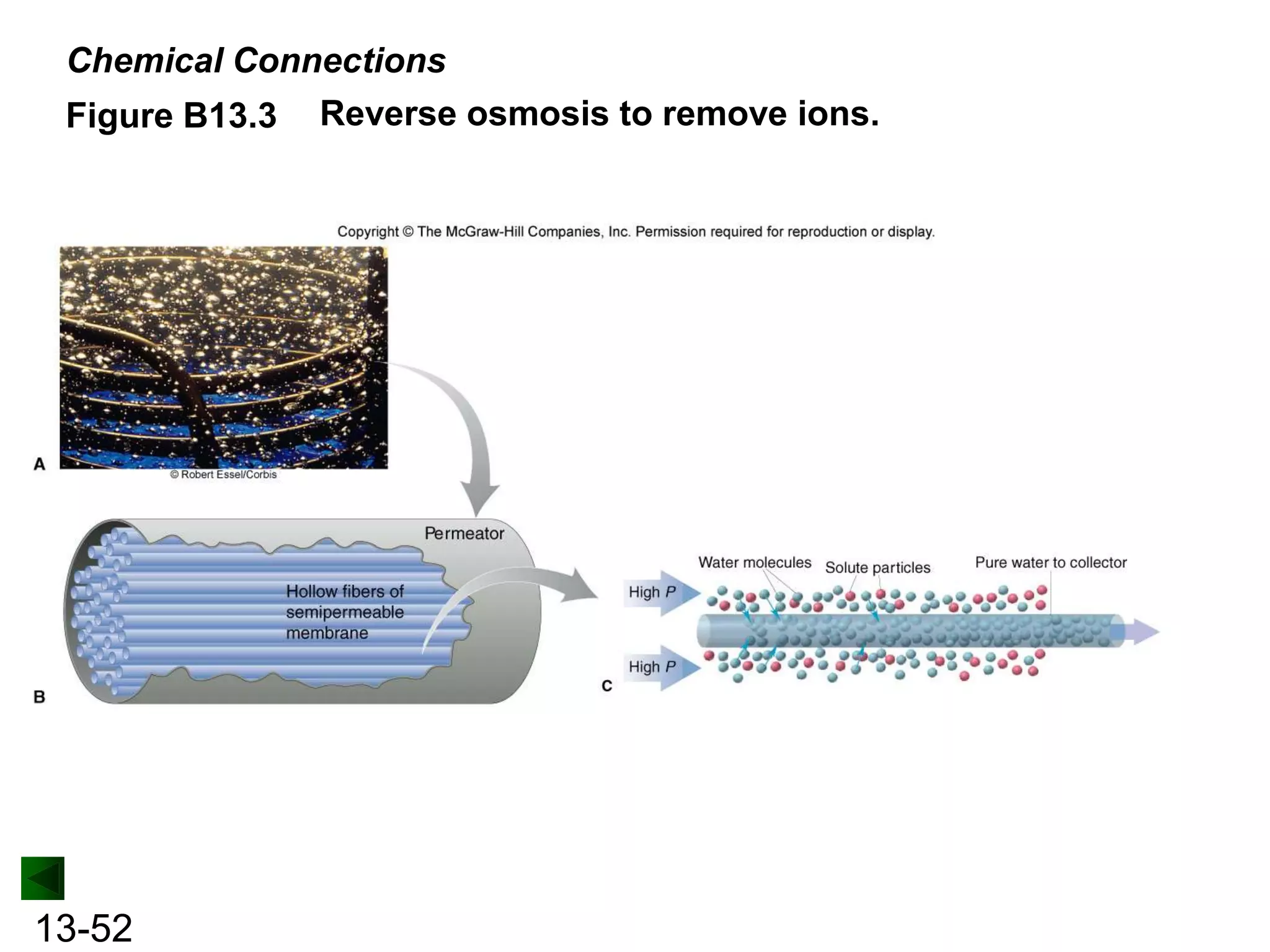
Chemical Connections
Figure B13.3 Reverse osmosis to remove ions.

13-52

New chm 151_unit_14_power_points-su13

  • 1.
    SOLUTIONS II • COLLIGATIVEPROPERTIES • Chapter 13.6 Silberberg 13-1
  • 2.
    Chapter 13 The Propertiesof Mixtures: Solutions and Colloids 13-2
  • 3.
    The Properties ofMixtures: Solutions and Colloids 13.1 Types of Solutions: Intermolecular Forces and Solubility 13.2 Intermolecular Forces and Biological Macromolecules 13.3 Why Substances Dissolve: Understanding the Solution Process 13.4 Solubility as an Equilibrium Process 13.5 Concentration Terms 13.6 Colligative Properties of Solutions 13.7 Structure and Properties of Colloids 13-3
  • 4.
    Goals & Objectives •See the following Learning Objectives on pages 543-544. • Understand these Concepts: • 13.15-20. • Master these Skills: • 13.5-10. 13-4
  • 5.
    Colligative Properties • Colligativeproperties depend on the number, rather than the kind, of solute particles. • Colligative properties are physical properties of solutions. 13-5
  • 6.
    Colligative Properties • Examplesof colligative properties include: – change in vapor pressure if solute is volatile – lowering of vapor pressure if solute is not volatile – freezing point depression – boiling point elevation if solute is not volatile 13-6 – osmotic pressure
  • 7.
    Colligative Properties ofSolutions Colligative properties are properties that depend on the number of solute particles, not their chemical identity. The number of particles in solution can be predicted from the formula and type of the solute. An electrolyte separates into ions when it dissolves in water. Strong electrolytes dissociate completely while weak electrolytes dissociate very little. A nonelectrolyte does not dissociate to form ions. Each mole of dissolved compound yields 1 mole of particles in solution. 13-7
  • 8.
    Figure 13.22 Conductivityof three types of electrolyte solutions. strong electrolyte 13-8 weak electrolyte nonelectrolyte
  • 9.
    Volatile Nonelectrolyte Solutions Fora volatile nonelectrolyte, the vapor of the solution contains both solute and solvent. The presence of each volatile component lowers the vapor pressure of the other, since each one lowers the mole fraction of the other. For such a solution, the vapor will have a higher mole fraction of the more volatile component. The vapor has a different composition than the solution. 13-9
  • 10.
    Colligative Properties ofElectrolyte Solutions For vapor pressure lowering: For boiling point elevation: For freezing point depression: For osmotic pressure: 13-10 P = i( solute x Tb = i( Posolvent) bm) Tf = i( fm) Π = i(MRT)
  • 11.
    Figure 13.26 Nonideal behaviorof strong electrolyte solutions. Ions in solution may remain clustered near ions of opposite charge, creating an ionic atmosphere. The ions do not act independently, and the effective concentration of dissolved particles is less than expected. 13-11
  • 12.
    Vapor Pressure Lowering Thevapor pressure of a solution containing a nonvolatile nonelectrolyte is always lower than the vapor pressure of the pure solvent. Raoult’s law states that the vapor pressure of the solvent above the solution is proportional to the mole fraction of the solvent present: Psolvent = Xsolvent x P solvent The vapor pressure lowering is proportional to the mole fraction of the solute present. Psolvent = Xsolute x P 13-12 solvent
  • 13.
    Figure 13.23 Effect ofsolute on the vapor pressure of solution. Equilibrium is reached with a given number of particles in the vapor. 13-13 Equilibrium is reached with fewer particles in the vapor.
  • 14.
    Sample Problem 13.6 UsingRaoult’s Law to Find ΔP PROBLEM: Find the vapor pressure lowering, P, when 10.0 mL of glycerol (C3H8O3) is added to 500. mL of water at 50. C. At this temperature, the vapor pressure of pure water is 92.5 torr and its density is 0.988 g/mL. The density of glycerol is 1.26 g/mL. PLAN: We are given the vapor pressure of pure H2O, so to calculate P we just need the mole fraction of glycerol, Xglycerol. volume (mL) of glycerol multiply by density mass (g) of glycerol multiply by M amount (mol) of glycerol multiply by P mole fraction (X) of glycerol 13-14 glycerol vapor pressure lowering
  • 15.
    Sample Problem 13.6 SOLUTION: 10.0mL C3H8O3 x 1.26 g C3H8O3 1 mL C3H8O3 x 1 mol C3H8O3 92.09 g C3H8O3 = 0.137 mol C3H8O3 500.0 mL H2O x Xglycerol = 0.988 g H2O 1 mL H2O x 1 mol H2O 18.02 g H2O 0.137 mol C3H8O3 = 0.00498 0.137 mol C3H8O3 + 27.4 mol H2O P = 0.00498 x 92.5 torr = 0.461 torr 13-15 = 27.4 mol H2O
  • 16.
    • Vapor Pressure &Raoult's Law the vapor Raoult’s Law states that pressure of a volatile component in an ideal solution decreases as its mole fraction decreases. – Psolution = (XA)(P A)+(XB)(P B)+(XC)(P C)… • When a nonvolatile solute is dissolved in a liquid, the vapor pressure of the liquid is always lowered. – Psolution = (Xsolvent)(P solvent) + (Xsolute)(P solute) 13-16
  • 17.
    Vapor Pressure &Raoult's Law • When an ionic solute is dissolved in a liquid, the vapor pressure of the liquid is lowered in proportion to the number of ions present. NaCl (s) + excess H2O Na1+(aq) + Cl1 (aq) • The vapor pressure is lower for a 1.0M solution of NaCl than for a 1.0 M solution of glucose due to the number of ions. 13-17
  • 18.
    • Vapor Pressure &Raoult's Determine the vapor Law of a solution pressure prepared by dissolving 18.3 g of sucrose in 500g of water at 70 C. The vapor pressure of water at 70 C is 233.7 torr. The molar mass of sucrose is 342.3g/mole. • What is the vapor pressure of a mixture that is 25% by mass acetone in water at 25 C? The vapor pressure of water at 25 C is 23.8 torr, and the vapor pressure of acetone at that temperature is 200 torr. The molar mass of acetone is 58.0 g/mole. 13-18
  • 19.
  • 20.
  • 21.
    Boiling Point Elevation Asolution always boils at a higher temperature than the pure solvent. This colligative property is a result of vapor pressure lowering. The boiling point elevation is proportional to the molality of the solution. Tb = Kbm Kb is the molal boiling point elevation constant for the solvent. 13-21
  • 22.
    Boiling Point Elevation •kb = the molal boiling point elevation constant kb for water, H2O kb for benzene, C6H6 kb for camphor 13-22 0.512 C/m 2.53 C/m 5.95 C/m
  • 23.
    Boiling Point Elevation •Determine the normal boiling point of a 2.50 m glucose, C6H12O6, solution. 13-23
  • 24.
  • 25.
    Figure 13.24 13-25 Boiling andfreezing points of solvent and solution.
  • 26.
    Freezing Point Depression Asolution always freezes at a lower temperature than the pure solvent. The freezing point depression is proportional to the molality of the solution. Tf = Kfm Kf is the molal freezing point depression constant for the solvent. 13-26
  • 27.
    Table 13.6 Molal BoilingPoint Elevation and Freezing Point Depression Constants of Several Solvents Kb ( C/m) Melting Point ( C) Kf ( C/m) 117.9 3.07 16.6 3.90 Benzene 80.1 2.53 5.5 4.90 Carbon disulfide 46.2 2.34 -111.5 3.83 Carbon tetrachloride 76.5 5.03 -23 Chloroform 61.7 3.63 -63.5 4.70 Diethyl ether 34.5 2.02 -116.2 1.79 Ethanol 78.5 1.22 -117.3 1.99 100.0 0.512 0.0 1.86 Solvent Boiling Point (oC)* Acetic acid Water *At 13-27 1 atm. 30.
  • 28.
    Sample Problem 13.7 DeterminingBoiling and Freezing Points of a Solution PROBLEM: You add 1.00 kg of ethylene glycol (C2H6O2) antifreeze to 4450 g of water in your car’s radiator. What are the boiling and freezing points of the solution? PLAN: We need to find the molality of the solution and then calculate the boiling point elevation and freezing point depression. mass (g) of solute divide by M amount (mol) of solute divide by kg of solvent molality (m) Tb(solution) 13-28 Tf = Kfm Tb = Kbm Tb + Tb Tb Tf T f - Tf Tf(solution)
  • 29.
    Sample Problem 13.7 SOLUTION: 1.00x10³g C2H6O2 x molality = 1 mol C2H6O2 62.07 g C2H6O2 16.1 mol C2H6O2 4.450 kg H2O = 16.1 mol C2H6O2 = 3.62 m C2H6O2 Tb = 3.62 m x 0.512 C/m = 1.85 C Tb(solution) = 100.00 + 1.85 = 101.85 C Tf = 3.62 m x 1.86 C/m = 6.73 C Tb(solution) = 0.00 - 6.73 = -6.73 C 13-29
  • 30.
    Freezing Point Depression Tf= kfm • kf = the molal freezing point depression constant kf kf kf kf 13-30 for water, H2O for benzene, C6H6 for t-butanol, (CH3)3COH for camphor 1.86 5.12 8.09 37.7 C/m C/m C/m C/m
  • 31.
    Freezing Point Depression •Calculate the freezing point of 2.50m glucose solution. • Calculate the freezing point of a solution that contains 8.50g of benzoic acid, C6H5COOH, in 75.0g of benzene, C6H6. kf for benzene, C6H6 = 5.12 C/m MW for benzoic acid = 122 g/mole Freezing point of benzene = 5.5 C 13-31
  • 32.
  • 33.
    Determination of MolarMasses by Freezing Point Depression • A 37.0g sample of a new covalent compound, a nonelectrolyte, was dissolved in 200g of water. The resulting solution froze at 5.58 C. • Determine the molecular weight of the compound. (V-3) 13-33
  • 34.
  • 35.
  • 36.
    Osmotic Pressure Osmosis isthe movement of solvent particles from a region of higher to a region of lower concentration through a semipermeable membrane. Solvent will always flow from a more dilute solution to a more concentrated one. Osmotic pressure is the pressure that must be applied to prevent the net flow of solvent. Π = MRT 13-36 M = molarity R = 0.0821 atm·L/mol·K T = Kelvin temperature
  • 37.
  • 38.
    Osmotic Pressure • Determinethe osmotic pressure of a 1.00 M solution of glucose at 25OC. 13-38
  • 39.
  • 40.
    Sample Problem 13.8 DeterminingMolar Mass from Osmotic Pressure PROBLEM: Biochemists have discovered more than 400 mutant varieties of hemoglobin, the blood protein that carries O2. A physician dissolves 21.5 mg of one variety in water to make 1.50 mL of solution at 5.0 C. She measures an osmotic pressure of 3.61 torr. What is the molar mass of the protein? PLAN: We convert Π to atm and T to degrees K and calculate molarity from osmotic pressure. We can then determine the molar mass using the number of moles and the known mass. Π (atm) Π = MRT M (mol/L) convert to mol amount (mol) of solute 13-40 divide mass (g) by moles M (g/mol)
  • 41.
    Sample Problem 13.8 SOLUTION: M= Π = RT 3.61torr x 1 atm 760 torr = 2.08 x10⁻⁴ M (0.0821 L·atm/mol·K)(278.15 K) 2.08 x10-4 mol x 1L = 3.12x10⁻⁷ mol 1L 103 mL 21.5 mg x M= 13-41 1g = 0.0215 g 103 mg 0.0215 g 3.12x10⁻⁷ mol = 6.89x10⁴ g/mol
  • 42.
    Osmotic Pressure • A1.00 g sample of a protein was dissolved in enough water to give 100 mL of solution. The osmotic pressure of the solution was 2.80 torr at 25 C. Calculate the molarity and the approximate molecular weight of the material. • 2.80 torr/ 760 torr = 0.00368 atm 13-42
  • 43.
  • 44.
    Figure 13.29a Osmoticpressure and cell shape. A red blood cell in an isotonic solution has its normal shape. 13-44
  • 45.
    Figure 13.29b Osmoticpressure and cell shape. A hypotonic solution has a lower concentration of particles than the cell. A cell in a hypotonic solution absorbs water and swells until it bursts. 13-45
  • 46.
    Figure 13.29c Osmoticpressure and cell shape. A hypertonic solution has a higher concentration of dissolved particles than the cell. If a cell is placed in a hypertonic solution, water moves out of the cell, causing it to shrink. 13-46
  • 47.
    Table 13.7 Types ofColloids Colloid Type Dispersed Substance Dispersing Medium Example(s) Aerosol Liquid Gas Fog Aerosol Solid Gas Smoke Foam Gas Liquid Whipped cream Solid foam Gas Solid Marshmallow Emulsion Liquid Liquid Milk Solid emulsion Liquid Solid Butter Sol Solid Liquid Paint; cell fluid Solid sol Solid Solid Opal 13-47
  • 48.
    Figure 13.30 Light scatteringand the Tyndall effect. The narrow, barely visible light beam that passes through a solution (left), is scattered and broadened by passing through a colloid (right). 13-48 Sunlight is scattered by dust in air.
  • 49.
    Figure 13.31 The Niledelta (reddish-brown area). At the mouths of rivers, colloidal clay particles coalesce into muddy deltas. 13-49
  • 50.
    Chemical Connections Figure B13.1 FigureB13.1 13-50 The typical steps in municipal water treatment.
  • 51.
    Chemical Connections Figure B13.2Ion exchange to remove hard-water cations. 13-51
  • 52.
    Chemical Connections Figure B13.3Reverse osmosis to remove ions. 13-52