Domina Petric, MD
ECG F
Fascicular VT
Burns E. Idiopathic Fascicular Left Ventricular Tachycardia (April 4, 2017).
Retrieved from https://lifeinthefastlane.com/ecg-library/fascicular-vt/
Fascicular VT
Synonyms are:
• fascicular tachycardia
• Belhassen-type VT
• verapamil-sensitive VT
• infrafascicular tachycardia
PowerPlugs Templates for PowerPoint Preview 3
Fascicular VT
Fascicular tachycardia is the most common
idiopathic VT of the left ventricle.
It is a re-entrant tachycardia, typically seen in
young patients without structural heart disease.
Verapamil is the first line treatment.
PowerPlugs Templates for PowerPoint Preview 4
ECG features
Monomorphic
ventricular
tachycardia with
fusion complexes, AV
dissociation and
capture beats.
QRS duration is
100-140 ms.
Short RS interval
of 60-80 ms.
The RS interval is
usually >100 ms in
other types of VT.
RBBB pattern.
Axis deviation!
PowerPlugs Templates for PowerPoint Preview 5
Classification
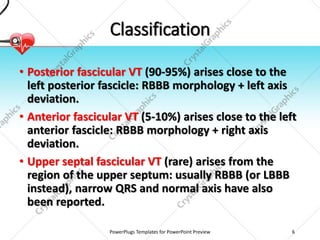
• Posterior fascicular VT (90-95%) arises close to the
left posterior fascicle: RBBB morphology + left axis
deviation.
• Anterior fascicular VT (5-10%) arises close to the left
anterior fascicle: RBBB morphology + right axis
deviation.
• Upper septal fascicular VT (rare) arises from the
region of the upper septum: usually RBBB (or LBBB
instead), narrow QRS and normal axis have also
been reported.
PowerPlugs Templates for PowerPoint Preview 6
Note!
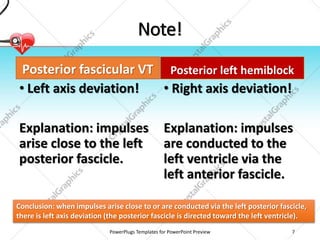
Posterior fascicular VT
• Left axis deviation!
Explanation: impulses
arise close to the left
posterior fascicle.
Posterior left hemiblock
• Right axis deviation!
Explanation: impulses
are conducted to the
left ventricle via the
left anterior fascicle.
PowerPlugs Templates for PowerPoint Preview 7
Conclusion: when impulses arise close to or are conducted via the left posterior fascicle,
there is left axis deviation (the posterior fascicle is directed toward the left ventricle).
Note!
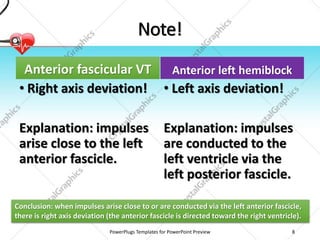
Anterior fascicular VT
• Right axis deviation!
Explanation: impulses
arise close to the left
anterior fascicle.
Anterior left hemiblock
• Left axis deviation!
Explanation: impulses
are conducted to the
left ventricle via the
left posterior fascicle.
PowerPlugs Templates for PowerPoint Preview 8
Conclusion: when impulses arise close to or are conducted via the left anterior fascicle,
there is right axis deviation (the anterior fascicle is directed toward the right ventricle).
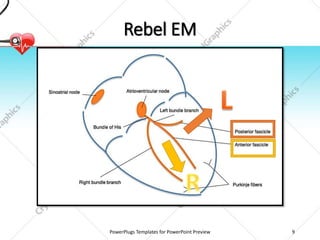
Rebel EM
PowerPlugs Templates for PowerPoint Preview 9
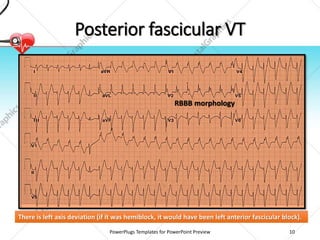
Posterior fascicular VT
PowerPlugs Templates for PowerPoint Preview 10
There is left axis deviation (if it was hemiblock, it would have been left anterior fascicular block).
RBBB morphology
Fusion beat
Burns E. Fusion Beats (July 19, 2018). Retrieved from
https://lifeinthefastlane.com/ecg-library/basics/fusion-beats/
PowerPlugs Templates for PowerPoint Preview 11
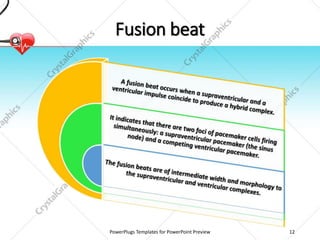
Fusion beat
PowerPlugs Templates for PowerPoint Preview 12
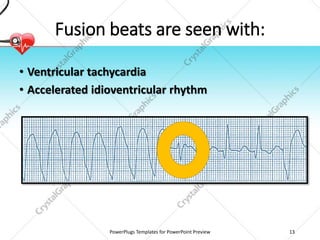
Fusion beats are seen with:
• Ventricular tachycardia
• Accelerated idioventricular rhythm
PowerPlugs Templates for PowerPoint Preview 13
Literature
PowerPlugs Templates for PowerPoint Preview 14

ECG F

  • 1.
  • 2.
    Fascicular VT Burns E.Idiopathic Fascicular Left Ventricular Tachycardia (April 4, 2017). Retrieved from https://lifeinthefastlane.com/ecg-library/fascicular-vt/
  • 3.
    Fascicular VT Synonyms are: •fascicular tachycardia • Belhassen-type VT • verapamil-sensitive VT • infrafascicular tachycardia PowerPlugs Templates for PowerPoint Preview 3
  • 4.
    Fascicular VT Fascicular tachycardiais the most common idiopathic VT of the left ventricle. It is a re-entrant tachycardia, typically seen in young patients without structural heart disease. Verapamil is the first line treatment. PowerPlugs Templates for PowerPoint Preview 4
  • 5.
    ECG features Monomorphic ventricular tachycardia with fusioncomplexes, AV dissociation and capture beats. QRS duration is 100-140 ms. Short RS interval of 60-80 ms. The RS interval is usually >100 ms in other types of VT. RBBB pattern. Axis deviation! PowerPlugs Templates for PowerPoint Preview 5
  • 6.
    Classification • Posterior fascicularVT (90-95%) arises close to the left posterior fascicle: RBBB morphology + left axis deviation. • Anterior fascicular VT (5-10%) arises close to the left anterior fascicle: RBBB morphology + right axis deviation. • Upper septal fascicular VT (rare) arises from the region of the upper septum: usually RBBB (or LBBB instead), narrow QRS and normal axis have also been reported. PowerPlugs Templates for PowerPoint Preview 6
  • 7.
    Note! Posterior fascicular VT •Left axis deviation! Explanation: impulses arise close to the left posterior fascicle. Posterior left hemiblock • Right axis deviation! Explanation: impulses are conducted to the left ventricle via the left anterior fascicle. PowerPlugs Templates for PowerPoint Preview 7 Conclusion: when impulses arise close to or are conducted via the left posterior fascicle, there is left axis deviation (the posterior fascicle is directed toward the left ventricle).
  • 8.
    Note! Anterior fascicular VT •Right axis deviation! Explanation: impulses arise close to the left anterior fascicle. Anterior left hemiblock • Left axis deviation! Explanation: impulses are conducted to the left ventricle via the left posterior fascicle. PowerPlugs Templates for PowerPoint Preview 8 Conclusion: when impulses arise close to or are conducted via the left anterior fascicle, there is right axis deviation (the anterior fascicle is directed toward the right ventricle).
  • 9.
    Rebel EM PowerPlugs Templatesfor PowerPoint Preview 9
  • 10.
    Posterior fascicular VT PowerPlugsTemplates for PowerPoint Preview 10 There is left axis deviation (if it was hemiblock, it would have been left anterior fascicular block). RBBB morphology
  • 11.
    Fusion beat Burns E.Fusion Beats (July 19, 2018). Retrieved from https://lifeinthefastlane.com/ecg-library/basics/fusion-beats/ PowerPlugs Templates for PowerPoint Preview 11
  • 12.
    Fusion beat PowerPlugs Templatesfor PowerPoint Preview 12
  • 13.
    Fusion beats areseen with: • Ventricular tachycardia • Accelerated idioventricular rhythm PowerPlugs Templates for PowerPoint Preview 13
  • 14.