Domina Petric, MD
ECG H
Hypercalcaemia
Burns E. Hypercalcaemia (April 16, 2017). Retrieved from
https://lifeinthefastlane.com/ecg-library/basics/hypercalcaemia/
PowerPlugs Templates for PowerPoint Preview 2
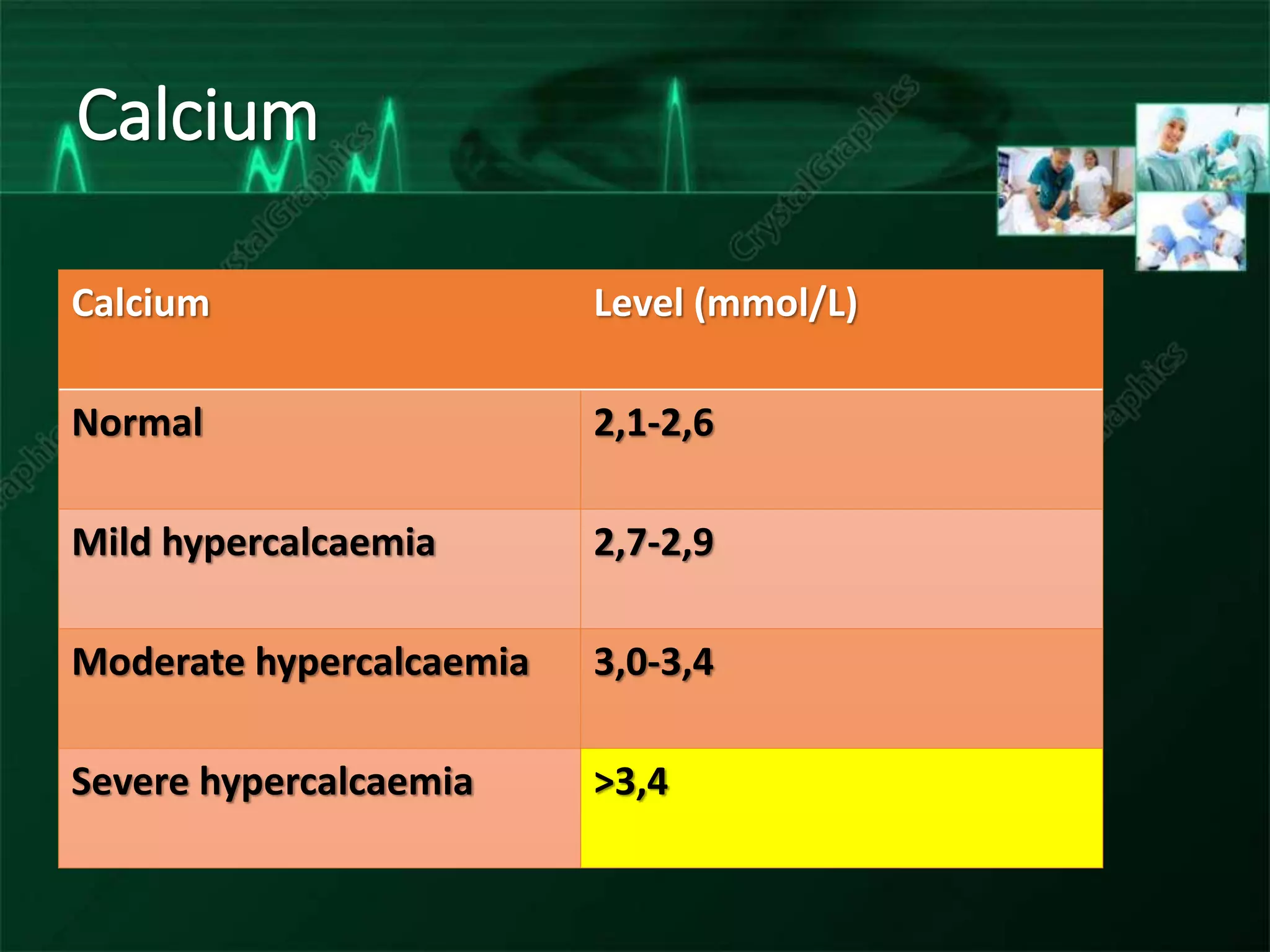
Calcium
Calcium Level (mmol/L)
Normal 2,1-2,6
Mild hypercalcaemia 2,7-2,9
Moderate hypercalcaemia 3,0-3,4
Severe hypercalcaemia >3,4
Causes of hypercalcaemia
PowerPlugs Templates for PowerPoint Preview 4
ECG features
PowerPlugs Templates for PowerPoint Preview 5
Example (Otero & Lenihan)
PowerPlugs Templates for PowerPoint Preview 6
Osborn (J) waves
Hypocalcaemia
Burns E. Hypocalcaemia (April 16, 2017). Retrieved from
https://lifeinthefastlane.com/ecg-library/basics/ecg-features-of-hypocalcaemia/
PowerPlugs Templates for PowerPoint Preview 7
Hypocalcaemia
PowerPlugs Templates for PowerPoint Preview 8
Calcium Level (mmol/L)
Normal 2,1-2,6
Mild-moderate
hypocalcaemia
1,9-2,1
Severe hypocalcaemia <1,9
Causes
Hypoparathyroidism Vitamin D deficiency Acute pancreatitis Hyperphosphataemia
Hypomagnesaemia Diuretics (fursemide) Pseudohypoparathyroidism
Congenital disorders
(DiGeorge syndrome)
Critical illness (sepsis)
Factitious (EDTA blood tube
contamination)
PowerPlugs Templates for PowerPoint Preview 9
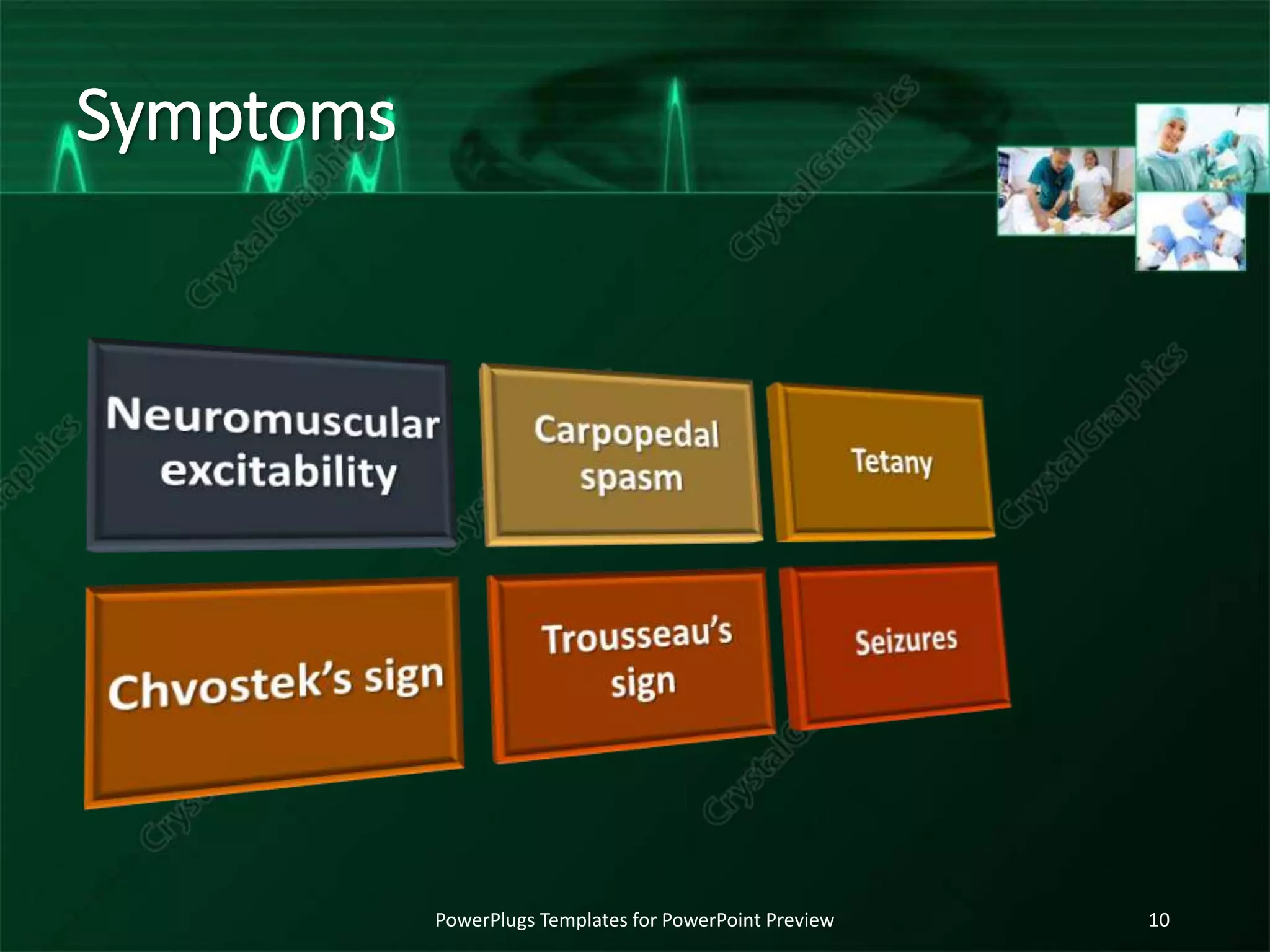
Symptoms
PowerPlugs Templates for PowerPoint Preview 10
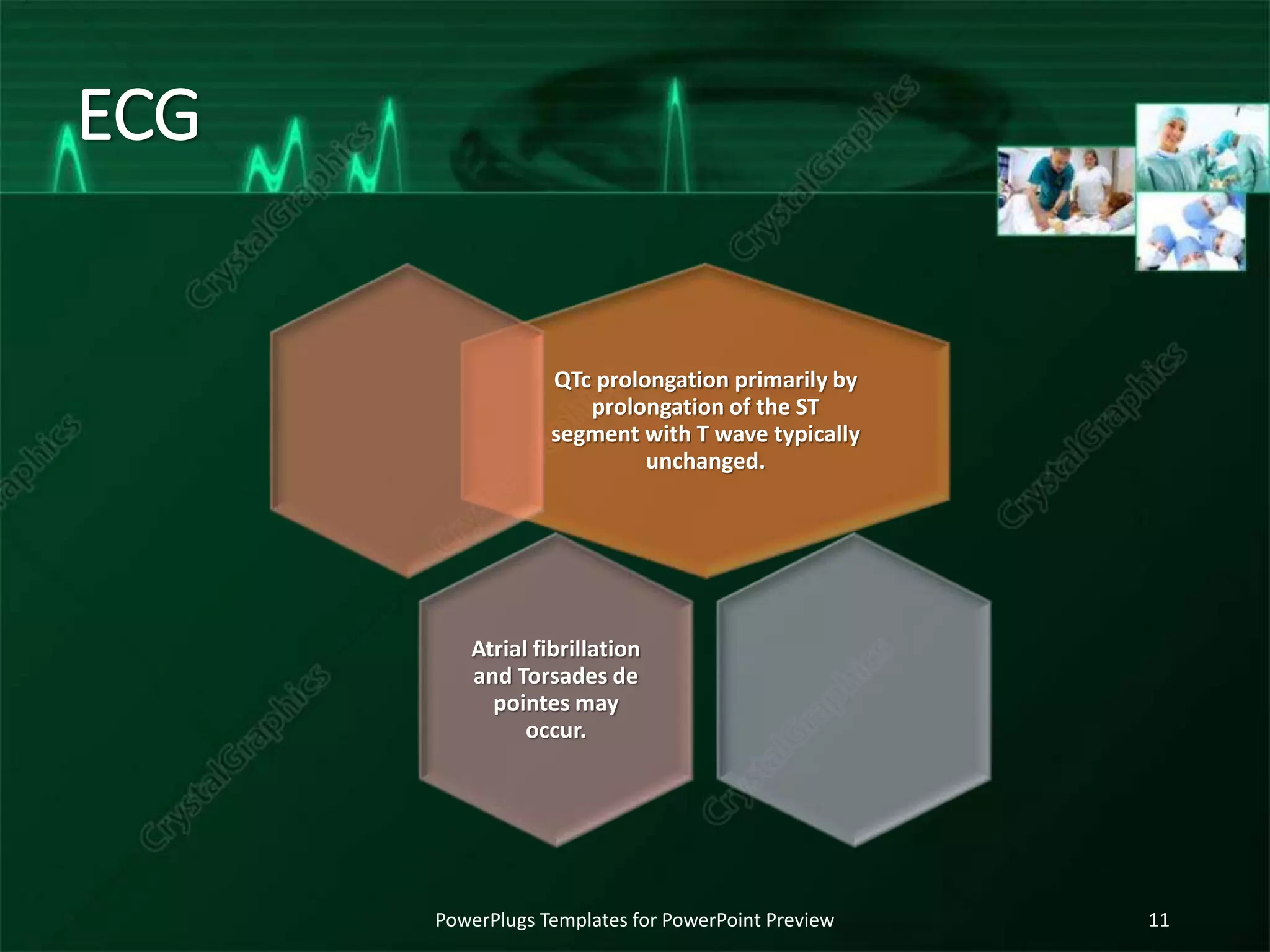
ECG
QTc prolongation primarily by
prolongation of the ST
segment with T wave typically
unchanged.
Atrial fibrillation
and Torsades de
pointes may
occur.
PowerPlugs Templates for PowerPoint Preview 11
Hyperkalaemia
Burns E. Hyperkalaemia (April 16, 2017). Retrieved from
https://lifeinthefastlane.com/ecg-library/basics/hyperkalaemia/
PowerPlugs Templates for PowerPoint Preview 12
Hyperkalaemia
PowerPlugs Templates for PowerPoint Preview 13
Potassium Level (mmol/L)
Hyperkalaemia >5,5
Moderate
hyperkalaemia
>6,0
Severe hyperkalaemia >7,0
Potassium >5,5 mmol/L
Repolarization abnormalities:
• peaked T waves (the earliest sign)
PowerPlugs Templates for PowerPoint Preview 14
Potassium >6,5 mmol/L
Progressive paralysis of the atria:
• P wave widens and flattens
• PR segment lengthens
• P waves eventually disappear
PowerPlugs Templates for PowerPoint Preview 15
Prolongation of PR segment
No P waves
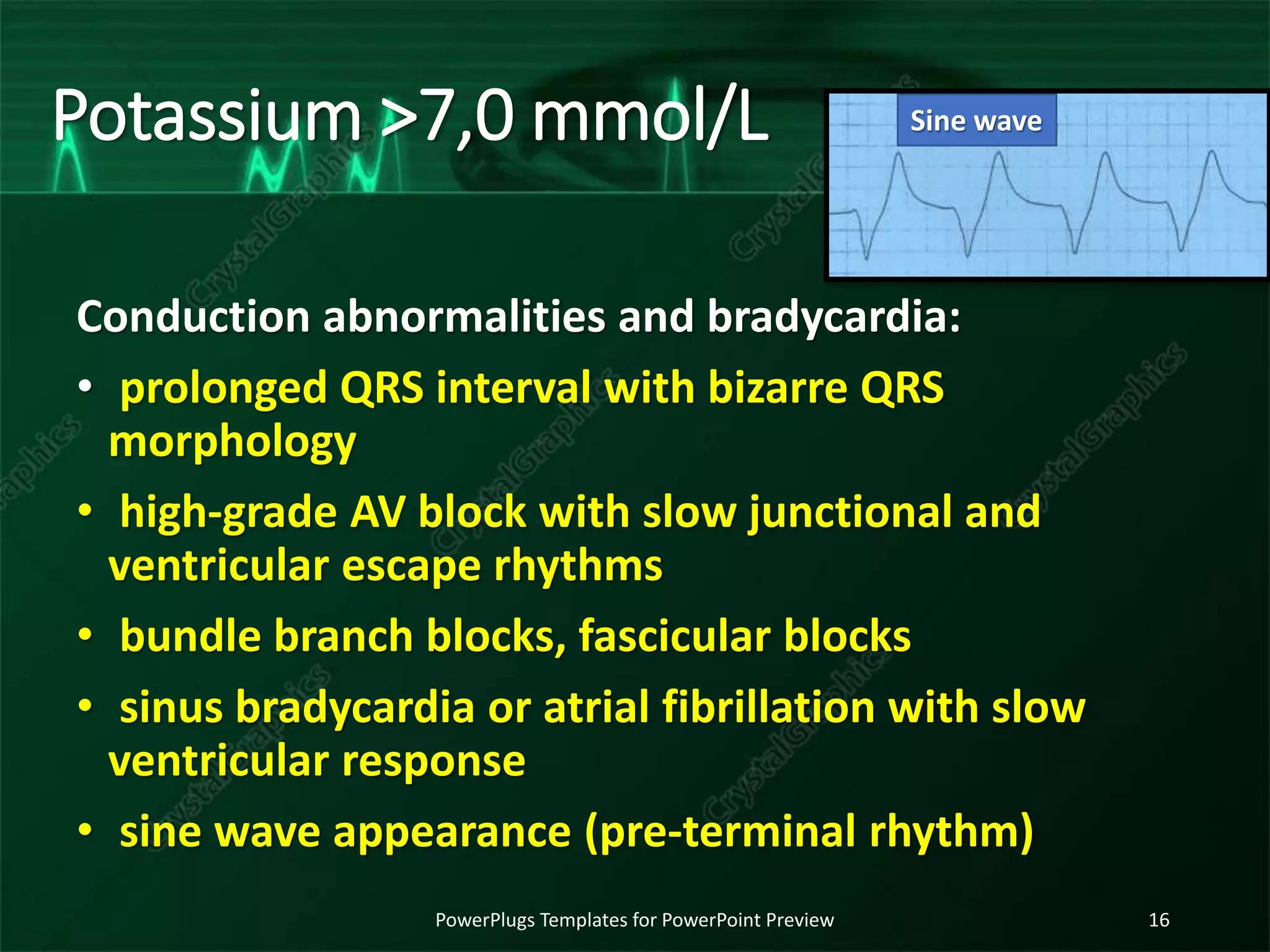
Potassium >7,0 mmol/L
Conduction abnormalities and bradycardia:
• prolonged QRS interval with bizarre QRS
morphology
• high-grade AV block with slow junctional and
ventricular escape rhythms
• bundle branch blocks, fascicular blocks
• sinus bradycardia or atrial fibrillation with slow
ventricular response
• sine wave appearance (pre-terminal rhythm)
PowerPlugs Templates for PowerPoint Preview 16
Sine wave
Potassium >9,0 mmol/L
Cardiac arrest due to:
•PEA with bizarre, wide complex rhythm
•Asystole
•Ventricular fibrillation
PowerPlugs Templates for PowerPoint Preview 17
Hypokalaemia
Burns E. Hypokalaemia (April 16, 2017). Retrieved from
https://lifeinthefastlane.com/ecg-library/basics/hypokalaemia/
PowerPlugs Templates for PowerPoint Preview 18
Hypokalaemia
PowerPlugs Templates for PowerPoint Preview 19
Potassium Level (mmol/L)
Hypokalaemia <3,5
Moderate
hypokalaemia
<3,0
Severe hypokalaemia <2,5
Potassium <2,7 mmol/L
PowerPlugs Templates for PowerPoint Preview 20
Prominent U wave
and T wave inversion
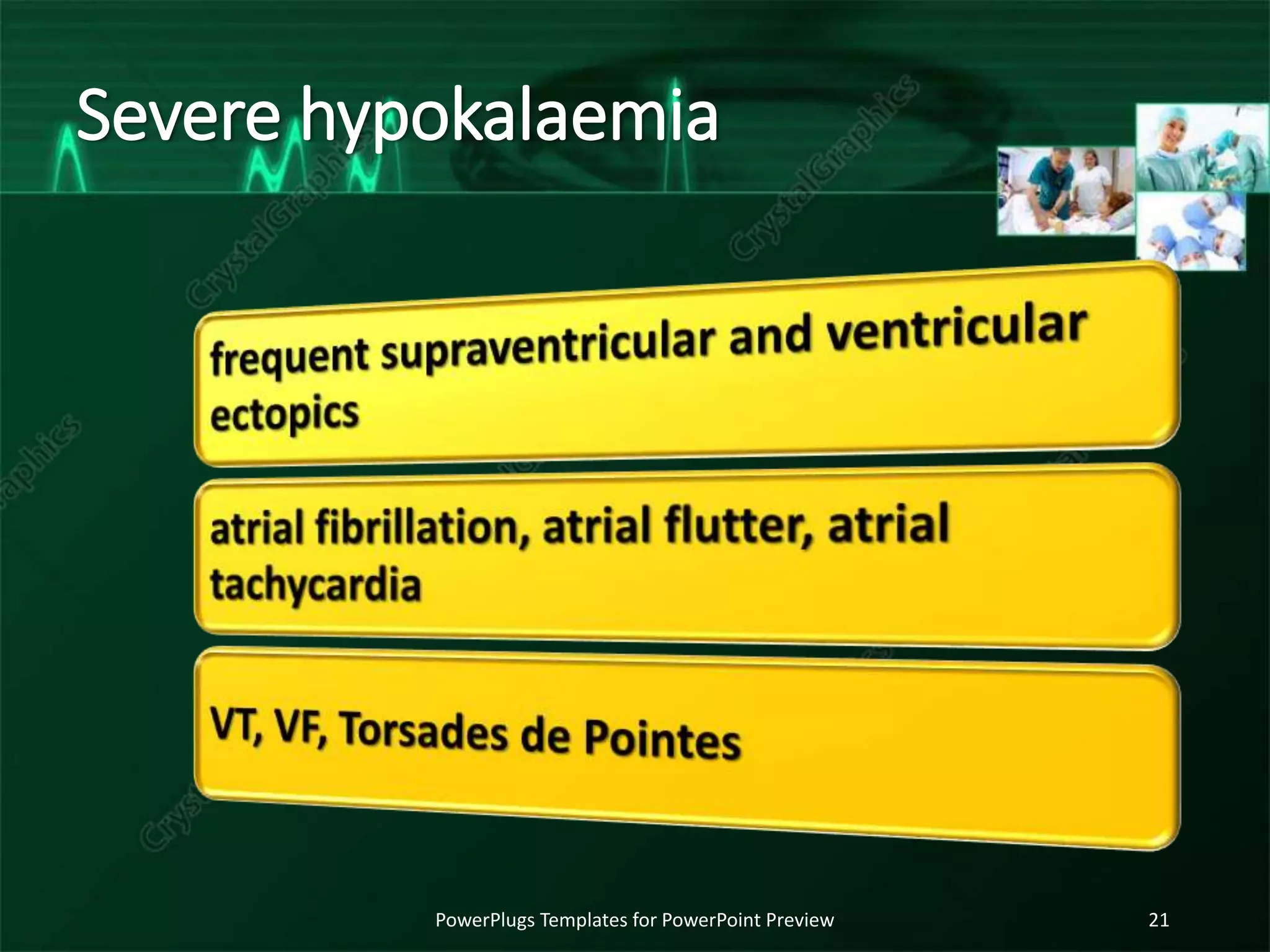
Severe hypokalaemia
PowerPlugs Templates for PowerPoint Preview 21
Note!
PowerPlugs Templates for PowerPoint Preview 22
Hypomagnesaemia
Burns E. Hypomagnesaemia (April 16, 2017). Retrieved from
https://lifeinthefastlane.com/ecg-library/basics/hypomagnesaemia/
PowerPlugs Templates for PowerPoint Preview 23
Hypomagnesaemia
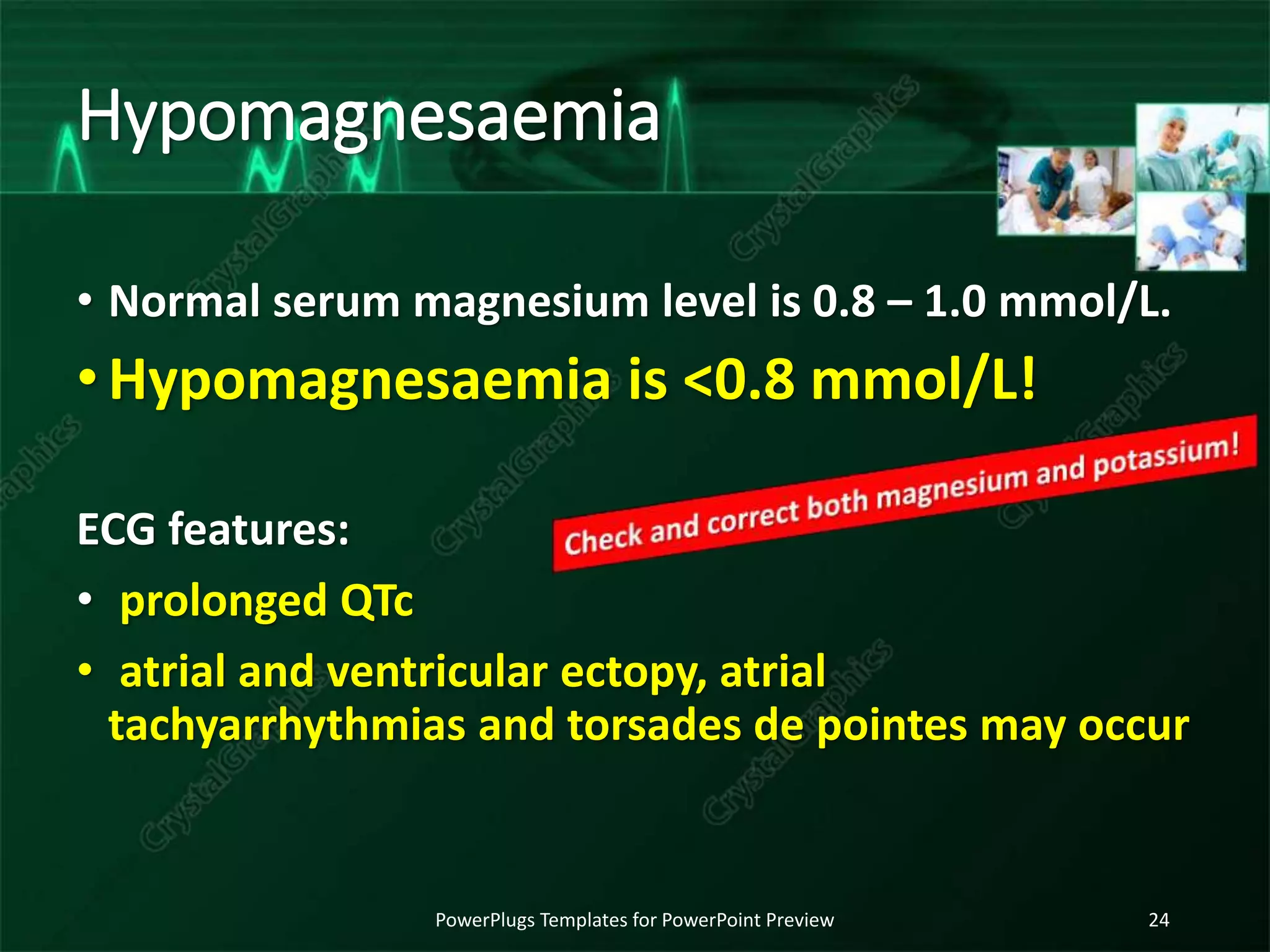
• Normal serum magnesium level is 0.8 – 1.0 mmol/L.
•Hypomagnesaemia is <0.8 mmol/L!
ECG features:
• prolonged QTc
• atrial and ventricular ectopy, atrial
tachyarrhythmias and torsades de pointes may occur
PowerPlugs Templates for PowerPoint Preview 24
Thyroid function abnormalities
Lifeinthefastlane.com
PowerPlugs Templates for PowerPoint Preview 25
Hyperthyroidism
• Sinus tachycardia!
• Atrial fibrillation with rapid ventricular response!
• High left-ventricular voltage!
Less frequent:
• supraventricular arrhythmias: premature atrial
beats, paroxysmal supraventricular tachycardia,
multifocal atrial tachycardia, atrial flutter
• non-specific ST and T wave changes
• ventricular extrasystoles
PowerPlugs Templates for PowerPoint Preview 26
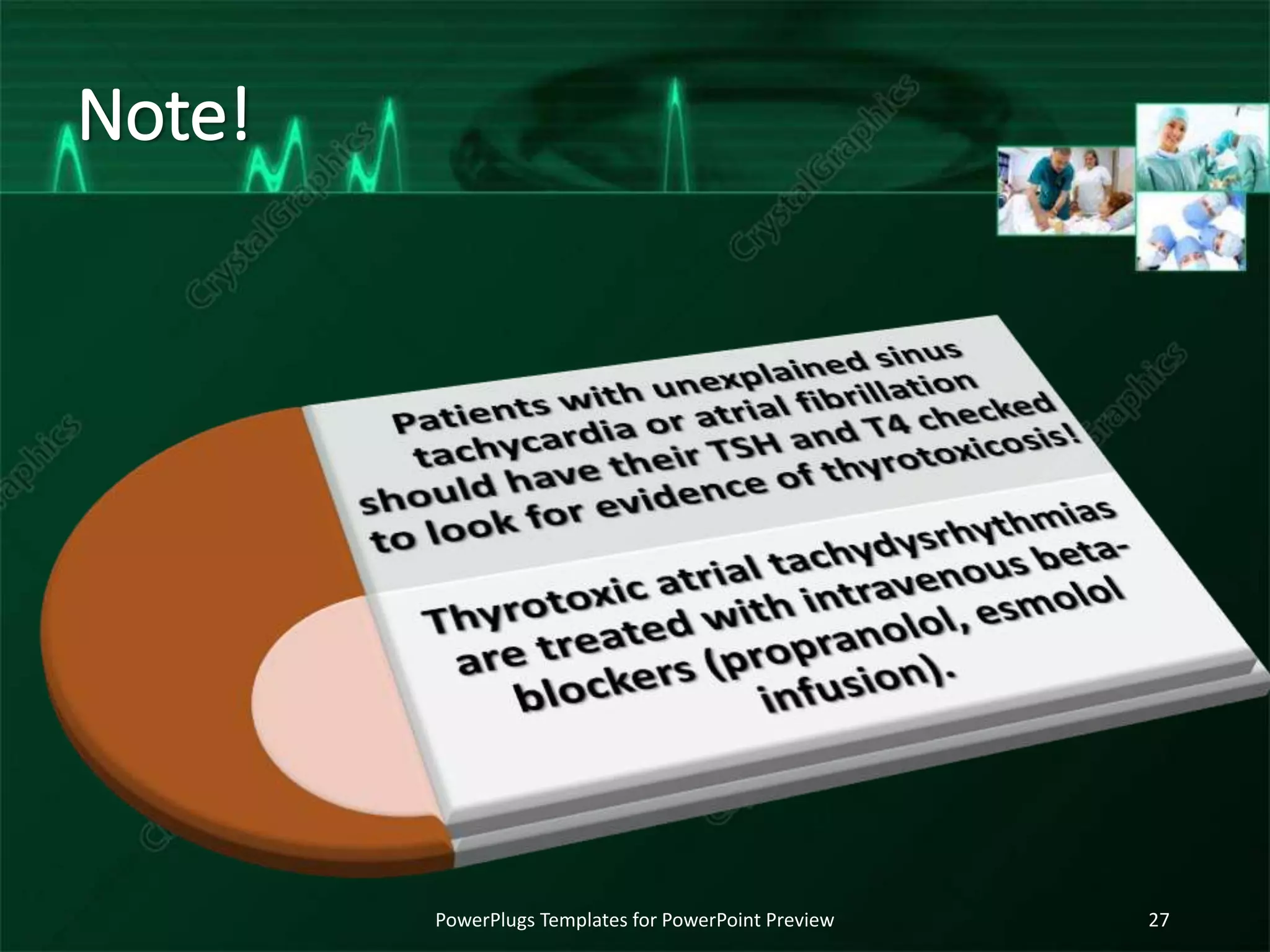
Note!
PowerPlugs Templates for PowerPoint Preview 27
Hypothyroidism
Severe hypothyroidism (myxoedema) causes a triad of:
• Bradycardia!
• Low QRS voltage!
• Widespread T-wave inversions usually without ST
deviation!
Other ECG changes are:
• QT prolongation
• first degree AV block
• interventricular conduction delay
PowerPlugs Templates for PowerPoint Preview 28
Myxoedema triad
PowerPlugs Templates for PowerPoint Preview 29
Bradycardia of about 30/min!
Low QRS voltage!
T wave inversion without
ST-segment deviation in precordial leads!
Hypothermia
Burns E. Hypothermia (April 4, 2017). Retrieved from
https://lifeinthefastlane.com/ecg-library/basics/hypothermia/
PowerPlugs Templates for PowerPoint Preview 30
Hypothermia
PowerPlugs Templates for PowerPoint Preview 31
Literature
PowerPlugs Templates for PowerPoint Preview 32

ECG H