How libraries can serve networked individualsLee Rainie, Director, Pew Internet Project11.5.10Tampa  Bay Library ConsortiumEmail: Lrainie@pewinternet.orgTwitter: @Lrainie
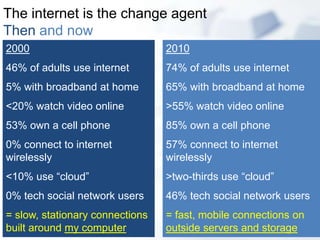
The internet is the change agent Thenand now200046% of adults use internet5% with broadband at home<20% watch video online53% own a cell phone0% connect to internet wirelessly<10% use “cloud”0% tech social network users  = slow, stationary connections built around my computer201074% of adults use internet65% with broadband at home>55% watch video online85% own a cell phone57% connect to internet wirelessly>two-thirds use “cloud”46% tech social network users= fast, mobile connections on  outside servers and storageApril 22, 20102
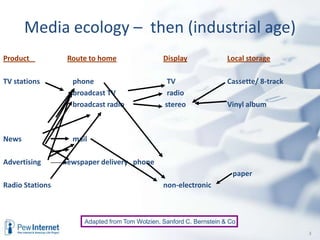
Media ecology –  then (industrial age)Product	Route to homeDisplayLocal storageTV stations	   phone		 	  TV		Cassette/ 8-track			   broadcast TV		  radio			   broadcast radio	stereo		Vinyl albumNews		   mailAdvertising            newspaper delivery	 phone								   paperRadio Stations				non-electronicAdapted from Tom Wolzien, Sanford C. Bernstein & Co3
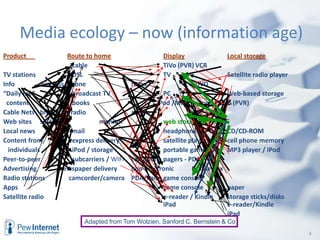
Media ecology – now (information age)Product	Route to homeDisplayLocal storage			   cable			TiVo (PVR)	VCRTV stations	   DSL			TV		Satellite radio playerInfo		   wireless/phone		radio		DVD“Daily me”  	   broadcast TV		PC		Web-based storage  content	  	   books		                iPod /MP3	server/ TiVo (PVR)Cable Nets	   broadcast radio		stereo		PCWeb sites	   satellite		monitor		web storage/serversLocal news	   mail			headphones	CD/CD-ROMContent from	   express delivery	pager	satellite player	cell phone memory   individuals	   iPod / storage		portable gamer	MP3 player / iPodPeer-to-peer	   subcarriers / WIFI	cell phone	pagers - PDAsAdvertising              newspaper delivery	non-electronic	cable boxRadio stations	 camcorder/camera	PDA/Palm	game consoleAppsgame console	paperSatellite radio				e-reader / Kindle	storage sticks/disks 					iPade-reader/KindleiPadAdapted from Tom Wolzien, Sanford C. Bernstein & Co4
Media ecology – now (information age)Product	Route to homeDisplayLocal storage			   cable			TiVo (PVR)	VCRTV stations	   DSL			TV		Satellite radio playerInfo		   wireless/phone		radio		DVD“Daily me”  	   broadcast TV		PC		Web-based storage  content	  	   books		                iPod /MP3	server/ TiVo (PVR)Cable Nets	   broadcast radio		stereo		PCWeb sites	   satellite		monitor		web storage/serversLocal news	   mail			headphones	CD/CD-ROMContent from	   express delivery	pager	satellite player	cell phone memory   individuals	   iPod / storage		portable gamer	MP3 player / iPodPeer-to-peer	   subcarriers / WIFI	cell phone	pagers - PDAsAdvertising              newspaper delivery	non-electronic	cable boxRadio stations	 camcorder/camera	PDA/Palm	game console						game console	paperSatellite radio				e-reader / Kindle	storage sticks/disks 							e-reader/Kindle	Ubiquitous computing ageCloud computing“Internet of things”Adapted from Tom Wolzien, Sanford C. Bernstein & Co5
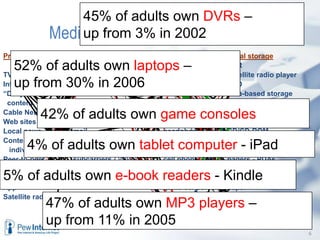
45% of adults own DVRs – up from 3% in 2002Media ecology – now (information age)Product	Route to homeDisplayLocal storage			   cable			TiVo (PVR)	VCRTV stations	   DSL			TV		Satellite radio playerInfo		   wireless/phone		radio		DVD“Daily me”  	   broadcast TV		PC		Web-based storage  content	  	   books		                iPod /MP3	server/ TiVo (PVR)Cable Nets	   broadcast radio		stereo		PCWeb sites	   satellite		monitor		web storage/serversLocal news	   mail			headphones	CD/CD-ROMContent from	   express delivery	pager	satellite player	cell phone memory   individuals	   iPod / storage		portable gamer	MP3 player / iPodPeer-to-peer	   subcarriers / WIFI	cell phone	pagers - PDAsAdvertising              newspaper delivery	non-electronic	iPadRadio stations	 camcorder/camera	PDA/Palm	game consoleApp					game console	paperSatellite radio				e-reader / Kindle	storage sticks/disks 					iPad - tablet	e-reader/Kindle	52% of adults own laptops – up from 30% in 200642% of adults own game consoles4% of adults own tablet computer - iPad5% of adults own e-book readers - Kindle47% of adults own MP3 players – up from 11% in 2005Adapted from Tom Wolzien, Sanford C. Bernstein & Co6
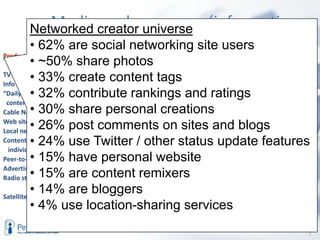
Media ecology – now (information age)Networked creator universe62% are social networking site users
~50% share photos
33% create content tags
 32% contribute rankings and ratings
 30% share personal creations
 26% post comments on sites and blogs
24% use Twitter / other status update features
 15% have personal website
 15% are content remixers
 14% are bloggers
 4% use location-sharing servicesProduct	Route to homeDisplayLocal storage			   cable			TiVo (PVR)	VCRTV stations	   DSL			TV		Satellite radio playerInfo		   wireless/phone		radio		DVD“Daily me”  	   broadcast TV		PC		Web-based storage  content	  	   books		                iPod /MP3	server/ TiVo (PVR)Cable Nets	   broadcast radio		stereo		PCWeb sites	   satellite		monitor		web storage/serversLocal news	   mail			headphones	CD/CD-ROMContent from	   express delivery	pager	satellite player	cell phone memory   individuals	   iPod / storage		portable gamer	MP3 player / iPodPeer-to-peer	   subcarriers / WIFI	cell phone	pagers - PDAsAdvertising              newspaper delivery	non-electronic	cable boxRadio stations	 camcorder/camera	PDA/Palm	game console						game console	paperSatellite radio				e-reader / Kindle	storage sticks/disks 							e-reader/Kindle	Adapted from Tom Wolzien, Sanford C. Bernstein & Co7
8Information and media ecosystem changes Volume of information growsVariety of information sources increasesVelocity of information speeds upVenues change -- times and places to experience media enlarge
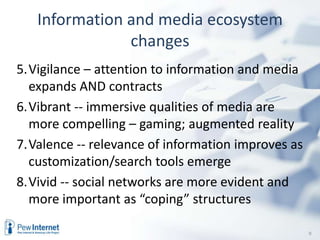
9Information and media ecosystem changesVigilance – attention to information and media expands AND contractsVibrant -- immersive qualities of media are more compelling – gaming; augmented realityValence -- relevance of information improves as customization/search tools emergeVivid -- social networks are more evident and more important as “coping” structures
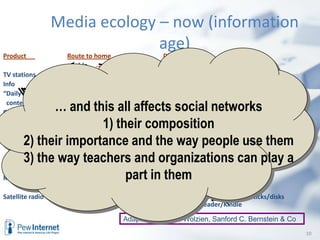
Media ecology – now (information age)Product	Route to homeDisplayLocal storage			   cable			TiVo (PVR)	VCRTV stations	   DSL			TV		Satellite radio playerInfo		   wireless/phone		radio		DVD“Daily me”  	   broadcast TV		PC		Web-based storage  content	  	   books		                iPod /MP3	server/ TiVo (PVR)Cable Nets	   broadcast radio		stereo		PCWeb sites	   satellite		monitor		web storage/serversLocal news	   mail			headphones	CD/CD-ROMContent from	   express delivery	pager	satellite player	cell phone memory   individuals	   iPod / storage		portable gamer	MP3 player / iPodPeer-to-peer	   subcarriers / WIFI	cell phone	pagers - PDAsAdvertising              newspaper delivery	non-electronic	cable boxRadio stations	 camcorder/camera	PDA/Palm	game console						game console	paperSatellite radio				e-reader / Kindle	storage sticks/disks 							e-reader/Kindle	… and this all affects social networks1) their composition2) their importance and the way people use them3) the way teachers and organizations can play a part in themAdapted from Tom Wolzien, Sanford C. Bernstein & Co10
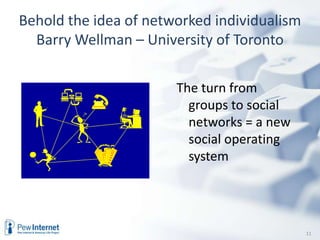
Behold the idea of networked individualismBarry Wellman – University of TorontoThe turn from groups to social networks = a new social operating system11
Networked Individuals have a different …Sense of information availability – it’s ambientSense of time – it’s oriented around “continuous partial attention”Sense of community and connection – it’s about “absent presence” Sense of the rewards and challenges of networking for social, economic, political, and cultural purposes – new layers and new audiences12

Networked Individuals (Tampa)

  • 1.
    How libraries canserve networked individualsLee Rainie, Director, Pew Internet Project11.5.10Tampa Bay Library ConsortiumEmail: Lrainie@pewinternet.orgTwitter: @Lrainie
  • 2.
    The internet isthe change agent Thenand now200046% of adults use internet5% with broadband at home<20% watch video online53% own a cell phone0% connect to internet wirelessly<10% use “cloud”0% tech social network users = slow, stationary connections built around my computer201074% of adults use internet65% with broadband at home>55% watch video online85% own a cell phone57% connect to internet wirelessly>two-thirds use “cloud”46% tech social network users= fast, mobile connections on outside servers and storageApril 22, 20102
  • 3.
    Media ecology – then (industrial age)Product Route to homeDisplayLocal storageTV stations phone TV Cassette/ 8-track broadcast TV radio broadcast radio stereo Vinyl albumNews mailAdvertising newspaper delivery phone paperRadio Stations non-electronicAdapted from Tom Wolzien, Sanford C. Bernstein & Co3
  • 4.
    Media ecology –now (information age)Product Route to homeDisplayLocal storage cable TiVo (PVR) VCRTV stations DSL TV Satellite radio playerInfo wireless/phone radio DVD“Daily me” broadcast TV PC Web-based storage content books iPod /MP3 server/ TiVo (PVR)Cable Nets broadcast radio stereo PCWeb sites satellite monitor web storage/serversLocal news mail headphones CD/CD-ROMContent from express delivery pager satellite player cell phone memory individuals iPod / storage portable gamer MP3 player / iPodPeer-to-peer subcarriers / WIFI cell phone pagers - PDAsAdvertising newspaper delivery non-electronic cable boxRadio stations camcorder/camera PDA/Palm game consoleAppsgame console paperSatellite radio e-reader / Kindle storage sticks/disks iPade-reader/KindleiPadAdapted from Tom Wolzien, Sanford C. Bernstein & Co4
  • 5.
    Media ecology –now (information age)Product Route to homeDisplayLocal storage cable TiVo (PVR) VCRTV stations DSL TV Satellite radio playerInfo wireless/phone radio DVD“Daily me” broadcast TV PC Web-based storage content books iPod /MP3 server/ TiVo (PVR)Cable Nets broadcast radio stereo PCWeb sites satellite monitor web storage/serversLocal news mail headphones CD/CD-ROMContent from express delivery pager satellite player cell phone memory individuals iPod / storage portable gamer MP3 player / iPodPeer-to-peer subcarriers / WIFI cell phone pagers - PDAsAdvertising newspaper delivery non-electronic cable boxRadio stations camcorder/camera PDA/Palm game console game console paperSatellite radio e-reader / Kindle storage sticks/disks e-reader/Kindle Ubiquitous computing ageCloud computing“Internet of things”Adapted from Tom Wolzien, Sanford C. Bernstein & Co5
  • 6.
    45% of adultsown DVRs – up from 3% in 2002Media ecology – now (information age)Product Route to homeDisplayLocal storage cable TiVo (PVR) VCRTV stations DSL TV Satellite radio playerInfo wireless/phone radio DVD“Daily me” broadcast TV PC Web-based storage content books iPod /MP3 server/ TiVo (PVR)Cable Nets broadcast radio stereo PCWeb sites satellite monitor web storage/serversLocal news mail headphones CD/CD-ROMContent from express delivery pager satellite player cell phone memory individuals iPod / storage portable gamer MP3 player / iPodPeer-to-peer subcarriers / WIFI cell phone pagers - PDAsAdvertising newspaper delivery non-electronic iPadRadio stations camcorder/camera PDA/Palm game consoleApp game console paperSatellite radio e-reader / Kindle storage sticks/disks iPad - tablet e-reader/Kindle 52% of adults own laptops – up from 30% in 200642% of adults own game consoles4% of adults own tablet computer - iPad5% of adults own e-book readers - Kindle47% of adults own MP3 players – up from 11% in 2005Adapted from Tom Wolzien, Sanford C. Bernstein & Co6
  • 7.
    Media ecology –now (information age)Networked creator universe62% are social networking site users
  • 8.
  • 9.
  • 10.
    32% contributerankings and ratings
  • 11.
    30% sharepersonal creations
  • 12.
    26% postcomments on sites and blogs
  • 13.
    24% use Twitter/ other status update features
  • 14.
    15% havepersonal website
  • 15.
    15% arecontent remixers
  • 16.
    14% arebloggers
  • 17.
    4% uselocation-sharing servicesProduct Route to homeDisplayLocal storage cable TiVo (PVR) VCRTV stations DSL TV Satellite radio playerInfo wireless/phone radio DVD“Daily me” broadcast TV PC Web-based storage content books iPod /MP3 server/ TiVo (PVR)Cable Nets broadcast radio stereo PCWeb sites satellite monitor web storage/serversLocal news mail headphones CD/CD-ROMContent from express delivery pager satellite player cell phone memory individuals iPod / storage portable gamer MP3 player / iPodPeer-to-peer subcarriers / WIFI cell phone pagers - PDAsAdvertising newspaper delivery non-electronic cable boxRadio stations camcorder/camera PDA/Palm game console game console paperSatellite radio e-reader / Kindle storage sticks/disks e-reader/Kindle Adapted from Tom Wolzien, Sanford C. Bernstein & Co7
  • 18.
    8Information and mediaecosystem changes Volume of information growsVariety of information sources increasesVelocity of information speeds upVenues change -- times and places to experience media enlarge
  • 19.
    9Information and mediaecosystem changesVigilance – attention to information and media expands AND contractsVibrant -- immersive qualities of media are more compelling – gaming; augmented realityValence -- relevance of information improves as customization/search tools emergeVivid -- social networks are more evident and more important as “coping” structures
  • 20.
    Media ecology –now (information age)Product Route to homeDisplayLocal storage cable TiVo (PVR) VCRTV stations DSL TV Satellite radio playerInfo wireless/phone radio DVD“Daily me” broadcast TV PC Web-based storage content books iPod /MP3 server/ TiVo (PVR)Cable Nets broadcast radio stereo PCWeb sites satellite monitor web storage/serversLocal news mail headphones CD/CD-ROMContent from express delivery pager satellite player cell phone memory individuals iPod / storage portable gamer MP3 player / iPodPeer-to-peer subcarriers / WIFI cell phone pagers - PDAsAdvertising newspaper delivery non-electronic cable boxRadio stations camcorder/camera PDA/Palm game console game console paperSatellite radio e-reader / Kindle storage sticks/disks e-reader/Kindle … and this all affects social networks1) their composition2) their importance and the way people use them3) the way teachers and organizations can play a part in themAdapted from Tom Wolzien, Sanford C. Bernstein & Co10
  • 21.
    Behold the ideaof networked individualismBarry Wellman – University of TorontoThe turn from groups to social networks = a new social operating system11
  • 22.
    Networked Individuals havea different …Sense of information availability – it’s ambientSense of time – it’s oriented around “continuous partial attention”Sense of community and connection – it’s about “absent presence” Sense of the rewards and challenges of networking for social, economic, political, and cultural purposes – new layers and new audiences12

Editor's Notes

  • #2 Title: How libraries can serve Networked IndividualsSubject: Lee Rainie, Director of the Pew Research Center’s Internet &amp; American Life Project, will discuss the latest research of the Project and preview the themes of his forthcoming book, “Networking: The New Social Operating System.” He will describe how the social world of “networked individuals” is different from previous generations and how libraries can plug into the information needs and habits of this new tribe of media users.