Netiquette BasicsBy Gena Montgomery
OverviewNetiquette refers to the right way to interact with other people through computers.After this slide show, you will be able to:Explain an emotional barrierUse proper netiquette for business and personal e-mail
Emotional Barriers in ReadingAn emotional barrier is anything that prevents clear communication in e-mail.Text onlyLack of cues like tone of voice and facial expressionsIf you react strongly to an e-mail:Assume the writer had good intentions.Use the phone or meet in person to clarify the message.
Emotional Barriers in WritingTo make sure your e-mail is clear, think 3 times.Before writingAfter writing   Before sending
Sending Personal E-mailUse specific subject lines.Think about using smilies and Internet shorthand.Ask, “What would I say if we were face-to-face?”LOL
Sending Business E-mailCreate clear subject lines.Identify yourself.Follow the rules of grammar and usage.Use spell check.
Replying to E-mailRespond within 24 hours.Avoid e-hoaxes and chain letters.Don’t forward or copy another’s e-mail without permission.
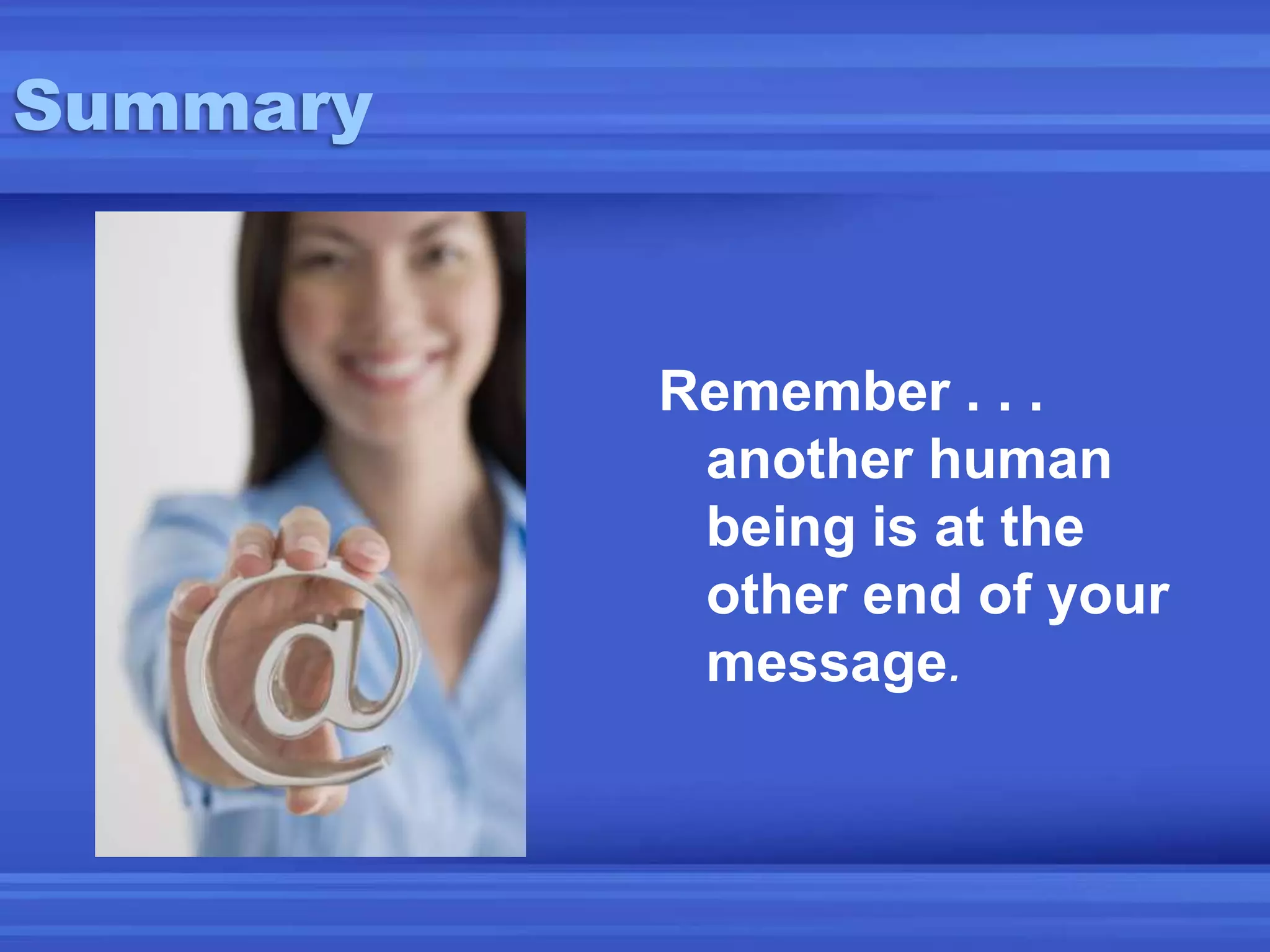
SummaryRemember . . .  another human being is at the other end of your message.
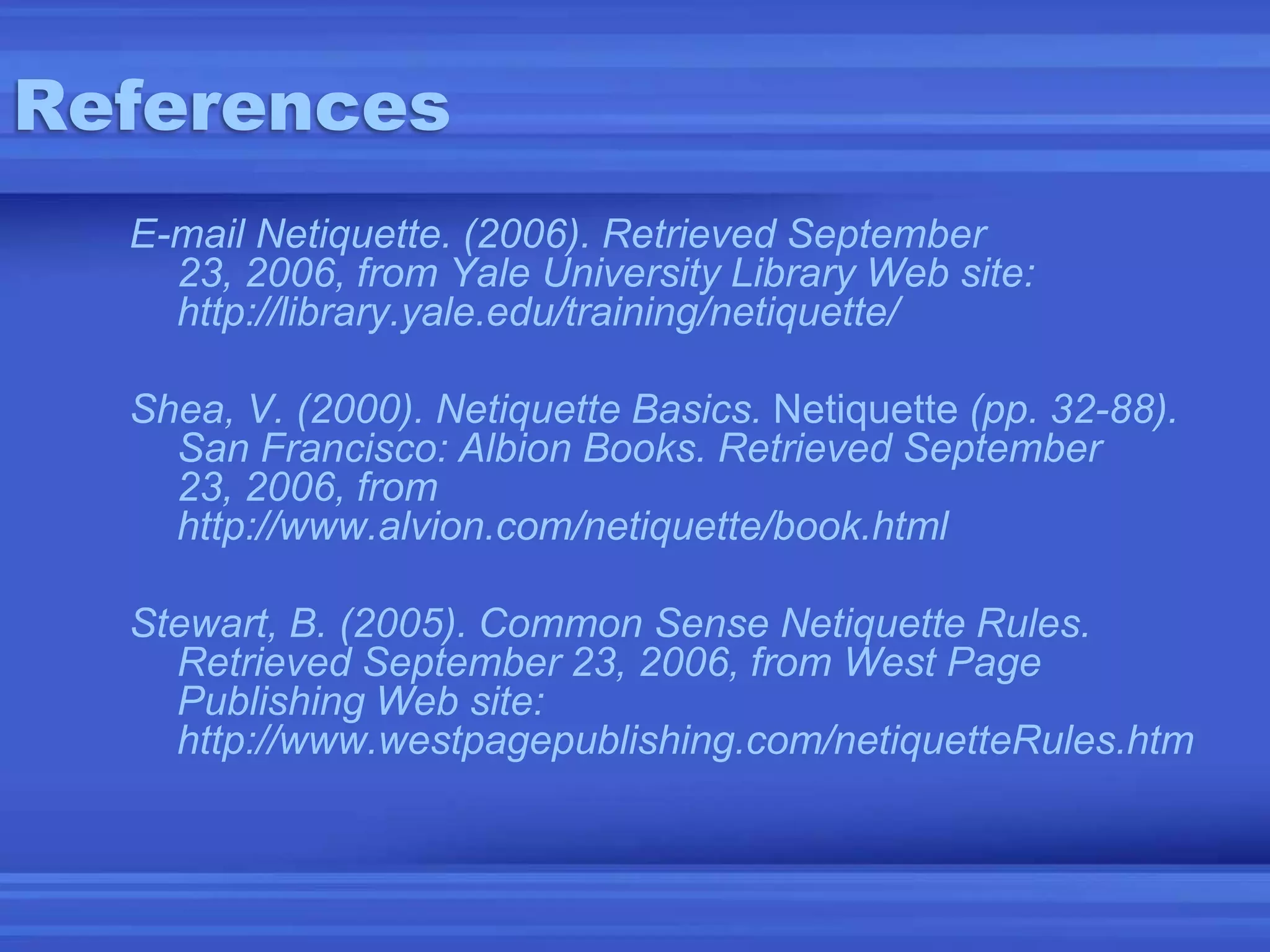
ReferencesE-mail Netiquette. (2006). Retrieved September 23, 2006, from Yale University Library Web site: http://library.yale.edu/training/netiquette/Shea, V. (2000). Netiquette Basics. Netiquette (pp. 32-88). San Francisco: Albion Books. Retrieved September 23, 2006, from http://www.alvion.com/netiquette/book.htmlStewart, B. (2005). Common Sense Netiquette Rules. Retrieved September 23, 2006, from West Page Publishing Web site: http://www.westpagepublishing.com/netiquetteRules.htm

Netiquette

  • 1.
  • 2.
    OverviewNetiquette refers tothe right way to interact with other people through computers.After this slide show, you will be able to:Explain an emotional barrierUse proper netiquette for business and personal e-mail
  • 3.
    Emotional Barriers inReadingAn emotional barrier is anything that prevents clear communication in e-mail.Text onlyLack of cues like tone of voice and facial expressionsIf you react strongly to an e-mail:Assume the writer had good intentions.Use the phone or meet in person to clarify the message.
  • 4.
    Emotional Barriers inWritingTo make sure your e-mail is clear, think 3 times.Before writingAfter writing Before sending
  • 5.
    Sending Personal E-mailUsespecific subject lines.Think about using smilies and Internet shorthand.Ask, “What would I say if we were face-to-face?”LOL
  • 6.
    Sending Business E-mailCreateclear subject lines.Identify yourself.Follow the rules of grammar and usage.Use spell check.
  • 7.
    Replying to E-mailRespondwithin 24 hours.Avoid e-hoaxes and chain letters.Don’t forward or copy another’s e-mail without permission.
  • 8.
    SummaryRemember . .. another human being is at the other end of your message.
  • 9.
    ReferencesE-mail Netiquette. (2006).Retrieved September 23, 2006, from Yale University Library Web site: http://library.yale.edu/training/netiquette/Shea, V. (2000). Netiquette Basics. Netiquette (pp. 32-88). San Francisco: Albion Books. Retrieved September 23, 2006, from http://www.alvion.com/netiquette/book.htmlStewart, B. (2005). Common Sense Netiquette Rules. Retrieved September 23, 2006, from West Page Publishing Web site: http://www.westpagepublishing.com/netiquetteRules.htm