Principles of AnimationApril 25, 2011
IntroductionThis week we will demonstrate our understanding of the principles of animation by designing a scene that illustrates the 12 principles.Today our goals are to:Become familiar with the 12 Principles of AnimationExamine some of the principles at work in a modern animationBegin planning your own scene
Principles of AnimationSquash and StretchAnticipationStagingStraight Ahead v. Pose to PoseFollow Through and Overlapping ActionSlow In and Slow OutArcsSecondary ActionTimingExaggerationSolid DrawingAppeal
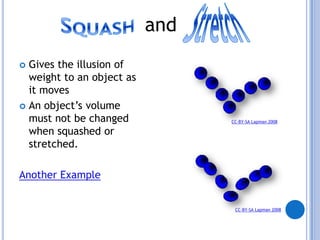
Gives the illusion of weight to an object as it movesAn object’s volume must not be changed when squashed or stretched.Another ExampleStretchandSquashCC-BY-SA Lapman 2008CC-BY-SA Lapman 2008
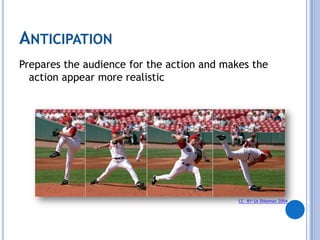
AnticipationPrepares the audience for the action and makes the action appear more realisticCC –BY-SA Dikeman 2004
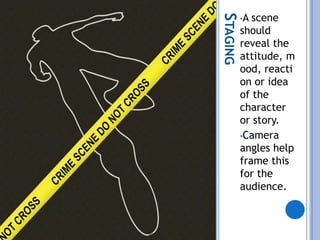
StagingA scene should reveal the attitude, mood, reaction or idea of the character or story.
Camera angles help frame this for the audience.Straight Ahead v. Pose to PoseBegins with the first drawing and works drawing toward the end of a scene. Planned out and chartedKey drawings done at intervals throughout the sceneStraight Ahead AnimationPose to Pose Animation
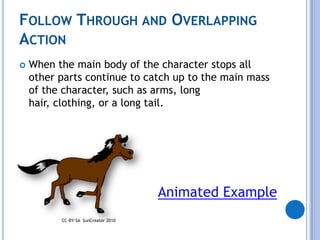
Follow Through and Overlapping ActionWhen the main body of the character stops all other parts continue to catch up to the main mass of the character, such as arms, long hair, clothing, or a long tail.Animated ExampleCC-BY-SA  SunCreator 2010
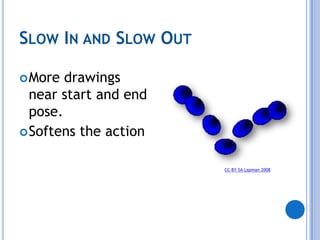
Slow In and Slow OutMore drawings near start and end pose. Softens the actionCC-BY-SA Lapman 2008
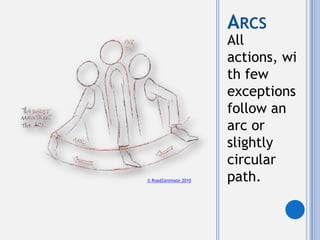
ArcsAll actions, with few exceptions follow an arc or slightly circular path. © Road2Animate 2010
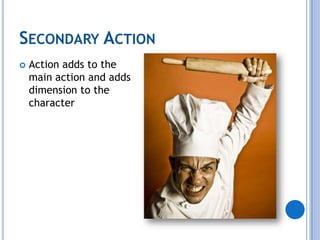
Secondary ActionAction adds to the main action and adds dimension to the character
TimingTiming refers to the number of drawings or frames for a given actionOn a purely physical level, correct timing makes objects appear to abide to the laws of physicsTiming is critical for establishing a character's mood, emotion, and reaction.
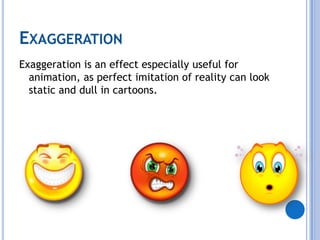
ExaggerationExaggeration is an effect especially useful for animation, as perfect imitation of reality can look static and dull in cartoons.
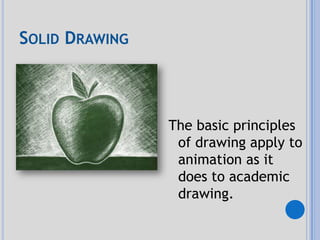
Solid DrawingThe basic principles of drawing apply to animation as it does to academic drawing.
AppealAppeal includes an easy to read design, clear drawing, and personality development to capture the audience’s interest
SummaryThe 12 Principles of Animation were developed by the animators at Disney studios.They serve as guidelines to make animation (drawn or computer generated) more realistic and appealing to an audience.Let’s take a look at how these principles have been applied in an animation you are probably familiar with.SAMPLE
References"12 Basic Principles of Animation." Wikipedia, the Free Encyclopedia. 23 Apr. 2011. Web. 24 Apr. 2011. <http://en.wikipedia.org/wiki/12_basic_principles_of_animation>."Frank & Ollie'sWebsite: Principles of Physical Animation." Frank & Ollie'sOfficial Site. Web. 24 Apr. 2011. <http://frankandollie.com/PhysicalAnimation.html>.Lightfoot, Nataha. "Animation Toolworks' Library - 12 Principles." Animation Toolworks - Home of the LunchBox DV, LunchBox Sync and Video LunchBox. Web. 24 Apr. 2011. <http://www.animationtoolworks.com/library/article9.html>.Stefano, Ralph A. "The Principles of Animation." Evl | Electronic Visualization Laboratory. Web. 24 Apr. 2011. <http://www.evl.uic.edu/ralph/508S99/>
ImagesArc. Digital image. Road2Animate. 30 Apr. 2010. Web. 24 Apr. 2011. <http://road2animate.com/2010/04/30/12-principles-of-animation-for-3d-animators/>.Dikeman, Rick. Pitcher's Motion. Digital image. Wikipedia, the Free Encyclopedia. 15 Sept. 2004. Web. 24 Apr. 2011. <http://upload.wikimedia.org/wikipedia/commons/2/25/Baseball_pitching_motion_2004.jpg>.Lampman. Squash and Stretch. Digital image. Wikipedia, the Free Encyclopedia. 27 June 2008. Web. 24 Apr. 2011. <http://upload.wikimedia.org/wikipedia/commons/b/b9/Squash_and_Stretch.svg>.Nystrom, J-E. Animhorse. Digital image. Wikipedia, the Free Encyclopedia. 6 Mar. 2010. Web. 24 Apr. 2011. <http://upload.wikimedia.org/wikipedia/commons/e/e3/Animhorse.gif>.All images courtesy Microsoft Office ClipArt, unless otherwise noted.

Principles of animation

  • 1.
  • 2.
    IntroductionThis week wewill demonstrate our understanding of the principles of animation by designing a scene that illustrates the 12 principles.Today our goals are to:Become familiar with the 12 Principles of AnimationExamine some of the principles at work in a modern animationBegin planning your own scene
  • 3.
    Principles of AnimationSquashand StretchAnticipationStagingStraight Ahead v. Pose to PoseFollow Through and Overlapping ActionSlow In and Slow OutArcsSecondary ActionTimingExaggerationSolid DrawingAppeal
  • 4.
    Gives the illusionof weight to an object as it movesAn object’s volume must not be changed when squashed or stretched.Another ExampleStretchandSquashCC-BY-SA Lapman 2008CC-BY-SA Lapman 2008
  • 5.
    AnticipationPrepares the audiencefor the action and makes the action appear more realisticCC –BY-SA Dikeman 2004
  • 6.
    StagingA scene shouldreveal the attitude, mood, reaction or idea of the character or story.
  • 7.
    Camera angles helpframe this for the audience.Straight Ahead v. Pose to PoseBegins with the first drawing and works drawing toward the end of a scene. Planned out and chartedKey drawings done at intervals throughout the sceneStraight Ahead AnimationPose to Pose Animation
  • 8.
    Follow Through andOverlapping ActionWhen the main body of the character stops all other parts continue to catch up to the main mass of the character, such as arms, long hair, clothing, or a long tail.Animated ExampleCC-BY-SA SunCreator 2010
  • 9.
    Slow In andSlow OutMore drawings near start and end pose. Softens the actionCC-BY-SA Lapman 2008
  • 10.
    ArcsAll actions, withfew exceptions follow an arc or slightly circular path. © Road2Animate 2010
  • 11.
    Secondary ActionAction addsto the main action and adds dimension to the character
  • 12.
    TimingTiming refers tothe number of drawings or frames for a given actionOn a purely physical level, correct timing makes objects appear to abide to the laws of physicsTiming is critical for establishing a character's mood, emotion, and reaction.
  • 13.
    ExaggerationExaggeration is aneffect especially useful for animation, as perfect imitation of reality can look static and dull in cartoons.
  • 14.
    Solid DrawingThe basicprinciples of drawing apply to animation as it does to academic drawing.
  • 15.
    AppealAppeal includes aneasy to read design, clear drawing, and personality development to capture the audience’s interest
  • 16.
    SummaryThe 12 Principlesof Animation were developed by the animators at Disney studios.They serve as guidelines to make animation (drawn or computer generated) more realistic and appealing to an audience.Let’s take a look at how these principles have been applied in an animation you are probably familiar with.SAMPLE
  • 17.
    References"12 Basic Principlesof Animation." Wikipedia, the Free Encyclopedia. 23 Apr. 2011. Web. 24 Apr. 2011. <http://en.wikipedia.org/wiki/12_basic_principles_of_animation>."Frank & Ollie'sWebsite: Principles of Physical Animation." Frank & Ollie'sOfficial Site. Web. 24 Apr. 2011. <http://frankandollie.com/PhysicalAnimation.html>.Lightfoot, Nataha. "Animation Toolworks' Library - 12 Principles." Animation Toolworks - Home of the LunchBox DV, LunchBox Sync and Video LunchBox. Web. 24 Apr. 2011. <http://www.animationtoolworks.com/library/article9.html>.Stefano, Ralph A. "The Principles of Animation." Evl | Electronic Visualization Laboratory. Web. 24 Apr. 2011. <http://www.evl.uic.edu/ralph/508S99/>
  • 18.
    ImagesArc. Digital image.Road2Animate. 30 Apr. 2010. Web. 24 Apr. 2011. <http://road2animate.com/2010/04/30/12-principles-of-animation-for-3d-animators/>.Dikeman, Rick. Pitcher's Motion. Digital image. Wikipedia, the Free Encyclopedia. 15 Sept. 2004. Web. 24 Apr. 2011. <http://upload.wikimedia.org/wikipedia/commons/2/25/Baseball_pitching_motion_2004.jpg>.Lampman. Squash and Stretch. Digital image. Wikipedia, the Free Encyclopedia. 27 June 2008. Web. 24 Apr. 2011. <http://upload.wikimedia.org/wikipedia/commons/b/b9/Squash_and_Stretch.svg>.Nystrom, J-E. Animhorse. Digital image. Wikipedia, the Free Encyclopedia. 6 Mar. 2010. Web. 24 Apr. 2011. <http://upload.wikimedia.org/wikipedia/commons/e/e3/Animhorse.gif>.All images courtesy Microsoft Office ClipArt, unless otherwise noted.

Editor's Notes

  • #8 Straight Ahead Animation:Loss of size, volume, and proportions Maintains spontaneity and freshnessFast, wild action scenes are done this wayPose to Pose Animation:Size, volumes, and proportions are controlled better this way, as is the action.