Temperature and
Its Measurement
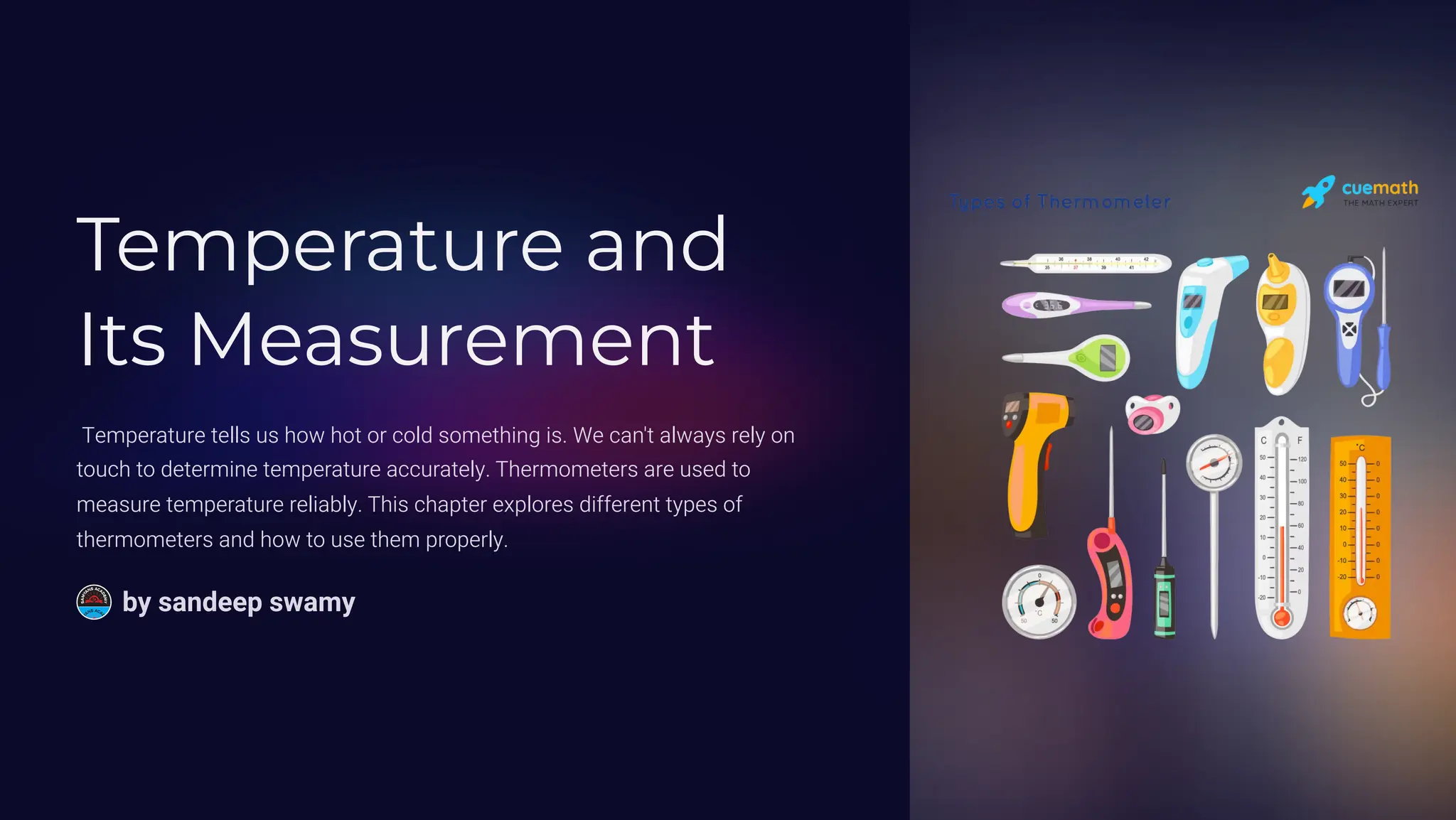
Temperature tells us how hot or cold something is. We can't always rely on
touch to determine temperature accurately. Thermometers are used to
measure temperature reliably. This chapter explores different types of
thermometers and how to use them properly.
by sandeep swamy
Hot or Cold?
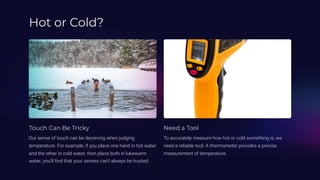
Touch Can Be Tricky
Our sense of touch can be deceiving when judging
temperature. For example, if you place one hand in hot water
and the other in cold water, then place both in lukewarm
water, you'll find that your senses can't always be trusted.
Need a Tool
To accurately measure how hot or cold something is, we
need a reliable tool. A thermometer provides a precise
measurement of temperature.
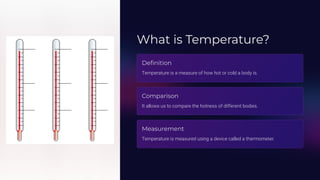
What is Temperature?
Definition
Temperature is a measure of how hot or cold a body is.
Comparison
It allows us to compare the hotness of different bodies.
Measurement
Temperature is measured using a device called a thermometer.
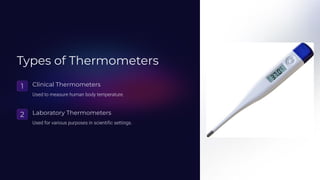
Types of Thermometers
1 Clinical Thermometers
Used to measure human body temperature.
2 Laboratory Thermometers
Used for various purposes in scientific settings.
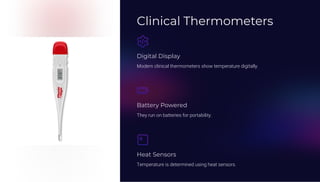
Clinical Thermometers
Digital Display
Modern clinical thermometers show temperature digitally.
Battery Powered
They run on batteries for portability.
Heat Sensors
Temperature is determined using heat sensors.
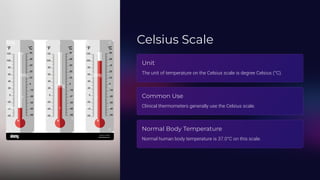
Celsius Scale
Unit
The unit of temperature on the Celsius scale is degree Celsius (°C).
Common Use
Clinical thermometers generally use the Celsius scale.
Normal Body Temperature
Normal human body temperature is 37.0°C on this scale.
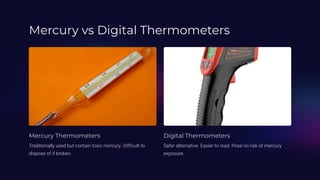
Mercury vs Digital Thermometers
Mercury Thermometers
Traditionally used but contain toxic mercury. Difficult to
dispose of if broken.
Digital Thermometers
Safer alternative. Easier to read. Pose no risk of mercury
exposure.
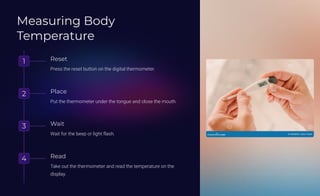
Measuring Body
Temperature
1 Reset
Press the reset button on the digital thermometer.
2 Place
Put the thermometer under the tongue and close the mouth.
3 Wait
Wait for the beep or light flash.
4 Read
Take out the thermometer and read the temperature on the
display.
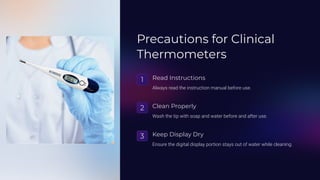
Precautions for Clinical
Thermometers
1 Read Instructions
Always read the instruction manual before use.
2 Clean Properly
Wash the tip with soap and water before and after use.
3 Keep Display Dry
Ensure the digital display portion stays out of water while cleaning.
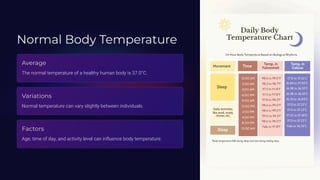
Normal Body Temperature
Average
The normal temperature of a healthy human body is 37.0°C.
Variations
Normal temperature can vary slightly between individuals.
Factors
Age, time of day, and activity level can influence body temperature.
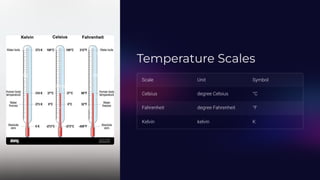
Temperature Scales
Scale Unit Symbol
Celsius degree Celsius °C
Fahrenheit degree Fahrenheit °F
Kelvin kelvin K
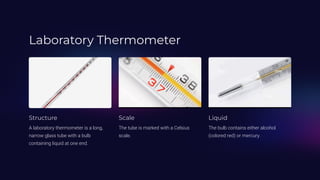
Laboratory Thermometer
Structure
A laboratory thermometer is a long,
narrow glass tube with a bulb
containing liquid at one end.
Scale
The tube is marked with a Celsius
scale.
Liquid
The bulb contains either alcohol
(colored red) or mercury.
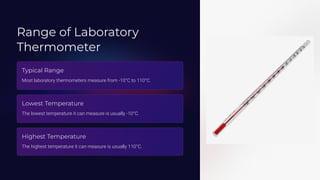
Range of Laboratory
Thermometer
Typical Range
Most laboratory thermometers measure from -10°C to 110°C.
Lowest Temperature
The lowest temperature it can measure is usually -10°C.
Highest Temperature
The highest temperature it can measure is usually 110°C.
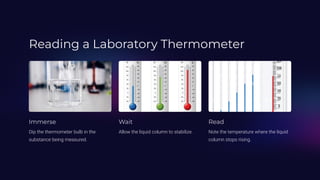
Reading a Laboratory Thermometer
Immerse
Dip the thermometer bulb in the
substance being measured.
Wait
Allow the liquid column to stabilize.
Read
Note the temperature where the liquid
column stops rising.
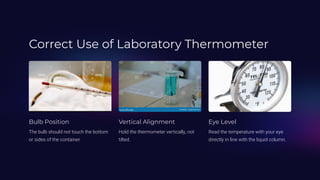
Correct Use of Laboratory Thermometer
Bulb Position
The bulb should not touch the bottom
or sides of the container.
Vertical Alignment
Hold the thermometer vertically, not
tilted.
Eye Level
Read the temperature with your eye
directly in line with the liquid column.
Measuring Ice and Boiling Water
Temperature
Ice Temperature
Remains constant while melting.
Boiling Water Temperature
Remains constant while boiling.
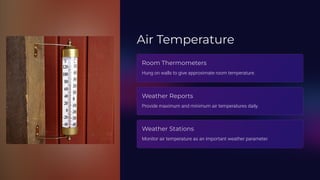
Air Temperature
Room Thermometers
Hung on walls to give approximate room temperature.
Weather Reports
Provide maximum and minimum air temperatures daily.
Weather Stations
Monitor air temperature as an important weather parameter.
Anna Mani: The Weather
Woman of India
1 Inventions
Invented numerous weather measurement instruments.
2 Impact
Reduced India's reliance on imported weather instruments.
3 Renewable Energy
Explored possibilities of wind and solar energy in India.
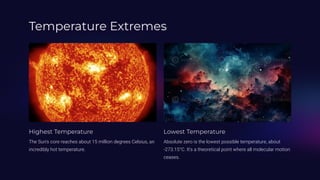
Temperature Extremes
Highest Temperature
The Sun's core reaches about 15 million degrees Celsius, an
incredibly hot temperature.
Lowest Temperature
Absolute zero is the lowest possible temperature, about
-273.15°C. It's a theoretical point where all molecular motion
ceases.
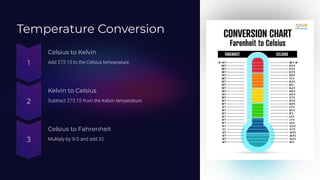
Temperature Conversion
1
Celsius to Kelvin
Add 273.15 to the Celsius temperature.
2
Kelvin to Celsius
Subtract 273.15 from the Kelvin temperature.
3
Celsius to Fahrenheit
Multiply by 9/5 and add 32.
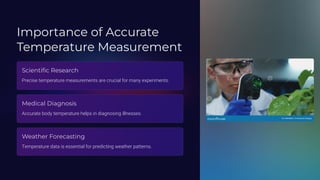
Importance of Accurate
Temperature Measurement
Scientific Research
Precise temperature measurements are crucial for many experiments.
Medical Diagnosis
Accurate body temperature helps in diagnosing illnesses.
Weather Forecasting
Temperature data is essential for predicting weather patterns.
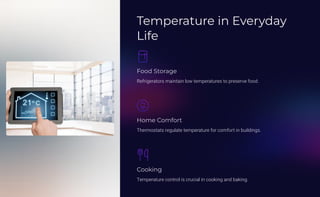
Temperature in Everyday
Life
Food Storage
Refrigerators maintain low temperatures to preserve food.
Home Comfort
Thermostats regulate temperature for comfort in buildings.
Cooking
Temperature control is crucial in cooking and baking.

Temperature-and-Its-Measurement ppt notes 6th class science

  • 1.
    Temperature and Its Measurement Temperaturetells us how hot or cold something is. We can't always rely on touch to determine temperature accurately. Thermometers are used to measure temperature reliably. This chapter explores different types of thermometers and how to use them properly. by sandeep swamy
  • 2.
    Hot or Cold? TouchCan Be Tricky Our sense of touch can be deceiving when judging temperature. For example, if you place one hand in hot water and the other in cold water, then place both in lukewarm water, you'll find that your senses can't always be trusted. Need a Tool To accurately measure how hot or cold something is, we need a reliable tool. A thermometer provides a precise measurement of temperature.
  • 3.
    What is Temperature? Definition Temperatureis a measure of how hot or cold a body is. Comparison It allows us to compare the hotness of different bodies. Measurement Temperature is measured using a device called a thermometer.
  • 4.
    Types of Thermometers 1Clinical Thermometers Used to measure human body temperature. 2 Laboratory Thermometers Used for various purposes in scientific settings.
  • 5.
    Clinical Thermometers Digital Display Modernclinical thermometers show temperature digitally. Battery Powered They run on batteries for portability. Heat Sensors Temperature is determined using heat sensors.
  • 6.
    Celsius Scale Unit The unitof temperature on the Celsius scale is degree Celsius (°C). Common Use Clinical thermometers generally use the Celsius scale. Normal Body Temperature Normal human body temperature is 37.0°C on this scale.
  • 7.
    Mercury vs DigitalThermometers Mercury Thermometers Traditionally used but contain toxic mercury. Difficult to dispose of if broken. Digital Thermometers Safer alternative. Easier to read. Pose no risk of mercury exposure.
  • 8.
    Measuring Body Temperature 1 Reset Pressthe reset button on the digital thermometer. 2 Place Put the thermometer under the tongue and close the mouth. 3 Wait Wait for the beep or light flash. 4 Read Take out the thermometer and read the temperature on the display.
  • 9.
    Precautions for Clinical Thermometers 1Read Instructions Always read the instruction manual before use. 2 Clean Properly Wash the tip with soap and water before and after use. 3 Keep Display Dry Ensure the digital display portion stays out of water while cleaning.
  • 10.
    Normal Body Temperature Average Thenormal temperature of a healthy human body is 37.0°C. Variations Normal temperature can vary slightly between individuals. Factors Age, time of day, and activity level can influence body temperature.
  • 11.
    Temperature Scales Scale UnitSymbol Celsius degree Celsius °C Fahrenheit degree Fahrenheit °F Kelvin kelvin K
  • 12.
    Laboratory Thermometer Structure A laboratorythermometer is a long, narrow glass tube with a bulb containing liquid at one end. Scale The tube is marked with a Celsius scale. Liquid The bulb contains either alcohol (colored red) or mercury.
  • 13.
    Range of Laboratory Thermometer TypicalRange Most laboratory thermometers measure from -10°C to 110°C. Lowest Temperature The lowest temperature it can measure is usually -10°C. Highest Temperature The highest temperature it can measure is usually 110°C.
  • 14.
    Reading a LaboratoryThermometer Immerse Dip the thermometer bulb in the substance being measured. Wait Allow the liquid column to stabilize. Read Note the temperature where the liquid column stops rising.
  • 15.
    Correct Use ofLaboratory Thermometer Bulb Position The bulb should not touch the bottom or sides of the container. Vertical Alignment Hold the thermometer vertically, not tilted. Eye Level Read the temperature with your eye directly in line with the liquid column.
  • 16.
    Measuring Ice andBoiling Water Temperature Ice Temperature Remains constant while melting. Boiling Water Temperature Remains constant while boiling.
  • 17.
    Air Temperature Room Thermometers Hungon walls to give approximate room temperature. Weather Reports Provide maximum and minimum air temperatures daily. Weather Stations Monitor air temperature as an important weather parameter.
  • 18.
    Anna Mani: TheWeather Woman of India 1 Inventions Invented numerous weather measurement instruments. 2 Impact Reduced India's reliance on imported weather instruments. 3 Renewable Energy Explored possibilities of wind and solar energy in India.
  • 19.
    Temperature Extremes Highest Temperature TheSun's core reaches about 15 million degrees Celsius, an incredibly hot temperature. Lowest Temperature Absolute zero is the lowest possible temperature, about -273.15°C. It's a theoretical point where all molecular motion ceases.
  • 20.
    Temperature Conversion 1 Celsius toKelvin Add 273.15 to the Celsius temperature. 2 Kelvin to Celsius Subtract 273.15 from the Kelvin temperature. 3 Celsius to Fahrenheit Multiply by 9/5 and add 32.
  • 21.
    Importance of Accurate TemperatureMeasurement Scientific Research Precise temperature measurements are crucial for many experiments. Medical Diagnosis Accurate body temperature helps in diagnosing illnesses. Weather Forecasting Temperature data is essential for predicting weather patterns.
  • 22.
    Temperature in Everyday Life FoodStorage Refrigerators maintain low temperatures to preserve food. Home Comfort Thermostats regulate temperature for comfort in buildings. Cooking Temperature control is crucial in cooking and baking.