NEETI SANON
www.udgamschool.com
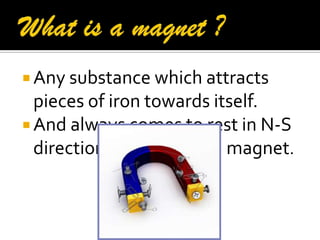
 Any substance which attracts
pieces of iron towards itself.
 And always comes to rest in N-S
direction is known as a magnet.
The Property of a magnet to
attract things made up of Iron,
Cobalt or Nickel is known as
magnetism.
 The area surrounding the magnet
in which magnetic force is exerted
to attract iron is known as
magnetic field.
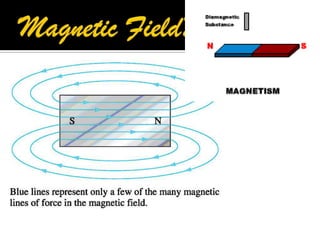
 The magnetic lines of force
originate from the North Pole of a
magnet and end at its South Pole.
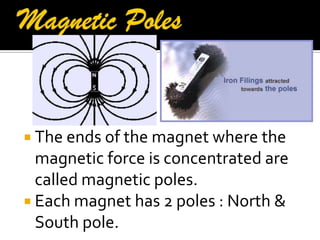
 The ends of the magnet where the
magnetic force is concentrated are
called magnetic poles.
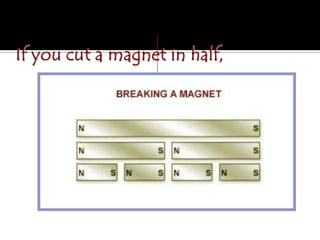
 Each magnet has 2 poles : North &
South pole.
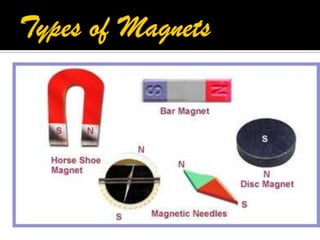
 There are 2 types of magnets :
 1) Natural Magnets:
 They have low magnetic power.
 Eg : Magnetite, lodestone.
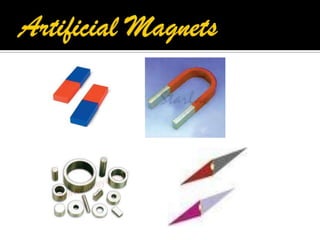
 2) Artificial Magnets :
 They have a strong magnetic power.
 They are found in different shapes.
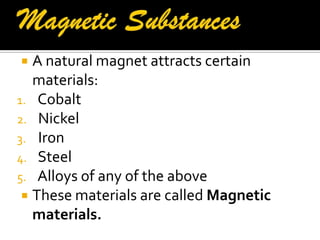
 A natural magnet attracts certain
materials:
1. Cobalt
2. Nickel
3. Iron
4. Steel
5. Alloys of any of the above
 These materials are called Magnetic
materials.
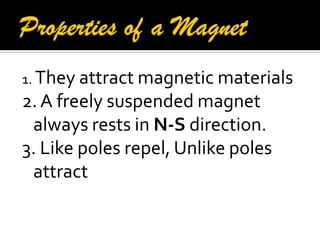
1. They attract magnetic materials
2. A freely suspended magnet
always rests in N-S direction.
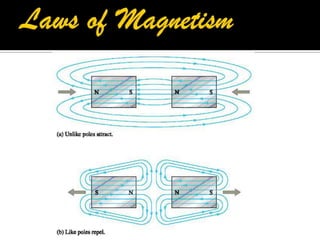
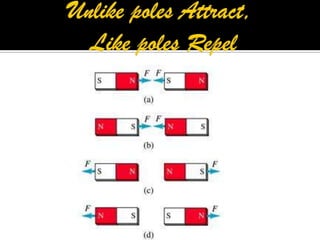
3. Like poles repel, Unlike poles
attract
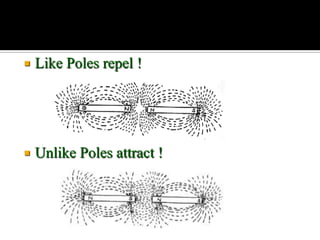
 Like Poles repel !
 Unlike Poles attract !
S N S N S N
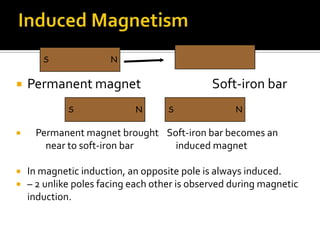
 Permanent magnet Soft-iron bar
 Permanent magnet brought Soft-iron bar becomes an
near to soft-iron bar induced magnet
 In magnetic induction, an opposite pole is always induced.
 – 2 unlike poles facing each other is observed during magnetic
induction.
S N
S N S N
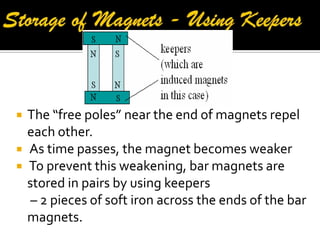
 The “free poles” near the end of magnets repel
each other.
 As time passes, the magnet becomes weaker
 To prevent this weakening, bar magnets are
stored in pairs by using keepers
– 2 pieces of soft iron across the ends of the bar
magnets.
Electromagnetism
P
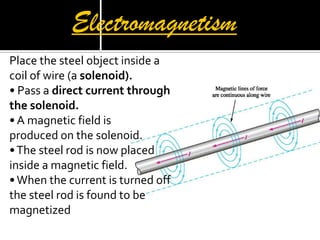
Place the steel object inside a
coil of wire (a solenoid).
• Pass a direct current through
the solenoid.
• A magnetic field is
produced on the solenoid.
•The steel rod is now placed
inside a magnetic field.
•When the current is turned off
the steel rod is found to be
magnetized
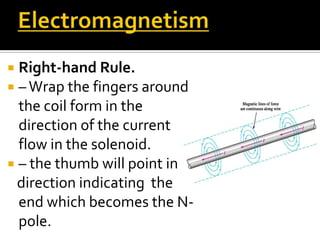
 Right-hand Rule.
 –Wrap the fingers around
the coil form in the
direction of the current
flow in the solenoid.
 – the thumb will point in
direction indicating the
end which becomes the N-
pole.
 We know that at the centre of the Earth lies a
molten metallic iron rich core.
 The outer portion of this core is molten.
 We also believe that this core is spinning.
 It is believed that the metals in the core have
many loosely bound electrons and that these
particles can conduct electricity.
 It is this mass of moving electrons which
produces the magnetic field.
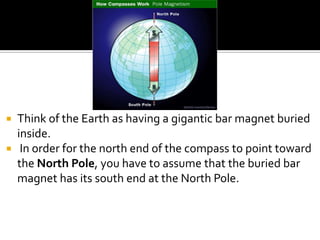
 Think of the Earth as having a gigantic bar magnet buried
inside.
 In order for the north end of the compass to point toward
the North Pole, you have to assume that the buried bar
magnet has its south end at the North Pole.
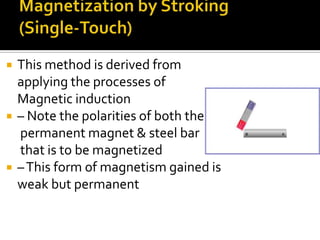
 This method is derived from
applying the processes of
Magnetic induction
 – Note the polarities of both the
permanent magnet & steel bar
that is to be magnetized
 –This form of magnetism gained is
weak but permanent
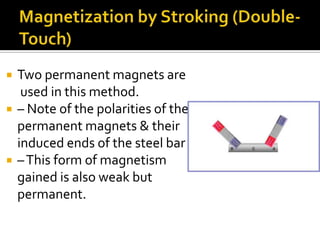
 Two permanent magnets are
used in this method.
 – Note of the polarities of the
permanent magnets & their
induced ends of the steel bar
 –This form of magnetism
gained is also weak but
permanent.

Fun with magnets

  • 1.
  • 2.
     Any substancewhich attracts pieces of iron towards itself.  And always comes to rest in N-S direction is known as a magnet.
  • 3.
    The Property ofa magnet to attract things made up of Iron, Cobalt or Nickel is known as magnetism.
  • 4.
     The areasurrounding the magnet in which magnetic force is exerted to attract iron is known as magnetic field.  The magnetic lines of force originate from the North Pole of a magnet and end at its South Pole.
  • 6.
     The endsof the magnet where the magnetic force is concentrated are called magnetic poles.  Each magnet has 2 poles : North & South pole.
  • 7.
     There are2 types of magnets :  1) Natural Magnets:  They have low magnetic power.  Eg : Magnetite, lodestone.  2) Artificial Magnets :  They have a strong magnetic power.  They are found in different shapes.
  • 11.
     A naturalmagnet attracts certain materials: 1. Cobalt 2. Nickel 3. Iron 4. Steel 5. Alloys of any of the above  These materials are called Magnetic materials.
  • 12.
    1. They attractmagnetic materials 2. A freely suspended magnet always rests in N-S direction. 3. Like poles repel, Unlike poles attract
  • 13.
     Like Polesrepel !  Unlike Poles attract !
  • 17.
    S N SN S N
  • 18.
     Permanent magnetSoft-iron bar  Permanent magnet brought Soft-iron bar becomes an near to soft-iron bar induced magnet  In magnetic induction, an opposite pole is always induced.  – 2 unlike poles facing each other is observed during magnetic induction. S N S N S N
  • 19.
     The “freepoles” near the end of magnets repel each other.  As time passes, the magnet becomes weaker  To prevent this weakening, bar magnets are stored in pairs by using keepers – 2 pieces of soft iron across the ends of the bar magnets.
  • 20.
    Electromagnetism P Place the steelobject inside a coil of wire (a solenoid). • Pass a direct current through the solenoid. • A magnetic field is produced on the solenoid. •The steel rod is now placed inside a magnetic field. •When the current is turned off the steel rod is found to be magnetized
  • 21.
     Right-hand Rule. –Wrap the fingers around the coil form in the direction of the current flow in the solenoid.  – the thumb will point in direction indicating the end which becomes the N- pole.
  • 22.
     We knowthat at the centre of the Earth lies a molten metallic iron rich core.  The outer portion of this core is molten.  We also believe that this core is spinning.  It is believed that the metals in the core have many loosely bound electrons and that these particles can conduct electricity.  It is this mass of moving electrons which produces the magnetic field.
  • 23.
     Think ofthe Earth as having a gigantic bar magnet buried inside.  In order for the north end of the compass to point toward the North Pole, you have to assume that the buried bar magnet has its south end at the North Pole.
  • 24.
     This methodis derived from applying the processes of Magnetic induction  – Note the polarities of both the permanent magnet & steel bar that is to be magnetized  –This form of magnetism gained is weak but permanent
  • 25.
     Two permanentmagnets are used in this method.  – Note of the polarities of the permanent magnets & their induced ends of the steel bar  –This form of magnetism gained is also weak but permanent.