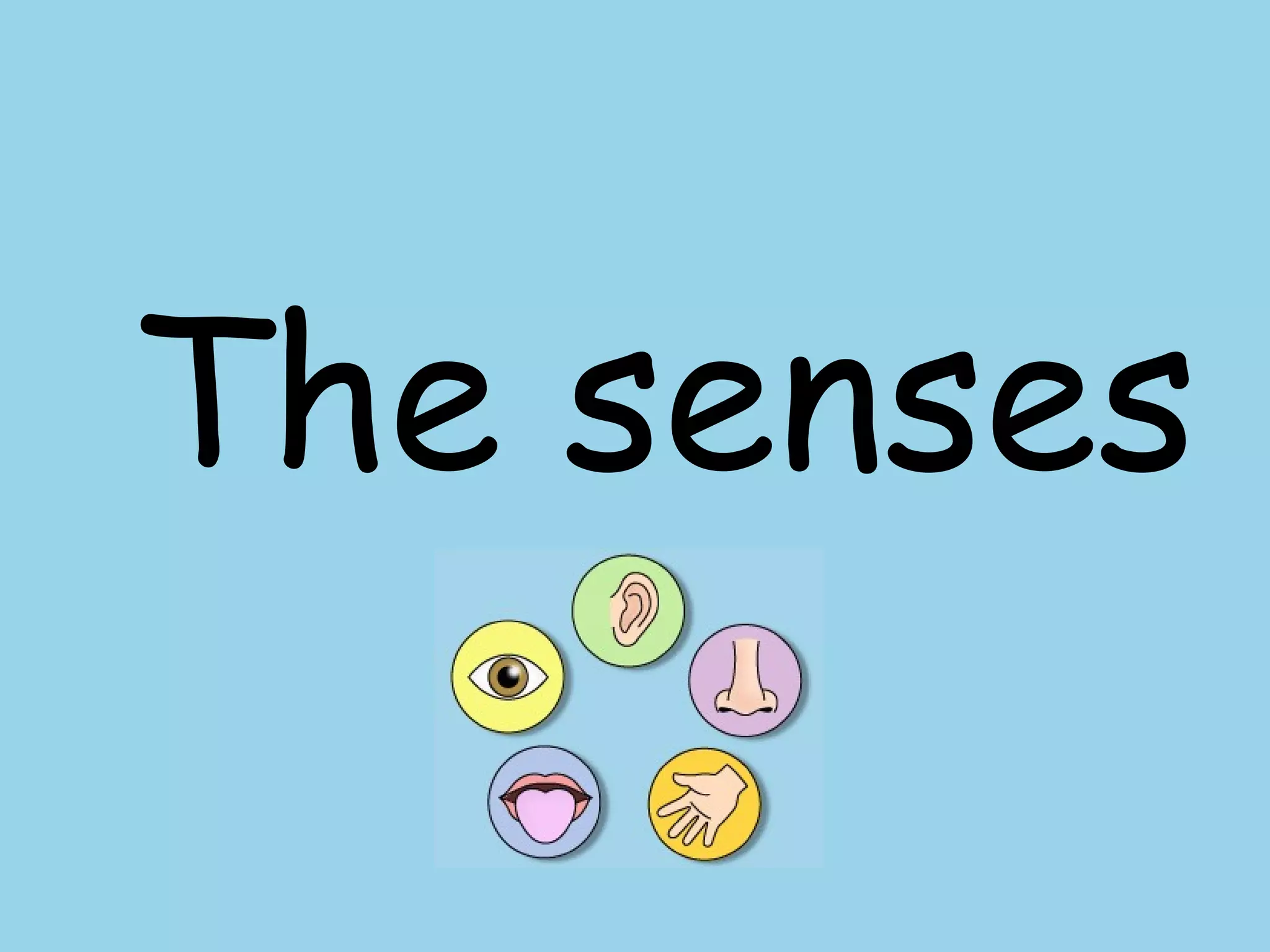
The senses
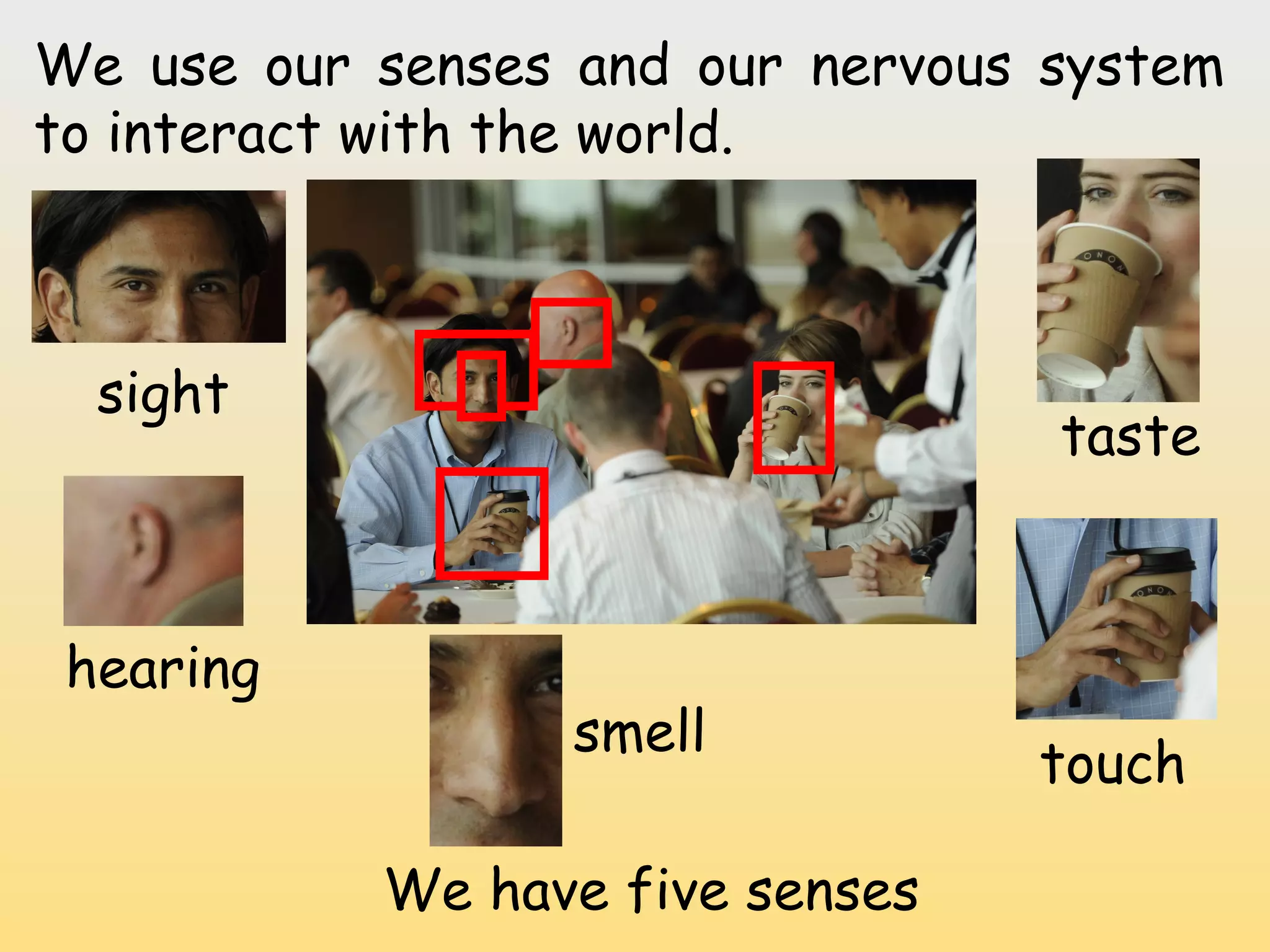
We use our senses and our nervous system
to interact with the world.


  sight
                                  taste


 hearing
                  smell
                                 touch

           We have five senses
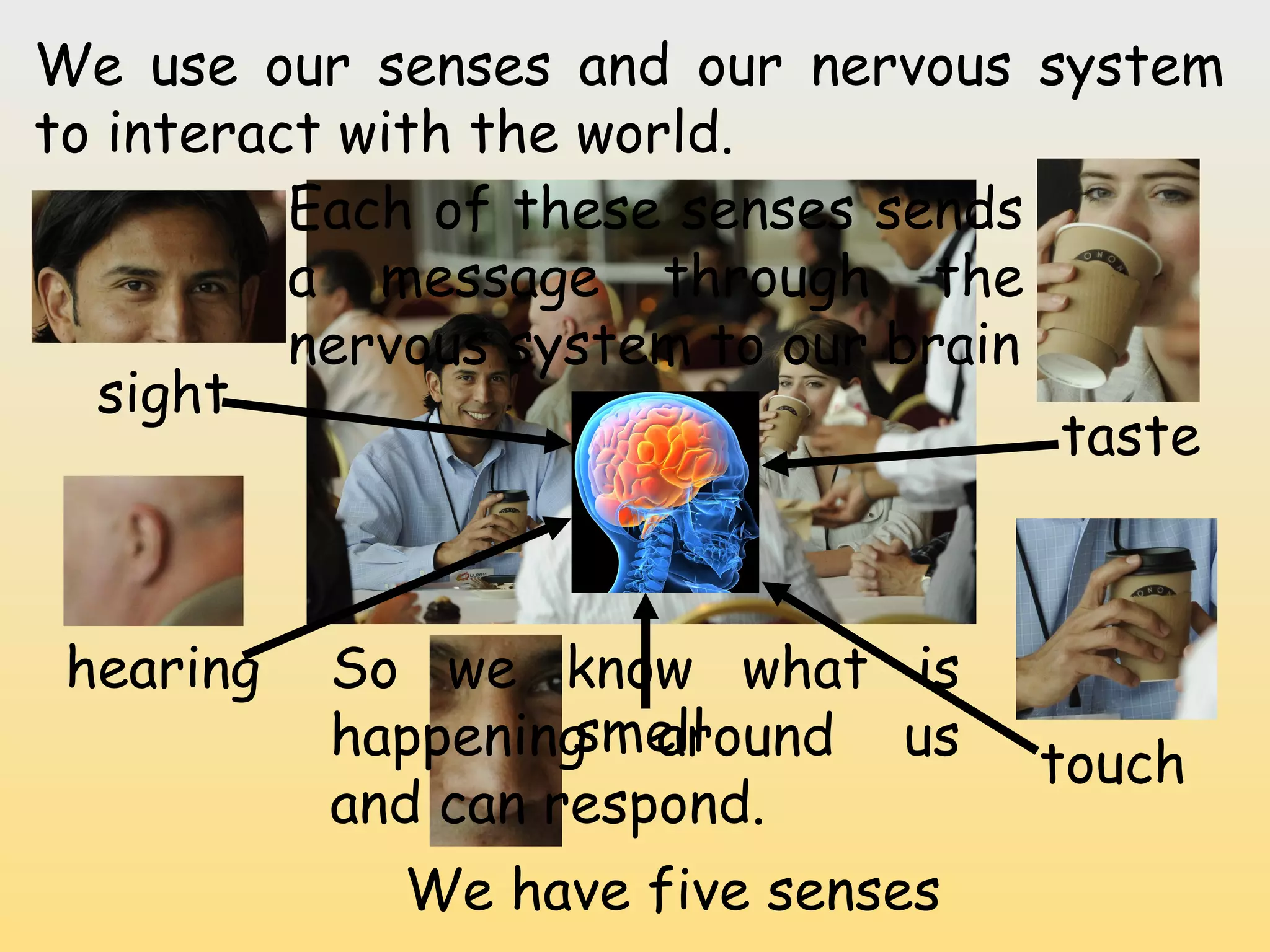
We use our senses and our nervous system
to interact with the world.
          Each of these senses sends
          a message through the
          nervous system to our brain
  sight
                                      taste


 hearing   So we know what is
                    smell
           happening around us      touch
           and can respond.
             We have five senses
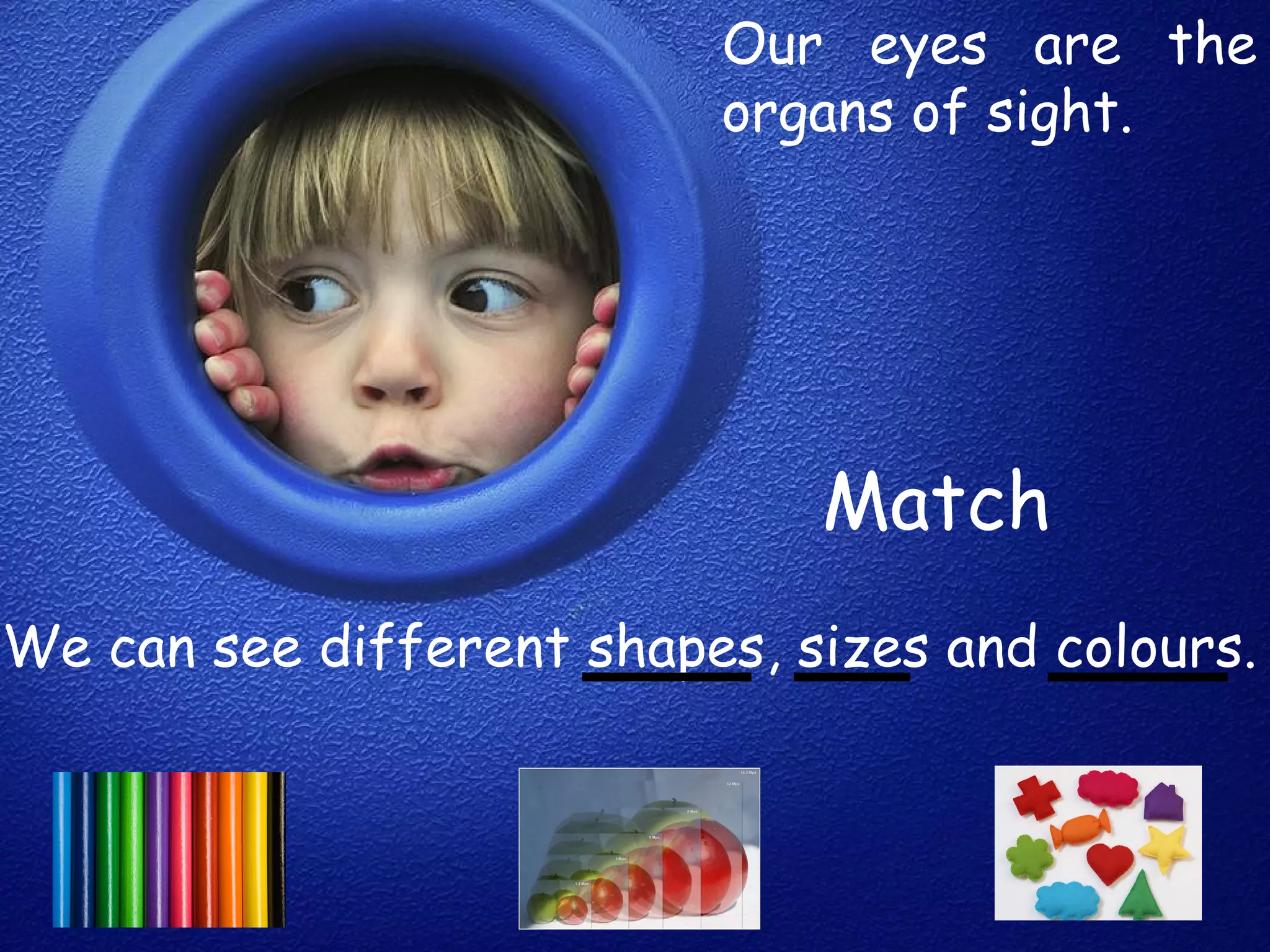
Our eyes are the
                          organs of sight.


                              Match
We can see different shapes, sizes and colours.
Our eyes are
                     very delicate
                   and are protected
                        by our…
                      eyebrows,
                      eyelashes
                      and eyelids.

These stop sweat and dust getting into our eyes.
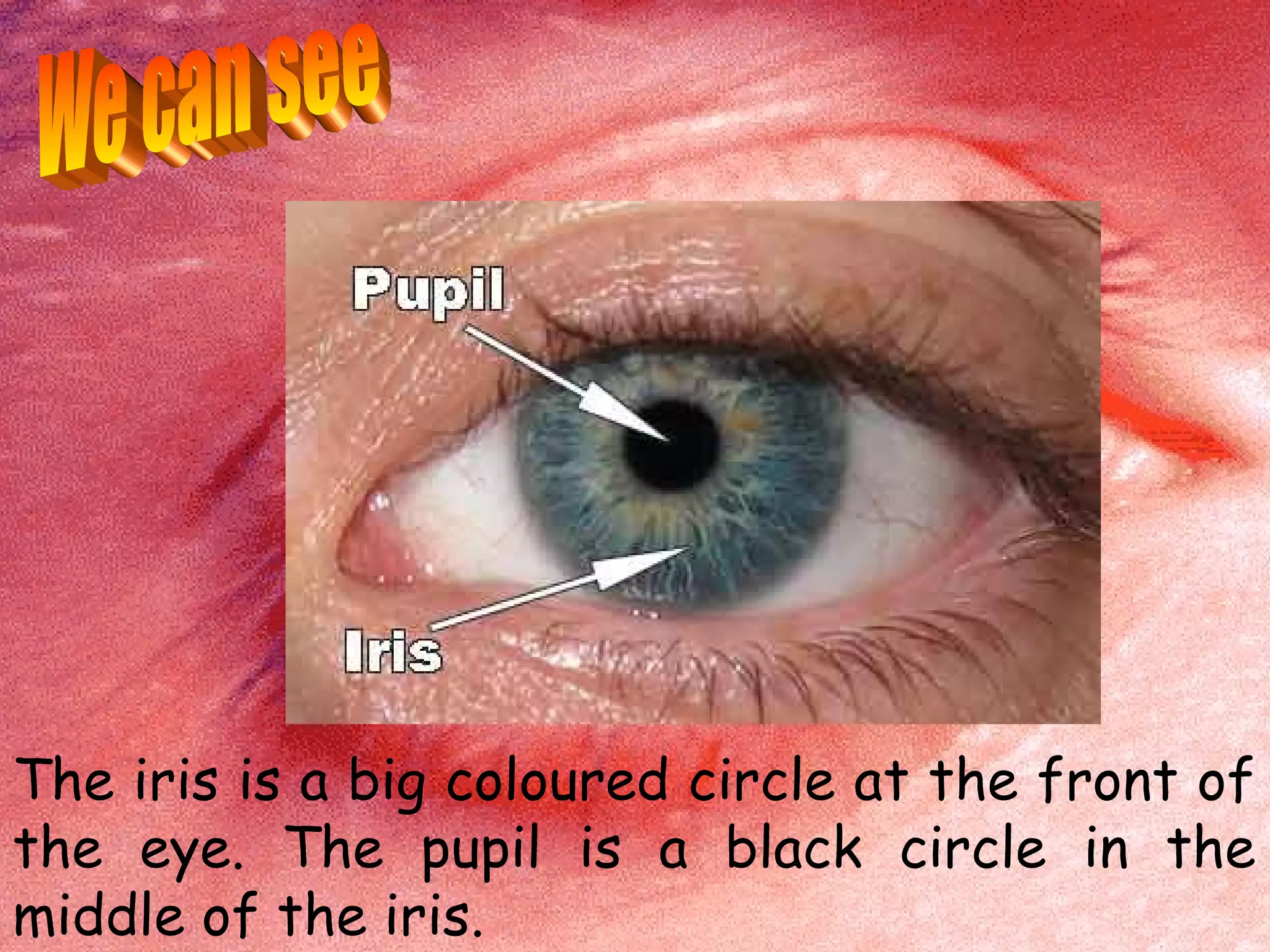
The iris is a big coloured circle at the front of
the eye. The pupil is a black circle in the
middle of the iris.
Light enters the eye through the pupil
and it makes an image on the retina at
the back of the eye. The retina sends
this information to our brain and this is
what we see.
                                     retina

     pupil
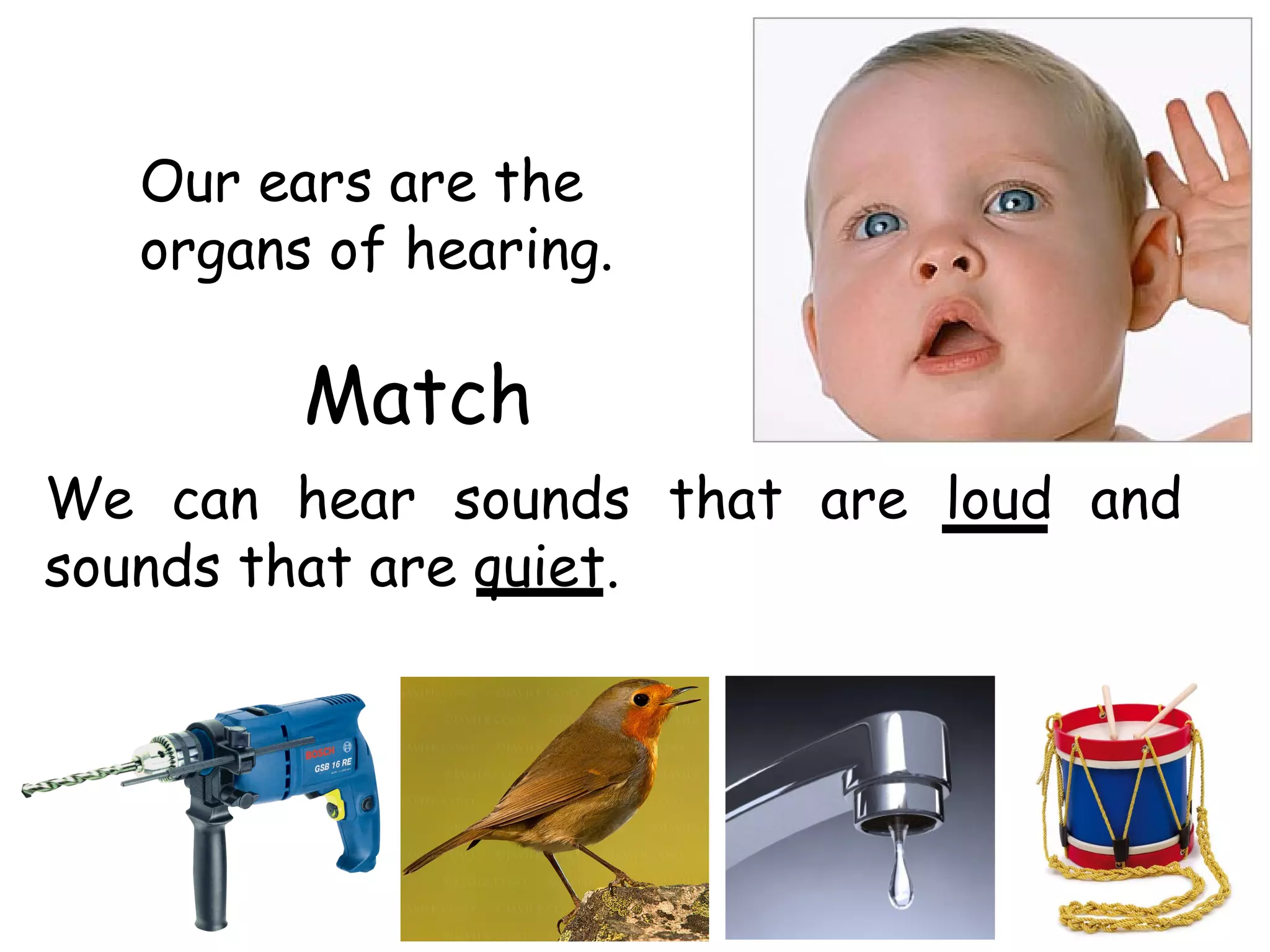
Our ears are the
   organs of hearing.

         Match
We can hear sounds that are loud and
sounds that are quiet.
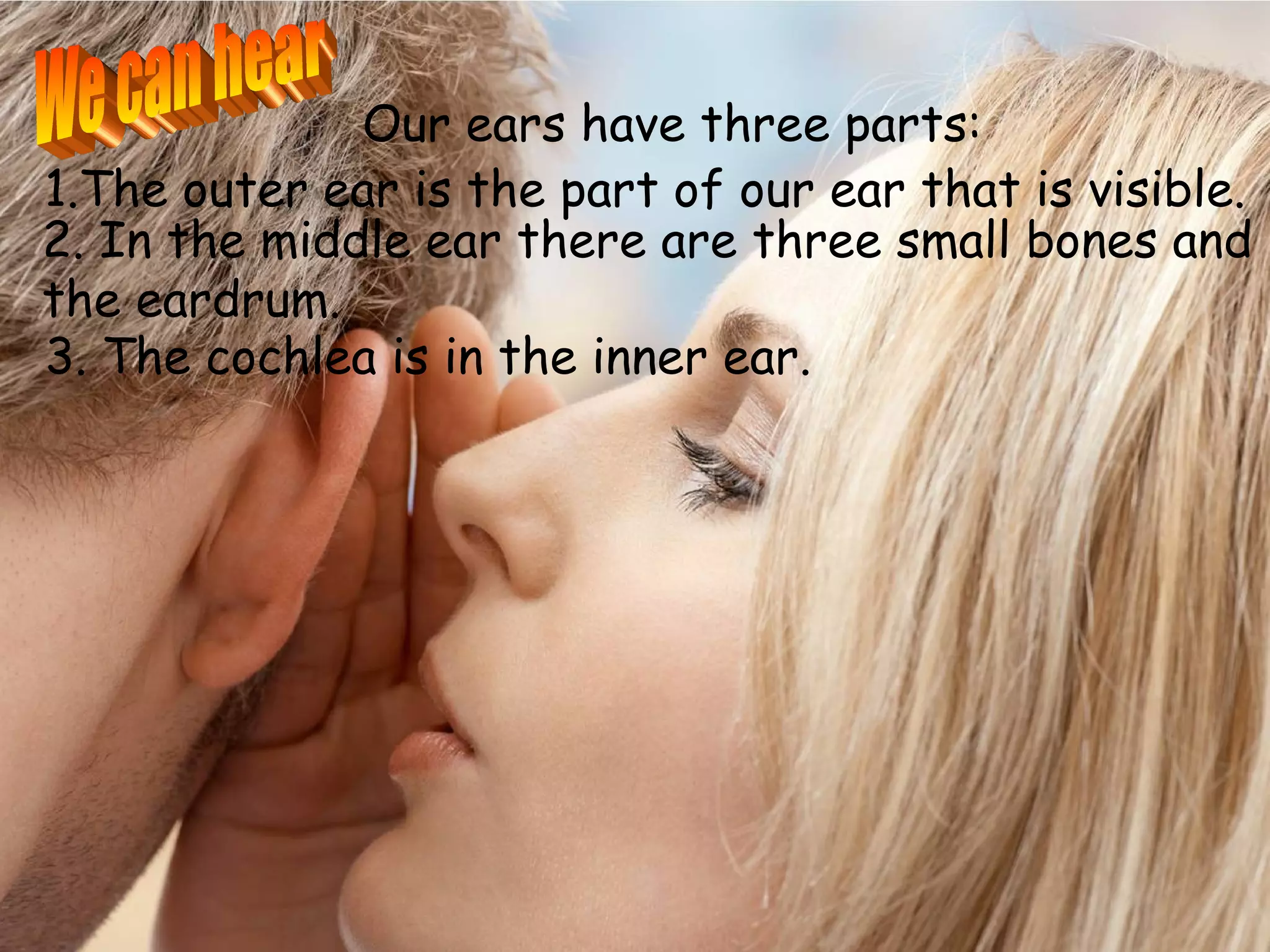
Our ears have three parts:
1.The outer ear is the part of our ear that is visible.
2. In the middle ear there are three small bones and
the eardrum.
3. The cochlea is in the inner ear.

                    Three small bones


               eardrum

                                          cochlea
Sounds enter the outer ear and go into the
middle ear. The eardrum vibrates. These
vibrations travel along the three small
bones to the cochlea. In the cochlea, the
vibrations are turned into signal. Nerves
carry signals to our brain, and this is what
we hear.
                     Look at this video.
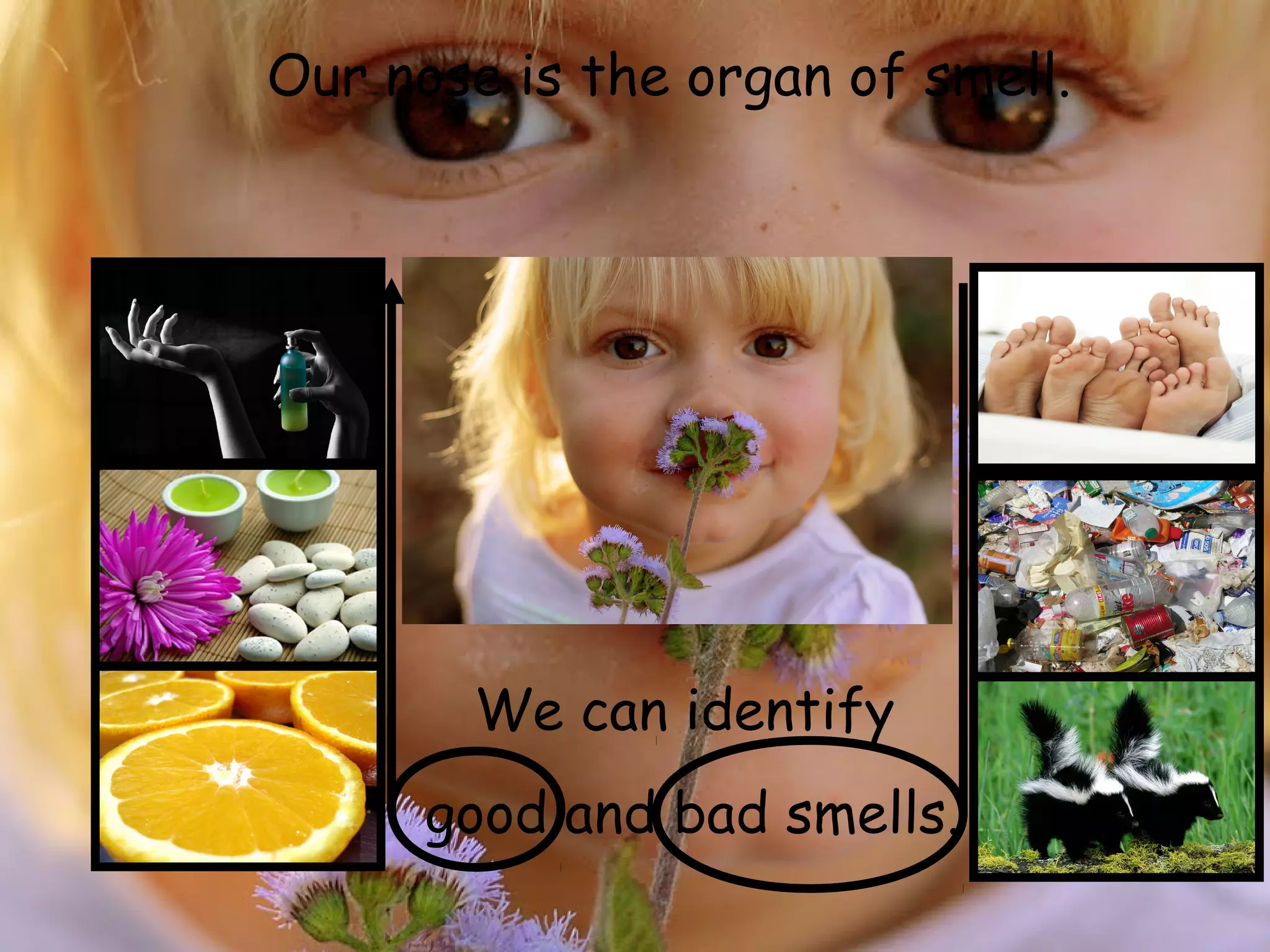
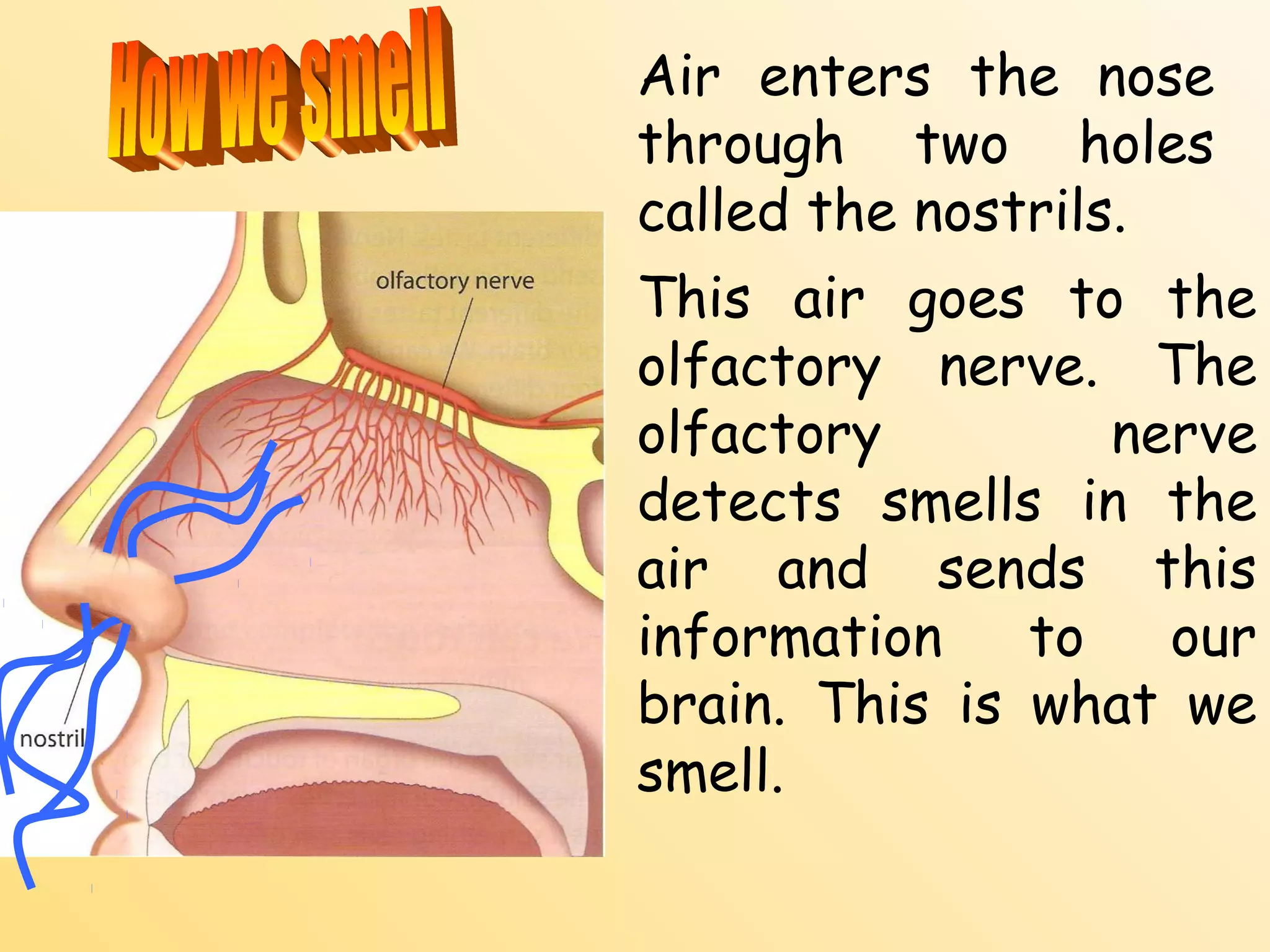
Our nose is the organ of smell.


       We can identify
      good and bad smells.
Air enters the nose
through two holes
called the nostrils.
This air goes to the
olfactory nerve. The
olfactory         nerve
detects smells in the
air and sends this
information    to   our
brain. This is what we
smell.
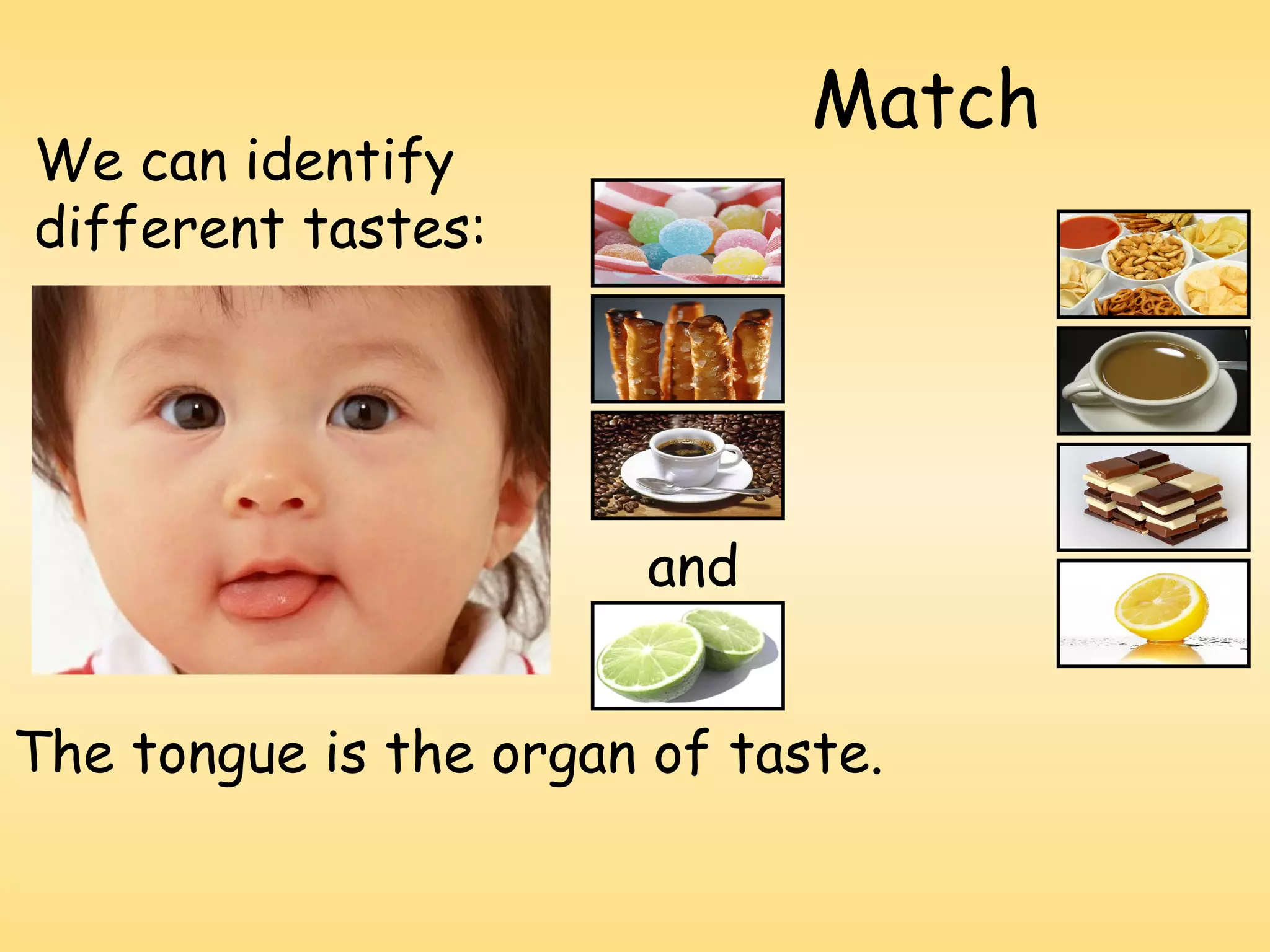
Match
We can identify
different tastes:     sweet
                      salty

                      bitter
                       and
                       sour
The tongue is the organ of taste.
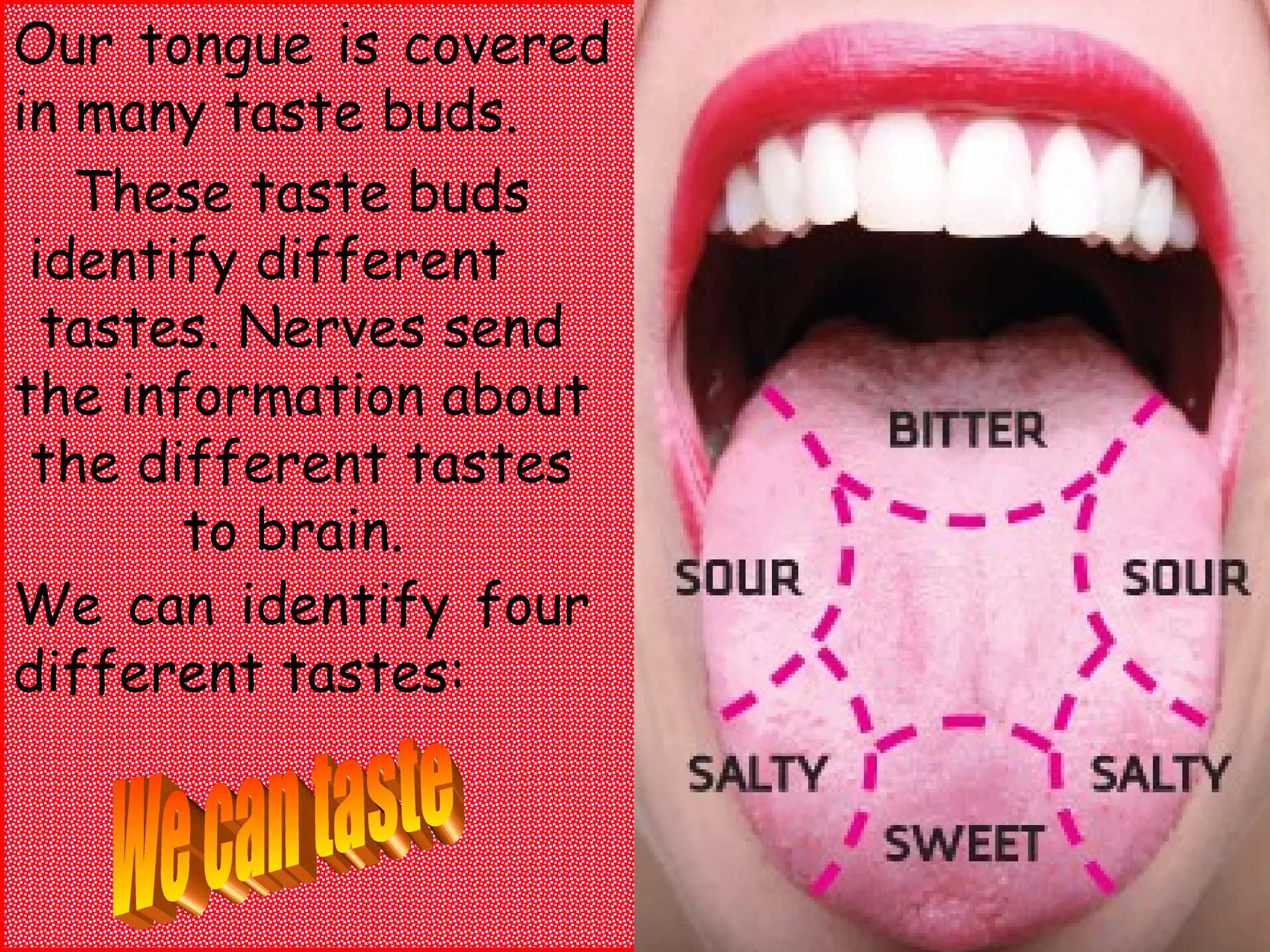
Our tongue is covered
in many taste buds.
   These taste buds
 identify different
  tastes. Nerves send
the information about
 the different tastes
       to brain.
We can identify four
different tastes:
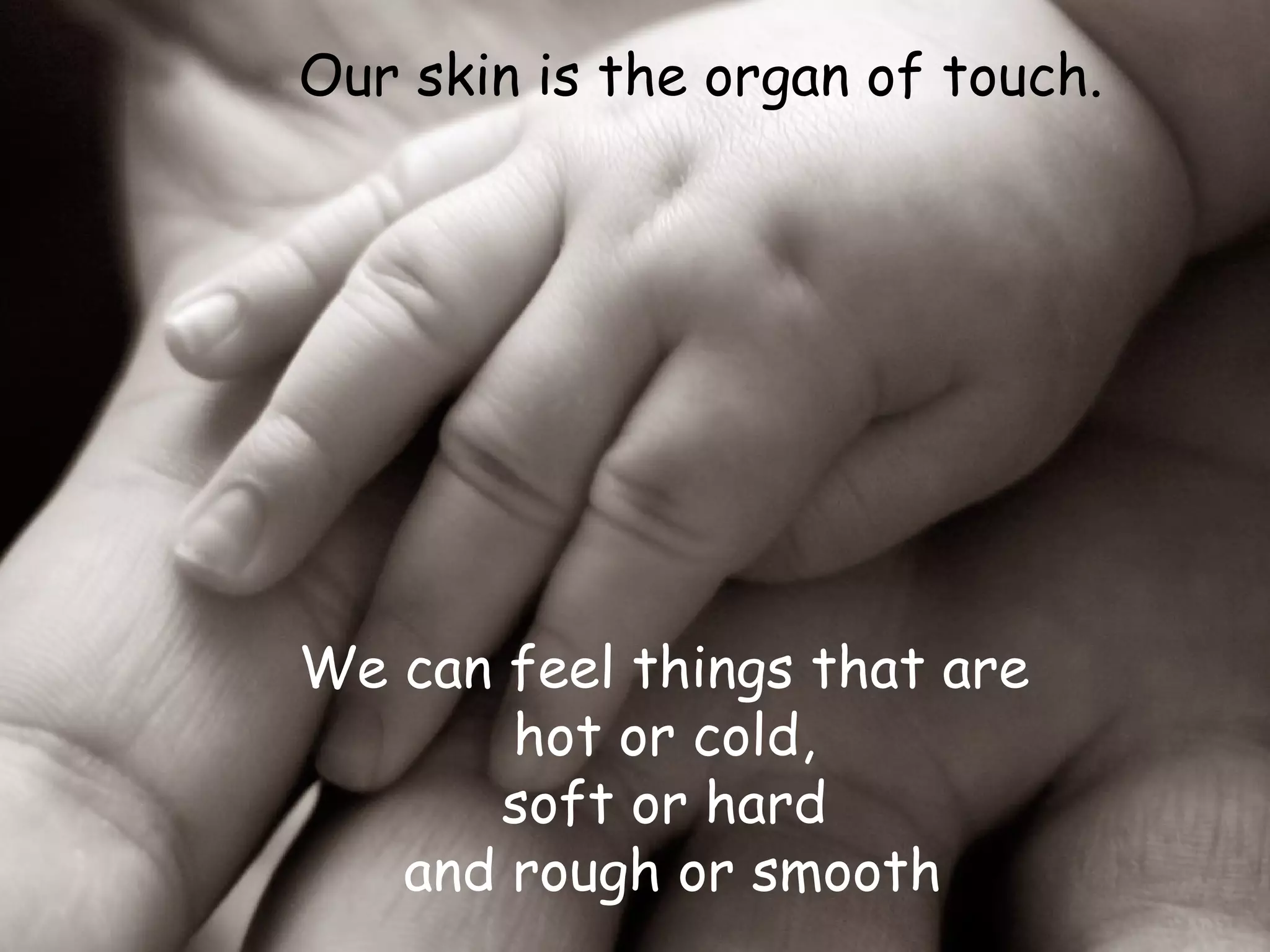
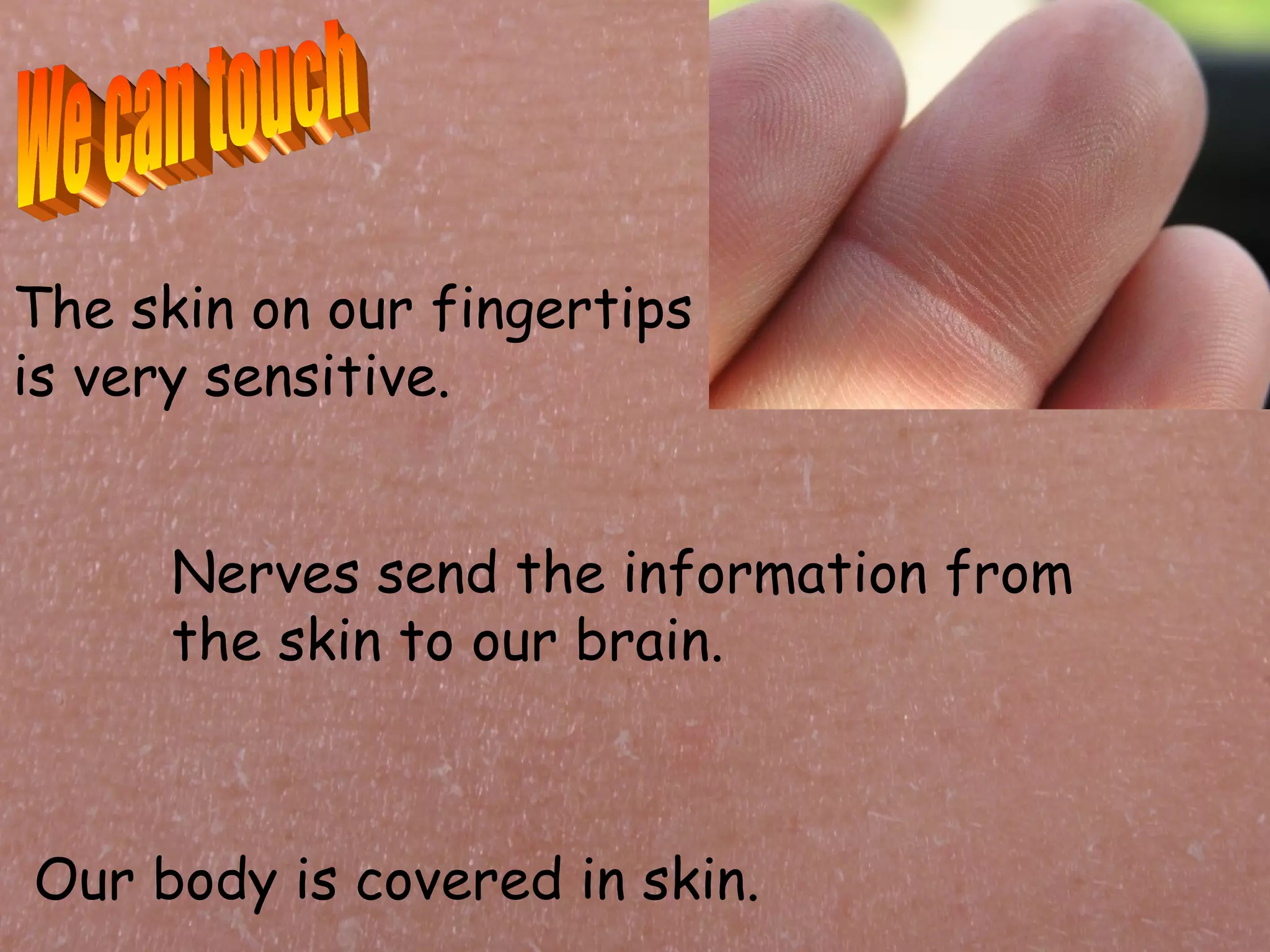
Our skin is the organ of touch.


We can feel things that are
       hot or cold,
       soft or hard
   and rough or smooth
The skin on our fingertips
is very sensitive.


      Nerves send the information from
      the skin to our brain.


Our body is covered in skin.
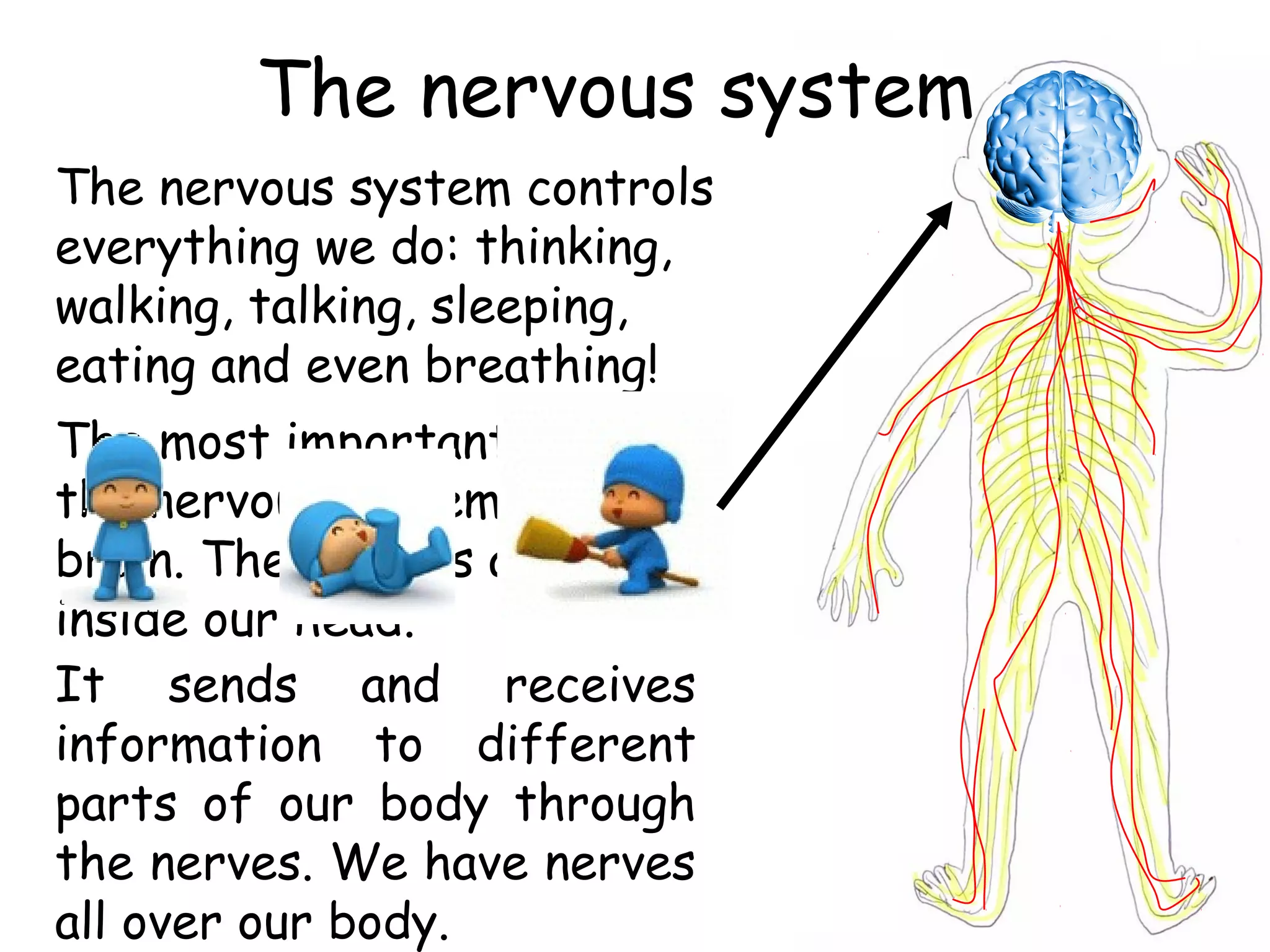
The nervous system
The nervous system controls
everything we do: thinking,
walking, talking, sleeping,
eating and even breathing!
The most important part of
the nervous system is our
brain. The brain is an organ
inside our head.
It sends and receives
information to different
parts of our body through
the nerves. We have nerves
all over our body.

Unit 2.the senses.

  • 1.
  • 2.
    We use oursenses and our nervous system to interact with the world. sight taste hearing smell touch We have five senses
  • 3.
    We use oursenses and our nervous system to interact with the world. Each of these senses sends a message through the nervous system to our brain sight taste hearing So we know what is smell happening around us touch and can respond. We have five senses
  • 4.
    Our eyes arethe organs of sight. Match We can see different shapes, sizes and colours.
  • 5.
    Our eyes are very delicate and are protected by our… eyebrows, eyelashes and eyelids. These stop sweat and dust getting into our eyes.
  • 6.
    The iris isa big coloured circle at the front of the eye. The pupil is a black circle in the middle of the iris.
  • 7.
    Light enters theeye through the pupil and it makes an image on the retina at the back of the eye. The retina sends this information to our brain and this is what we see. retina pupil
  • 8.
    Our ears arethe organs of hearing. Match We can hear sounds that are loud and sounds that are quiet.
  • 9.
    Our ears havethree parts: 1.The outer ear is the part of our ear that is visible. 2. In the middle ear there are three small bones and the eardrum. 3. The cochlea is in the inner ear. Three small bones eardrum cochlea
  • 10.
    Sounds enter theouter ear and go into the middle ear. The eardrum vibrates. These vibrations travel along the three small bones to the cochlea. In the cochlea, the vibrations are turned into signal. Nerves carry signals to our brain, and this is what we hear. Look at this video.
  • 11.
    Our nose isthe organ of smell. We can identify good and bad smells.
  • 12.
    Air enters thenose through two holes called the nostrils. This air goes to the olfactory nerve. The olfactory nerve detects smells in the air and sends this information to our brain. This is what we smell.
  • 13.
    Match We can identify differenttastes: sweet salty bitter and sour The tongue is the organ of taste.
  • 14.
    Our tongue iscovered in many taste buds. These taste buds identify different tastes. Nerves send the information about the different tastes to brain. We can identify four different tastes:
  • 15.
    Our skin isthe organ of touch. We can feel things that are hot or cold, soft or hard and rough or smooth
  • 16.
    The skin onour fingertips is very sensitive. Nerves send the information from the skin to our brain. Our body is covered in skin.
  • 17.
    The nervous system Thenervous system controls everything we do: thinking, walking, talking, sleeping, eating and even breathing! The most important part of the nervous system is our brain. The brain is an organ inside our head. It sends and receives information to different parts of our body through the nerves. We have nerves all over our body.