
Necrotizing fasciitis
• Definition
• Riskfactors
• Etiology
• Pathogenesis
• Microbiology
• Clinical presentation
• Workup
• Management
• Prognosis
Definition
• Necrotizing fasciitis is anecrotizing soft tissue infection spreading
along fascial planes with or without overlyingcellulitis.
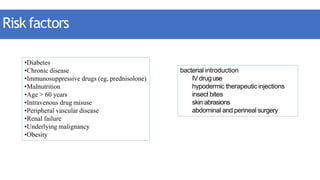
•Diabetes
•Chronic disease
•Immunosuppressive drugs (eg, prednisolone)
•Malnutrition
•Age > 60 years
•Intravenous drug misuse
•Peripheral vascular disease
•Renal failure
•Underlying malignancy
•Obesity
Riskfactors
bacterial introduction
IVdruguse
hypodermic therapeutic injections
insect bites
skin abrasions
abdominal and perineal surgery
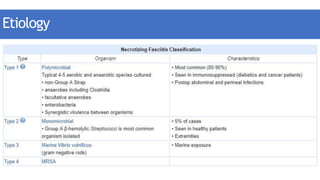
Etiology
Clinicalpresentation
• Patients with NFcanpresentwith
• constitutional symptoms of sepsis(eg, fever, tachycardia, alteredmental
state)
• signs of skin inflammation (ie, pain, skin edema, anderythema)
• However, asthese are also present in lessserious conditions such as
cellulitis, the degree of pain relative to the skin condition might
provide the physician with clues—NFtypically presents with painout
of proportion tothe degree of skin inflammation.
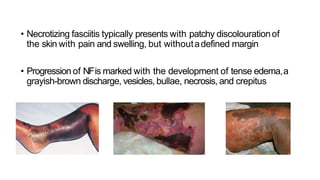
• Necrotizing fasciitis typically presents with patchy discolourationof
the skin with pain and swelling, but withoutadefined margin
• Progression of NFis marked with the development of tense edema,a
grayish-brown discharge, vesicles, bullae, necrosis, and crepitus
Workup
• Laboratory
• Cultures
• Imaging
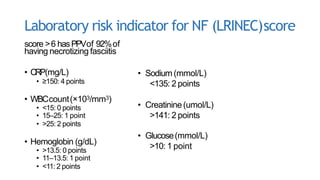
Laboratory risk indicator for NF (LRINEC)score
score >6 hasPPVof 92%of
having necrotizing fasciitis
• CRP(mg/L)
• ≥150: 4 points
• WBCcount(×103/mm3)
• <15: 0 points
• 15–25: 1 point
• >25: 2 points
• Hemoglobin (g/dL)
• >13.5: 0 points
• 11–13.5: 1 point
• <11: 2 points
• Sodium (mmol/L)
<135: 2 points
• Creatinine(umol/L)
>141: 2 points
• Glucose(mmol/L)
>10: 1 point
Cultures
• Blood cultures
• Intraoperative tissue cultures
Imaging
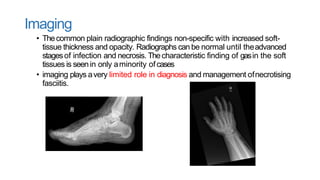
• Thecommon plain radiographic findings non-specific with increased soft-
tissue thickness and opacity. Radiographs can be normal until theadvanced
stagesof infection and necrosis. Thecharacteristic finding of gasin the soft
tissues is seenin only aminority ofcases
• imaging plays avery limited role in diagnosis and management ofnecrotising
fasciitis.
Treatment
• Antibiotics
• Operative
Antibiotics
• initial antibiotics
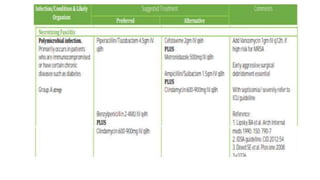
• start empirically with penicillin, clindamycin, metronidazole, and an
aminoglycoside
• definitive antibiotics
• penicillin G
• for strep orclostridium
• imipenem or doripenem ormeropenem
• for polymicrobial
• add vancomycin or daptomycin
• if MRSAsuspected
Operative
• emergency radical debridement with broad-spectrum IV antibiotics
operative findings
• liquefied subcutaneousfat
• dishwater pus
• muscle necrosis
• venousthrombosis
• noncontracting muscle,
• and apositive “probe test” result, which is characterized by lack of resistance to finger
dissection in normally adherenttissues
Gas gangrene
Definition
• necrotizing soft tissue infection of skeletal muscle causedbytoxin-
and gas-producing Clostridium species.
• Thesynonym clostridial myonecrosis better describes both the
causative agent and the targettissue.
Riskfactors
• risk factors
• posttraumatic (associated with Cperfringens)
• car accidents (most common)
• crush injuries
• gunshot wounds with foreignbodies
• burns and frostbite
• IV drug abuse
• postoperative
• bowel resection or perforation
• biliary surgery
• premature wound closure
• spontaneous
• colon cancer (associated with C.septicum)
Etiology
Clostridial species
• Clostridium perfringens (mostcommon),
• Clostridium novyi
• Clostridium septicum
found in soil and gutflora
• gram-positive obligate anaerobic spore-forming rods that produce exotoxins(e.g.
C.perfringens alpha toxin)
• gasproduced by fermentation of glucose
• other bacteria include E.coli, Pseudomonasaeruginosa, Proteus
species, Klebsiella pneumoniae
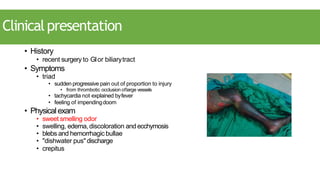
Clinicalpresentation
• History
• recent surgery to GIor biliarytract
• Symptoms
• triad
• sudden progressive pain out of proportion to injury
• from thrombotic occlusion oflarge vessels
• tachycardia not explained byfever
• feeling of impendingdoom
• Physicalexam
• sweet smelling odor
• swelling, edema, discoloration and ecchymosis
• blebs and hemorrhagic bullae
• "dishwater pus"discharge
• crepitus
workup
• Laboratory
• Cultures
• Imaging
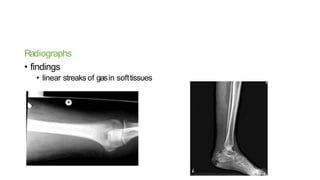
Radiographs
• findings
• linear streaks of gasin softtissues
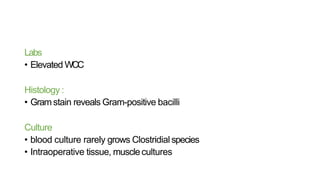
Labs
• Elevated WCC
Histology :
• Gram stain reveals Gram-positive bacilli
Culture
• blood culture rarely grows Clostridial species
• Intraoperative tissue, musclecultures
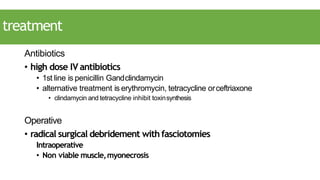
treatment
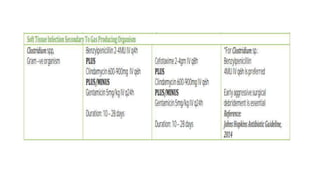
Antibiotics
• high dose IV antibiotics
• 1st line is penicillin Gandclindamycin
• alternative treatment is erythromycin, tetracycline orceftriaxone
• clindamycin and tetracycline inhibit toxinsynthesis
Operative
• radical surgical debridement withfasciotomies
Intraoperative
• Non viable muscle,myonecrosis
references
• https://www.orthobullets.com/trauma/1007/necrotizing-fasciitis
• https://www.ncbi.nlm.nih.gov/pmc/articles/PMC2762295/
• https://radiopaedia.org/cases/gas-gangrene-of-lower-limb
• https://www.orthobullets.com/trauma/1067/gas-gangrene

Necrotising fascitis ppt

  • 1.
  • 2.
    • Definition • Riskfactors •Etiology • Pathogenesis • Microbiology • Clinical presentation • Workup • Management • Prognosis
  • 3.
    Definition • Necrotizing fasciitisis anecrotizing soft tissue infection spreading along fascial planes with or without overlyingcellulitis.
  • 4.
    •Diabetes •Chronic disease •Immunosuppressive drugs(eg, prednisolone) •Malnutrition •Age > 60 years •Intravenous drug misuse •Peripheral vascular disease •Renal failure •Underlying malignancy •Obesity Riskfactors bacterial introduction IVdruguse hypodermic therapeutic injections insect bites skin abrasions abdominal and perineal surgery
  • 5.
  • 6.
    Clinicalpresentation • Patients withNFcanpresentwith • constitutional symptoms of sepsis(eg, fever, tachycardia, alteredmental state) • signs of skin inflammation (ie, pain, skin edema, anderythema) • However, asthese are also present in lessserious conditions such as cellulitis, the degree of pain relative to the skin condition might provide the physician with clues—NFtypically presents with painout of proportion tothe degree of skin inflammation.
  • 7.
    • Necrotizing fasciitistypically presents with patchy discolourationof the skin with pain and swelling, but withoutadefined margin • Progression of NFis marked with the development of tense edema,a grayish-brown discharge, vesicles, bullae, necrosis, and crepitus
  • 8.
  • 9.
    Laboratory risk indicatorfor NF (LRINEC)score score >6 hasPPVof 92%of having necrotizing fasciitis • CRP(mg/L) • ≥150: 4 points • WBCcount(×103/mm3) • <15: 0 points • 15–25: 1 point • >25: 2 points • Hemoglobin (g/dL) • >13.5: 0 points • 11–13.5: 1 point • <11: 2 points • Sodium (mmol/L) <135: 2 points • Creatinine(umol/L) >141: 2 points • Glucose(mmol/L) >10: 1 point
  • 10.
    Cultures • Blood cultures •Intraoperative tissue cultures
  • 11.
    Imaging • Thecommon plainradiographic findings non-specific with increased soft- tissue thickness and opacity. Radiographs can be normal until theadvanced stagesof infection and necrosis. Thecharacteristic finding of gasin the soft tissues is seenin only aminority ofcases • imaging plays avery limited role in diagnosis and management ofnecrotising fasciitis.
  • 12.
  • 13.
    Antibiotics • initial antibiotics •start empirically with penicillin, clindamycin, metronidazole, and an aminoglycoside • definitive antibiotics • penicillin G • for strep orclostridium • imipenem or doripenem ormeropenem • for polymicrobial • add vancomycin or daptomycin • if MRSAsuspected
  • 15.
    Operative • emergency radicaldebridement with broad-spectrum IV antibiotics operative findings • liquefied subcutaneousfat • dishwater pus • muscle necrosis • venousthrombosis • noncontracting muscle, • and apositive “probe test” result, which is characterized by lack of resistance to finger dissection in normally adherenttissues
  • 16.
  • 17.
    Definition • necrotizing softtissue infection of skeletal muscle causedbytoxin- and gas-producing Clostridium species. • Thesynonym clostridial myonecrosis better describes both the causative agent and the targettissue.
  • 18.
    Riskfactors • risk factors •posttraumatic (associated with Cperfringens) • car accidents (most common) • crush injuries • gunshot wounds with foreignbodies • burns and frostbite • IV drug abuse • postoperative • bowel resection or perforation • biliary surgery • premature wound closure • spontaneous • colon cancer (associated with C.septicum)
  • 19.
    Etiology Clostridial species • Clostridiumperfringens (mostcommon), • Clostridium novyi • Clostridium septicum found in soil and gutflora • gram-positive obligate anaerobic spore-forming rods that produce exotoxins(e.g. C.perfringens alpha toxin) • gasproduced by fermentation of glucose • other bacteria include E.coli, Pseudomonasaeruginosa, Proteus species, Klebsiella pneumoniae
  • 20.
    Clinicalpresentation • History • recentsurgery to GIor biliarytract • Symptoms • triad • sudden progressive pain out of proportion to injury • from thrombotic occlusion oflarge vessels • tachycardia not explained byfever • feeling of impendingdoom • Physicalexam • sweet smelling odor • swelling, edema, discoloration and ecchymosis • blebs and hemorrhagic bullae • "dishwater pus"discharge • crepitus
  • 21.
  • 22.
    Radiographs • findings • linearstreaks of gasin softtissues
  • 23.
    Labs • Elevated WCC Histology: • Gram stain reveals Gram-positive bacilli Culture • blood culture rarely grows Clostridial species • Intraoperative tissue, musclecultures
  • 24.
    treatment Antibiotics • high doseIV antibiotics • 1st line is penicillin Gandclindamycin • alternative treatment is erythromycin, tetracycline orceftriaxone • clindamycin and tetracycline inhibit toxinsynthesis Operative • radical surgical debridement withfasciotomies Intraoperative • Non viable muscle,myonecrosis
  • 26.
    references • https://www.orthobullets.com/trauma/1007/necrotizing-fasciitis • https://www.ncbi.nlm.nih.gov/pmc/articles/PMC2762295/ •https://radiopaedia.org/cases/gas-gangrene-of-lower-limb • https://www.orthobullets.com/trauma/1067/gas-gangrene