FUNCTIONS, ROLES, AND
SKILLS OF MANAGERS
Presented by:
GLENDA NACPIL – NAGUIT, Ph.D.
WHY STUDY MANAGEMENT?
The better you can work with people, the
more successful you will be in both your
personal and your professional lives.
Employers want to hire employees who
can participate in managing the firm.
Even non managers are being trained to
perform management functions.
WHAT IS A MANAGER?
A manager achieves objectives
through efficient and effective use of
resources.
Efficient-doing things right
Effective-doing the right
thing
FUNCTIONS, ROLES, AND SKILLS
Functions
Planning
Organizing
Staffing
Directing
Controlling
Roles
• Interpersonal
• Informational
• Decisional
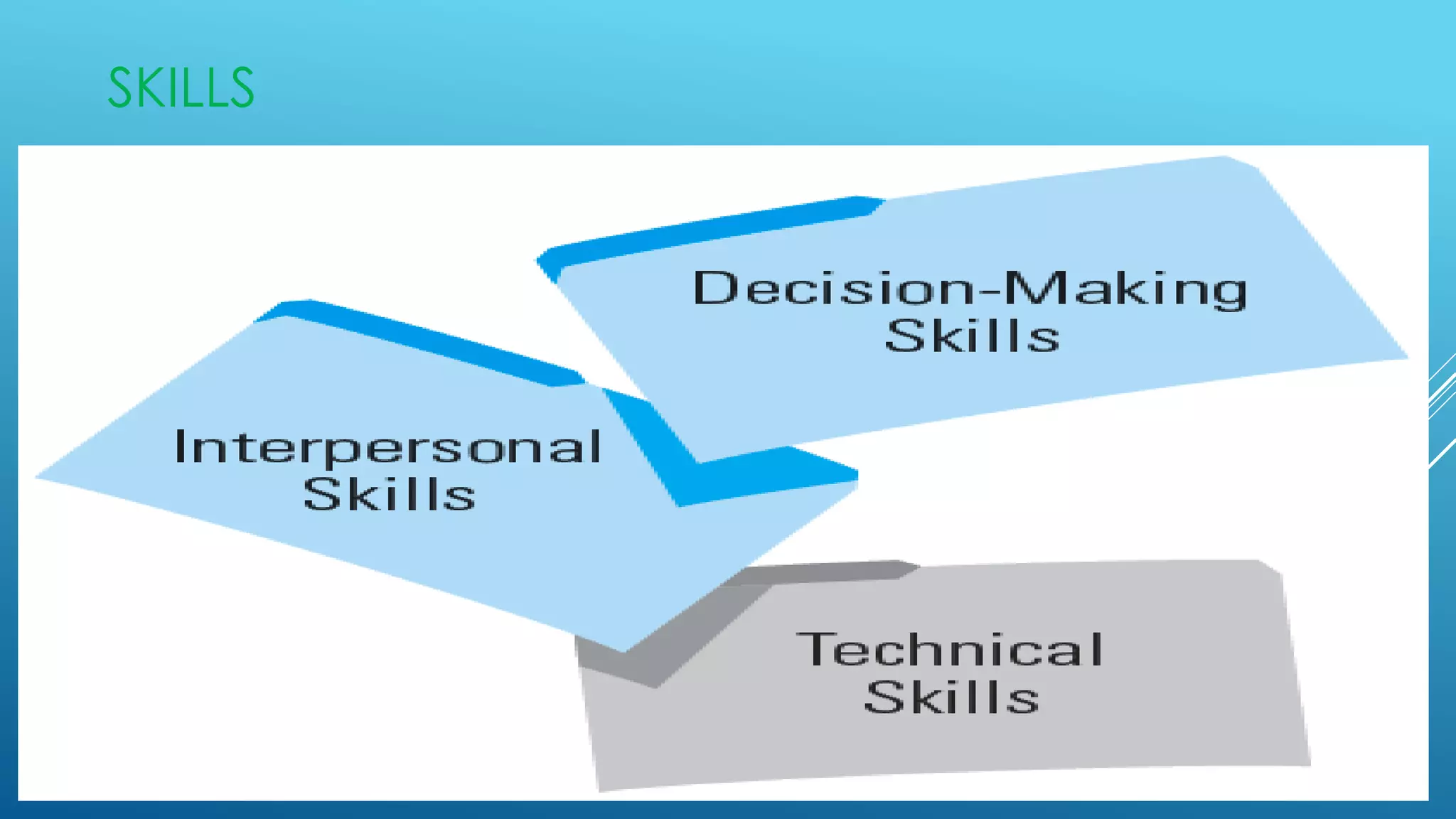
Skills
• Interpersonal
• Technical
• Decision-
making
FUNCTIONS
Planning
Setting objectives
Determining how
they’ll be met
FUNCTIONS
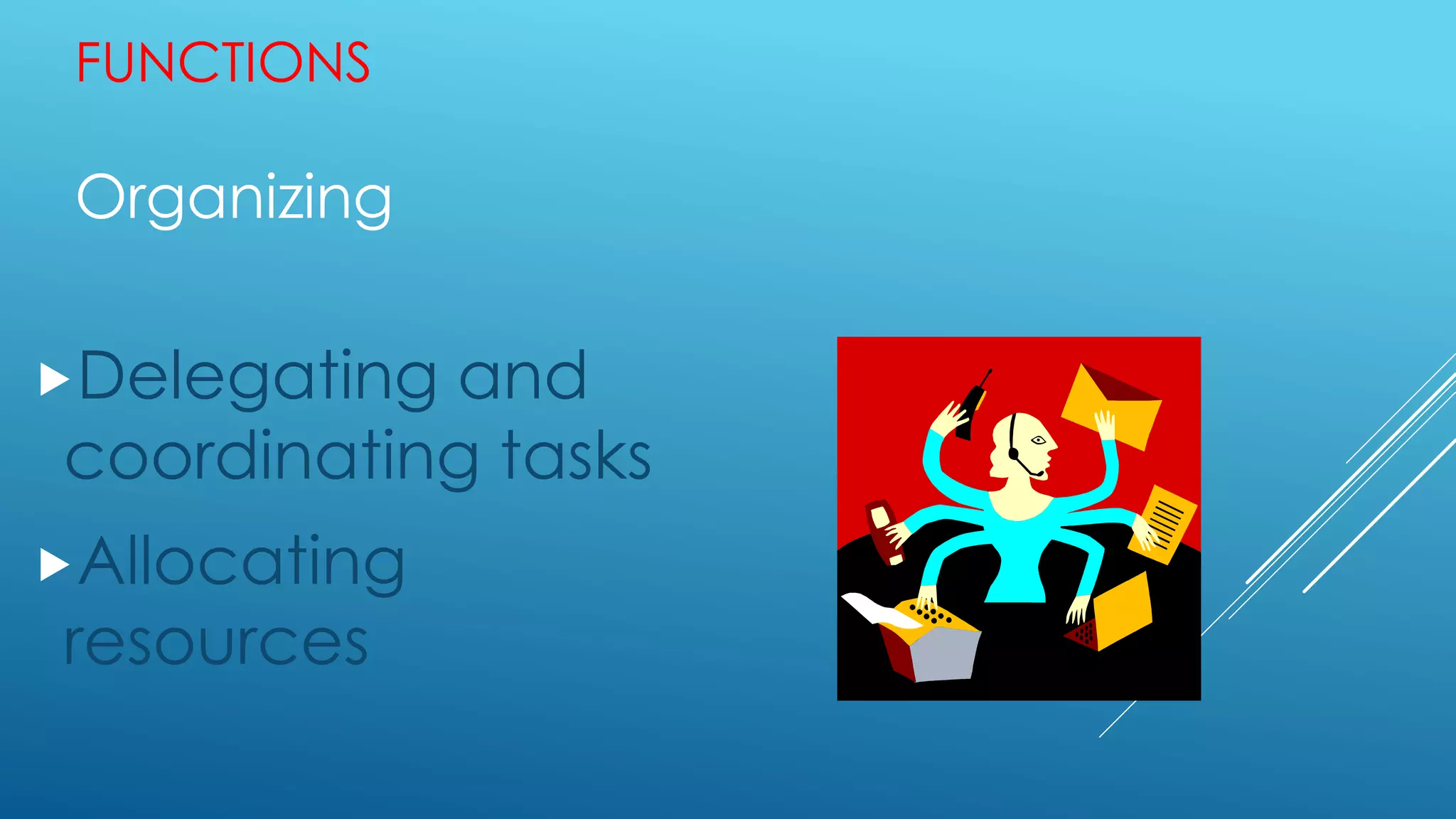
Organizing
Delegating and
coordinating tasks
Allocating
resources
FUNCTIONS
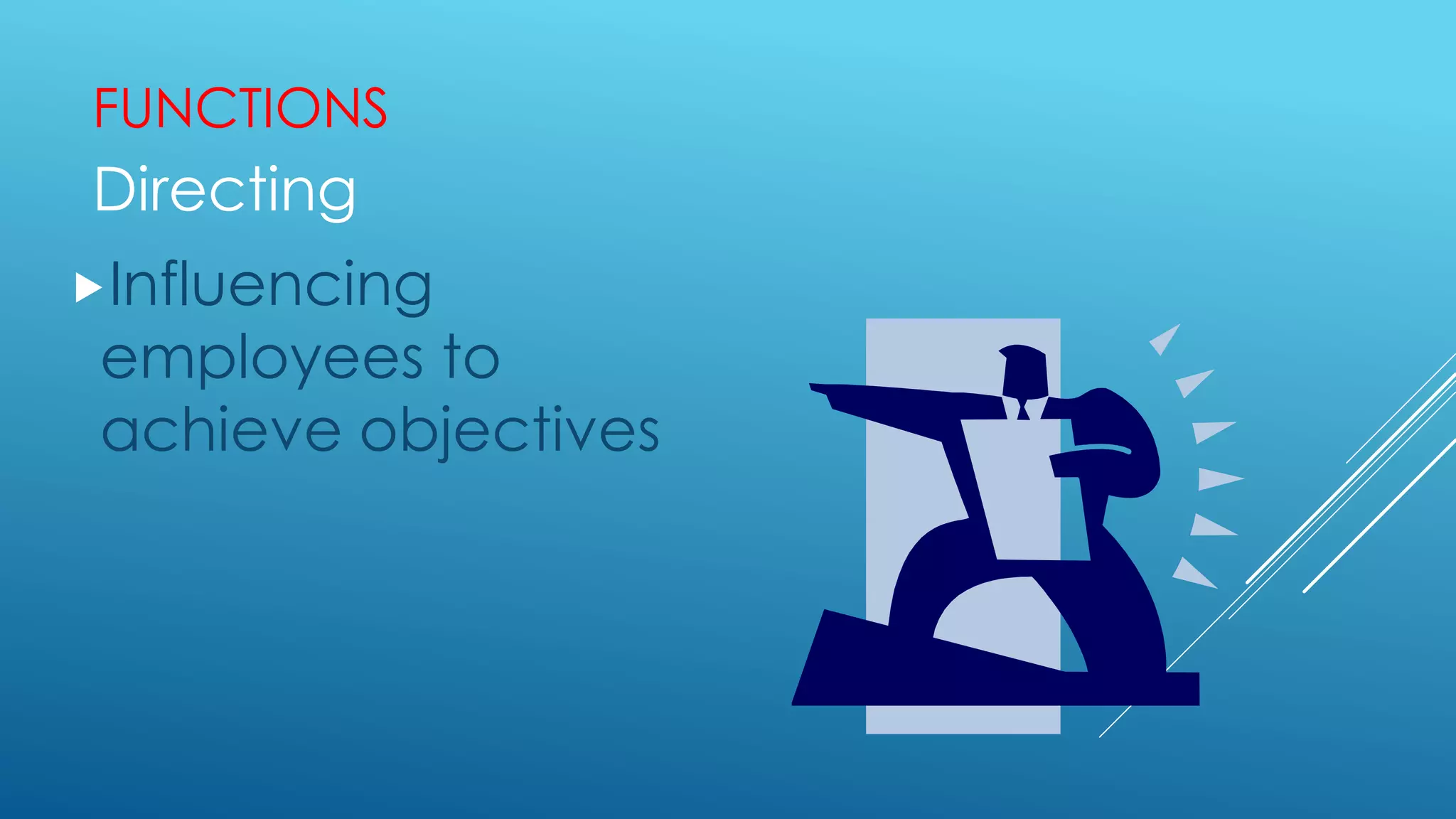
Directing
Influencing
employees to
achieve objectives
FUNCTIONS
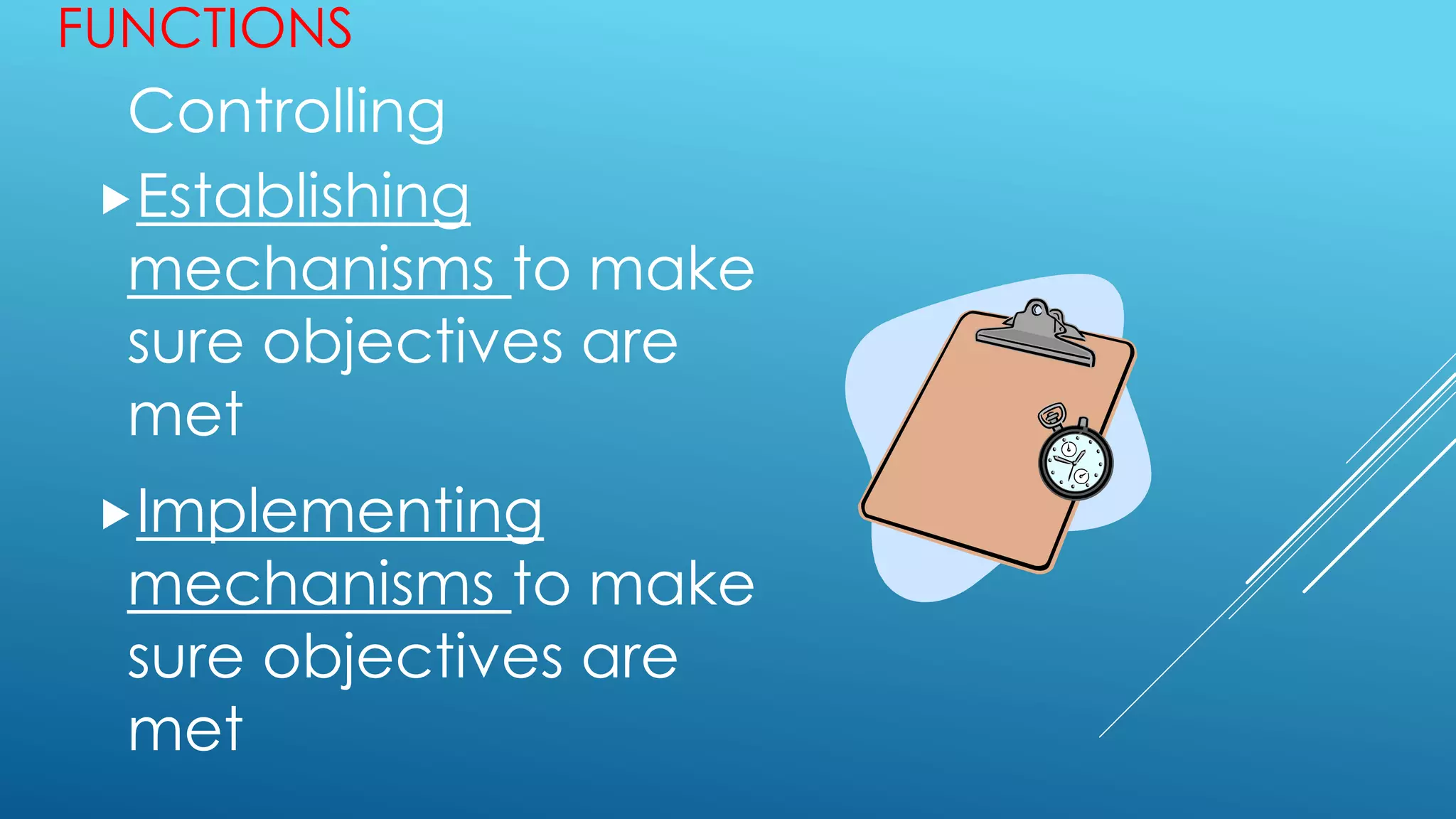
Controlling
Establishing
mechanisms to make
sure objectives are
met
Implementing
mechanisms to make
sure objectives are
met
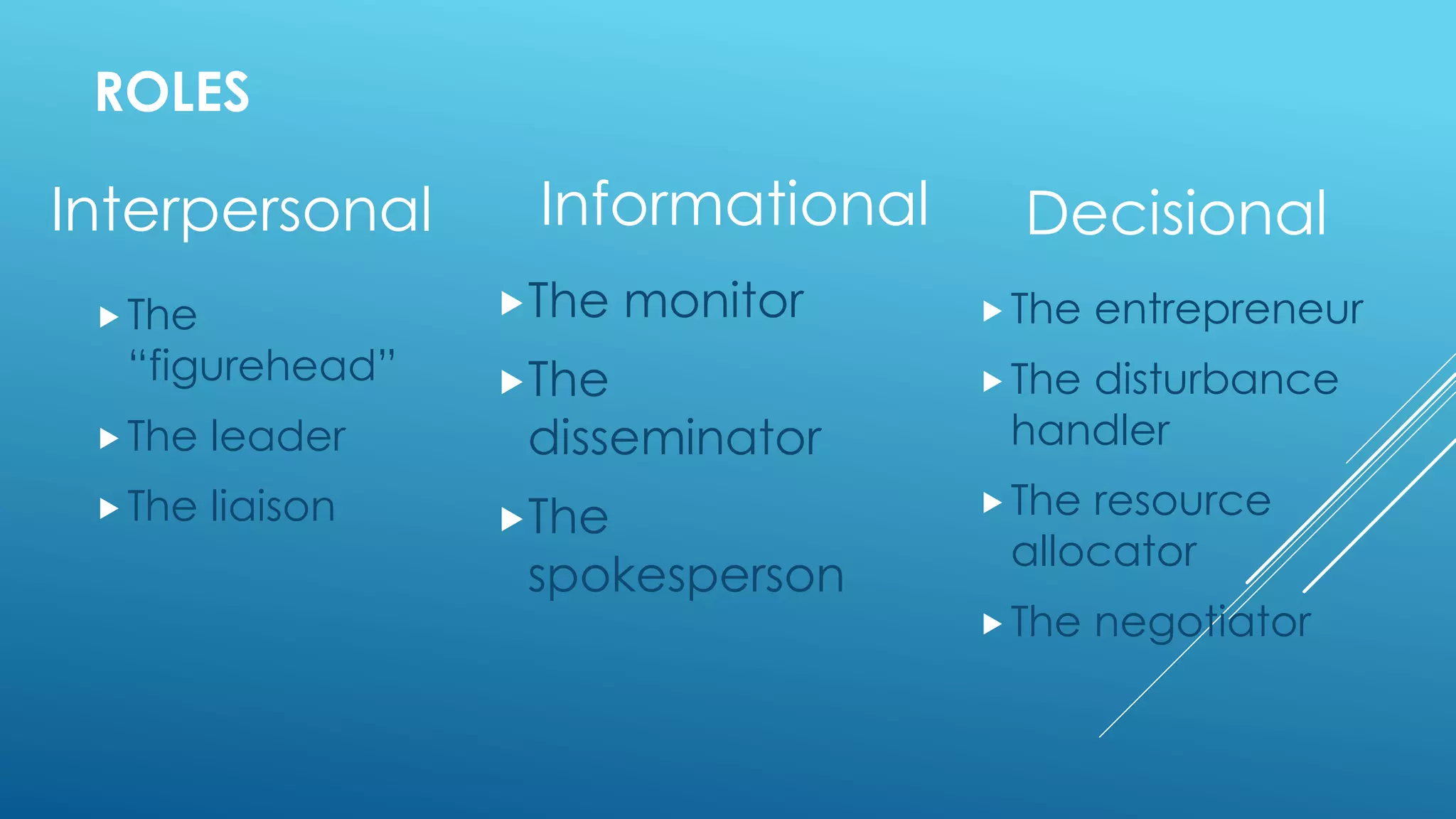
ROLES
Interpersonal
The
“figurehead”
The leader
The liaison
Informational
The monitor
The
disseminator
The
spokesperson
Decisional
The entrepreneur
The disturbance
handler
The resource
allocator
The negotiator
SKILLS
SKILLS
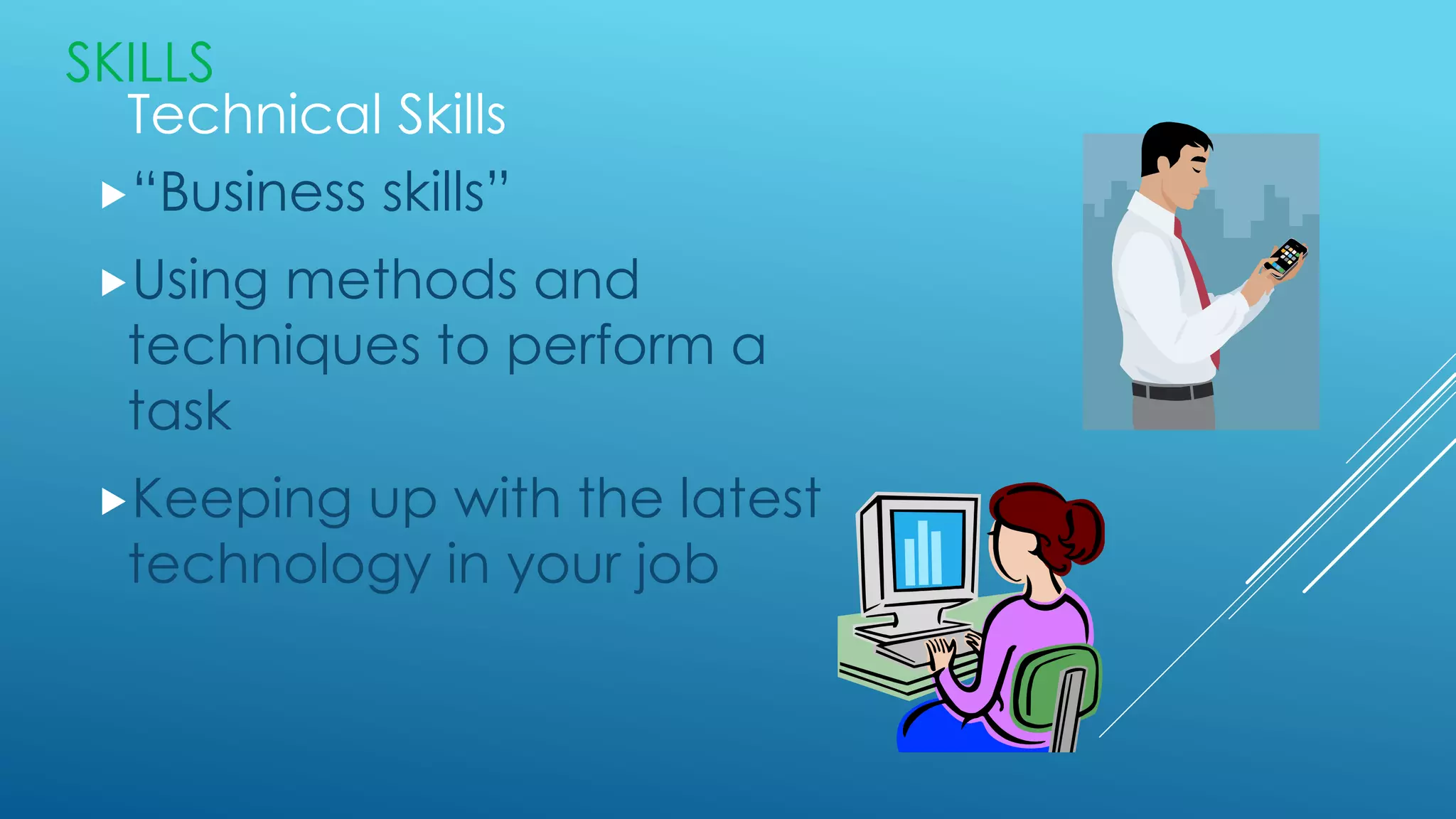
Technical Skills
“Business skills”
Using methods and
techniques to perform a
task
Keeping up with the latest
technology in your job
SKILLS
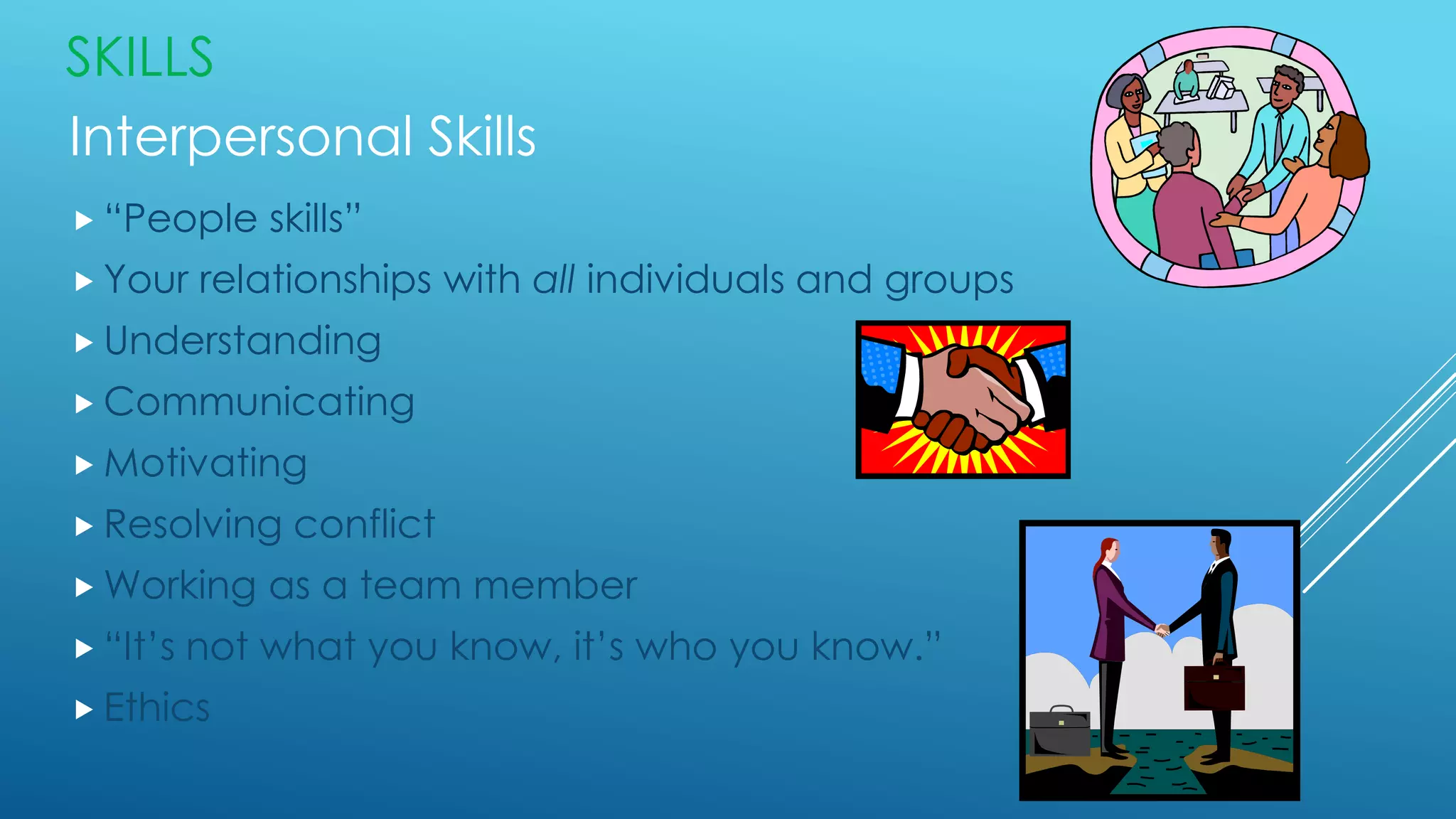
Interpersonal Skills
 “People skills”
 Your relationships with all individuals and groups
 Understanding
 Communicating
 Motivating
 Resolving conflict
 Working as a team member
 “It’s not what you know, it’s who you know.”
 Ethics
SKILLS
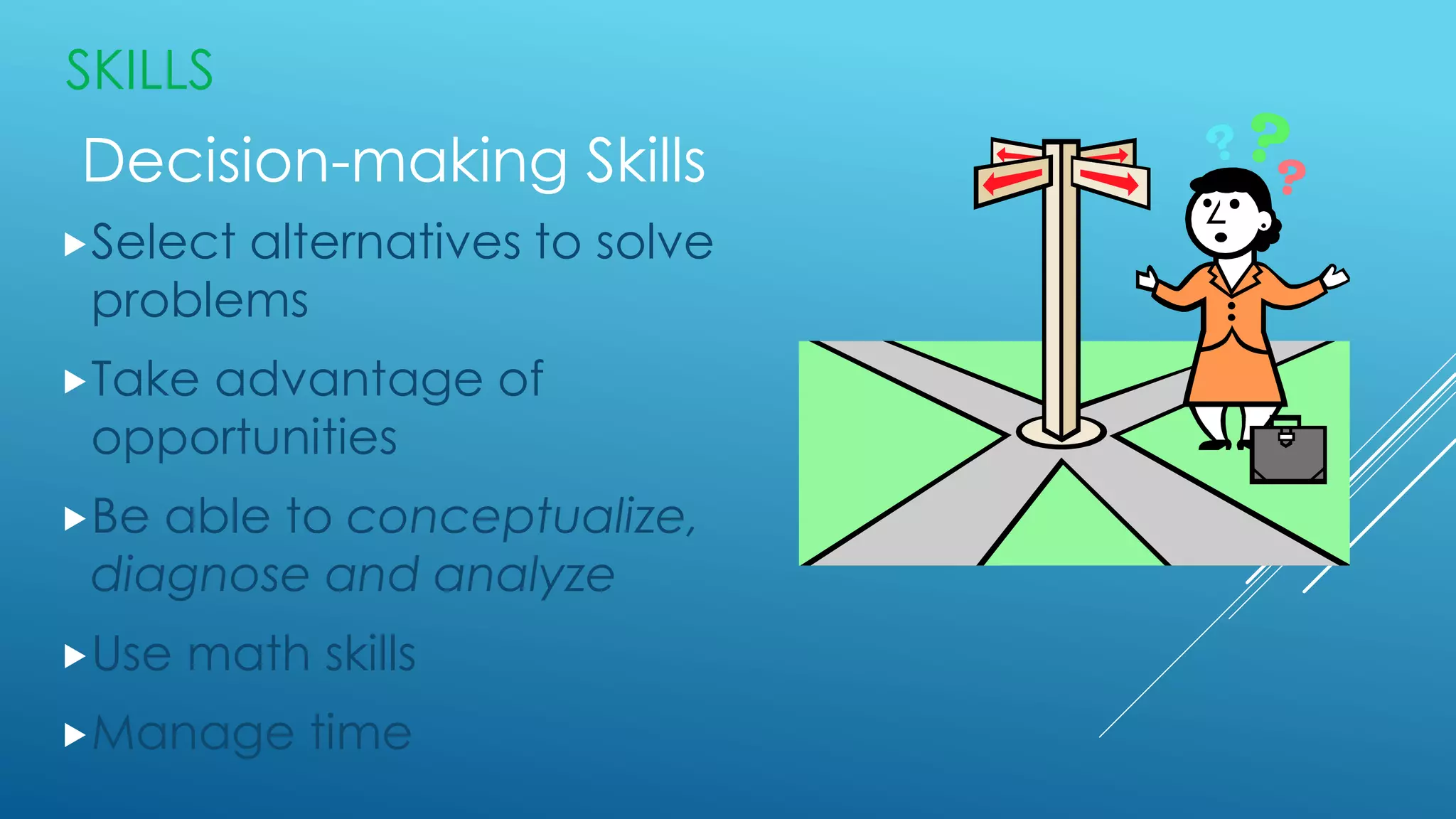
Decision-making Skills
Select alternatives to solve
problems
Take advantage of
opportunities
Be able to conceptualize,
diagnose and analyze
Use math skills
Manage time
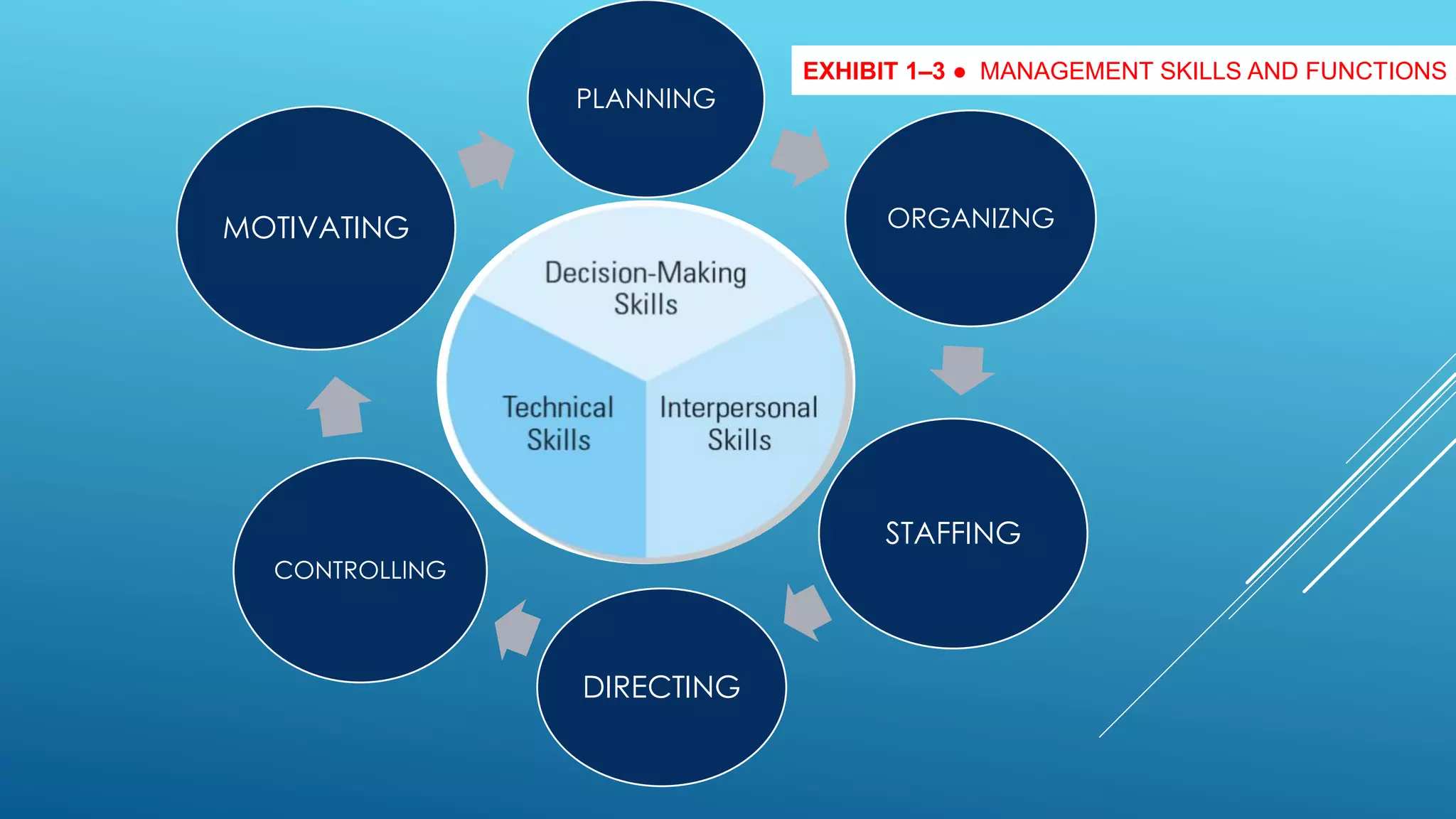
EXHIBIT 1–3 ● MANAGEMENT SKILLS AND FUNCTIONS
PLANNING
ORGANIZNG
STAFFING
DIRECTING
CONTROLLING
MOTIVATING
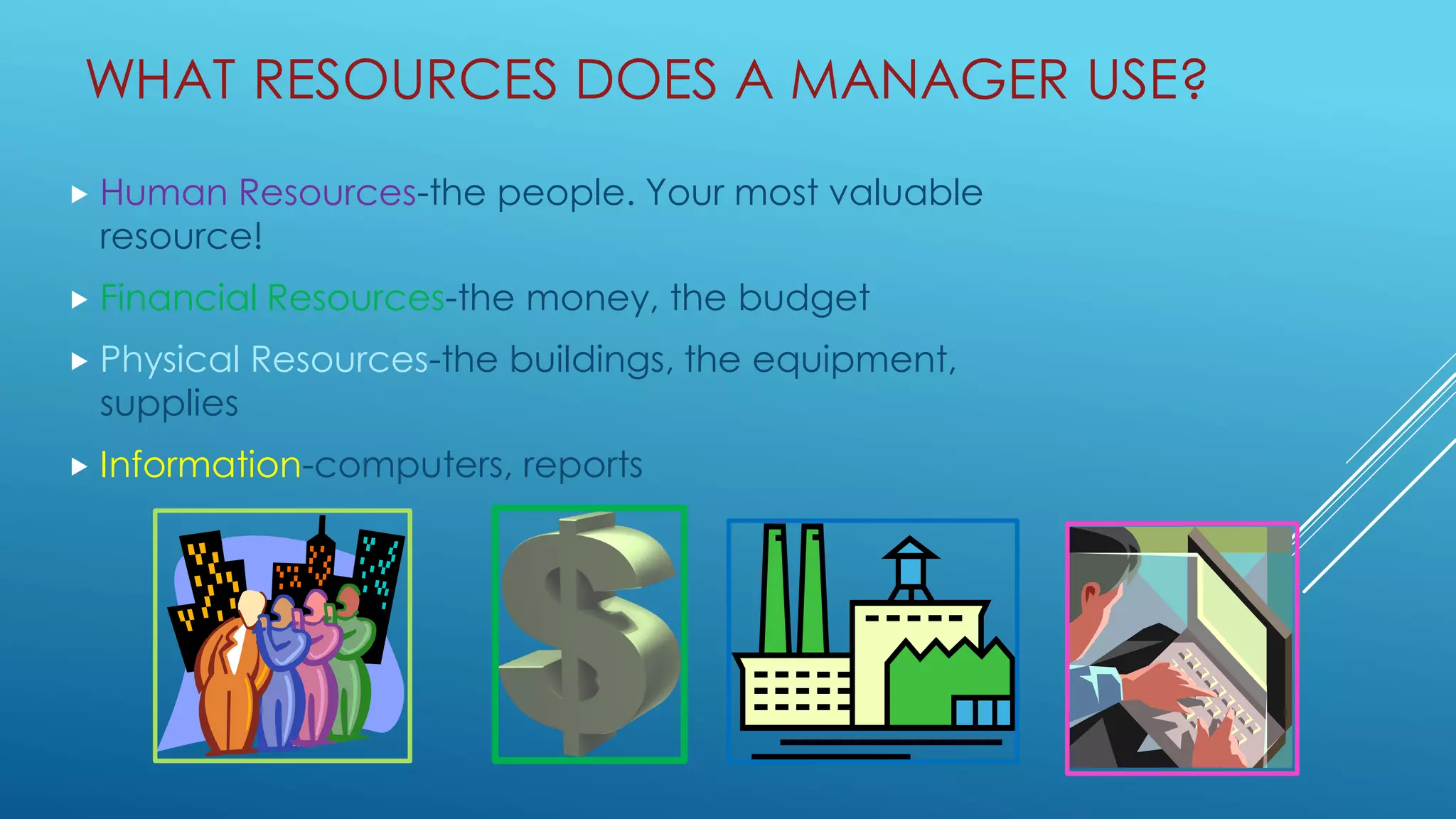
WHAT RESOURCES DOES A MANAGER USE?
 Human Resources-the people. Your most valuable
resource!
 Financial Resources-the money, the budget
 Physical Resources-the buildings, the equipment,
supplies
 Information-computers, reports
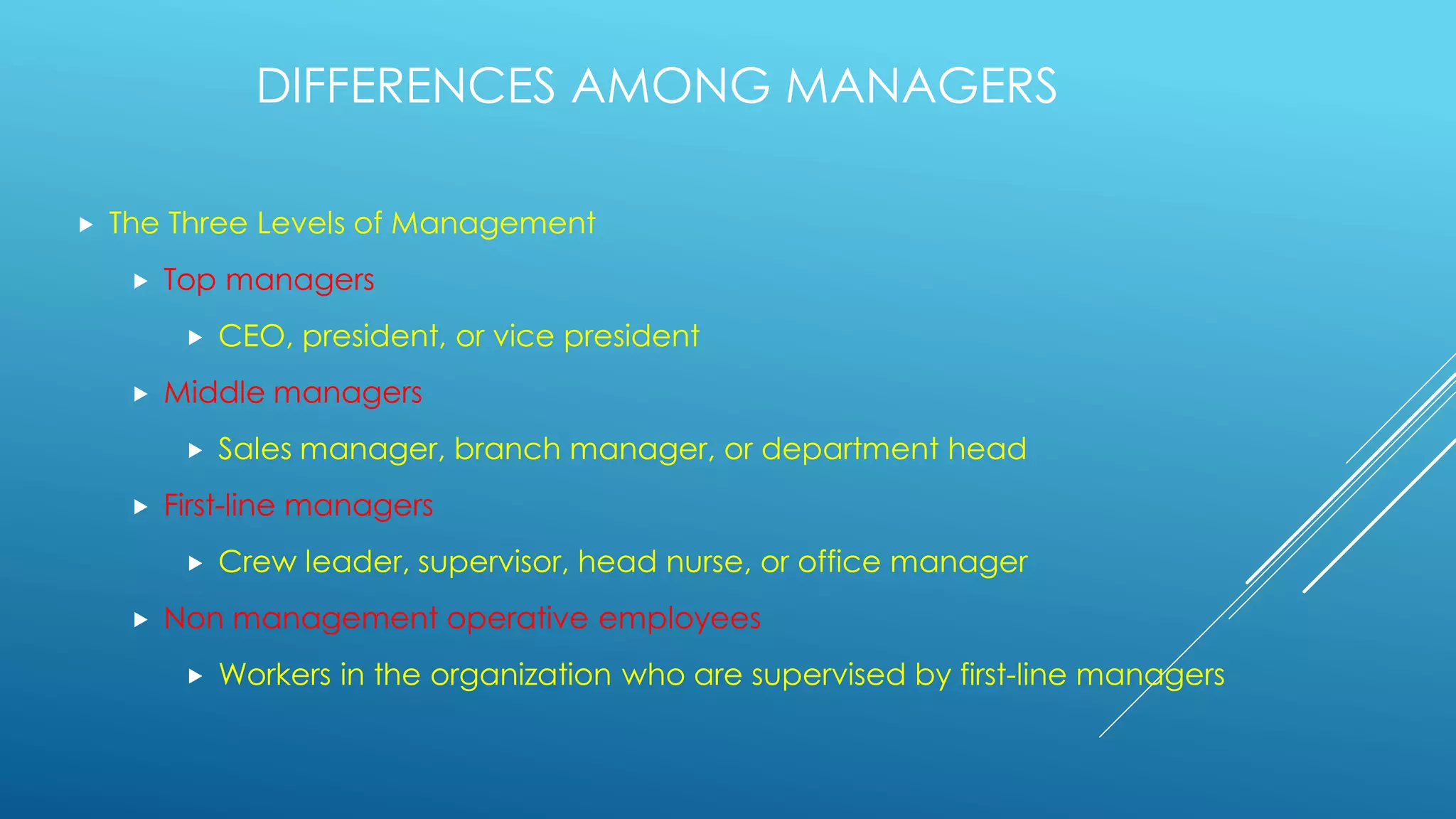
DIFFERENCES AMONG MANAGERS
 The Three Levels of Management
 Top managers
 CEO, president, or vice president
 Middle managers
 Sales manager, branch manager, or department head
 First-line managers
 Crew leader, supervisor, head nurse, or office manager
 Non management operative employees
 Workers in the organization who are supervised by first-line managers
LEVELS OF MANAGEMENT
Top Management
Executives-CEO, CFO, COO, Presidents, Vice
Presidents
Manage the entire organization or major
parts
Develop the purpose, the goals, strategies,
long-term plans
Report to board of directors or other
executives
Supervise middle managers
LEVELS OF MANAGEMENT
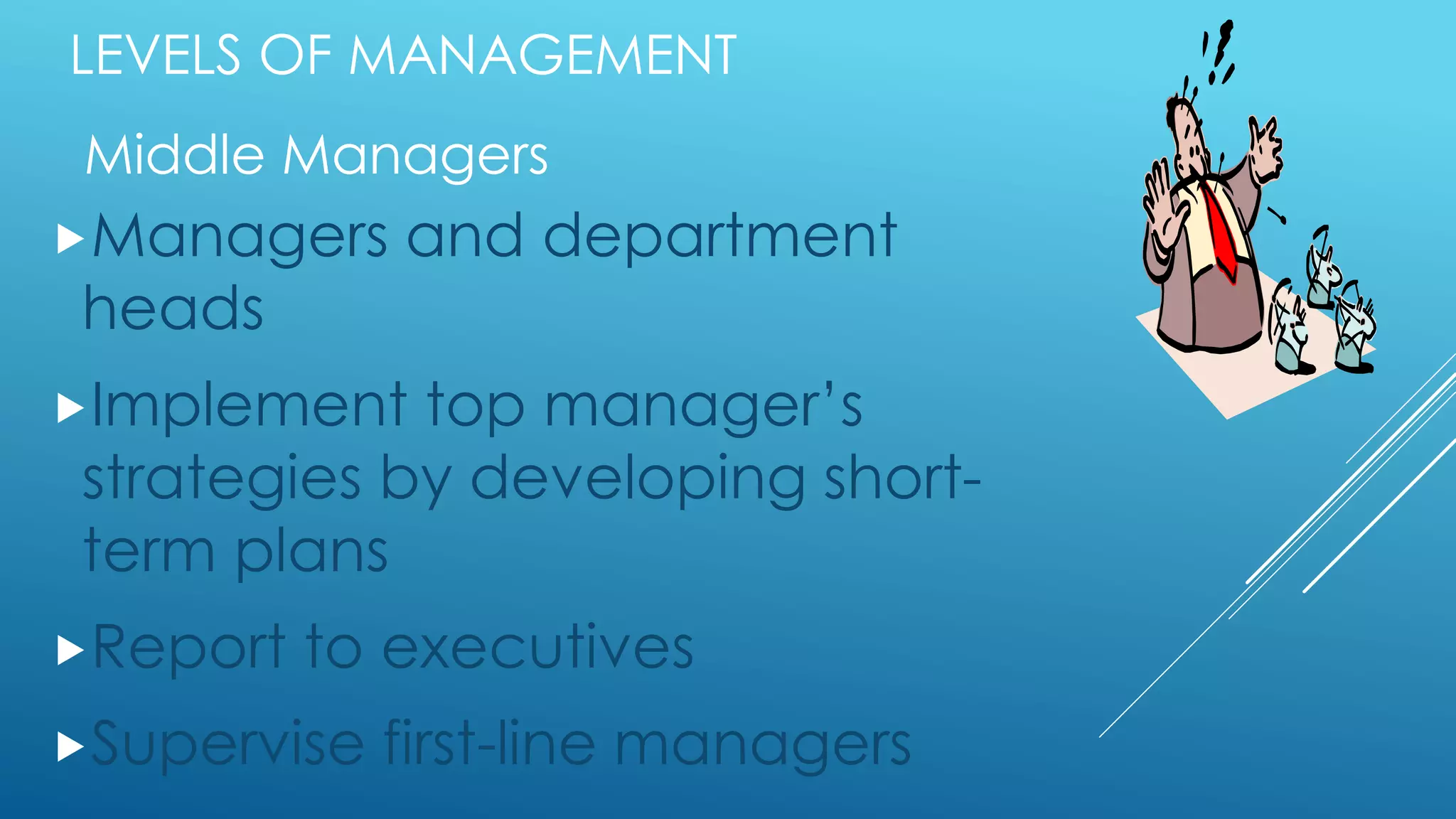
Middle Managers
Managers and department
heads
Implement top manager’s
strategies by developing short-
term plans
Report to executives
Supervise first-line managers
LEVELS OF MANAGEMENT
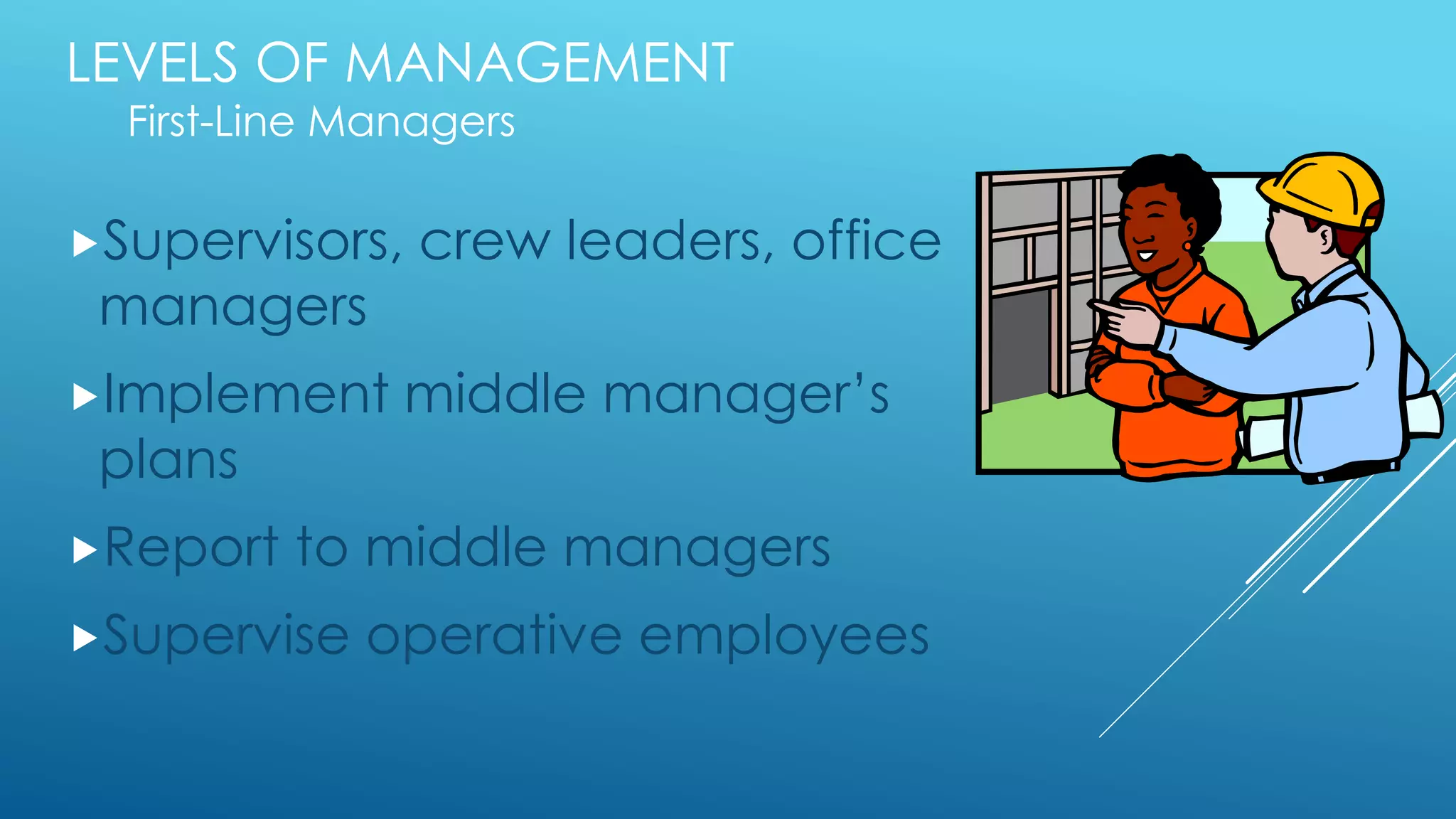
First-Line Managers
Supervisors, crew leaders, office
managers
Implement middle manager’s
plans
Report to middle managers
Supervise operative employees
KEY TERMS manager
 manager’s resources
 performance
 management skills
 technical skills
 interpersonal skills
 decision-making skills
 management functions
 planning
 organizing
 directing
 Controlling
 Staffing
management role
categories
Interpersonal role
Informational role
Decisional role
Organization
effective
efficient

Functions, roles, and skills of managers