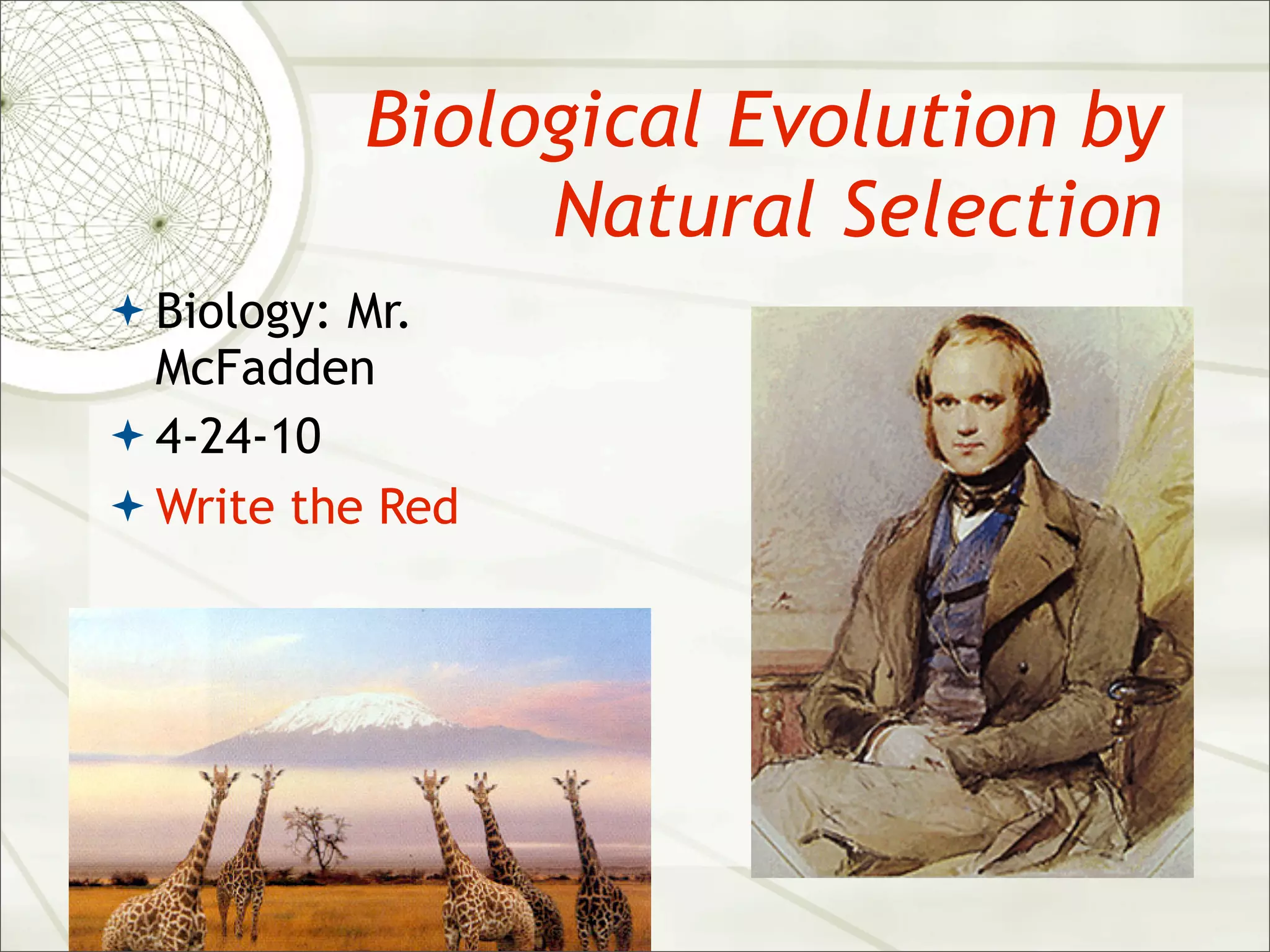
Biological Evolution by
                Natural Selection
 Biology: Mr.
  McFadden
 4-24-10
 Write the Red
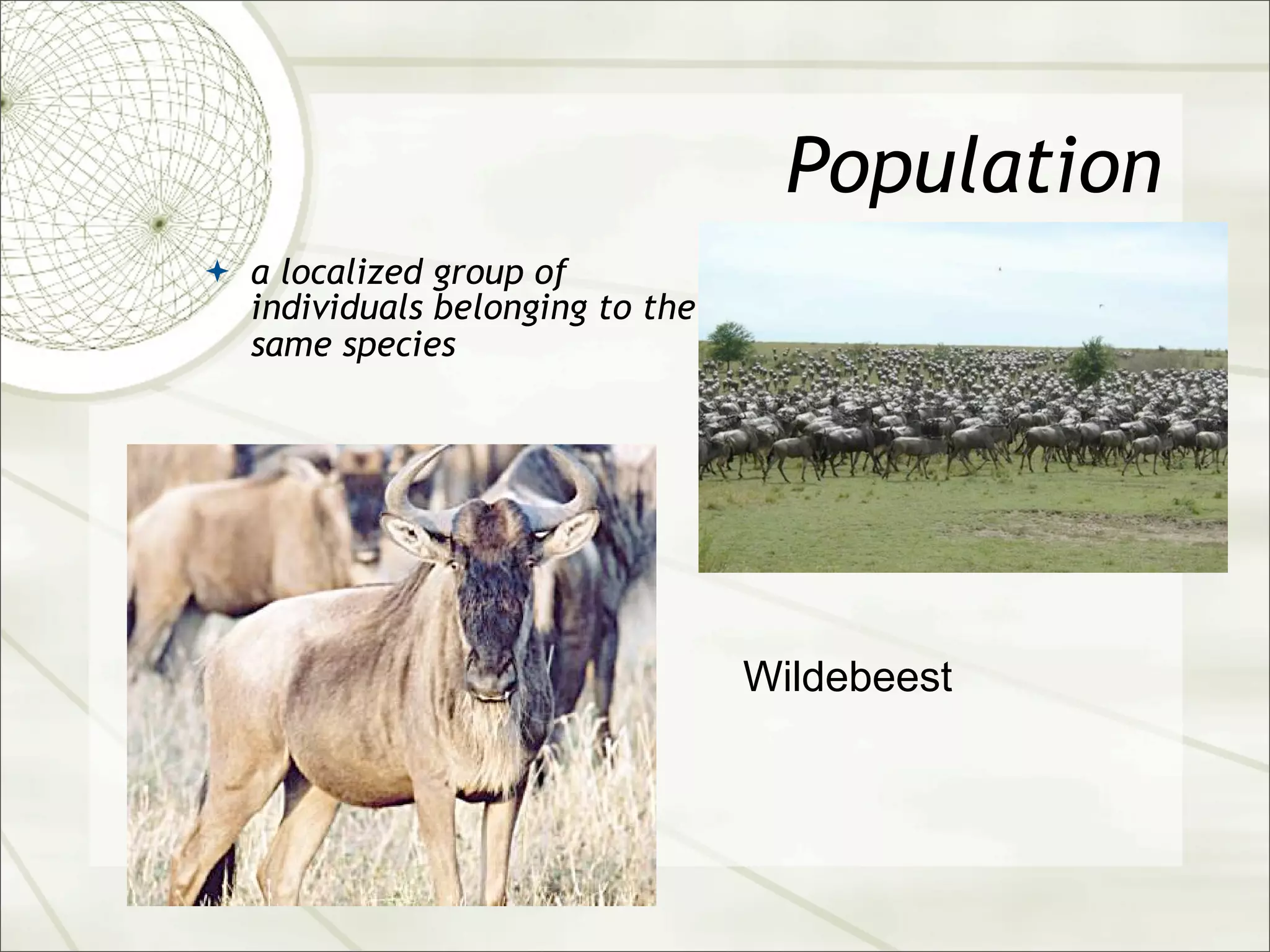
Population
 a localized group of
  individuals belonging to the
  same species


                                 Wildebeest
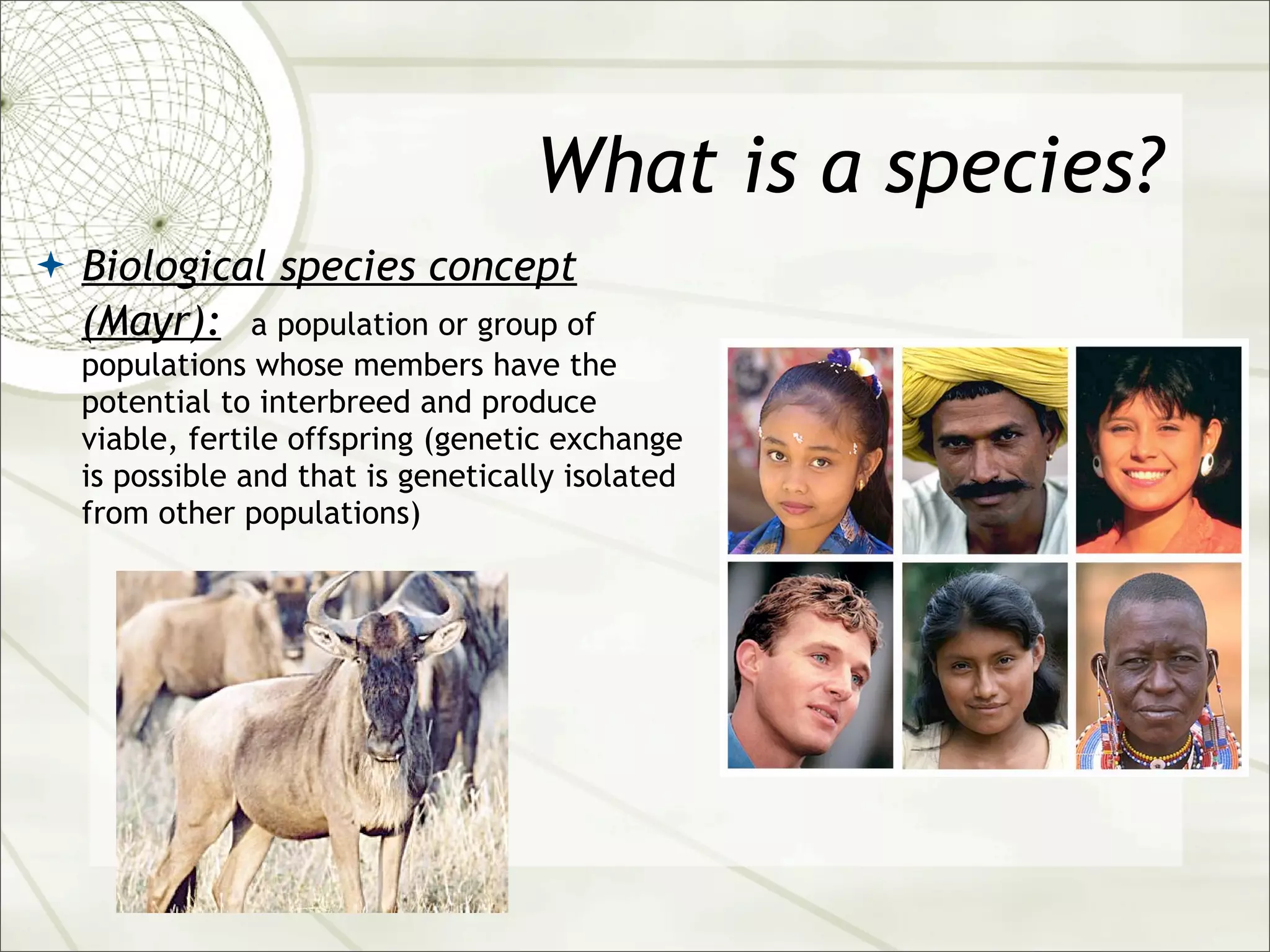
What is a species?
 Biological species concept
  (Mayr):      a population or group of
  populations whose members have the
  potential to interbreed and produce
  viable, fertile offspring (genetic exchange
  is possible and that is genetically isolated
  from other populations)
Biological Evolution
What is needed:
1. Genetic Variation: Differences that occur
   in a population between individuals.
    3 Sources of Variation:
        Mutations are changes in
         the DNA. A single mutation can
         have a large effect, but in many
         cases, evolutionary change is
         based on the accumulation of
         many mutations.
        Gene flow is any movement of
        genes from one population to
        another.
        Sex can introduce new gene
        combinations into a population
        during meiosis & fertilization.
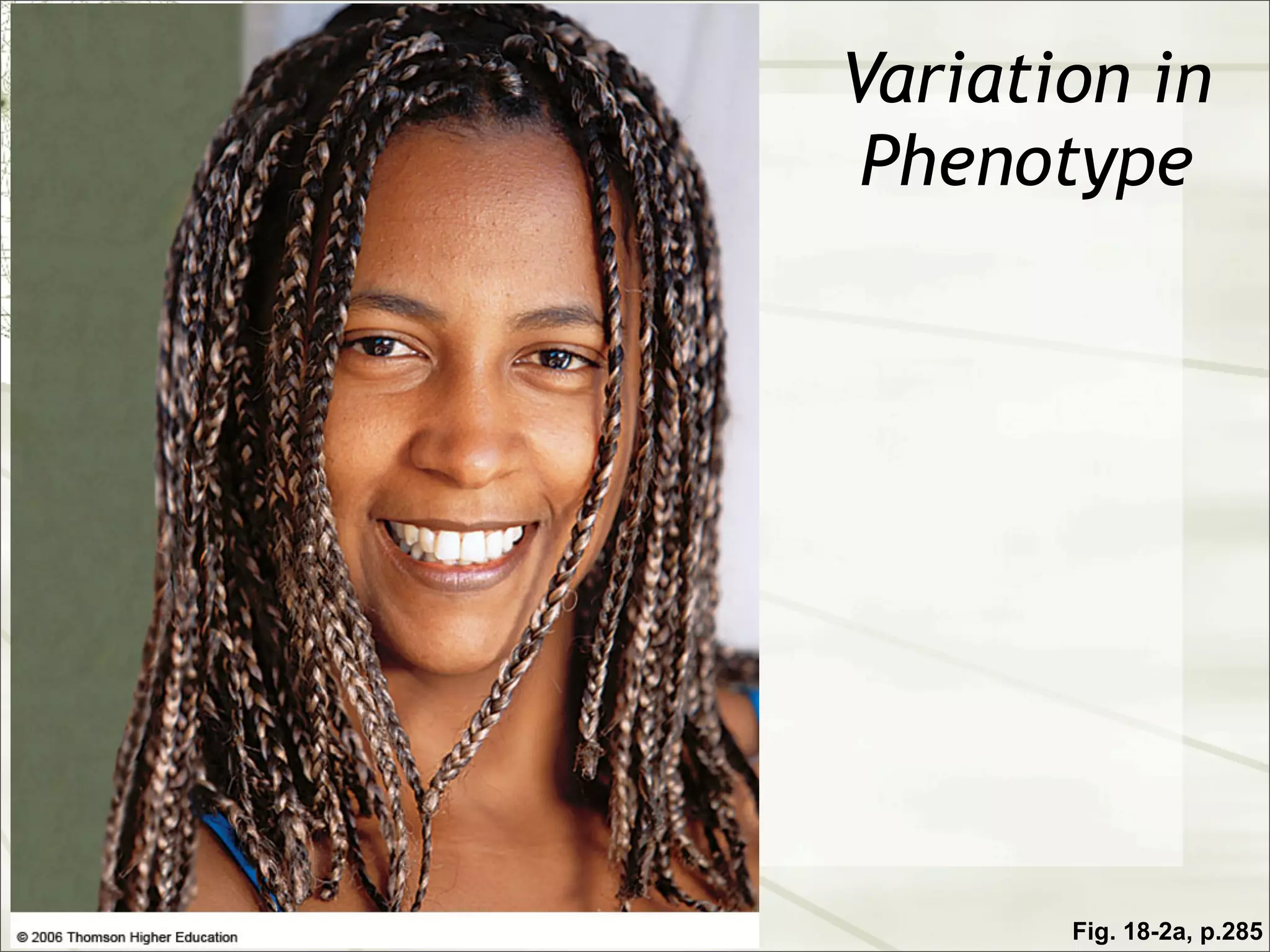
Variation in
 Phenotype


       Fig. 18-2a, p.285
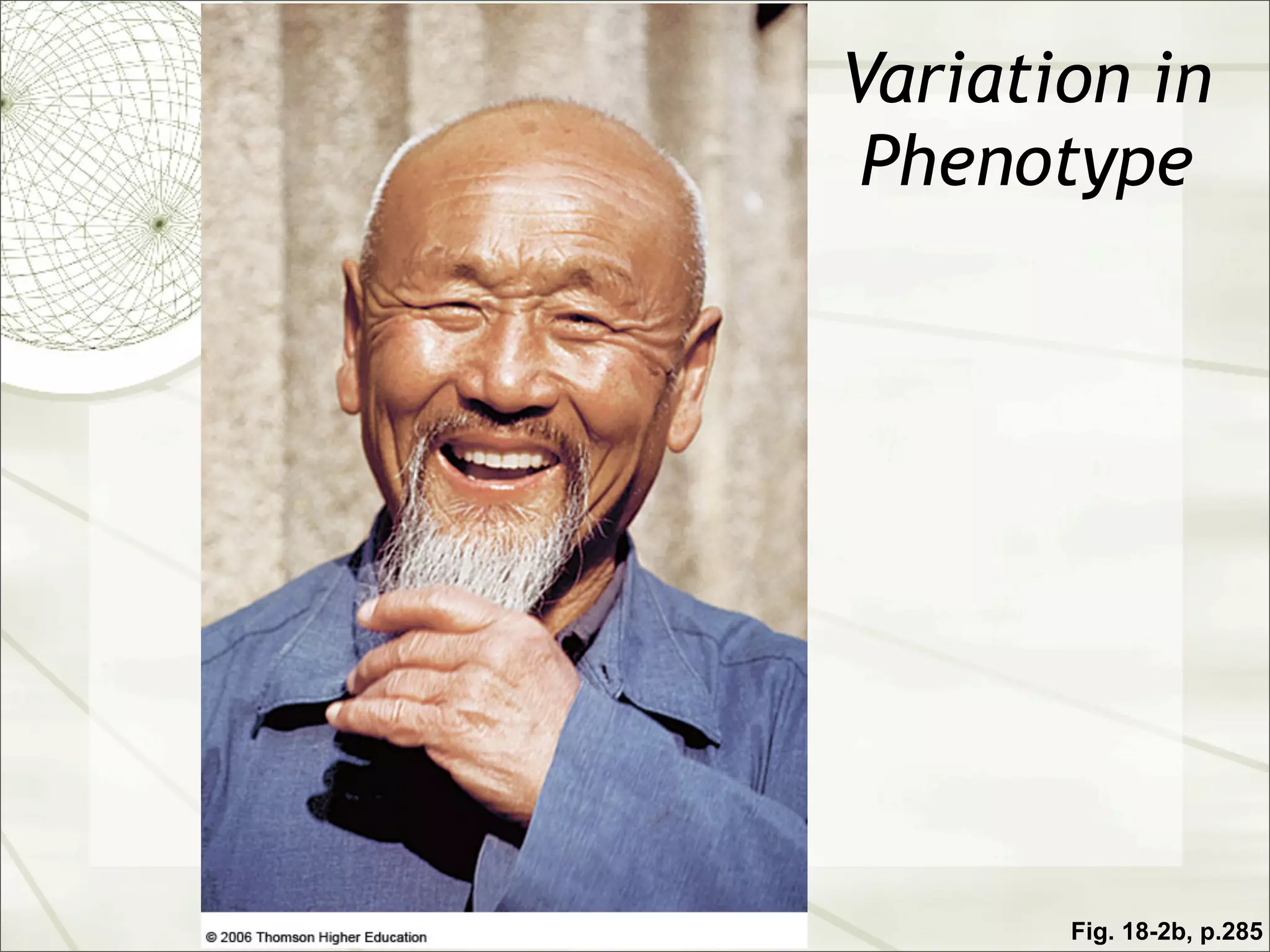
Variation in
 Phenotype


       Fig. 18-2b, p.285
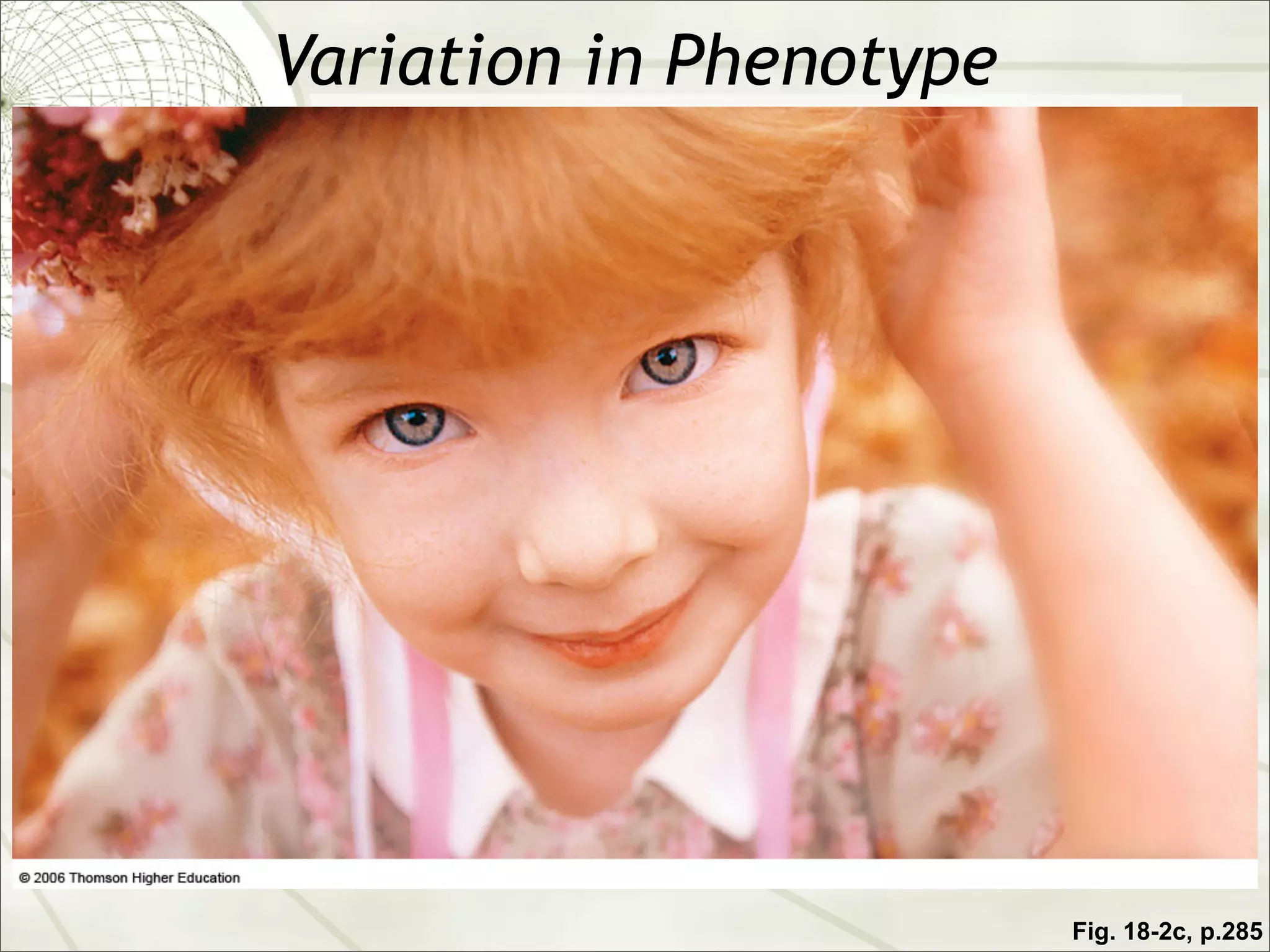
Variation in Phenotype


                         Fig. 18-2c, p.285
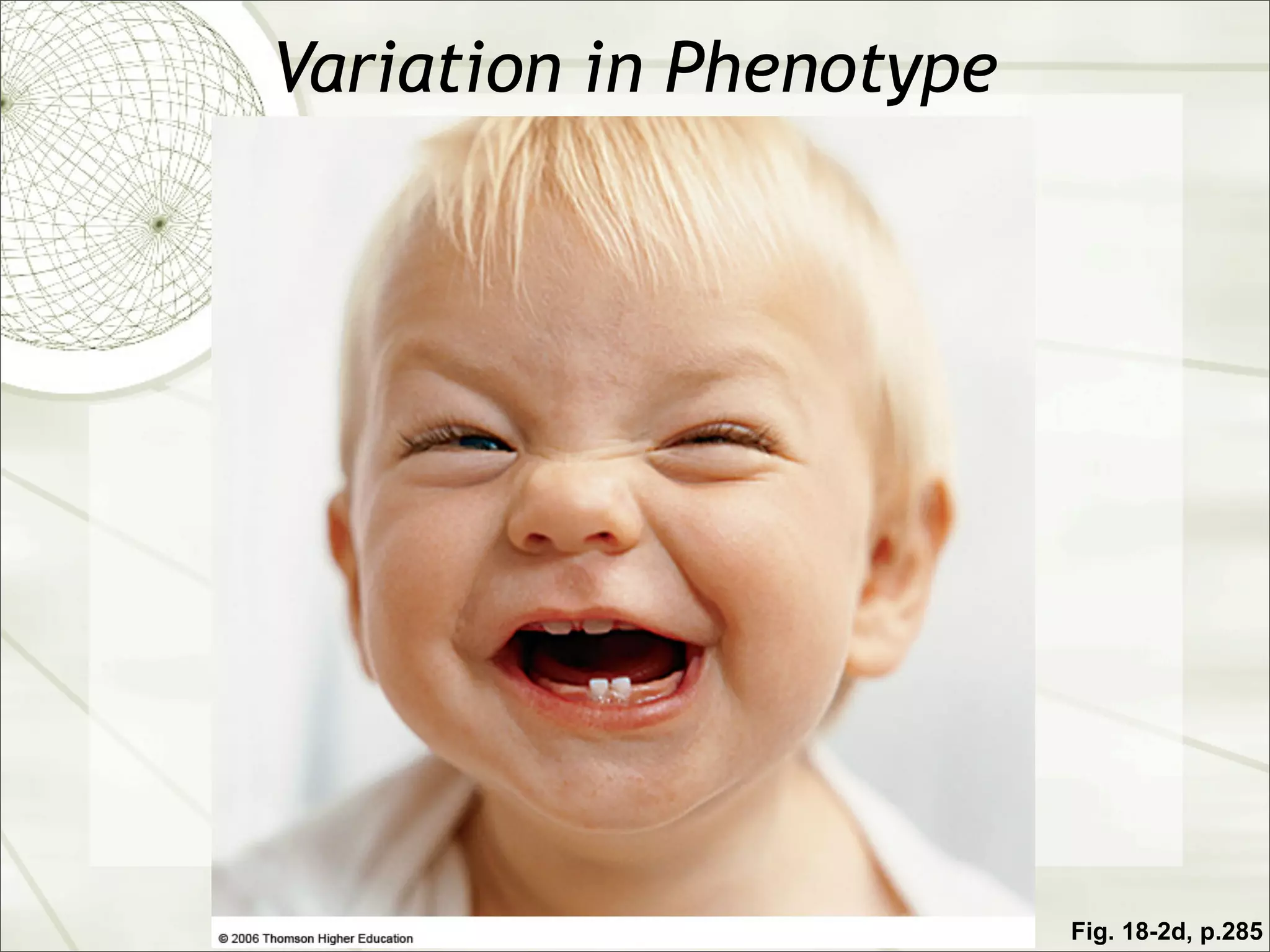
Variation in Phenotype


                         Fig. 18-2d, p.285
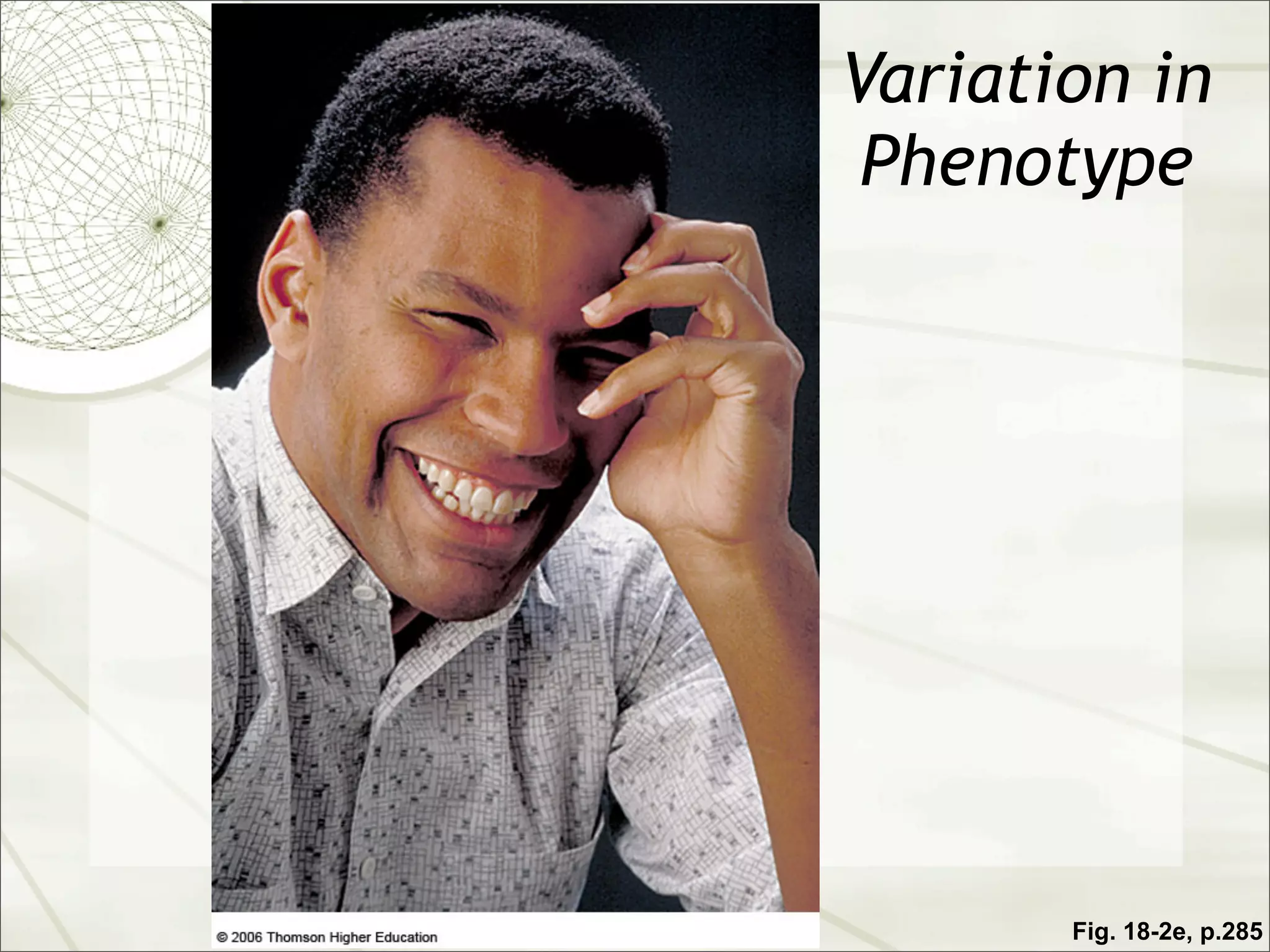
Variation in
 Phenotype


       Fig. 18-2e, p.285
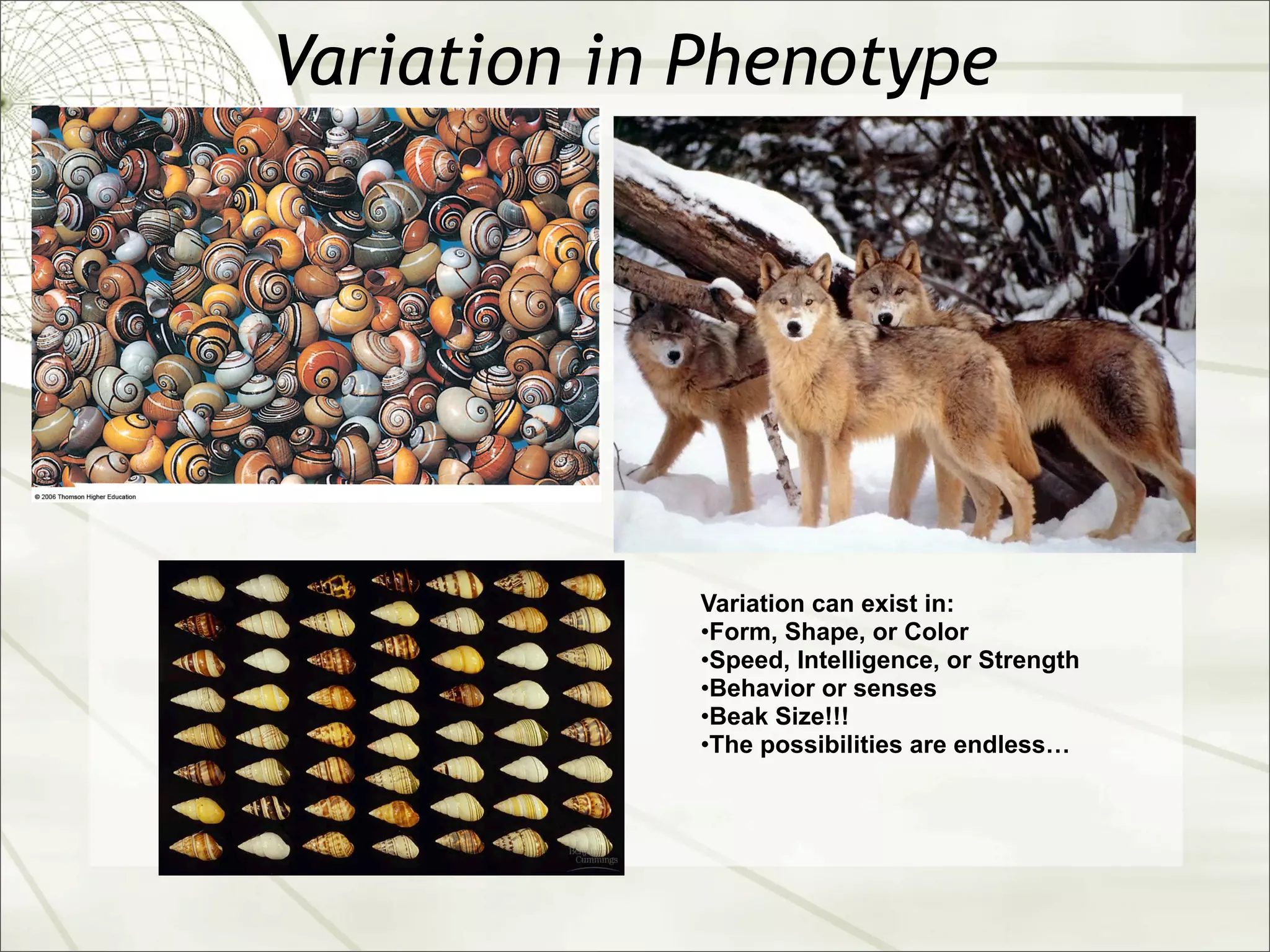
Variation in Phenotype


            Variation can exist in:
            •Form, Shape, or Color
            •Speed, Intelligence, or Strength
            •Behavior or senses
            •Beak Size!!!
            •The possibilities are endless…
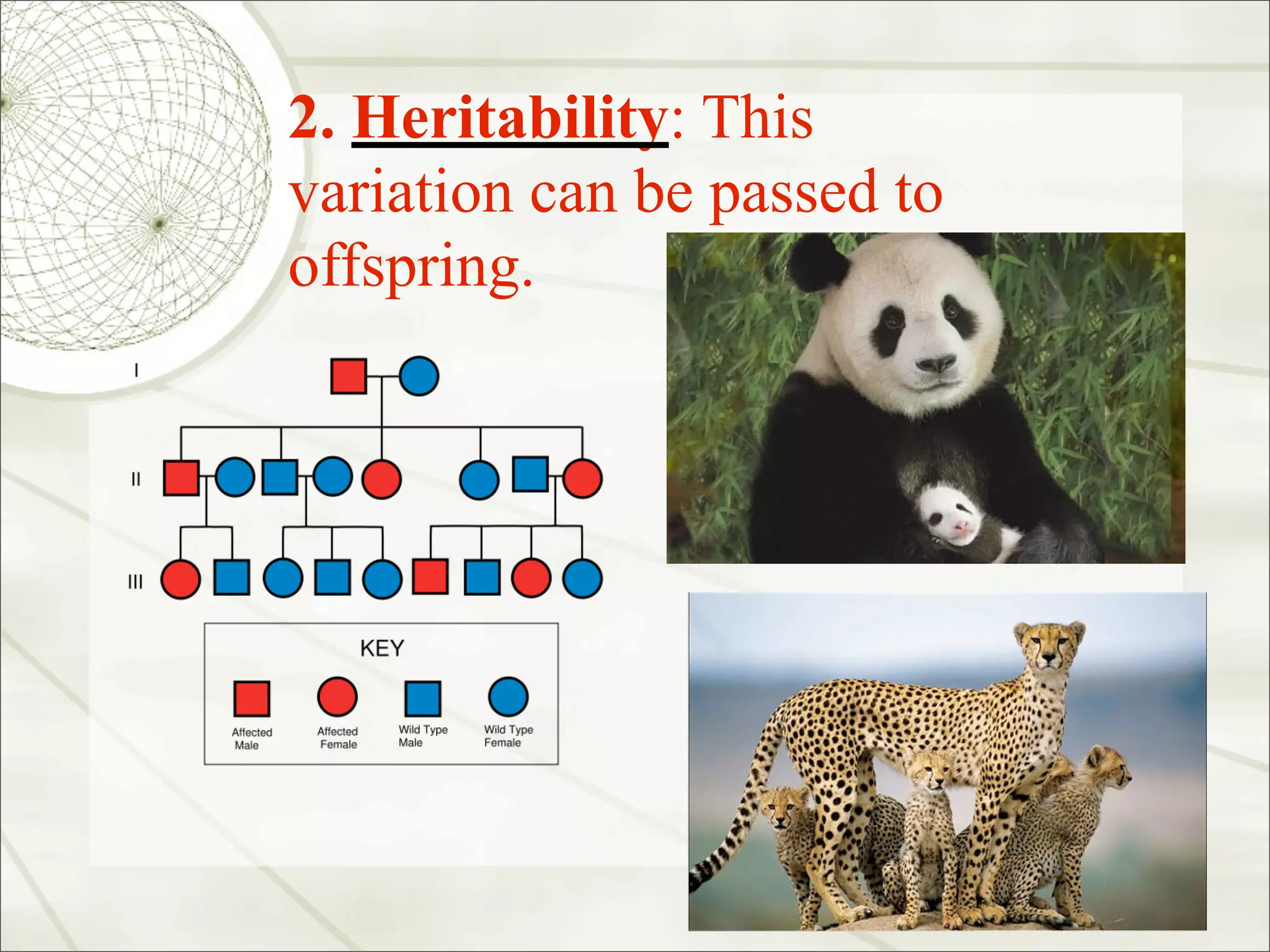
2. Heritability: This
variation can be passed to
offspring.
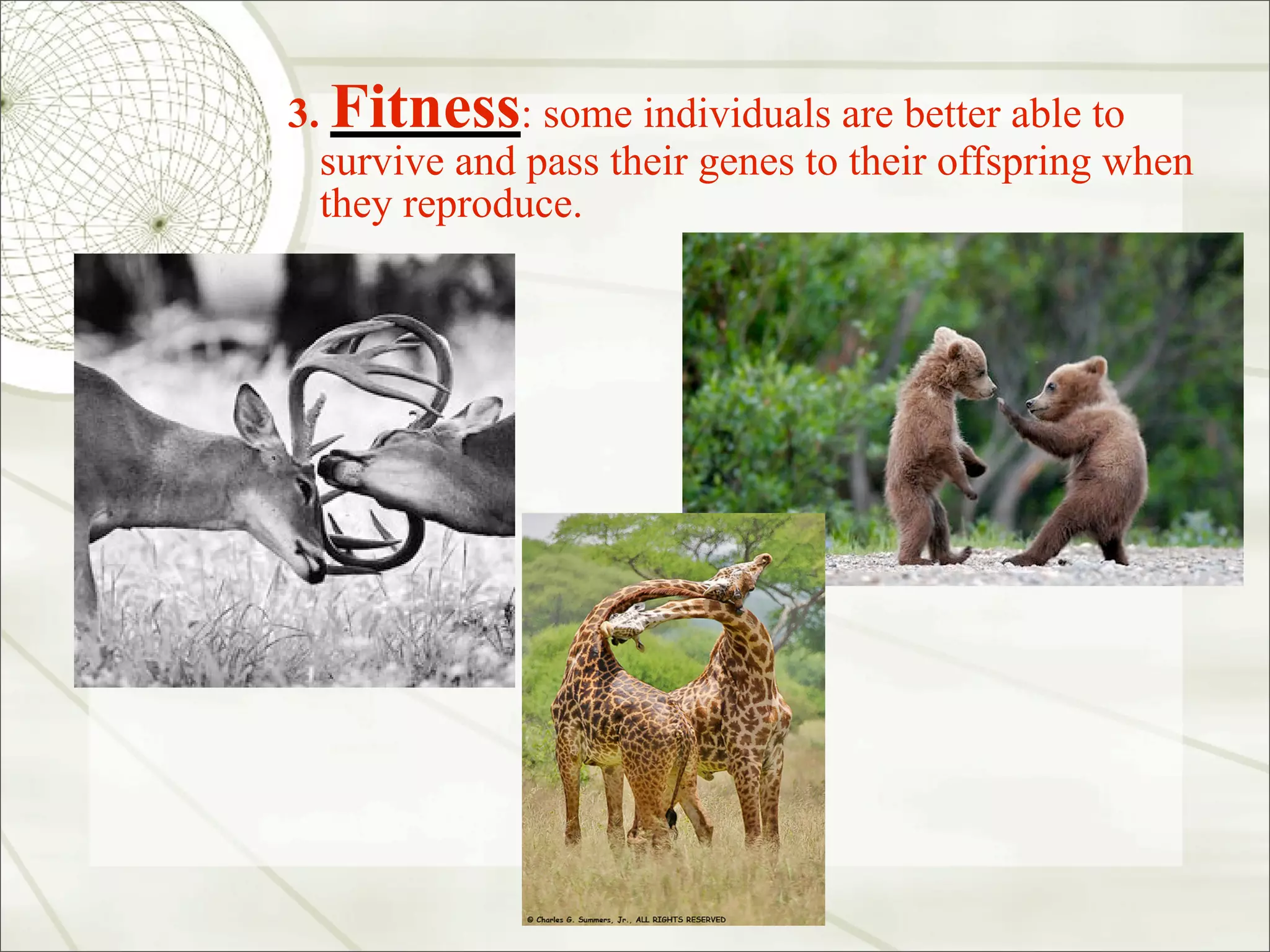
3. Fitness: some individuals are better able to
  survive and pass their genes to their offspring when
  they reproduce.
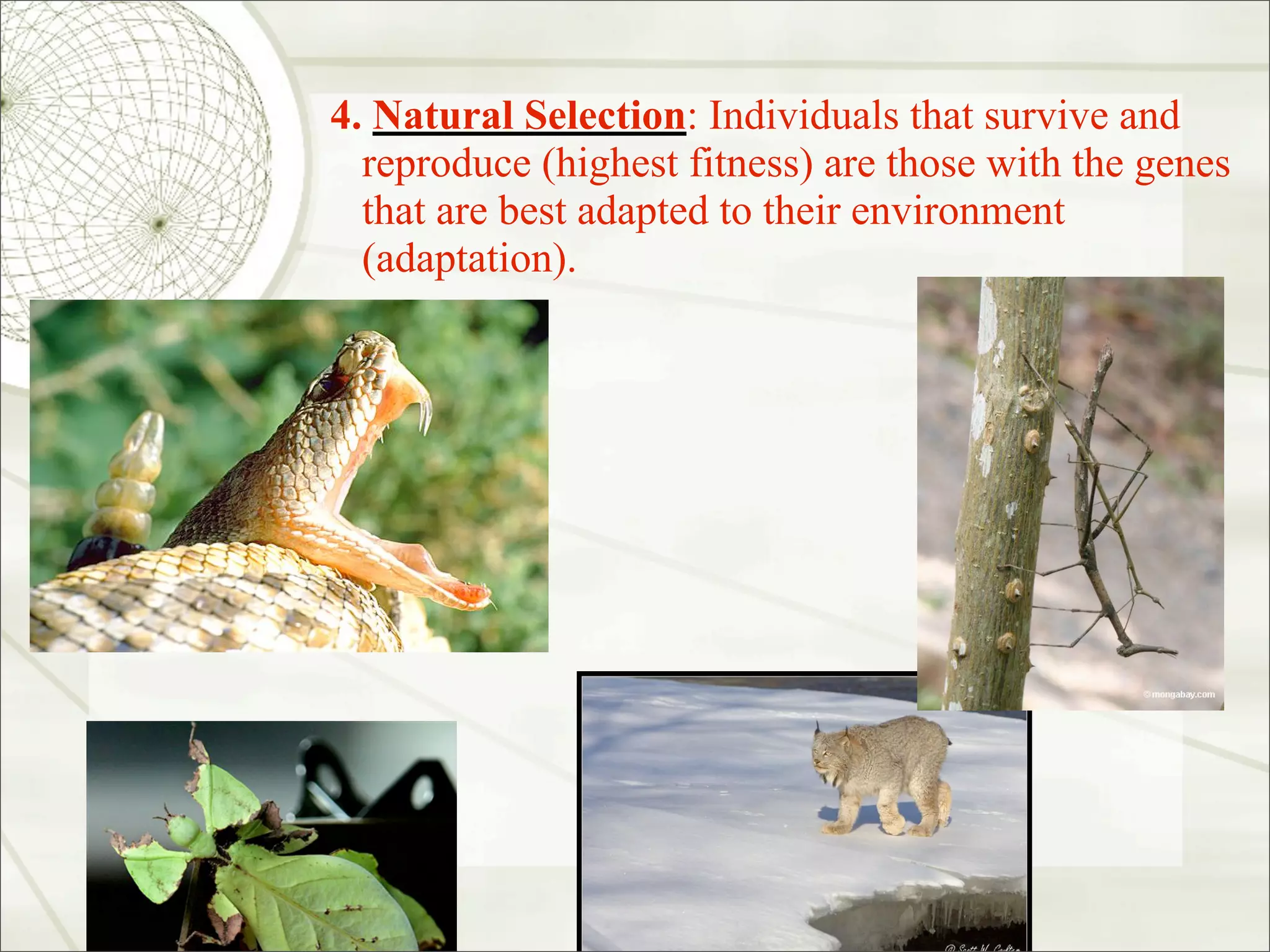
4. Natural Selection: Individuals that survive and
  reproduce (highest fitness) are those with the genes
  that are best adapted to their environment
  (adaptation).
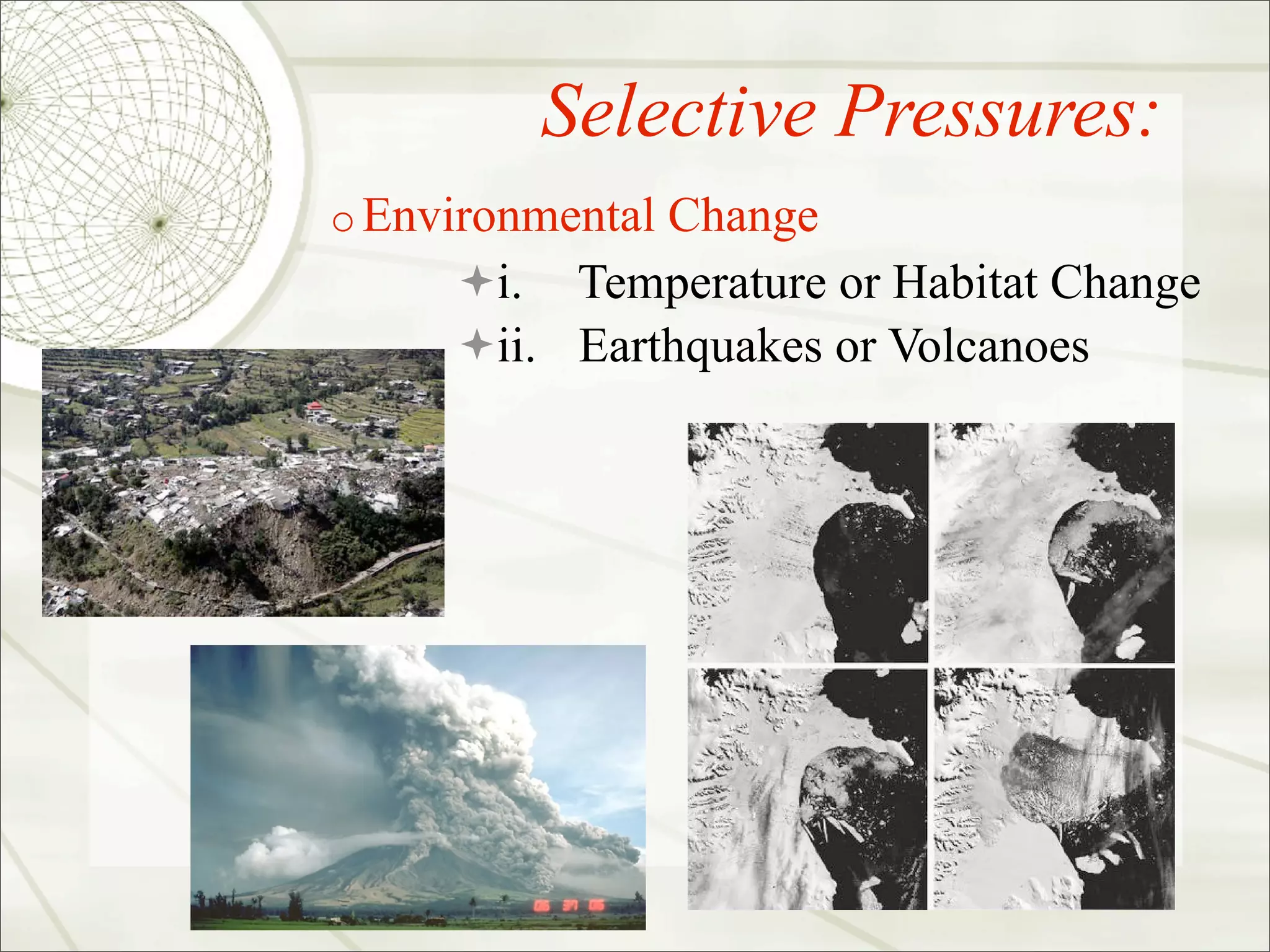
Selective Pressures:
o Environmental Change
     i. Temperature or Habitat Change
     ii. Earthquakes or Volcanoes
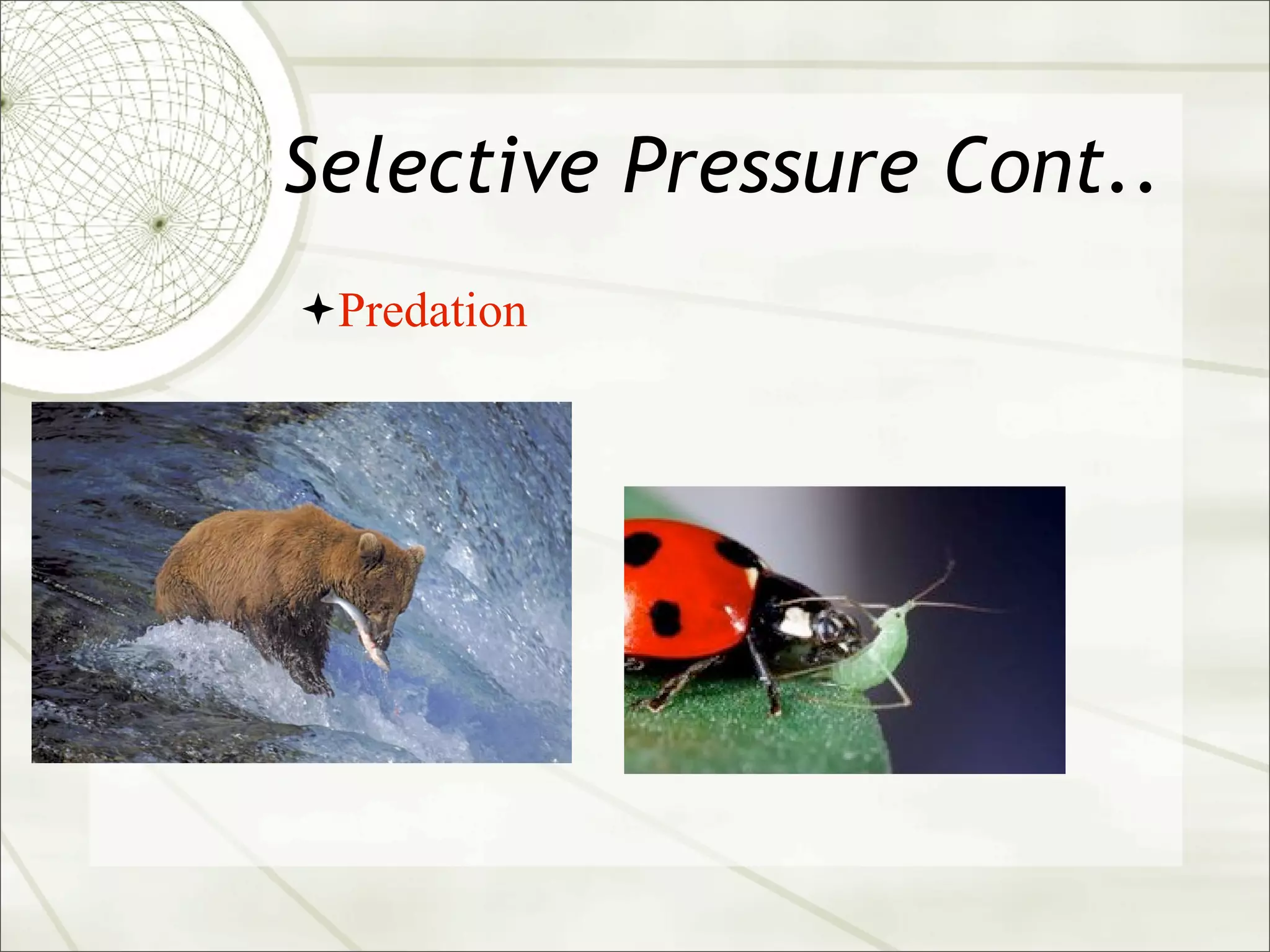
Selective Pressure Cont..
Predation
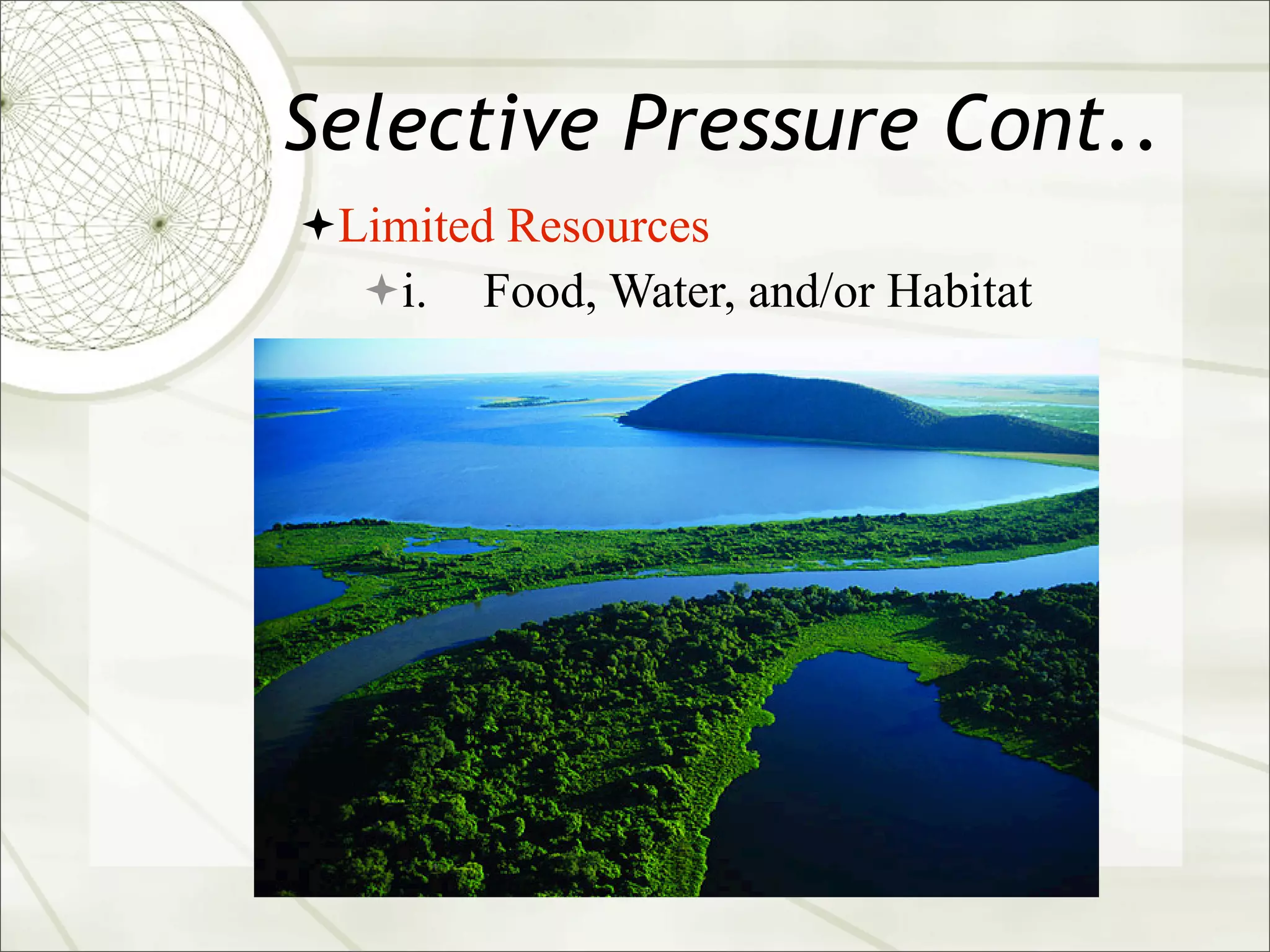
Selective Pressure Cont..
Limited Resources
  i. Food, Water, and/or Habitat
Review of Biological
                         Evolution

1. Variation
2. Heritability
3. Fitness
4. Natural Selection
Review: Selective Pressures
 A pressure put on a species to survive
  such as an environmental change,
  predation, or limiting resources.
 Go to the following website to
  complete the Planet Earth Evolution
  “Mini Lesson”
 http://dsc.discovery.com/
  convergence/planet-earth/video-
  player/video-player.html
Your Task Today
 Using your Notes and the Planet Earth
 Videos on Computers in the back,
 prepare a “mini-evolution” lesson to
 present to the class TODAY, with your
 video.


                                   19

Natural selection (2011)

  • 1.
    Biological Evolution by Natural Selection  Biology: Mr. McFadden  4-24-10  Write the Red
  • 2.
    Population  a localizedgroup of individuals belonging to the same species Wildebeest
  • 3.
    What is aspecies?  Biological species concept (Mayr): a population or group of populations whose members have the potential to interbreed and produce viable, fertile offspring (genetic exchange is possible and that is genetically isolated from other populations)
  • 4.
    Biological Evolution What isneeded: 1. Genetic Variation: Differences that occur in a population between individuals. 3 Sources of Variation:  Mutations are changes in the DNA. A single mutation can have a large effect, but in many cases, evolutionary change is based on the accumulation of many mutations.  Gene flow is any movement of genes from one population to another.  Sex can introduce new gene combinations into a population during meiosis & fertilization.
  • 5.
    Variation in Phenotype Fig. 18-2a, p.285
  • 6.
    Variation in Phenotype Fig. 18-2b, p.285
  • 7.
    Variation in Phenotype Fig. 18-2c, p.285
  • 8.
    Variation in Phenotype Fig. 18-2d, p.285
  • 9.
    Variation in Phenotype Fig. 18-2e, p.285
  • 10.
    Variation in Phenotype Variation can exist in: •Form, Shape, or Color •Speed, Intelligence, or Strength •Behavior or senses •Beak Size!!! •The possibilities are endless…
  • 11.
    2. Heritability: This variationcan be passed to offspring.
  • 12.
    3. Fitness: someindividuals are better able to survive and pass their genes to their offspring when they reproduce.
  • 13.
    4. Natural Selection:Individuals that survive and reproduce (highest fitness) are those with the genes that are best adapted to their environment (adaptation).
  • 14.
    Selective Pressures: o EnvironmentalChange i. Temperature or Habitat Change ii. Earthquakes or Volcanoes
  • 15.
  • 16.
    Selective Pressure Cont.. LimitedResources i. Food, Water, and/or Habitat
  • 17.
    Review of Biological Evolution 1. Variation 2. Heritability 3. Fitness 4. Natural Selection
  • 18.
    Review: Selective Pressures A pressure put on a species to survive such as an environmental change, predation, or limiting resources.  Go to the following website to complete the Planet Earth Evolution “Mini Lesson”  http://dsc.discovery.com/ convergence/planet-earth/video- player/video-player.html
  • 19.
    Your Task Today Using your Notes and the Planet Earth Videos on Computers in the back, prepare a “mini-evolution” lesson to present to the class TODAY, with your video. 19