Evolution, 4th Editionby Futuyma, Douglas
download
https://ebookluna.com/product/evolution-4th-edition-by-futuyma-
douglas/
Download full version ebook from https://ebookluna.com
3.
Brief Contents
UNIT I
AnIdea that Changed the World 1
CHAPTER 1 Evolutionary Biology 3
CHAPTER 2 The Tree of Life 27
CHAPTER 3 Natural Selection and
Adaptation 55
CHAPTER 4 Mutation and Variation 79
CHAPTER 5 The Genetical Theory of
Natural Selection 103
CHAPTER 6 Phenotypic Evolution 135
CHAPTER 7 Genetic Drift: Evolution at
Random 165
CHAPTER 8 Evolution in Space 191
CHAPTER 9 Species and Speciation 213
UNIT Ill
Products of Evolution: What Natural
Selection Has Wrought 245
CHAPTER 10 All About Sex 247
CHAPTER 11 How to Be Fit 275
CHAPTER 12 Cooperation and Conflict 295
CHAPTER 13 Interactions among
Species 321
CHAPTER 14 The Evolution of Genes and
Genomes 345
CHAPTER 15 Evolution and
Development 369
ftl.l UNIT IV
lAIII Macroevolution and the History
of Life 399
CHAPTER 16 Phylogeny: The
Unity and Diversity
of Life 401
CHAPTER 17 The History of Life 431
CHAPTER 18 The Geography
of Evolution 469
CHAPTER 19 The Evolution of
Biological
Diversity 491
CHAPTER 20 Macroevolution:
Ill UNITV
Evolution above the
Species Level 515
aw Evolution and Homo sapiens 545
CHAPTER 21 The Evolutionary
Story of Homo
sapiens 547
CHAPTER 22 Evolution and
Society 573
4.
Contents
UNIT I AnIdea that Changed the World 1
CHAPTER 1
Evolutionary Biology
"Nothing in Biology Makes Sense except in
the Light of Evolution" 6
What Is Evolution? Is It Fact or Theory? 7
The Evolution of Evolutionary Biology 9
Before Darwin 9
Charles Darwin 10
Darwin's evolutionary theory 13
Evolutionary biology after Darwin 15
CHAPTER 2
The Tree of Life 27
The Tree of Life, from Darwin to Today 28
BOX 2A Classification, Taxonomic Practice, and
Nomenclature 32
Phylogenetic Trees 33
Inferring phylogenies: An introduction 35
Variations on the Phylogenetic Theme 38
Branches of a phylogenetic tree sometimes
rejoin 38
CHAPTER 3
3
The evolutionary synthesis 16
Evolutionary biology since the synthesis 16
BOX 1A Fundamental Principles of Biological
Evolution 18
How Evolution Is Studied 18
Philosophicallssues 20
Ethics, religion, and evolution 21
SUMMARY 22
Not only organisms have "phylogenies" 39
Phylogenetic Insights into Evolutionary
History 41
Inferring the history of character evolution 41
Estimating time of divergence 42
Patterns of evolution 43
BOX 2B Evidence for Evolution 44
SUMMARY 52
Natural Selection and Adaptation 55
Adaptive Evolution Observed 57
Natural Selection 59
The meaning of natural selection 59
Natural selection and chance 61
The effective environment depends on the
organism 61
Levels of Selection 62
Selfish genes and unselfish behaviors 63
5.
VIII CONTENTS
Selection oforganisms and groups 64
Species selection 65
The Nature of Adaptations 66
Selection of and selection for 67
Recognizing adaptations 67
Imperfections and Constraints 71
UNIT II How Evolution Works 77
CHAPTER 4
Mutation and Variation
The Machinery of Inheritance 79
The Inheritance of Variation 82
Gene mixing by segregation 83
Gene mixing by recombination 85
Gene mixing with asexual inheritance 88
Mutation: The Ultimate Source of
Variation 88
Point mutations 89
Structural mutations 89
CHAPTER 5
Natural Selection and the Evolution of
Diversity 72
What Not To Expect of Natural Selection 74
SUMMARY 75
79
Rates and Effects of Mutations 91
Mutation rates 91
BOX 4A Estimating Mutation Rates 92
Effects of mutations 92
Germ line mutations and somatic mutations 94
Is Mutation Random? 94
Nongenetic Inheritance 96
SUMMARY 99
The Genetical Theory of Natural Selection 103
Natural Selection and Evolution in Real
Time 104
Evolution by Selection and Inheritance 106
Fitness: The Currency of Selection 107
Positive Selection:
The Spread of Beneficial Mutations 108
BOX SA Evolution by Selection on a Single
Locus 109
The rate of adaptation 110
Chance and adaptation: The probability that a
beneficial mutation spreads 115
Evolutionary Side Effects 116
Hitchhiking: When one allele goes for a ride with
another 117
When Selection Preserves Variation 119
Overdominance 120
Other forms of balancing selection 122
Selection That Favors the Most Common 125
Underdominance: When heterozygotes
suffer 125
Positive frequency-dependent selection 126
The Evolution of a Population's Mean
Fitness 126
The fundamental theorem of natural selection
and the adaptive landscape 127
Deleterious Mutations 130
A mutation-selection balance 130
The mutation load 130
SUMMARY 132
6.
CONTENTS IX
CHAPTER6
Phenotypic Evolution135
Genotypes and Phenotypes 136
Fitness Functions Describe Selection
on Quantitative Traits 139
Measuring the Strength of Directional
Selection 143
Evolution by Directional Selection 144
When genes interact: Dominance and
epistasis 147
Adaptation from standing genetic variation
versus new mutations 147
Can adaptation rescue species from
extinction? 148
CHAPTER 7
Artificial Selection 149
Correlated Traits 151
Constraints and trade-offs 152
The causes of genetic correlations 153
Phenotypic Plasticity 155
The Genetic Architecture of
Quantitative Traits 156
Quantitative trait loci 156
The genetics of quantitative traits 158
SUMMARY 161
Genetic Drift: Evolution at Random 165
What Is Random Genetic Drift? 166
The Genealogy of Genes 170
How Strong Is Genetic Drift? 172
Populations that change in size 173
Drift and Genetic Variation within
Species 174
Estimating population size 176
Genetic Drift and Natural Selection 177
Crossing an adaptive valley by drift 180
The fate of beneficial mutations in large
populations 180
8 ~ - -~ CHAPTER 8
Evolution in Space
Patterns in Space 192
Gene Flow 193
How is gene flow measured? 194
Genetic Divergence between
Populations 196
Gene Flow and Selection 198
191
The Evolution of Differences among
Species 181
The neutral theory of molecular evolution 182
Searching the Genes for Signatures
of Adaptation 183
Synonymous versus nonsynonymous
differences 184
The MK test 186
Divergence among populations 186
SUMMARY 188
Tension zones 201
Gene Flow and Drift 202
Gene flow, local adaptation, and drift 203
The Evolution of Dispersal 204
The Evolution of Species' Ranges 207
SUMMARY 209
7.
X CONTENTS
CHAPTER 9
Speciesand Speciation
What Are Species? 215
BOX 9A Diagnosis of a New Species 219
Reproductive Isolation 220
Prezygotic barriers 222
Postzygotic barriers 223
How fast does reproductive isolation evolve? 225
The Causes of Speciation 227
213
BOX 9A Speciation in the Lab 228
The Geography of Speciation 235
Allopatric speciation 235
Sympatric speciation 238
Parapatric speciation 241
The Genomics of Speciation 242
SUMMARY 243
UNIT Ill Products of Evolution: What Natural Selection Has Wrought 245
CHAPTERlO
All About Sex 247
What Are Females and Males? 249 Why Sex? 263
Sexual Selection 251
Why are males sexually selected? 253
Sexual selection by male-male competition 254
Sexual selection by female choice 257
Sexual selection in flowering plants 260
Sex Ratios 260
CHAPTERll
How to Be Fit 275
Life History Traits as Components of
Fitness 276
Costs of reproduction 278
Fitness in age-structured populations 279
Senescence 280
Evolution of the Population Growth Rate
and Density 281
Diverse life histories 282
CHAPTER 12
Advantages to sex in changing
environments 264
Selective interference favors sex and
recombination 265
Selfing and Outcrossing 269
SUMMARY 271
Number of offspring 286
Life histories and mating strategies 286
Specialists and Generalists 288
Advantages of specialization 289
Specialization without trade-offs 289
Experiments on niche evolution 291
SUMMARY 292
Cooperation and Conflict 295
The Costs and Benefits of Interacting 296
Social Interactions and Cooperation 296
Cooperation among Unrelated
Individuals 297
Reciprocity 298
8.
BOX 12A EvolutionarilyStable Strategies 299
Shared Genes and the Evolution of
Altruism 300
BOX 12B Calculating Relatedness 301
BOX 12C Altruistic Mating Displays In
Turkeys 303
Spite 304
Conflict and Cooperation in Close Quarters:
The Family 304
Conflict between mates 304
CHAPTER 13
CONTENTS XI
Murder in the family 306
Parent-offspring conflict 308
Eusocial animals: The ultimate families 308
Levels of Selection 310
Selfish DNA 310
Selfish mitochondria 312
Group selection 313
Cooperation and Major Evolutionary
Transitions 315
SUMMARY 317
Interactions among Species 321
Coevolution and Interactions
among Species 322
The Evolution of Enemies and Victims 324
Aposematism and mimicry 328
Plants and herbivores 329
Parasite-host interactions and infectious
disease 331
,../ .... '
CHAPTER 14
Mutualisms 334
The Evolution of Competitive
Interactions 337
Evolution and Community Structure 339
SUMMARY 342
14 ~ The Evolution of Genes and Genomes 345
The Birth of a Gene 347
Gene families 351
The Death of a Gene 353
Evolution of Protein-Coding Genes 354
Evolution of coding regions by genetic drift 354
Evolution of coding regions by positive
selection 355
Evolution of Gene Expression 356
Gene Structure 358
Chromosome Evolution 359
CHAPTER 15
Fissions, fusions, and the evolution of chromosome
number 359
Inversions and the evolution of chromosome
structure 360
Evolution of Genome Size and Content 361
Genomes large and small 362
Genetic parasites and transposable
elements 362
Routes to the evolution of the smallest
and largest genomes 364
SUMMARY 366
15 ~~ Evolution and Development 369
Comparative Development and
Evolution 371
Gene Regulation 375
BOX 15A Some Methods in Developmental
Genetics 376
Hox genes and the genetic toolkit 378
Developmental-Genetic Bases of
Phenotypic Evolution 382
9.
XII CONTENTS
Evolution bycis-regulatory mutations 382
Evolution by trans-regulatory mutations 383
Overview: The genetics and development of
phenotypic evolution 386
Evolvability and Developmental
Pathways 386
Constraints on Adaptive Evolution 389
Phenotypic Plasticity and Canalization 391
Does phenotypic plasticity contribute to
evolution? 394
SUMMARY 396
UNIT IV Macroevolution and the History of Life 399
,..,, . CHAPTER 16
16 ~;.--::~
• .I
Phylogeny: The Unity and Diversity of Life 401
Inferring Phylogenies 402
Why estimating phylogenies can be hard 404
Methods for estimating phylogenies 409
BOX 16A Estimating Trees with Likelihood 412
How Do We Use Phylogenies? 416
Dating evolutionary events 416
CHAPTER 17
The History of Life 431
Discovering the history of genes and cultures 417
Reconstructing ancestors 419
Studying adaptations: The comparative
method 421
Classification 424
SUMMARY 427
Some Geological Fundamentals 432 The colonization of land 447
The fossil record 435 Paleozoic life on land 449
Before Life Began 435
The Emergence of Life 436
Precambrian Life 438
The Cambrian Explosion and the
Origins of Animal Diversity 440
Paleozoic Life 443
CHAPTER 18
The end-Permian mass extinction 450
Mesozoic Life 452
The Cenozoic Era 459
The modern world takes shape 459
The adaptive radiation of mammals 460
Pleistocene events 463
SUMMARY 466
The Geography of Evolution 469
Biogeographic Evidence for Evolution 470
Major Patterns of Distribution 471
Historical factors affecting geographic
distributions 474
Historical Explanations of Geographic
Distributions 476
Vicariance 476
Dispersal 477
Phytogeography 480
Geographic Range Limits: Ecology and
Evolution 481
Geographic Patterns of Diversity 484
SUMMARY 487
10.
CONTENTS XIII
CHAPTER 19
TheEvolution of Biological Diversity 491
Estimating and Modeling Changes in
Biological Diversity 493
Studying diversity in the fossil record 494
Diversity through the Phanerozoic 495
Rates of origination and extinction 496
Mass extinctions 500
CHAPTER 20
Phylogenetic Studies of Diversity 502
The shapes of phylogenies 506
Does Species Diversity Reach
Equilibrium? 507
SUMMARY 511
Macroevolution: Evolution above the Species Level 515
The Origin of Major New Forms of Life 516
The origin of mammals 517
Gradualism and Saltation 520
The Evolution of Novelty 524
Incipient and novel features:
Permissive conditions and natural
selection 524
Complex characteristics 526
Homology and the emergence of novel
characters 527
From Microevolution to Macroevolution 529
Rates of evolution 529
Gradualism and punctuated equilibria 533
Speciation and phenotypic evolution 534
Trends, Predictability, and Progress 536
Trends: Kinds and causes 536
Are there major trends in the history of life? 538
Predictability and contingency in evolution 540
The question of progress 542
SUMMARY 543
UNIT V Evolution and Homo sapiens 545
CHAPTER 21
The Evolutionary Story of Homo sapiens 547
Where Did We Come From? 548
Our closest living relatives 548
How humans differ from other apes 549
Our ancestry: Hominins through time 551
The Arrival of Homo sapiens 555
The human history of hybridization 556
The diversity of human populations 557
Brain and Language 558
Diet and Agriculture: A Revolution in Our
World 559
BOX 21A Domesticated Plants and Animals 561
Natural Selection, Past and Present 562
Our genetic loads 563
Natural selection and evolution in real time 565
Evolutionary mismatches 565
The Evolution of Culture 566
SUMMARY 569
11.
XIV CONTENTS
CHAPTER 22
Evolutionand Society
BOX 22A Refuting Antievolutionary
Arguments 574
Creationism and Science 577
Creationism 577
The nature of science 578
The Evidence for Evolution 579
The fossil record 579
Phylogenetic and comparative studies 580
Genes and genomes 580
Biogeography 580
Failures of the argument from design 581
Evolution, and its mechanisms, observed 583
The Uses and Implications of Evolutionary
Science 584
APPENDIX: A Statistics Primer A-1
GLOSSARY G-1
LITERATURE CITED LC-1
ILLUSTRATION CREDITS IC-1
INDEX 1-1
573
Evolution by natural selection: A broad and
flexible concept 584
Practical applications of evolutionary
science 584
Using organisms' adaptations 585
Agriculture and natural resources 585
Conservation 587
BOX 22B The Current Extinction Crisis 587
Health and medicine 589
Evolution and Human Behavior 593
Variation in cognitive and behavioral traits 594
Human behavior: Evolution and culture 596
Understanding nature and humanity 598
SUMMARY 600
12.
It is thoroughlyestablished that all known organisms
descended from a single ancient common ancestor. This means
that all characteristics of organisms, in all their glorious diver-
sity, have evolved. Anatomical and cellular traits, biochemi-
cal, molecular, neural and developmental processes, life histo-
ries and ecological relationships-all can be viewed from the
dual perspectives of current mechanism (how they work) and
of history (how and why they came to be). The disciplines of
organismal biology, including paleobiology, ecology, animal
behavior, physiology, and systematics, continue to be central
to evolutionary science, but are now being enriched by the
genomic revolution, new analytical methods, and new evolu-
tionary theory.
The fourth edition of Evolution keeps pace with this
explosively developing field. There are now two authors
with broadly overlapping but complementary areas of
expertise. The organization, content, and style of the book
are reworked to such an extent that it is largely a new book.
Key changes include:
• Many human examples are used throughout, and there is
an all-new chapter on human evolution.
• A new primer in statistics gives a concise and accessible
introduction to the field.
• Theoretical concepts are developed in a more informal and
inviting style.
• The book has been entirely re-illustrated.
The book is organized into these units:
I. An Idea that Changed the World
Chapter 1 opens with an overview of evolutionary biology
and its history. The next two chapters introduce two of the
most fundamental ideas in evolution: evolutionary trees
(Chapter 2) and the concepts of natural selection and adap-
tation (Chapter 3).
II. How Evolution Works
The first four chapters of this unit develop genetics and inheri-
tance (Chapter 4), one-locus population genetics (Chapter 5),
Preface
quantitative genetics (Chapter 6), and genetic drift (Chapter 7).
Chapter 8, which is entirely new, discusses spatial patterns and
the evolution of dispersal. Chapter 9 then tackles species and
speciation in a coherent treatment that has been streamlined
relative to the third edition. Every chapter in this unit has been
completely rewritten.
Ill. Products of Evolution: What Natural
Selection Has Wrought
This unit treats key aspects of the evolution of phenotypes and
genotypes: the all-new Chapter 10 on sexual selection and
sexual reproduction, Chapter 11 with a rewritten exposition
of the evolution of life histories and ecological niches, Chap-
ter 12 on cooperation and conflict with new topics that include
the evolution of virulence in pathogens, Chapter 13 on inter-
actions among species, Chapter 14 on the evolution of genes
and genomes, and Chapter 15 on evolution and development.
These last two chapters have been rewritten in their entirety.
IV. Macroevolution and the History of Life
Chapter 16 develops the topic of phylogeny in detail. Chapter
17 provides a grand tour through the history of life. We turn
to analysis of these historical data in Chapter 18, on bioge-
ography, and Chapter 19, on patterns and causes of changes
in biological diversity through time. Concepts drawn from
throughout the book culminate in Chapter 20, which treats
macroevolution.
V. Evolution and Homo sapiens
Perhaps no topic in biology has captured the imagination of
scientists and the public alike than the tremendous recent
advances in understanding human evolution. Chapter 21 con-
veys this excitement with a synthesis of sources that include
paleontology, genomics, and cultural anthropology. Our final
chapter (22) looks at how evolutionary biology impacts soci-
ety, including belief systems and our understanding of human
behavior.
More than any other science, evolutionary biology has
had to prove its validity: in the United States, about half the
13.
XVI PREFACE
population doesnot accept evolution by natural selection,
and many of them are college students. To teach evolution,
then, is to teach the nature of science, the habit of reasoning
between hypothesis and evidence, and the habit ofcritical evalu-
ation. At a time when science and evidence are increasingly
misunderstood or even dismissed, we feel it is important to
teach students what science is, how it works, and why it is
the most reliable way of knowing that has yet been devel-
oped. Evolutionary biology is an ideal vehicle for this impor-
tant function.
ACKNOWLEDGMENTS
Countless colleagues and students have contributed indi-
rectly to this book, through their lectures, publications, con-
versations, and questions. We are indebted to the reviewers
of chapter drafts for abundant, invaluable advice and correc-
tions: Anurag Agrawal, Richard Bambach, Brian Barringer,
David Begun, Andrew Brower, Brian Charlesworth, Jerry
Coyne, Christopher Dick, Diego Figueroa, John Fleagle, Jacob
Gardner, Kenneth Hayes, David Hillis, Gene Hunt, David
Innes, David Jablonski, Elizabeth Jockusch, Joel Kingsolver,
David Lohman, Greg Mayer, Duane McKenna, Mark McPeek,
Monica Medina, Christopher Organ, Sally Otto, David Quel-
ler, Kaustuv Roy, Michael Ryan, Ellen Simms, Montgomery
Slatkin, David Spiller, Stephen Stearns, Joseph Travis, Mark
Welch, Noah Whiteman, Michael Whitlock, David Sloan Wil-
son, Greg Wray, Stephen Wright, Yaowu Yuan, and Roman
Yukilevich. We are very grateful to David Hall, J. Matthew
Hoch, and David Houle for writing the Problems and Discus-
sion Topics at the chapter ends.
For advice, references, answers to questions, correc-
tions, and many other favors, Douglas Futuyma is grateful
to Richard Bambach, Michael Bell, Jackie Collier, Stefan
Cover, Jerry Coyne, Joel Cracraft, Liliana Davalos-Alvarez,
Charles Davis, Christopher Dick, Daniel Dykhuizen, Walter
Eanes, John Fleagle, Brenna Henn, Andreas Koenig, Spen-
cer Koury, Harilaos Lessios, Jeffrey Levinton, James Mallet,
Ross Nehm, Sally Otto, Joshua Rest, Martin Schoenhals,
David Stern, Ian Tattersall, Robert Thacker, and Krishna
Veeramah. Douglas Futuyma thanks Rob DeSalle and the
American Museum of Natural History for generously pro-
viding work space in that marvelous institution, and the
Department of Ecology and Evolution at Stony Brook for
unending support and intellectual sustenance.
Mark Kirkpatrick is most grateful to the following people
for their generous help with countless aspects of this proj-
ect: Diego Ayala, Claudia Bank, Daniel Bolnick, Andrius
Dagilis, Larry Gilbert, Shyamalika Gopalan, Matthew
Hahn, David Hall, David Hillis, Robin Hopkins, David
Houle, Matheiu Joron, Tom Juenger, Peter Keightley, Mar-
cus Kronfrost, Curtis Lively, James Mallet, Richard Merrill,
Michael Miyagi, Nancy Moran, Rasmus Nielsen, Mohamed
Noor, Howard Ochman, Kenneth Olson, Sally Otto, Daven
Presgraves, Trevor Price, David Queller, Fernando Racimo,
Michael Ryan, Sara Sawyer, Dolph Schluter, Michael Shap-
iro, Stephen Shuster, Montgomery Slatkin, Ammon Thomp-
son, Michael Wade, Stuart West, and Harold Zakon. Mark
Kirkpatrick also thanks his colleagues and members of his
laboratories at the University of Texas and the University of
Montpellier for countless enlightening discussions.
This book was only made possible by the tireless work of
many people at Sinauer Associates, consistently done with
professionalism and a sense of humor. We are particularly in
debt to Joanne Delphia, Laura Green, David Mcintyre, Andy
Sinauer, and Chris Small.
14.
How to Learn
~volutionaryBiology
The great geneticist Fran<;ois Jacob, who won the Nobel Prize
in Physiology and Medicine for discovering mechanisms by
which gene activity is regulated, wrote that "there are many
generalizations in biology, but precious few theories. Among
these, the theory of evolution is by far the most important."
Why? Because, he said, evolution explains a vast range of
biological information and unites all of the biological sci-
ences, from molecular biology to ecology. "In short," he wrote,
"it provides a causal explanation of the living world and its
heterogeneity."
Jacob did not himself do research on evolution, but
like most thoughtful biologists, he recognized its pivotal
importance in the biological sciences. Evolution provides
an indispensable framework for understanding phenomena
that range from the structure and size of genomes to the
ecological interactions among different species. And it has
many philosophical implications and practical applications,
ranging from understanding human diversity and behavior
to health and medicine, food production, and environmental
science.
Your course on evolution is likely to differ from almost any
other course in biology you may have had, and it may pres-
ent an unfamiliar challenge. Because all organisms, and all
their characteristics, are products of a history of evolution-
ary change, the scope of evolutionary biology is far greater
than any other field of biological science. In a course in cell
biology, you are expected to learn many factual aspects of
cell structure and function, which apply very broadly to
various types of cells in almost all organisms. But courses
in evolution generally do not emphasize the factual details
of the evolution of particular groups of organisms-the
amount of information would be impossibly overwhelming.
There certainly are some important facts-for example, you
should learn about major events in the history of life. But for
the most part, your course is likely to emphasize the general
principles of evolution, especially the processes ofevolutionary
change that apply to most or all organisms, how we can learn
what has happened in the evolutionary past, and the most com-
mon patterns ofchange, those that have characterized many
different groups of organisms.
For example, you will learn that natural selection is a
consistent, statistical difference between groups of repro-
ducing entities (such as large versus small individuals of a
species) in the number of descendants they have. By under-
standing how a characteristic can affect survival or repro-
duction, we can arrive at generalizations about how certain
characteristics are likely to evolve. For instance, it is easy for
us to understand why a feature would be likely to evolve if
it made males more attractive to females so that they have
more offspring. But evolution by natural selection equally
well explains why about half of the human genome consists
of repeated DNA sequences that do nothing of value to the
human organism! (The reason is that DNA sequences are
also reproducing entities, and any sequence that can make
more copies of itself will automatically increase more than
a sequence that makes fewer copies. This is the essence of
natural selection.) So the abstract concept of natural selec-
tion has a great range of applications and implications that
will make up much of what you will want to learn about
evolution.
It is important to learn how evolutionary hypotheses have
been tested, in other words, what the evidence is for (or
against) postulated histories and causes of evolutionary
change. Evolutionary biology largely concerns events that
happened in the past, so it differs from most other biological
disciplines, which analyze the properties and functions of
organisms' characteristics without reference to their history.
We often must make inferences about past events and about
ongoing processes that are difficult to see in action (e.g., dif-
ferences in the replication rate of different DNA sequences).
We make inferences by (1) posing informed hy potheses,
then (2) generating predictions (making deductions) from
15.
XVIII HOW TOLEARN EVOLUTIONARY BIOLOGY
these hypotheses about data that we can actually obtain,
and finally (3) judging the validity of each hypothesis by the
match between our observations and what we expect to see
if the hypothesis were true.
For example, if you imagine that the long tail feathers of
males in a species of bird evolved because such males attract
more females and therefore have more offspring, you might
predict that if you lengthened males' tail feathers, they will
mate with more females. (The experiment has been done,
with exactly this outcome.) You will find that throughout
this book, we develop an idea, or hypothesis, theoretically,
and then present one or two examples of empirical (i.e.,
real-world) studies that biologists have done, which provide
evidence supporting the idea. Understanding the theoretical
ideas, and how and why the empirical study provides evidence
for them, is the key to learning evolutionary biology.
It is also the key to understanding how science works.
Science isn't merely accumulating facts. In every field, scien-
tists try to develop general principles that explain how natu-
ral phenomena work. Often, there are several conceivable
explanations. The community of scientists in a field devel-
ops fuller understanding by devising alternative hypotheses
and thinking of what kind of data would support one while
refuting another. There is a competition of ideas (and com-
petition among scientists) that results in a closer approach to
reality. We cannot prove that a scientific hypothesis is abso-
lutely true, but we can hope for very high confidence-and
no other method of knowing can be shown to come as close.
You can have very high confidence that DNA is the basis of
inheritance, that human consumption of fossil fuels causes
global climate change, and that humans have evolved from
the same ancestor as all other animals, and from a much
older ancestor of all the living things we know of.
In every field of science, the unknown greatly exceeds
the known. Thousands of research papers on evolution-
ary topics are published each year, and many of them raise
new questions even as they attempt to answer old ones. No
one, least of all a scientist, should be afraid to say "I don't
know" or 'Tm not sure." To recognize where our knowledge
and understanding are uncertain or lacking is to see where
research may be warranted, or where exciting new research
trails might be blazed. We hope that some readers will find
evolution so rich a subject, so intellectually challenging, so
fertile in insights, and so deep in its implications that they
will adopt our subject as a career. But all readers, we hope,
will find in evolutionary biology the thrill of understanding
and the excitement of finding both answers and intriguing
new questions about the living world, including ourselves.
Felix, qui potuit rerum cognoscere causas, wrote Virgil: happy is
the person who could learn the nature of things.
16.
Media and Supplements
toaccompany Evolution, Fourth Edition
FOR STUDENTS
Companion Website (evolution4e.sinauer.com)
Evolution's Companion Website features review and study tools
to help students master the material presented in the textbook.
Access to the site is free of charge, and requires no passcode.
The site includes:
• Chapter Outlines and Summaries: Concise overviews of the
important topics covered in each chapter.
• Data Analysis Exercises: These inquiry-based problems are
designed to sharpen the student's ability to reason as a
scientist, drawing on data from real experiments and pub-
lished papers.
• Simulation Exercises: Interactive modules that allow students
to explore many of the dynamic processes of evolution and
answer questions based on the results they observe.
• Online Quizzes: Quizzes that cover all the major concepts
introduced in each chapter. These quizzes are assignable by
the instructor. (Instructor registration is required.)
• Flashcards: Easy-to-use flashcard activities that help stu-
dents learn and review all the key terminology introduced
in each chapter.
• The complete Glossary
FOR INSTRUCTORS
(Available to qualified adopters)
Instructor's Resource Library
The Evolution Instructor's Resource Library includes a variety
of resources to help instructors in developing their courses and
delivering their lectures. The IRL includes the following:
• Textbook Figures and Tables: All of the figures (including
photographs) and tables from the textbook are provided as
JPEGs, reformatted and relabeled for optimal readability
when projected.
• PowerPoint Presentations: For each chapter, all of the figures
and tables are provided in a ready-to-use PowerPoint pre-
sentation that includes titles and full captions.
• Answers to the textbook end-of-chapter Problems and Dis-
cussion Topics.
• Quiz Questions: All of the questions from the Companion
Website's online quizzes are provided in Microsoft Word
format.
• Data Analysis and Simulation Exercises: All of the exercises
from the Companion Website are provided as Word docu-
ments, with answers, for use in class or as assignments.
Online Quizzing
The Companion Website includes an online quiz for each
chapter of the textbook. Via the instructor's area of the com-
panion website, these quizzes can be assigned or opened for
use by students as self-quizzes. Custom quizzes can be cre-
ated using any combination of publisher-provided questions
and instructor-created questions. Quiz results are stored in an
online gradebook and can be exported. (Note: Instructors must
register with Sinauer Associates in order for their students to
access the quizzes.)
Value Options
eBook
Evolution, Fourth Edition is available as an eBook, in several
different formats, including VitalSource, RedShelf, Yuzu, and
BryteWave. All major mobile devices are supported. For
details on the eBook platforms offered, please visit
www.sinauer.com/ebooks.
Looseleaf Textbook
(ISBN 978-1-60535-696-9)
Evolution is also available in a three-hole punched, looseleaf
format. Students can take just the sections they need to class
and can easily integrate instructor material with the text.
"We swear eternalfidelity to the nation, the law, and the king; to
maintain, to the utmost of our power, the Constitution decreed by
the National Assembly and accepted by the king, and to remain
united with every Frenchman by the indissoluble ties of fraternity."
When he closed, every banner waved, every sabre gleamed, and
sixty thousand voices shouted, as with thunder peal, "We swear it!"
The president of the National Assembly then repeated the oath, and
all the deputies and the four hundred thousand spectators
responded, "We swear it."
The king then rose in front of his throne. In a loud, distinct voice,
which seemed to vibrate through the still air to the remotest part of
the vast and thronged amphitheatre, he repeated the solemn oath,
"I, King of the French, swear to the nation to employ all the powers
delegated to me by the constitutional law of the state in maintaining
the Constitution decreed by the National Assembly and accepted by
me."
20.
GRAND CELEBRATION ONTHE FIELD OF MARS.
A more sublime moment never occurred in a nation's history. Every
heart throbbed, and thousands of eyes were dimmed with tears.
Even the queen was roused by the enthusiasm of the scene.
Inspired by the impulse which glowed in every bosom, she rose,
stepped forward into the presence of the people, and, raising her
beautiful boy, the little dauphin, in her arms, said, in a loud voice,
"See my son! he joins, as well as myself, in the same oath."
Every eye beheld the act, and the words she uttered were repeated
with electric speed along the lines. Enthusiasm burst all bounds. The
spectators rose from their seats, and the air was filled with the roar
of five hundred thousand voices, as every man, woman, and child
shouted, "Vive le Roi! Vive la Reine! Vive le Dauphin!" The crowds on
Montmartre, St. Cloud, Sevres, and Meudon caught the shout, and
re-echoed it in tumultuous reverberations. And then came another
peal still louder, as battery after battery of artillery, on the field, on
the bridges, in the streets, and on the heights, simultaneously
mingled their majestic voices with the clash of martial bands and the
acclaim of regenerated France.
God seemed to smile upon this jubilee of his enfranchised children.
The clouds had all disappeared. The sun shone brilliantly, and the
Majesty of heaven apparently condescended to take a prominent
part in the ceremonies of the eventful day. In conclusion, the Te
Deum was again chanted by the vast choir, and the deep-voiced
cannon proclaimed "Peace to the nation and praise to the Lord."
At the same hour all France, assembled in the eighty-three
departments, took the same oath of fidelity to the nation, the law,
and the king. Discord seemed to have passed away. No murmurs
were heard. No man raised a voice of opposition. The general tide of
rejoicing swept resistlessly over the land. From mountain to
mountain the roar of cannon transmitted the tidings, from valley to
valley chimes from the church bells caught and re-echoed the joyful
sound, and from central Paris to the ocean, to the Rhine, to the Alps,
and to the Pyrenees, twenty-four millions of people in one hour
21.
raised the shoutof emancipation. Such a shout never before or since
has ascended from earth to the ear of God.
For a week these rejoicings were continued in Paris. The Field of
Mars was converted into an immense ball-room, where thousands
listened to enchanting music, and with the overflowings of fraternal
love engaged in feasting, dancing, and all manner of games. At night
the city blazed with illuminations, and the flame of fireworks turned
darkness into day. The trees of the Elysian Fields were festooned
with brilliant lamps, shedding a mild light upon the most attractive of
scenes. There was no intoxication, no tumult, no confusion. All
classes intermingled, with kind words on every lip and kind looks
beaming from every face. No carriages were permitted to enter
these avenues, that the rich and the poor might share the festivities
alike. Pyramids of fire were placed at intervals in the midst of the
mass of foliage. The white dresses of the ladies who were
sauntering through those umbrageous alleys, the music, the dances,
the games, the shouts of laughter, led almost every one to the
delusive hope that the old world of care and sorrow had vanished to
give place to a new era of universal love and joy.[256]
The site of the Bastille was converted into an open square, and at
the entrance of the inclosure was an inscription "Ici l'on danse"
(Dancing here). For centuries the groans of the captive had
resounded through the vaults of that odious prison. The groans had
now ceased, and happy hearts throbbed with the excitement of the
song and the dance.
La Fayette gave a splendid review of the National Guard. The king,
the queen, and the dauphin attended the review, and were warmly
greeted by the people. The queen assumed the attitude of
reconciliation, and graciously presented her hand to the delegates to
kiss.
The delegates from the departments, before they left Paris, went in
a body to present their homage to the king. With one voice they
expressed to him their respect, gratitude, and affection. The chief of
22.
the Bretons droppedon his knee and presented to the monarch his
sword.
"Sire," said he, "I deliver to you, pure and sacred, the sword of the
faithful Bretons. It shall never be stained but with the blood of your
enemies."
LOUIS XVI. AND THE DEPUTATION OF THE BRETONS.
The heart of the kind-hearted king was touched. He returned the
sword, and, throwing his arms around the neck of the chief of the
Bretons, said, in tones broken with emotion,
"That sword can not be in better hands than those of my dear
Bretons. I have never doubted their fidelity and affection. Assure
them that I am the father, the brother, the friend of all the French."
For a moment there was silence, and all alike were moved by the
affecting scene. The chief of the Bretons then rejoined,
"Sire, all the French, if I may judge from our hearts, love and will
love you because you are a citizen-king."
Many of the most influential men in England contemplated with
admiration this immense reform, in which, to use the language of
23.
Professor William Smyth,one of the most candid of English writers,
"the Constituent Assembly was supposed to have freed the country
from temporal and spiritual thraldom; the government had been
rested on free principles; the Bastille had been destroyed, lettres de
cachet abolished, feudal impediments and oppressions of every kind
removed, religious liberty established, the system of law made
uniform, the criminal jurisprudence reformed, monasteries
abolished; and by making the military force consist of the citizens of
the country, freedom, and all those new and weighty advantages,
seemed to be forever secured from the machinations of arbitrary
power."
The aristocracy, however, of England and Europe were struck with
alarm. The emancipation of the people in France threatened their
emancipation throughout the civilized world. Edmund Burke
espoused the cause of the aristocracy. With eloquence quite
unparalleled he roused England and Europe to war. In view of his
fierce invectives Michelet exclaims, in language which will yet be
pronounced by the world as not too severe,
"Mr. Pitt, feeling sure of the European alliance, did not hesitate to
say in open parliament that he approved of every word of Burke's
diatribe against the Revolution and against France—an infamous
book, full of calumny, scurrilous abuse, and insulting buffoonery; in
which the author compares the French to galley-slaves breaking
their chains, treads under foot the declaration of the rights of man,
tears it in pieces and spits upon it. Oh! what a cruel, painful
discovery. Those whom we thought our friends are our most bitter
enemies."[257]
Thirty thousand copies of Burke's memorable "Reflections" were sold
almost in a day. The sovereigns of Europe were so highly elated that
they transmitted to him their thanks. The nobles and the higher
clergy of France wrote to him letters of acknowledgment, and the
nobility of England lavished upon him their applause. These
"Reflections" combined aristocratic Europe against popular rights,
24.
and the peoplehad no resource left them but to defend their
liberties with the sword.
FOOTNOTES:
[251] For the speech in full, see Thiers, vol. i., p. 126.
[252] M. Fromont, in his memoirs entitled "Recueil de divers
Ecrits relatifs à la Revolution," very frankly writes, "I repaired
secretly to Turin (January, 1790), to the French princes, to solicit
their approbation and their support. In a council which was held
on my arrival, I demonstrated to them that, if they would arm the
partisans of the altar and of the throne, and make the interests of
religion go hand in hand with those of royalty, it would save both.
The real argument of the revolutionists being force, I felt that the
real answer was force. Then, as at present, I was convinced of
this great truth—that religious zeal alone can stifle the Republican
mania.
"In consequence of this dread (of the new order of things), they
secretly set at work the most efficacious means for ruining the
internal resources and for thwarting the proposed plans, several
of which were calculated to effect the re-establishment of order, if
they had been wisely directed and supported."
[253] "There is no country in the world," says Voltaire, "where
there are so many contradictions as in France. The king gives the
actors wages, and the curé excommunicates them."
[254] "The whole of Europe—on the one hand Austria and Russia,
on the other England and Prussia—were gradually gravitating
toward the selfsame thought, the hatred of the Revolution.
However, there was this difference, that liberal England and
philosophical Prussia needed a little time in order to pass from
one pole to the other—to prevail upon themselves to give
themselves the lie, to abjure and disown their principles, and
avow that they were the enemies of liberty."—Michelet, p. 327.
[255] Memoirs of the Marquis of Ferrières.
[256] No one familiar with the writings of that day will affirm that
this description is too highly drawn. Upon this point Patriots and
Royalists agree. See Ferrières, t. ii., p. 89, on the part of the
Royalists, and Alphonse Esquiros, p. 38, on the part of the
Revolutionists.
25.
[257] Michelet's FrenchRevolution, p. 415.
CHAPTER XX.
FLIGHT OF THE KING.
Riot at Nancy.—Prosecution of Mirabeau.—Issue of Assignats.—
Mirabeau's Interview with the Queen.—Four political Parties.—
Bishops refuse to take the Oath to the Constitution.—Character
of the Emigrants.—The King's Aunts attempt to leave France.—
Debates upon Emigration.—Embarrassment of the Assembly.—
Death of Mirabeau.—His Funeral.—The King prevented from
visiting St. Cloud.—Duplicity of the King.—Conference of the
Allies.—Their Plan of Invasion.—Measures for the Escape of the
King.—The Flight.
THE grand gala days, in the Field of Mars, celebrating the formation
of the Constitution, soon passed. The twenty thousand delegates,
having been fêted even to satiety, returned to their homes; the
Constituent Assembly resumed its labors.[258] The cares and toils of
life again pressed heavily upon the tax-exhausted and impoverished
millions of France.
The Belgians, in imitation of France, had commenced a struggle for
freedom. The King of France permitted Austria to send her troops
across the French territory into Belgium to crush the patriots. Many
of the most influential of the opponents of the Revolution were still
leaving France and uniting with the armed emigrants on the
frontiers. England, Austria, Sardinia, and Prussia were manifestly
forming an alliance to punish the French patriots, and to restore the
tyranny of the execrable old régime. The court, emboldened by
these proceedings, were boasting of the swift destruction which was
to overwhelm the advocates of reform, and commenced a
26.
prosecution of Mirabeau,the Duke of Orleans, and others of the
popular party, for instigating the movement of the 5th and 6th of
October, when the royal family were taken from Versailles to Paris.
These movements created much alarm, and even the royal troops at
Metz and Nancy, who were mostly composed of Swiss and Germans,
fraternized with the populace.
A new issue of eight hundred millions of bonds or assignats was
decreed, which quite abundantly replenished the treasury. There was
never a paper currency created upon so valuable a pledge, or
sustained by security more ample and undoubted. The assignats
represented the whole public domain, and could at any time be
exchanged for the most valuable landed property. Still, Talleyrand
with singular precision predicted the confusion which eventually
resulted from these issues.
In the majestic march of events, Necker had for some time been
passing into oblivion. The king had been forced to recall him. Hated
by the court, neglected by the Assembly, forgotten by the people, he
soon found his situation insupportable, and, sending in his
resignation, retired to Switzerland, from which safe retreat he
watched the terrific gatherings of the revolutionary storm.
Civil war was sure to break out the moment the court could obtain
possession of the person of the king. The pliant nature of the
monarch would immediately yield to the influences which
surrounded him, and the court, under such circumstances, could find
no difficulty in inducing him to sanction any acts of violence to
regain their power. But while the king was in Paris, in the hands of
the Assembly, he would sanction the decrees of the Assembly, and
thus the aristocrats could not wage war against the patriots without
at the same time waging war against the king. Foreign monarchies
could not be induced to take this step. Thus the retention of the king
was peace; his escape, civil war. The court were plotting
innumerable plans to effect his escape. La Fayette, at the head of
the National Guard, was fully awake to the responsibility of guarding
him with the utmost vigilance. The king was apparently left at
27.
perfect liberty, buthe was continually watched. The queen was
exceedingly anxious for flight. The king was ever vacillating, but
generally, influenced by such advisers as Mirabeau and La Fayette,
inclined to accept the Revolution. He was also haunted with the idea
that his cousin, the Duke of Orleans, wished to frighten him into
flight, that the Assembly might declare the throne vacant, and place
the sceptre in the duke's hand as the sworn friend and supporter of
the Revolution.
Mirabeau had commenced his career as one of the most ardent
advocates of reform, but he now wished to arrest the progress of
the revolutionary chariot, as he affirmed that it had passed beyond
its proper goal. His course was attributed by some to bribery on the
part of the court. His friends say that he was only influenced by his
own patriotic intelligence. At St. Cloud there is a retired summer-
house, embowered in foliage, at the summit of a hill which crowns
the highest part of the park. The queen appointed an interview with
Mirabeau at this secluded spot.
The statesman of gigantic genius, who seemed to hold in his hand
the destinies of France, left Paris on horseback one evening, under
pretense of visiting a friend. Avoiding observation, he turned aside
into a by-path until he reached a back gate of the park. Here he was
met in the dark by a nobleman, who conducted him to the retreat of
the queen, who was waiting to receive him. His constitution was
already undermined by dissipation and unintermitted labors. His
cheeks were sunken, his eyes inflamed, his complexion sallow, and a
flabby corpulency announced the ravages of disease; but,
notwithstanding all these defects, his genial spirit and courtly
bearing made him one of the most fascinating of men.[259]
The queen was then thirty-five years of age. Care and grief had
sadly marred her marvelous beauty. Her proud spirit was chagrined
in being compelled to look for support to one of the leaders of the
people. But little is known respecting what passed at this private
interview. At its close Mirabeau said to the queen,
28.
"Madam, when youraugust mother admitted one of her subjects to
the honor of her presence, she never dismissed him without allowing
him to kiss her hand."
The queen, responding to the gallantry, graciously presented her
hand. Mirabeau, bowing profoundly, kissed it, and then, raising his
head, said proudly,
"Madam, the monarchy is saved."[260]
Suddenly Mirabeau became rich, set up a carriage, furnished his
house sumptuously, and gave magnificent entertainments. He
immediately commenced a course of cautious but vigorous measures
to overthrow the Constitution and establish one less democratic,
which should give more stability and efficiency to the royal power.
He affirmed that this was essential to the peace and prosperity of
France, and that, instead of being bought over by the court, he had
bought the court over to his views.
"But suppose the court refuses," said one of his friends, "to adopt
your plans?"
"They have promised me every thing," Mirabeau replied.
"But suppose they should not keep their word?" it was rejoined.
"Then," said Mirabeau, "I will overthrow the throne and establish a
republic."
It can hardly be denied that the Constitution was too democratic for
a monarchy and hardly democratic enough for a republic. In the
natural course of events public opinion would sway either to
strengthening the throne or to diminish still more its prerogatives.
There were now four parties in France. The first consisted of the old
aristocratic classes of the clergy and the nobles, now mostly
emigrants, and busy in effecting a coalition of surrounding
monarchies to quell the Revolution, and by fire and sword to
reinstate the rejected despotism of the Bourbons.
29.
The second classwas composed of the king and Mirabeau, with the
queen reluctantly assenting to its principles, and others of the nobles
and priests who were disposed, some from choice and others from
the consciousness of necessity, partially to accept the Revolution.
They were willing to adopt a constitution which should seriously limit
the old prerogatives of the crown. But they wished to repudiate the
constitution now adopted, and to form one less democratic, which
would still grant many prerogatives to the king.
The third party consisted of the great majority of the Assembly,
headed by sincere and guileless patriots like La Fayette, and
sustained probably by the great majority of the purest and best men
in the kingdom, who were in favor of the constitution which the
nation had accepted. While they did not regard it as perfect, they
felt that it was a noble advance in the right direction, and that the
salvation of the liberties of France now depended upon allegiance to
this constitution.
There was a fourth class, restless, tumultuous, uninformed,
composed of the lowest portion of the populace, who could ever be
roused to phrensy by the cry of "Aristocracy," who were ripe for any
deeds of violence, and who regarded that firmness of law which
protected order, property, and life as tyranny. They occupied the
lowest possible platform of democracy.
Such was the condition of France as the Constituent Assembly now
endeavored to consolidate the new institutions and to bring harmony
from the chaos into which the nation had been plunged. While in
these circumstances of unparalleled peril, combined Europe was
watching for an opportunity to pounce upon the distracted nation.
All public functionaries were required to take oath to the new
constitution. The clergy, as bound by the laws of the Romish Church,
appealed to the Pope for instructions. At the same time the opposing
bishops and nobles wrote to the Pope urging him to withhold his
assent.[261] The king had sanctioned the decrees. The Pope, under
various pretexts, postponed an answer. Many of the bishops and
curates consequently refused to take the oath. The Assembly was
30.
not disposed towait for the decision of a foreign potentate, and,
accepting those bishops and curates who took the oath, immediately
nominated new bishops and curates to take the place of those who
refused. Justly and frankly the Assembly declared that it wished to
do no violence to conscience, but that it could not appoint as public
functionaries those men who refused to take the oath of allegiance
to the Constitution of the kingdom. This increased exasperation, and
enabled many of the bishops to appeal to the fanatic populace to
rise in defense of the endangered Church.
The emigrants now made a general rendezvous at Coblentz, in the
territory of the Elector of Treves, and at other points of the frontier.
[262] These men, composing what was called the court, consisted
mainly of the higher nobles who had long been pampered with the
favors of the monarchy, and who looked with contempt upon the
nobles of the rural districts. Haughty, dissolute, and frivolous, they
scorned any appeal to the popular arm, even to popular fanaticism
for support. The only recourse to which they would condescend
were the armies of England, Austria, and Prussia. The rural nobles,
on the other hand, and the rural bishops, were secretly organizing
their friends within the kingdom to fall fiercely in civil war upon the
patriots so soon as the solid battalions of the allies should cross the
frontiers.[263]
In this state of things the king's aunts decided to leave France. They
had proceeded in their carriage on the way to Rome as far as Arnay-
le-Duc, when they were arrested. The feverish state of the public
mind led to suspicions that their emigration might accelerate
impending perils. The Assembly took the matter into deliberation
whether the ladies should be permitted to depart. The question was
settled by a keen sally of Menou.
31.
MOB OPPOSING THEFLIGHT OF THE KING'S AUNTS.
"All Europe," said he, "will be astonished to learn that a great
Assembly has spent several days in deciding whether two old ladies
shall hear mass at Paris or at Rome."
The worthy ladies continued the journey without interruption. The
king's next elder brother, usually called Monsieur, subsequently Louis
XVIII., remained with the king in Paris. The next brother, however,
the Count d'Artois, subsequently Charles X., was actively
participating with the emigrants at Coblentz. The very difficult
question respecting emigration was now brought forward in the
Assembly. It seemed to be a gross act of tyranny to prohibit French
citizens from withdrawing from or entering France at their pleasure.
On the other hand the enemies of regenerated France were daily
leaving the kingdom with all the resources they could collect; and
from the frontier, where they were plotting foreign and civil war, they
were continually entering the kingdom to make preparations for the
invasion.
Mirabeau, who was at this time conspiring for the escape of the
king, with his accustomed vehemence and his overpowering
32.
audacity, opposed anylaw against emigration.[264]
"I admit," said he, "that a bad use is made of this liberty at the
present moment. But that by no means authorizes this absurd
tyranny. I beg you to remember that I have all my life combated
against tyranny, and that I will combat it wherever I find it. That
popularity to which I have aspired, and which I have enjoyed, is not
a feeble reed. I will thrust it deep into the earth, and will make it
shoot up in the soil of justice and of reason. And I now solemnly
swear, if a law against emigration is voted, I swear to disobey you."
[265]
The Assembly was truly in a dilemma. They could not prohibit
emigration without grossly violating that declaration of rights which
they had just adopted with solemnities which had arrested the
attention of the world. They could not permit this flood of emigration
without exposing France to ruin; for it was well known that the
nobles, with all the wealth they could accumulate, were crossing the
frontiers merely to organize themselves into armies for the invasion
of France.
Mirabeau never displayed more power than on this occasion, in
overawing and commanding the Assembly. He succeeded in
arresting the measure. This, however, was his last triumph. Disease
was making rapid ravages, his frame was exhausted, and death
approached. A sudden attack of colic confined him to his chamber,
and soon all hope of recovery was relinquished. He was still the idol
of the people, and crowds, in breathless silence, thronged around
his abode, anxious to receive bulletins of his health. The king and
the people alike mourned, for both were leaning upon that vigorous
arm.
He could not repress an expression of satisfaction in view of his
labors and his accomplishments. To his servants he said, "Support
this head, the greatest in France." "William Pitt," he remarked, "is
the minister of preparations. He governs with threats. I would give
33.
him some troubleif I should live."[266] On the morning of his death
he said to an attendant,
"Open the window. I shall die to-day. All that can now be done is to
envelop one's self in perfumes, to crown one's self with flowers, to
surround one's self with music, that one may sink quietly into
everlasting sleep."
Soon, in a paroxysm of extreme agony, he called for opium, saying,
"You promised to save me from needless suffering."
To quiet him a cup was presented, and he was deceived with the
assurance that it contained the desired fatal opiate. He swallowed
the draught, and in a moment expired, in the forty-second year of
his age. It was the 2d of April, 1791. His death caused profound
grief. All parties vied alike in conferring honor upon his remains. The
nation went into mourning, a magnificent funeral was arranged, and
the body was deposited in the tomb with pomp surpassing that
which had accompanied the burial of the ancient kings of France.
Suspicions are still cherished that Mirabeau died the victim of poison.
[267]
The funeral of Mirabeau was the most imposing, popular, and
extensive of any recorded in history, always excepting that
unparalleled display of a nation's gratitude and grief which
accompanied the transfer of the remains of Napoleon from St.
Helena to the Invalides. It is estimated that four hundred thousand
men took a part in the funeral pageant of Mirabeau. The streets
were draped in mourning, and pavements, windows, balconies, and
house-tops were thronged with sad and silent spectators.
La Fayette headed the immense procession, and was followed by the
whole Constituent Assembly, and by the whole club of Jacobins,
who, in a dense mass, assumed to be chief mourners on the
occasion, though Mirabeau had for some time held himself aloof
from their tumultuous meetings. It was eight o'clock in the evening
before the procession arrived at the Church of Saint Eustache, where
a funeral oration was pronounced by Cérutti. The arms of twenty
34.
thousand of theNational Guard were then discharged at once. The
crash caused the very walls of the church to rock, shivering to atoms
every pane of glass.
It was now night, and, by the light of a hundred thousand torches,
the procession resumed its course. New instruments of music had
been invented, which were then heard for the first time—the
trombone and the tamtam. As the vast procession traversed the
streets through the gloomy shades of night, illumined by the glare of
flickering torches, with the tolling of bells, blending, now with the
wail of the chant and now with the pealing requiems of martial
bands, all the elements of sublimity seemed combined to affect the
heart and overawe the soul. It was near midnight when the
sarcophagus was deposited in its tomb at the Church of Saint
Geneviève, over whose portal was inscribed these words,
"AUX GRANDS HOMMES LA PATRIE RECONNAISSANTE."
Mirabeau was the master-spirit of the Revolution. After his death
there were multitudes struggling for the leadership, with no man of
sufficient prominence to attain and retain it. The funeral of Mirabeau
was the funeral of emancipated France. From that hour the
Revolution was on the rush to ruin.
"Time," writes Michelet, "which reveals every thing, has revealed
nothing that really proves the reproach of treason to be well
founded. Mirabeau's real transaction was an error, a serious, fatal
error, but one that was then shared by all in different degrees. At
that time all men, of every party, from Cazalès and Maury down to
Robespierre, and even to Marat, believed France to entertain Royalist
opinions. All men wanted a king. The number of Republicans was
truly imperceptible. Mirabeau believed that it was necessary to have
a king with power, or no king at all. It is true that Mirabeau appears
to have received sums to defray the expense of his immense
correspondence with the Departments—a sort of ministry that he
was organizing at his own house. He makes use of this subtle
expression—this excuse which does not excuse him—that he had not
been bought; that he was paid, not sold."[268]
35.
FUNERAL OF MIRABEAU.
Thedeath of Mirabeau seemed to paralyze the hopes of the king,
and he now resolved to spare no endeavors to secure his escape. On
the 18th of April the king took his carriage at Versailles, intending to
ride to St. Cloud. A rumor spread through the city that he was
contemplating flight. The populace collected and stopped the horses.
La Fayette immediately hastened to the spot with a company of the
guards, dispersed the mob, who offered no other violence than to
obstruct the departure of the king, and cleared a passage. The king,
however, who now wished to have it appear that he was held a
prisoner, as most certainly he virtually was, refused to go, and
returned indignantly into the palace.
By the advice of his ministers he repaired to the Assembly, and
complained warmly of the insult he had encountered. The king was
received with the utmost kindness by the Assembly, cordially
greeted, and was assured that every thing should be done to
prevent the possible occurrence of another similar outrage.
To disarm suspicion and appease the public mind the king, on the
23d of April, sent a letter to the foreign embassadors declaring that
he had no intention of leaving France, that he was resolved to be
36.
faithful to theoath which he had taken to the Constitution, and that
all those who intimated any thing to the contrary were his enemies
and the enemies of the country. He soon after, however, declared to
an envoy sent to him from the Emperor Leopold, that this letter by
no means contained his real sentiments, but that it was wrung from
him by the peril of his situation.[269]
A conference of the foreign powers was held on the 20th of May,
1791, at Mantua, in Italy, where Leopold, Emperor of Austria, and
brother of Marie Antoinette, then chanced to be. At this conference
Count d'Artois appeared in behalf of the emigrants. Prussia was
represented by Major Bischofverder, England by Lord Elgin, and
Louis XVI. by the Count de Durfort. Several other of the kingdoms
and principalities of Europe were represented on the occasion. The
Count de Durfort returned from this conference to Louis XVI. in
Paris, and brought him the following secret declaration in the name
of the Emperor Leopold:[270]
Austria engaged to assemble thirty-five thousand men on the
frontiers of Flanders. At the same time fifteen thousand men from
the smaller German States would attack Alsace. Fifteen thousand
Swiss troops were to be marched on Lyons, and the King of Sardinia,
whose daughter the Count d'Artois had married, was to assail
Dauphiné. The king of Spain, cousin of Louis XVI., was to gather
twenty thousand troops upon the slopes of the Pyrenees, to fall like
an avalanche down upon southern France. Prussia engaged to co-
operate cordially. The King of England, notwithstanding the
eloquence of Burke's pamphlet, could not yet venture to call upon
the liberty-loving English to engage in this infamous crusade against
the independence and the liberty of a sister kingdom. But the king,
as Elector of Hanover, engaged to take an active part in the war. A
protest against the Revolution was to be drawn up in the name of
the whole house of Bourbon, whose divine right to despotism in
France had been questioned by the French people, and this protest
was to be signed by those branches of the Bourbons who were
occupying the thrones of Spain, Naples, and Parma.[271]
37.
Plans for theinvasion having been thus arranged, Louis XVI.
resolved immediately to effect his escape to the frontier. He could
then place himself at the head of these foreign armies, and lash
France into obedience, and consign those patriots who had been
toiling for liberty to the dungeon and the scaffold.
Never was the condition of a nation more full of peril, or apparently
more hopeless. This impending destruction was enough to drive any
people into the madness of despair. It is hard to wear the fetters of
bondage even when one has never known any thing better. But,
after having once broken those chains and tasted the sweets of
liberty, then to have the shackles riveted anew is what few human
spirits can endure.
It was not the intention of the king immediately to leave France. He
arranged to go to Montmedy, about two hundred miles from Paris,
taking the very retired Chalons road through Clermont and
Varennes. The Marquis of Bouillé, a general entirely devoted to the
court party, formed a camp at Montmedy to receive the king, under
the pretense of watching hostile movements on the frontiers. Small
detachments of cavalry were also very quietly posted at different
points on the road to aid in the flight. All the arrangements were
made for starting on the 20th of June.[272]
The king, though on the whole a worthy man, and possessing some
excellent traits of character, was in some points weak almost to
imbecility. All the energy of the family was with the queen, and she,
with the Marquis of Bouillé, planned the escape. They were often
thwarted, however, in their wishes by the obstinacy of the king. La
Fayette was entirely deceived, and but few even of the court were
intrusted with the secret. Still, rumors of flight had been repeatedly
circulated, and the people were in a state of constant anxiety lest
the court should carry off the king. They hardly believed that the
king himself wished to join the emigrants, and to urge war against
the Constitution which he had sworn to accept.
The Swiss Guards still surrounded the Tuileries. They were stationed,
however, only at the exterior posts. The interior of the palace, the
38.
staircases, and thecommunications between the rooms were
occupied by the National Guard, in whom the nation could place
more reliance. It was a long-established custom that troops should
be thus stationed throughout the palace, that the royal family might
be protected from impertinence or from any irruption of popular
violence. Since the terrible scenes of the 5th and 6th of October it
became more important than ever that a strong guard should
encircle the royal family. But while the ostensible duty of this guard
was only to protect the king from insult, it had also a secret mission
to prevent the king's escape.
La Fayette, to whom the whole business was intrusted, oppressed
with the responsibility of his office, was continually, by night and by
day, visiting the posts. To the officers who had charge of the night-
watch he had given secret orders that the king was not to be
permitted to leave the palace after midnight. Thus the king was truly
a prisoner, and he was fully conscious of it, though every possible
effort was adopted to conceal from him the humiliating fact.
M. Bouillé and the queen were compelled to yield to the whims of
the king, and to adopt measures which threatened to frustrate the
plan. The king insisted upon having an immense carriage
constructed which could take the whole party, though the unusual
appearance of the carriage would instantly attract all eyes; he
insisted upon traveling a very unfrequented route, which would
excite the curiosity of every one who should see the carriage pass;
he insisted upon stationing military detachments along the route,
though Bouillé urged that such detachments if small could render no
service, and if large would excite suspicion; he insisted upon taking
the governess of the children, because the governess said that she
loved the children too much to be separated from them, though
Bouillé urged that instead of the incumbrance of a governess they
should take in the carriage an officer accustomed to traveling, and
who could aid in any unexpected emergency. The king, though fickle
as the wind upon questions of great moment, was, like all weak
men, inflexible upon trifles.[273]
39.
At midnight ofthe 20th of June, the king, the queen, Madame
Elizabeth, the sister of the king, the two royal children, and Madame
Tourzel their governess, carefully disguised themselves in one of the
interior rooms of the Tuileries. Creeping cautiously down, in three
successive parties, an obscure flight of stairs, and emerging by a
gate which was contrived to be left unguarded, the fugitives,
mingling with the groups of people who ever at that time were
leaving the chateau, crossed the Carrousel, and, taking different
streets, groped along through the darkness until they all met on the
Quai des Théatins, where two hackney-coaches awaited them. In
breathless silence they took their seats. The Count de Fersen, a
Prussian noble, young, handsome, enthusiastic, who was inspired
with a chivalric admiration of Marie Antoinette, had made all the
arrangements for the escape from the city. Disguised as a
coachman, he conducted the king, who led the young dauphin by
the hand. The count immediately mounted the box of the coach
which contained the royal family, and drove rapidly some twelve
miles to the little town of Bondy, where the capacious carriage
constructed for the king was waiting before the door of an
Englishman, Mr. Crawford. At the same hour in a similar manner the
king's brother, Monsieur the Count of Provence, subsequently Louis
XVIII., left the Palace of the Luxembourg, and with his family
traveled all night toward Flanders, where he crossed the frontiers in
safety.
At Bondy the king, the queen, Madame Elizabeth, the two children,
Maria Theresa being about ten years of age and Louis seven, with
their governess, took their seats in the large carriage. One of the
body-guard of the king, disguised as a servant, sat on the box, and
another, as footman, sat behind. M. de Vallory rode on horseback,
that he might gallop forward and order the relays of horses. The
waiting women of the queen, who, by the strangest infatuation, had
been included in the party, took the other carriage.
The Marquis of Bouillé, an energetic, heroic man, finding that he
could not control the arrangements of the king, did every thing in his
power to avert the suspicion which the strange-looking cortège
40.
would be likelyto excite. He had a passport prepared, in which the
governess was represented as a German baroness, Madame de
Korff, traveling with her two children. The king was her valet-de-
chambre, the queen her waiting-maid. The proverbial wealth of the
German barons and the peculiar style of the equipage to which they
were accustomed happily favored this idea.[274]
The morning was just beginning to dawn as Count Fersen kissed the
hands of the king and queen and left them to prosecute their
perilous journey, while he took flight for the frontier through
Flanders. The coach was drawn by six horses, who were driven at
the utmost speed, relays of horses having been established at short
stages. The sun at length rose bright and cheerful. The country was
smiling in all the verdure of blooming June. Every revolution of the
wheels was bearing them farther from Paris. It was hardly possible
that their flight could be discovered until a late hour in the morning.
There were no telegraphs in those days to send intelligence with
lightning speed to arrest their flight. Having six or eight hours the
start of their pursuers, and being abundantly supplied with fresh
horses, escape seemed now almost certain. Hope began to cheer
their hearts.
Some slight interruptions had retarded their progress, and it was
about three o'clock in the afternoon when they entered Chalons,
some ninety miles from Paris. The queen, with an exultant smile,
exclaimed, "All goes well. If we were to have been stopped at all it
would have been before now."
At Chalons they exchanged horses. The king now felt that he was
safe, for the Marquis of Bouillé had posted detachments of troops at
every important point between Chalons and Montmedy. With
characteristic imprudence, as the carriage was surrounded with
idlers at Chalons, the king put his head out of the window, showing
his well-known face to the crowd. The postmaster instantly
recognized the king, but, being himself an ardent Royalist, divulged
not his secret, but aided in putting in the fresh horses, and ordered
the postillions to drive on.
41.
About ten milesfrom Chalons is the bridge of Sommeville, which
crosses a narrow stream, where the Duke of Choiseul and M.
Goguelat were stationed with fifty hussars. They were to secure the
king's passage, and then to remain and block up the road against all
pursuers. Faithful to the plan, they were at the bridge, with the
mounted hussars, at the appointed hour. The strange assemblage of
a military force at that spot excited the curiosity of the peasants, and
a great crowd was gathered. Every mind throughout France was
then in a very sensitive state. The crowd increased, and in the
adjoining villages the alarm-bells were beginning to ring. As the
royal carriages did not appear for five or six hours later than they
were expected, the Duke of Choiseul, to appease the ferment, left
the spot, and the people then dispersed.
Soon after the detachment had left the king arrived, and was
surprised to find no troops. It was then between four and five
o'clock in the evening. In great perplexity and anxiety he drove
rapidly on two hours farther to St. Menehould, where he was to find
another detachment of troops; but the Duke of Choiseul had sent
forward to St. Menehould and Chalons, informing the detachments
there that he had waited six hours for the arrival of the king; that
the plan had probably miscarried; that excitement was rapidly rising
among the people; and that the detachments had better retire.
The king, unaware of all this, was astonished and bewildered in still
finding no troops, and naturally, but imprudently, again looked out of
the window. The excited crowd which was gathered around the
carriages suspected that they contained the royal family. A young
man named Drouet, son of the postmaster, instantly recognized the
king, from his resemblance to the imprint on the coins in circulation.
Without communicating his discovery to any one, he mounted a
horse, and, taking a cross road, galloped some twelve or fifteen
miles to Varennes, to inform the municipality and cause the arrest of
the party.
FOOTNOTES:
42.
[258] "I haveread many histories of revolutions, and can affirm
what a Royalist avowed in 1791, that never had any great
revolution cost less bloodshed and weeping. In reality, only one
class, the clergy, was able, with any appearance of truth, to call
itself robbed; and, nevertheless, the result of that spoliation was,
that the great bulk of the clergy, starved under the old system for
the emolument of a few prelates, had at length a comfortable
livelihood."—Michelet, p. 417.
[259] "If I had never lived with Mirabeau," says Dumont, "I
should never have known what a man can make of one day—
what things may be placed within the interval of twelve hours. A
day for this man is more than a week or a month is for others.
The mass of things he guided on together was prodigious; from
the scheming to the executing, not a moment lost."—Dumont, p.
311.
[260] Michelet, p. 333.
[261] Thiers, vol. i., p. 166. Ferrières, t. ii., p. 198.
[262] "Many of the emigrants had joined the army in a state of
complete destitution. Others were spending improvidently the last
relics of their fortunes. All were in good spirits, for the camp life
was free and joyous. They confidently believed that the end of
autumn would find them restored to their splendid homes, to
their groves, to their forests, and to their dove-cots."—
Chateaubriand's Memoirs of the Duke de Berri.
[263] See Recueil de divers Ecrits relatif à la Revolution, p. 62;
also Chateaubriand's Memoirs of the Duke de Berri.
In reference to England Michelet remarks, with much truth: "The
first power is aristocracy, the second aristocracy, and the third
aristocracy. This aristocracy goes on incessantly recruiting its
body with all those who grow rich. To be rich in order to be noble
is the absorbing thought of the Englishman. Property, specially
territorial and feudal, is the religion of the country."—Michelet's
French Revolution, p. 432.
[264] "The meeting ended at half past five, and Mirabeau went to
the house of his sister, his intimate and dear confidante, and said
to her, 'I have pronounced my death-warrant. It is now all over
with me, for they will kill me.'"—Michelet, p. 461.
[265] The peculiar character of Mirabeau is illustrated by the
following well-authenticated anecdote. He was, on one occasion,
43.
reading a reportto the Assembly upon some riots in Marseilles,
which he affirmed were fomented by the partisans of the court.
He was incessantly interrupted by the aristocratic party with such
abusive epithets as "calumniator, liar, assassin, scoundrel." He
stopped a moment, looked at them with an imperturbable smile,
and, in his most honeyed tones, said, "Gentlemen, I wait till these
amenities be exhausted."—Dumont, Souvenirs, p. 278.
[266] The English people were at this time generally in sympathy
with the Revolution. The aristocratic government of England was
in deadly hostility to it. In 1792, Samuel Taylor Coleridge, then
head scholar in Jesus College, Cambridge, wrote an Ode to
France, commencing with the words,
"When France, in wrath, her giant limbs upreared,
And, with that oath which smote air, earth, and sea,
Stamped her strong foot, and said she would be free,
Bear witness for me how I hoped and feared."
In consequence of this ode, and his avowed attachment to the
principles of the Revolution, he became so obnoxious to his
superiors that he was constrained to leave the college abruptly,
without a degree.—Cyclopædia of English Literature, Article S.T.
Coleridge.
[267] M. Thiers, in the impetuosity of his narrative, is not always
accurate in details. He gives the 20th of April as the date of
Mirabeau's death. Mignet assigns it to the 2d of March. Nearly all
other authorities agree upon the 2d of April. It is indeed
wonderful that upon such a subject there should be such a
diversity of statement. The event at the time was deemed so
momentous, that the Jacobin Club voted that the anniversary of
his death should, through all future time, be celebrated with
funereal pomp.
[268] Mirabeau claims, and his friends claim for him, and
probably with justice, that he wished to be the mediator between
the Revolution and the monarchy—to save royalty and liberty,
believing that, under the circumstances, royalty was essential to
liberty. But the folly of the court thwarted every endeavor. They
would not accede to any measure of justice and moderation. The
court wished only to make him unpopular. Mirabeau saw his
position, from which no struggles could extricate him, and he died
of disappointment and grief. Had he not then died, he would, in a
44.
Welcome to ourwebsite – the ideal destination for book lovers and
knowledge seekers. With a mission to inspire endlessly, we offer a
vast collection of books, ranging from classic literary works to
specialized publications, self-development books, and children's
literature. Each book is a new journey of discovery, expanding
knowledge and enriching the soul of the reade
Our website is not just a platform for buying books, but a bridge
connecting readers to the timeless values of culture and wisdom. With
an elegant, user-friendly interface and an intelligent search system,
we are committed to providing a quick and convenient shopping
experience. Additionally, our special promotions and home delivery
services ensure that you save time and fully enjoy the joy of reading.
Let us accompany you on the journey of exploring knowledge and
personal growth!
ebookluna.com


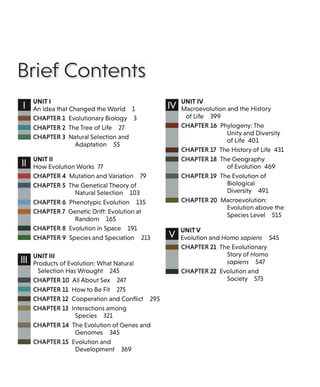
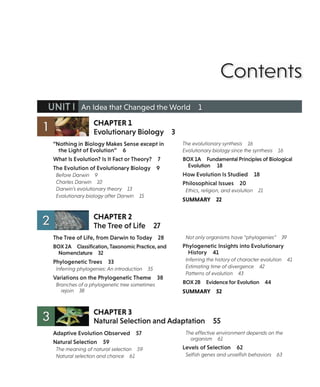
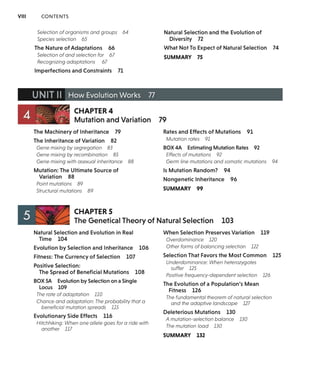
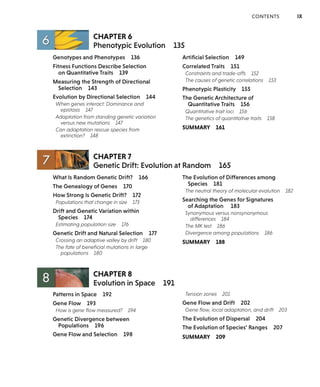
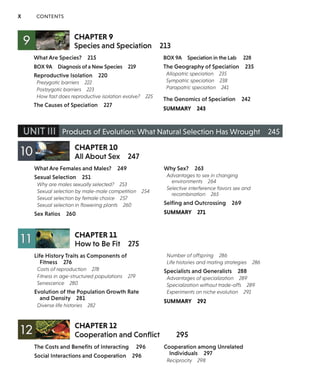
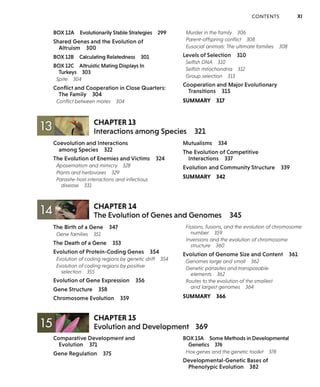
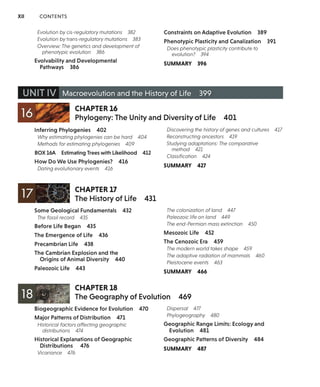
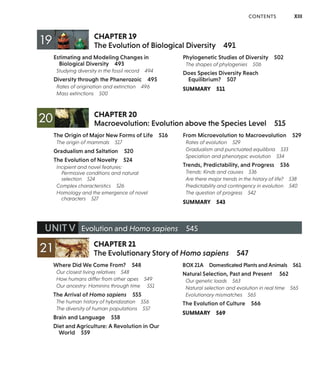



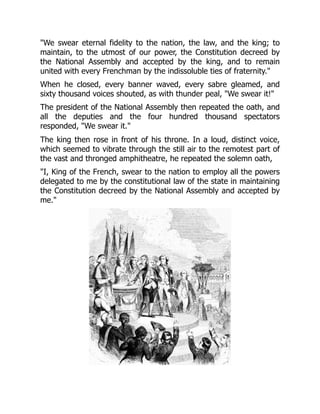
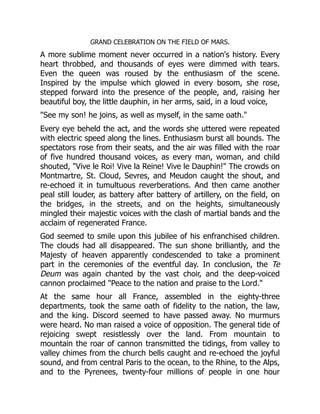
![raised the shout of emancipation. Such a shout never before or since
has ascended from earth to the ear of God.
For a week these rejoicings were continued in Paris. The Field of
Mars was converted into an immense ball-room, where thousands
listened to enchanting music, and with the overflowings of fraternal
love engaged in feasting, dancing, and all manner of games. At night
the city blazed with illuminations, and the flame of fireworks turned
darkness into day. The trees of the Elysian Fields were festooned
with brilliant lamps, shedding a mild light upon the most attractive of
scenes. There was no intoxication, no tumult, no confusion. All
classes intermingled, with kind words on every lip and kind looks
beaming from every face. No carriages were permitted to enter
these avenues, that the rich and the poor might share the festivities
alike. Pyramids of fire were placed at intervals in the midst of the
mass of foliage. The white dresses of the ladies who were
sauntering through those umbrageous alleys, the music, the dances,
the games, the shouts of laughter, led almost every one to the
delusive hope that the old world of care and sorrow had vanished to
give place to a new era of universal love and joy.[256]
The site of the Bastille was converted into an open square, and at
the entrance of the inclosure was an inscription "Ici l'on danse"
(Dancing here). For centuries the groans of the captive had
resounded through the vaults of that odious prison. The groans had
now ceased, and happy hearts throbbed with the excitement of the
song and the dance.
La Fayette gave a splendid review of the National Guard. The king,
the queen, and the dauphin attended the review, and were warmly
greeted by the people. The queen assumed the attitude of
reconciliation, and graciously presented her hand to the delegates to
kiss.
The delegates from the departments, before they left Paris, went in
a body to present their homage to the king. With one voice they
expressed to him their respect, gratitude, and affection. The chief of](https://image.slidesharecdn.com/21519-250614151151-d22a935c/85/Evolution-4th-Edition-by-Futuyma-Douglas-21-320.jpg)
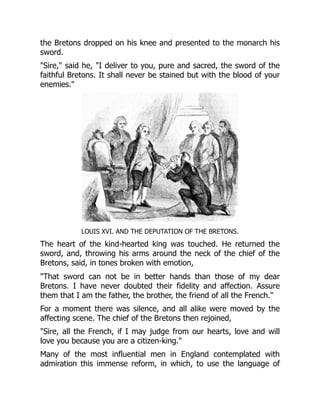
![Professor William Smyth, one of the most candid of English writers,
"the Constituent Assembly was supposed to have freed the country
from temporal and spiritual thraldom; the government had been
rested on free principles; the Bastille had been destroyed, lettres de
cachet abolished, feudal impediments and oppressions of every kind
removed, religious liberty established, the system of law made
uniform, the criminal jurisprudence reformed, monasteries
abolished; and by making the military force consist of the citizens of
the country, freedom, and all those new and weighty advantages,
seemed to be forever secured from the machinations of arbitrary
power."
The aristocracy, however, of England and Europe were struck with
alarm. The emancipation of the people in France threatened their
emancipation throughout the civilized world. Edmund Burke
espoused the cause of the aristocracy. With eloquence quite
unparalleled he roused England and Europe to war. In view of his
fierce invectives Michelet exclaims, in language which will yet be
pronounced by the world as not too severe,
"Mr. Pitt, feeling sure of the European alliance, did not hesitate to
say in open parliament that he approved of every word of Burke's
diatribe against the Revolution and against France—an infamous
book, full of calumny, scurrilous abuse, and insulting buffoonery; in
which the author compares the French to galley-slaves breaking
their chains, treads under foot the declaration of the rights of man,
tears it in pieces and spits upon it. Oh! what a cruel, painful
discovery. Those whom we thought our friends are our most bitter
enemies."[257]
Thirty thousand copies of Burke's memorable "Reflections" were sold
almost in a day. The sovereigns of Europe were so highly elated that
they transmitted to him their thanks. The nobles and the higher
clergy of France wrote to him letters of acknowledgment, and the
nobility of England lavished upon him their applause. These
"Reflections" combined aristocratic Europe against popular rights,](https://image.slidesharecdn.com/21519-250614151151-d22a935c/85/Evolution-4th-Edition-by-Futuyma-Douglas-23-320.jpg)
![and the people had no resource left them but to defend their
liberties with the sword.
FOOTNOTES:
[251] For the speech in full, see Thiers, vol. i., p. 126.
[252] M. Fromont, in his memoirs entitled "Recueil de divers
Ecrits relatifs à la Revolution," very frankly writes, "I repaired
secretly to Turin (January, 1790), to the French princes, to solicit
their approbation and their support. In a council which was held
on my arrival, I demonstrated to them that, if they would arm the
partisans of the altar and of the throne, and make the interests of
religion go hand in hand with those of royalty, it would save both.
The real argument of the revolutionists being force, I felt that the
real answer was force. Then, as at present, I was convinced of
this great truth—that religious zeal alone can stifle the Republican
mania.
"In consequence of this dread (of the new order of things), they
secretly set at work the most efficacious means for ruining the
internal resources and for thwarting the proposed plans, several
of which were calculated to effect the re-establishment of order, if
they had been wisely directed and supported."
[253] "There is no country in the world," says Voltaire, "where
there are so many contradictions as in France. The king gives the
actors wages, and the curé excommunicates them."
[254] "The whole of Europe—on the one hand Austria and Russia,
on the other England and Prussia—were gradually gravitating
toward the selfsame thought, the hatred of the Revolution.
However, there was this difference, that liberal England and
philosophical Prussia needed a little time in order to pass from
one pole to the other—to prevail upon themselves to give
themselves the lie, to abjure and disown their principles, and
avow that they were the enemies of liberty."—Michelet, p. 327.
[255] Memoirs of the Marquis of Ferrières.
[256] No one familiar with the writings of that day will affirm that
this description is too highly drawn. Upon this point Patriots and
Royalists agree. See Ferrières, t. ii., p. 89, on the part of the
Royalists, and Alphonse Esquiros, p. 38, on the part of the
Revolutionists.](https://image.slidesharecdn.com/21519-250614151151-d22a935c/85/Evolution-4th-Edition-by-Futuyma-Douglas-24-320.jpg)
![[257] Michelet's French Revolution, p. 415.
CHAPTER XX.
FLIGHT OF THE KING.
Riot at Nancy.—Prosecution of Mirabeau.—Issue of Assignats.—
Mirabeau's Interview with the Queen.—Four political Parties.—
Bishops refuse to take the Oath to the Constitution.—Character
of the Emigrants.—The King's Aunts attempt to leave France.—
Debates upon Emigration.—Embarrassment of the Assembly.—
Death of Mirabeau.—His Funeral.—The King prevented from
visiting St. Cloud.—Duplicity of the King.—Conference of the
Allies.—Their Plan of Invasion.—Measures for the Escape of the
King.—The Flight.
THE grand gala days, in the Field of Mars, celebrating the formation
of the Constitution, soon passed. The twenty thousand delegates,
having been fêted even to satiety, returned to their homes; the
Constituent Assembly resumed its labors.[258] The cares and toils of
life again pressed heavily upon the tax-exhausted and impoverished
millions of France.
The Belgians, in imitation of France, had commenced a struggle for
freedom. The King of France permitted Austria to send her troops
across the French territory into Belgium to crush the patriots. Many
of the most influential of the opponents of the Revolution were still
leaving France and uniting with the armed emigrants on the
frontiers. England, Austria, Sardinia, and Prussia were manifestly
forming an alliance to punish the French patriots, and to restore the
tyranny of the execrable old régime. The court, emboldened by
these proceedings, were boasting of the swift destruction which was
to overwhelm the advocates of reform, and commenced a](https://image.slidesharecdn.com/21519-250614151151-d22a935c/85/Evolution-4th-Edition-by-Futuyma-Douglas-25-320.jpg)
![perfect liberty, but he was continually watched. The queen was
exceedingly anxious for flight. The king was ever vacillating, but
generally, influenced by such advisers as Mirabeau and La Fayette,
inclined to accept the Revolution. He was also haunted with the idea
that his cousin, the Duke of Orleans, wished to frighten him into
flight, that the Assembly might declare the throne vacant, and place
the sceptre in the duke's hand as the sworn friend and supporter of
the Revolution.
Mirabeau had commenced his career as one of the most ardent
advocates of reform, but he now wished to arrest the progress of
the revolutionary chariot, as he affirmed that it had passed beyond
its proper goal. His course was attributed by some to bribery on the
part of the court. His friends say that he was only influenced by his
own patriotic intelligence. At St. Cloud there is a retired summer-
house, embowered in foliage, at the summit of a hill which crowns
the highest part of the park. The queen appointed an interview with
Mirabeau at this secluded spot.
The statesman of gigantic genius, who seemed to hold in his hand
the destinies of France, left Paris on horseback one evening, under
pretense of visiting a friend. Avoiding observation, he turned aside
into a by-path until he reached a back gate of the park. Here he was
met in the dark by a nobleman, who conducted him to the retreat of
the queen, who was waiting to receive him. His constitution was
already undermined by dissipation and unintermitted labors. His
cheeks were sunken, his eyes inflamed, his complexion sallow, and a
flabby corpulency announced the ravages of disease; but,
notwithstanding all these defects, his genial spirit and courtly
bearing made him one of the most fascinating of men.[259]
The queen was then thirty-five years of age. Care and grief had
sadly marred her marvelous beauty. Her proud spirit was chagrined
in being compelled to look for support to one of the leaders of the
people. But little is known respecting what passed at this private
interview. At its close Mirabeau said to the queen,](https://image.slidesharecdn.com/21519-250614151151-d22a935c/85/Evolution-4th-Edition-by-Futuyma-Douglas-27-320.jpg)
!["Madam, when your august mother admitted one of her subjects to
the honor of her presence, she never dismissed him without allowing
him to kiss her hand."
The queen, responding to the gallantry, graciously presented her
hand. Mirabeau, bowing profoundly, kissed it, and then, raising his
head, said proudly,
"Madam, the monarchy is saved."[260]
Suddenly Mirabeau became rich, set up a carriage, furnished his
house sumptuously, and gave magnificent entertainments. He
immediately commenced a course of cautious but vigorous measures
to overthrow the Constitution and establish one less democratic,
which should give more stability and efficiency to the royal power.
He affirmed that this was essential to the peace and prosperity of
France, and that, instead of being bought over by the court, he had
bought the court over to his views.
"But suppose the court refuses," said one of his friends, "to adopt
your plans?"
"They have promised me every thing," Mirabeau replied.
"But suppose they should not keep their word?" it was rejoined.
"Then," said Mirabeau, "I will overthrow the throne and establish a
republic."
It can hardly be denied that the Constitution was too democratic for
a monarchy and hardly democratic enough for a republic. In the
natural course of events public opinion would sway either to
strengthening the throne or to diminish still more its prerogatives.
There were now four parties in France. The first consisted of the old
aristocratic classes of the clergy and the nobles, now mostly
emigrants, and busy in effecting a coalition of surrounding
monarchies to quell the Revolution, and by fire and sword to
reinstate the rejected despotism of the Bourbons.](https://image.slidesharecdn.com/21519-250614151151-d22a935c/85/Evolution-4th-Edition-by-Futuyma-Douglas-28-320.jpg)
![The second class was composed of the king and Mirabeau, with the
queen reluctantly assenting to its principles, and others of the nobles
and priests who were disposed, some from choice and others from
the consciousness of necessity, partially to accept the Revolution.
They were willing to adopt a constitution which should seriously limit
the old prerogatives of the crown. But they wished to repudiate the
constitution now adopted, and to form one less democratic, which
would still grant many prerogatives to the king.
The third party consisted of the great majority of the Assembly,
headed by sincere and guileless patriots like La Fayette, and
sustained probably by the great majority of the purest and best men
in the kingdom, who were in favor of the constitution which the
nation had accepted. While they did not regard it as perfect, they
felt that it was a noble advance in the right direction, and that the
salvation of the liberties of France now depended upon allegiance to
this constitution.
There was a fourth class, restless, tumultuous, uninformed,
composed of the lowest portion of the populace, who could ever be
roused to phrensy by the cry of "Aristocracy," who were ripe for any
deeds of violence, and who regarded that firmness of law which
protected order, property, and life as tyranny. They occupied the
lowest possible platform of democracy.
Such was the condition of France as the Constituent Assembly now
endeavored to consolidate the new institutions and to bring harmony
from the chaos into which the nation had been plunged. While in
these circumstances of unparalleled peril, combined Europe was
watching for an opportunity to pounce upon the distracted nation.
All public functionaries were required to take oath to the new
constitution. The clergy, as bound by the laws of the Romish Church,
appealed to the Pope for instructions. At the same time the opposing
bishops and nobles wrote to the Pope urging him to withhold his
assent.[261] The king had sanctioned the decrees. The Pope, under
various pretexts, postponed an answer. Many of the bishops and
curates consequently refused to take the oath. The Assembly was](https://image.slidesharecdn.com/21519-250614151151-d22a935c/85/Evolution-4th-Edition-by-Futuyma-Douglas-29-320.jpg)
![not disposed to wait for the decision of a foreign potentate, and,
accepting those bishops and curates who took the oath, immediately
nominated new bishops and curates to take the place of those who
refused. Justly and frankly the Assembly declared that it wished to
do no violence to conscience, but that it could not appoint as public
functionaries those men who refused to take the oath of allegiance
to the Constitution of the kingdom. This increased exasperation, and
enabled many of the bishops to appeal to the fanatic populace to
rise in defense of the endangered Church.
The emigrants now made a general rendezvous at Coblentz, in the
territory of the Elector of Treves, and at other points of the frontier.
[262] These men, composing what was called the court, consisted
mainly of the higher nobles who had long been pampered with the
favors of the monarchy, and who looked with contempt upon the
nobles of the rural districts. Haughty, dissolute, and frivolous, they
scorned any appeal to the popular arm, even to popular fanaticism
for support. The only recourse to which they would condescend
were the armies of England, Austria, and Prussia. The rural nobles,
on the other hand, and the rural bishops, were secretly organizing
their friends within the kingdom to fall fiercely in civil war upon the
patriots so soon as the solid battalions of the allies should cross the
frontiers.[263]
In this state of things the king's aunts decided to leave France. They
had proceeded in their carriage on the way to Rome as far as Arnay-
le-Duc, when they were arrested. The feverish state of the public
mind led to suspicions that their emigration might accelerate
impending perils. The Assembly took the matter into deliberation
whether the ladies should be permitted to depart. The question was
settled by a keen sally of Menou.](https://image.slidesharecdn.com/21519-250614151151-d22a935c/85/Evolution-4th-Edition-by-Futuyma-Douglas-30-320.jpg)
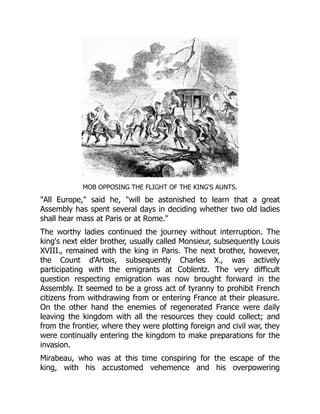
![audacity, opposed any law against emigration.[264]
"I admit," said he, "that a bad use is made of this liberty at the
present moment. But that by no means authorizes this absurd
tyranny. I beg you to remember that I have all my life combated
against tyranny, and that I will combat it wherever I find it. That
popularity to which I have aspired, and which I have enjoyed, is not
a feeble reed. I will thrust it deep into the earth, and will make it
shoot up in the soil of justice and of reason. And I now solemnly
swear, if a law against emigration is voted, I swear to disobey you."
[265]
The Assembly was truly in a dilemma. They could not prohibit
emigration without grossly violating that declaration of rights which
they had just adopted with solemnities which had arrested the
attention of the world. They could not permit this flood of emigration
without exposing France to ruin; for it was well known that the
nobles, with all the wealth they could accumulate, were crossing the
frontiers merely to organize themselves into armies for the invasion
of France.
Mirabeau never displayed more power than on this occasion, in
overawing and commanding the Assembly. He succeeded in
arresting the measure. This, however, was his last triumph. Disease
was making rapid ravages, his frame was exhausted, and death
approached. A sudden attack of colic confined him to his chamber,
and soon all hope of recovery was relinquished. He was still the idol
of the people, and crowds, in breathless silence, thronged around
his abode, anxious to receive bulletins of his health. The king and
the people alike mourned, for both were leaning upon that vigorous
arm.
He could not repress an expression of satisfaction in view of his
labors and his accomplishments. To his servants he said, "Support
this head, the greatest in France." "William Pitt," he remarked, "is
the minister of preparations. He governs with threats. I would give](https://image.slidesharecdn.com/21519-250614151151-d22a935c/85/Evolution-4th-Edition-by-Futuyma-Douglas-32-320.jpg)
![him some trouble if I should live."[266] On the morning of his death
he said to an attendant,
"Open the window. I shall die to-day. All that can now be done is to
envelop one's self in perfumes, to crown one's self with flowers, to
surround one's self with music, that one may sink quietly into
everlasting sleep."
Soon, in a paroxysm of extreme agony, he called for opium, saying,
"You promised to save me from needless suffering."
To quiet him a cup was presented, and he was deceived with the
assurance that it contained the desired fatal opiate. He swallowed
the draught, and in a moment expired, in the forty-second year of
his age. It was the 2d of April, 1791. His death caused profound
grief. All parties vied alike in conferring honor upon his remains. The
nation went into mourning, a magnificent funeral was arranged, and
the body was deposited in the tomb with pomp surpassing that
which had accompanied the burial of the ancient kings of France.
Suspicions are still cherished that Mirabeau died the victim of poison.
[267]
The funeral of Mirabeau was the most imposing, popular, and
extensive of any recorded in history, always excepting that
unparalleled display of a nation's gratitude and grief which
accompanied the transfer of the remains of Napoleon from St.
Helena to the Invalides. It is estimated that four hundred thousand
men took a part in the funeral pageant of Mirabeau. The streets
were draped in mourning, and pavements, windows, balconies, and
house-tops were thronged with sad and silent spectators.
La Fayette headed the immense procession, and was followed by the
whole Constituent Assembly, and by the whole club of Jacobins,
who, in a dense mass, assumed to be chief mourners on the
occasion, though Mirabeau had for some time held himself aloof
from their tumultuous meetings. It was eight o'clock in the evening
before the procession arrived at the Church of Saint Eustache, where
a funeral oration was pronounced by Cérutti. The arms of twenty](https://image.slidesharecdn.com/21519-250614151151-d22a935c/85/Evolution-4th-Edition-by-Futuyma-Douglas-33-320.jpg)
![thousand of the National Guard were then discharged at once. The
crash caused the very walls of the church to rock, shivering to atoms
every pane of glass.
It was now night, and, by the light of a hundred thousand torches,
the procession resumed its course. New instruments of music had
been invented, which were then heard for the first time—the
trombone and the tamtam. As the vast procession traversed the
streets through the gloomy shades of night, illumined by the glare of
flickering torches, with the tolling of bells, blending, now with the
wail of the chant and now with the pealing requiems of martial
bands, all the elements of sublimity seemed combined to affect the
heart and overawe the soul. It was near midnight when the
sarcophagus was deposited in its tomb at the Church of Saint
Geneviève, over whose portal was inscribed these words,
"AUX GRANDS HOMMES LA PATRIE RECONNAISSANTE."
Mirabeau was the master-spirit of the Revolution. After his death
there were multitudes struggling for the leadership, with no man of
sufficient prominence to attain and retain it. The funeral of Mirabeau
was the funeral of emancipated France. From that hour the
Revolution was on the rush to ruin.
"Time," writes Michelet, "which reveals every thing, has revealed
nothing that really proves the reproach of treason to be well
founded. Mirabeau's real transaction was an error, a serious, fatal
error, but one that was then shared by all in different degrees. At
that time all men, of every party, from Cazalès and Maury down to
Robespierre, and even to Marat, believed France to entertain Royalist
opinions. All men wanted a king. The number of Republicans was
truly imperceptible. Mirabeau believed that it was necessary to have
a king with power, or no king at all. It is true that Mirabeau appears
to have received sums to defray the expense of his immense
correspondence with the Departments—a sort of ministry that he
was organizing at his own house. He makes use of this subtle
expression—this excuse which does not excuse him—that he had not
been bought; that he was paid, not sold."[268]](https://image.slidesharecdn.com/21519-250614151151-d22a935c/85/Evolution-4th-Edition-by-Futuyma-Douglas-34-320.jpg)
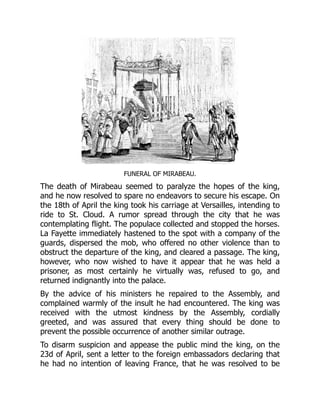
![faithful to the oath which he had taken to the Constitution, and that
all those who intimated any thing to the contrary were his enemies
and the enemies of the country. He soon after, however, declared to
an envoy sent to him from the Emperor Leopold, that this letter by
no means contained his real sentiments, but that it was wrung from
him by the peril of his situation.[269]
A conference of the foreign powers was held on the 20th of May,
1791, at Mantua, in Italy, where Leopold, Emperor of Austria, and
brother of Marie Antoinette, then chanced to be. At this conference
Count d'Artois appeared in behalf of the emigrants. Prussia was
represented by Major Bischofverder, England by Lord Elgin, and
Louis XVI. by the Count de Durfort. Several other of the kingdoms
and principalities of Europe were represented on the occasion. The
Count de Durfort returned from this conference to Louis XVI. in
Paris, and brought him the following secret declaration in the name
of the Emperor Leopold:[270]
Austria engaged to assemble thirty-five thousand men on the
frontiers of Flanders. At the same time fifteen thousand men from
the smaller German States would attack Alsace. Fifteen thousand
Swiss troops were to be marched on Lyons, and the King of Sardinia,
whose daughter the Count d'Artois had married, was to assail
Dauphiné. The king of Spain, cousin of Louis XVI., was to gather
twenty thousand troops upon the slopes of the Pyrenees, to fall like
an avalanche down upon southern France. Prussia engaged to co-
operate cordially. The King of England, notwithstanding the
eloquence of Burke's pamphlet, could not yet venture to call upon
the liberty-loving English to engage in this infamous crusade against
the independence and the liberty of a sister kingdom. But the king,
as Elector of Hanover, engaged to take an active part in the war. A
protest against the Revolution was to be drawn up in the name of
the whole house of Bourbon, whose divine right to despotism in
France had been questioned by the French people, and this protest
was to be signed by those branches of the Bourbons who were
occupying the thrones of Spain, Naples, and Parma.[271]](https://image.slidesharecdn.com/21519-250614151151-d22a935c/85/Evolution-4th-Edition-by-Futuyma-Douglas-36-320.jpg)
![Plans for the invasion having been thus arranged, Louis XVI.
resolved immediately to effect his escape to the frontier. He could
then place himself at the head of these foreign armies, and lash
France into obedience, and consign those patriots who had been
toiling for liberty to the dungeon and the scaffold.
Never was the condition of a nation more full of peril, or apparently
more hopeless. This impending destruction was enough to drive any
people into the madness of despair. It is hard to wear the fetters of
bondage even when one has never known any thing better. But,
after having once broken those chains and tasted the sweets of
liberty, then to have the shackles riveted anew is what few human
spirits can endure.
It was not the intention of the king immediately to leave France. He
arranged to go to Montmedy, about two hundred miles from Paris,
taking the very retired Chalons road through Clermont and
Varennes. The Marquis of Bouillé, a general entirely devoted to the
court party, formed a camp at Montmedy to receive the king, under
the pretense of watching hostile movements on the frontiers. Small
detachments of cavalry were also very quietly posted at different
points on the road to aid in the flight. All the arrangements were
made for starting on the 20th of June.[272]
The king, though on the whole a worthy man, and possessing some
excellent traits of character, was in some points weak almost to
imbecility. All the energy of the family was with the queen, and she,
with the Marquis of Bouillé, planned the escape. They were often
thwarted, however, in their wishes by the obstinacy of the king. La
Fayette was entirely deceived, and but few even of the court were
intrusted with the secret. Still, rumors of flight had been repeatedly
circulated, and the people were in a state of constant anxiety lest
the court should carry off the king. They hardly believed that the
king himself wished to join the emigrants, and to urge war against
the Constitution which he had sworn to accept.
The Swiss Guards still surrounded the Tuileries. They were stationed,
however, only at the exterior posts. The interior of the palace, the](https://image.slidesharecdn.com/21519-250614151151-d22a935c/85/Evolution-4th-Edition-by-Futuyma-Douglas-37-320.jpg)
![staircases, and the communications between the rooms were
occupied by the National Guard, in whom the nation could place
more reliance. It was a long-established custom that troops should
be thus stationed throughout the palace, that the royal family might
be protected from impertinence or from any irruption of popular
violence. Since the terrible scenes of the 5th and 6th of October it
became more important than ever that a strong guard should
encircle the royal family. But while the ostensible duty of this guard
was only to protect the king from insult, it had also a secret mission
to prevent the king's escape.
La Fayette, to whom the whole business was intrusted, oppressed
with the responsibility of his office, was continually, by night and by
day, visiting the posts. To the officers who had charge of the night-
watch he had given secret orders that the king was not to be
permitted to leave the palace after midnight. Thus the king was truly
a prisoner, and he was fully conscious of it, though every possible
effort was adopted to conceal from him the humiliating fact.
M. Bouillé and the queen were compelled to yield to the whims of
the king, and to adopt measures which threatened to frustrate the
plan. The king insisted upon having an immense carriage
constructed which could take the whole party, though the unusual
appearance of the carriage would instantly attract all eyes; he
insisted upon traveling a very unfrequented route, which would
excite the curiosity of every one who should see the carriage pass;
he insisted upon stationing military detachments along the route,
though Bouillé urged that such detachments if small could render no
service, and if large would excite suspicion; he insisted upon taking
the governess of the children, because the governess said that she
loved the children too much to be separated from them, though
Bouillé urged that instead of the incumbrance of a governess they
should take in the carriage an officer accustomed to traveling, and
who could aid in any unexpected emergency. The king, though fickle
as the wind upon questions of great moment, was, like all weak
men, inflexible upon trifles.[273]](https://image.slidesharecdn.com/21519-250614151151-d22a935c/85/Evolution-4th-Edition-by-Futuyma-Douglas-38-320.jpg)
![would be likely to excite. He had a passport prepared, in which the
governess was represented as a German baroness, Madame de
Korff, traveling with her two children. The king was her valet-de-
chambre, the queen her waiting-maid. The proverbial wealth of the
German barons and the peculiar style of the equipage to which they
were accustomed happily favored this idea.[274]
The morning was just beginning to dawn as Count Fersen kissed the
hands of the king and queen and left them to prosecute their
perilous journey, while he took flight for the frontier through
Flanders. The coach was drawn by six horses, who were driven at
the utmost speed, relays of horses having been established at short
stages. The sun at length rose bright and cheerful. The country was
smiling in all the verdure of blooming June. Every revolution of the
wheels was bearing them farther from Paris. It was hardly possible
that their flight could be discovered until a late hour in the morning.
There were no telegraphs in those days to send intelligence with
lightning speed to arrest their flight. Having six or eight hours the
start of their pursuers, and being abundantly supplied with fresh
horses, escape seemed now almost certain. Hope began to cheer
their hearts.
Some slight interruptions had retarded their progress, and it was
about three o'clock in the afternoon when they entered Chalons,
some ninety miles from Paris. The queen, with an exultant smile,
exclaimed, "All goes well. If we were to have been stopped at all it
would have been before now."
At Chalons they exchanged horses. The king now felt that he was
safe, for the Marquis of Bouillé had posted detachments of troops at
every important point between Chalons and Montmedy. With
characteristic imprudence, as the carriage was surrounded with
idlers at Chalons, the king put his head out of the window, showing
his well-known face to the crowd. The postmaster instantly
recognized the king, but, being himself an ardent Royalist, divulged
not his secret, but aided in putting in the fresh horses, and ordered
the postillions to drive on.](https://image.slidesharecdn.com/21519-250614151151-d22a935c/85/Evolution-4th-Edition-by-Futuyma-Douglas-40-320.jpg)
![[258] "I have read many histories of revolutions, and can affirm
what a Royalist avowed in 1791, that never had any great
revolution cost less bloodshed and weeping. In reality, only one
class, the clergy, was able, with any appearance of truth, to call
itself robbed; and, nevertheless, the result of that spoliation was,
that the great bulk of the clergy, starved under the old system for
the emolument of a few prelates, had at length a comfortable
livelihood."—Michelet, p. 417.
[259] "If I had never lived with Mirabeau," says Dumont, "I
should never have known what a man can make of one day—
what things may be placed within the interval of twelve hours. A
day for this man is more than a week or a month is for others.
The mass of things he guided on together was prodigious; from
the scheming to the executing, not a moment lost."—Dumont, p.
311.
[260] Michelet, p. 333.
[261] Thiers, vol. i., p. 166. Ferrières, t. ii., p. 198.
[262] "Many of the emigrants had joined the army in a state of
complete destitution. Others were spending improvidently the last
relics of their fortunes. All were in good spirits, for the camp life
was free and joyous. They confidently believed that the end of
autumn would find them restored to their splendid homes, to
their groves, to their forests, and to their dove-cots."—
Chateaubriand's Memoirs of the Duke de Berri.
[263] See Recueil de divers Ecrits relatif à la Revolution, p. 62;
also Chateaubriand's Memoirs of the Duke de Berri.
In reference to England Michelet remarks, with much truth: "The
first power is aristocracy, the second aristocracy, and the third
aristocracy. This aristocracy goes on incessantly recruiting its
body with all those who grow rich. To be rich in order to be noble
is the absorbing thought of the Englishman. Property, specially
territorial and feudal, is the religion of the country."—Michelet's
French Revolution, p. 432.
[264] "The meeting ended at half past five, and Mirabeau went to
the house of his sister, his intimate and dear confidante, and said
to her, 'I have pronounced my death-warrant. It is now all over
with me, for they will kill me.'"—Michelet, p. 461.
[265] The peculiar character of Mirabeau is illustrated by the
following well-authenticated anecdote. He was, on one occasion,](https://image.slidesharecdn.com/21519-250614151151-d22a935c/85/Evolution-4th-Edition-by-Futuyma-Douglas-42-320.jpg)
![reading a report to the Assembly upon some riots in Marseilles,
which he affirmed were fomented by the partisans of the court.
He was incessantly interrupted by the aristocratic party with such
abusive epithets as "calumniator, liar, assassin, scoundrel." He
stopped a moment, looked at them with an imperturbable smile,
and, in his most honeyed tones, said, "Gentlemen, I wait till these
amenities be exhausted."—Dumont, Souvenirs, p. 278.
[266] The English people were at this time generally in sympathy
with the Revolution. The aristocratic government of England was
in deadly hostility to it. In 1792, Samuel Taylor Coleridge, then
head scholar in Jesus College, Cambridge, wrote an Ode to
France, commencing with the words,
"When France, in wrath, her giant limbs upreared,
And, with that oath which smote air, earth, and sea,
Stamped her strong foot, and said she would be free,
Bear witness for me how I hoped and feared."
In consequence of this ode, and his avowed attachment to the
principles of the Revolution, he became so obnoxious to his
superiors that he was constrained to leave the college abruptly,
without a degree.—Cyclopædia of English Literature, Article S.T.
Coleridge.
[267] M. Thiers, in the impetuosity of his narrative, is not always
accurate in details. He gives the 20th of April as the date of
Mirabeau's death. Mignet assigns it to the 2d of March. Nearly all
other authorities agree upon the 2d of April. It is indeed
wonderful that upon such a subject there should be such a
diversity of statement. The event at the time was deemed so
momentous, that the Jacobin Club voted that the anniversary of
his death should, through all future time, be celebrated with
funereal pomp.
[268] Mirabeau claims, and his friends claim for him, and
probably with justice, that he wished to be the mediator between
the Revolution and the monarchy—to save royalty and liberty,
believing that, under the circumstances, royalty was essential to
liberty. But the folly of the court thwarted every endeavor. They
would not accede to any measure of justice and moderation. The
court wished only to make him unpopular. Mirabeau saw his
position, from which no struggles could extricate him, and he died
of disappointment and grief. Had he not then died, he would, in a](https://image.slidesharecdn.com/21519-250614151151-d22a935c/85/Evolution-4th-Edition-by-Futuyma-Douglas-43-320.jpg)