CYCLONES
CONTENTS
 DEFINITION
 DIFFERENT NAMES
 TYPES OF CYCLONES
 NAMING OF A CYCLONE
 MECHANISM OF A CYCLONE
 HAZARDS
 IMPACTS
 MITIGATING THE EFFECTS
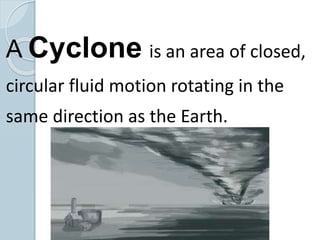
A Cyclone is an area of closed,
circular fluid motion rotating in the
same direction as the Earth.
ALSO KNOWN AS…..
Hurricane Hurricane
Tropical Cyclone
Tropical Cyclone
Typhoon
Indian Ocean
North
West Pacific
Ocean
South
Pacific Ocean
Atlantic
Ocean
North
East Pacific
Ocean
TYPES OF CYCLONES
 TROPICAL CYCLONES: these are cyclones that
occur over tropical ocean regions.
 Tropical Disturbance: Winds weak and
 unorganized
 Tropical Depression: Winds less than 39 mph
 Tropical Storm: Winds 39 to 74 mph
 Hurricane: Winds greater than 74 mph
 POLAR CYCLONES: are cyclones that occur
in polar regions like Greenland, Siberia and
Antarctica.
 MESOCYCLONES: is when part of a
thunderstorm cloud starts to spin, which
may eventually lead to a tornado.
NAMING OF A CYCLONE
Cyclones derive their names through a
systematic procedure laid down by the World
Meteorological Organization (WMO).
Eight north Indian Ocean countries -
Bangladesh, India, the Maldives, Myanmar,
Oman, Pakistan, Sri Lanka and Thailand - have
prepared a list of 64 names.
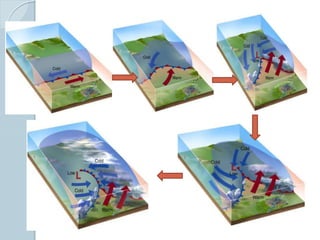
MECHANISM
OF A
CYCLONE
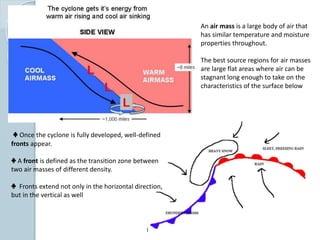
♣ Once the cyclone is fully developed, well-defined
fronts appear.
♣ A front is defined as the transition zone between
two air masses of different density.
♣ Fronts extend not only in the horizontal direction,
but in the vertical as well
An air mass is a large body of air that
has similar temperature and moisture
properties throughout.
The best source regions for air masses
are large flat areas where air can be
stagnant long enough to take on the
characteristics of the surface below
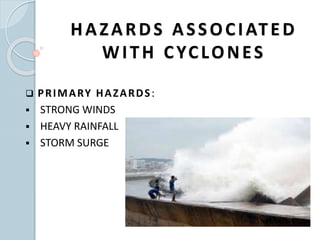
HAZARDS ASSOCIATED
WITH CYCLONES
 PRIMARY HAZARDS:
 STRONG WINDS
 HEAVY RAINFALL
 STORM SURGE
 SECONDARY HAZARDS
 FLOODING
 EPIDEMICS
 TERTIARY HAZARDS
 INCREASE IN PRICES
 WATER
CONTAMINATION
IMPACTS OF CYCLONES
AT SEA
 LOWERING OF SEA SURFACE TEMPERATURES
 DISRUPTING INTERNATIONAL SHIPPING
 MAINTAINS GLOBAL HEAT BALANCE
UPON LANDFALL
DUE TO
 STRONG WINDS
 STORM SURGE
 HEAVY RAINFALL
MITIGATING
THE EFFECTS
OF A
CYCLONE
BEFORE THE CYCLONE
 Check the house; secure loose tiles, carry out
repair works for doors and windows
 Remove dead woods or dying trees close to the
house; anchor removable objects like lumber
piles, loose tin sheds, loose bricks, garbage
cans, sign boards etc which can fly in strong
winds.
 Keep some glass boards ready so that glass
windows can be boarded if needed.
 Demolish condemned buildings
 Keep some dry non perishable food always
ready for emergency use.
WHEN THE CYCLONE STARTS
 Listen to the radio about weather warnings
 Keep monitoring the warnings.
 Pass on the information to others, believe in the
official information only.
 Ignore rumors and do not spread them; this will help
to avoid panic situation.
 Be sure that a window and door can be opened only
on the side opposite to the one facing the wind.
 If the centre of the cyclone is passing directly over
your house there will be a lull in the wind and rain
lasting for half and hour or so. During this time do not
go out; because immediately after that very strong
winds will blow from the opposite direction.
 Switch off electrical mains in your house.
 Remain calm.
 Believe in the official information when a cyclone
alert is on for your area, continue normal working
but stay alert to the radio warnings.
 Remember that a cyclone alert means that the
danger is within 24 hours. Stay alert.
 If your house is securely built on high ground take
shelter in the safer part of the house. However, if
asked to evacuate do not hesitate to leave the
place.
 Provide strong suitable support for outside doors.
 Keep torches handy
 WHEN EVACUATION IS INSTRUCTED
 Pack essentials for youeself and your family
to last you a few days, including medicines,
special foods for babies, children or elders.
 Head for the proper shelter or evacuation
points indicated for your area.
 Do not worry about your property
 At the shelter follow instructions of the
person in charge
 Remain n the shelter until you have been
informed to leave.
POST CYCLONE MEASURES
 You should remain in the shelter until
informed that you can return to your home.
 Strictly avoid any loose and dangling wires
from the lamp posts
 If you are to drive, drive carefully.
 Clear debris from your premises immediately.
 Report the correct loss to appropriate
authorities.
THANK YOU

Cyclones

  • 1.
  • 2.
    CONTENTS  DEFINITION  DIFFERENTNAMES  TYPES OF CYCLONES  NAMING OF A CYCLONE  MECHANISM OF A CYCLONE  HAZARDS  IMPACTS  MITIGATING THE EFFECTS
  • 3.
    A Cyclone isan area of closed, circular fluid motion rotating in the same direction as the Earth.
  • 4.
    ALSO KNOWN AS….. HurricaneHurricane Tropical Cyclone Tropical Cyclone Typhoon Indian Ocean North West Pacific Ocean South Pacific Ocean Atlantic Ocean North East Pacific Ocean
  • 5.
    TYPES OF CYCLONES TROPICAL CYCLONES: these are cyclones that occur over tropical ocean regions.  Tropical Disturbance: Winds weak and  unorganized  Tropical Depression: Winds less than 39 mph  Tropical Storm: Winds 39 to 74 mph  Hurricane: Winds greater than 74 mph
  • 6.
     POLAR CYCLONES:are cyclones that occur in polar regions like Greenland, Siberia and Antarctica.  MESOCYCLONES: is when part of a thunderstorm cloud starts to spin, which may eventually lead to a tornado.
  • 7.
    NAMING OF ACYCLONE Cyclones derive their names through a systematic procedure laid down by the World Meteorological Organization (WMO). Eight north Indian Ocean countries - Bangladesh, India, the Maldives, Myanmar, Oman, Pakistan, Sri Lanka and Thailand - have prepared a list of 64 names.
  • 8.
  • 10.
    ♣ Once thecyclone is fully developed, well-defined fronts appear. ♣ A front is defined as the transition zone between two air masses of different density. ♣ Fronts extend not only in the horizontal direction, but in the vertical as well An air mass is a large body of air that has similar temperature and moisture properties throughout. The best source regions for air masses are large flat areas where air can be stagnant long enough to take on the characteristics of the surface below
  • 12.
    HAZARDS ASSOCIATED WITH CYCLONES PRIMARY HAZARDS:  STRONG WINDS  HEAVY RAINFALL  STORM SURGE
  • 13.
     SECONDARY HAZARDS FLOODING  EPIDEMICS  TERTIARY HAZARDS  INCREASE IN PRICES  WATER CONTAMINATION
  • 14.
    IMPACTS OF CYCLONES ATSEA  LOWERING OF SEA SURFACE TEMPERATURES  DISRUPTING INTERNATIONAL SHIPPING  MAINTAINS GLOBAL HEAT BALANCE UPON LANDFALL DUE TO  STRONG WINDS  STORM SURGE  HEAVY RAINFALL
  • 15.
  • 16.
    BEFORE THE CYCLONE Check the house; secure loose tiles, carry out repair works for doors and windows  Remove dead woods or dying trees close to the house; anchor removable objects like lumber piles, loose tin sheds, loose bricks, garbage cans, sign boards etc which can fly in strong winds.  Keep some glass boards ready so that glass windows can be boarded if needed.  Demolish condemned buildings  Keep some dry non perishable food always ready for emergency use.
  • 17.
    WHEN THE CYCLONESTARTS  Listen to the radio about weather warnings  Keep monitoring the warnings.  Pass on the information to others, believe in the official information only.  Ignore rumors and do not spread them; this will help to avoid panic situation.  Be sure that a window and door can be opened only on the side opposite to the one facing the wind.  If the centre of the cyclone is passing directly over your house there will be a lull in the wind and rain lasting for half and hour or so. During this time do not go out; because immediately after that very strong winds will blow from the opposite direction.
  • 18.
     Switch offelectrical mains in your house.  Remain calm.  Believe in the official information when a cyclone alert is on for your area, continue normal working but stay alert to the radio warnings.  Remember that a cyclone alert means that the danger is within 24 hours. Stay alert.  If your house is securely built on high ground take shelter in the safer part of the house. However, if asked to evacuate do not hesitate to leave the place.  Provide strong suitable support for outside doors.  Keep torches handy
  • 19.
     WHEN EVACUATIONIS INSTRUCTED  Pack essentials for youeself and your family to last you a few days, including medicines, special foods for babies, children or elders.  Head for the proper shelter or evacuation points indicated for your area.  Do not worry about your property  At the shelter follow instructions of the person in charge  Remain n the shelter until you have been informed to leave.
  • 20.
    POST CYCLONE MEASURES You should remain in the shelter until informed that you can return to your home.  Strictly avoid any loose and dangling wires from the lamp posts  If you are to drive, drive carefully.  Clear debris from your premises immediately.  Report the correct loss to appropriate authorities.
  • 21.