Nasal Polyps
Dr. Krishna Koirala
MBBS, MS ENT-HNS
Associate professor
MCOMS, Pokhara,
Nepal29-06-2020
Definition
• Hypertrophied, edematous, pedunculated mucosa
prolapsing out of the nose or paranasal sinus
• Classification
– Antrochoanal Polyp
– Ethmoidal polyps
• Properties of Nasal Polyps
– Pale /grey in color, glistening, pedunculated, smooth
surface, mobile, insensitive to touch, do not bleed on
probing
Antro - choanal Polyp
( Killian’s Polyp)
• Etiology:
– Infection
– Proetz Theory (anomaly of maxillary sinus ostium)
– Bernoulli’s phenomenon ( pressure drop next to
constriction)
• Origin:
– Arises from maxillary sinus mucosa and exits via
its natural or accessory ostium and extends to
choana
Why does AC polyp prefer to extend
towards the choana?
1. Maxillary ostium is directed posteriorly
2. Cilia beat posteriorly
3. Air current flows posteriorly in a greater force
4. Nasal floor slopes posteriorly
5. Posterior nasal cavity is larger
6. Negative oropharyngeal pressure while swallowing
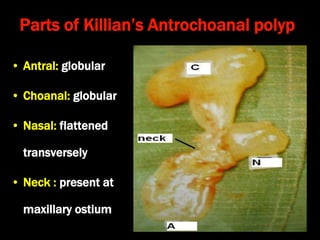
Parts of Killian’s Antrochoanal polyp
• Antral: globular
• Choanal: globular
• Nasal: flattened
transversely
• Neck : present at
maxillary ostium
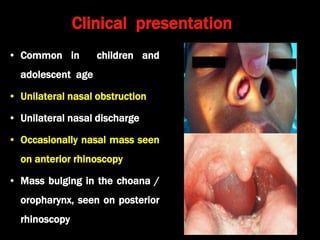
Clinical presentation
• Common in children and
adolescent age
• Unilateral nasal obstruction
• Unilateral nasal discharge
• Occasionally nasal mass seen
on anterior rhinoscopy
• Mass bulging in the choana /
oropharynx, seen on posterior
rhinoscopy
Examination of nasal mass
• Inspection : side, size, number, color, surface,
pedunculated or sessile, origin, attachment
• Probing : consistency, sensitivity to touch, bleeding
on touch, can be passed all around
• Shrinkage with decongestant drops
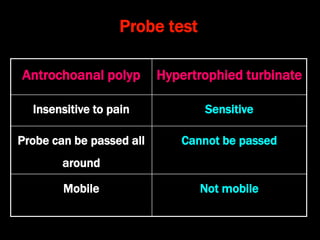
Probe test
Antrochoanal polyp Hypertrophied turbinate
Insensitive to pain Sensitive
Probe can be passed all
around
Cannot be passed
Mobile Not mobile
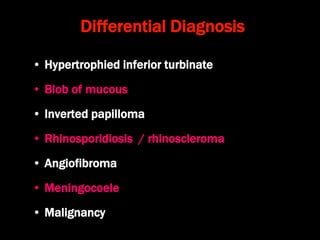
Differential Diagnosis
• Hypertrophied inferior turbinate
• Blob of mucous
• Inverted papilloma
• Rhinosporidiosis / rhinoscleroma
• Angiofibroma
• Meningocoele
• Malignancy
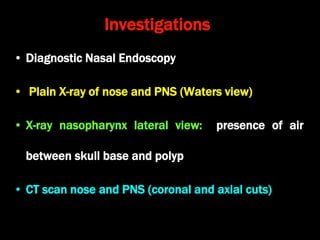
Investigations
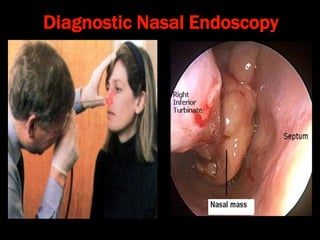
• Diagnostic Nasal Endoscopy
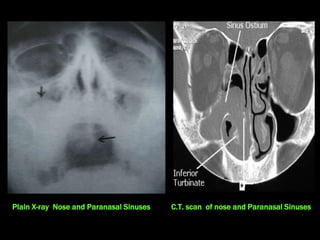
• Plain X-ray of nose and PNS (Waters view)
• X-ray nasopharynx lateral view: presence of air
between skull base and polyp
• CT scan nose and PNS (coronal and axial cuts)
Diagnostic Nasal Endoscopy
Plain X-ray Nose and Paranasal Sinuses C.T. scan of nose and Paranasal Sinuses
Treatment
• Antibiotics (pre & post operatively)
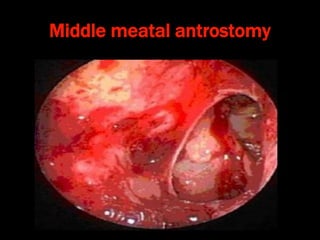
• Avulsion polypectomy with middle meatal antrostomy
• F.E.S.S.
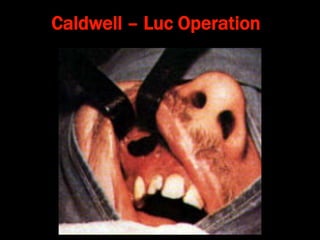
• Caldwell – Luc operation (for recurrence)
Middle meatal antrostomy
Caldwell – Luc Operation
How to prevent recurrence ?
• Complete removal of all parts ( Nasal , Antral ,
Choanal)
• Wide middle meatal antrostomy (widening of
maxillary sinus ostium)
• Post-operative antibiotics
Ethmoidal Polyps
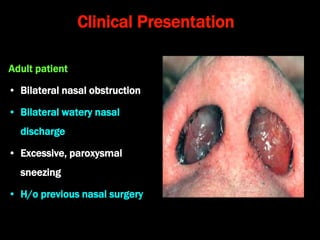
Clinical Presentation
Adult patient
• Bilateral nasal obstruction
• Bilateral watery nasal
discharge
• Excessive, paroxysmal
sneezing
• H/o previous nasal surgery
Etiology of ethmoid polyp
1. Allergy
2. Infection
3. Vasomotor imbalance
4. Bernoulli phenomenon
5. Poly-saccharide changes
Associated diseases
• Samter’s triad
– Aspirin intolerance , bronchial asthma, ethmoid polyps
• Cystic fibrosis
• Allergic fungal sinusitis
• Kartagener’s syndrome (ciliary dyskinesia)
− Situs inversus, chronic sinusitis, and bronchiectasis
• Young’s syndrome (hyperviscous mucous)
− Bronchiectasis, chronic rhinosinusitis and infertility
Investigations
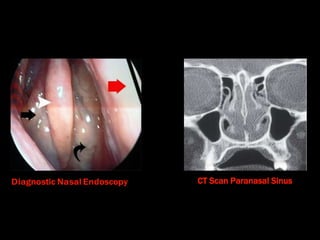
• Diagnostic Nasal Endoscopy (D.N.E.)
• X-ray PNS (Rhese lateral oblique view)
• C.T. scan P.N.S. (coronal cuts)
• Tests for allergy
CT Scan Paranasal Sinus
Non-surgical Treatment
• For small polyps
– Avoid allergens
– Oral antihistamines (1-3 months)
– Corticosteroid nasal sprays (3-6 months)
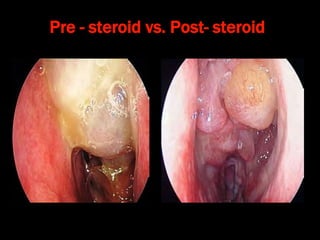
– Oral prednisolone (1 mg/kg/day for 2 weeks )
Pre - steroid vs. Post- steroid
Surgical Treatment
1. Intra-nasal avulsion polypectomy
2. Extra-nasal external ethmoidectomy
3. Trans-antral ethmoidectomy
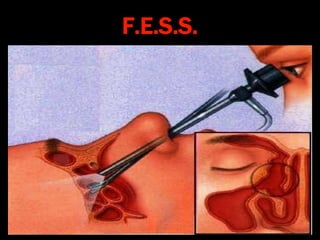
4. Functional Endoscopic Sinus Surgery
• Conventional
• Micro - debrider
• Laser
F.E.S.S.
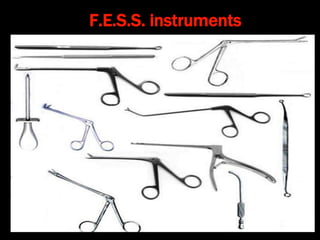
F.E.S.S. instruments
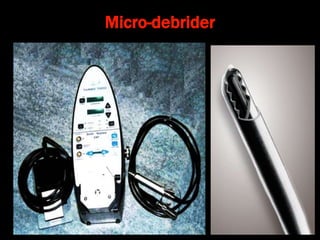
Micro-debrider
How to prevent recurrence?
1. Complete removal of all polyps
2. Avoid allergens
3. Post-operative course of:
− Oral antihistamines (1-3 months)
− Corticosteroid nasal sprays (3-6 months)
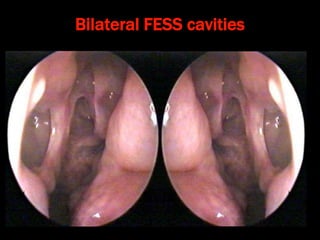
Bilateral FESS cavities
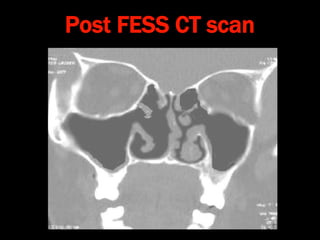
Post FESS CT scan
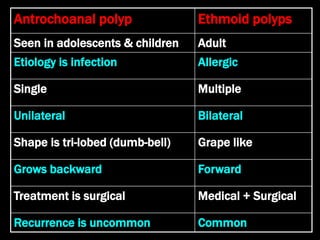
Antrochoanal polyp Ethmoid polyps
Seen in adolescents & children Adult
Etiology is infection Allergic
Single Multiple
Unilateral Bilateral
Shape is tri-lobed (dumb-bell) Grape like
Grows backward Forward
Treatment is surgical Medical + Surgical
Recurrence is uncommon Common

Nasal polyps

  • 1.
    Nasal Polyps Dr. KrishnaKoirala MBBS, MS ENT-HNS Associate professor MCOMS, Pokhara, Nepal29-06-2020
  • 2.
    Definition • Hypertrophied, edematous,pedunculated mucosa prolapsing out of the nose or paranasal sinus • Classification – Antrochoanal Polyp – Ethmoidal polyps • Properties of Nasal Polyps – Pale /grey in color, glistening, pedunculated, smooth surface, mobile, insensitive to touch, do not bleed on probing
  • 3.
    Antro - choanalPolyp ( Killian’s Polyp)
  • 4.
    • Etiology: – Infection –Proetz Theory (anomaly of maxillary sinus ostium) – Bernoulli’s phenomenon ( pressure drop next to constriction) • Origin: – Arises from maxillary sinus mucosa and exits via its natural or accessory ostium and extends to choana
  • 5.
    Why does ACpolyp prefer to extend towards the choana? 1. Maxillary ostium is directed posteriorly 2. Cilia beat posteriorly 3. Air current flows posteriorly in a greater force 4. Nasal floor slopes posteriorly 5. Posterior nasal cavity is larger 6. Negative oropharyngeal pressure while swallowing
  • 6.
    Parts of Killian’sAntrochoanal polyp • Antral: globular • Choanal: globular • Nasal: flattened transversely • Neck : present at maxillary ostium
  • 7.
    Clinical presentation • Commonin children and adolescent age • Unilateral nasal obstruction • Unilateral nasal discharge • Occasionally nasal mass seen on anterior rhinoscopy • Mass bulging in the choana / oropharynx, seen on posterior rhinoscopy
  • 8.
    Examination of nasalmass • Inspection : side, size, number, color, surface, pedunculated or sessile, origin, attachment • Probing : consistency, sensitivity to touch, bleeding on touch, can be passed all around • Shrinkage with decongestant drops
  • 9.
    Probe test Antrochoanal polypHypertrophied turbinate Insensitive to pain Sensitive Probe can be passed all around Cannot be passed Mobile Not mobile
  • 10.
    Differential Diagnosis • Hypertrophiedinferior turbinate • Blob of mucous • Inverted papilloma • Rhinosporidiosis / rhinoscleroma • Angiofibroma • Meningocoele • Malignancy
  • 11.
    Investigations • Diagnostic NasalEndoscopy • Plain X-ray of nose and PNS (Waters view) • X-ray nasopharynx lateral view: presence of air between skull base and polyp • CT scan nose and PNS (coronal and axial cuts)
  • 12.
  • 13.
    Plain X-ray Noseand Paranasal Sinuses C.T. scan of nose and Paranasal Sinuses
  • 14.
    Treatment • Antibiotics (pre& post operatively) • Avulsion polypectomy with middle meatal antrostomy • F.E.S.S. • Caldwell – Luc operation (for recurrence)
  • 15.
  • 16.
  • 17.
    How to preventrecurrence ? • Complete removal of all parts ( Nasal , Antral , Choanal) • Wide middle meatal antrostomy (widening of maxillary sinus ostium) • Post-operative antibiotics
  • 18.
  • 19.
    Clinical Presentation Adult patient •Bilateral nasal obstruction • Bilateral watery nasal discharge • Excessive, paroxysmal sneezing • H/o previous nasal surgery
  • 20.
    Etiology of ethmoidpolyp 1. Allergy 2. Infection 3. Vasomotor imbalance 4. Bernoulli phenomenon 5. Poly-saccharide changes
  • 21.
    Associated diseases • Samter’striad – Aspirin intolerance , bronchial asthma, ethmoid polyps • Cystic fibrosis • Allergic fungal sinusitis • Kartagener’s syndrome (ciliary dyskinesia) − Situs inversus, chronic sinusitis, and bronchiectasis • Young’s syndrome (hyperviscous mucous) − Bronchiectasis, chronic rhinosinusitis and infertility
  • 22.
    Investigations • Diagnostic NasalEndoscopy (D.N.E.) • X-ray PNS (Rhese lateral oblique view) • C.T. scan P.N.S. (coronal cuts) • Tests for allergy
  • 23.
  • 24.
    Non-surgical Treatment • Forsmall polyps – Avoid allergens – Oral antihistamines (1-3 months) – Corticosteroid nasal sprays (3-6 months) – Oral prednisolone (1 mg/kg/day for 2 weeks )
  • 25.
    Pre - steroidvs. Post- steroid
  • 26.
    Surgical Treatment 1. Intra-nasalavulsion polypectomy 2. Extra-nasal external ethmoidectomy 3. Trans-antral ethmoidectomy 4. Functional Endoscopic Sinus Surgery • Conventional • Micro - debrider • Laser
  • 27.
  • 28.
  • 29.
  • 30.
    How to preventrecurrence? 1. Complete removal of all polyps 2. Avoid allergens 3. Post-operative course of: − Oral antihistamines (1-3 months) − Corticosteroid nasal sprays (3-6 months)
  • 31.
  • 32.
  • 33.
    Antrochoanal polyp Ethmoidpolyps Seen in adolescents & children Adult Etiology is infection Allergic Single Multiple Unilateral Bilateral Shape is tri-lobed (dumb-bell) Grape like Grows backward Forward Treatment is surgical Medical + Surgical Recurrence is uncommon Common