NASAL POLYPS
Definition
• Hypertrophied, edematous, pedunculated mucosa
prolapsing out of nose or paranasal sinuses
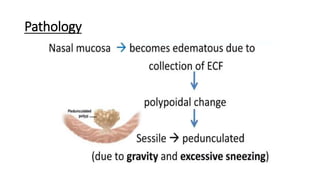
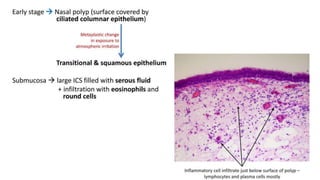
Pathology
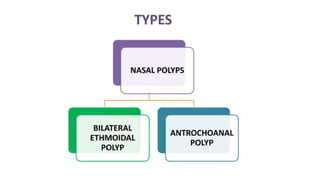
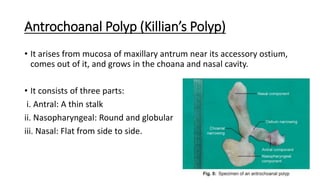
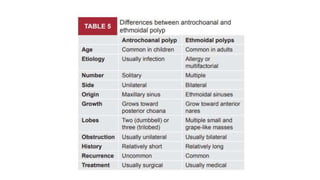
Antrochoanal Polyp (Killian’s Polyp)
• It arises from mucosa of maxillary antrum near its accessory ostium,
comes out of it, and grows in the choana and nasal cavity.
• It consists of three parts:
i. Antral: A thin stalk
ii. Nasopharyngeal: Round and globular
iii. Nasal: Flat from side to side.
Etiology
• Nasal allergy along with sinus infection.
• Seen in children and young adults.
• Usually unilateral and single.
Symptoms
• Unilateral nasal obstruction
• Bilateral nasal obstruction
-when polyp grows into the nasopharynx
-starts obstructing the opposite choana
• Thick and dull voice – hyponasality
• Nasal discharge- mostly mucoid
Signs
• On anterior rhinoscopy – sometimes it may be missed as it grows
posteriorly
• Large, smooth, greyish mass
covered with nasal discharge.
• Soft and mobile
• May protrude from nostril
-pink and congested
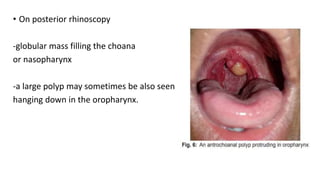
• On posterior rhinoscopy
-globular mass filling the choana
or nasopharynx
-a large polyp may sometimes be also seen
hanging down in the oropharynx.
Investigations
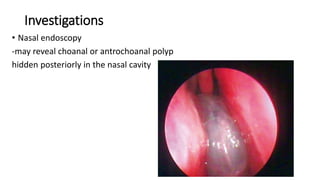
• Nasal endoscopy
-may reveal choanal or antrochoanal polyp
hidden posteriorly in the nasal cavity
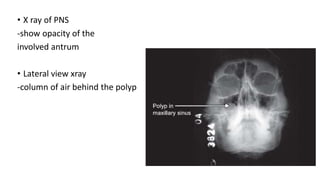
• X ray of PNS
-show opacity of the
involved antrum
• Lateral view xray
-column of air behind the polyp
Bilateral Ethmoidal Polyposis
• Common sites of origin are
-uncinate process,
-bulla ethmoidalis,
-ostia of sinuses and
-medial surface and edge middle turbinate.
• Nasal polyps usually never arise from the septum or the floor of nose.
Etiology
• Inflammatory conditions of nasal mucosa
-Rhinosinusitis
• Disorders of ciliary motility
- Kartagener’s syndrome
• Abnormal composition of nasal mucus
- Cystic fibrosis
• Various diseases associated are
- Chronic rhinosinusitis
- Kartagener syndrome: Bronchiectasis, sinusitis, situs inversus and ciliary
dyskinesis.
- Young’s syndrome: Sinopulmonary disease and azoospermia.
- Churg-Strauss syndrome: Asthma, fever, eosinophilia, vasculitis and
granuloma
- Samter’s triad: It is the triad of nasal polyps, asthma and aspirin
intolerance.
- Allergic fungal sinusitis.
Symptoms
• Mostly seen in adults
• Nasal stuffiness- leading to total nasal obstruction
• Partial/ Total loss of smell
• Headache
• Sneezing and watery nasal discharge
• Protruding mass
Signs
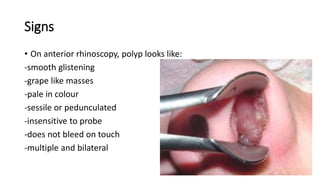
• On anterior rhinoscopy, polyp looks like:
-smooth glistening
-grape like masses
-pale in colour
-sessile or pedunculated
-insensitive to probe
-does not bleed on touch
-multiple and bilateral
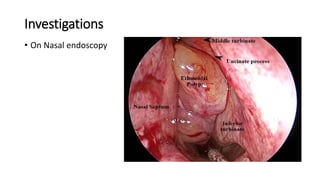
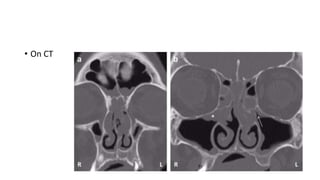
Investigations
• On Nasal endoscopy
• On CT
Differential Diagnosis
a. Bleb of mucus:
-It disappears on blowing the nose.
b. Hypertrophied middle turbinate:
-It is pink in color
-hard like bone on probe testing.
c. Angiofibroma:
- It occurs in adolescent male
- profuse recurrent episodes of epistaxis.
- Easily bleeds on touch
d. Neoplasms:
-fleshy pink appearance
-friable nature
-tendency to bleed
Treatment
Conservative
• Antihistamines
-may revert early polypoidal changes with edematous mucosa to
normal
• Short course of steriods
Surgical
Currently almost all the polyps, which do not respond to medical
treatment, are managed by ESS.
• Snare
-Solitary pedunculated polyp can be removed with snare.
-Krause’s nasal snare is used for removal of nasal polyps and partial
turbinectomy. The polyp mass is engaged in the wire loop and avulsed
• FESS
THANK YOU

Nasal polyp antrochoanal polyp ethmoid polyp

  • 1.
  • 2.
    Definition • Hypertrophied, edematous,pedunculated mucosa prolapsing out of nose or paranasal sinuses
  • 4.
  • 6.
    Antrochoanal Polyp (Killian’sPolyp) • It arises from mucosa of maxillary antrum near its accessory ostium, comes out of it, and grows in the choana and nasal cavity. • It consists of three parts: i. Antral: A thin stalk ii. Nasopharyngeal: Round and globular iii. Nasal: Flat from side to side.
  • 7.
    Etiology • Nasal allergyalong with sinus infection. • Seen in children and young adults. • Usually unilateral and single.
  • 8.
    Symptoms • Unilateral nasalobstruction • Bilateral nasal obstruction -when polyp grows into the nasopharynx -starts obstructing the opposite choana • Thick and dull voice – hyponasality • Nasal discharge- mostly mucoid
  • 9.
    Signs • On anteriorrhinoscopy – sometimes it may be missed as it grows posteriorly • Large, smooth, greyish mass covered with nasal discharge. • Soft and mobile • May protrude from nostril -pink and congested
  • 10.
    • On posteriorrhinoscopy -globular mass filling the choana or nasopharynx -a large polyp may sometimes be also seen hanging down in the oropharynx.
  • 11.
    Investigations • Nasal endoscopy -mayreveal choanal or antrochoanal polyp hidden posteriorly in the nasal cavity
  • 12.
    • X rayof PNS -show opacity of the involved antrum • Lateral view xray -column of air behind the polyp
  • 13.
    Bilateral Ethmoidal Polyposis •Common sites of origin are -uncinate process, -bulla ethmoidalis, -ostia of sinuses and -medial surface and edge middle turbinate. • Nasal polyps usually never arise from the septum or the floor of nose.
  • 14.
    Etiology • Inflammatory conditionsof nasal mucosa -Rhinosinusitis • Disorders of ciliary motility - Kartagener’s syndrome • Abnormal composition of nasal mucus - Cystic fibrosis
  • 15.
    • Various diseasesassociated are - Chronic rhinosinusitis - Kartagener syndrome: Bronchiectasis, sinusitis, situs inversus and ciliary dyskinesis. - Young’s syndrome: Sinopulmonary disease and azoospermia. - Churg-Strauss syndrome: Asthma, fever, eosinophilia, vasculitis and granuloma - Samter’s triad: It is the triad of nasal polyps, asthma and aspirin intolerance. - Allergic fungal sinusitis.
  • 16.
    Symptoms • Mostly seenin adults • Nasal stuffiness- leading to total nasal obstruction • Partial/ Total loss of smell • Headache • Sneezing and watery nasal discharge • Protruding mass
  • 17.
    Signs • On anteriorrhinoscopy, polyp looks like: -smooth glistening -grape like masses -pale in colour -sessile or pedunculated -insensitive to probe -does not bleed on touch -multiple and bilateral
  • 18.
  • 19.
  • 20.
    Differential Diagnosis a. Blebof mucus: -It disappears on blowing the nose. b. Hypertrophied middle turbinate: -It is pink in color -hard like bone on probe testing.
  • 21.
    c. Angiofibroma: - Itoccurs in adolescent male - profuse recurrent episodes of epistaxis. - Easily bleeds on touch d. Neoplasms: -fleshy pink appearance -friable nature -tendency to bleed
  • 22.
    Treatment Conservative • Antihistamines -may revertearly polypoidal changes with edematous mucosa to normal • Short course of steriods
  • 23.
    Surgical Currently almost allthe polyps, which do not respond to medical treatment, are managed by ESS. • Snare -Solitary pedunculated polyp can be removed with snare. -Krause’s nasal snare is used for removal of nasal polyps and partial turbinectomy. The polyp mass is engaged in the wire loop and avulsed • FESS
  • 25.