NARRATIVE WRITING 
Steps Chap 3
*Review 
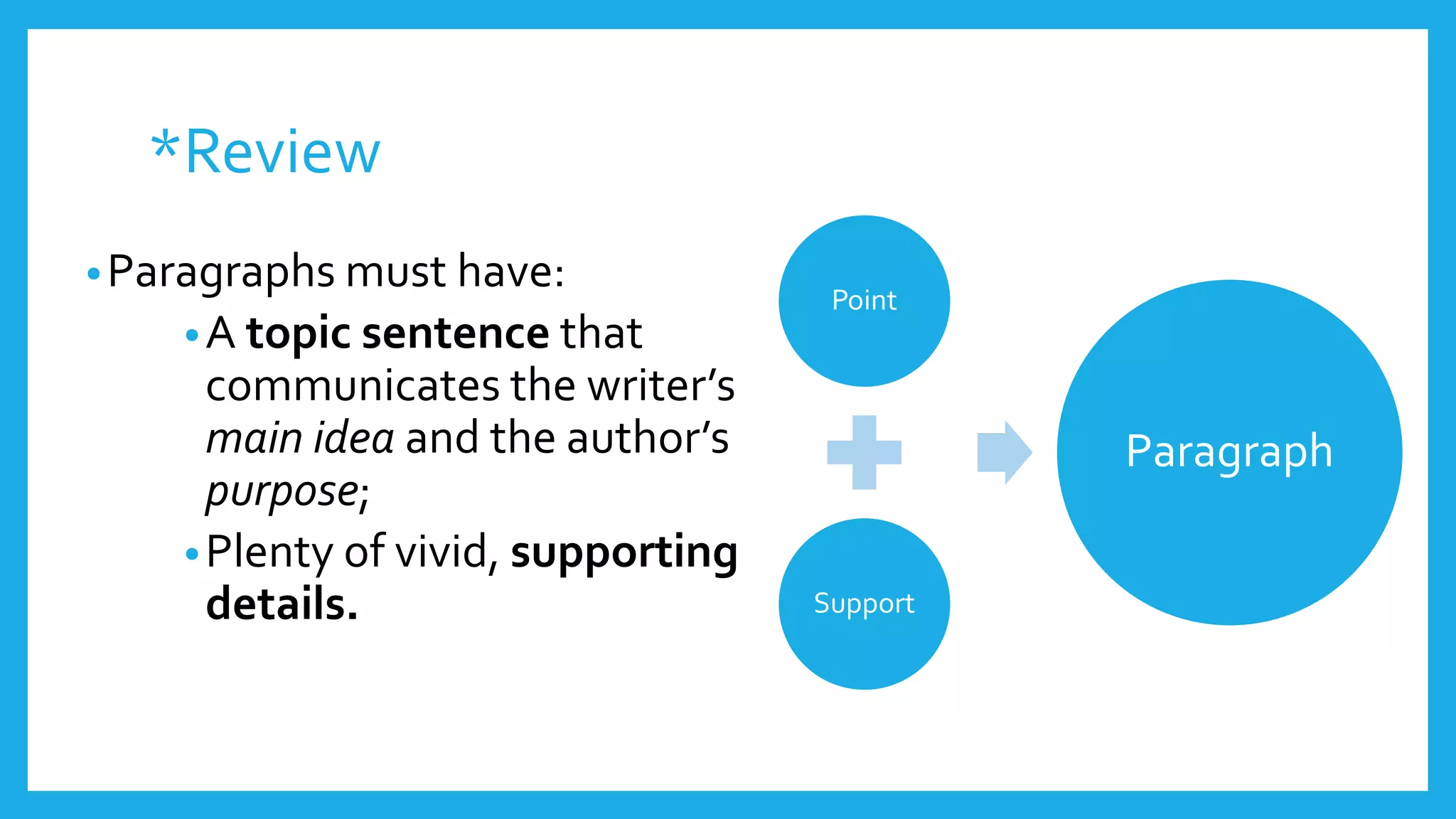
•Paragraphs must have: 
•A topic sentence that 
communicates the writer’s 
main idea and the author’s 
purpose; 
•Plenty of vivid, supporting 
details. 
Point 
Support 
Paragraph
Narrative Writing 
•Narrative Writing--writing that tells a story by presenting 
events in an orderly, logical sequence. 
•Narratives always have a purpose—the writer has a reason 
he/she wants to tell this story. 
• What is Malcolm X’s purpose in “Prison Studies”?
Important Features 
•Topic sentence provides the main idea and the purpose of the 
story 
•Unified details create a vivid picture for the reader 
•Story follows chronological order, meaning that all events are 
depicted in the order they happened 
• Beginning 
• Middle (turning point—what changed?) 
• End 
•Story is in past tense.
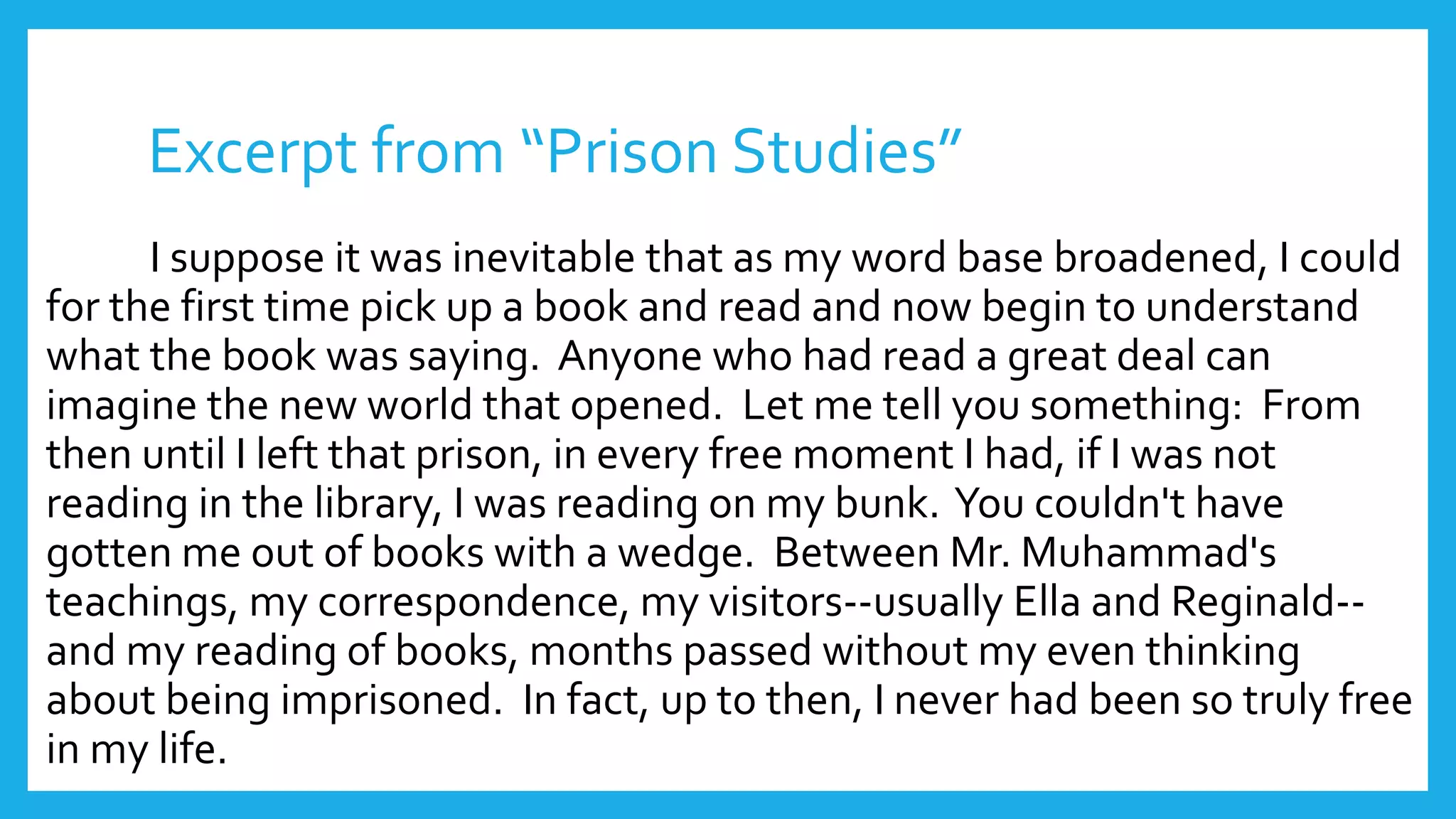
Excerpt from “Prison Studies” 
I suppose it was inevitable that as my word base broadened, I could 
for the first time pick up a book and read and now begin to understand 
what the book was saying. Anyone who had read a great deal can 
imagine the new world that opened. Let me tell you something: From 
then until I left that prison, in every free moment I had, if I was not 
reading in the library, I was reading on my bunk. You couldn't have 
gotten me out of books with a wedge. Between Mr. Muhammad's 
teachings, my correspondence, my visitors--usually Ella and Reginald-- 
and my reading of books, months passed without my even thinking 
about being imprisoned. In fact, up to then, I never had been so truly free 
in my life.
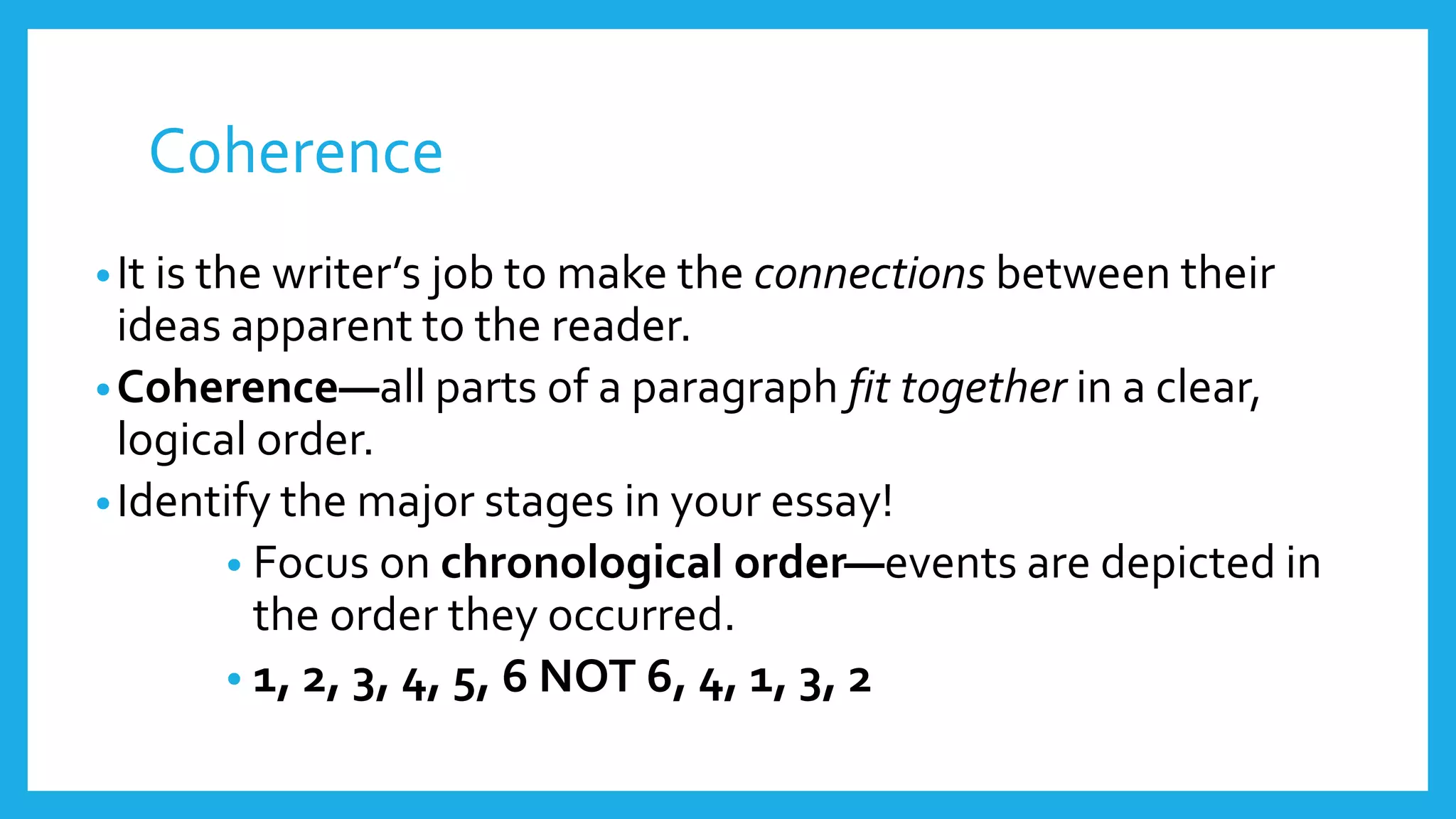
Coherence 
• It is the writer’s job to make the connections between their 
ideas apparent to the reader. 
•Coherence—all parts of a paragraph fit together in a clear, 
logical order. 
•Identify the major stages in your essay! 
• Focus on chronological order—events are depicted in 
the order they occurred. 
• 1, 2, 3, 4, 5, 6 NOT 6, 4, 1, 3, 2
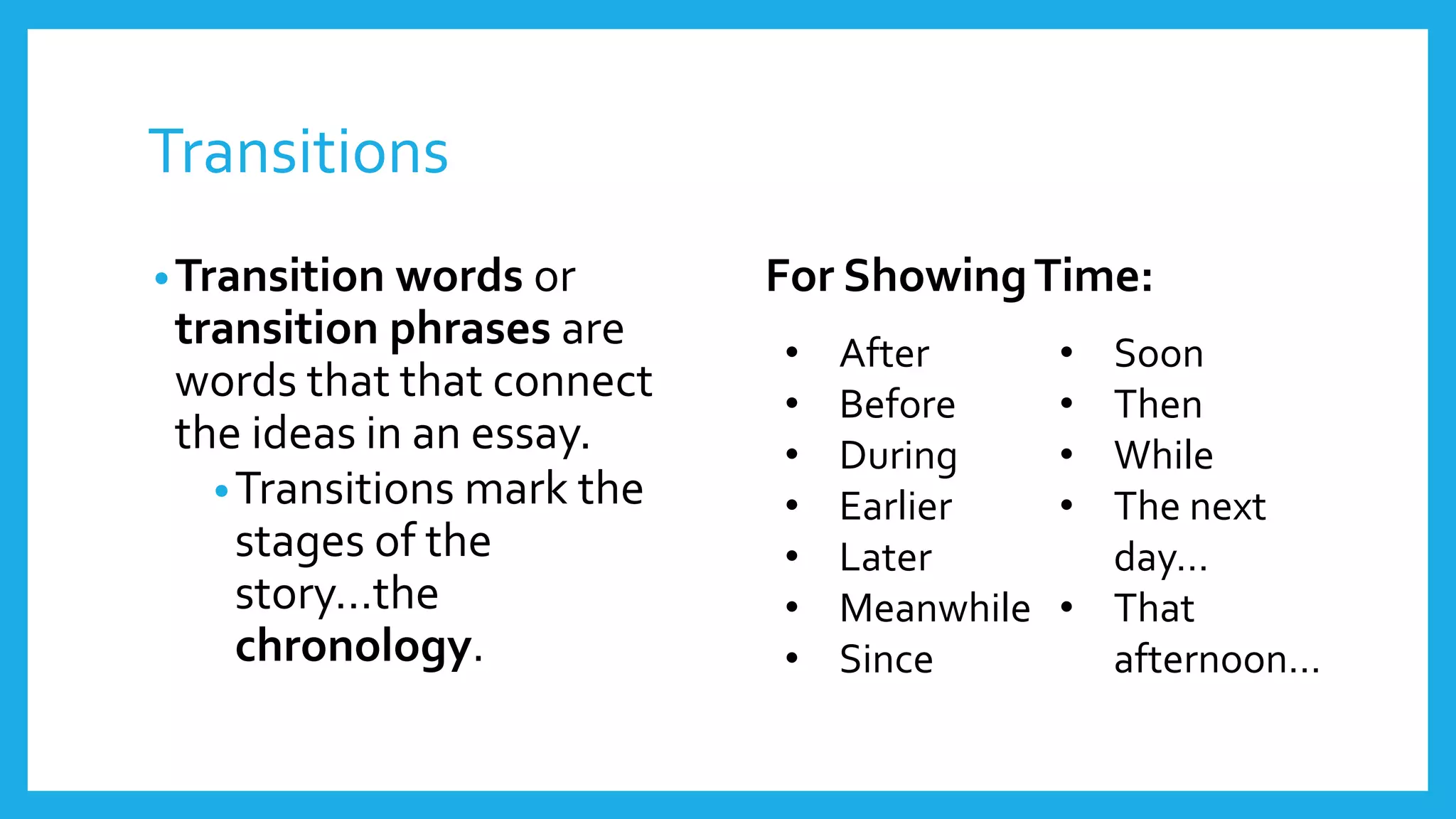
Transitions 
•Transition words or 
transition phrases are 
words that that connect 
the ideas in an essay. 
•Transitions mark the 
stages of the 
story…the 
chronology. 
For Showing Time: 
• After 
• Before 
• During 
• Earlier 
• Later 
• Meanwhile 
• Since 
• Soon 
• Then 
• While 
• The next 
day… 
• That 
afternoon…
THE WRITING PROCESS 
Exploring Writing p 21-49
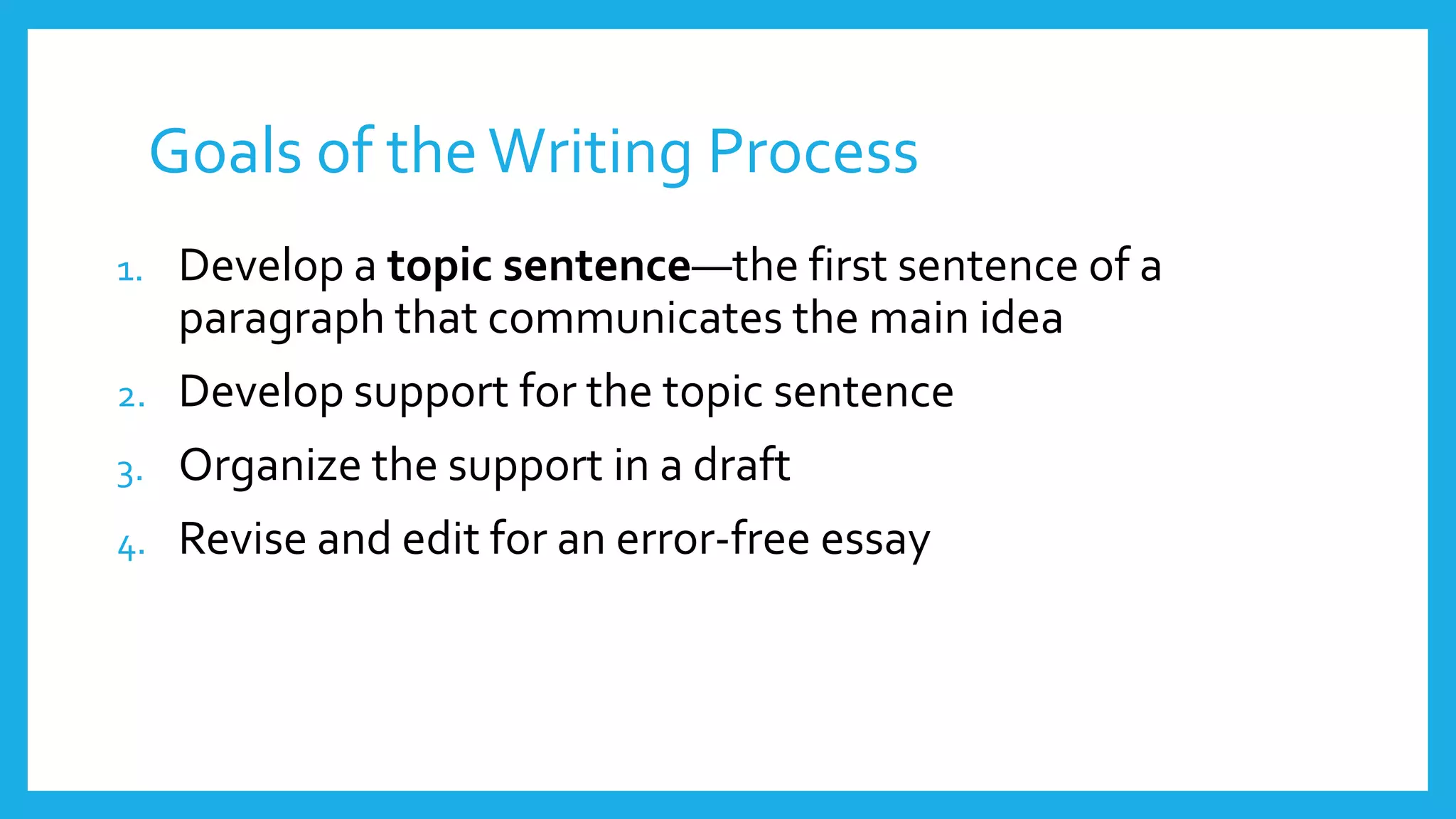
Goals of the Writing Process 
1. Develop a topic sentence—the first sentence of a 
paragraph that communicates the main idea 
2. Develop support for the topic sentence 
3. Organize the support in a draft 
4. Revise and edit for an error-free essay
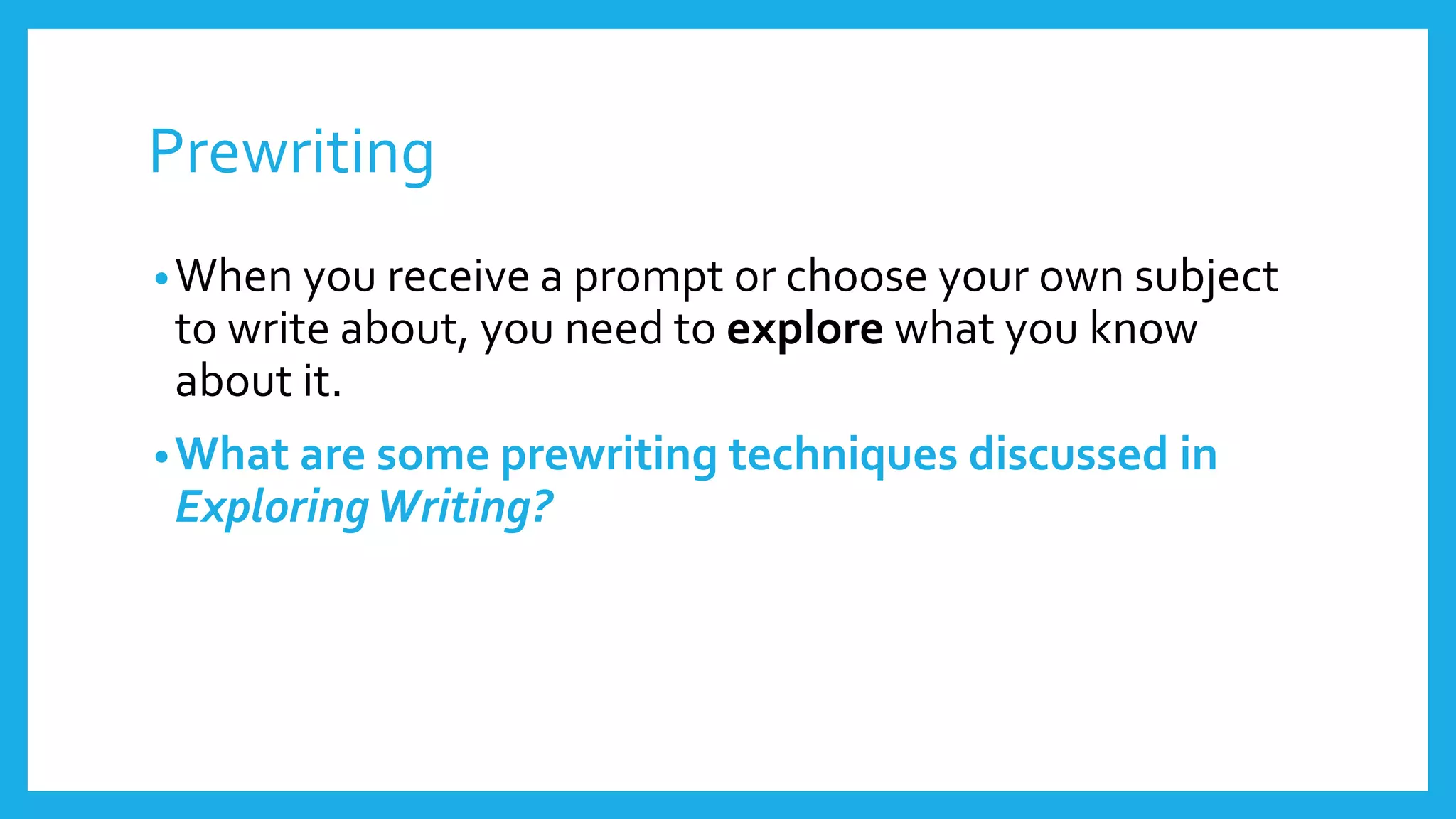
Prewriting 
•When you receive a prompt or choose your own subject 
to write about, you need to explore what you know 
about it. 
•What are some prewriting techniques discussed in 
Exploring Writing?
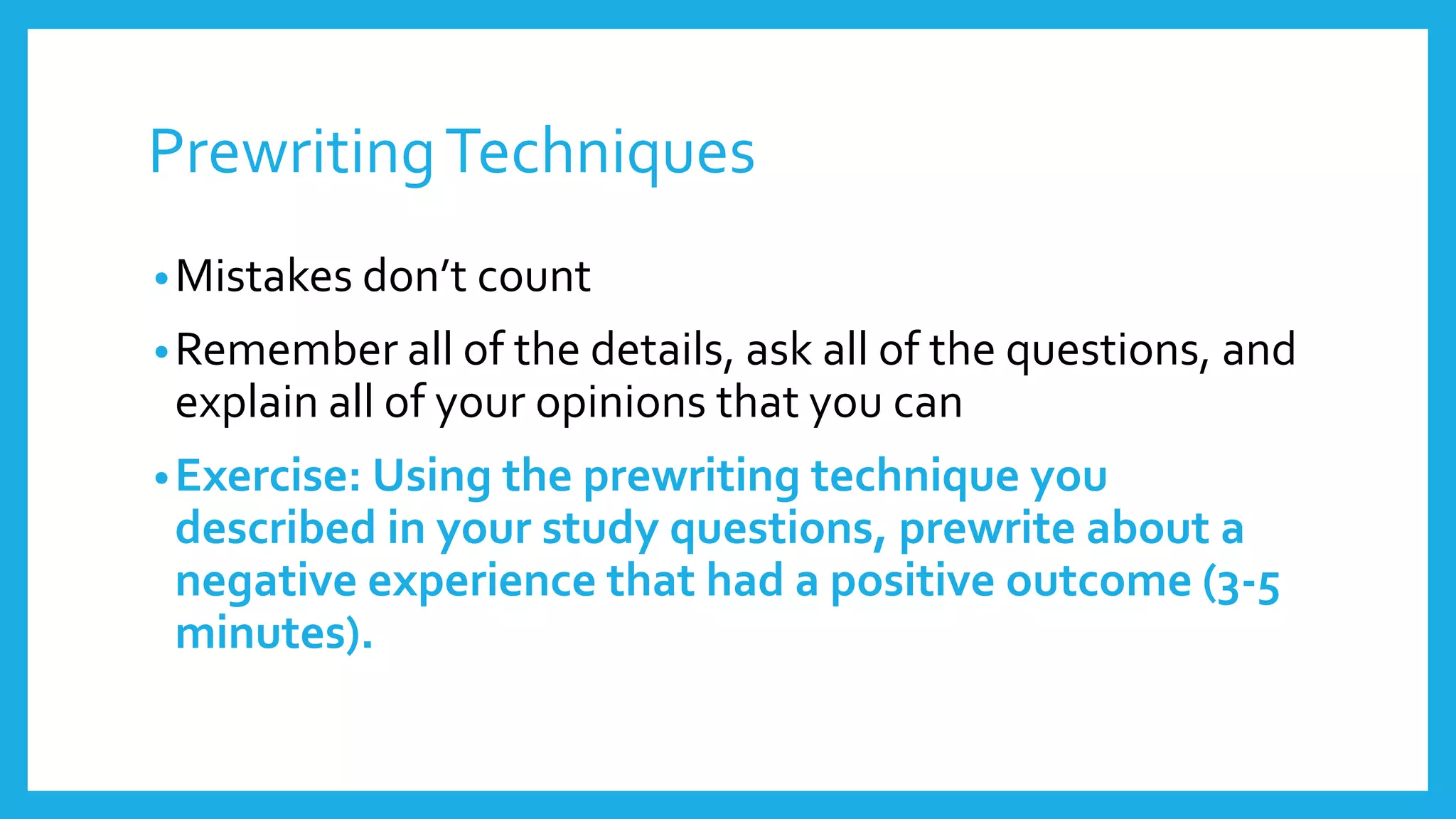
Prewriting Techniques 
• Mistakes don’t count 
•Remember all of the details, ask all of the questions, and 
explain all of your opinions that you can 
•Exercise: Using the prewriting technique you 
described in your study questions, prewrite about a 
negative experience that had a positive outcome (3-5 
minutes).
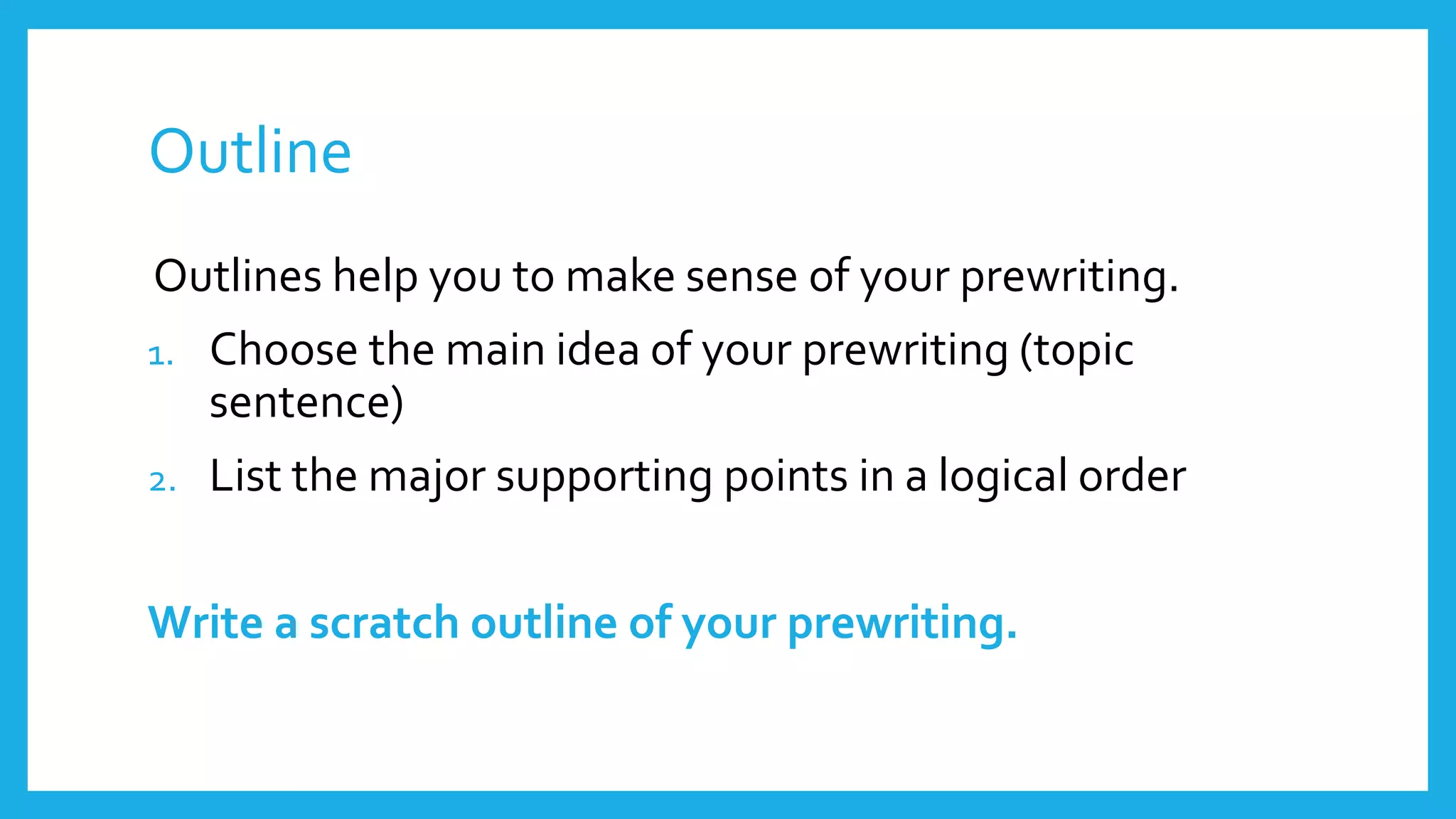
Outline 
Outlines help you to make sense of your prewriting. 
1. Choose the main idea of your prewriting (topic 
sentence) 
2. List the major supporting points in a logical order 
Write a scratch outline of your prewriting.
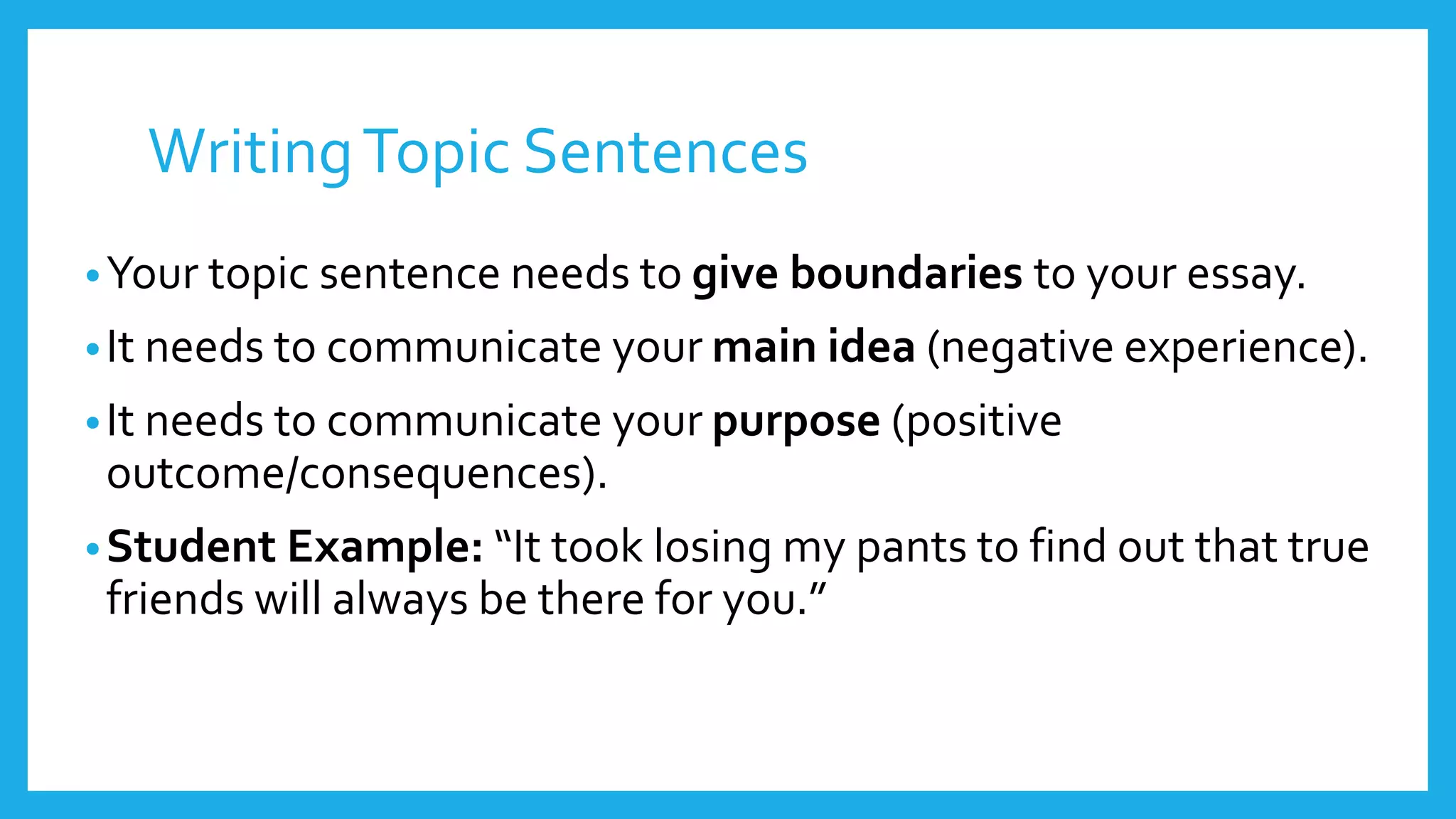
Writing Topic Sentences 
•Your topic sentence needs to give boundaries to your essay. 
• It needs to communicate your main idea (negative experience). 
• It needs to communicate your purpose (positive 
outcome/consequences). 
•Student Example: “It took losing my pants to find out that true 
friends will always be there for you.”
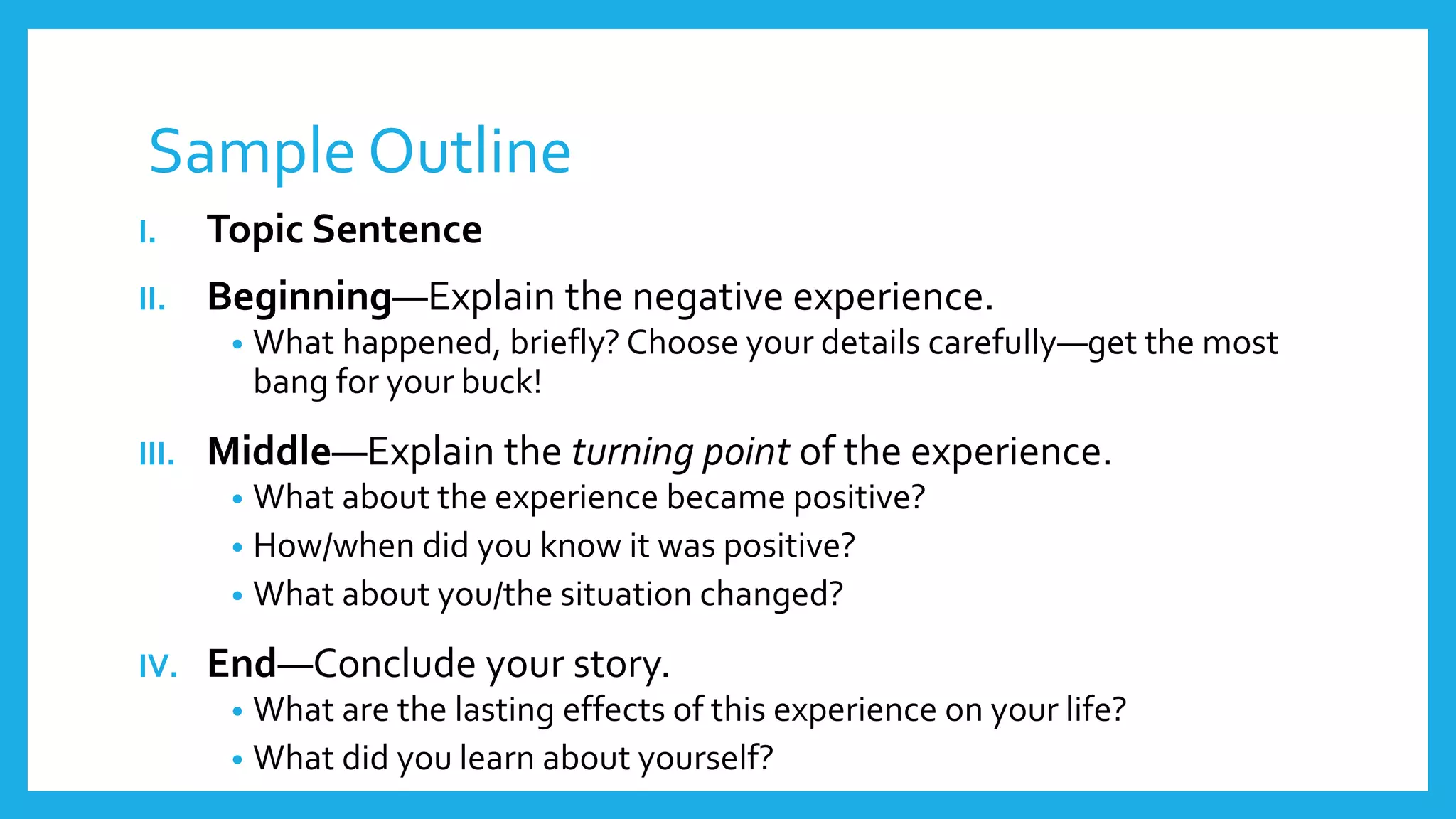
Sample Outline 
I. Topic Sentence 
II. Beginning—Explain the negative experience. 
• What happened, briefly? Choose your details carefully—get the most 
bang for your buck! 
III. Middle—Explain the turning point of the experience. 
• What about the experience became positive? 
• How/when did you know it was positive? 
• What about you/the situation changed? 
IV. End—Conclude your story. 
• What are the lasting effects of this experience on your life? 
• What did you learn about yourself?
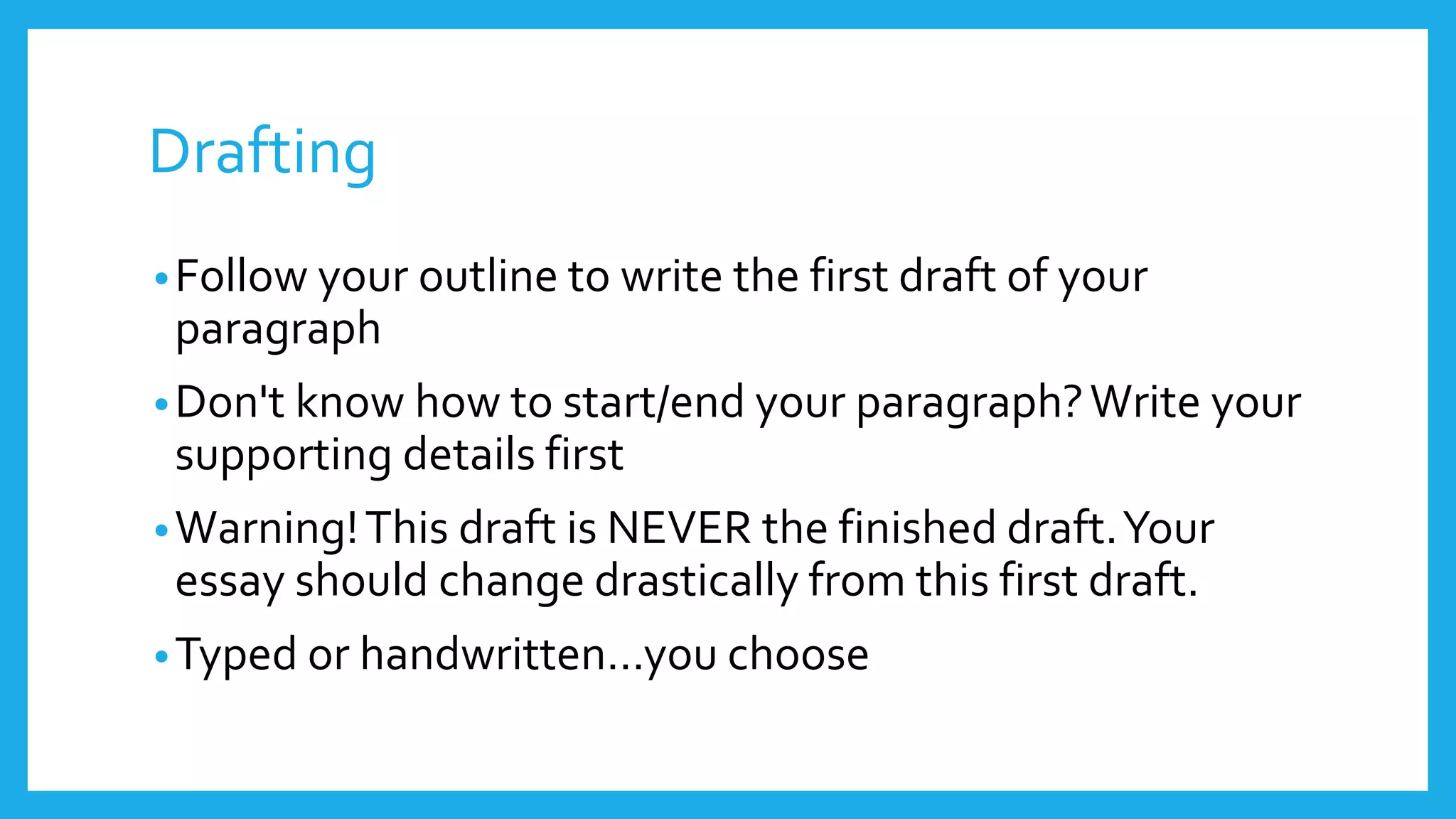
Drafting 
•Follow your outline to write the first draft of your 
paragraph 
•Don't know how to start/end your paragraph? Write your 
supporting details first 
•Warning! This draft is NEVER the finished draft. Your 
essay should change drastically from this first draft. 
• Typed or handwritten…you choose
Revising and Editing 
Revising Editing

Narrative Writing and the Writing Process

  • 1.
  • 2.
    *Review •Paragraphs musthave: •A topic sentence that communicates the writer’s main idea and the author’s purpose; •Plenty of vivid, supporting details. Point Support Paragraph
  • 3.
    Narrative Writing •NarrativeWriting--writing that tells a story by presenting events in an orderly, logical sequence. •Narratives always have a purpose—the writer has a reason he/she wants to tell this story. • What is Malcolm X’s purpose in “Prison Studies”?
  • 4.
    Important Features •Topicsentence provides the main idea and the purpose of the story •Unified details create a vivid picture for the reader •Story follows chronological order, meaning that all events are depicted in the order they happened • Beginning • Middle (turning point—what changed?) • End •Story is in past tense.
  • 5.
    Excerpt from “PrisonStudies” I suppose it was inevitable that as my word base broadened, I could for the first time pick up a book and read and now begin to understand what the book was saying. Anyone who had read a great deal can imagine the new world that opened. Let me tell you something: From then until I left that prison, in every free moment I had, if I was not reading in the library, I was reading on my bunk. You couldn't have gotten me out of books with a wedge. Between Mr. Muhammad's teachings, my correspondence, my visitors--usually Ella and Reginald-- and my reading of books, months passed without my even thinking about being imprisoned. In fact, up to then, I never had been so truly free in my life.
  • 6.
    Coherence • Itis the writer’s job to make the connections between their ideas apparent to the reader. •Coherence—all parts of a paragraph fit together in a clear, logical order. •Identify the major stages in your essay! • Focus on chronological order—events are depicted in the order they occurred. • 1, 2, 3, 4, 5, 6 NOT 6, 4, 1, 3, 2
  • 7.
    Transitions •Transition wordsor transition phrases are words that that connect the ideas in an essay. •Transitions mark the stages of the story…the chronology. For Showing Time: • After • Before • During • Earlier • Later • Meanwhile • Since • Soon • Then • While • The next day… • That afternoon…
  • 8.
    THE WRITING PROCESS Exploring Writing p 21-49
  • 9.
    Goals of theWriting Process 1. Develop a topic sentence—the first sentence of a paragraph that communicates the main idea 2. Develop support for the topic sentence 3. Organize the support in a draft 4. Revise and edit for an error-free essay
  • 10.
    Prewriting •When youreceive a prompt or choose your own subject to write about, you need to explore what you know about it. •What are some prewriting techniques discussed in Exploring Writing?
  • 11.
    Prewriting Techniques •Mistakes don’t count •Remember all of the details, ask all of the questions, and explain all of your opinions that you can •Exercise: Using the prewriting technique you described in your study questions, prewrite about a negative experience that had a positive outcome (3-5 minutes).
  • 12.
    Outline Outlines helpyou to make sense of your prewriting. 1. Choose the main idea of your prewriting (topic sentence) 2. List the major supporting points in a logical order Write a scratch outline of your prewriting.
  • 13.
    Writing Topic Sentences •Your topic sentence needs to give boundaries to your essay. • It needs to communicate your main idea (negative experience). • It needs to communicate your purpose (positive outcome/consequences). •Student Example: “It took losing my pants to find out that true friends will always be there for you.”
  • 14.
    Sample Outline I.Topic Sentence II. Beginning—Explain the negative experience. • What happened, briefly? Choose your details carefully—get the most bang for your buck! III. Middle—Explain the turning point of the experience. • What about the experience became positive? • How/when did you know it was positive? • What about you/the situation changed? IV. End—Conclude your story. • What are the lasting effects of this experience on your life? • What did you learn about yourself?
  • 15.
    Drafting •Follow youroutline to write the first draft of your paragraph •Don't know how to start/end your paragraph? Write your supporting details first •Warning! This draft is NEVER the finished draft. Your essay should change drastically from this first draft. • Typed or handwritten…you choose
  • 16.
    Revising and Editing Revising Editing