Narrative Theories 
(Barthe’s & Cameron) 
Rachael Sampson
Barthe’s 5 Code Theory 
• The Hermeneutic Code – This code is also 
known as enigma codes. These codes give 
information to the audience which advances 
the storyline, such as expressions of worry. 
• The Proairetic Code – Also known the as 
action code. This is any action which moves 
the narrative forward (events taking place) 
e.g., someone informing the protagonist on an 
occurrence.
The Semantic Code 
• This code refers to connotation within the 
story that gives additional meaning over the 
basic denotative meaning of the word. 
• It is by the use of extended meaning that can 
be applied to words that authors can paint 
rich pictures with relatively limited text and 
the way they do this is a common indication of 
their writing skills.
The Symbolic Code 
• This is very similar to the Semantic Code, but 
acts at a wider level, organising semantic 
meanings into broader and deeper sets of 
meaning. 
• This is typically done in the use of antithesis, 
where new meaning arises out of opposing 
and conflict ideas.
The Cultural Code 
• This code refers to anything that is founded on 
some kind of work that cannot be challenged 
and is assumed to be a foundation for truth. 
• Typically this involves either science or 
religion, although other canons such as 
magical truths may be used in fantasy stories. 
The Gnomic Code is a cultural code that 
particularly refers to sayings, proverbs, clichés 
and other common meaning-giving word sets.
Allan Cameron – Modular Narratives 
“Popular cinema has 
displayed a turn 
towards narrative 
complexity”
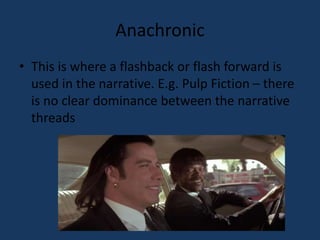
Anachronic 
• This is where a flashback or flash forward is 
used in the narrative. E.g. Pulp Fiction – there 
is no clear dominance between the narrative 
threads
Forking Path 
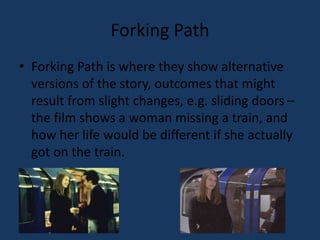
• Forking Path is where they show alternative 
versions of the story, outcomes that might 
result from slight changes, e.g. sliding doors – 
the film shows a woman missing a train, and 
how her life would be different if she actually 
got on the train.
Episodic 
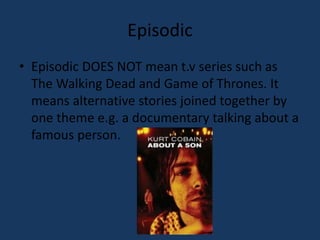
• Episodic DOES NOT mean t.v series such as 
The Walking Dead and Game of Thrones. It 
means alternative stories joined together by 
one theme e.g. a documentary talking about a 
famous person.
Split Screen 
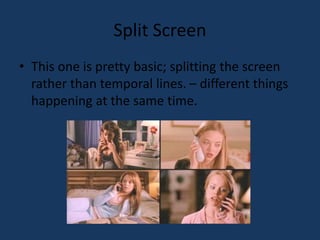
• This one is pretty basic; splitting the screen 
rather than temporal lines. – different things 
happening at the same time.

Narrative theories Barthe's and Cameron

  • 1.
    Narrative Theories (Barthe’s& Cameron) Rachael Sampson
  • 2.
    Barthe’s 5 CodeTheory • The Hermeneutic Code – This code is also known as enigma codes. These codes give information to the audience which advances the storyline, such as expressions of worry. • The Proairetic Code – Also known the as action code. This is any action which moves the narrative forward (events taking place) e.g., someone informing the protagonist on an occurrence.
  • 3.
    The Semantic Code • This code refers to connotation within the story that gives additional meaning over the basic denotative meaning of the word. • It is by the use of extended meaning that can be applied to words that authors can paint rich pictures with relatively limited text and the way they do this is a common indication of their writing skills.
  • 4.
    The Symbolic Code • This is very similar to the Semantic Code, but acts at a wider level, organising semantic meanings into broader and deeper sets of meaning. • This is typically done in the use of antithesis, where new meaning arises out of opposing and conflict ideas.
  • 5.
    The Cultural Code • This code refers to anything that is founded on some kind of work that cannot be challenged and is assumed to be a foundation for truth. • Typically this involves either science or religion, although other canons such as magical truths may be used in fantasy stories. The Gnomic Code is a cultural code that particularly refers to sayings, proverbs, clichés and other common meaning-giving word sets.
  • 6.
    Allan Cameron –Modular Narratives “Popular cinema has displayed a turn towards narrative complexity”
  • 7.
    Anachronic • Thisis where a flashback or flash forward is used in the narrative. E.g. Pulp Fiction – there is no clear dominance between the narrative threads
  • 8.
    Forking Path •Forking Path is where they show alternative versions of the story, outcomes that might result from slight changes, e.g. sliding doors – the film shows a woman missing a train, and how her life would be different if she actually got on the train.
  • 9.
    Episodic • EpisodicDOES NOT mean t.v series such as The Walking Dead and Game of Thrones. It means alternative stories joined together by one theme e.g. a documentary talking about a famous person.
  • 10.
    Split Screen •This one is pretty basic; splitting the screen rather than temporal lines. – different things happening at the same time.