Theories of Narrative

   The aim of this powerpoint is to
   introduce you to some key theorists
   and ideas in the study of narrative.
Definitions of Narrative…

 Narrative:  The story - what
  happens or what is depicted,
  actions, events and characters.
 Narration: How the story is told,
  how the information is presented to
  viewers, e.g. visual style and point
  of view the story is told from.
Narrative structure

  Linear/Chronological
  Non   Linear – Pulp Fiction, Memento
  Cyclical – Groundhog day/Run Lola
   Run
  Cause and effect – often motivated by
   the needs and wishes of the characters.
  Single/Multiple viewpoints – who is
   telling us the story?
Omniscient/Restricted Narration
  Restricted  narration –we see an event
   through the viewpoint of only one
   person. This can add surprise as we
   only discover events alongside them
  Omniscient narration – when we see
   events from multiple viewpoints. This
   can add suspense as we are privy to
   information other characters are not.
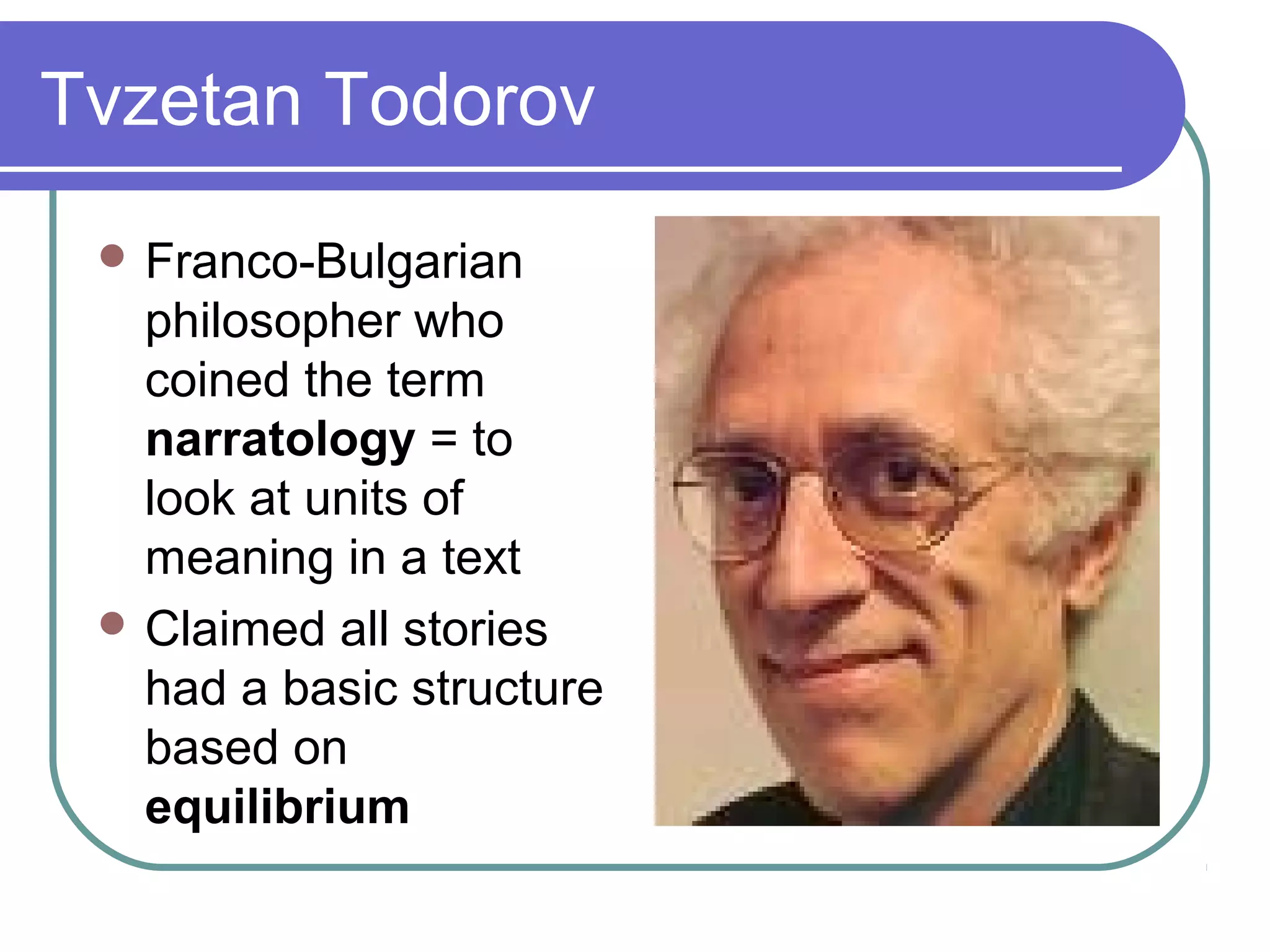
Tvzetan Todorov
  Franco-Bulgarian
   philosopher who
   coined the term
   narratology = to
   look at units of
   meaning in a text
  Claimed all stories
   had a basic structure
   based on
   equilibrium
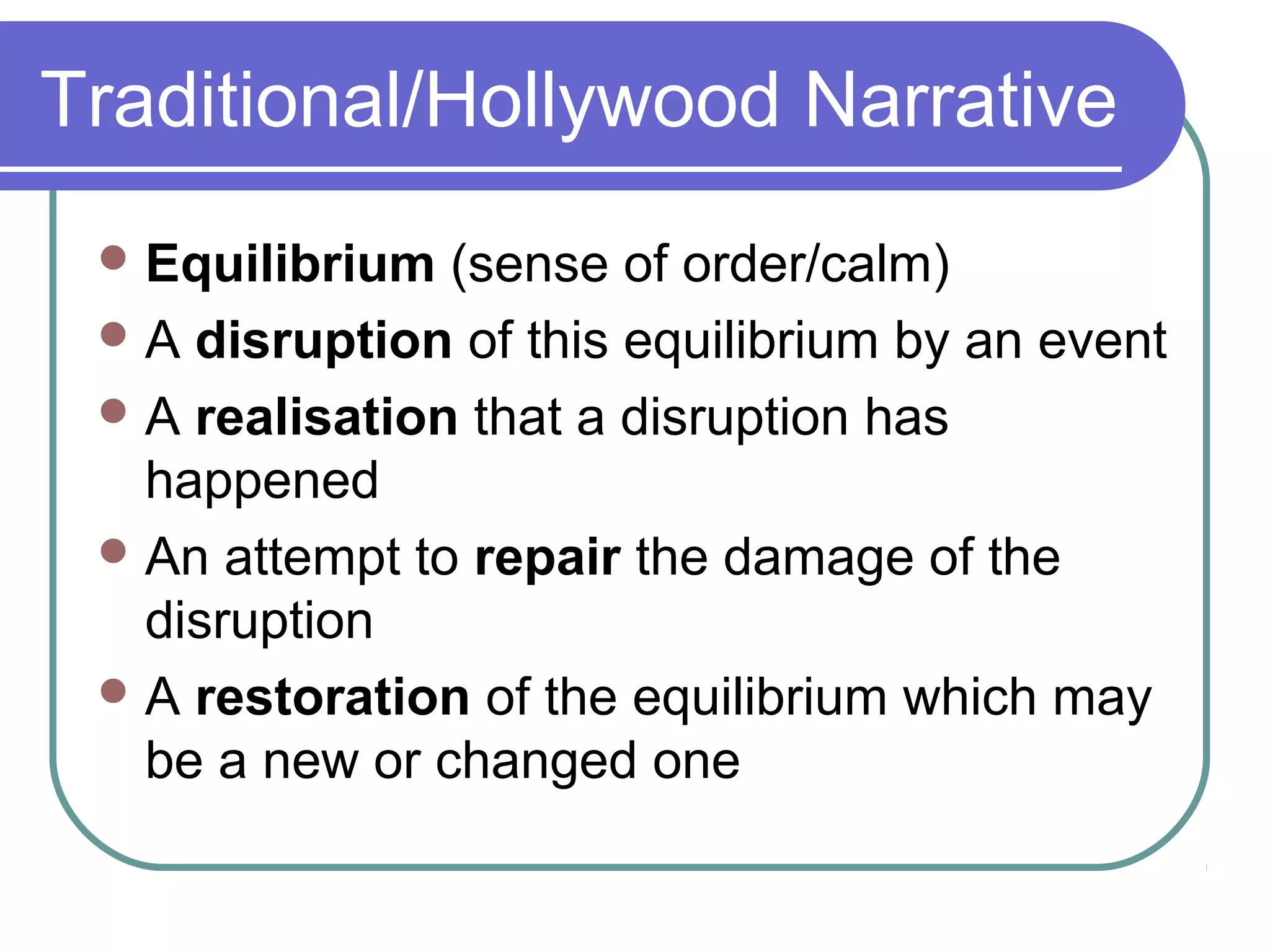
Traditional/Hollywood Narrative
  Equilibrium  (sense of order/calm)
  A disruption of this equilibrium by an event
  A realisation that a disruption has
   happened
  An attempt to repair the damage of the
   disruption
  A restoration of the equilibrium which may
   be a new or changed one
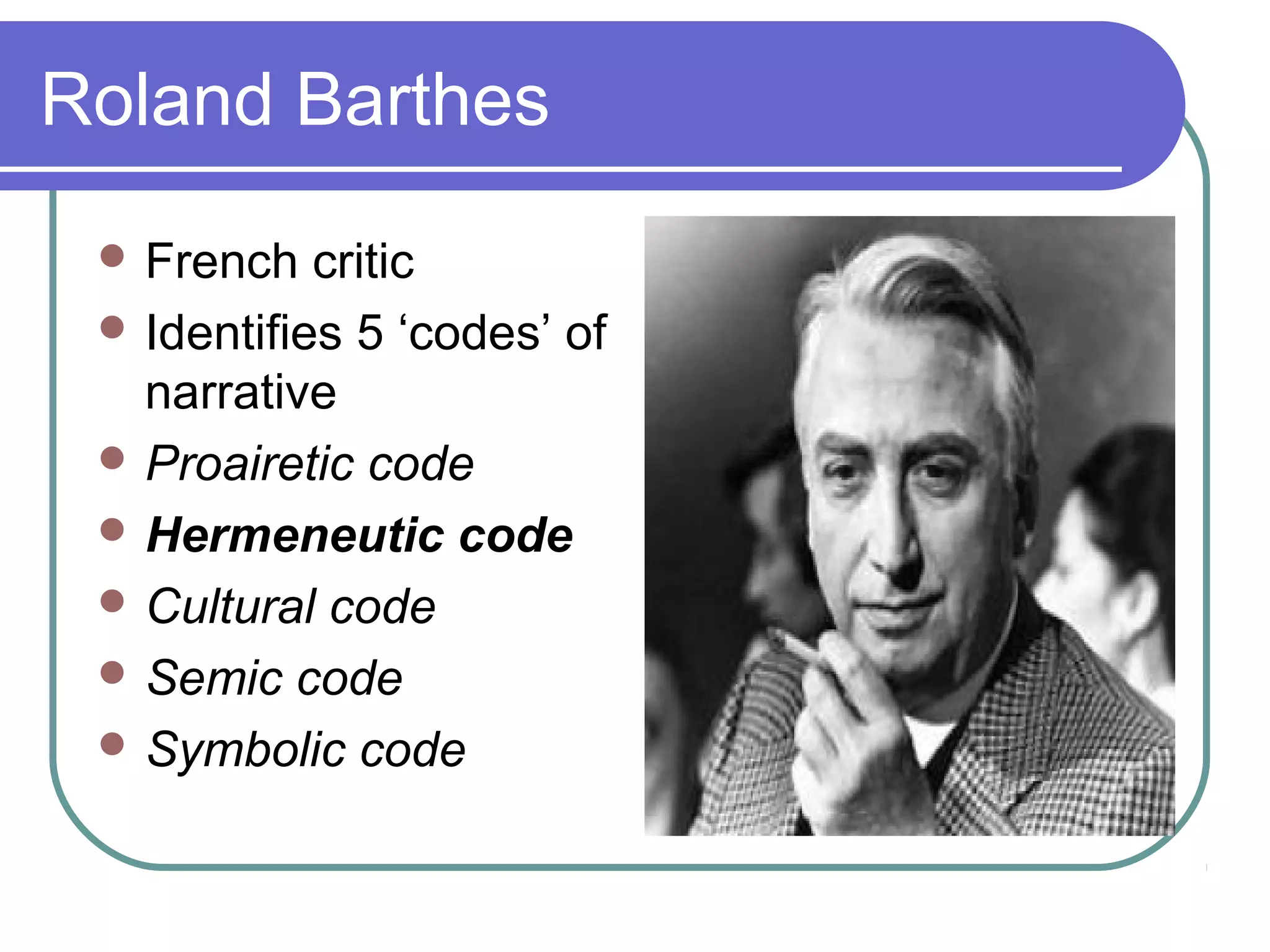
Roland Barthes
  French   critic
  Identifies 5 ‘codes’ of
   narrative
  Proairetic code
  Hermeneutic code
  Cultural code
  Semic code
  Symbolic code
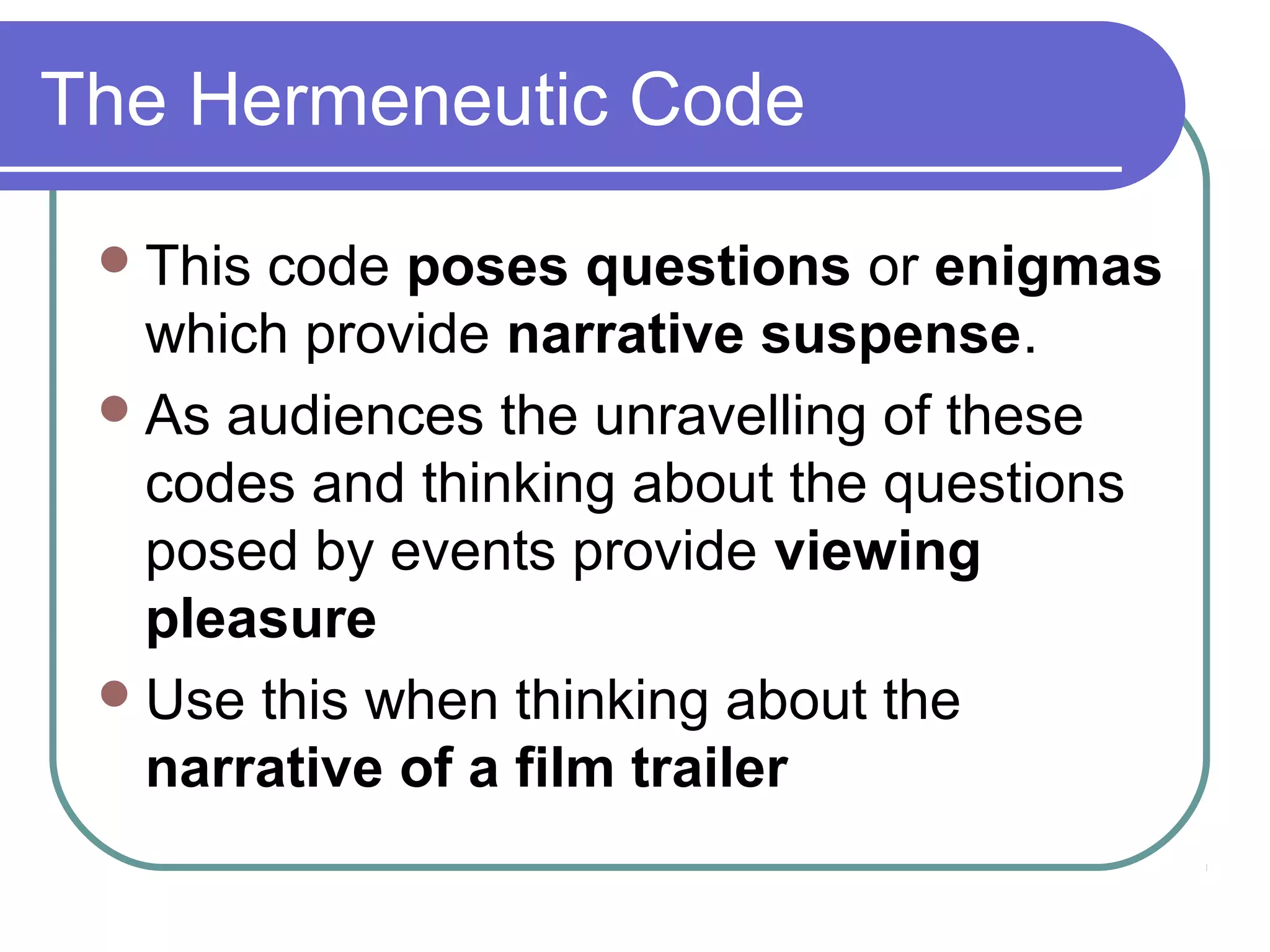
The Hermeneutic Code

  Thiscode poses questions or enigmas
   which provide narrative suspense.
  As audiences the unravelling of these
   codes and thinking about the questions
   posed by events provide viewing
   pleasure
  Use this when thinking about the
   narrative of a film trailer
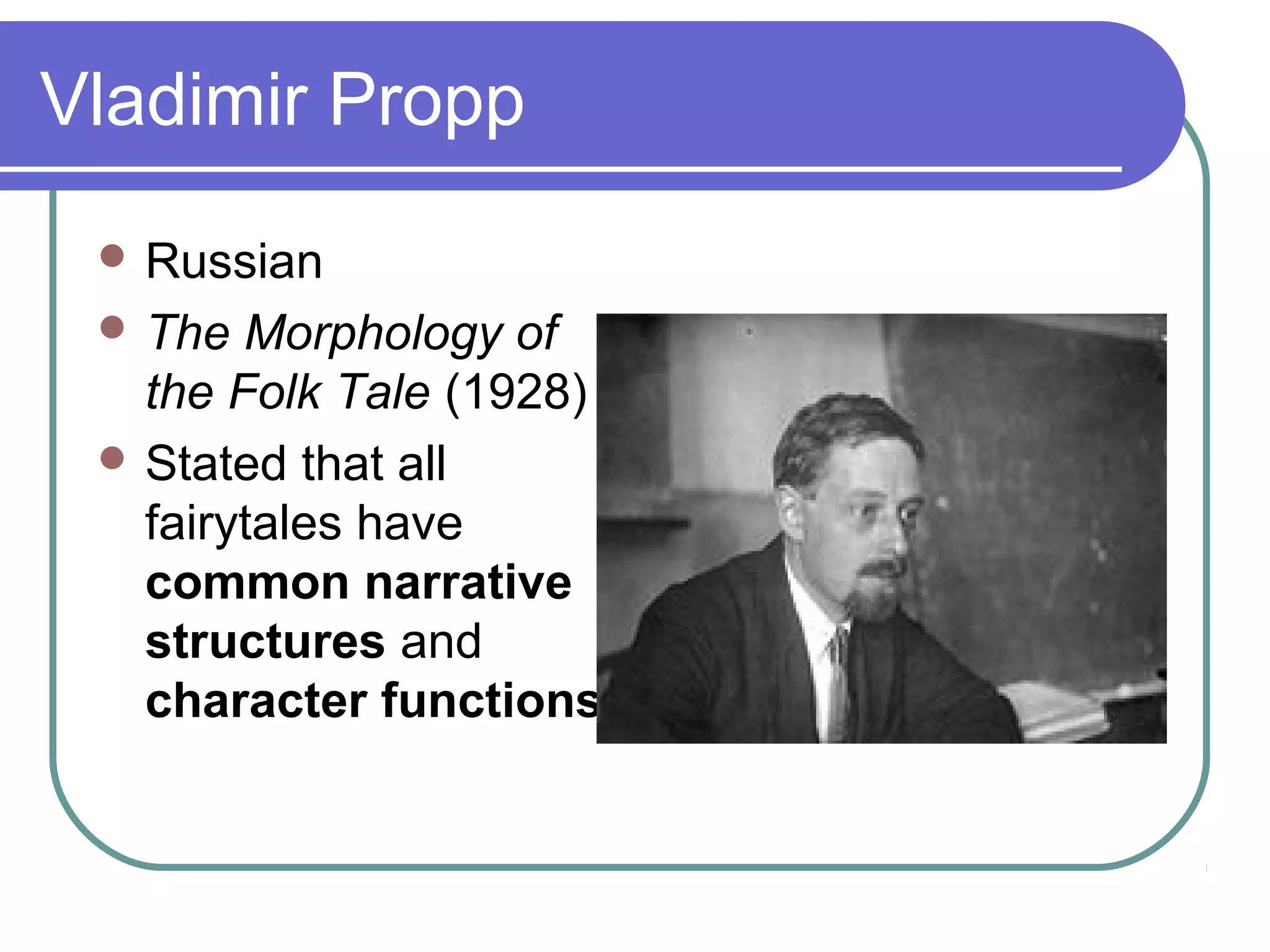
Vladimir Propp
  Russian
  The  Morphology of
   the Folk Tale (1928)
  Stated that all
   fairytales have
   common narrative
   structures and
   character functions
31 Functions of Fairytales

  Propp  identified 31 key functions in his
   analysis of Russian folktales
  Not all 31 had to be present, however,
   they did always follow the same
   sequential order
  These functions were performed by one
   of 8 main character types that advanced
   the action
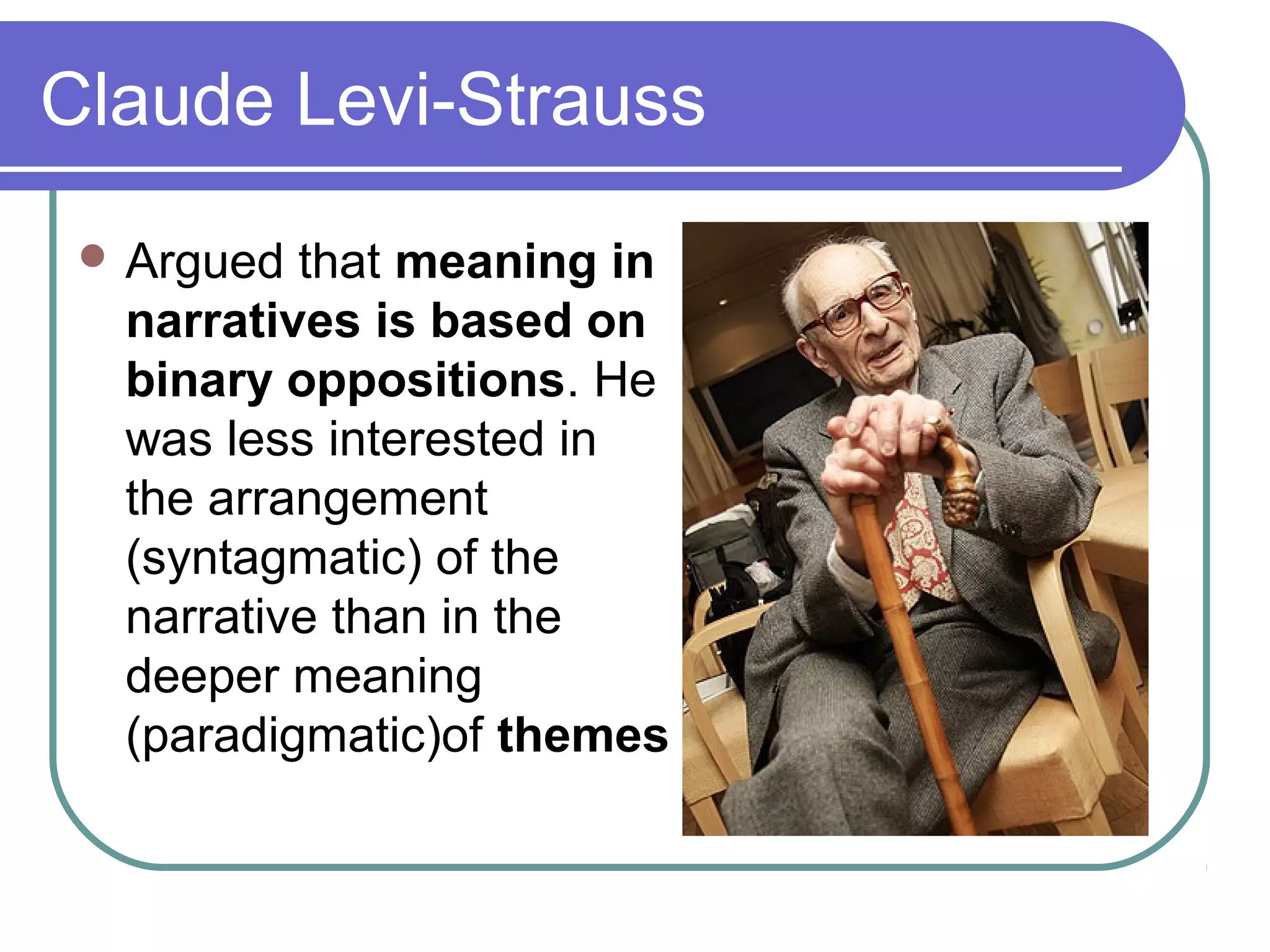
Claude Levi-Strauss
  Argued that meaning in
  narratives is based on
  binary oppositions. He
  was less interested in
  the arrangement
  (syntagmatic) of the
  narrative than in the
  deeper meaning
  (paradigmatic)of themes
Binary Oppositions
  Binary  oppositions are opposite values that
   reveal the structure of media texts.
  It is important to look at the denotations (literal
   meaning) and connotations (cultural
   significance) of the sign.
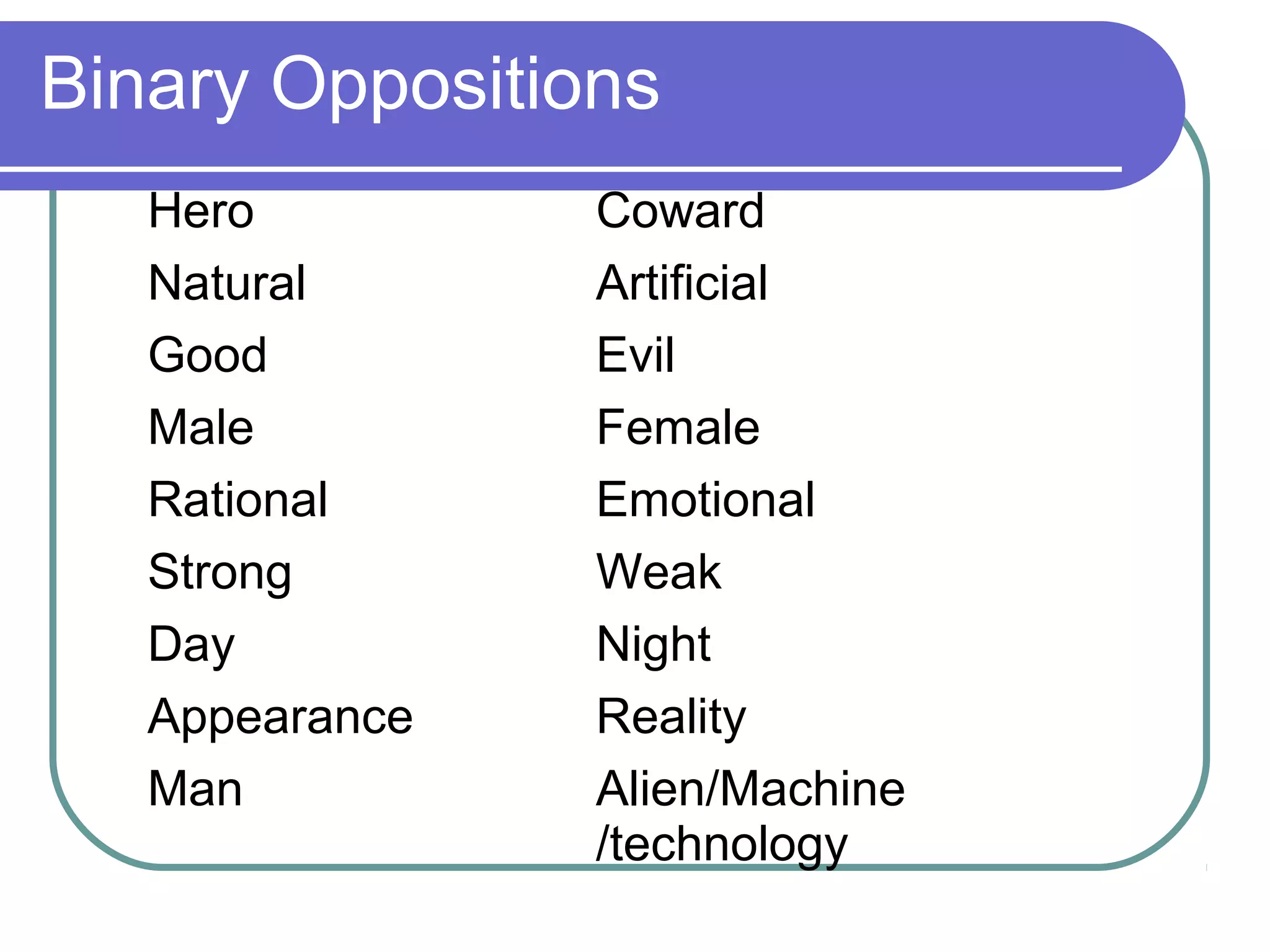
Binary Oppositions
   Hero         Coward
   Natural      Artificial
   Good         Evil
   Male         Female
   Rational     Emotional
   Strong       Weak
   Day          Night
   Appearance   Reality
   Man          Alien/Machine
                /technology
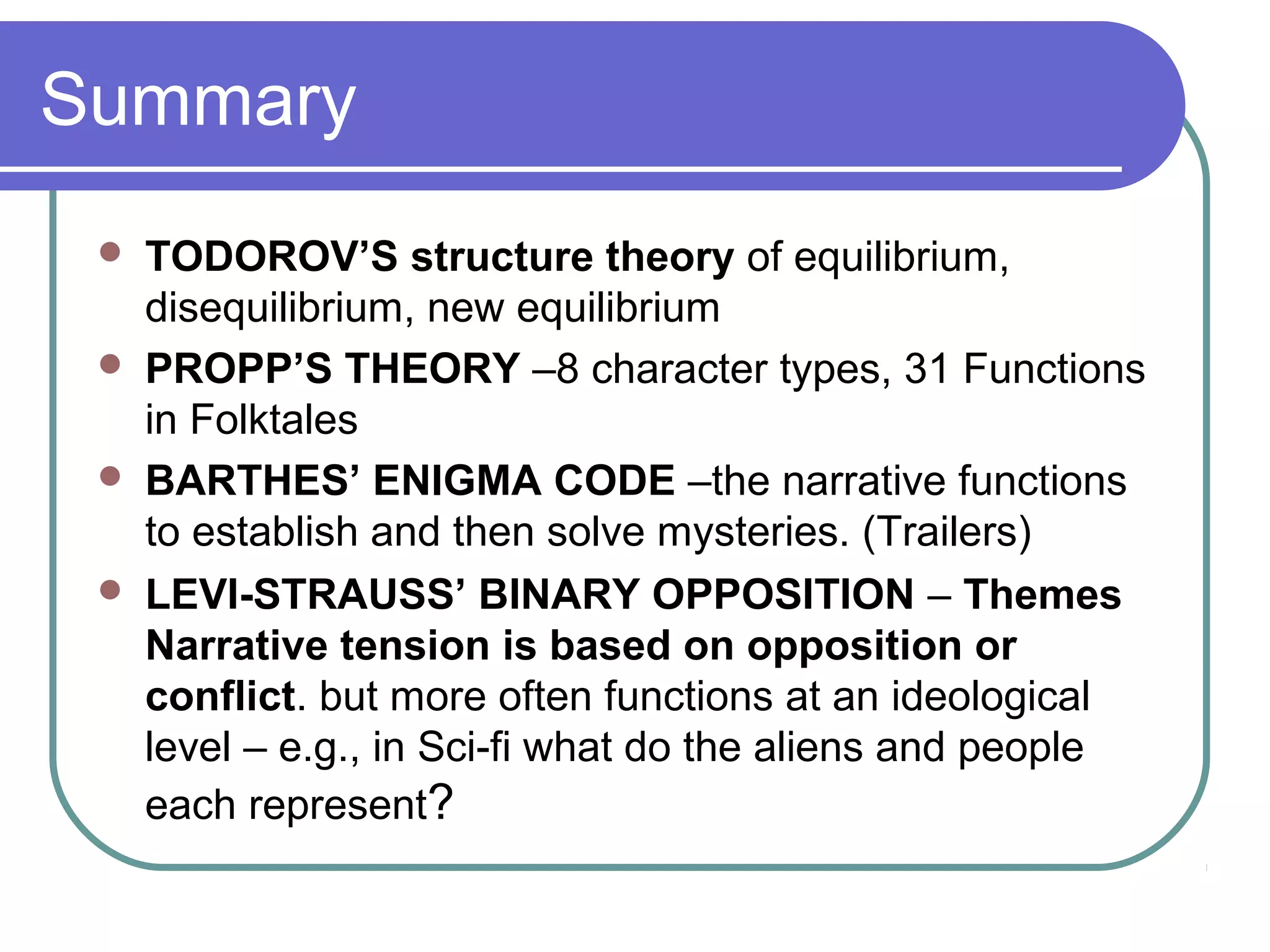
Summary
    TODOROV’S structure theory of equilibrium,
     disequilibrium, new equilibrium
    PROPP’S THEORY –8 character types, 31 Functions
     in Folktales
    BARTHES’ ENIGMA CODE –the narrative functions
     to establish and then solve mysteries. (Trailers)
    LEVI-STRAUSS’ BINARY OPPOSITION – Themes
     Narrative tension is based on opposition or
     conflict. but more often functions at an ideological
     level – e.g., in Sci-fi what do the aliens and people
     each represent?
References
   Barry, P (1995) Beginning Theory. Manchester: Manchester
    University Press.
   Fell, J.L. (1977) ‘Vladimir Propp in Hollywood’ in Film Quarterly.
    Vol. 30, No.3pp19-28
   Propp, Vladimir. (1928) Morphology of the Folk Tale. Excerpts
    available from:
    http://homepage.mac.com/allanmcnyc/textpdfs/propp.pdf
   Todorov, Tzvetan & Weinstein, Arnold. (1969) ‘Structural Analysis
    of Narrative’ in NOVEL: A Forum on Fiction. Vol. 3, No 1, pp70-
    76
   Todorov, Tzvetan. (1971) ‘The 2 Principles of Narrative’ in
    Diacritics. Vol. 1, no 1, pp37-44.
   Whalen, Tom. (2000) ‘Run Lola Run’ in Film Quarterly. Vol. 53,
    No.3, pp33-40.

Narrative theory

  • 1.
    Theories of Narrative The aim of this powerpoint is to introduce you to some key theorists and ideas in the study of narrative.
  • 2.
    Definitions of Narrative… Narrative: The story - what happens or what is depicted, actions, events and characters. Narration: How the story is told, how the information is presented to viewers, e.g. visual style and point of view the story is told from.
  • 3.
    Narrative structure Linear/Chronological  Non Linear – Pulp Fiction, Memento  Cyclical – Groundhog day/Run Lola Run  Cause and effect – often motivated by the needs and wishes of the characters.  Single/Multiple viewpoints – who is telling us the story?
  • 4.
    Omniscient/Restricted Narration Restricted narration –we see an event through the viewpoint of only one person. This can add surprise as we only discover events alongside them  Omniscient narration – when we see events from multiple viewpoints. This can add suspense as we are privy to information other characters are not.
  • 5.
    Tvzetan Todorov Franco-Bulgarian philosopher who coined the term narratology = to look at units of meaning in a text  Claimed all stories had a basic structure based on equilibrium
  • 6.
    Traditional/Hollywood Narrative Equilibrium (sense of order/calm)  A disruption of this equilibrium by an event  A realisation that a disruption has happened  An attempt to repair the damage of the disruption  A restoration of the equilibrium which may be a new or changed one
  • 7.
    Roland Barthes French critic  Identifies 5 ‘codes’ of narrative  Proairetic code  Hermeneutic code  Cultural code  Semic code  Symbolic code
  • 8.
    The Hermeneutic Code  Thiscode poses questions or enigmas which provide narrative suspense.  As audiences the unravelling of these codes and thinking about the questions posed by events provide viewing pleasure  Use this when thinking about the narrative of a film trailer
  • 9.
    Vladimir Propp Russian  The Morphology of the Folk Tale (1928)  Stated that all fairytales have common narrative structures and character functions
  • 10.
    31 Functions ofFairytales  Propp identified 31 key functions in his analysis of Russian folktales  Not all 31 had to be present, however, they did always follow the same sequential order  These functions were performed by one of 8 main character types that advanced the action
  • 11.
    Claude Levi-Strauss Argued that meaning in narratives is based on binary oppositions. He was less interested in the arrangement (syntagmatic) of the narrative than in the deeper meaning (paradigmatic)of themes
  • 12.
    Binary Oppositions Binary oppositions are opposite values that reveal the structure of media texts.  It is important to look at the denotations (literal meaning) and connotations (cultural significance) of the sign.
  • 13.
    Binary Oppositions Hero Coward Natural Artificial Good Evil Male Female Rational Emotional Strong Weak Day Night Appearance Reality Man Alien/Machine /technology
  • 14.
    Summary  TODOROV’S structure theory of equilibrium, disequilibrium, new equilibrium  PROPP’S THEORY –8 character types, 31 Functions in Folktales  BARTHES’ ENIGMA CODE –the narrative functions to establish and then solve mysteries. (Trailers)  LEVI-STRAUSS’ BINARY OPPOSITION – Themes Narrative tension is based on opposition or conflict. but more often functions at an ideological level – e.g., in Sci-fi what do the aliens and people each represent?
  • 15.
    References  Barry, P (1995) Beginning Theory. Manchester: Manchester University Press.  Fell, J.L. (1977) ‘Vladimir Propp in Hollywood’ in Film Quarterly. Vol. 30, No.3pp19-28  Propp, Vladimir. (1928) Morphology of the Folk Tale. Excerpts available from: http://homepage.mac.com/allanmcnyc/textpdfs/propp.pdf  Todorov, Tzvetan & Weinstein, Arnold. (1969) ‘Structural Analysis of Narrative’ in NOVEL: A Forum on Fiction. Vol. 3, No 1, pp70- 76  Todorov, Tzvetan. (1971) ‘The 2 Principles of Narrative’ in Diacritics. Vol. 1, no 1, pp37-44.  Whalen, Tom. (2000) ‘Run Lola Run’ in Film Quarterly. Vol. 53, No.3, pp33-40.