

Friday, October 9, 2009
Presented by:- Manish Sharma ABM-08126 Friday, October 9, 2009
There are three basic theories of communication:- Electronic theory. Social environment theory. Rhetorical theory. Friday, October 9, 2009
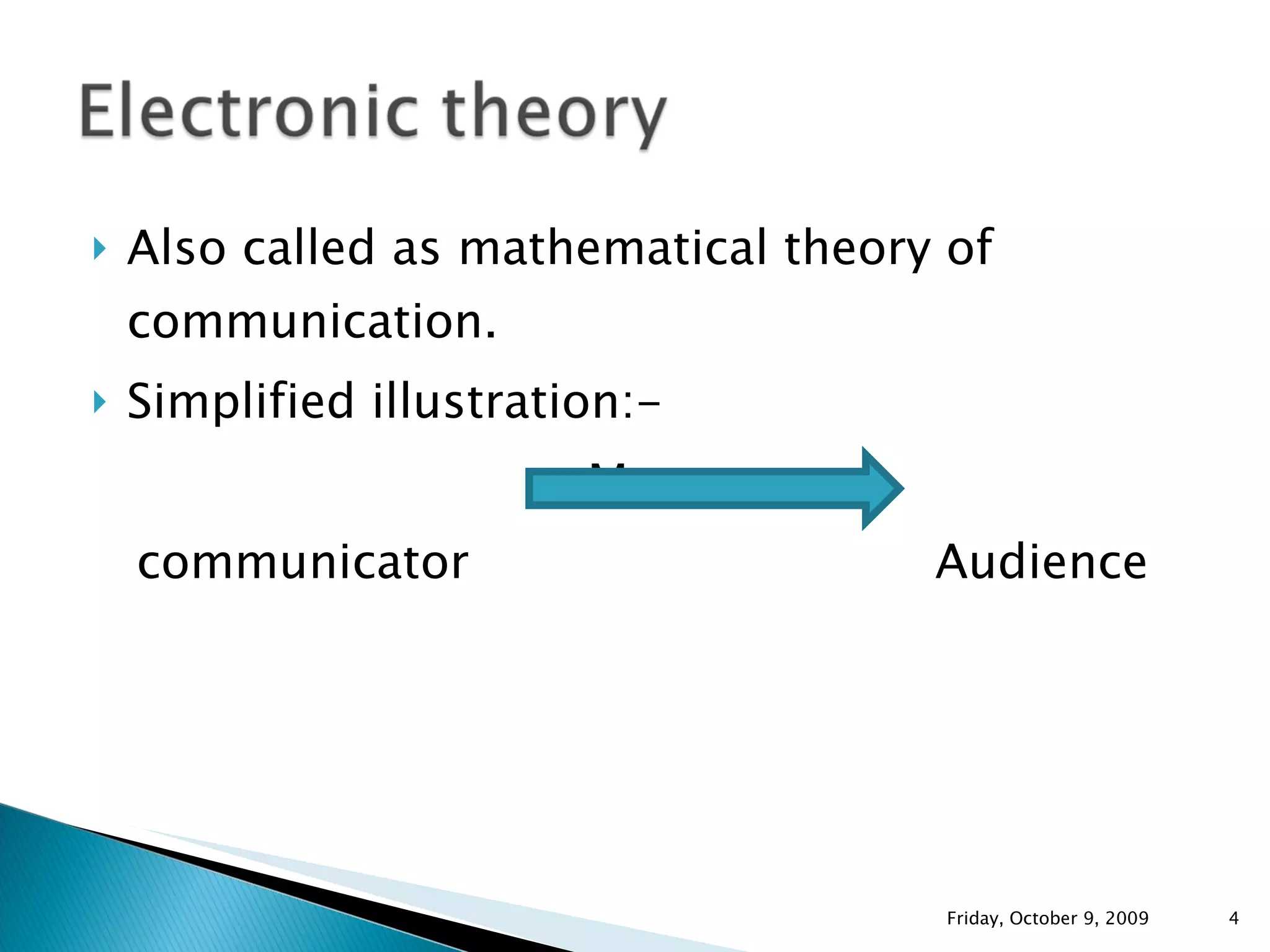
Also called as mathematical theory of communication. Simplified illustration:- Message communicator  Audience Friday, October 9, 2009
Friday, October 9, 2009
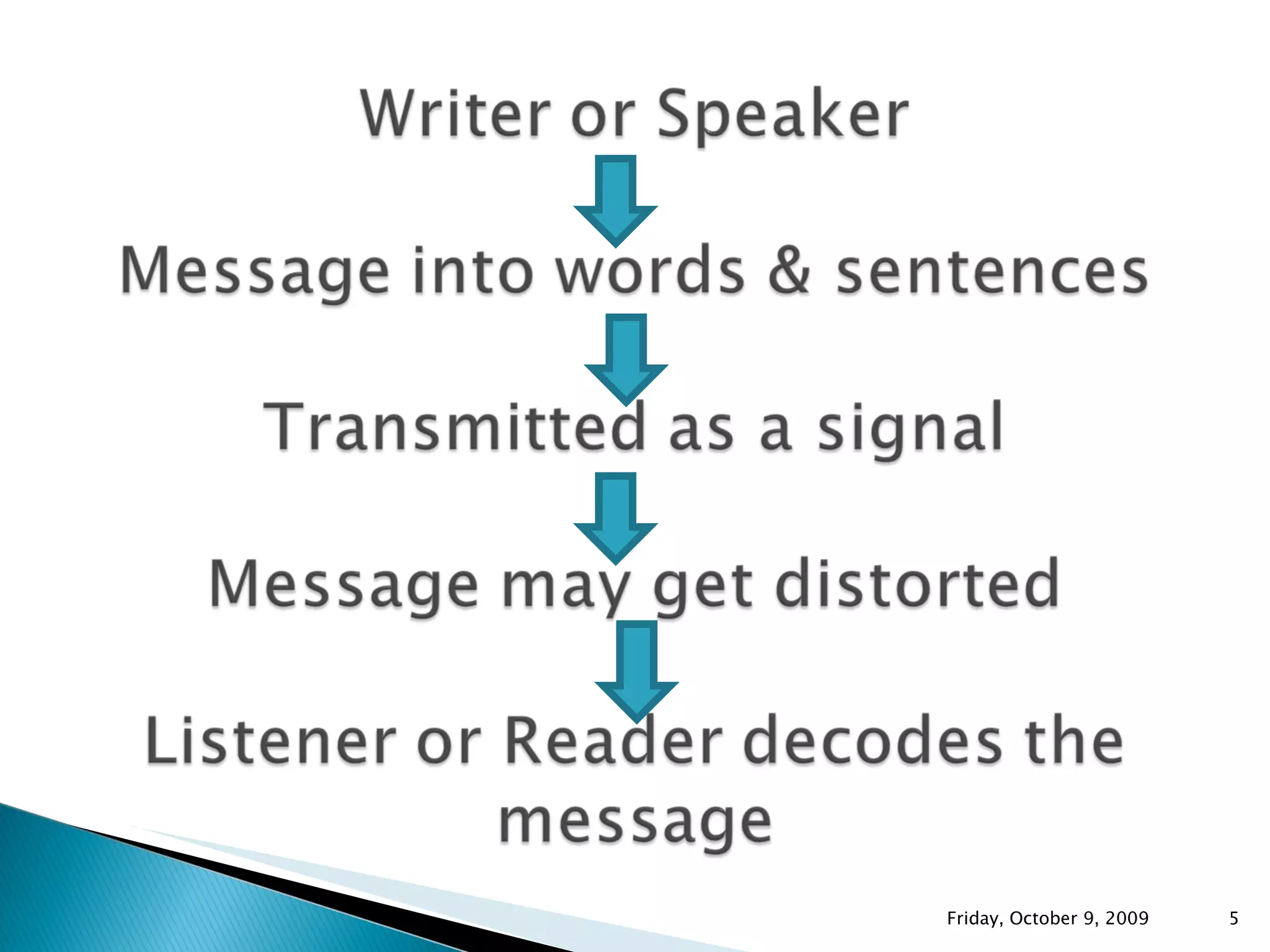
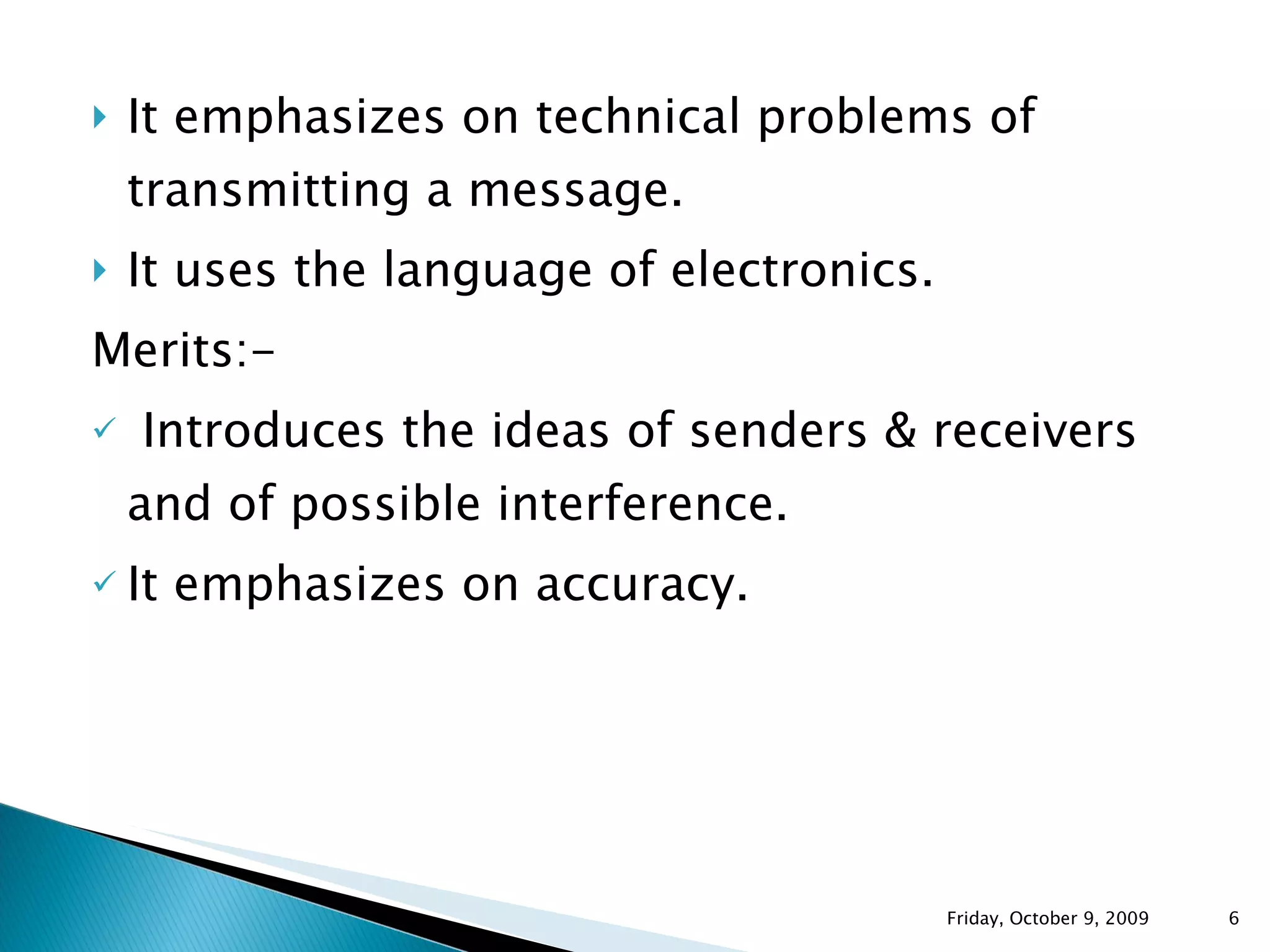
It emphasizes on technical problems of transmitting a message. It uses the language of electronics. Merits:- Introduces the ideas of senders & receivers and of possible interference. It emphasizes on accuracy. Friday, October 9, 2009
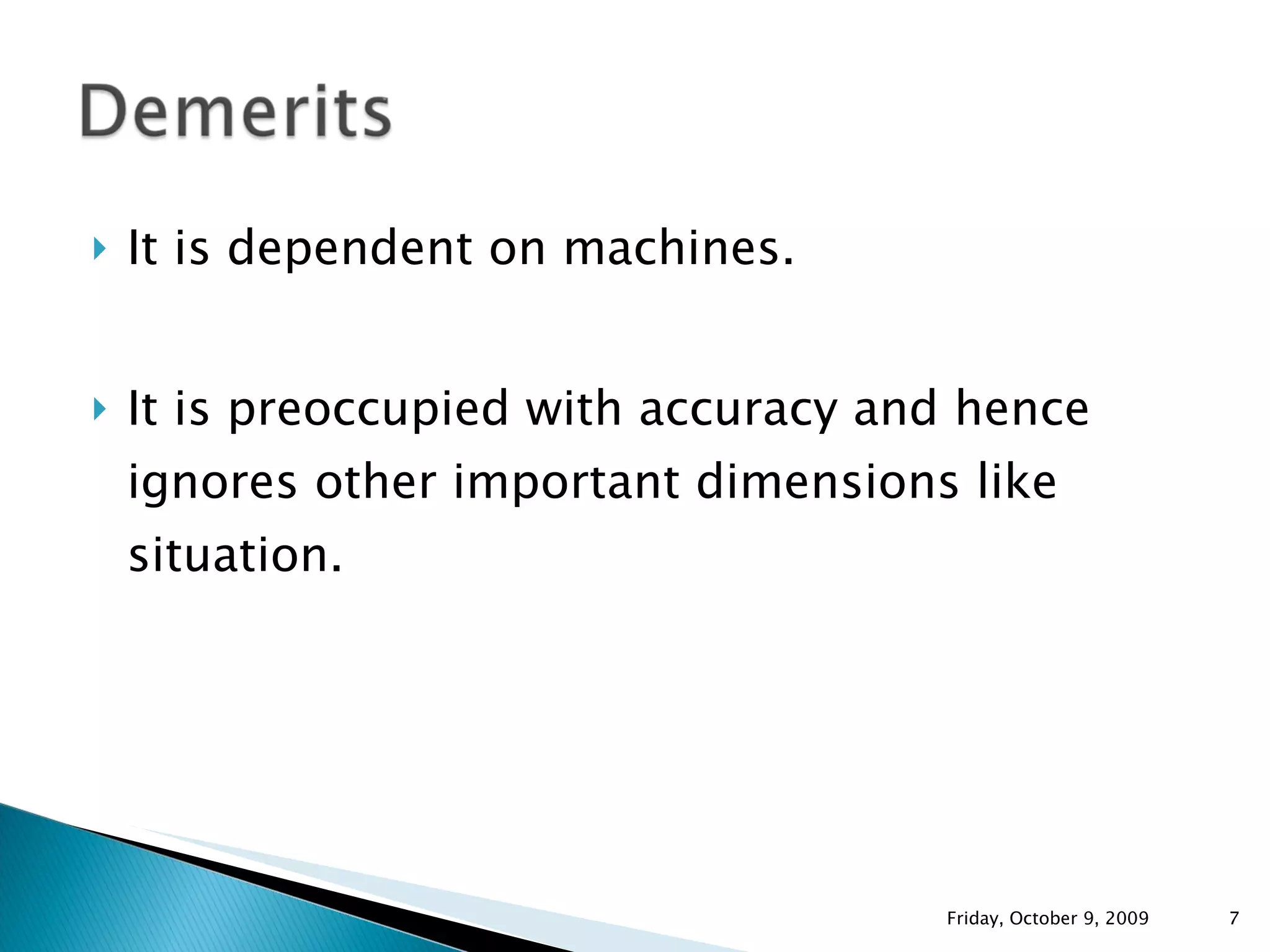
It is dependent on machines. It is preoccupied with accuracy and hence ignores other important dimensions like situation. Friday, October 9, 2009
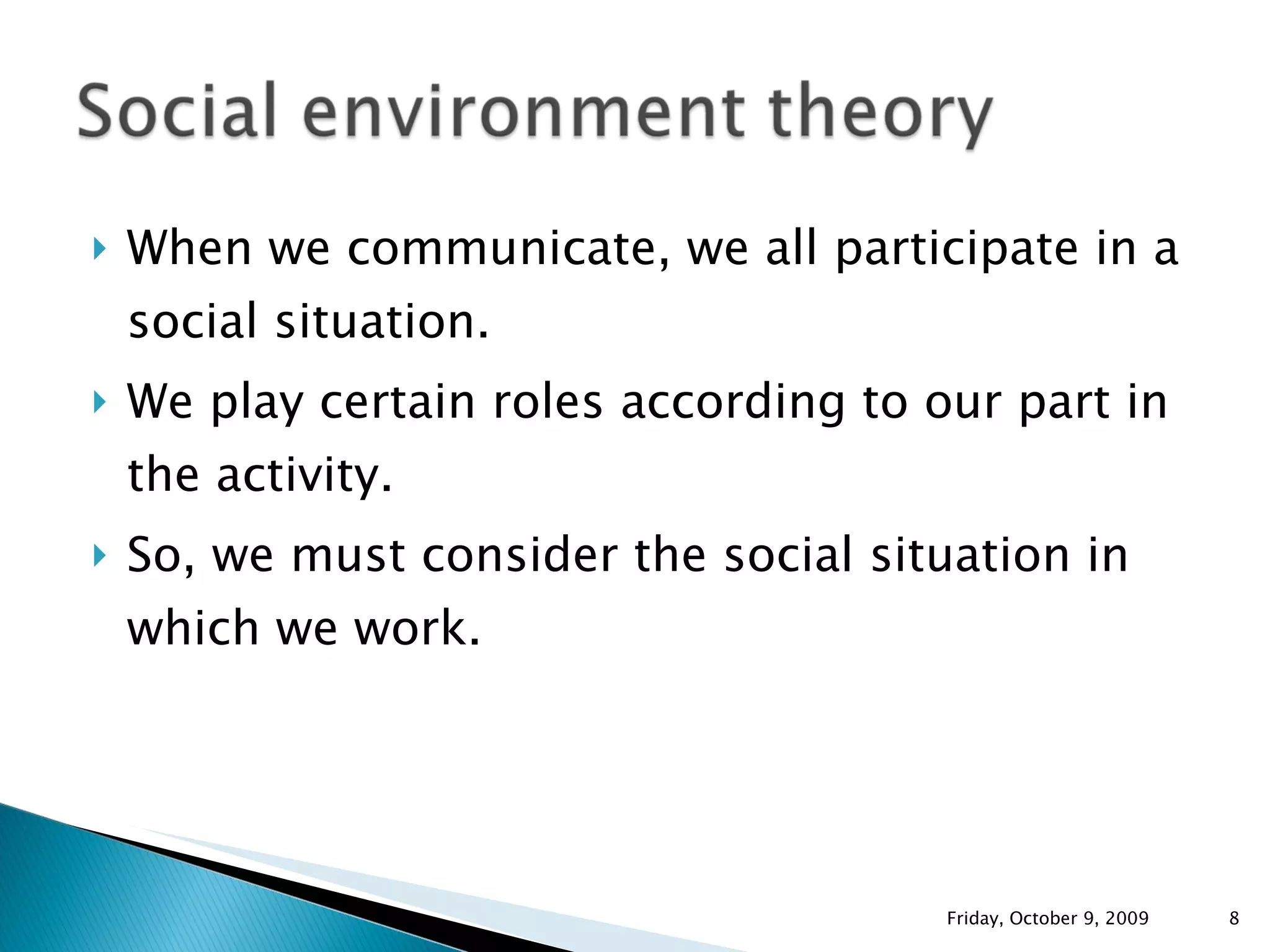
When we communicate, we all participate in a social situation. We play certain roles according to our part in the activity. So, we must consider the social situation in which we work. Friday, October 9, 2009
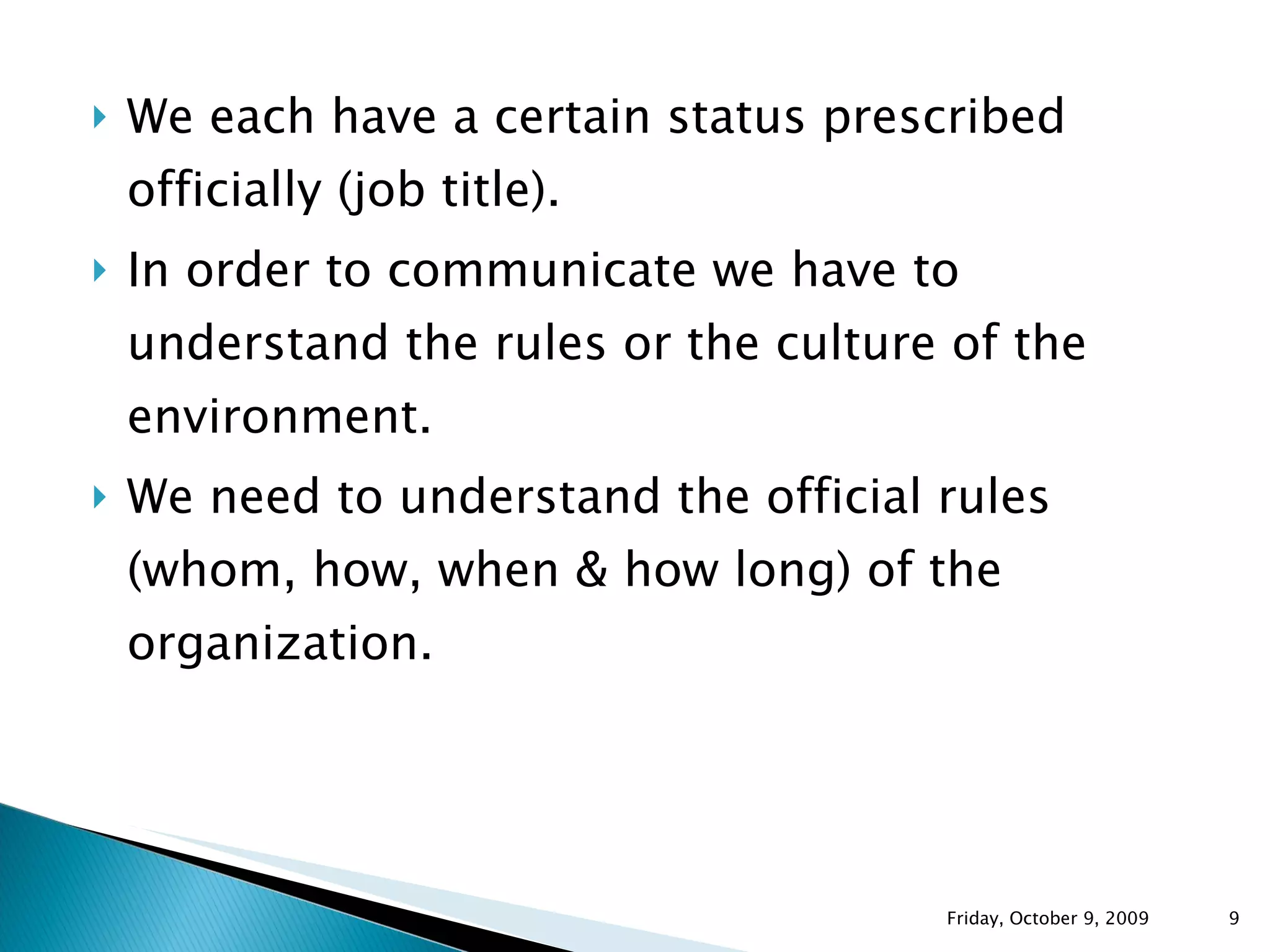
We each have a certain status prescribed officially (job title). In order to communicate we have to understand the rules or the culture of the environment. We need to understand the official rules (whom, how, when & how long) of the organization. Friday, October 9, 2009
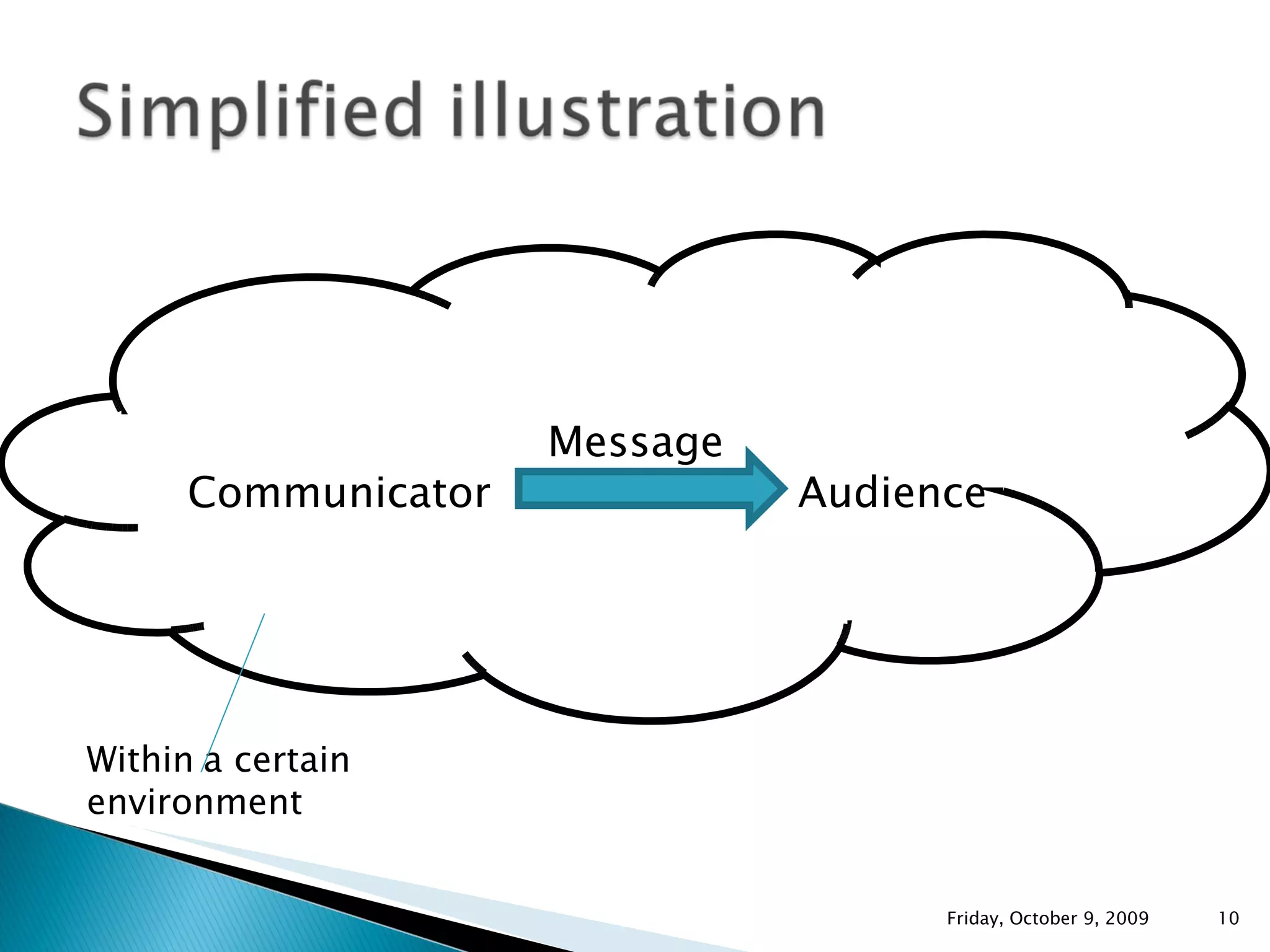
Message Communicator  Audience Within   a certain environment Friday, October 9, 2009
Merit:- It includes the social environment. Demerit:- It doesn’t take into account the response of audience.  Friday, October 9, 2009
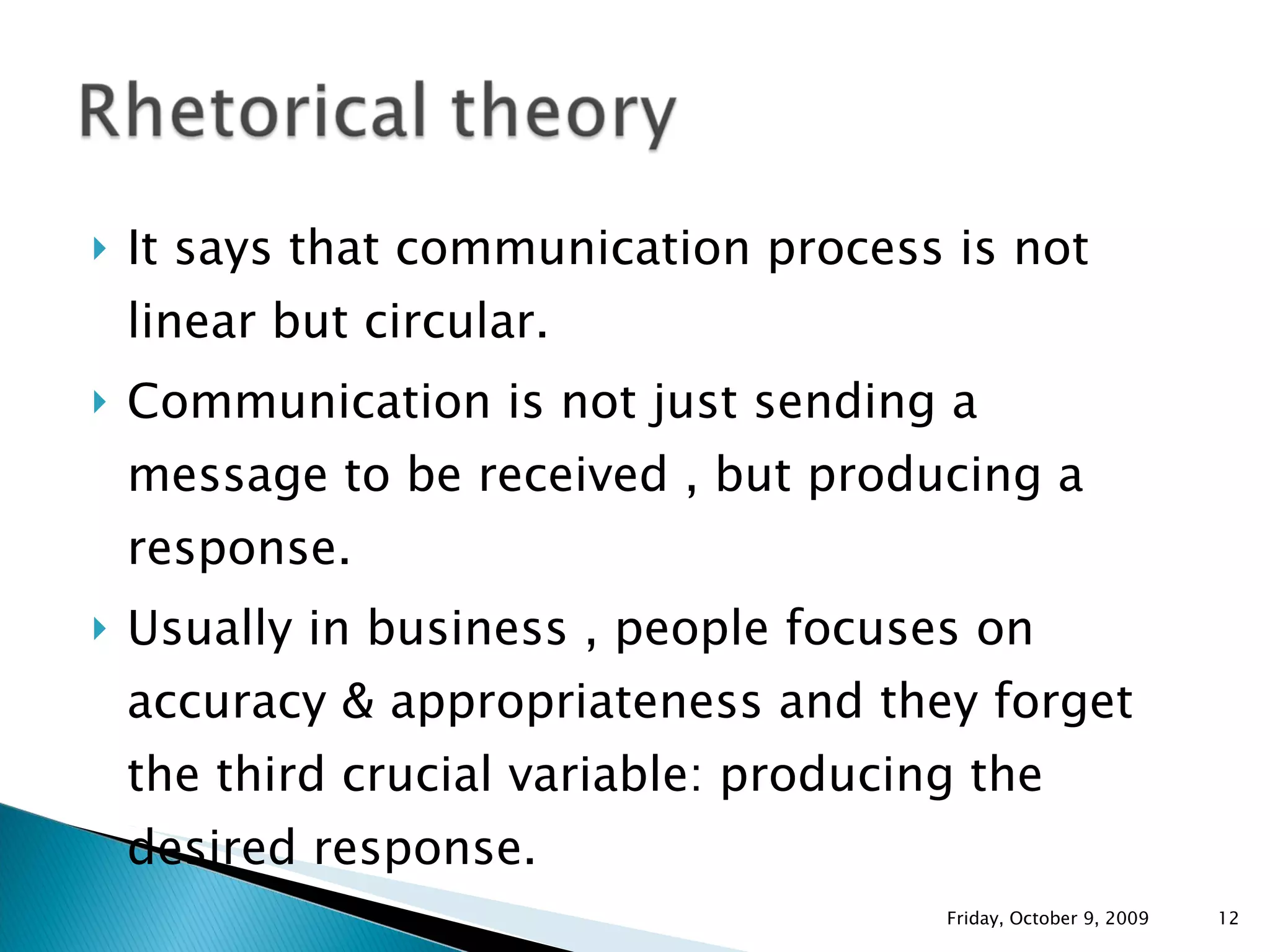
It says that communication process is not linear but circular. Communication is not just sending a message to be received , but producing a response. Usually in business , people focuses on accuracy & appropriateness and they forget the third crucial variable: producing the desired response. Friday, October 9, 2009
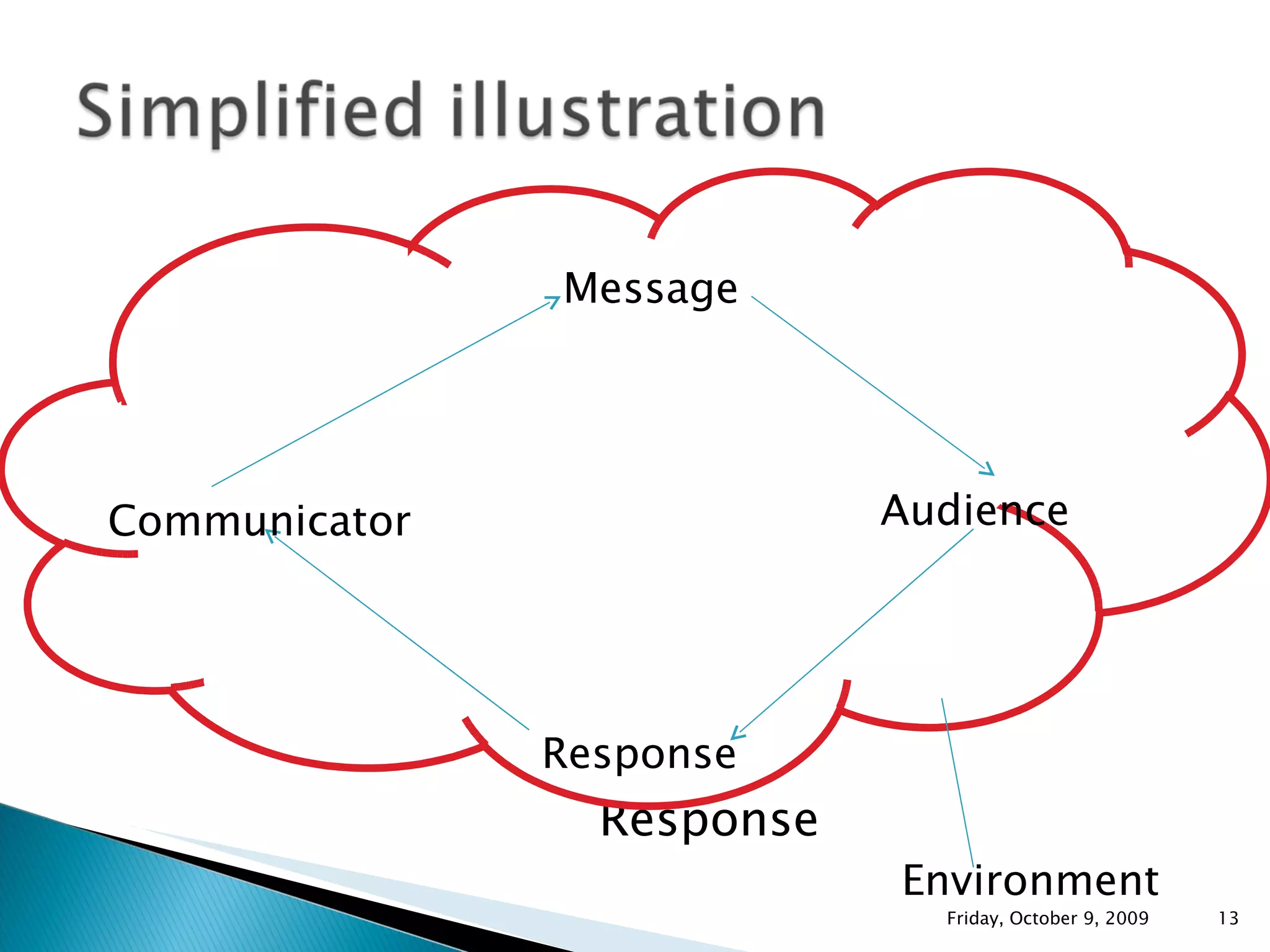
Message Communicator  Audience Response Environment Communicator Message Audience Response Friday, October 9, 2009
It incorporates the ideas of accuracy and situation but looks significantly different. This model is circular not linear. In business communication, generating a desired response is very important.  Friday, October 9, 2009
Business communication: Strategy & Skill by Mary Munter , Prentice-Hall Publication. Friday, October 9, 2009
Friday, October 9, 2009

Basic Theories Of Communication By Manish Sharma

  • 1.
  • 2.
    Presented by:- ManishSharma ABM-08126 Friday, October 9, 2009
  • 3.
    There are threebasic theories of communication:- Electronic theory. Social environment theory. Rhetorical theory. Friday, October 9, 2009
  • 4.
    Also called asmathematical theory of communication. Simplified illustration:- Message communicator Audience Friday, October 9, 2009
  • 5.
  • 6.
    It emphasizes ontechnical problems of transmitting a message. It uses the language of electronics. Merits:- Introduces the ideas of senders & receivers and of possible interference. It emphasizes on accuracy. Friday, October 9, 2009
  • 7.
    It is dependenton machines. It is preoccupied with accuracy and hence ignores other important dimensions like situation. Friday, October 9, 2009
  • 8.
    When we communicate,we all participate in a social situation. We play certain roles according to our part in the activity. So, we must consider the social situation in which we work. Friday, October 9, 2009
  • 9.
    We each havea certain status prescribed officially (job title). In order to communicate we have to understand the rules or the culture of the environment. We need to understand the official rules (whom, how, when & how long) of the organization. Friday, October 9, 2009
  • 10.
    Message Communicator Audience Within a certain environment Friday, October 9, 2009
  • 11.
    Merit:- It includesthe social environment. Demerit:- It doesn’t take into account the response of audience. Friday, October 9, 2009
  • 12.
    It says thatcommunication process is not linear but circular. Communication is not just sending a message to be received , but producing a response. Usually in business , people focuses on accuracy & appropriateness and they forget the third crucial variable: producing the desired response. Friday, October 9, 2009
  • 13.
    Message Communicator Audience Response Environment Communicator Message Audience Response Friday, October 9, 2009
  • 14.
    It incorporates theideas of accuracy and situation but looks significantly different. This model is circular not linear. In business communication, generating a desired response is very important. Friday, October 9, 2009
  • 15.
    Business communication: Strategy& Skill by Mary Munter , Prentice-Hall Publication. Friday, October 9, 2009
  • 16.