The Uses and Gratification 
Theory 
Uses and gratifications theory (UGT) is an 
approach to understanding why and how 
people actively seek out specific media 
to satisfy specific needs. UGT is an 
audience-centered approach to 
understanding mass communication. 
Diverging from other media effect 
theories that question "what does media 
do to people?", UGT focuses on "what do 
people do with media?"
In simplistic terms, Bulmer and Katz say that UaGT 
suggests that we choose certain types of media to 
satisfy our needs, to gratify them. 
We, as audience members, take an active part in the 
communication process and are goal oriented in their 
media use, and theorists say we do this to best fulfil 
our own needs as users, and we have alternative 
choices to satisfy these needs. 
• Information 
• Personal Identity 
• Integration and social interaction 
• Entertainment
Information 
• Finding out about relevant events and 
conditions in society and around the world. 
• Seeking advice on practical matters or opinion 
and decision choices 
• Satisfying curiosity and general interest 
• Learning; self-education 
• Gaining a sense of security through 
knowledge
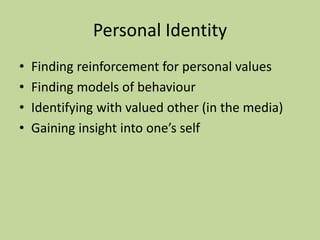
Personal Identity 
• Finding reinforcement for personal values 
• Finding models of behaviour 
• Identifying with valued other (in the media) 
• Gaining insight into one’s self
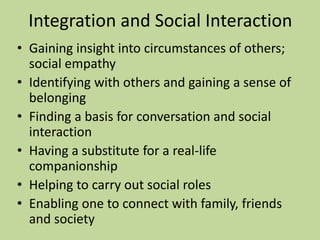
Integration and Social Interaction 
• Gaining insight into circumstances of others; 
social empathy 
• Identifying with others and gaining a sense of 
belonging 
• Finding a basis for conversation and social 
interaction 
• Having a substitute for a real-life 
companionship 
• Helping to carry out social roles 
• Enabling one to connect with family, friends 
and society
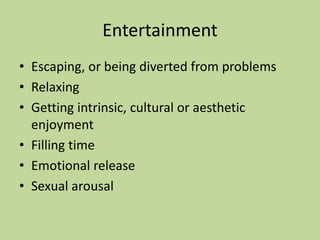
Entertainment 
• Escaping, or being diverted from problems 
• Relaxing 
• Getting intrinsic, cultural or aesthetic 
enjoyment 
• Filling time 
• Emotional release 
• Sexual arousal

The uses and gratification theory

  • 1.
    The Uses andGratification Theory Uses and gratifications theory (UGT) is an approach to understanding why and how people actively seek out specific media to satisfy specific needs. UGT is an audience-centered approach to understanding mass communication. Diverging from other media effect theories that question "what does media do to people?", UGT focuses on "what do people do with media?"
  • 2.
    In simplistic terms,Bulmer and Katz say that UaGT suggests that we choose certain types of media to satisfy our needs, to gratify them. We, as audience members, take an active part in the communication process and are goal oriented in their media use, and theorists say we do this to best fulfil our own needs as users, and we have alternative choices to satisfy these needs. • Information • Personal Identity • Integration and social interaction • Entertainment
  • 3.
    Information • Findingout about relevant events and conditions in society and around the world. • Seeking advice on practical matters or opinion and decision choices • Satisfying curiosity and general interest • Learning; self-education • Gaining a sense of security through knowledge
  • 4.
    Personal Identity •Finding reinforcement for personal values • Finding models of behaviour • Identifying with valued other (in the media) • Gaining insight into one’s self
  • 5.
    Integration and SocialInteraction • Gaining insight into circumstances of others; social empathy • Identifying with others and gaining a sense of belonging • Finding a basis for conversation and social interaction • Having a substitute for a real-life companionship • Helping to carry out social roles • Enabling one to connect with family, friends and society
  • 6.
    Entertainment • Escaping,or being diverted from problems • Relaxing • Getting intrinsic, cultural or aesthetic enjoyment • Filling time • Emotional release • Sexual arousal