Narrative Theory
Narrative Theory
• Narrative can be described as: “The way
  in which the plot is told to the audience”
• Narrative is strongly linked to the audience
  and purpose of a text.
• Within film the condensing of time is
  important to narrative…This may be done
  through techniques such as camera fades.
Roland Barthes
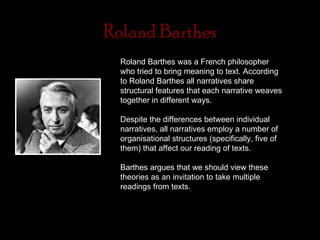
  Roland Barthes was a French philosopher
  who tried to bring meaning to text. According
  to Roland Barthes all narratives share
  structural features that each narrative weaves
  together in different ways.

  Despite the differences between individual
  narratives, all narratives employ a number of
  organisational structures (specifically, five of
  them) that affect our reading of texts.

  Barthes argues that we should view these
  theories as an invitation to take multiple
  readings from texts.
Narrative theory
Roland Barthes' narrative theory claims that a narrative can be broken down
   into five codes or sets of rules. These are:

   Action code
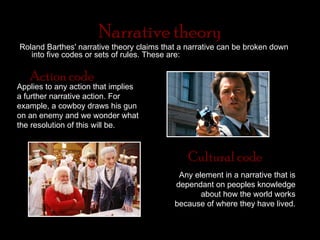
Applies to any action that implies
a further narrative action. For
example, a cowboy draws his gun
on an enemy and we wonder what
the resolution of this will be.


                                               Cultural code
                                            Any element in a narrative that is
                                           dependant on peoples knowledge
                                                  about how the world works
                                           because of where they have lived.
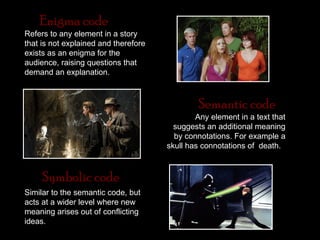
Enigma code
Refers to any element in a story
that is not explained and therefore
exists as an enigma for the
audience, raising questions that
demand an explanation.


                                               Semantic code
                                              Any element in a text that
                                        suggests an additional meaning
                                        by connotations. For example a
                                      skull has connotations of death.


     Symbolic code
Similar to the semantic code, but
acts at a wider level where new
meaning arises out of conflicting
ideas.
Applying Barthes Narrative theory to our film
           Enigma code
                We
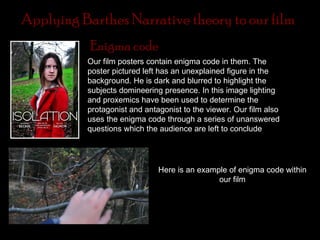
          Our film posters contain enigma code in them. The
          poster pictured left has an unexplained figure in the
          background. He is dark and blurred to highlight the
          subjects domineering presence. In this image lighting
          and proxemics have been used to determine the
          protagonist and antagonist to the viewer. Our film also
          uses the enigma code through a series of unanswered
          questions which the audience are left to conclude
           Semantic code


                              Here is an example of enigma code within
                                              our film
Applying Barthes Narrative theory to our film
     Action code
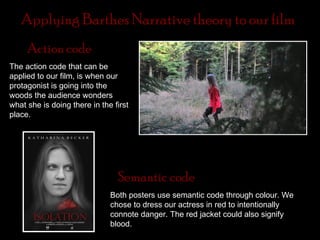
The action code that can be
applied to our film, is when our
protagonist is going into the
woods the audience wonders
what she is doing there in the first
place.


                                Semantic code
                              Both posters use semantic code through colour. We
                              chose to dress our actress in red to intentionally
                              connote danger. The red jacket could also signify
                              blood.

Narrative Theory

  • 1.
  • 2.
    Narrative Theory • Narrativecan be described as: “The way in which the plot is told to the audience” • Narrative is strongly linked to the audience and purpose of a text. • Within film the condensing of time is important to narrative…This may be done through techniques such as camera fades.
  • 3.
    Roland Barthes Roland Barthes was a French philosopher who tried to bring meaning to text. According to Roland Barthes all narratives share structural features that each narrative weaves together in different ways. Despite the differences between individual narratives, all narratives employ a number of organisational structures (specifically, five of them) that affect our reading of texts. Barthes argues that we should view these theories as an invitation to take multiple readings from texts.
  • 4.
    Narrative theory Roland Barthes'narrative theory claims that a narrative can be broken down into five codes or sets of rules. These are: Action code Applies to any action that implies a further narrative action. For example, a cowboy draws his gun on an enemy and we wonder what the resolution of this will be. Cultural code Any element in a narrative that is dependant on peoples knowledge about how the world works because of where they have lived.
  • 5.
    Enigma code Refers toany element in a story that is not explained and therefore exists as an enigma for the audience, raising questions that demand an explanation. Semantic code Any element in a text that suggests an additional meaning by connotations. For example a skull has connotations of death. Symbolic code Similar to the semantic code, but acts at a wider level where new meaning arises out of conflicting ideas.
  • 6.
    Applying Barthes Narrativetheory to our film Enigma code We Our film posters contain enigma code in them. The poster pictured left has an unexplained figure in the background. He is dark and blurred to highlight the subjects domineering presence. In this image lighting and proxemics have been used to determine the protagonist and antagonist to the viewer. Our film also uses the enigma code through a series of unanswered questions which the audience are left to conclude Semantic code Here is an example of enigma code within our film
  • 7.
    Applying Barthes Narrativetheory to our film Action code The action code that can be applied to our film, is when our protagonist is going into the woods the audience wonders what she is doing there in the first place. Semantic code Both posters use semantic code through colour. We chose to dress our actress in red to intentionally connote danger. The red jacket could also signify blood.