Narrative Theory 
Sophie Purchon
Roland Barthes 
Narrative Codes 
• Barthes introduced 5 codes which are merged into any narrative. 
• The Hermeneutic/Enigma code = This code refers to the hidden 
meaning within the text, clues are given but there is no clear indication 
to what is happening. Enigmas in the narrative make the audience want 
to know more, which can frustrate them. 
• The Proairetic/Action Code = Is a code where an action that happens in 
the text which does not raise questioning, however, leads on to an other 
action and could cause element which adds suspense to the text. 
• The Semantic Code = This code states the connotation in the text that 
gives extra information over the basic meaning and adding an additional 
layer. 
• The Symbolic Code = This code is very similar to the semantic code, it 
the symbolism within the text and it exercises opposites to show 
contrast and creates greater meaning. 
• The Referential Code = Is a code which refers to anything in the text 
which relates to outside knowledge, such as scientific, historical and 
cultural knowledge.
Tzvetan Todorov 
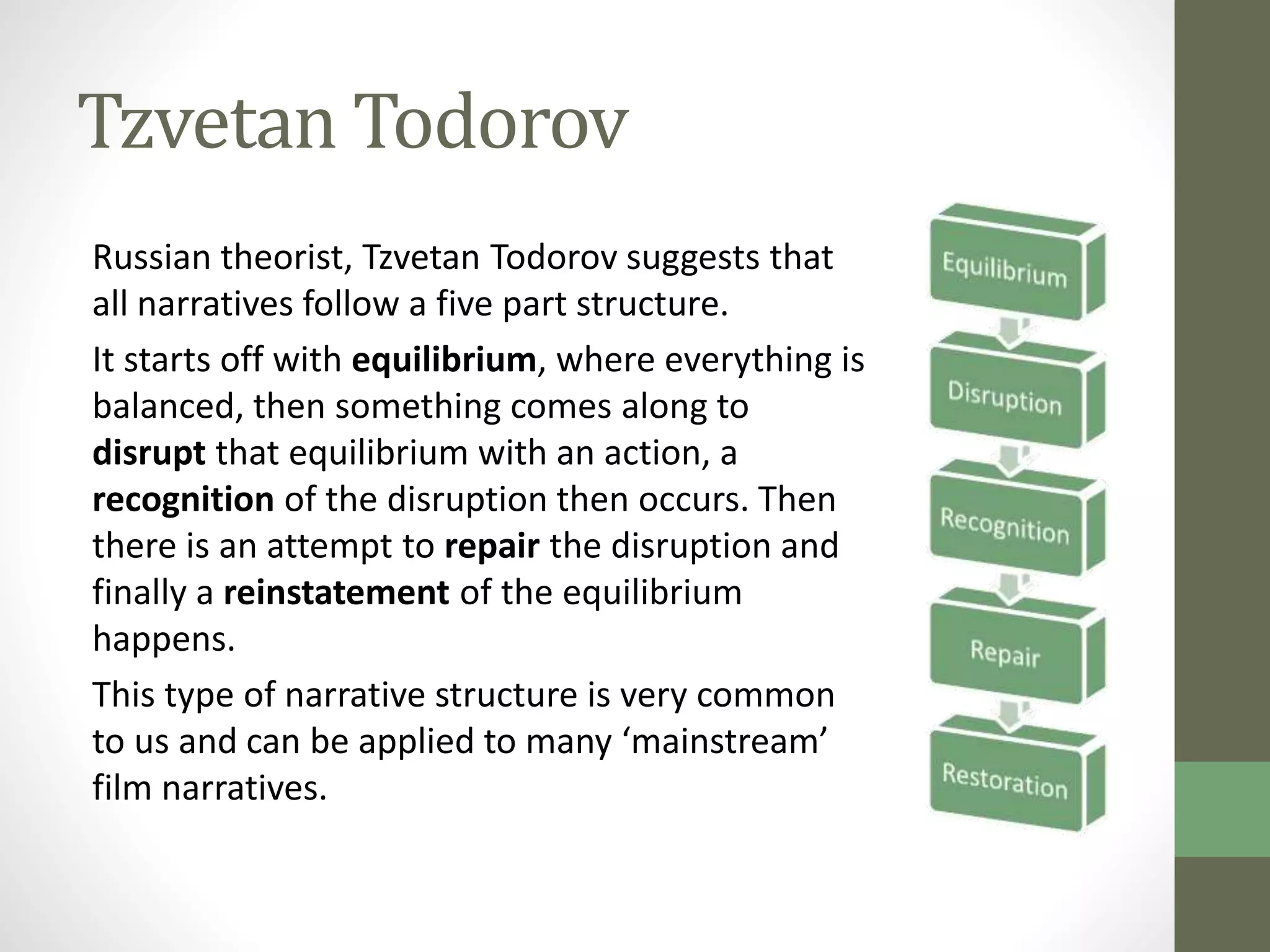
Russian theorist, Tzvetan Todorov suggests that 
all narratives follow a five part structure. 
It starts off with equilibrium, where everything is 
balanced, then something comes along to 
disrupt that equilibrium with an action, a 
recognition of the disruption then occurs. Then 
there is an attempt to repair the disruption and 
finally a reinstatement of the equilibrium 
happens. 
This type of narrative structure is very common 
to us and can be applied to many ‘mainstream’ 
film narratives.
Allan Cameron 
Cameron has identified four different types of modular narrative: 
• Anachronic 
This modular narrative involves the use of flashbacks and/or flash-forwards, with no clear 
authority between any of the narrative threads. These narratives also often repeat scenes 
directly or via a different perspective. An example being Pulp Fiction. 
• Forking Paths 
Forking-path narratives juxtapose alternative versions of a story, showing the possible 
outcomes that might result from small changes in a single event or group of events. The 
forking-path narrative introduces a number of plotlines that usually contradict one another. 
Examples include Groundhog Day and Run Lola Run. 
• Episodic 
This narrative is organised as an abstract series or narrative anthology. Abstract series type of 
modular narrative is characterized by the operation of a non- narrative formal system which 
appears to dictate (or at least overlay) the organization of narrative elements such as a 
sequence of numbers or the alphabet. Anthology consists of a series of shorter tales which are 
apparently disconnected but share a random similarity, such as all ‘episodes’ being survivors of 
a shipwreck. 
• Split Screens 
Split screen narratives are different from the other types of modular narrative discussed here, 
because their modularity is articulated along spatial rather than temporal lines. These films 
divide the screen into two or more frames, juxtaposing events within the same visual field, in a 
sustained fashion.
Claude Levi-Strauss 
Claude Levi Strauss theory is that the conflict is based around the binary opposites and that the 
binary opposites are the central climax of a narrative structure. 
Examples of Binary Opposition: 
Good vs Evil, 
Black vs White, 
Boy vs Girl, 
Peace vs War, 
Civilised vs Savage, 
Democracy vs Dictatorship, 
Domestic vs foreign/alien, 
Articulate vs inarticulate , 
Young vs Old, 
Man vs Nature, 
Protagonist vs antagonist, 
Motivator vs observer, 
Empowered vs victim , 
Man vs Woman, 
Good looking vs Ugly, 
Strong vs weak, 
Decisive vs indecisive, 
Ignorance vs wisdom
Vladimir Propp 
Vladimir Propp suggested that characters took on the role of narrative 
functions. From a comprehensive study of stories, Propp came up with 
seven different character types: 
• The hero (who is usually male, he is the agent who restores the 
narrative equilibrium often by boarding upon a quest.) 
• The villain (who usually creates the narrative disruption.) 
• The donor (gives the hero something, it may be an object, 
information or advice, which helps in resolution of the narrative.) 
• The helper (aids the hero in the task of restoring equilibrium.) 
• The princess/victim (is usually the character most threatened by the 
villain and has to be saved, at the climax, by the hero.) 
• The dispatcher (sends the hero on her or his task, who can typically 
be the princess father) 
• The false hero (appears to be good at first but is revealed at the 
end) 
Characters can also fulfil more than one character type, for example; a 
princess may also be a helper.

Narrative theory

  • 1.
  • 2.
    Roland Barthes NarrativeCodes • Barthes introduced 5 codes which are merged into any narrative. • The Hermeneutic/Enigma code = This code refers to the hidden meaning within the text, clues are given but there is no clear indication to what is happening. Enigmas in the narrative make the audience want to know more, which can frustrate them. • The Proairetic/Action Code = Is a code where an action that happens in the text which does not raise questioning, however, leads on to an other action and could cause element which adds suspense to the text. • The Semantic Code = This code states the connotation in the text that gives extra information over the basic meaning and adding an additional layer. • The Symbolic Code = This code is very similar to the semantic code, it the symbolism within the text and it exercises opposites to show contrast and creates greater meaning. • The Referential Code = Is a code which refers to anything in the text which relates to outside knowledge, such as scientific, historical and cultural knowledge.
  • 3.
    Tzvetan Todorov Russiantheorist, Tzvetan Todorov suggests that all narratives follow a five part structure. It starts off with equilibrium, where everything is balanced, then something comes along to disrupt that equilibrium with an action, a recognition of the disruption then occurs. Then there is an attempt to repair the disruption and finally a reinstatement of the equilibrium happens. This type of narrative structure is very common to us and can be applied to many ‘mainstream’ film narratives.
  • 4.
    Allan Cameron Cameronhas identified four different types of modular narrative: • Anachronic This modular narrative involves the use of flashbacks and/or flash-forwards, with no clear authority between any of the narrative threads. These narratives also often repeat scenes directly or via a different perspective. An example being Pulp Fiction. • Forking Paths Forking-path narratives juxtapose alternative versions of a story, showing the possible outcomes that might result from small changes in a single event or group of events. The forking-path narrative introduces a number of plotlines that usually contradict one another. Examples include Groundhog Day and Run Lola Run. • Episodic This narrative is organised as an abstract series or narrative anthology. Abstract series type of modular narrative is characterized by the operation of a non- narrative formal system which appears to dictate (or at least overlay) the organization of narrative elements such as a sequence of numbers or the alphabet. Anthology consists of a series of shorter tales which are apparently disconnected but share a random similarity, such as all ‘episodes’ being survivors of a shipwreck. • Split Screens Split screen narratives are different from the other types of modular narrative discussed here, because their modularity is articulated along spatial rather than temporal lines. These films divide the screen into two or more frames, juxtaposing events within the same visual field, in a sustained fashion.
  • 5.
    Claude Levi-Strauss ClaudeLevi Strauss theory is that the conflict is based around the binary opposites and that the binary opposites are the central climax of a narrative structure. Examples of Binary Opposition: Good vs Evil, Black vs White, Boy vs Girl, Peace vs War, Civilised vs Savage, Democracy vs Dictatorship, Domestic vs foreign/alien, Articulate vs inarticulate , Young vs Old, Man vs Nature, Protagonist vs antagonist, Motivator vs observer, Empowered vs victim , Man vs Woman, Good looking vs Ugly, Strong vs weak, Decisive vs indecisive, Ignorance vs wisdom
  • 6.
    Vladimir Propp VladimirPropp suggested that characters took on the role of narrative functions. From a comprehensive study of stories, Propp came up with seven different character types: • The hero (who is usually male, he is the agent who restores the narrative equilibrium often by boarding upon a quest.) • The villain (who usually creates the narrative disruption.) • The donor (gives the hero something, it may be an object, information or advice, which helps in resolution of the narrative.) • The helper (aids the hero in the task of restoring equilibrium.) • The princess/victim (is usually the character most threatened by the villain and has to be saved, at the climax, by the hero.) • The dispatcher (sends the hero on her or his task, who can typically be the princess father) • The false hero (appears to be good at first but is revealed at the end) Characters can also fulfil more than one character type, for example; a princess may also be a helper.