





NARCOTIC DRUGS TYPES, PROPERTIES
AND EFFECTS
PRESENTED BY GURURAJ KULKARNI GUEST
LECTURER KARNATAKA POLICE TRAINING COLLGE
(GULBARGA) KALBURAGI
WHAT IS A DRUG?
 A drug is “any chemical substance that brings
about physical, emotional, or mental changes in
people”.
 Alcohol, tobacco, and even caffeine (in coffee,
tea, cocoa, and cola drinks) are drugs.
 However, the term “drug” is more typically used
to refer to marijuana, amphetamines,
barbiturates, tranquilizers, narcotics, cocaine,
“crack”, phencyclidine (PCP), volatile chemicals
(glue and other inhalants), LSD, and heroin.
WHAT IS DRUG ABUSE?
 Drug abuse is the use of a chemical
substance, legal or illegal, which causes
physical, mental, emotional or social harm to
a person or to people close to him or her.
THERE ARE DIFFERENT KINDS OF DRUG USERS:
-
 Experimenters who may try one or two drugs
a few times out of curiosity about their
effects.
 Recreational users use drugs to “get high”
with friends on special occasions or at
parties.
 Regular users use drugs constantly to
achieve or maintain a desired state, but
continue to attempt normal activity (work,
school, housework, etc.)
 Dependent users can’t relate to anything but
drug seeking and drug taking. They
experience mental or physical discomfort
when they need drugs and will do anything to
obtain them
 Drug use is often hard to pinpoint, especially
in the early stages.
 One way to find out is to simply ask,
especially when there are significant
changes in behavior.
 This is often a sign that something is wrong,
it may not be drug abuse but your concern
and openness can make the difference.
TYPES OF DRUGS
 BARBITURATES.
 DEPRESSANTS.
 FENTANYLS.
 GLUE .AND OTHER INHALANTS.
 LSD
 MARIJUANA AND HASHISH.
 NARCOTICS.
 PCP
DANGEROUS DRUGS
 KIDDIE DOPE AND LOOK-ALIKES.
 STIMULANTS.
 AMPHETAMINES.
 COCAINE
BARBITURATES
 Barbiturates, sometimes called “barbs”,
“downs”, or “reds”, cause mental confusion,
dizziness, and loss of memory.
 People sometimes get so confused from
barbiturates that they forget how many pills
they have taken. Often this confusion can
result in overdose.
IMAGE OF BARIBITURATES
 Barbiturates and alcohol make each other
more powerful when taken together.
 Mixing even a few sleeping pills with alcohol
can easily lead to an overdose and is a
frequent cause of accidental death.
IMAGE OF DEPRESSANTS
 Some of these tablets and capsules are
called “downers” and can be obtained in the
black-market or taken from the family
medicine cabinet.
 There are many drugs in this category,
including sedatives (tranquilizers) like Valium,
Librium, and Xanax, and hypnotics (sleeping
pills) like Nembutal, Seconal, Dalmane, and
Placidyl.
FENTANYLS
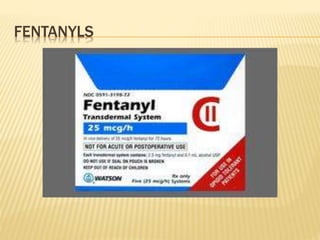
 Fentanyls are a family of compounds that
mimic the effect of heroin.
 Some derivatives of fentanyl are thousands
of times more potent than heroin.
GLUE AND OTHER INHALANTS
 Sniffing glue and inhaling other volatile
chemicals, such as deodorant, hair spray, or
even gasoline can cause a high.
 These materials are poisonous and very
dangers.
 Part of their intoxicating effect comes from
cutting off oxygen to the brain or affecting the
lungs.
 Overdoses of these chemicals can damage
the liver, heart, kidney, brain, blood and
central nervous system.
IMAGE OF GLU AND OTHER INHALANTS
HALLUCINOGENS
 Hallucinogens also called psychedelics are
drugs which affect sensation, thinking,
selfawareness, and emotion.
 Changes in time and space perception,
delusions, and hallucinations may range from
mild to overwhelming, depending on the
dose and quality of the drug.
 Effects vary; the same person may have
different reactions on different occasions.
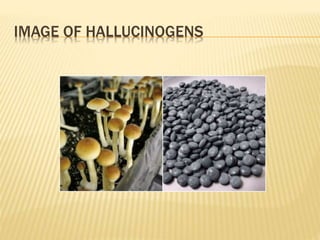
 Many natural and synthetic hallucinogens are
in use. LSD, a synthetic, is the most potent
and best studied.
 Mescaline (from the peyote cactus),
psilocybin (from the Mexican mushroom),
morning glory seeds, DMT, DOM(STP),
PMA, MDA, and others have somewhat
similar effects
IMAGE OF HALLUCINOGENS
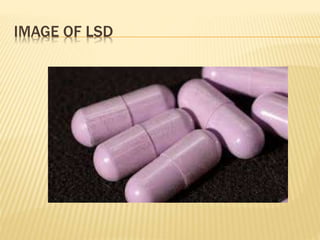
LSD
 Lysergic Acid comes from a fungus (ergot)
and was first converted to lysergic acid
diethylamide (LSD) in 1938.
 It was not until 1943 that its psychoactive
properties became known.
 Effects of LSD vary greatly according to
dosage, personality of the user, and
conditions under which the drug is used.
 Basically, it causes changes in sensation.
Users describe changes in depth perception
and in the meaning of the perceived object.
 Illusions and hallucinations often occur.
 Users describe changes in depth perception
and in the meaning of the perceived object.
Illusions and hallucinations often occur
 The sense of time and self are altered.
Sensations may seem to “cross over” - that
is, Physical reactions range from minor, such
as dilated pupils, rise in temperature and
heartbeat, or a slight increase in blood
pressure to tremors.
 The user’s emotional response to LSD varies
widely.
 High doses can greatly alter the state of
consciousness. Music may be seen or colors
heard.
 ard. Physical reactions range from minor,
such as dilated pupils, rise in temperature
and heartbeat, or a slight increase in blood
pressure to tremors.
IMAGE OF LSD
MARIJUANA AND HASHISH
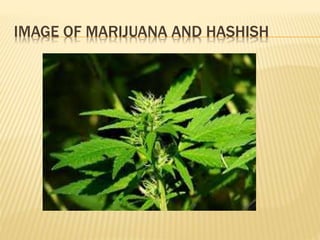
 Marijuana, hashish, and hashish oil come
from a plant called Cannabis.
 The dried, chopped leaves are called
marijuana.
 The dark brown resin from the tops of the
plant is hashish, with hashish oil being
distilled from the hashish.
 The cannabis plant gets its effects primarily
from a drug called delta-9-tetrahydro-
cannabinol, THC for short.
 Smoking or eating THC brings most of the
“high”
IMAGE OF MARIJUANA AND HASHISH
NARCOTICS
 Narcotics are derived from opium or are
synthesized, and are highly addictive.
 Used medically as pain killers, they depress
the central nervous system and eventually
make people physically and mentally
dependent.
 Codeine and Demerol are common synthetic
narcotics. The “opiates”, a more powerful
class of narcotics derived from the opium
poppy, include opium, morphine, and heroin.
Although the medical effects of the drug may
be no more severe than those of the
barbiturates, the great need for heroin often
leads to personal desperation, crime and
intense suffering.
PCP
 One serious drug of abuse, phencyclidine
(PCP), is a tranquilizer for animals. PCP
(“hog” or “angel dust”) produces a feeling of
numbness in arms and legs, and can cause
hallucinations
 Sprinkled on tobacco or marijuana cigarettes
or taken in capsules, PCP can create
temporary psychosis very much like acute
schizophrenia. It often leads to paranoia and
has been linked with serious violence.

Narcotic drugs types, properties and effects

  • 1.
    NARCOTIC DRUGS TYPES,PROPERTIES AND EFFECTS PRESENTED BY GURURAJ KULKARNI GUEST LECTURER KARNATAKA POLICE TRAINING COLLGE (GULBARGA) KALBURAGI
  • 2.
    WHAT IS ADRUG?  A drug is “any chemical substance that brings about physical, emotional, or mental changes in people”.  Alcohol, tobacco, and even caffeine (in coffee, tea, cocoa, and cola drinks) are drugs.  However, the term “drug” is more typically used to refer to marijuana, amphetamines, barbiturates, tranquilizers, narcotics, cocaine, “crack”, phencyclidine (PCP), volatile chemicals (glue and other inhalants), LSD, and heroin.
  • 3.
    WHAT IS DRUGABUSE?  Drug abuse is the use of a chemical substance, legal or illegal, which causes physical, mental, emotional or social harm to a person or to people close to him or her.
  • 4.
    THERE ARE DIFFERENTKINDS OF DRUG USERS: -  Experimenters who may try one or two drugs a few times out of curiosity about their effects.  Recreational users use drugs to “get high” with friends on special occasions or at parties.
  • 5.
     Regular usersuse drugs constantly to achieve or maintain a desired state, but continue to attempt normal activity (work, school, housework, etc.)  Dependent users can’t relate to anything but drug seeking and drug taking. They experience mental or physical discomfort when they need drugs and will do anything to obtain them
  • 6.
     Drug useis often hard to pinpoint, especially in the early stages.  One way to find out is to simply ask, especially when there are significant changes in behavior.  This is often a sign that something is wrong, it may not be drug abuse but your concern and openness can make the difference.
  • 7.
    TYPES OF DRUGS BARBITURATES.  DEPRESSANTS.  FENTANYLS.  GLUE .AND OTHER INHALANTS.  LSD  MARIJUANA AND HASHISH.  NARCOTICS.  PCP
  • 8.
    DANGEROUS DRUGS  KIDDIEDOPE AND LOOK-ALIKES.  STIMULANTS.  AMPHETAMINES.  COCAINE
  • 9.
    BARBITURATES  Barbiturates, sometimescalled “barbs”, “downs”, or “reds”, cause mental confusion, dizziness, and loss of memory.  People sometimes get so confused from barbiturates that they forget how many pills they have taken. Often this confusion can result in overdose.
  • 10.
  • 11.
     Barbiturates andalcohol make each other more powerful when taken together.  Mixing even a few sleeping pills with alcohol can easily lead to an overdose and is a frequent cause of accidental death.
  • 12.
  • 13.
     Some ofthese tablets and capsules are called “downers” and can be obtained in the black-market or taken from the family medicine cabinet.  There are many drugs in this category, including sedatives (tranquilizers) like Valium, Librium, and Xanax, and hypnotics (sleeping pills) like Nembutal, Seconal, Dalmane, and Placidyl.
  • 14.
  • 15.
     Fentanyls area family of compounds that mimic the effect of heroin.  Some derivatives of fentanyl are thousands of times more potent than heroin.
  • 16.
    GLUE AND OTHERINHALANTS  Sniffing glue and inhaling other volatile chemicals, such as deodorant, hair spray, or even gasoline can cause a high.  These materials are poisonous and very dangers.
  • 17.
     Part oftheir intoxicating effect comes from cutting off oxygen to the brain or affecting the lungs.  Overdoses of these chemicals can damage the liver, heart, kidney, brain, blood and central nervous system.
  • 18.
    IMAGE OF GLUAND OTHER INHALANTS
  • 19.
    HALLUCINOGENS  Hallucinogens alsocalled psychedelics are drugs which affect sensation, thinking, selfawareness, and emotion.  Changes in time and space perception, delusions, and hallucinations may range from mild to overwhelming, depending on the dose and quality of the drug.
  • 20.
     Effects vary;the same person may have different reactions on different occasions.  Many natural and synthetic hallucinogens are in use. LSD, a synthetic, is the most potent and best studied.  Mescaline (from the peyote cactus), psilocybin (from the Mexican mushroom), morning glory seeds, DMT, DOM(STP), PMA, MDA, and others have somewhat similar effects
  • 21.
  • 22.
    LSD  Lysergic Acidcomes from a fungus (ergot) and was first converted to lysergic acid diethylamide (LSD) in 1938.  It was not until 1943 that its psychoactive properties became known.  Effects of LSD vary greatly according to dosage, personality of the user, and conditions under which the drug is used.
  • 23.
     Basically, itcauses changes in sensation. Users describe changes in depth perception and in the meaning of the perceived object.  Illusions and hallucinations often occur.  Users describe changes in depth perception and in the meaning of the perceived object. Illusions and hallucinations often occur
  • 24.
     The senseof time and self are altered. Sensations may seem to “cross over” - that is, Physical reactions range from minor, such as dilated pupils, rise in temperature and heartbeat, or a slight increase in blood pressure to tremors.
  • 25.
     The user’semotional response to LSD varies widely.  High doses can greatly alter the state of consciousness. Music may be seen or colors heard.  ard. Physical reactions range from minor, such as dilated pupils, rise in temperature and heartbeat, or a slight increase in blood pressure to tremors.
  • 26.
  • 27.
    MARIJUANA AND HASHISH Marijuana, hashish, and hashish oil come from a plant called Cannabis.  The dried, chopped leaves are called marijuana.  The dark brown resin from the tops of the plant is hashish, with hashish oil being distilled from the hashish.
  • 28.
     The cannabisplant gets its effects primarily from a drug called delta-9-tetrahydro- cannabinol, THC for short.  Smoking or eating THC brings most of the “high”
  • 29.
    IMAGE OF MARIJUANAAND HASHISH
  • 30.
    NARCOTICS  Narcotics arederived from opium or are synthesized, and are highly addictive.  Used medically as pain killers, they depress the central nervous system and eventually make people physically and mentally dependent.
  • 31.
     Codeine andDemerol are common synthetic narcotics. The “opiates”, a more powerful class of narcotics derived from the opium poppy, include opium, morphine, and heroin. Although the medical effects of the drug may be no more severe than those of the barbiturates, the great need for heroin often leads to personal desperation, crime and intense suffering.
  • 32.
    PCP  One seriousdrug of abuse, phencyclidine (PCP), is a tranquilizer for animals. PCP (“hog” or “angel dust”) produces a feeling of numbness in arms and legs, and can cause hallucinations
  • 33.
     Sprinkled ontobacco or marijuana cigarettes or taken in capsules, PCP can create temporary psychosis very much like acute schizophrenia. It often leads to paranoia and has been linked with serious violence.