
PRESENTED BY GURURAJ KULKARNI
GUEST FACULY KARNATAKA POLICE
TRAINING COLLEGE GULBARGA
SURVILLANCE DESCRIPTION
 Surveillance is the monitoring of behavior, activities,
or other changing information for the purpose of
influencing, managing, directing, or protecting people.
 This can include observation from a distance by
means of electronic equipment (such as closed-circuit
television (CCTV) cameras)or interception of
electronically transmitted information (such as Internet
traffic or phone calls).
 It can also include simple no- or relatively low-
technology methods such as human intelligence
agents and postal interception.
Meaning of Survillance
 The word surveillance comes from a French phrase
for "watching over" (surmeans "from above"
and veiller means "to watch") and is in contrast to
more recent developments such as sousveillance.
 Surveillance is used by governments for intelligence
gathering, prevention of crime, the protection of a
process, person, group or object, or the investigation
of crime.
 It is also used by criminal organisations to plan and
commit crimes, such as robbery and kidnapping, by
businesses to gather intelligence.
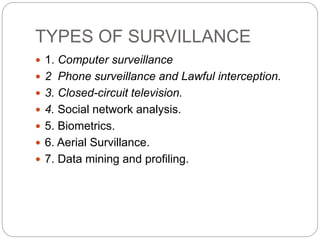
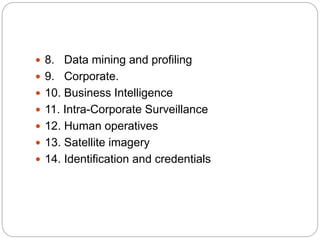
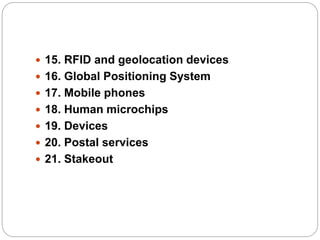
TYPES OF SURVILLANCE
 1. Computer surveillance
 2 Phone surveillance and Lawful interception.
 3. Closed-circuit television.
 4. Social network analysis.
 5. Biometrics.
 6. Aerial Survillance.
 7. Data mining and profiling.
 8. Data mining and profiling
 9. Corporate.
 10. Business Intelligence
 11. Intra-Corporate Surveillance
 12. Human operatives
 13. Satellite imagery
 14. Identification and credentials
 15. RFID and geolocation devices
 16. Global Positioning System
 17. Mobile phones
 18. Human microchips
 19. Devices
 20. Postal services
 21. Stakeout
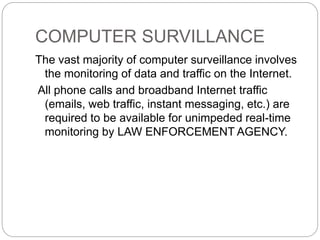
COMPUTER SURVILLANCE
The vast majority of computer surveillance involves
the monitoring of data and traffic on the Internet.
All phone calls and broadband Internet traffic
(emails, web traffic, instant messaging, etc.) are
required to be available for unimpeded real-time
monitoring by LAW ENFORCEMENT AGENCY.
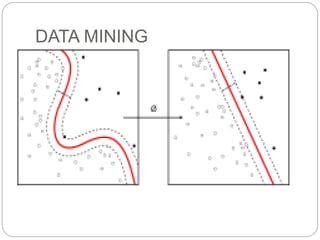
DATA MINING
 Data mining is the process of discovering
patterns in large data sets involving methods at
the intersection of machine learning, statistics,
and database systems.
 There is far too much data on the Internet for
human investigators to manually search through
all of it.
 Therefore, automated Internet surveillance
computers sift through the vast amount of
intercepted Internet traffic to identify and report to
human investigators the traffic that is considered
interesting or suspicious.
 Computers can be a surveillance target because
of the personal data stored on them. If someone
is able to install software, such as the FBI's Magic
Lantern and CIPAV, on a computer system, they
can easily gain unauthorized access to this data.
 Another form of computer surveillance, known
as van Eck phreaking, involves reading
electromagnetic emanations from computing
devices in order to extract data from them at
distances of hundreds of meters.
Phone surveillance and Lawful
interception
 It is the most useful surveillance method.
 The taping of telephones and collect the
information.
CAMERAS
Closed-circuit television
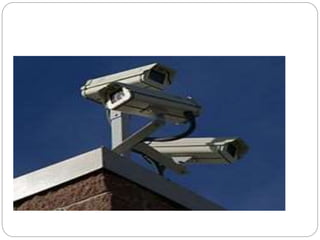
 Surveillance cameras are video cameras used for
the purpose of observing an area. They are often
connected to a recording device or IP network,
and may be watched by a security guard or law
enforcement officer
 Cameras and recording equipment used to be
relatively expensive and required human
personnel to monitor camera footage, but
analysis of footage has been made easier by
automated software that organizes digital video
footage into a searchable database, and by video
analysis software (such as VIRAT and HumanID).
 The amount of footage is also drastically reduced
by motion sensors which only record when motion
is detected.
Social network analysis
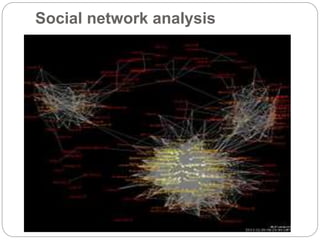
 One common form of surveillance is to create
maps of social networks based on data
from social networking sites such
as Facebook, MySpace, Twitter as well as
from traffic analysis information from phone call
records such as those in the NSA call
database,and others.
 These social network“ maps" are then data
mined to extract useful information such as
personal interests, friendships & affiliations,
wants, beliefs, thoughts, and activities
Biometric
 Biometric surveillance is a technology that
measures and analyzes human physical and/or
behavioral characteristics for authentication,
identification, or screening purposes.
 Examples of physical characteristics include
fingerprints, DNA, and facial patterns. Examples
of mostly behavioral characteristics include gait (a
person's manner of walking) or voice.
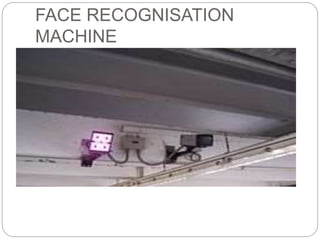
 Facial Recognisation is the use of the unique
configuration of a person's facial features to
accurately identify them, usually from surveillance
video.
FACE RECOGNISATION
MACHINE
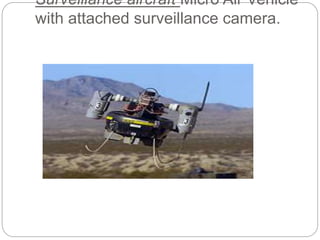
Surveillance aircraft Micro Air Vehicle
with attached surveillance camera.
 Aerial surveillance is the gathering of
surveillance, usually visual imagery or video, from
an airborne vehicle—such as an unmanned aerial
vehicle, helicopter, or spy plane.
 Military surveillance aircraft use a range of
sensors (e.g. radar) to monitor the battlefield.
Corporate
 Corporate surveillance is the monitoring of a
person or group's behavior by a corporation. The
data collected is most often used for marketing
purposes or sold to other corporations, but is also
regularly shared with government agencies.
 It can be used as a form of business intelligence.
Human operatives
 Organizations that have enemies who wish to
gather information about the groups' members or
activities face the issue of infiltration.
 In addition to operatives' infiltrating an
organization, the surveilling party may exert
pressure on certain members of the target
organization to act as informants.
Identification and credentials
 One of the simplest forms of identification is the
carrying of credentials. Some nations have
an identity card system to aid identification, whilst
others are considering it but face public
opposition. Other documents, such as passports,
driver's licenses, library cards, banking or credit
cards are also used to verify identity.
RFID and geolocation devices
 RFID tagging:
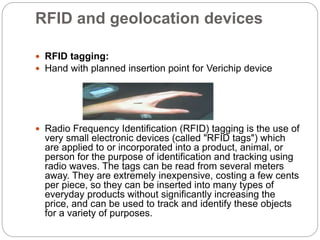
 Hand with planned insertion point for Verichip device
 Radio Frequency Identification (RFID) tagging is the use of
very small electronic devices (called "RFID tags") which
are applied to or incorporated into a product, animal, or
person for the purpose of identification and tracking using
radio waves. The tags can be read from several meters
away. They are extremely inexpensive, costing a few cents
per piece, so they can be inserted into many types of
everyday products without significantly increasing the
price, and can be used to track and identify these objects
for a variety of purposes.
Satellite imagery
 The satellites and aircraft sensors will be able to
penetrate cloud cover, detect chemical traces,
and identify objects in buildings and "underground
bunkers", and will provide real-time video at much
higher resolutions than the still-images produced
by programs such as Google Earth.
Global Positioning System
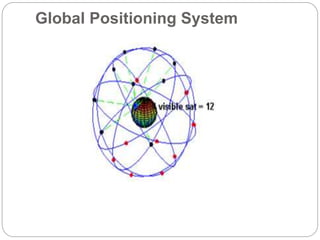
 Several cities are running pilot projects to require
parolees to wear GPS devices to track their
movements when they get out of prison.
 Mobile phones are also commonly used to collect
geolocation data. The geographical location of a
mobile phone (and thus the person carrying it)
can be determined easily (whether it is being
used or not), using a technique
known multilateration to calculate the differences
in time for a signal to travel from the cell phone to
each of several cell towers near the owner of the
phone.
Human microchips
 Microchip implant (human):
 A human microchip implant is an identifying
integrated circuit device or RFID transponder
encased in silicate glass and implanted in the
body of a human being. A sub dermal implant
typically contains a unique ID number that can be
linked to information contained in an external
database, such as personal identification, medical
history, medications, allergies, and contact
information.
Devices
 Covert listening devices and video devices, or
"bugs", are hidden electronic devices which are
used to capture, record, and/or transmit data to a
receiving party such as a law enforcement
agency.
Stakeout
 A stakeout is the coordinated surveillance of a
location or person. Stakeouts are generally
performed covertly and for the purpose of
gathering evidence related to criminal activity.
The term derives from the practice by land
surveyors of using survey stakes to measure out
an area before the main building project is
commenced.
Postal services
 As more people use faxes and e-mail the
significance of surveilling the postal system is
decreasing, in favor of Internet and telephone
surveillance. But interception of post is still an
available option for law enforcement and
intelligence agencies, in certain circumstances
Survillance description

Survillance description

  • 1.
    PRESENTED BY GURURAJKULKARNI GUEST FACULY KARNATAKA POLICE TRAINING COLLEGE GULBARGA SURVILLANCE DESCRIPTION
  • 2.
     Surveillance isthe monitoring of behavior, activities, or other changing information for the purpose of influencing, managing, directing, or protecting people.  This can include observation from a distance by means of electronic equipment (such as closed-circuit television (CCTV) cameras)or interception of electronically transmitted information (such as Internet traffic or phone calls).
  • 3.
     It canalso include simple no- or relatively low- technology methods such as human intelligence agents and postal interception.
  • 4.
    Meaning of Survillance The word surveillance comes from a French phrase for "watching over" (surmeans "from above" and veiller means "to watch") and is in contrast to more recent developments such as sousveillance.  Surveillance is used by governments for intelligence gathering, prevention of crime, the protection of a process, person, group or object, or the investigation of crime.
  • 5.
     It isalso used by criminal organisations to plan and commit crimes, such as robbery and kidnapping, by businesses to gather intelligence.
  • 6.
    TYPES OF SURVILLANCE 1. Computer surveillance  2 Phone surveillance and Lawful interception.  3. Closed-circuit television.  4. Social network analysis.  5. Biometrics.  6. Aerial Survillance.  7. Data mining and profiling.
  • 7.
     8. Datamining and profiling  9. Corporate.  10. Business Intelligence  11. Intra-Corporate Surveillance  12. Human operatives  13. Satellite imagery  14. Identification and credentials
  • 8.
     15. RFIDand geolocation devices  16. Global Positioning System  17. Mobile phones  18. Human microchips  19. Devices  20. Postal services  21. Stakeout
  • 9.
    COMPUTER SURVILLANCE The vastmajority of computer surveillance involves the monitoring of data and traffic on the Internet. All phone calls and broadband Internet traffic (emails, web traffic, instant messaging, etc.) are required to be available for unimpeded real-time monitoring by LAW ENFORCEMENT AGENCY.
  • 10.
  • 11.
     Data miningis the process of discovering patterns in large data sets involving methods at the intersection of machine learning, statistics, and database systems.
  • 12.
     There isfar too much data on the Internet for human investigators to manually search through all of it.  Therefore, automated Internet surveillance computers sift through the vast amount of intercepted Internet traffic to identify and report to human investigators the traffic that is considered interesting or suspicious.
  • 13.
     Computers canbe a surveillance target because of the personal data stored on them. If someone is able to install software, such as the FBI's Magic Lantern and CIPAV, on a computer system, they can easily gain unauthorized access to this data.
  • 14.
     Another formof computer surveillance, known as van Eck phreaking, involves reading electromagnetic emanations from computing devices in order to extract data from them at distances of hundreds of meters.
  • 15.
    Phone surveillance andLawful interception  It is the most useful surveillance method.  The taping of telephones and collect the information.
  • 16.
    CAMERAS Closed-circuit television  Surveillancecameras are video cameras used for the purpose of observing an area. They are often connected to a recording device or IP network, and may be watched by a security guard or law enforcement officer
  • 17.
     Cameras andrecording equipment used to be relatively expensive and required human personnel to monitor camera footage, but analysis of footage has been made easier by automated software that organizes digital video footage into a searchable database, and by video analysis software (such as VIRAT and HumanID).
  • 18.
     The amountof footage is also drastically reduced by motion sensors which only record when motion is detected.
  • 20.
  • 21.
     One commonform of surveillance is to create maps of social networks based on data from social networking sites such as Facebook, MySpace, Twitter as well as from traffic analysis information from phone call records such as those in the NSA call database,and others.
  • 22.
     These socialnetwork“ maps" are then data mined to extract useful information such as personal interests, friendships & affiliations, wants, beliefs, thoughts, and activities
  • 23.
    Biometric  Biometric surveillanceis a technology that measures and analyzes human physical and/or behavioral characteristics for authentication, identification, or screening purposes.  Examples of physical characteristics include fingerprints, DNA, and facial patterns. Examples of mostly behavioral characteristics include gait (a person's manner of walking) or voice.
  • 24.
     Facial Recognisationis the use of the unique configuration of a person's facial features to accurately identify them, usually from surveillance video.
  • 25.
  • 26.
    Surveillance aircraft MicroAir Vehicle with attached surveillance camera.
  • 27.
     Aerial surveillanceis the gathering of surveillance, usually visual imagery or video, from an airborne vehicle—such as an unmanned aerial vehicle, helicopter, or spy plane.  Military surveillance aircraft use a range of sensors (e.g. radar) to monitor the battlefield.
  • 28.
    Corporate  Corporate surveillanceis the monitoring of a person or group's behavior by a corporation. The data collected is most often used for marketing purposes or sold to other corporations, but is also regularly shared with government agencies.  It can be used as a form of business intelligence.
  • 29.
    Human operatives  Organizationsthat have enemies who wish to gather information about the groups' members or activities face the issue of infiltration.  In addition to operatives' infiltrating an organization, the surveilling party may exert pressure on certain members of the target organization to act as informants.
  • 30.
    Identification and credentials One of the simplest forms of identification is the carrying of credentials. Some nations have an identity card system to aid identification, whilst others are considering it but face public opposition. Other documents, such as passports, driver's licenses, library cards, banking or credit cards are also used to verify identity.
  • 31.
    RFID and geolocationdevices  RFID tagging:  Hand with planned insertion point for Verichip device  Radio Frequency Identification (RFID) tagging is the use of very small electronic devices (called "RFID tags") which are applied to or incorporated into a product, animal, or person for the purpose of identification and tracking using radio waves. The tags can be read from several meters away. They are extremely inexpensive, costing a few cents per piece, so they can be inserted into many types of everyday products without significantly increasing the price, and can be used to track and identify these objects for a variety of purposes.
  • 32.
    Satellite imagery  Thesatellites and aircraft sensors will be able to penetrate cloud cover, detect chemical traces, and identify objects in buildings and "underground bunkers", and will provide real-time video at much higher resolutions than the still-images produced by programs such as Google Earth.
  • 33.
  • 34.
     Several citiesare running pilot projects to require parolees to wear GPS devices to track their movements when they get out of prison.  Mobile phones are also commonly used to collect geolocation data. The geographical location of a mobile phone (and thus the person carrying it) can be determined easily (whether it is being used or not), using a technique known multilateration to calculate the differences in time for a signal to travel from the cell phone to each of several cell towers near the owner of the phone.
  • 35.
    Human microchips  Microchipimplant (human):  A human microchip implant is an identifying integrated circuit device or RFID transponder encased in silicate glass and implanted in the body of a human being. A sub dermal implant typically contains a unique ID number that can be linked to information contained in an external database, such as personal identification, medical history, medications, allergies, and contact information.
  • 36.
    Devices  Covert listeningdevices and video devices, or "bugs", are hidden electronic devices which are used to capture, record, and/or transmit data to a receiving party such as a law enforcement agency.
  • 37.
    Stakeout  A stakeoutis the coordinated surveillance of a location or person. Stakeouts are generally performed covertly and for the purpose of gathering evidence related to criminal activity. The term derives from the practice by land surveyors of using survey stakes to measure out an area before the main building project is commenced.
  • 38.
    Postal services  Asmore people use faxes and e-mail the significance of surveilling the postal system is decreasing, in favor of Internet and telephone surveillance. But interception of post is still an available option for law enforcement and intelligence agencies, in certain circumstances