DRUG ABUSE
BY: SAMUEL TOPE TRINITY
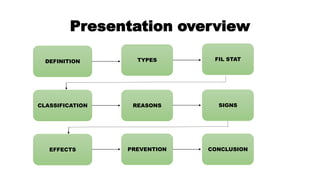
Presentation overview
DEFINITION FIL STATTYPES
CLASSIFICATION SIGNSREASONS
EFFECTS PREVENTION CONCLUSION
DRUG ABUSE
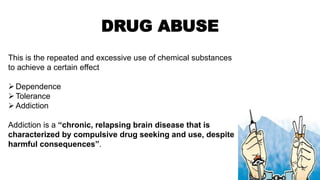
This is the repeated and excessive use of chemical substances
to achieve a certain effect
Dependence
Tolerance
Addiction
Addiction is a “chronic, relapsing brain disease that is
characterized by compulsive drug seeking and use, despite
harmful consequences”.
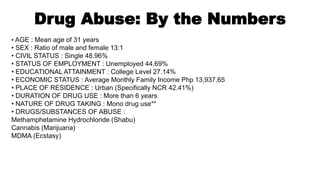
Drug Abuse: By the Numbers
• AGE : Mean age of 31 years
• SEX : Ratio of male and female 13:1
• CIVIL STATUS : Single 48.96%
• STATUS OF EMPLOYMENT : Unemployed 44.69%
• EDUCATIONAL ATTAINMENT : College Level 27.14%
• ECONOMIC STATUS : Average Monthly Family Income Php 13,937.65
• PLACE OF RESIDENCE : Urban (Specifically NCR 42.41%)
• DURATION OF DRUG USE : More than 6 years
• NATURE OF DRUG TAKING : Mono drug use**
• DRUGS/SUBSTANCES OF ABUSE :
Methamphetamine Hydrochloride (Shabu)
Cannabis (Marijuana)
MDMA (Ecstasy)
Chemical classification of drugs
 Depressants
 Stimulants
 Hallucinogen
 Opioids
 Inhalants
 Cannabis
 New psychoactive substances (NPS)
DEPRESSANTS
This category includes barbiturates (phenobarbital, thiopental, butalbital),
benzodiazepines (alprazolam, diazepam, clonazepam, lorazepam, midazolam),
alcohol, and gamma hydroxybutyrate (GHB).
Taken to
 relieve anxiety,
 promote sleep and
 manage seizure activity.
STIMULANTS
This include drugs such as cocaine, crack cocaine, amphetamine,
and methamphetamine (Shabu).
HALLUCINOGENS
Also known as psychedelics, hallucinogenic drugs include psilocybin (found in
magic mushrooms), lysergic acid diethylamide (LSD), peyote, and
dimethyltryptamine (DMT).
OPIOIDS
These include drugs such as heroin, codeine, morphine, fentanyl,
hydrocodone, oxycodone, buprenorphine, and methadone.
INHALANTS
These include substances such as paint, glue, paint thinners, gasoline, marker or
pen ink, ETC.
method of abuse may vary but can include sniffing, spraying, huffing, bagging, and
inhaling.
CANNABIS
Also known as Marijuana is generally classified as a downer.
NPS
These are drugs designed to evade the existing drug laws. Drugs such as
synthetic cannabinoids, synthetic cathinones, ketamine, piperazines, and some
plant-based drugs such as khat and kratom
SIGNS OF DRUG ABUSE
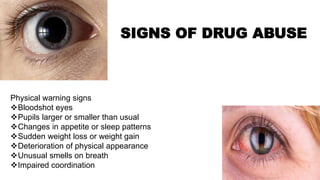
Physical warning signs
Bloodshot eyes
Pupils larger or smaller than usual
Changes in appetite or sleep patterns
Sudden weight loss or weight gain
Deterioration of physical appearance
Unusual smells on breath
Impaired coordination
Behavioral warning signs
Poor work
Decline in performance
Financial problems
Secretive behaviors
Sudden change in friends and associates
Accident or trouble prone
Lack of motivation and withdrawal
Unexplained anxiety
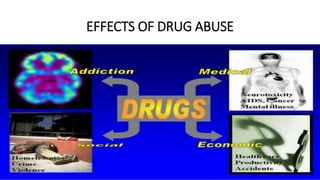
EFFECTS OF DRUG ABUSE
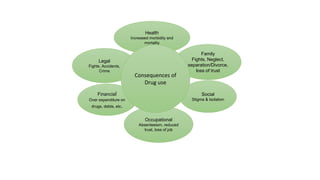
Financial
Over expenditure on
drugs, debts, etc.
Legal
Fights, Accidents,
Crime
Social
Stigma & Isolation
Family
Fights, Neglect,
separation/Divorce,
loss of trust
Occupational
Absenteeism, reduced
trust, loss of job
Health
Increased morbidity and
mortality
Consequences of
Drug use
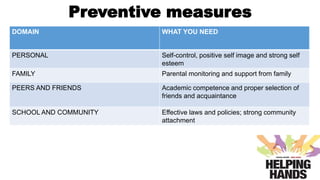
Preventive measures
DOMAIN WHAT YOU NEED
PERSONAL Self-control, positive self image and strong self
esteem
FAMILY Parental monitoring and support from family
PEERS AND FRIENDS Academic competence and proper selection of
friends and acquaintance
SCHOOL AND COMMUNITY Effective laws and policies; strong community
attachment
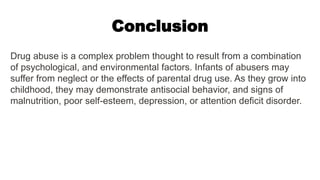
Conclusion
Drug abuse is a complex problem thought to result from a combination
of psychological, and environmental factors. Infants of abusers may
suffer from neglect or the effects of parental drug use. As they grow into
childhood, they may demonstrate antisocial behavior, and signs of
malnutrition, poor self-esteem, depression, or attention deficit disorder.
ROAD TO RECOVERY
 IDENTIFY
 ACCEPT
 DO NOT ENABLE
Identification of drug abuse is a difficult first step on the road to recovery
because of the methods many abusers use to hide their addiction, the
inability of family members to recognize or accept the problem, and the
relatives' enabling behavior.
Drug abuse

Drug abuse

  • 1.
  • 2.
    Presentation overview DEFINITION FILSTATTYPES CLASSIFICATION SIGNSREASONS EFFECTS PREVENTION CONCLUSION
  • 3.
    DRUG ABUSE This isthe repeated and excessive use of chemical substances to achieve a certain effect Dependence Tolerance Addiction Addiction is a “chronic, relapsing brain disease that is characterized by compulsive drug seeking and use, despite harmful consequences”.
  • 4.
    Drug Abuse: Bythe Numbers • AGE : Mean age of 31 years • SEX : Ratio of male and female 13:1 • CIVIL STATUS : Single 48.96% • STATUS OF EMPLOYMENT : Unemployed 44.69% • EDUCATIONAL ATTAINMENT : College Level 27.14% • ECONOMIC STATUS : Average Monthly Family Income Php 13,937.65 • PLACE OF RESIDENCE : Urban (Specifically NCR 42.41%) • DURATION OF DRUG USE : More than 6 years • NATURE OF DRUG TAKING : Mono drug use** • DRUGS/SUBSTANCES OF ABUSE : Methamphetamine Hydrochloride (Shabu) Cannabis (Marijuana) MDMA (Ecstasy)
  • 5.
    Chemical classification ofdrugs  Depressants  Stimulants  Hallucinogen  Opioids  Inhalants  Cannabis  New psychoactive substances (NPS)
  • 6.
    DEPRESSANTS This category includesbarbiturates (phenobarbital, thiopental, butalbital), benzodiazepines (alprazolam, diazepam, clonazepam, lorazepam, midazolam), alcohol, and gamma hydroxybutyrate (GHB). Taken to  relieve anxiety,  promote sleep and  manage seizure activity.
  • 7.
    STIMULANTS This include drugssuch as cocaine, crack cocaine, amphetamine, and methamphetamine (Shabu). HALLUCINOGENS Also known as psychedelics, hallucinogenic drugs include psilocybin (found in magic mushrooms), lysergic acid diethylamide (LSD), peyote, and dimethyltryptamine (DMT).
  • 8.
    OPIOIDS These include drugssuch as heroin, codeine, morphine, fentanyl, hydrocodone, oxycodone, buprenorphine, and methadone. INHALANTS These include substances such as paint, glue, paint thinners, gasoline, marker or pen ink, ETC. method of abuse may vary but can include sniffing, spraying, huffing, bagging, and inhaling.
  • 9.
    CANNABIS Also known asMarijuana is generally classified as a downer. NPS These are drugs designed to evade the existing drug laws. Drugs such as synthetic cannabinoids, synthetic cathinones, ketamine, piperazines, and some plant-based drugs such as khat and kratom
  • 14.
    SIGNS OF DRUGABUSE Physical warning signs Bloodshot eyes Pupils larger or smaller than usual Changes in appetite or sleep patterns Sudden weight loss or weight gain Deterioration of physical appearance Unusual smells on breath Impaired coordination
  • 15.
    Behavioral warning signs Poorwork Decline in performance Financial problems Secretive behaviors Sudden change in friends and associates Accident or trouble prone Lack of motivation and withdrawal Unexplained anxiety
  • 16.
  • 17.
    Financial Over expenditure on drugs,debts, etc. Legal Fights, Accidents, Crime Social Stigma & Isolation Family Fights, Neglect, separation/Divorce, loss of trust Occupational Absenteeism, reduced trust, loss of job Health Increased morbidity and mortality Consequences of Drug use
  • 18.
    Preventive measures DOMAIN WHATYOU NEED PERSONAL Self-control, positive self image and strong self esteem FAMILY Parental monitoring and support from family PEERS AND FRIENDS Academic competence and proper selection of friends and acquaintance SCHOOL AND COMMUNITY Effective laws and policies; strong community attachment
  • 19.
    Conclusion Drug abuse isa complex problem thought to result from a combination of psychological, and environmental factors. Infants of abusers may suffer from neglect or the effects of parental drug use. As they grow into childhood, they may demonstrate antisocial behavior, and signs of malnutrition, poor self-esteem, depression, or attention deficit disorder.
  • 20.
    ROAD TO RECOVERY IDENTIFY  ACCEPT  DO NOT ENABLE Identification of drug abuse is a difficult first step on the road to recovery because of the methods many abusers use to hide their addiction, the inability of family members to recognize or accept the problem, and the relatives' enabling behavior.