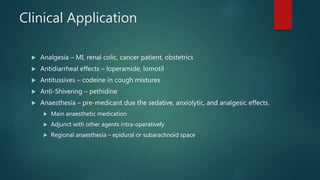
1. Opioid overdose can occur from both prescription and illicit opioid use. Common opioids involved include morphine, heroin, fentanyl, oxycodone, and hydrocodone.
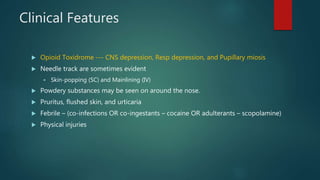
2. Symptoms of opioid overdose include respiratory depression, sedation, small pupils, nausea, vomiting, and decreased heart rate. Naloxone is used as an antidote to reverse the effects of opioid overdose.
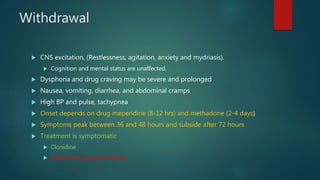
3. Treatment of opioid overdose focuses on supporting breathing, administering naloxone, monitoring for complications, and managing withdrawal symptoms which can include restlessness, nausea, and drug craving. Prevention strategies aim to reduce opioid misuse and increase access to treatment.