Amphetamine
Md : Obydulla Al Mamun
Id:131-29-500
9th(B)
Department Of Pharmacy
Daffodil International University
almamundcc94@gmail.com
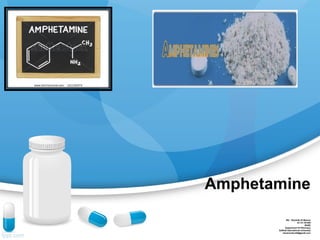
Amphetamine
A distinct class of
drugs that stimulate
the central nervous
system producing an
increase in alertness,
wakefulness and
awareness.
History of
Amphetamines
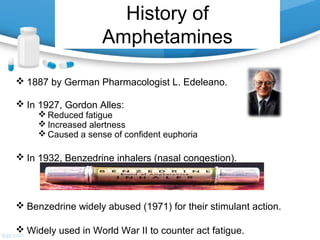
 1887 by German Pharmacologist L. Edeleano.
 In 1927, Gordon Alles:
 Reduced fatigue
 Increased alertness
 Caused a sense of confident euphoria
 In 1932, Benzedrine inhalers (nasal congestion).
 Benzedrine widely abused (1971) for their stimulant action.
 Widely used in World War II to counter act fatigue.
Sources
Ephedra is the primary component used
to synthesize amphetamine.
Types of Amphetamines
 CNS stimulant
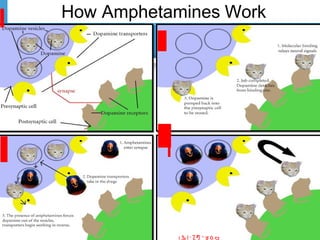
How Amphetamines Work
Therapeutic Uses
of Amphetamines
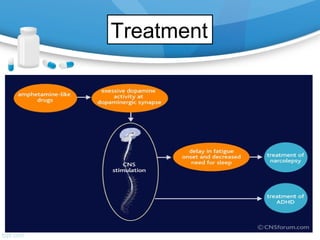
 Narcolepsy
 Attention Deficit Hyperactivity Disorder (ADHD)
Weight reduction
HyperkinesisHyperkinesisNarcolepsyNarcolepsy
Treatment
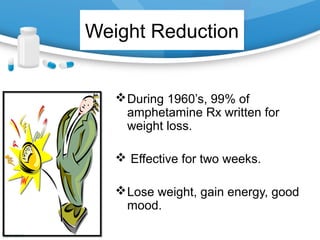
Weight Reduction
During 1960’s, 99% of
amphetamine Rx written for
weight loss.
 Effective for two weeks.
Lose weight, gain energy, good
mood.
Psychological Effects
Euphoria
Excitement
Mood elevation
 sed speech activity
Feeling of power
Psychological Effects
Euphoria
Excitement
Mood elevation
 sed speech activity
Feeling of power
Pharmacological effectPharmacological effect
Physiological Effects
Increased BP
Decreased HR
Increased alertness
Psychomotor
stimulant
Loss of appetite
High Dose Users
 leading to extended mental and physical hyperactivity.
 Continued abuse (high doses) often leads to:
 Considerable weight loss
 Skin lesions
 Oral damage
 Liver disease
 Hypertensive disorders
 Stroke
 Kidney damage
 Seizures
Summary of the Effects of Amphetamines
Body
 Increased heartbeat
 Increased blood
pressure
 Decreased appetite
 Increased breathing
rate
 Inability to sleep
 Sweating
 Convulsions, fever
 Chest pain
 Irregular heartbeat
Due to overdose
Mind
Decreased fatigue
Increased confidence
Increased feeling of
alertness
Restlessness
Increased irritability
Fearfulness
Distrust of people
Behavioral stereotypy
Hallucination
low
dose
high
dose
• Acute overdose is treated by –
 Acidification of urine by administering ammonium
chloride. This increases rate of elimination of
amphetamine.
 Anti-hypertensive drugs like labetelol.
 Treatment typically requires more than one year of
Intense intervention consisting of drug abstinence,
cognitive, emotional and motivational rehabilitation.
Treatment Of Acute Poisoning
Amphetamine.final.pptx

Amphetamine.final.pptx

  • 1.
    Amphetamine Md : ObydullaAl Mamun Id:131-29-500 9th(B) Department Of Pharmacy Daffodil International University almamundcc94@gmail.com
  • 2.
    Amphetamine A distinct classof drugs that stimulate the central nervous system producing an increase in alertness, wakefulness and awareness.
  • 3.
    History of Amphetamines  1887by German Pharmacologist L. Edeleano.  In 1927, Gordon Alles:  Reduced fatigue  Increased alertness  Caused a sense of confident euphoria  In 1932, Benzedrine inhalers (nasal congestion).  Benzedrine widely abused (1971) for their stimulant action.  Widely used in World War II to counter act fatigue.
  • 4.
    Sources Ephedra is theprimary component used to synthesize amphetamine.
  • 5.
  • 6.
  • 7.
    Therapeutic Uses of Amphetamines Narcolepsy  Attention Deficit Hyperactivity Disorder (ADHD) Weight reduction
  • 8.
  • 9.
  • 10.
    Weight Reduction During 1960’s,99% of amphetamine Rx written for weight loss.  Effective for two weeks. Lose weight, gain energy, good mood.
  • 11.
    Psychological Effects Euphoria Excitement Mood elevation sed speech activity Feeling of power Psychological Effects Euphoria Excitement Mood elevation  sed speech activity Feeling of power Pharmacological effectPharmacological effect Physiological Effects Increased BP Decreased HR Increased alertness Psychomotor stimulant Loss of appetite
  • 12.
    High Dose Users leading to extended mental and physical hyperactivity.  Continued abuse (high doses) often leads to:  Considerable weight loss  Skin lesions  Oral damage  Liver disease  Hypertensive disorders  Stroke  Kidney damage  Seizures
  • 14.
    Summary of theEffects of Amphetamines Body  Increased heartbeat  Increased blood pressure  Decreased appetite  Increased breathing rate  Inability to sleep  Sweating  Convulsions, fever  Chest pain  Irregular heartbeat Due to overdose Mind Decreased fatigue Increased confidence Increased feeling of alertness Restlessness Increased irritability Fearfulness Distrust of people Behavioral stereotypy Hallucination low dose high dose
  • 15.
    • Acute overdoseis treated by –  Acidification of urine by administering ammonium chloride. This increases rate of elimination of amphetamine.  Anti-hypertensive drugs like labetelol.  Treatment typically requires more than one year of Intense intervention consisting of drug abstinence, cognitive, emotional and motivational rehabilitation. Treatment Of Acute Poisoning

Editor's Notes

  • #3 Other names Speed, fast, up,
  • #5 Amphetamines are synthesized from ephedra which comes from the Mu-Huange plant.  Natural amphetamines do not exist because amphetamine itself is not a naturally occurring product.  It must be created, in a lab, through synthesis of other naturally and unnaturally occurring products. 
  • #6 attention deficit hyperactivity disorder (ADHD)  There are many different types of amphetamines. Dextroamphetamine – a medication used in the treatment of ADHD that is also sometimes used to treat narcolepsy. Levoamphetamine – a psycho stimulant known to increase wakefulness and focs. Lisdexamfetamine – used in treatment of ADHD Methamphetamine (Ritalin) Adderall Dexedrine etc ANALEPTICS (Respiratory stimulants):
  • #7 parakeets)-tiya Effects are due mainly to release of catecholamines, especially dopamine and noradrenaline.
  • #8 There is no safe level of drug use. Use of any drug always carries some risk. It's important to be careful when taking any type of drug
  • #9 Narcolepsy is a chronic neurological disorder caused by autoimmune destruction of hypocretin(neurotransmetter)-producing neurons inhibiting the brain's ability to regulate sleep-wake cycles normally. Attention deficit hyperactivity disorder is a psychiatric disorder[1][2] of the neurodevelopmental type[3][4] in which there are significant problems of attention, hyperactivity, or acting impulsively that are notappropriate for a person's age
  • #11 Amphetamines as very popular for weight control and relief from boredom. Ephedra has been mixed with aspirin and caffeine to be used for weight loss
  • #12 Euphoria medically recognized as a mental and emotional condition in which a person experiences intense feelings of well-being, elation, happiness, excitement and joy
  • #13 The amphetamine addict tries to maintain the “high” as long as possible
  • #14 The following effects may be experienced for 4 to 6 days -