Downloaded 517 times
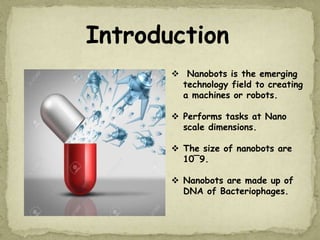
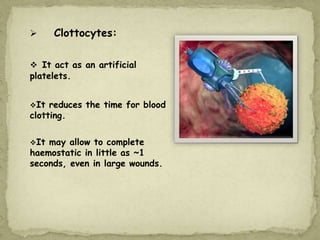
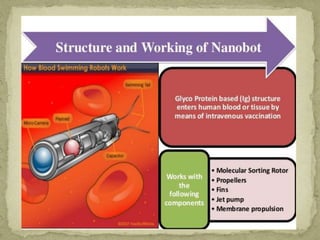
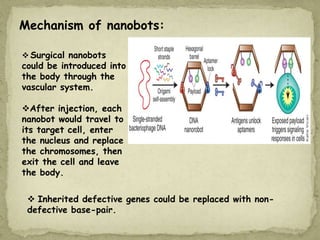
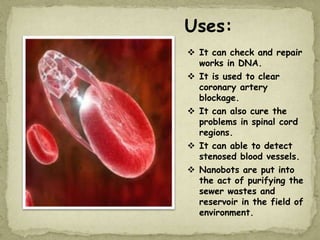
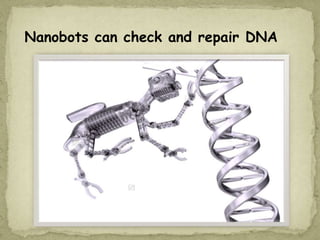
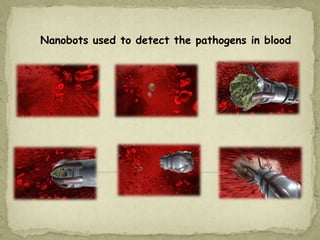
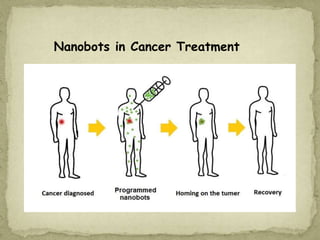
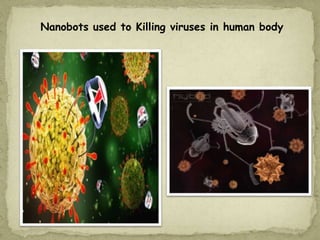
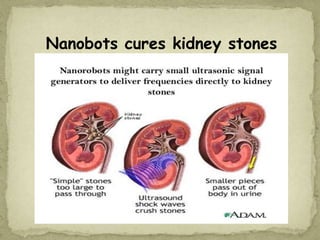
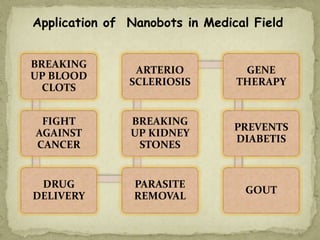
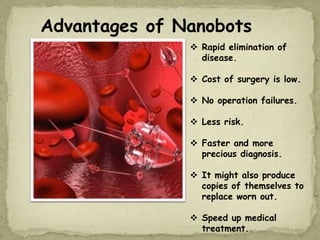
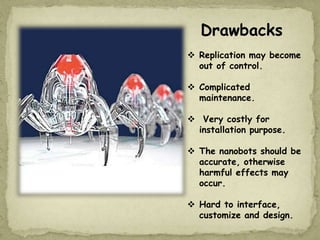
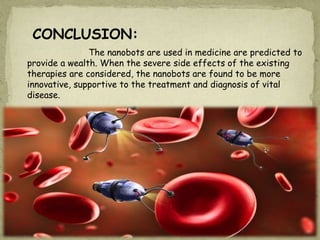


Nanobots are tiny machines that can perform tasks at the nanoscale level. They are made from DNA and bacteria phages and have sizes around 10-9 meters. Different types of nanobots include respirocytes that act as artificial red blood cells, microbivores that act as white blood cells, and clottocytes that act as platelets. Nanobots have a variety of medical applications such as identifying and destroying cancer cells, clearing artery blockages, and repairing DNA and spinal cord issues. While nanobots show promise for rapid treatment, their replication needs to be carefully controlled and their use presents some economic and technical challenges.


