2/5/2014

QUESTION 5 IN PAPER 2 (20 POINTS)

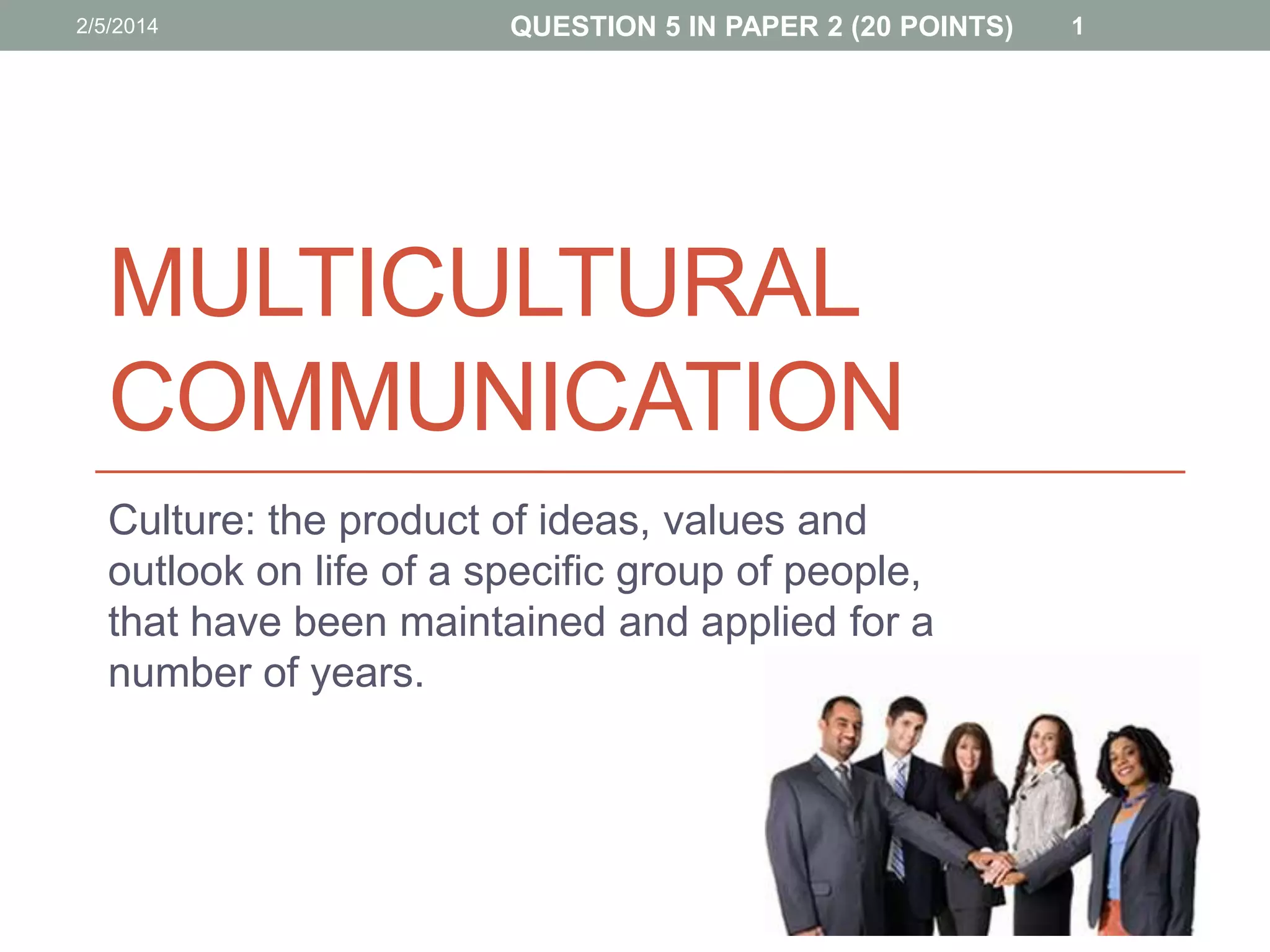
MULTICULTURAL
COMMUNICATION
Culture: the product of ideas, values and
outlook on life of a specific group of people,
that have been maintained and applied for a
number of years.

1
2/5/2014

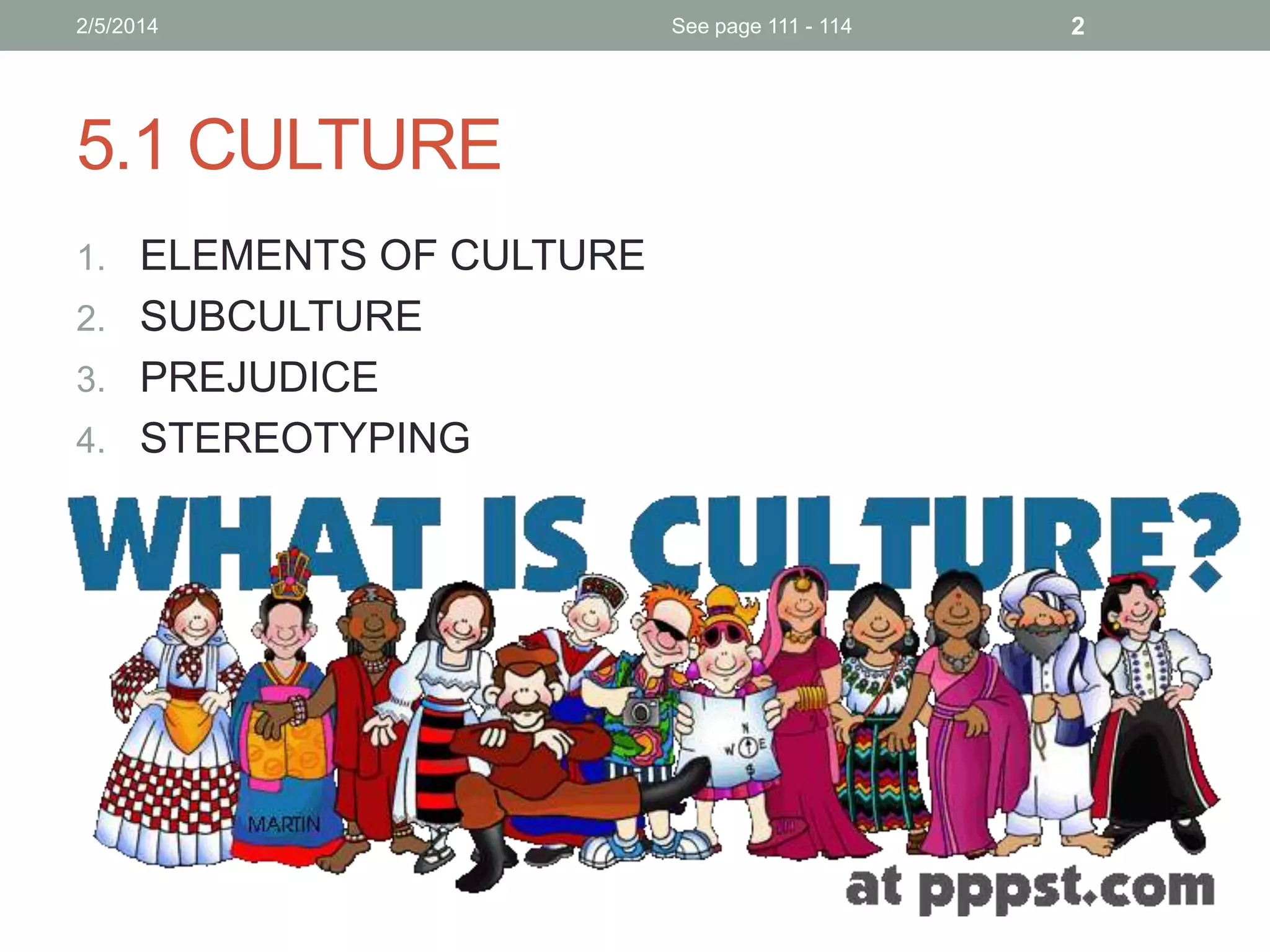
5.1 CULTURE
1. ELEMENTS OF CULTURE
2. SUBCULTURE
3. PREJUDICE
4. STEREOTYPING

See page 111 - 114

2
2/5/2014

See page 111

3

5.1.1 ELEMENTS OF CULTURE
• Values: a culture’s assessment of what is good or bad
• Beliefs: broad, vague, generalised statements that reflect

people’s assessment and awareness
• Norms of behaviour: values expressed in norms, which
are guidelines for action or conduct within a culture.
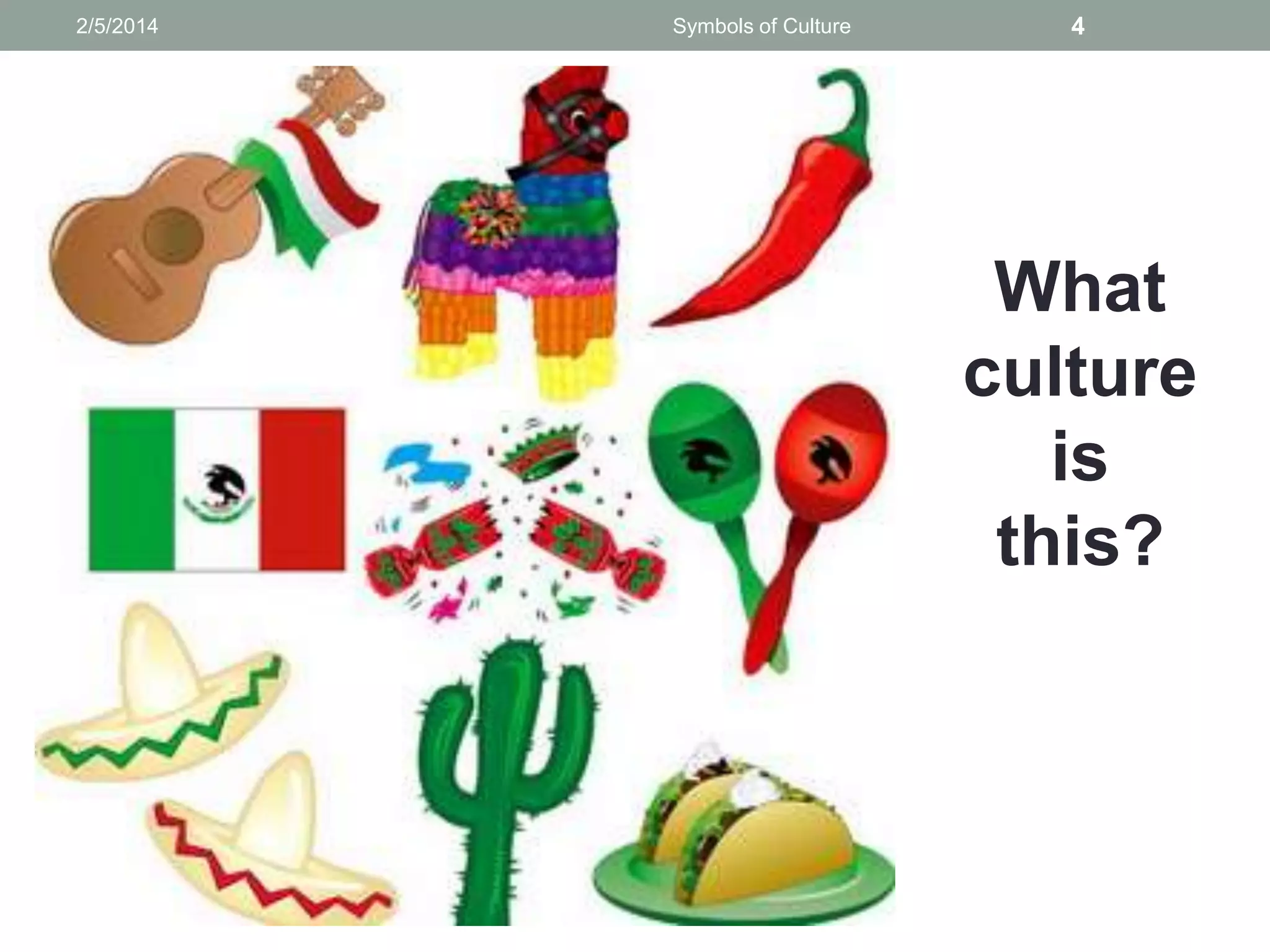
• Symbols: special objects, gestures, sounds, images that
have a specific meaning in a culture
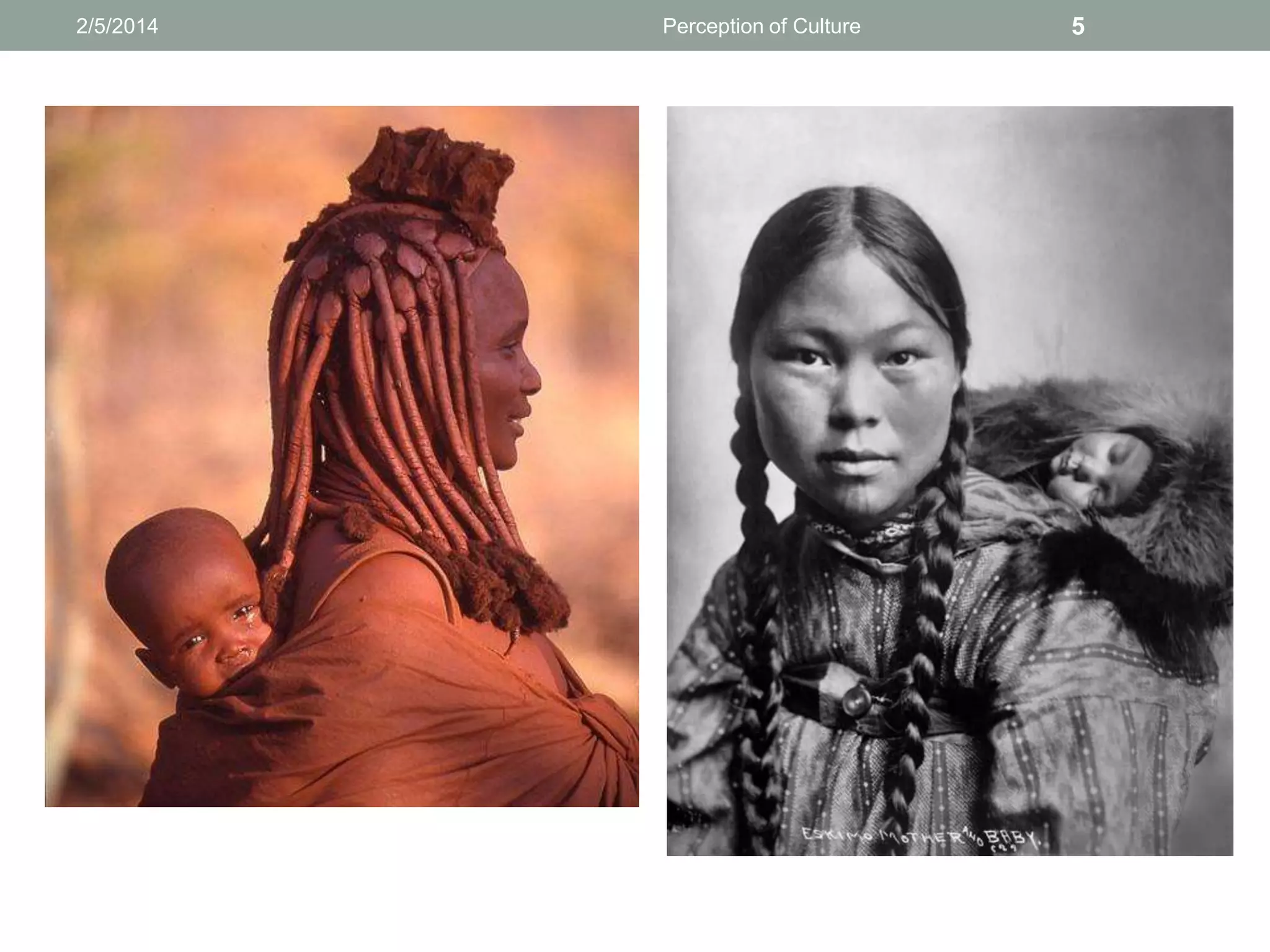
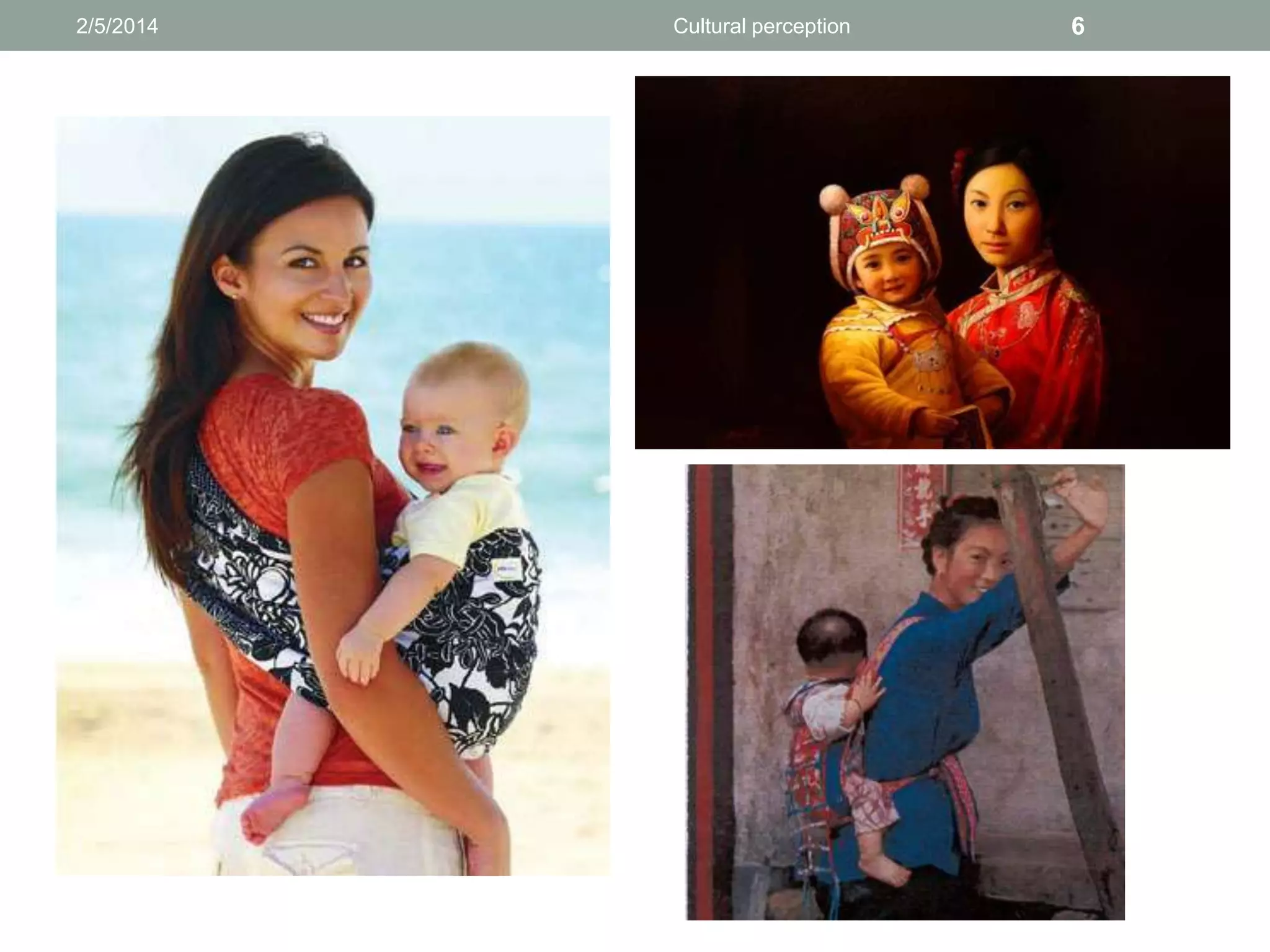
• Perception: the way people choose, arrange, process and
interpret stimuli from environment in an attempt to
integrate them in an approach to their world which, for
them, is meaningful and structured.
2/5/2014

Symbols of Culture

4

What
culture
is
this?
2/5/2014

Perception of Culture

5
2/5/2014

Cultural perception

6
2/5/2014

See page 112

7

5.1.1 ELEMENTS OF CULTURE
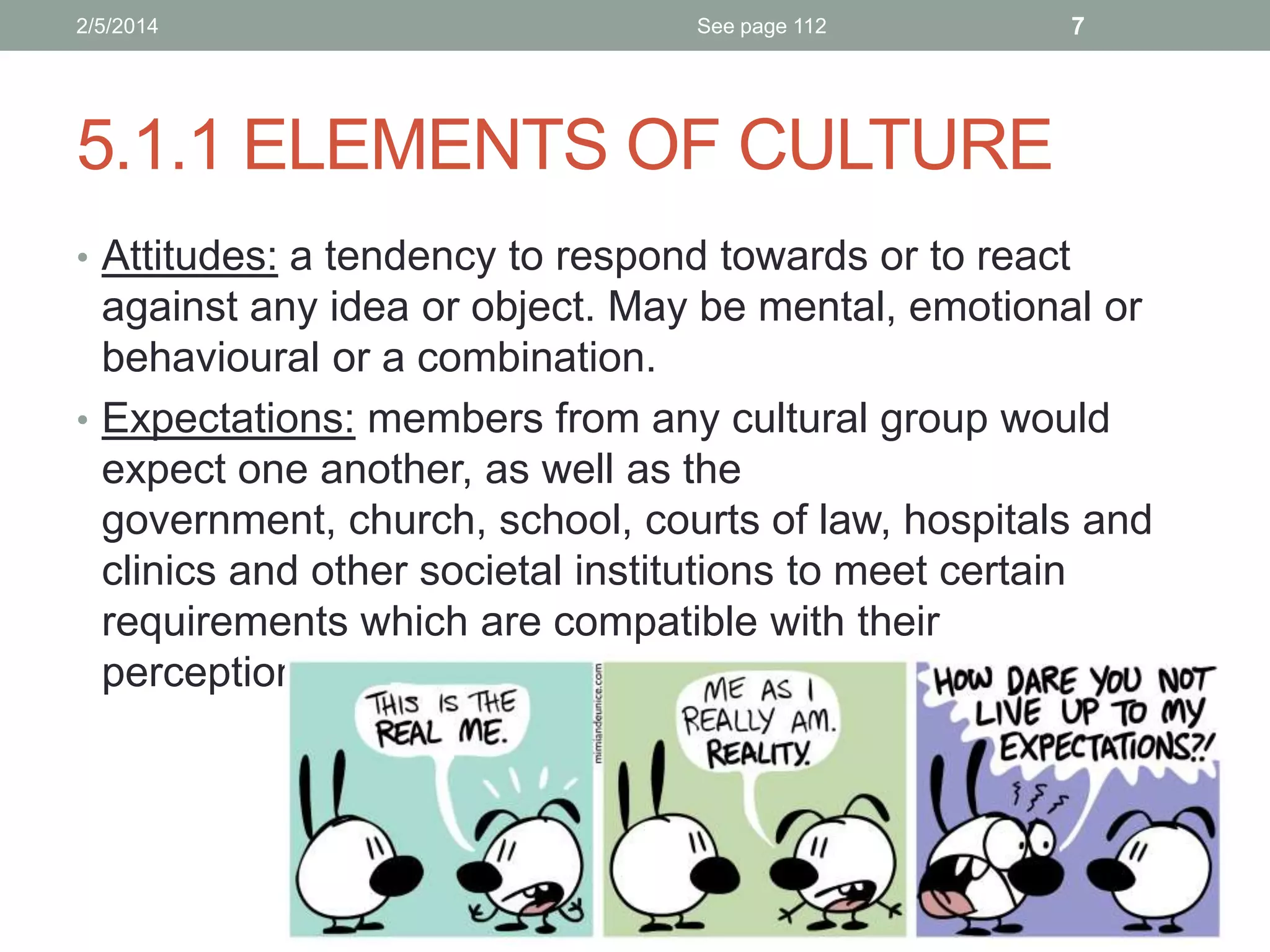
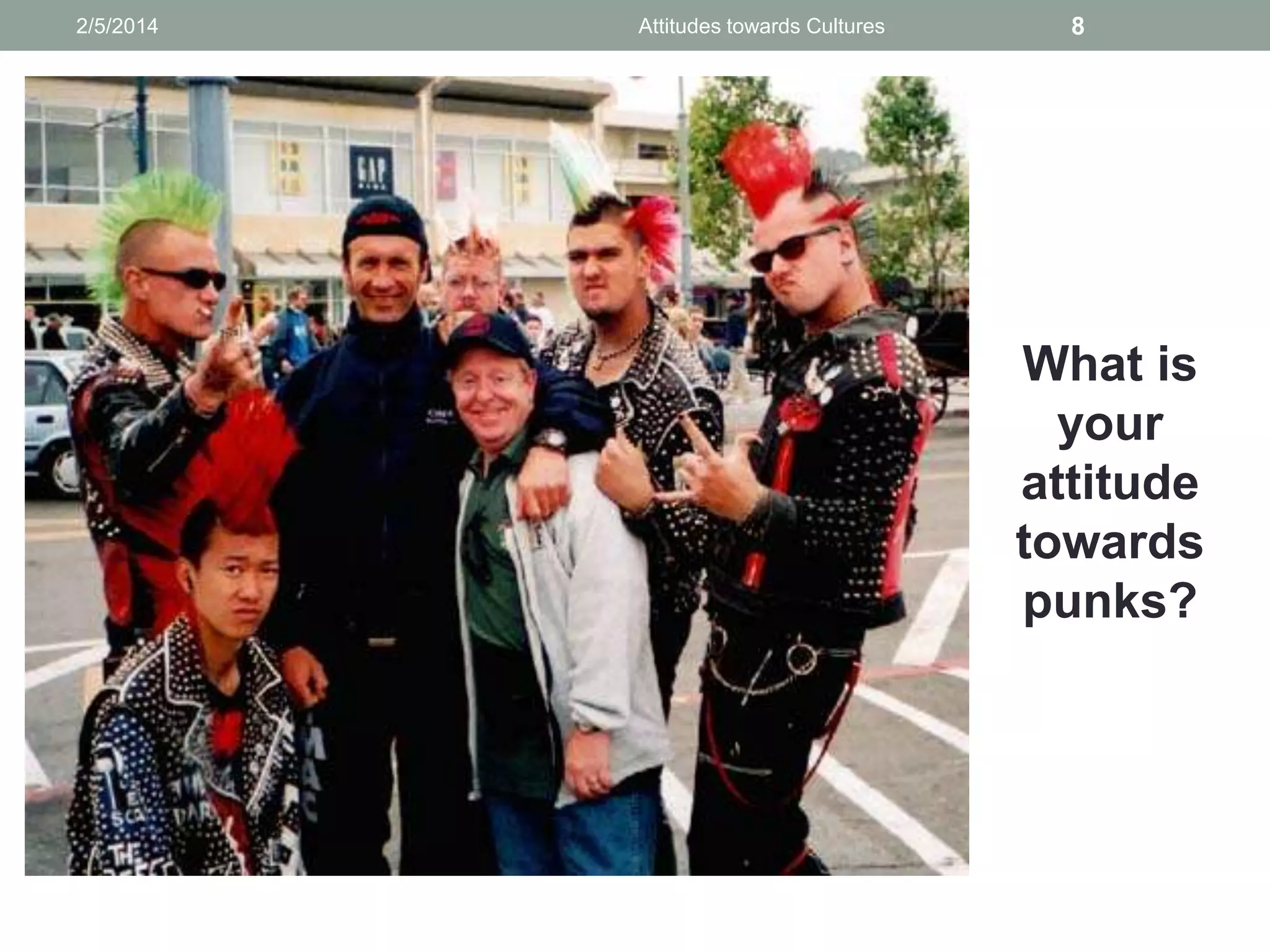
• Attitudes: a tendency to respond towards or to react

against any idea or object. May be mental, emotional or
behavioural or a combination.
• Expectations: members from any cultural group would
expect one another, as well as the
government, church, school, courts of law, hospitals and
clinics and other societal institutions to meet certain
requirements which are compatible with their
perceptions, values, norms and attitudes.
2/5/2014

Attitudes towards Cultures

8

What is
your
attitude
towards
punks?
2/5/2014

See page 112

9

5.1.2 SUBCULTURE
Within each cultural group a number of smaller sections or
subcultures can be identified
• The role of demography (refers to the study of human
populations, their distribution, geographic locations. It
includes information about their age, level of education,
income, vocations, etc. of specific groups.
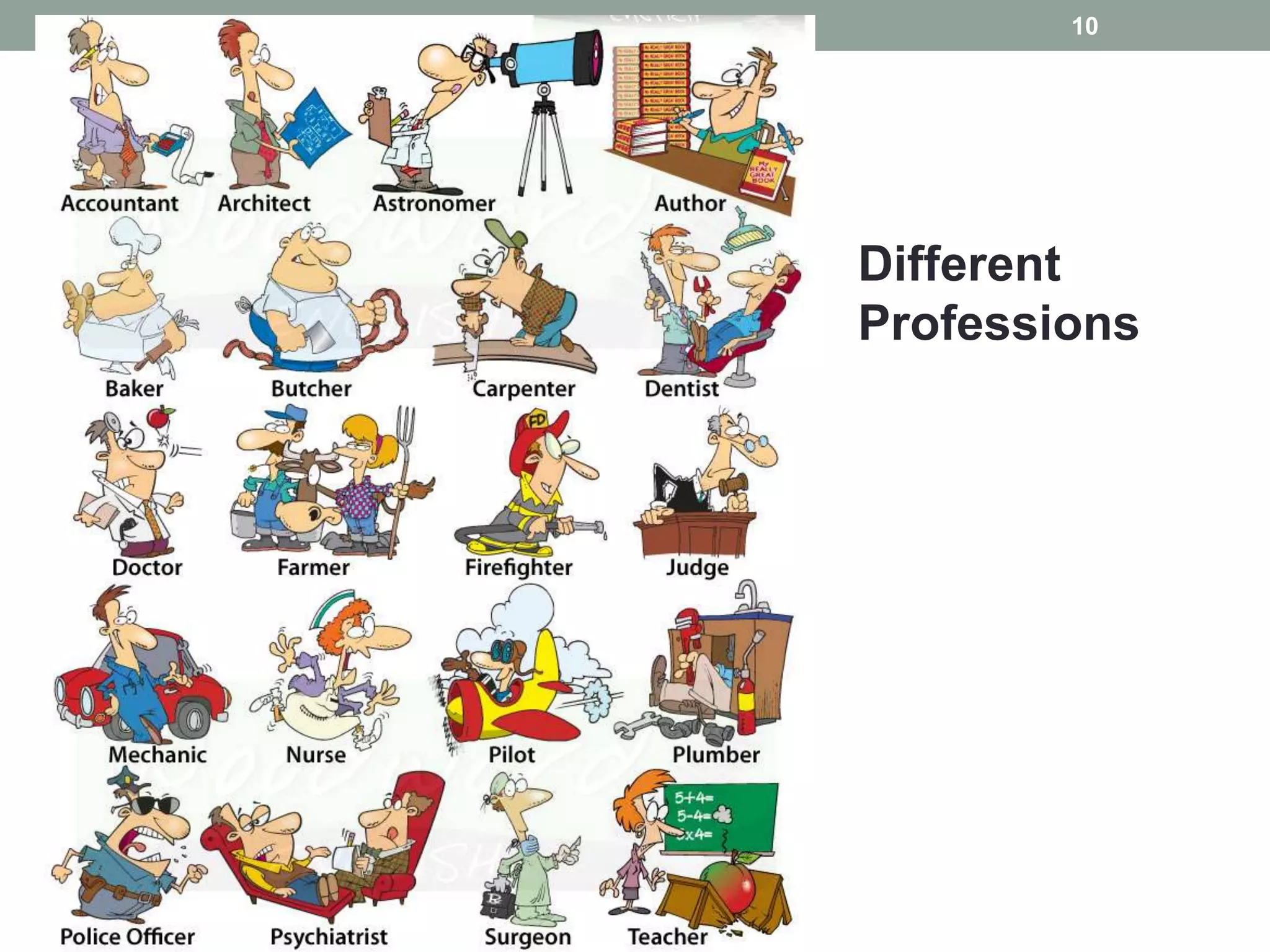
• Profession: e.g. lawyers, teachers, secretaries
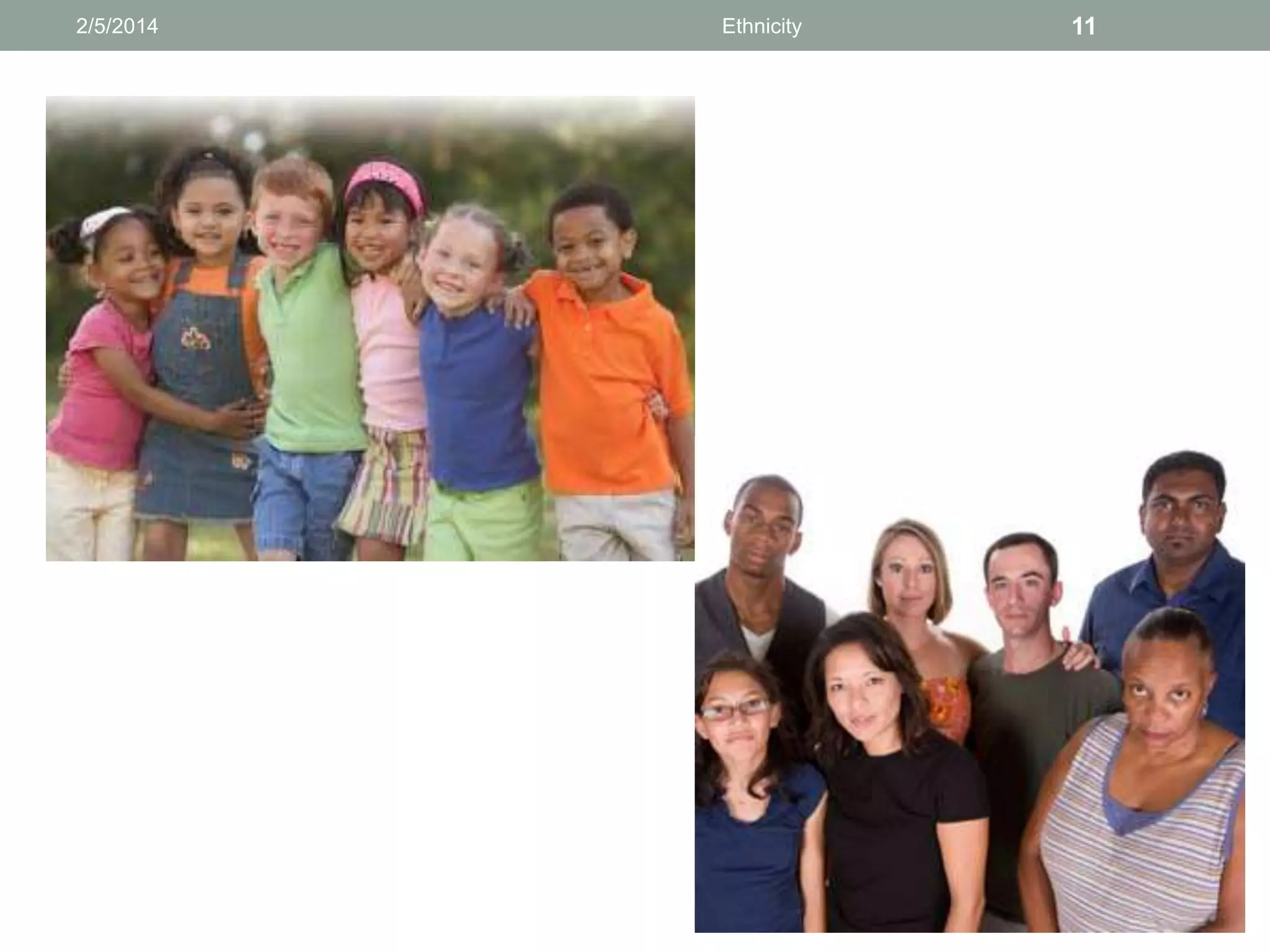
• Ethnicity: e.g. Zulus, Xhosas, Sothos. (common cultural traditions

and a sense of identity)
• Religion: Christian (Roman Catholic, Protestant) Jewish, Muslims
• Language: 11 official languages in SA … and counting
Ethnocentricity: tendency of members of a particular culture or
subculture to judge other cultures according to its own norms &
values
2/5/2014

Footer Text

10

Different
Professions
2/5/2014

Ethnicity

11
2/5/2014

See page 114

12

5.1.3 PREJUDICE
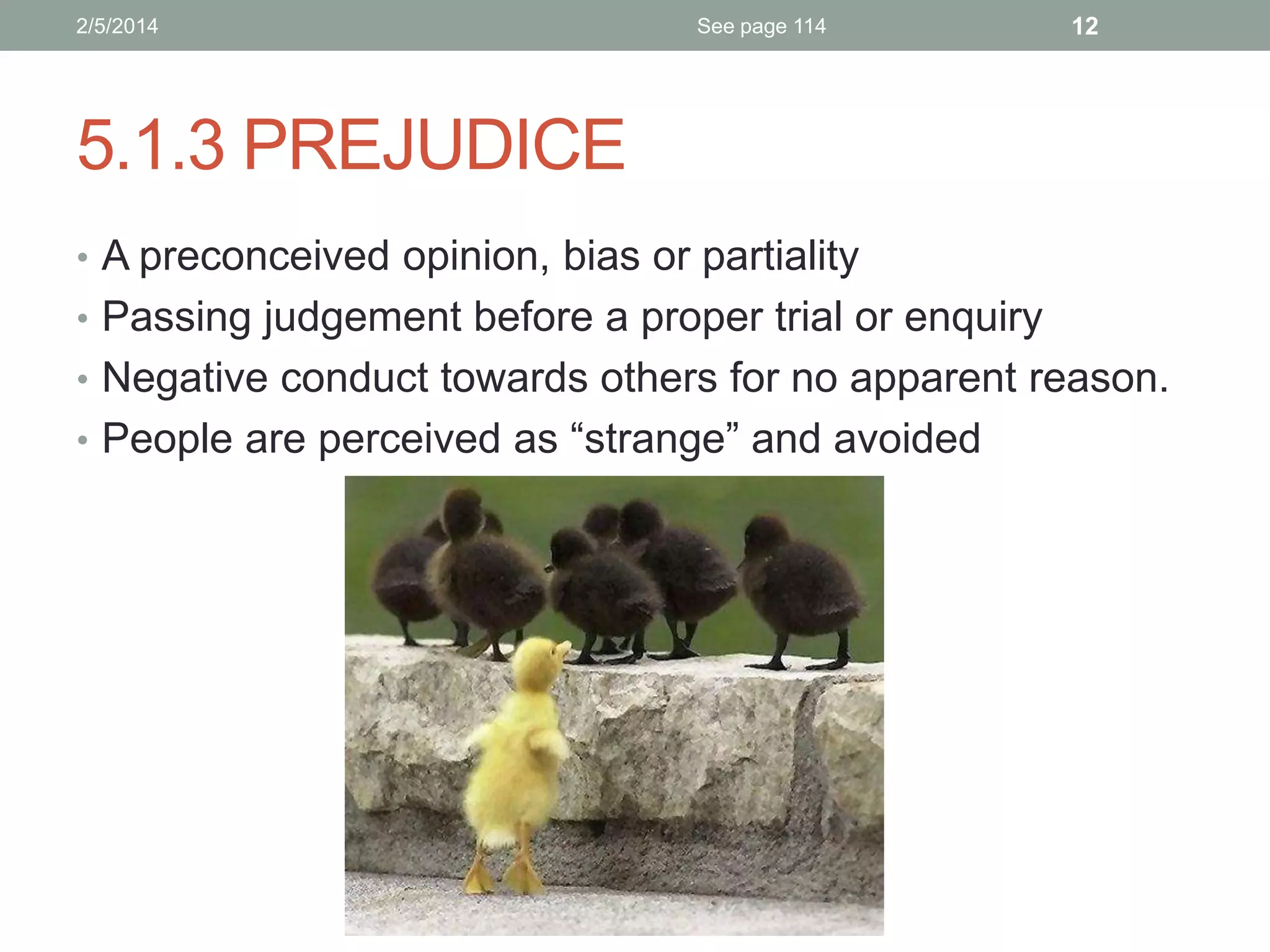
• A preconceived opinion, bias or partiality
• Passing judgement before a proper trial or enquiry
• Negative conduct towards others for no apparent reason.
• People are perceived as “strange” and avoided
2/5/2014

See page 114

13

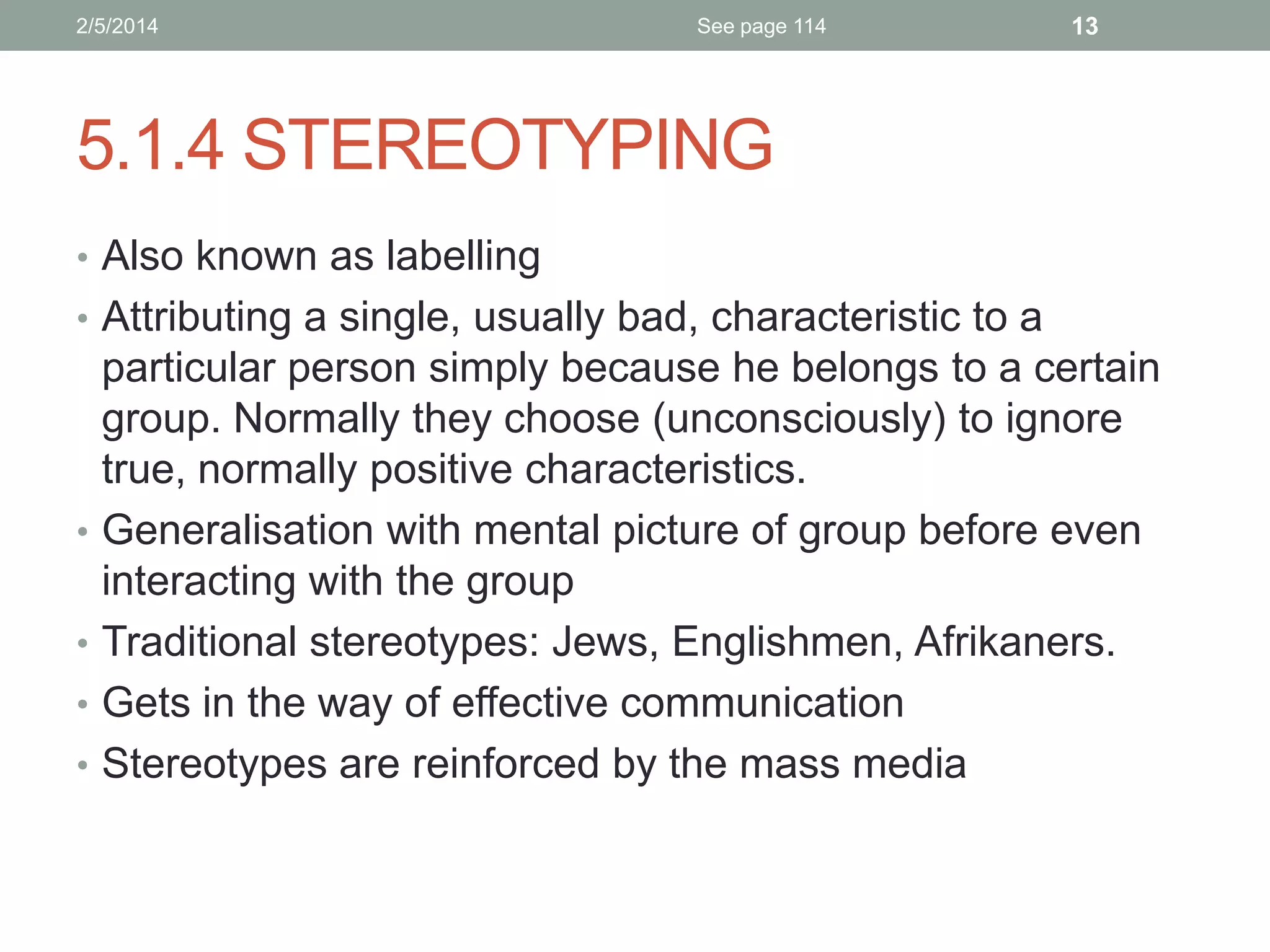
5.1.4 STEREOTYPING
• Also known as labelling
• Attributing a single, usually bad, characteristic to a

•
•
•

•

particular person simply because he belongs to a certain
group. Normally they choose (unconsciously) to ignore
true, normally positive characteristics.
Generalisation with mental picture of group before even
interacting with the group
Traditional stereotypes: Jews, Englishmen, Afrikaners.
Gets in the way of effective communication
Stereotypes are reinforced by the mass media
2/5/2014

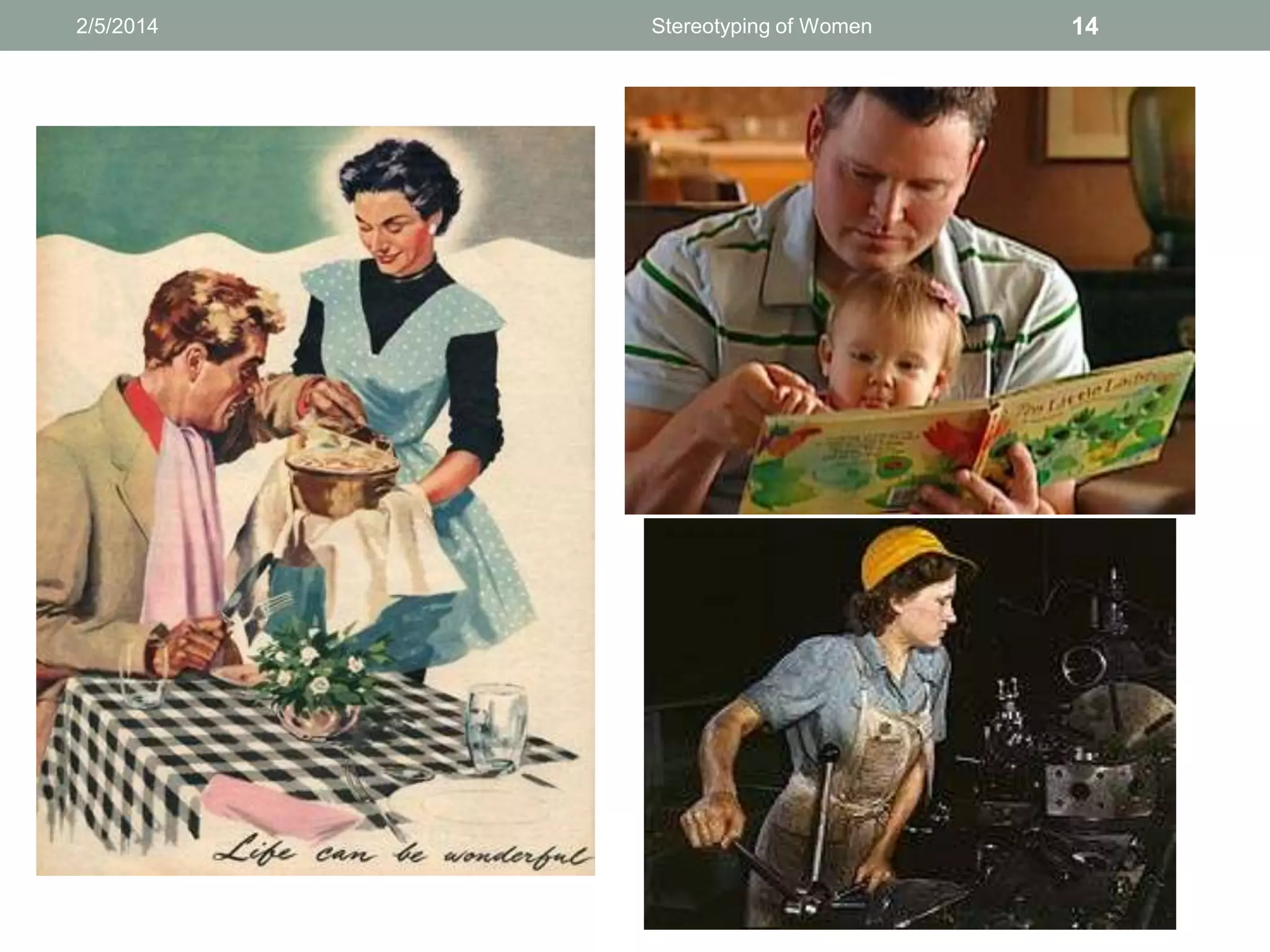
Stereotyping of Women

14
2/5/2014

See page 115 - 116

15

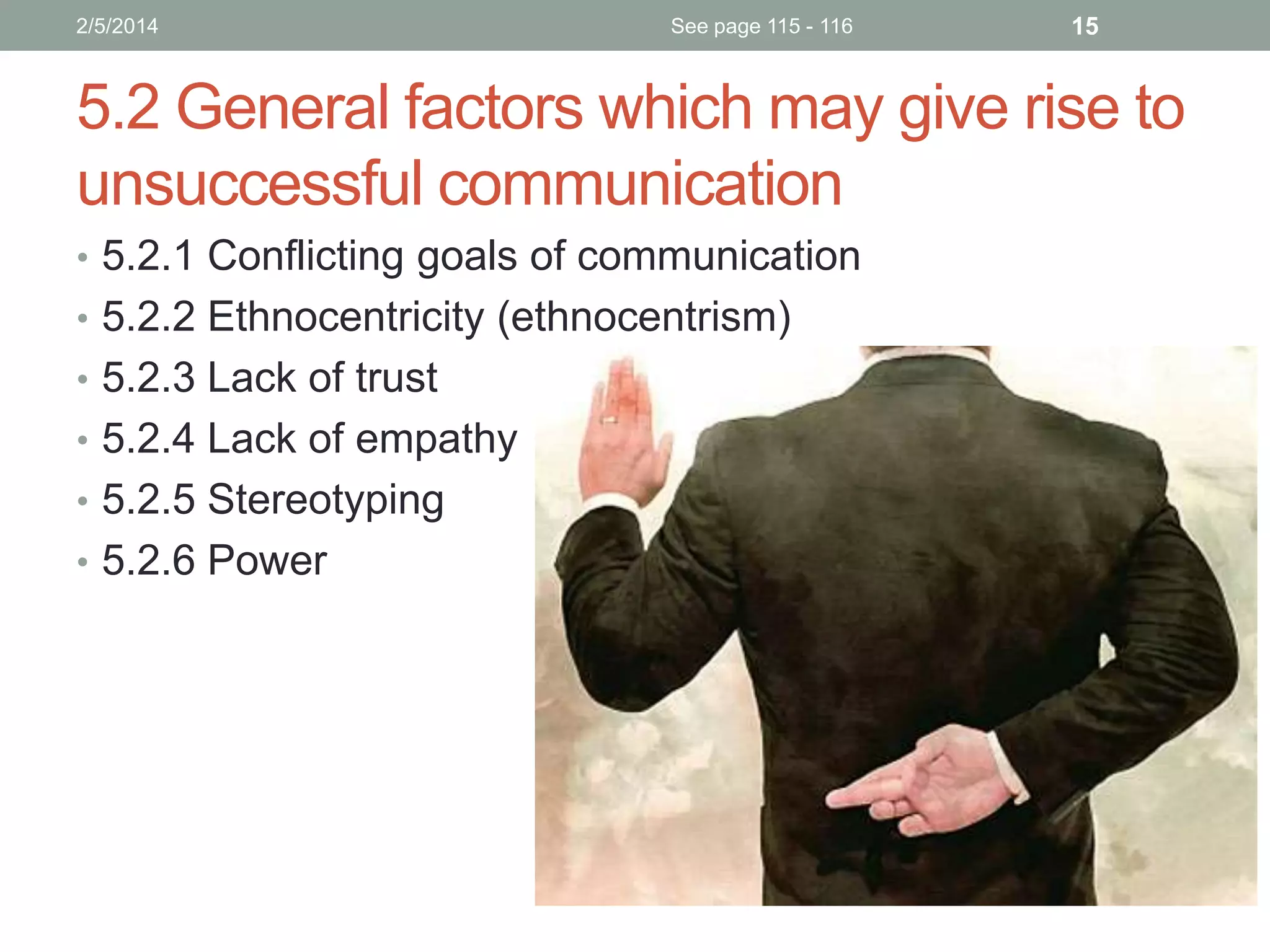
5.2 General factors which may give rise to
unsuccessful communication
• 5.2.1 Conflicting goals of communication
• 5.2.2 Ethnocentricity (ethnocentrism)
• 5.2.3 Lack of trust
• 5.2.4 Lack of empathy
• 5.2.5 Stereotyping

• 5.2.6 Power
2/5/2014

See page 117 - 123

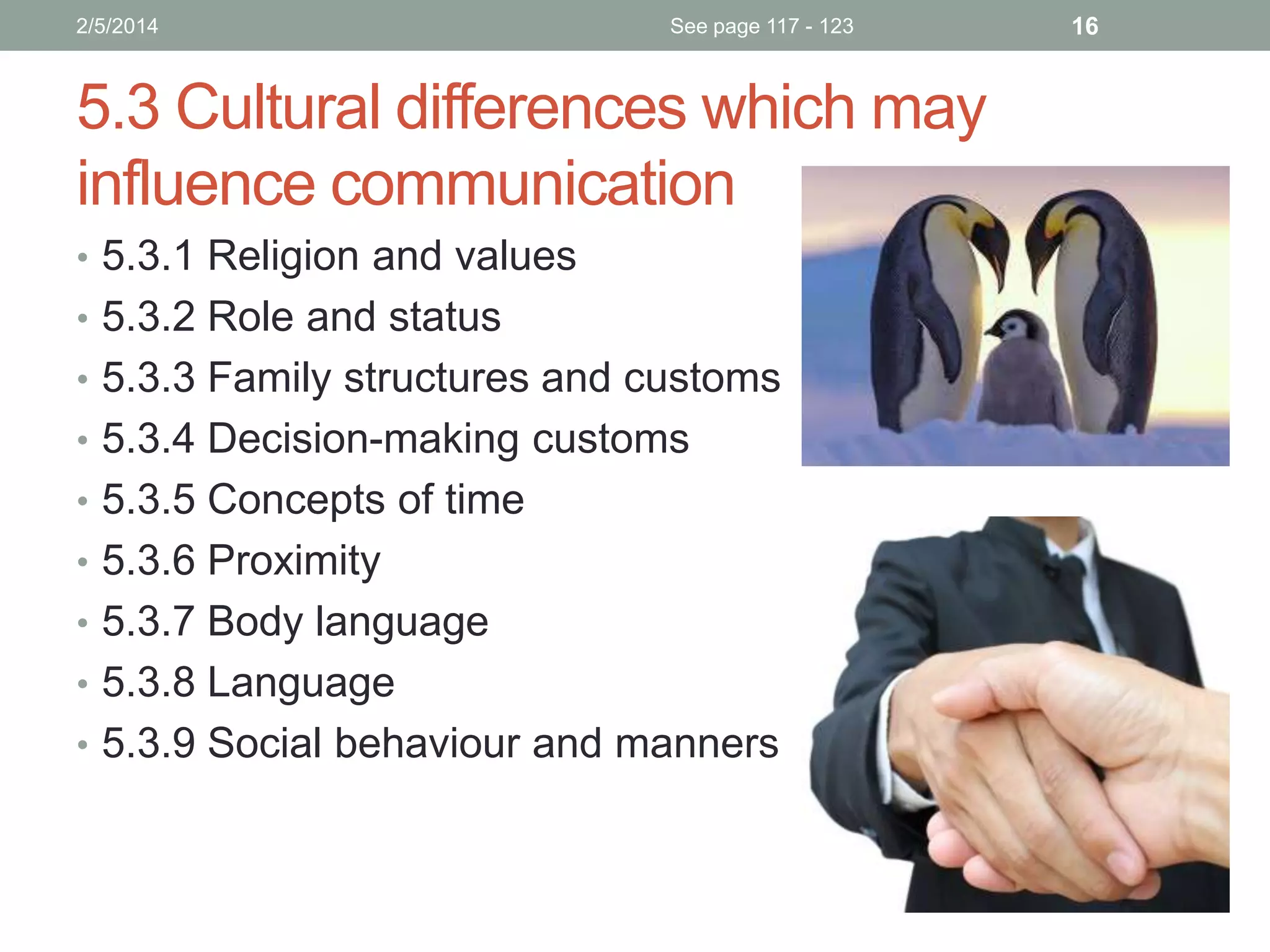
5.3 Cultural differences which may
influence communication
• 5.3.1 Religion and values
• 5.3.2 Role and status
• 5.3.3 Family structures and customs
• 5.3.4 Decision-making customs
• 5.3.5 Concepts of time

• 5.3.6 Proximity
• 5.3.7 Body language
• 5.3.8 Language
• 5.3.9 Social behaviour and manners

16
2/5/2014

See page 123 - 125

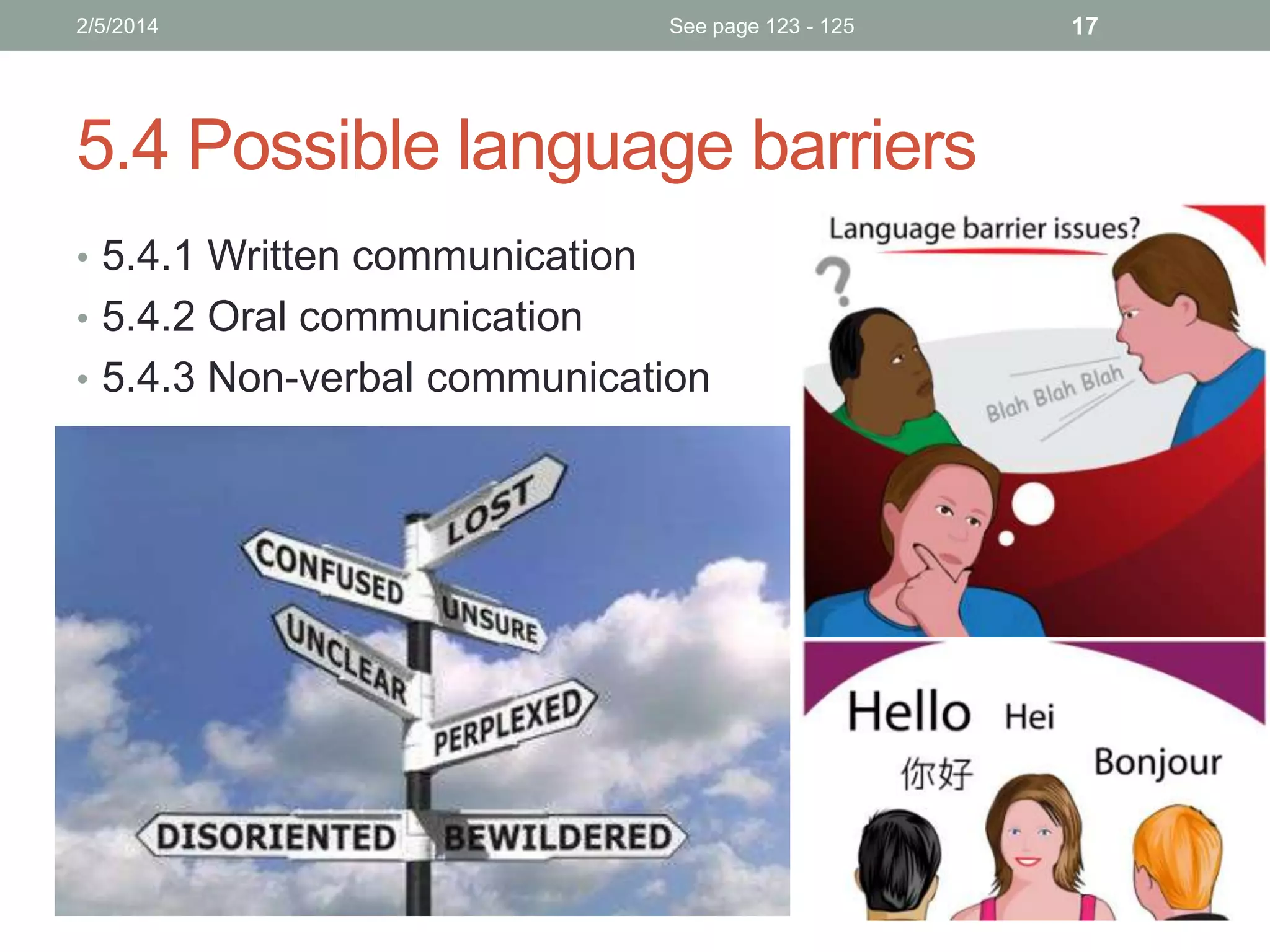
5.4 Possible language barriers
• 5.4.1 Written communication
• 5.4.2 Oral communication
• 5.4.3 Non-verbal communication

17
2/5/2014

See page 126

18

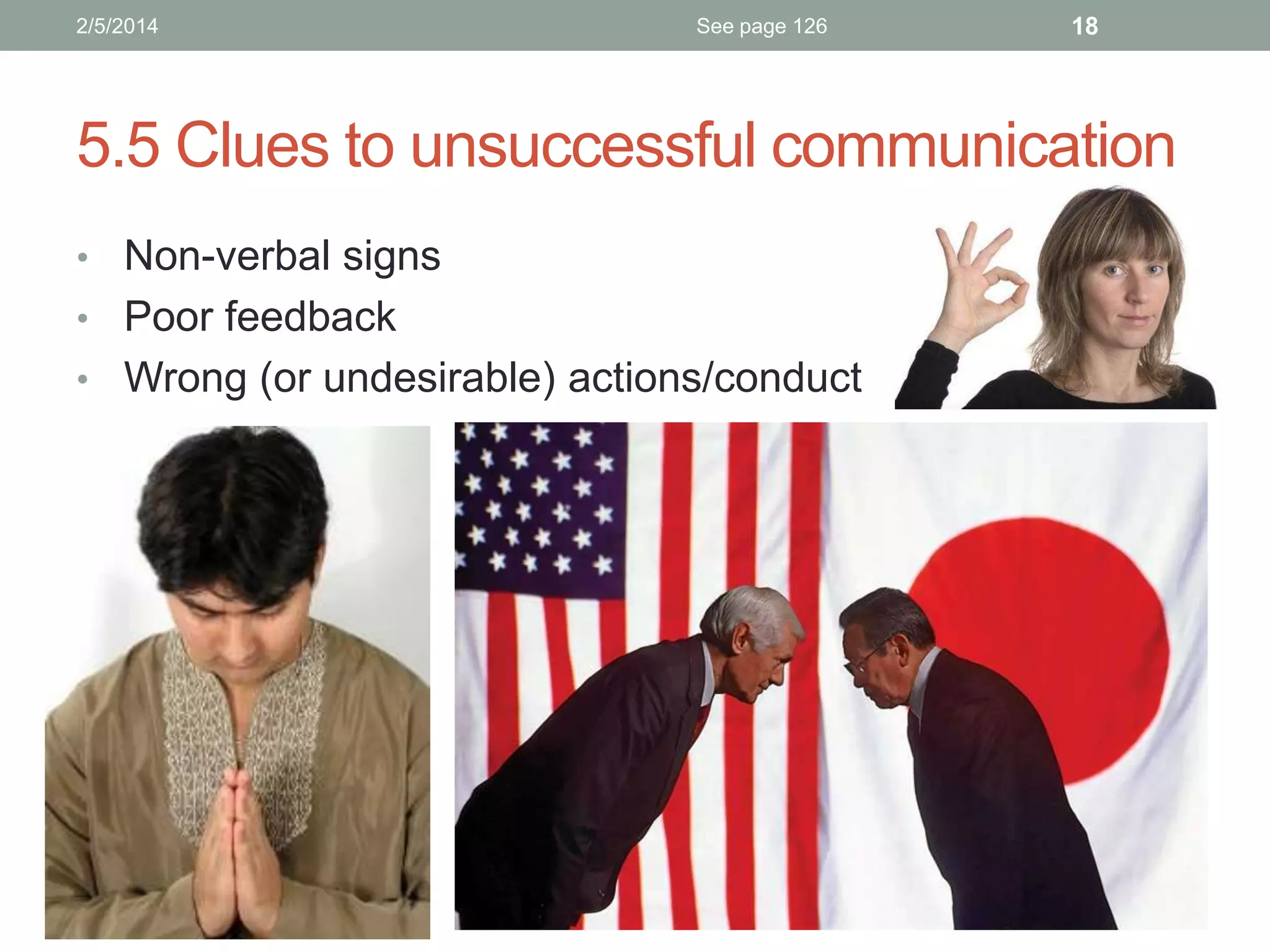
5.5 Clues to unsuccessful communication
• Non-verbal signs
• Poor feedback
• Wrong (or undesirable) actions/conduct
2/5/2014

See page 126 - 128

19

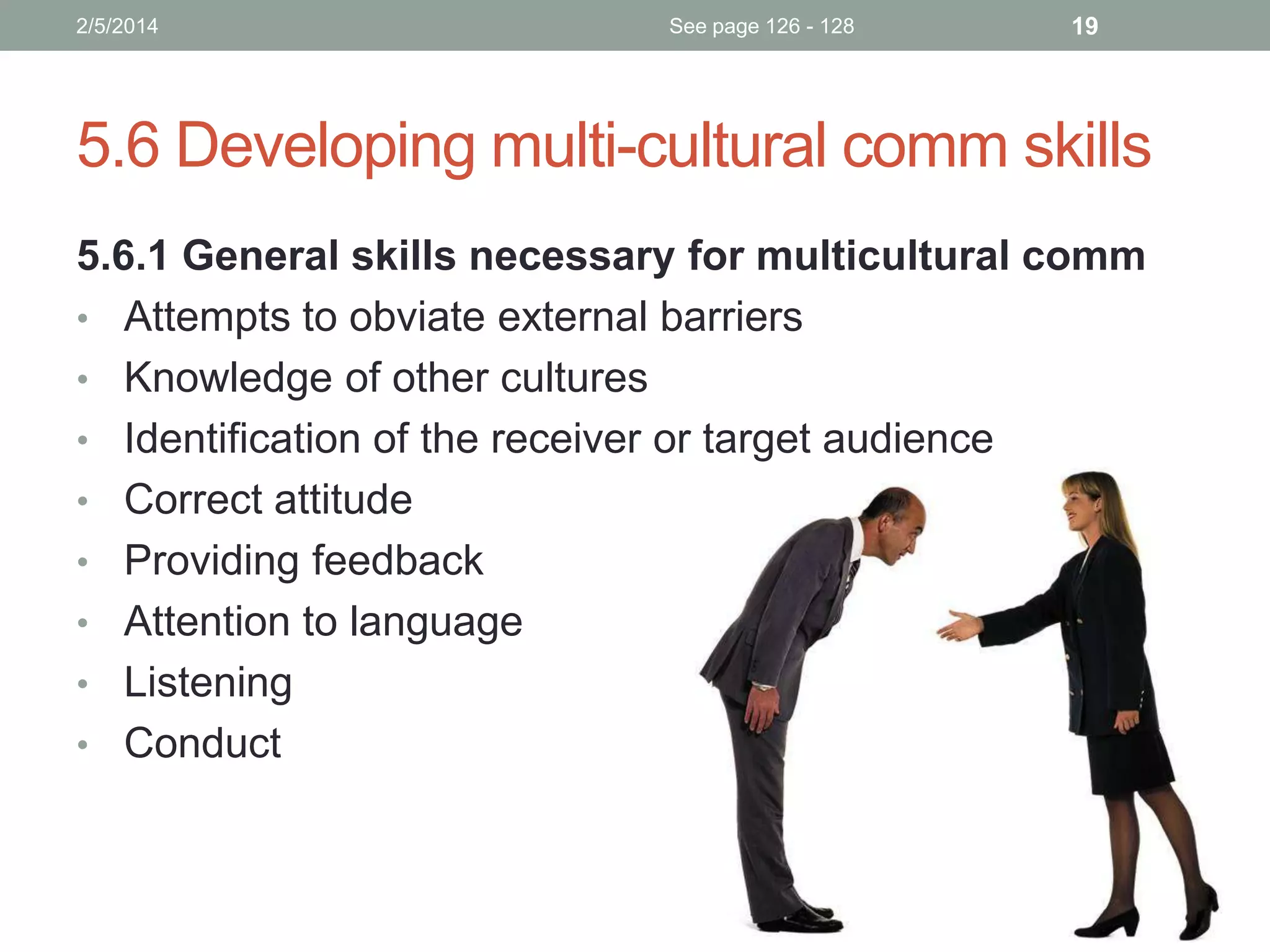
5.6 Developing multi-cultural comm skills
5.6.1 General skills necessary for multicultural comm
• Attempts to obviate external barriers
• Knowledge of other cultures
• Identification of the receiver or target audience
• Correct attitude
• Providing feedback
• Attention to language
• Listening
• Conduct
2/5/2014

See page 128 - 129

20

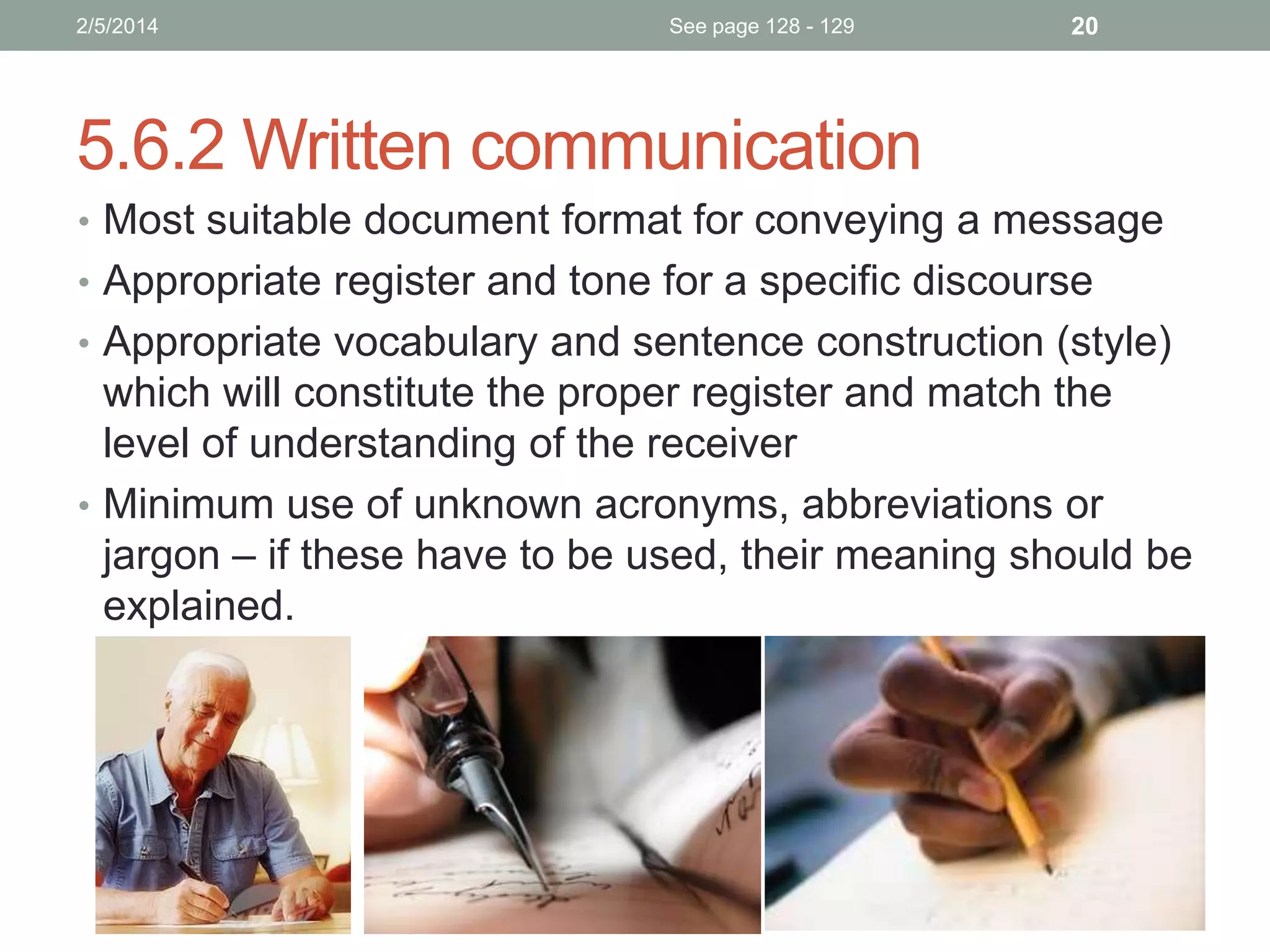
5.6.2 Written communication
• Most suitable document format for conveying a message
• Appropriate register and tone for a specific discourse
• Appropriate vocabulary and sentence construction (style)

which will constitute the proper register and match the
level of understanding of the receiver
• Minimum use of unknown acronyms, abbreviations or
jargon – if these have to be used, their meaning should be
explained.
2/5/2014

Footer Text

21

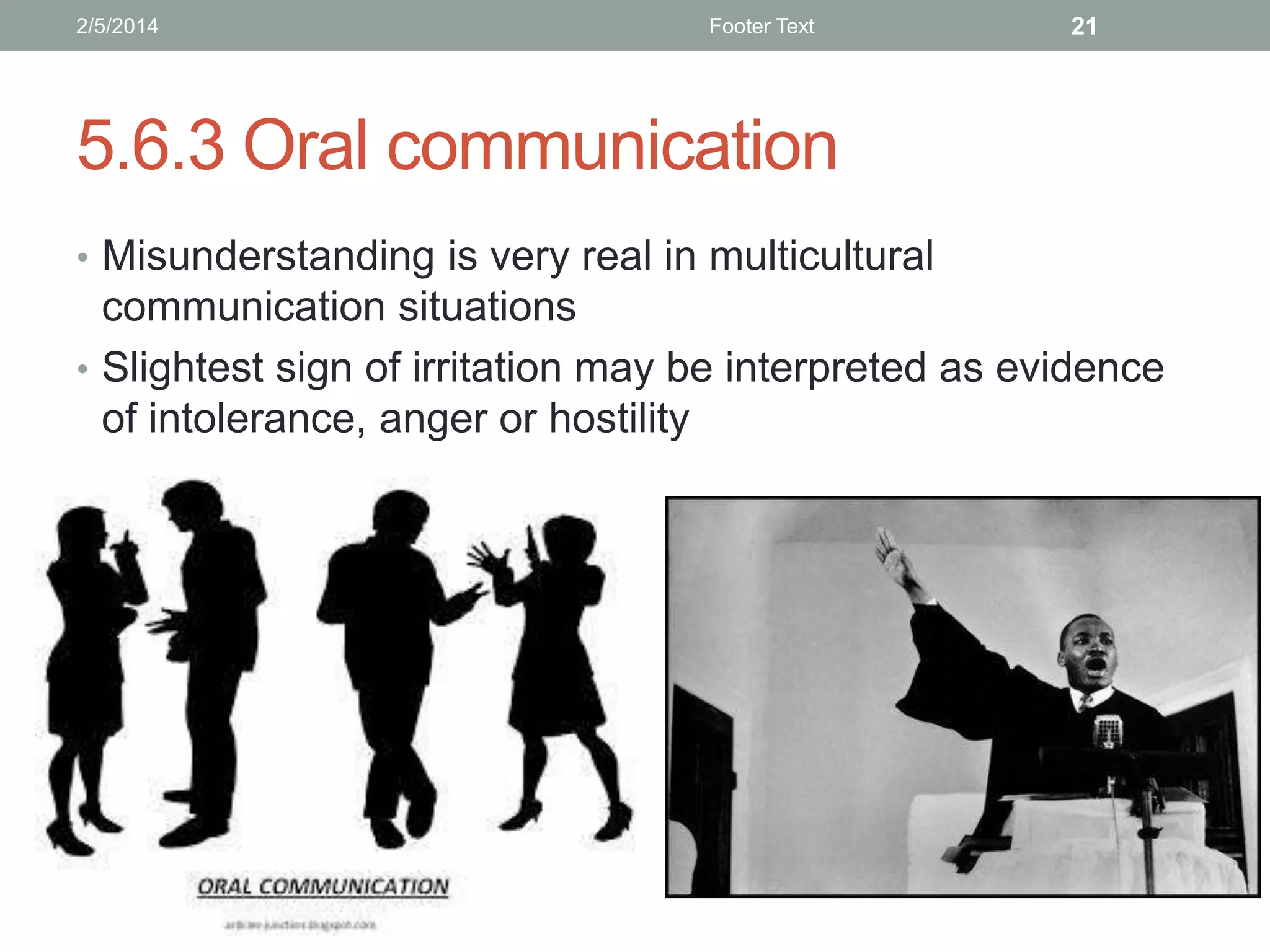
5.6.3 Oral communication
• Misunderstanding is very real in multicultural

communication situations
• Slightest sign of irritation may be interpreted as evidence
of intolerance, anger or hostility
2/5/2014

NON-VERBAL ACTIONS

22

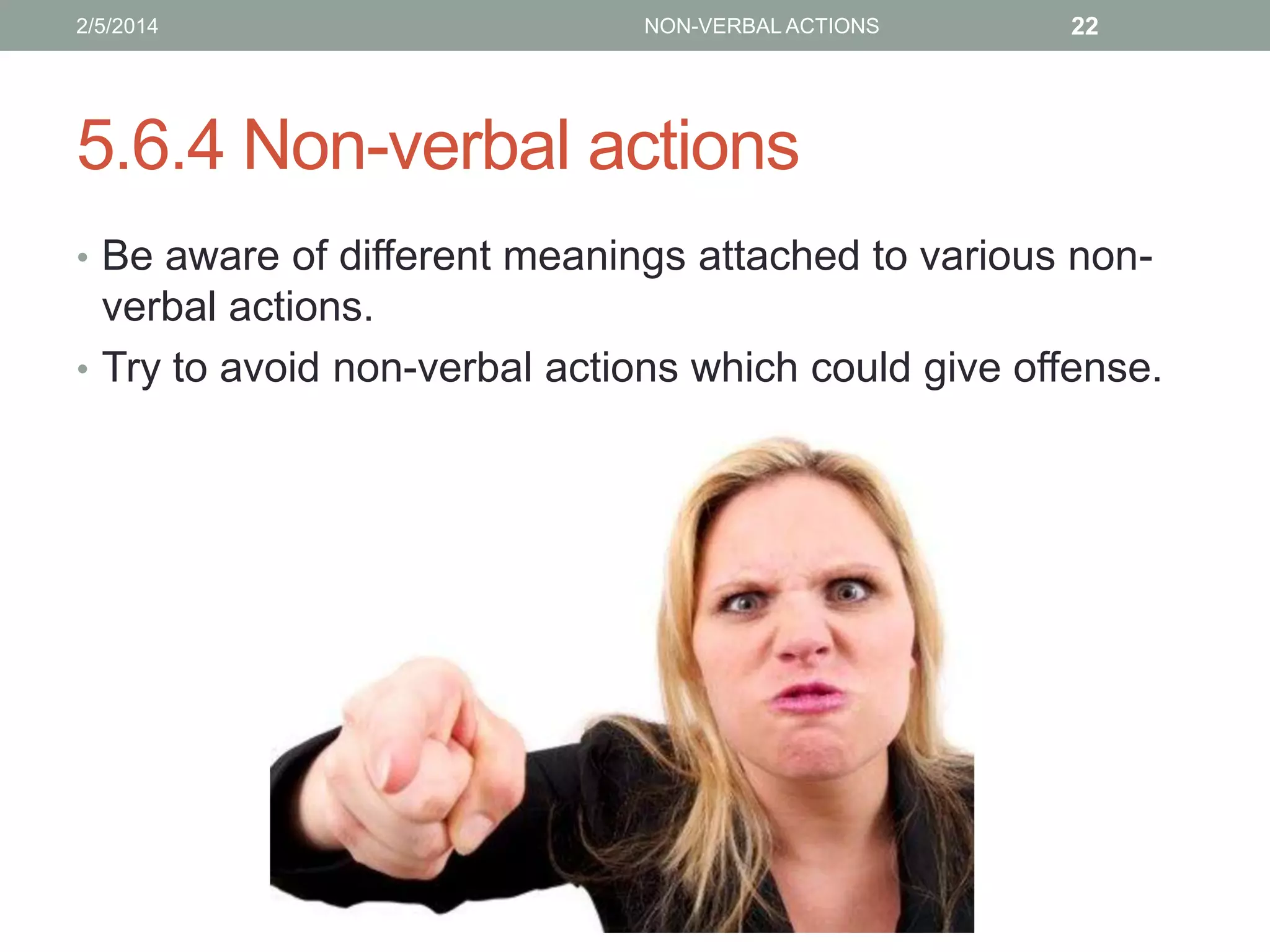
5.6.4 Non-verbal actions
• Be aware of different meanings attached to various non-

verbal actions.
• Try to avoid non-verbal actions which could give offense.
2/5/2014

See page 129-130

23

5.7 Corporate culture
• The image of a specific organisation, as determined by its

structure and the nature of its communication in order to
achieve its organisational goals
• Business in SA is conducted according to Western social
customs and with a distinctly Western emphasis on the
importance of time, productivity, profit and progress
• “Cultures meet, merge, and often collide” within the
workplace.
• Corporate culture is the social energy that moves the
members of organisations to act. This could be productive
or unproductive.
2/5/2014

Footer Text

24

5.7 CORPORATE CULTURE
5.7.1 Management approach

• The workplace is the

melting pot of the great
diversity of South African
cultures, management
must manage this cultural
diversity skilfully and
deliberately to create an
integrated corporate
culture which is shared by
all employees.

5.7.2 Attitude or disposition of the
individual or group

• Each individual in an

organisation represents
its own cultural group,
attitude, disposition and
contribution of each
individual member has a
subtle yet cumulative
effect on the corporate
culture of the organisation
• See p.131 (table)
2/5/2014

Corporate Management

25

N5 Communication: Multicultural Communication

  • 1.
    2/5/2014 QUESTION 5 INPAPER 2 (20 POINTS) MULTICULTURAL COMMUNICATION Culture: the product of ideas, values and outlook on life of a specific group of people, that have been maintained and applied for a number of years. 1
  • 2.
    2/5/2014 5.1 CULTURE 1. ELEMENTSOF CULTURE 2. SUBCULTURE 3. PREJUDICE 4. STEREOTYPING See page 111 - 114 2
  • 3.
    2/5/2014 See page 111 3 5.1.1ELEMENTS OF CULTURE • Values: a culture’s assessment of what is good or bad • Beliefs: broad, vague, generalised statements that reflect people’s assessment and awareness • Norms of behaviour: values expressed in norms, which are guidelines for action or conduct within a culture. • Symbols: special objects, gestures, sounds, images that have a specific meaning in a culture • Perception: the way people choose, arrange, process and interpret stimuli from environment in an attempt to integrate them in an approach to their world which, for them, is meaningful and structured.
  • 4.
  • 5.
  • 6.
  • 7.
    2/5/2014 See page 112 7 5.1.1ELEMENTS OF CULTURE • Attitudes: a tendency to respond towards or to react against any idea or object. May be mental, emotional or behavioural or a combination. • Expectations: members from any cultural group would expect one another, as well as the government, church, school, courts of law, hospitals and clinics and other societal institutions to meet certain requirements which are compatible with their perceptions, values, norms and attitudes.
  • 8.
    2/5/2014 Attitudes towards Cultures 8 Whatis your attitude towards punks?
  • 9.
    2/5/2014 See page 112 9 5.1.2SUBCULTURE Within each cultural group a number of smaller sections or subcultures can be identified • The role of demography (refers to the study of human populations, their distribution, geographic locations. It includes information about their age, level of education, income, vocations, etc. of specific groups. • Profession: e.g. lawyers, teachers, secretaries • Ethnicity: e.g. Zulus, Xhosas, Sothos. (common cultural traditions and a sense of identity) • Religion: Christian (Roman Catholic, Protestant) Jewish, Muslims • Language: 11 official languages in SA … and counting Ethnocentricity: tendency of members of a particular culture or subculture to judge other cultures according to its own norms & values
  • 10.
  • 11.
  • 12.
    2/5/2014 See page 114 12 5.1.3PREJUDICE • A preconceived opinion, bias or partiality • Passing judgement before a proper trial or enquiry • Negative conduct towards others for no apparent reason. • People are perceived as “strange” and avoided
  • 13.
    2/5/2014 See page 114 13 5.1.4STEREOTYPING • Also known as labelling • Attributing a single, usually bad, characteristic to a • • • • particular person simply because he belongs to a certain group. Normally they choose (unconsciously) to ignore true, normally positive characteristics. Generalisation with mental picture of group before even interacting with the group Traditional stereotypes: Jews, Englishmen, Afrikaners. Gets in the way of effective communication Stereotypes are reinforced by the mass media
  • 14.
  • 15.
    2/5/2014 See page 115- 116 15 5.2 General factors which may give rise to unsuccessful communication • 5.2.1 Conflicting goals of communication • 5.2.2 Ethnocentricity (ethnocentrism) • 5.2.3 Lack of trust • 5.2.4 Lack of empathy • 5.2.5 Stereotyping • 5.2.6 Power
  • 16.
    2/5/2014 See page 117- 123 5.3 Cultural differences which may influence communication • 5.3.1 Religion and values • 5.3.2 Role and status • 5.3.3 Family structures and customs • 5.3.4 Decision-making customs • 5.3.5 Concepts of time • 5.3.6 Proximity • 5.3.7 Body language • 5.3.8 Language • 5.3.9 Social behaviour and manners 16
  • 17.
    2/5/2014 See page 123- 125 5.4 Possible language barriers • 5.4.1 Written communication • 5.4.2 Oral communication • 5.4.3 Non-verbal communication 17
  • 18.
    2/5/2014 See page 126 18 5.5Clues to unsuccessful communication • Non-verbal signs • Poor feedback • Wrong (or undesirable) actions/conduct
  • 19.
    2/5/2014 See page 126- 128 19 5.6 Developing multi-cultural comm skills 5.6.1 General skills necessary for multicultural comm • Attempts to obviate external barriers • Knowledge of other cultures • Identification of the receiver or target audience • Correct attitude • Providing feedback • Attention to language • Listening • Conduct
  • 20.
    2/5/2014 See page 128- 129 20 5.6.2 Written communication • Most suitable document format for conveying a message • Appropriate register and tone for a specific discourse • Appropriate vocabulary and sentence construction (style) which will constitute the proper register and match the level of understanding of the receiver • Minimum use of unknown acronyms, abbreviations or jargon – if these have to be used, their meaning should be explained.
  • 21.
    2/5/2014 Footer Text 21 5.6.3 Oralcommunication • Misunderstanding is very real in multicultural communication situations • Slightest sign of irritation may be interpreted as evidence of intolerance, anger or hostility
  • 22.
    2/5/2014 NON-VERBAL ACTIONS 22 5.6.4 Non-verbalactions • Be aware of different meanings attached to various non- verbal actions. • Try to avoid non-verbal actions which could give offense.
  • 23.
    2/5/2014 See page 129-130 23 5.7Corporate culture • The image of a specific organisation, as determined by its structure and the nature of its communication in order to achieve its organisational goals • Business in SA is conducted according to Western social customs and with a distinctly Western emphasis on the importance of time, productivity, profit and progress • “Cultures meet, merge, and often collide” within the workplace. • Corporate culture is the social energy that moves the members of organisations to act. This could be productive or unproductive.
  • 24.
    2/5/2014 Footer Text 24 5.7 CORPORATECULTURE 5.7.1 Management approach • The workplace is the melting pot of the great diversity of South African cultures, management must manage this cultural diversity skilfully and deliberately to create an integrated corporate culture which is shared by all employees. 5.7.2 Attitude or disposition of the individual or group • Each individual in an organisation represents its own cultural group, attitude, disposition and contribution of each individual member has a subtle yet cumulative effect on the corporate culture of the organisation • See p.131 (table)
  • 25.