Download to read offline


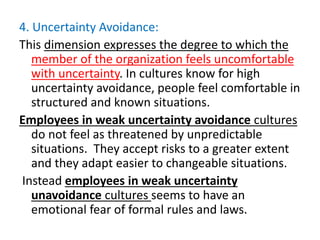


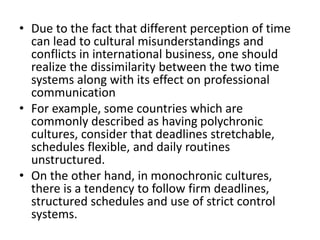


This document discusses various aspects of cross-cultural communication and business. It defines culture and cross-culture business, noting that differences in values, viewpoints, and practices must be navigated. Frameworks for analyzing cultural dimensions are presented, including Hofstede's model of power distance, individualism, uncertainty avoidance, and more. Hall's concepts of high-context vs low-context cultures and perception of time are also summarized. Challenges like direct vs indirect communication styles, language barriers, and differing views of hierarchy are outlined. The importance of understanding both verbal and non-verbal cultural communication is stressed.


