The document discusses various topics related to consumer attitudes, including what attitudes are, how they are formed and changed, and their influence on marketing strategies. It describes the cognitive, affective, and behavioral components of attitudes, and different models of attitude hierarchy. It also discusses how attitudes can be used to develop marketing strategies, identify customer benefits, and evaluate products and marketing mix elements.
Consumer Attitudes Whatare Attitudes? Attitude Heirarchy & Structure and composition of attitudes ( Models ) How are they formed and changed? Attitude influence Stratigies .
4.
Attitudes Why? Attituderesearch is important to know what is in the heart of consumer. To gauge how firms target audience will react to the new changes in the Mkt’g Mix.
5.
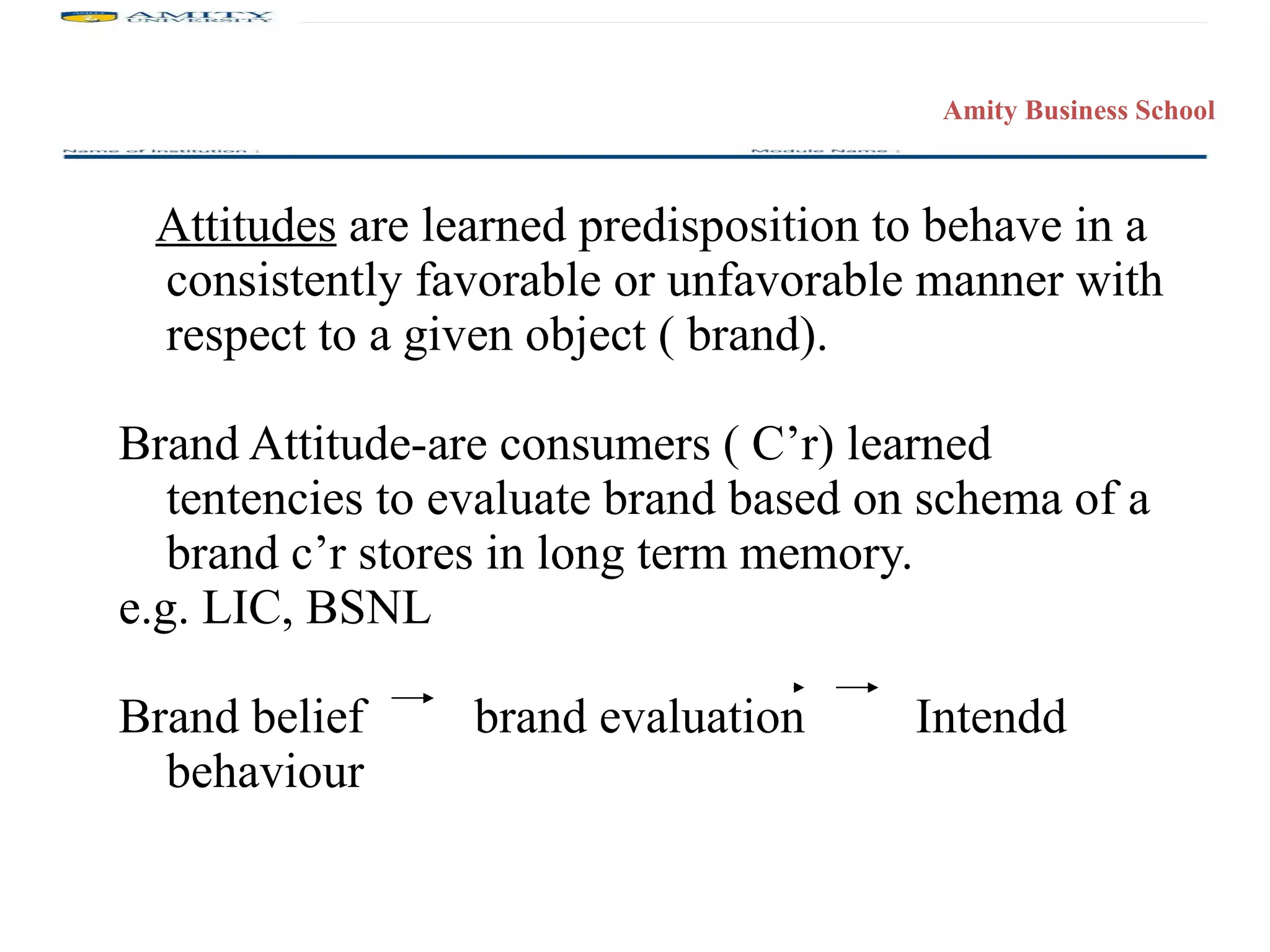
Attitudes arelearned predisposition to behave in a consistently favorable or unfavorable manner with respect to a given object ( brand). Brand Attitude-are consumers ( C’r) learned tentencies to evaluate brand based on schema of a brand c’r stores in long term memory. e.g. LIC, BSNL Brand belief brand evaluation Intendd behaviour
6.
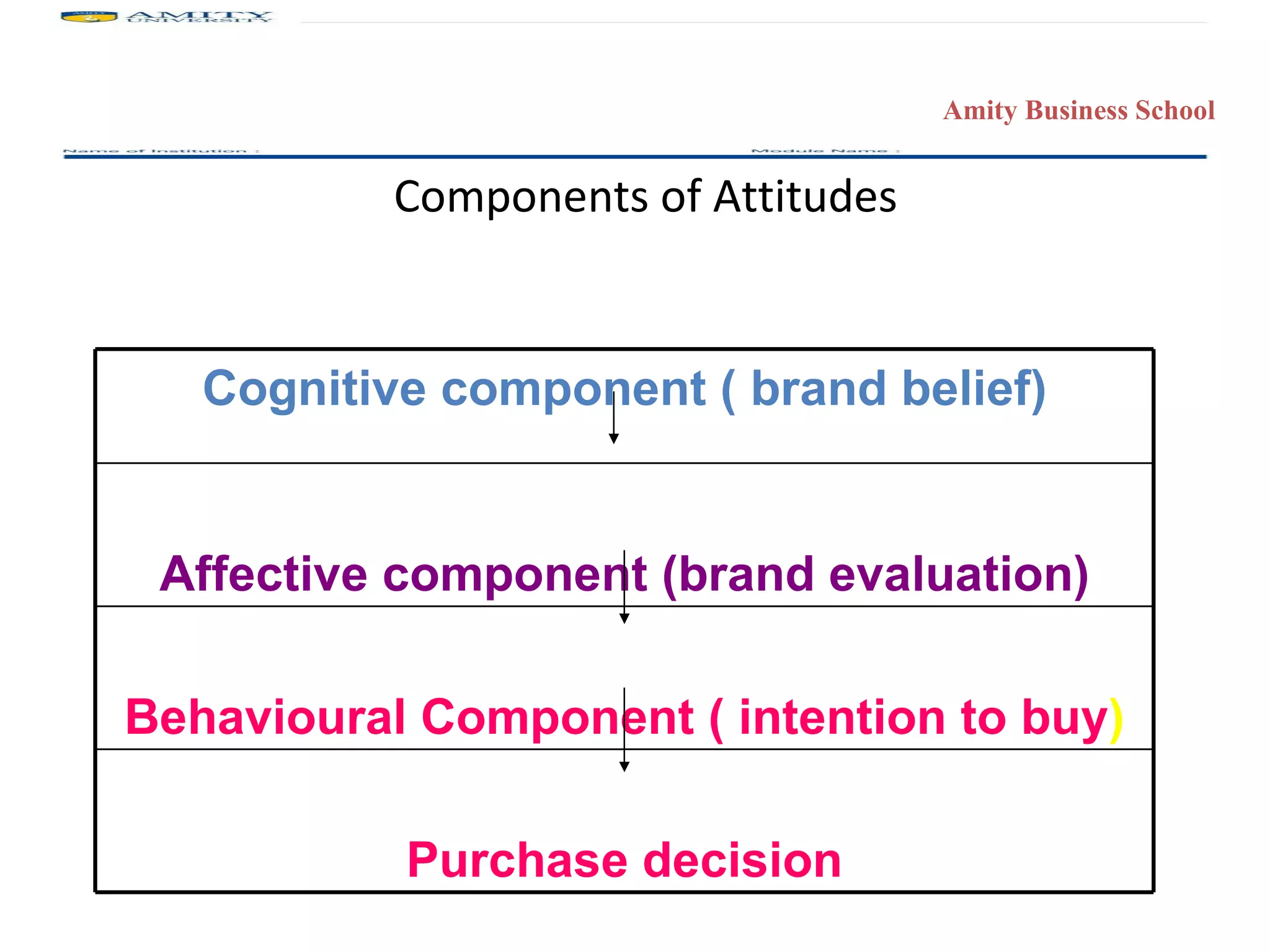
Components of Attitude- mutually interdependence Brand beliefs - cognitive/thinking . Brand Evaluation – affective or feeling. Intention to buy- behavioural
7.
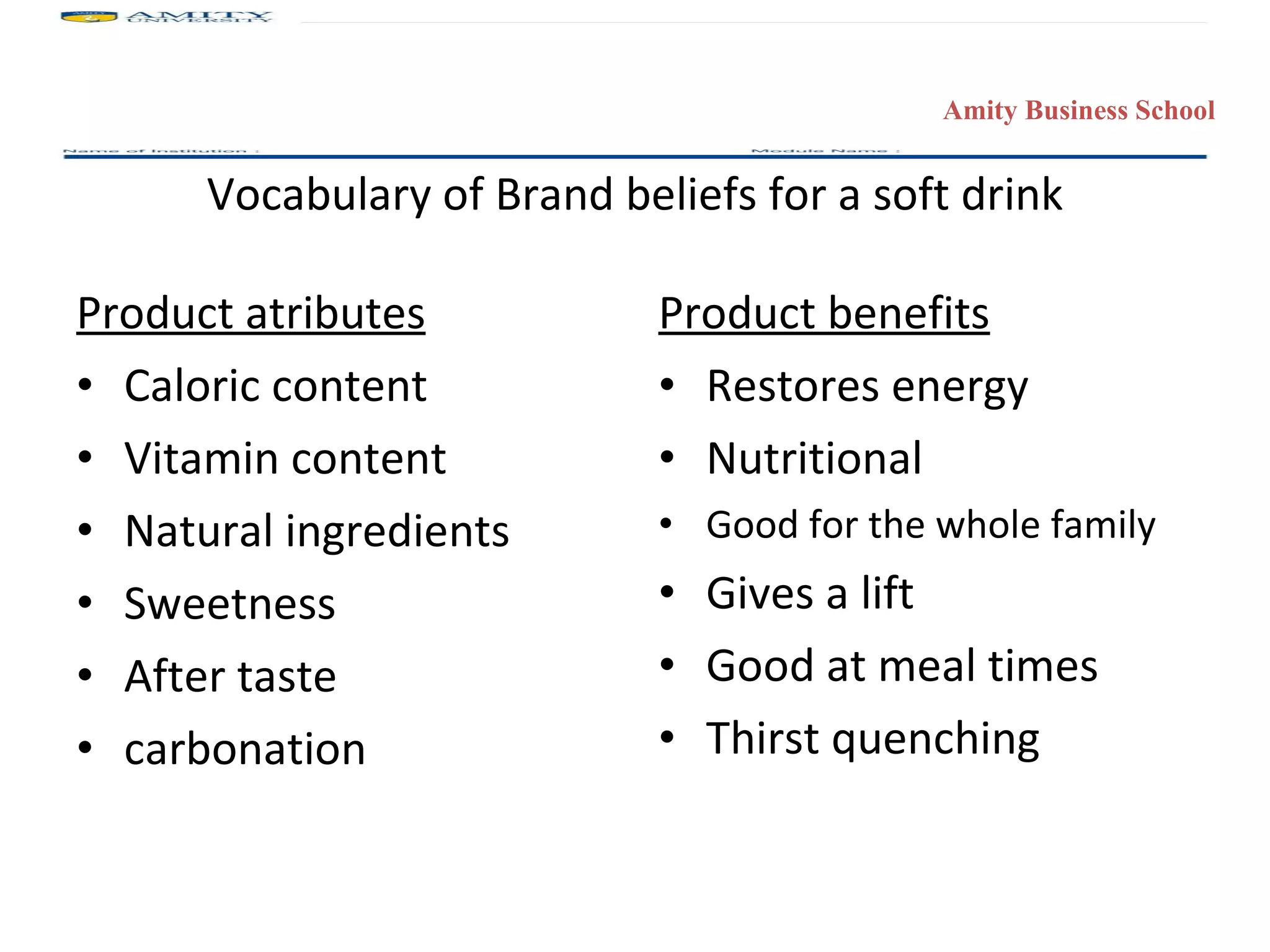
Vocabulary of Brandbeliefs for a soft drink Product atributes Caloric content Vitamin content Natural ingredients Sweetness After taste carbonation Product benefits Restores energy Nutritional Good for the whole family Gives a lift Good at meal times Thirst quenching
8.
Components of AttitudesCognitive component ( brand belief) Affective component (brand evaluation) Behavioural Component ( intention to buy ) Purchase decision
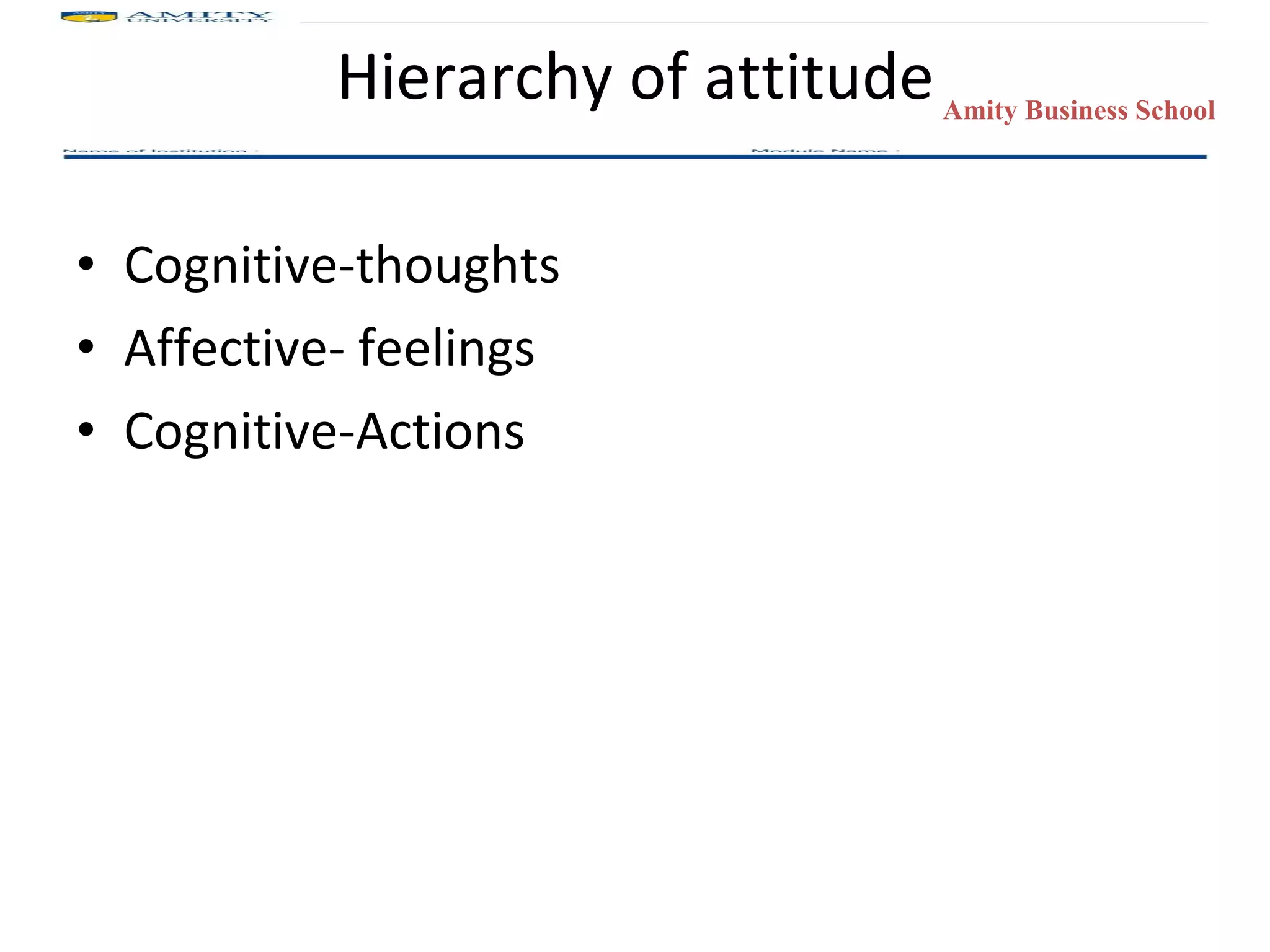
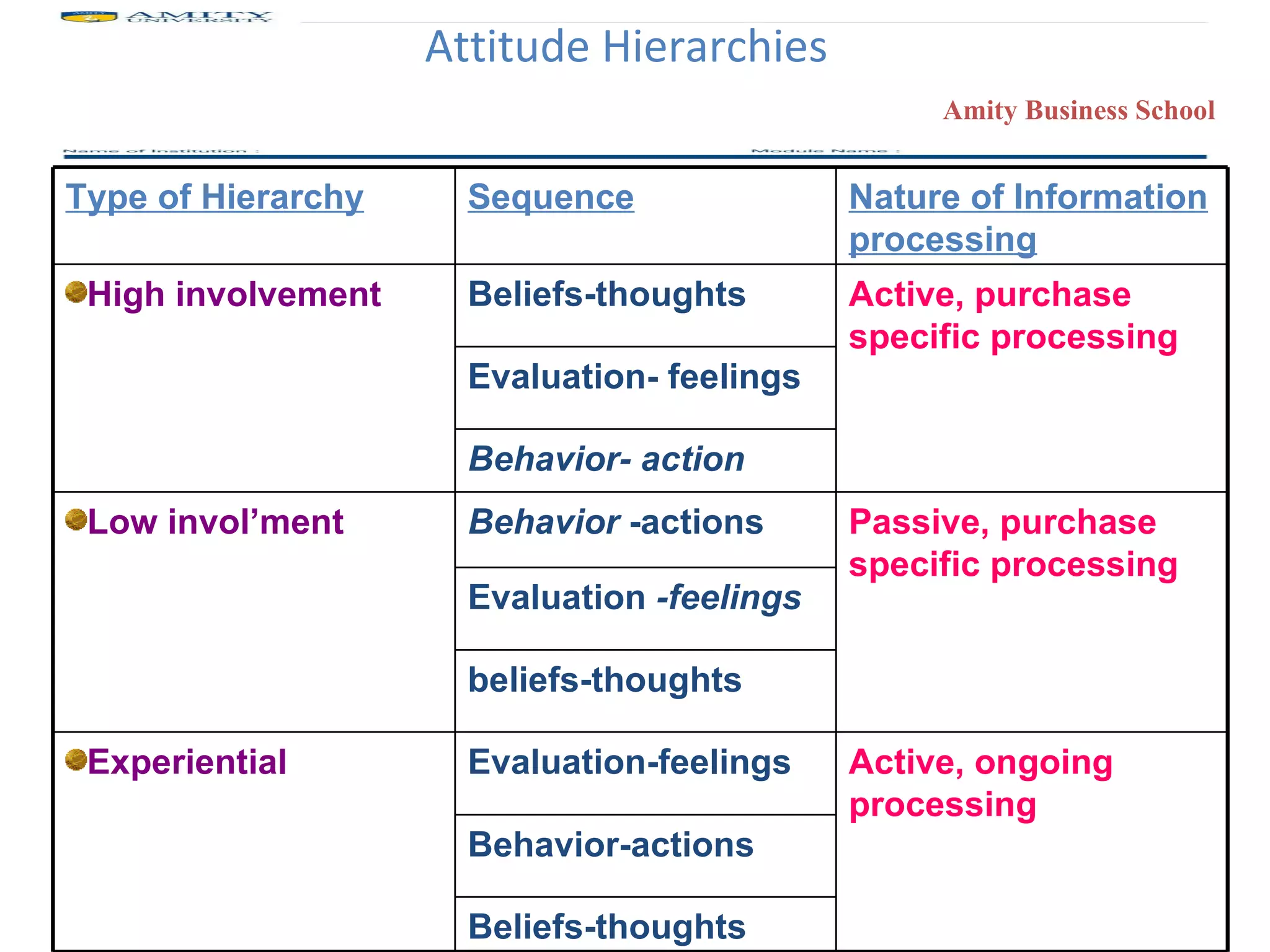
Attitude Hierarchies Type of Hierarchy Sequence Nature of Information processing High involvement Beliefs-thoughts Active, purchase specific processing Evaluation- feelings Behavior- action Low invol’ment Behavior -actions Passive, purchase specific processing Evaluation -feelings beliefs-thoughts Experiential Evaluation-feelings Active, ongoing processing Behavior-actions Beliefs-thoughts
11.
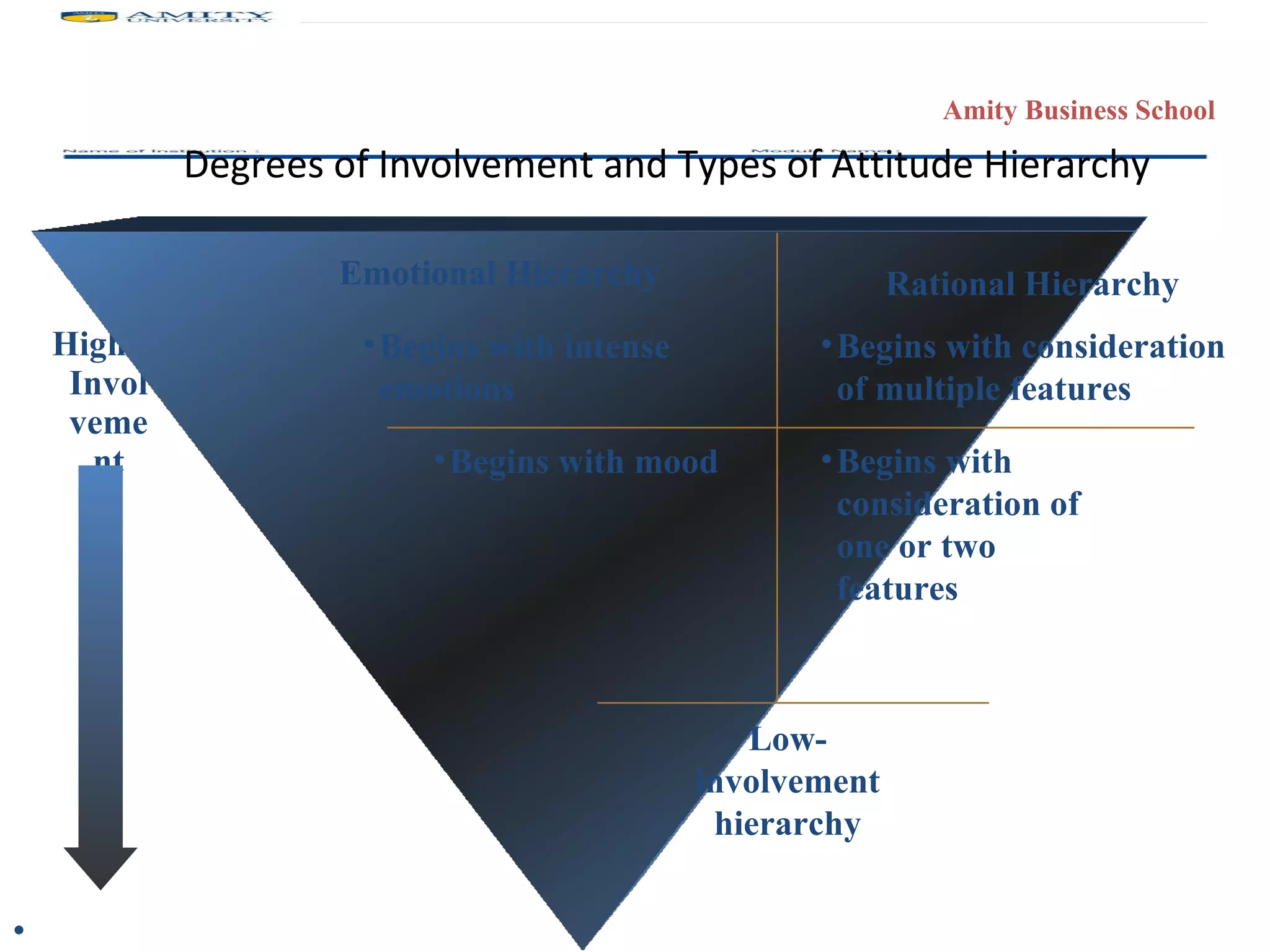
Degrees of Involvementand Types of Attitude Hierarchy High Involvement Low Involvement Emotional Hierarchy Begins with intense emotions Rational Hierarchy Begins with consideration of multiple features Begins with mood Begins with consideration of one or two features Low-involvement hierarchy
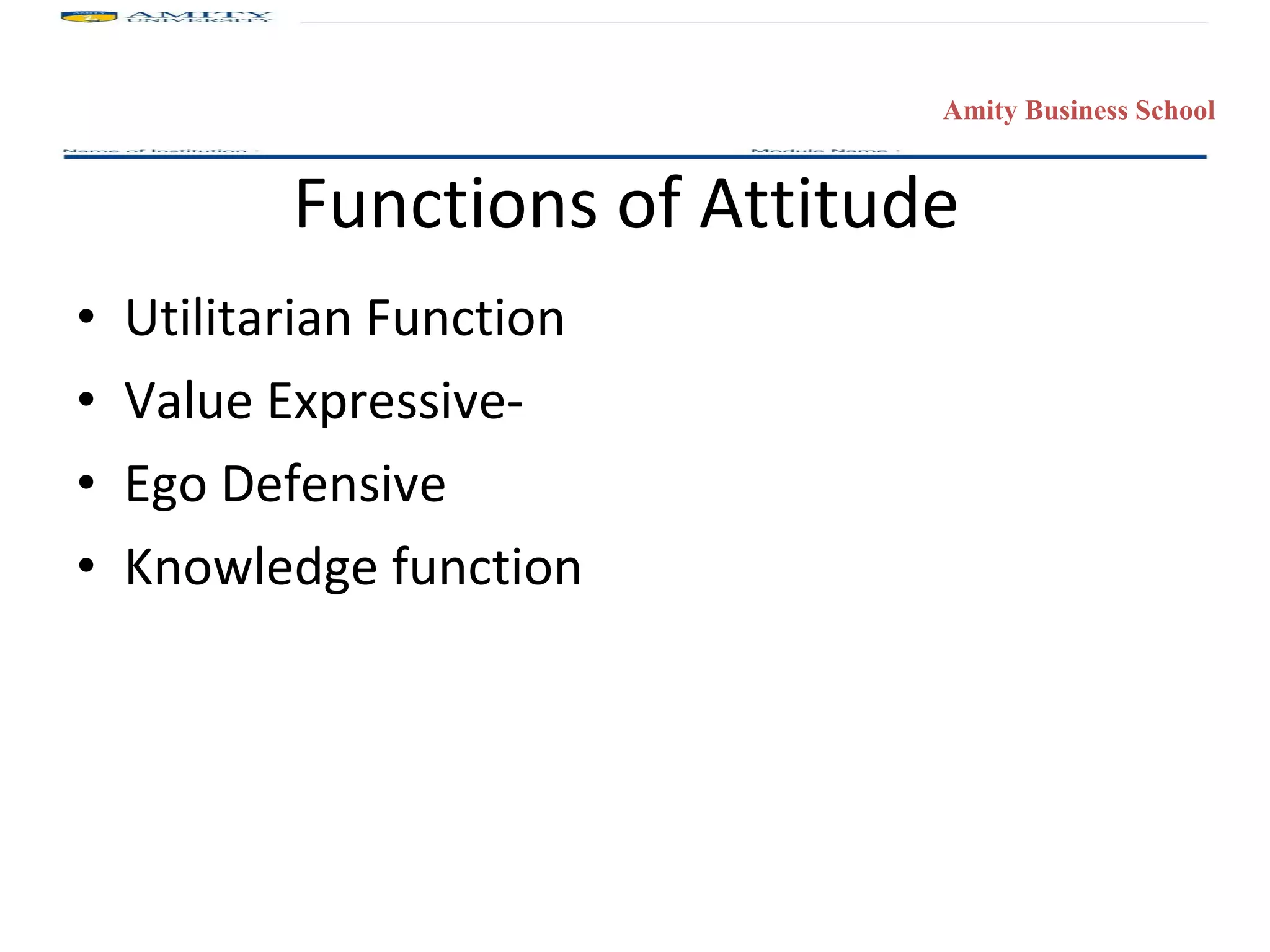
Functions of Attitude Utilitarian Function Value Expressive- Ego Defensive Knowledge function
14.
Role of Attitudesin developing marketing Strategies. Identify Benefit segments Develop new products Formulate & evaluate mkt’g mix strategies.
15.
Relationship of beliefsand behaviour Balance theory - cognitive consistency Multi attribute theory - attitude formation is function of C’r belief. Diagnose the strengths of competitive brands. apply the vocabulary of brand attributes .e.g. Listerine.
16.
Behavior and attitudeCognitive dissonance-Attitudes sometimes change to confirm previous behaviour.e.g bettors Passive learning- C’r learn about the brand with little involvement.link the pdt with involving issue/personal situstion. Disconfirmation of expectations.
17.
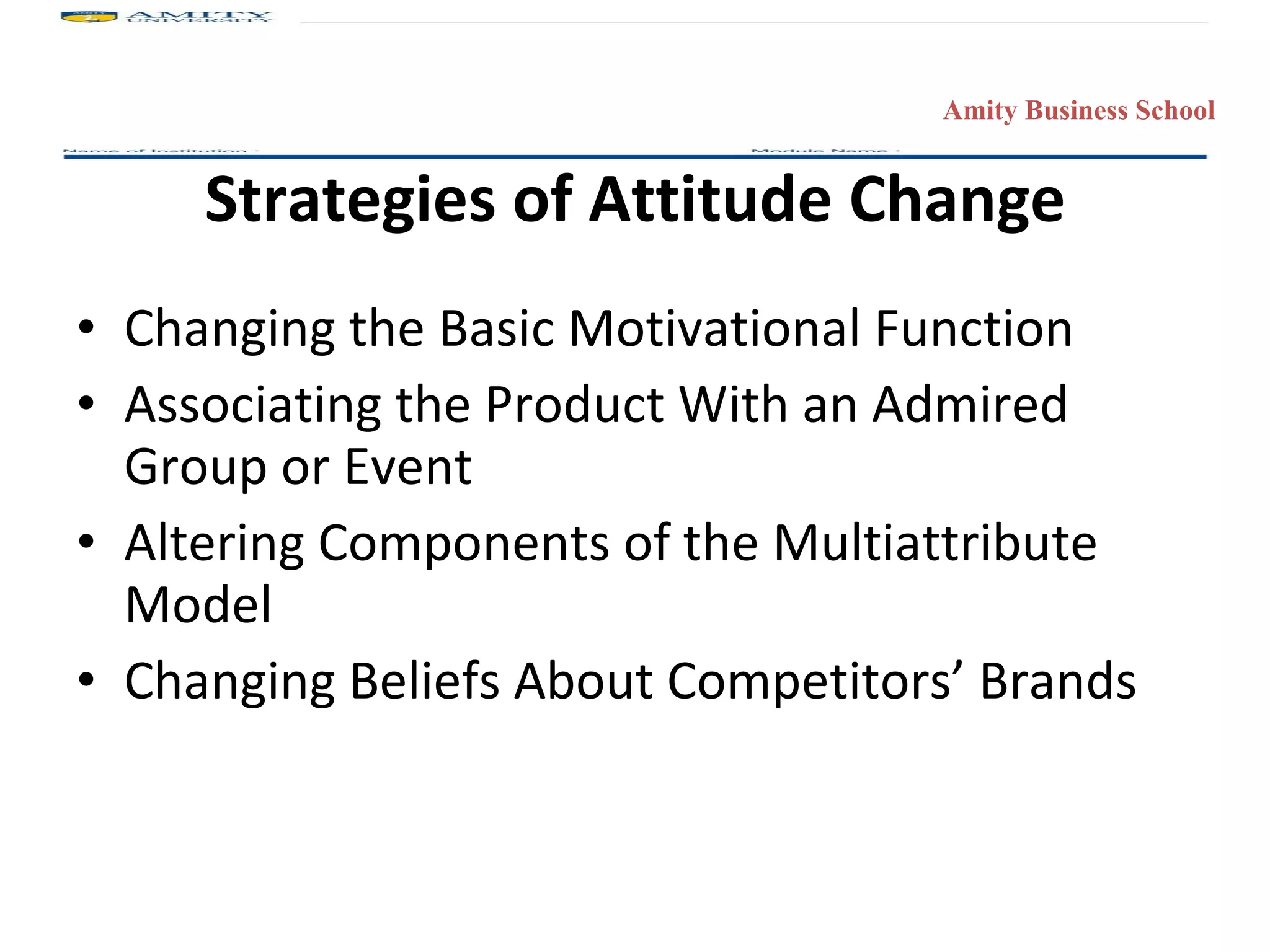
Strategies of AttitudeChange Changing the Basic Motivational Function Associating the Product With an Admired Group or Event Altering Components of the Multiattribute Model Changing Beliefs About Competitors’ Brands
18.
Methods of Influencingthe Customer’s Behavior Incentives- low involvement products. Structuring the physical environment - display of eatables, magazines or novelties in the checkout lines, spaciousness of aisles & lightning conditions, slow pace music. (ecological design) Government mandates - consumers lack competence to judge their own concerns .e.g. seatbelts, auto insurance, speed limits. Business procedures - store hrs time, instore surveillance design. Information structuring –e.g. declaring the item as last one in stock.
19.
Conclusion Reinforcing existingbehavior is easier then changing them. E.g Miller lite is less filling, tastes great. If attitudes about the brand r effective , then try to change the attitudes of non users.