1
MULTI QUADRANT OPERATION
OF HOIST LOAD
Name : Ranjan Ghosh
Dept : Electrical Engineering
Roll No : 11901621021
Year : 4th
 Four Quadrant Operation of any drives or DC Motor
means that the machine operates in four quadrants.
 They are
⚫ Forward Braking,
⚫ Forward motoring
⚫ Reverse motoring
⚫ Reverse braking.
2
FOUR QUADRANT OPERATION
m
Te
Te
m
Te
m
Te
m

T
• Direction of positive
(forward) speed is arbitrary
chosen
• Direction of positive torque will
produce positive (forward) speed
Quadrant 1
Forward motoring
Quadrant 2
Forward braking
Quadrant 3
Reverse motoring
Quadrant 4
Reverse braking
3
MULTI QUADRANT OPERATION OF MOTOR USGIN
Hoist load
5
1ST QUADRANT (FORWARD MOTORING):
j
6
 The machine then receives
mechanical energy,
converting it in to electrical
energy and returning it back to
the electric source. The electric
machine is thus acting as a
Generator.
2ND QUADRANT (FORWARD BRAKING):
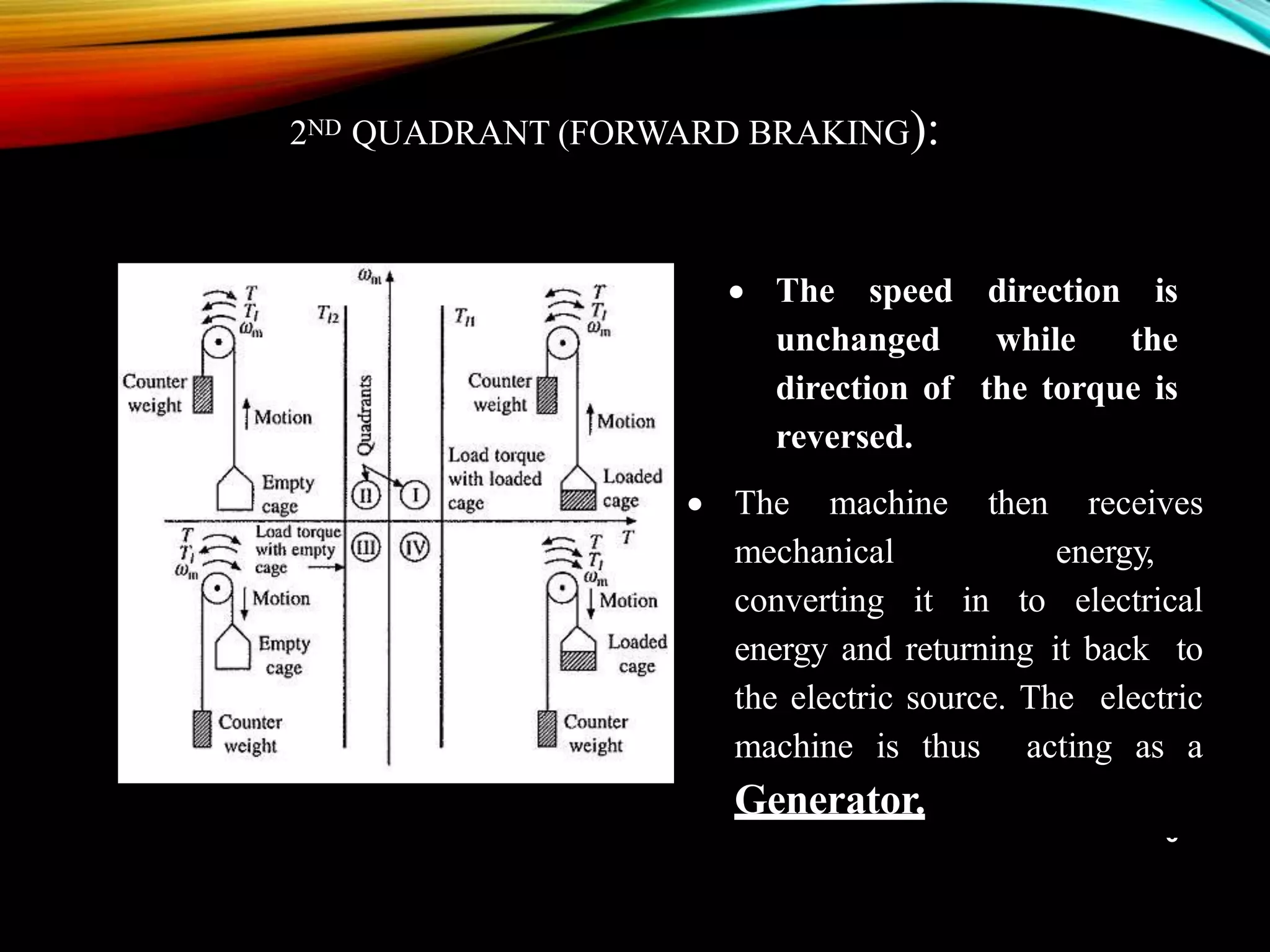
 The speed direction is
unchanged while the
direction of the torque is
reversed.
7
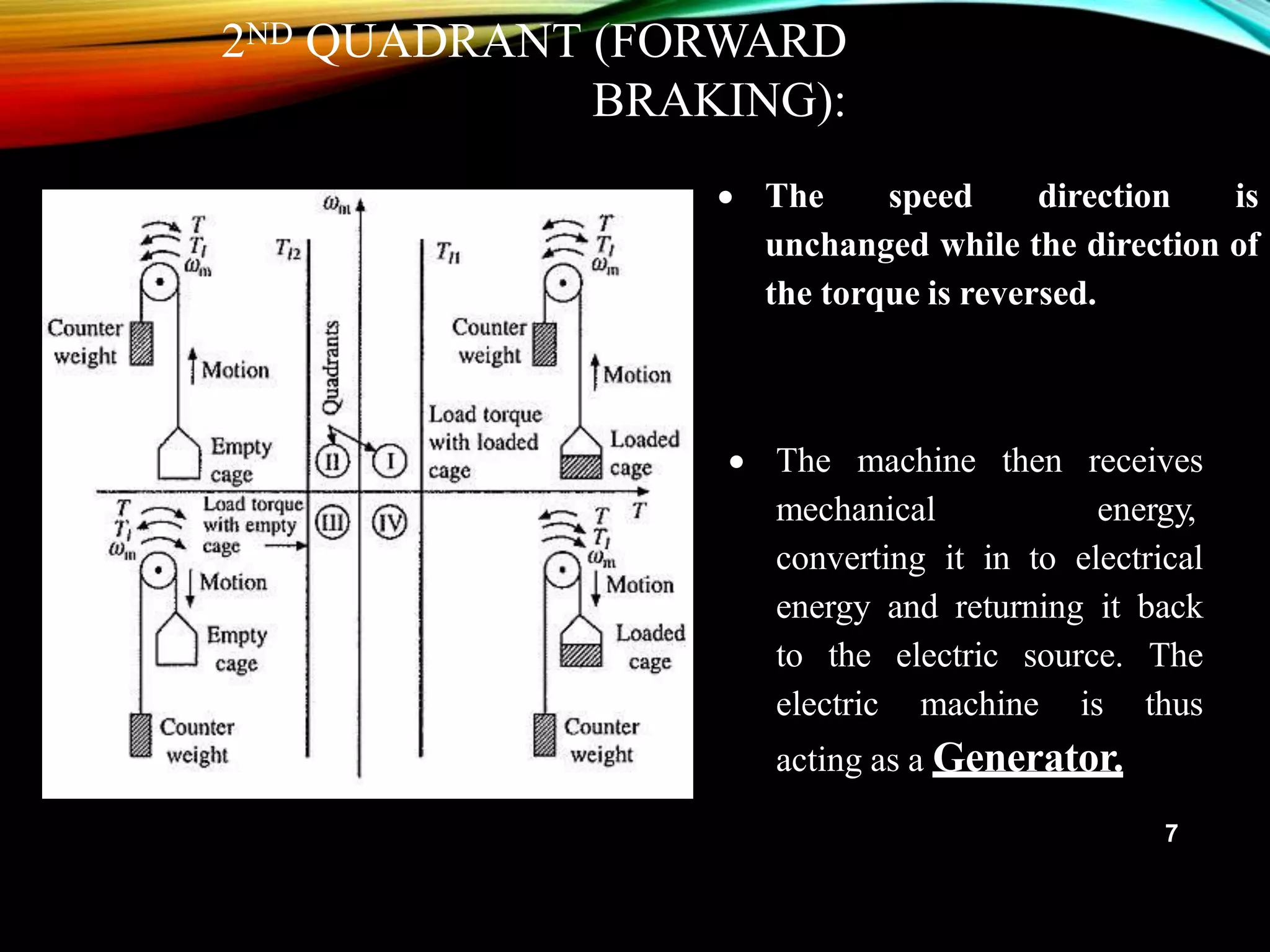
 The machine then receives
mechanical energy,
converting it in to electrical
energy and returning it back
to the electric source. The
electric machine is thus
acting as a Generator.
2ND QUADRANT (FORWARD
BRAKING):
 The speed direction is
unchanged while the direction of
the torque is reversed.
8
3RD QUADRANT (REVERSE MOTORING):
 Since the torque and speed of the
machine are in the same direction,
the power flow is from the
machine to the load. The machine
is therefore acting as a motor
rotating in the reverse direction to
the speed of the first quadrant.
 The speed direction is
unchanged while the direction
of the torque is reversed.
9
3RD QUADRANT (REVERSE
MOTORING):
 Since the torque and speed
of the machine are in the
same direction, the power
flow is from the machine to
the load. The machine is
therefore acting as a motor
rotating in the reverse
direction to the speed of the
first quadrant.
 The speed direction is
unchanged while the direction of
the torque is reversed.
10
4TH QUADRANT (REVERSE
BRAKING):
 The torques remains unchanged
as compared
quadrant. The
to the first
speed, however,
changes the direction.
4TH QUADRANT (REVERSE
BRAKING):
 The first and fourth quadrant of operation can be explained with the
elevator. When the elevator is going upward or downward, the
direction of the load torque remains unchanged but the direction of
the speed only reversed.
11
12
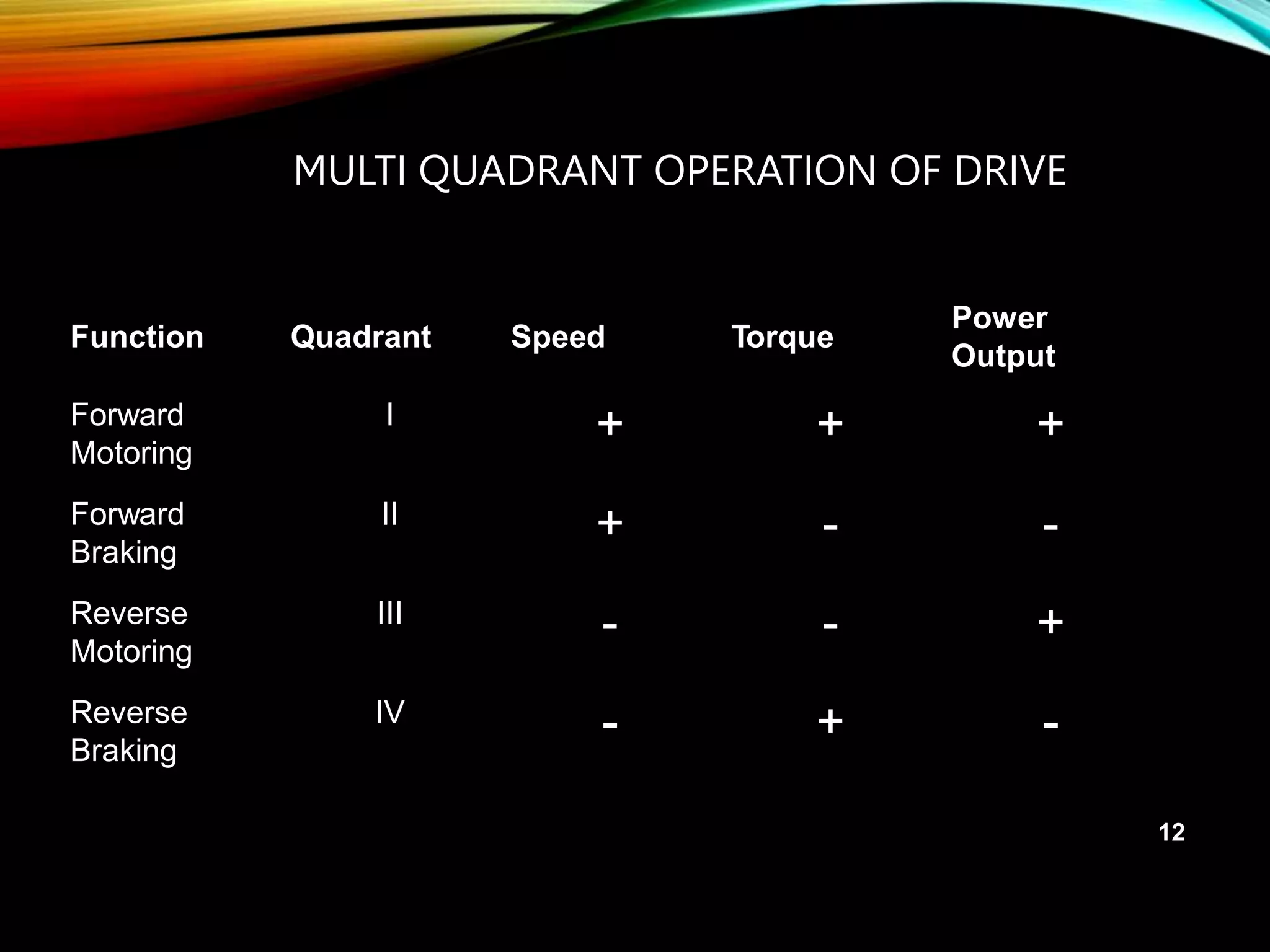
Function Quadrant Speed Torque
Power
Output
Forward
Motoring
I + + +
Forward
Braking
II + - -
Reverse
Motoring
III - - +
Reverse
Braking
IV - + -
MULTI QUADRANT OPERATION OF DRIVE
13
A OPERATION APPLICATION OF FOUR QUADRANT
 Compressor, pump and fan type load requires operation
in the I quadrant only. As their operation is
one quadrant drive
they are called
drives require operation in both
unidirectiona
l, systems.
 Transportatio
n directions.
 If
regeneration
is necessary, application in all four
quadrants may be required. If not, then the operation is
restricted to quadrants I and III, and thus dynamic
braking or mechanical braking may be required.
 In hoist drives, a four-quadrant operation is needed.
14

multiquadrant-210207143216.pptx

  • 1.
    1 MULTI QUADRANT OPERATION OFHOIST LOAD Name : Ranjan Ghosh Dept : Electrical Engineering Roll No : 11901621021 Year : 4th
  • 2.
     Four QuadrantOperation of any drives or DC Motor means that the machine operates in four quadrants.  They are ⚫ Forward Braking, ⚫ Forward motoring ⚫ Reverse motoring ⚫ Reverse braking. 2 FOUR QUADRANT OPERATION
  • 3.
    m Te Te m Te m Te m  T • Direction ofpositive (forward) speed is arbitrary chosen • Direction of positive torque will produce positive (forward) speed Quadrant 1 Forward motoring Quadrant 2 Forward braking Quadrant 3 Reverse motoring Quadrant 4 Reverse braking 3 MULTI QUADRANT OPERATION OF MOTOR USGIN Hoist load
  • 5.
  • 6.
    6  The machinethen receives mechanical energy, converting it in to electrical energy and returning it back to the electric source. The electric machine is thus acting as a Generator. 2ND QUADRANT (FORWARD BRAKING):  The speed direction is unchanged while the direction of the torque is reversed.
  • 7.
    7  The machinethen receives mechanical energy, converting it in to electrical energy and returning it back to the electric source. The electric machine is thus acting as a Generator. 2ND QUADRANT (FORWARD BRAKING):  The speed direction is unchanged while the direction of the torque is reversed.
  • 8.
    8 3RD QUADRANT (REVERSEMOTORING):  Since the torque and speed of the machine are in the same direction, the power flow is from the machine to the load. The machine is therefore acting as a motor rotating in the reverse direction to the speed of the first quadrant.  The speed direction is unchanged while the direction of the torque is reversed.
  • 9.
    9 3RD QUADRANT (REVERSE MOTORING): Since the torque and speed of the machine are in the same direction, the power flow is from the machine to the load. The machine is therefore acting as a motor rotating in the reverse direction to the speed of the first quadrant.  The speed direction is unchanged while the direction of the torque is reversed.
  • 10.
    10 4TH QUADRANT (REVERSE BRAKING): The torques remains unchanged as compared quadrant. The to the first speed, however, changes the direction.
  • 11.
    4TH QUADRANT (REVERSE BRAKING): The first and fourth quadrant of operation can be explained with the elevator. When the elevator is going upward or downward, the direction of the load torque remains unchanged but the direction of the speed only reversed. 11
  • 12.
    12 Function Quadrant SpeedTorque Power Output Forward Motoring I + + + Forward Braking II + - - Reverse Motoring III - - + Reverse Braking IV - + - MULTI QUADRANT OPERATION OF DRIVE
  • 13.
    13 A OPERATION APPLICATIONOF FOUR QUADRANT  Compressor, pump and fan type load requires operation in the I quadrant only. As their operation is one quadrant drive they are called drives require operation in both unidirectiona l, systems.  Transportatio n directions.  If regeneration is necessary, application in all four quadrants may be required. If not, then the operation is restricted to quadrants I and III, and thus dynamic braking or mechanical braking may be required.  In hoist drives, a four-quadrant operation is needed.
  • 14.